111 Results for "

nausea

" in MedChemExpress (MCE) Product Catalog:
Products (111)

111 Results for "nausea" in MCE Product Catalog:

Cat. No.: HY-13256R
CAS No.: 183320-51-6
Synonyms: OSI-420 (Standard); CP-373420 hydrochloride (Standard)
Research Areas:  

Cancer

Metoclopramide (hydrochloride hydrate) (Standard) is the analytical standard of Metoclopramide (hydrochloride hydrate). This product is intended for research and analytical applications. Metoclopramide hydrochloride hydrate is a potent antagonist of 5-HT3 and dopamine D2 receptor, with IC50s of 308 nM and 483 nM, respectively. Metoclopramide hydrochloride hydrate can be used for the research of nausea and vomiting, gastro-oesophageal reflux, and gastroparesis .
loading...
    loading...
Cat. No.: HY-17382AR
CAS No.: 54143-57-6
Metoclopramide (hydrochloride hydrate) (Standard) is the analytical standard of Metoclopramide (hydrochloride hydrate). This product is intended for research and analytical applications. Metoclopramide hydrochloride hydrate is a potent antagonist of 5-HT3 and dopamine D2 receptor, with IC50s of 308 nM and 483 nM, respectively. Metoclopramide hydrochloride hydrate can be used for the research of nausea and vomiting, gastro-oesophageal reflux, and gastroparesis .
loading...
    loading...
Cat. No.: HY-17382R
CAS No.: 364-62-5
Metoclopramide (Standard) is the analytical standard of Metoclopramide. This product is intended for research and analytical applications. Metoclopramide is a potent antagonist of 5-HT3 and dopamine D2 receptor, with IC50s of 308 nM and 483 nM, respectively. Metoclopramide can be used for the research of nausea and vomiting, gastro-oesophageal reflux, and gastroparesis .
loading...
    loading...
Cat. No.: HY-N7541R
CAS No.: 656830-24-9
Metoclopramide (Standard) is the analytical standard of Metoclopramide. This product is intended for research and analytical applications. Metoclopramide is a potent antagonist of 5-HT3 and dopamine D2 receptor, with IC50s of 308 nM and 483 nM, respectively. Metoclopramide can be used for the research of nausea and vomiting, gastro-oesophageal reflux, and gastroparesis .
loading...
    loading...
Cat. No.: HY-169451
CAS No.: 55658-71-4
Synonyms: HU-580
Target:  

5-HT Receptor

Research Areas:  

Neurological Disease

Cannabidiolic acid methyl ester (HU-580) is an orally active cannabidiolic acid analogue. Cannabidiolic acid methyl ester can enhance the activation of 5-HT1A receptor and increase the expression of c-Fos and NeuN in specific hypothalamic nuclei of rats. Cannabidiolic acid methyl ester has anti-nausea, anti-anxiety and anti-injury effects .
loading...
    loading...
Cat. No.: HY-172514
CAS No.: 1185502-97-9
Target:  

Neurokinin Receptor

Research Areas:  

Cancer

(1R,2S,3R)-Aprepitant (Compound ent-4) is a competitive human neurokinin-1 (NK-1) receptor antagonist. (1R,2S,3R)-Aprepitant is promising for research of cancers and postoperative nausea and vomiting .
loading...
    loading...
Cat. No.: HY-B0002AR
CAS No.: 103639-04-9
Synonyms: GR 38032 hydrochloride dihydrate (Standard); SN 307 hydrochloride dihydrate (Standard)
Research Areas:  

Neurological Disease

Ondansetron (hydrochloride dihydrate) (Standard) is the analytical standard of Ondansetron (hydrochloride dihydrate). This product is intended for research and analytical applications. Ondansetron (GR 38032) hydrochloride dehydrate is an orally active, highly selective and competitive 5-HT3 receptor antagonist (crosses the blood-brain barrier). Ondansetron hydrochloride dehydrate can be used in studies of preventing nausea and vomiting associated with cancer chemotherapy, radiation therapy and surgery .
loading...
    loading...
Cat. No.: HY-W775346
CAS No.: 23050-54-6
Synonyms: Δ8-THC acetate; Delta8-tetrahydrocannabinol
Delta8-THC acetate (Delta8-tetrahydrocannabinol) is a psychoactive phytocannabinoid, that binds to cannabinoid receptor 1 (CB1 receptor), and exhibits anti-nausea, appetite-stimulating, and anti-inflammatory activities. Delta8-THC acetate exhibits probably neuroprotective efficacy and can be used in anti-anxiety and antidepressant research .
loading...
    loading...
Cat. No.: HY-A0021R
CAS No.: 135729-62-3
Palonosetron hydrochloride (Standard) is the analytical standard of Palonosetron hydrochloride (HY-A0021). This product is intended for research and analytical applications. Palonosetron hydrochloride is a 5-HT3 antagonist primarily used to prevent acute, delayed, and overall chemotherapy-induced nausea and vomiting. In addition, Palonosetron hydrochloride exhibits moderate anti-flavivirus activity and potent anti-Zika virus activity in mammalian cells. Palonosetron hydrochloride also possesses antidepressant activity .
loading...
    loading...
Cat. No.: HY-B1164A
CAS No.: 52423-56-0
Target:  

Dopamine Receptor

Research Areas:  

Neurological Disease

Bromopride hydrochloride is a selective, irreversible, competitive, and orally active dopamine D2 receptor antagonist. Bromopride hydrochloride can pass through the blood-brain barrier, inhibit the vomiting center, and enhance gastrointestinal motility, exerting antiemetic and gastrointestinal motility effects. Bromopride hydrochloride antagonizes dopamine-mediated vomiting reflexes and promotes gastrointestinal smooth muscle contraction, and has no adverse effects on abdominal wall healing in rats with postoperative abdominal infection. Bromopride hydrochloride can be used for the study of digestive system diseases (such as gastric hypomotility, nausea and vomiting) .
loading...
    loading...
Cat. No.: HY-B0002BR
CAS No.: 99614-02-5
Synonyms: GR 38032 (Standard); SN 307 (Standard)
Ondansetron (Standard) is the analytical standard of Ondansetron (HY-B0002B). This product is intended for research and analytical applications. Ondansetron (GR 38032; SN 307) is a highly selective 5-HT3 receptor antagonist with an IC50 value of 103 pM. Ondansetron exerts its antiemetic effect by antagonizing 5-HT receptors located in localized neurons in the peripheral and central nervous systems. Ondansetron can inhibit nausea and vomiting induced by chemotherapy and radiotherapy .
loading...
    loading...
Cat. No.: HY-B0002BS1
CAS No.: 1132757-82-4
Synonyms: GR 38032-d3; SN 307-d3
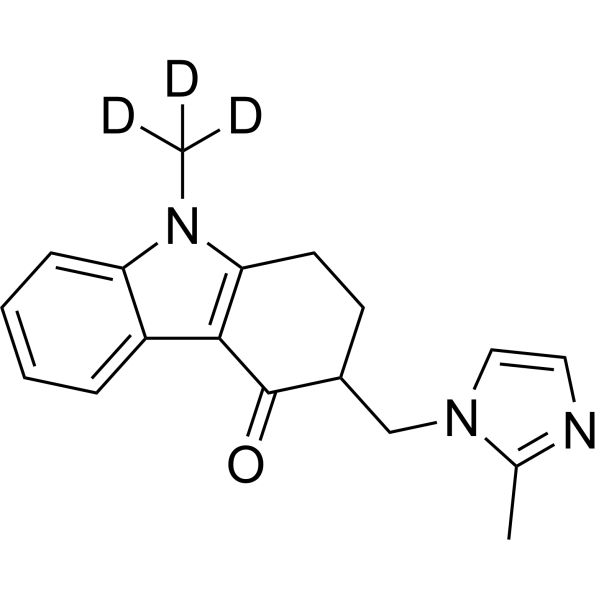
Ondansetron-d3 is the deuterium labeled Ondansetron (HY-B0002B ). Ondansetron (GR 38032; SN 307) is a highly selective 5-HT3 receptor antagonist with an IC50 value of 103 pM. Ondansetron exerts its antiemetic effect by antagonizing 5-HT receptors located in localized neurons in the peripheral and central nervous systems. Ondansetron can inhibit nausea and vomiting induced by chemotherapy and radiotherapy .
loading...
    loading...
Cat. No.: HY-B0002BS2
CAS No.: 2699607-85-5
Synonyms: GR 38032-13C,d3; SN 307-13C,d3
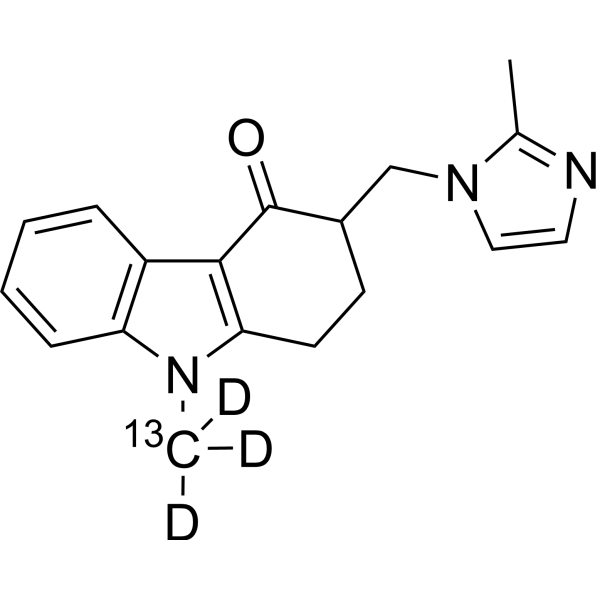
Ondansetron- 13C,d3 is the 13C- and deuterium labeled Ondansetron (HY-B0002B). Ondansetron (GR 38032; SN 307) is a highly selective 5-HT3 receptor antagonist with an IC50 value of 103 pM. Ondansetron exerts its antiemetic effect by antagonizing 5-HT receptors located in localized neurons in the peripheral and central nervous systems. Ondansetron can inhibit nausea and vomiting induced by chemotherapy and radiotherapy .
loading...
    loading...
Cat. No.: HY-B0071S1
CAS No.: 1224925-90-9
Synonyms: BRL 43694-d4
Granisetron-d4 (BRL 43694-d4) is deuterium labeled Granisetron. Granisetron (BRL 43694) is a serotonin 5-HT3 receptor antagonist used as an antiemetic to treat nausea and vomiting following chemotherapy.
loading...
    loading...
Cat. No.: HY-16347
CAS No.: 290296-54-7
Synonyms: CID 6451149 hydrochloride
Target:  

Neurokinin Receptor

Research Areas:  

Neurological Disease Endocrinology

Netupitant hydrochloride (CID 6451149 hydrochloride) is a blood-brain barrier penetrable, orally active NK1 receptor inhibitor with a Ki of 0.95 nM (CHO cells) against the human receptor. Netupitant hydrochloride antagonizes the effects induced by Substance P, inhibits the maximal response of Substance P with a long-lasting action, and suppresses NK1 agonist-induced behaviors in mice and gerbils. Netupitant hydrochloride reduces the frequency of bladder contractions, prolongs contraction intervals, decreases basal pressure at high doses, and acts on the afferent branch of the micturition reflex. Netupitant hydrochloride can be used in research related to overactive bladder, chemotherapy-induced nausea and vomiting, post-operative nausea and vomiting, anxiety disorders, and depression .
loading...
    loading...
Cat. No.: HY-17382D
CAS No.: 5581-45-3
Research Areas:  

Metabolic Disease Cancer

Metoclopramide dihydrochloride hydrate is a potent antagonist of 5-HT3 and dopamine D2 receptor, with IC50s of 308 nM and 483 nM, respectively. Metoclopramide dihydrochloride hydrate can be used for the research of nausea and vomiting, gastro-oesophageal reflux, and gastroparesis .
loading...
    loading...
Cat. No.: HY-FLB0002A
CAS No.: 103639-04-9
Synonyms: GR 38032 hydrochloride dihydrate solution; SN 307 hydrochloride dihydrate solution
Target:  

5-HT Receptor

Research Areas:  

Neurological Disease

Ondansetron hydrochloride solution is mainly composed of Ondansetron hydrochloride dihydrate (HY-B0002A). Ondansetron (GR 38032; SN 307) hydrochloride dehydrate is a highly selective 5-HT3 receptor antagonist with an IC50 value of 103 pM. Ondansetron hydrochloride dehydrate exerts its antiemetic effect by antagonizing 5-HT receptors located in localized neurons in the peripheral and central nervous systems. Ondansetron hydrochloride dehydrate can inhibit nausea and vomiting induced by chemotherapy and radiotherapy .
loading...
    loading...
Cat. No.: HY-124470
CAS No.: 550-28-7
Target:  

Others

Research Areas:  

Cardiovascular Disease

Amisometradine is an orally active aminouracil diuretic with a diuretic potency approximately 40% that of Mersalyl (HY-108868) (when administered intramuscularly). Amisometradine exerts its effects by promoting the excretion of sodium, chloride and a small amount of potassium, exhibits significant therapeutic effects in heart failure models, and has good tolerance with long-term administration. Compared with drugs of the same class, Amisometradine causes fewer gastrointestinal reactions; its minor side effects mainly include nausea, vomiting, diarrhea, tinnitus and deafness, and are usually not accompanied by proteinuria or abnormalities in blood and urine indicators. Amisometradine is an important tool for the study of heart failure and related diuretic mechanisms .
loading...
    loading...
Cat. No.: HY-123113
CAS No.: 65886-71-7
Synonyms: Kymarabine; Ara-AC; NSC 281272
Target:  

DNA/RNA Synthesis

Research Areas:  

Cancer

Fazarabine (Kymarabine; Ara-AC; NSC 281272) is an orally active, blood-brain barrier permeable DNA polymerase inhibitor and antitumor agent. Fazarabine interferes with DNA synthesis via intracellular activation into a triphosphate nucleotide that directly incorporates into DNA, inducing cytotoxicity, myelosuppression, as well as moderate nausea and vomiting. Fazarabine is resistant to deamination by cytidine-deoxycytidine deaminase and undergoes spontaneous aqueous degradation. Fazarabine exerts time-dependent, broad-spectrum activity against leukemia and solid tumors. Fazarabine can be used in research related to refractory malignancies, acute leukemia, and blast-phase chronic myeloid leukemia .
loading...
    loading...
Cat. No.: HY-166562S
Synonyms: Methotrimeprazine-d6 hydrochloride
Levomepromazine-d6 hydrochloride (Methotrimeprazine-d6 hydrochloride) is the deuterium labeled Levomepromazine hydrochloride. Levomepromazine (Methotrimeprazine) hydrochloride is an orally active antipsychotic compound and Ca 2+ release inducer. Levomepromazine inhibits SERCA pump and induces an increase in cytoplasmic Ca 2+ levels. Levomepromazine hydrochloride has antagonistic effects on a variety of neurotransmitter receptors, including dopamine, cholinergic, serotonin, and histamine receptors. Levomepromazine hydrochloride can induce adaptive ER stress and autophagy. In addition, Levomepromazine hydrochloride has antiviral, anti-inflammatory, neuroprotective and analgesic, sedative and anti-injurious activities. Levomepromazine hydrochloride can be used in the study psychiatric disorders and relieving nausea and vomiting .
loading...
    loading...

