


318 Results for "

microenvironment

" in MedChemExpress (MCE) Product Catalog:
Products (318)

318 Results for "microenvironment" in MCE Product Catalog:

Cat. No.: HY-P10449
CAS No.: 3098205-40-1
Target:  

Inhibitory Antibodies

Research Areas:  

Inflammation/Immunology Cancer

M2 Peptide is a peptide targeting M2-like tumor-associated macrophages (TAMs). M2 Peptide is used to carry drugs or small interfering RNA (siRNA) to promote the repolarization of M2-like macrophages to M1-like macrophages, thereby altering the immunosuppressive state in the tumor microenvironment and enhancing the anti-tumor immune response. M2 Peptide can be used to study the effect of macrophage polarization and how this polarization change affects tumor growth and metastasis .
loading...
    loading...
Cat. No.: HY-P991061
CAS No.: 3024486-14-1
Synonyms: CHS-114; SRF-114
Target:  

CCR

Research Areas:  

Cancer

Tagmokitug (CHS-114; SRF-114) is a fully human IgG1 antibody targeting CCR8. Tagmokitug selectively binds to human CCR8 (Kd = 502 pM) and mediates the death of CCR8-expressing cells via antibody-dependent cellular cytotoxicity and antibody-dependent cellular phagocytosis. Tagmokitug selectively eliminates intratumoral regulatory T cells, induces tumor growth inhibition, remodels the tumor immune microenvironment, and promotes the differentiation of cytotoxic CD8 + T cell subsets. Tagmokitug can be used for the research of solid tumors .
loading...
    loading...
Cat. No.: HY-176785S
MCB-294 is a dual-state pan-KRAS inhibitor that selectively inhibits KRAS over NRAS and HRAS. MCB-294 capable of binding both the active (GTP-bound) and inactive (GDP-bound) forms of KRAS with Kds of approximately 1 pM and 10 nM, respectively. MCB-294 broadly impairs the growth of hTERT-HPNE cells expressing G12D, G12C, G12V, G12S, G13D, and wild-type KRAS, with IC50s of approximately 700 nM. MCB-294 induces irreversible apoptosis in KRAS-mutated tumors. MCB-294 effectively suppress KRAS G12C inhibitor-resistant cancer cells and remodel the tumor immune microenvironment. MCB-294 can be used for the study of pancreatic cancer, colorectal cancer and lung cancer .
loading...
    loading...
Cat. No.: HY-160696
CAS No.: 2641306-62-7
Target:  

CD73

Research Areas:  

Cancer

ORIC-533 is an orally active, highly selective, AMP-competitive CD73 inhibitor that potently blocks adenosine production with sub-nanomolar affinity (Ka=0.03 nM). In multiple myeloma, ORIC-533 restores and enhances the cytotoxicity of the immune system against tumor cells through multiple immunological mechanisms, including reversing the immunosuppressive microenvironment, inducing immunogenic cell death, and activating dendritic cells, T cells and NK cells, with no direct toxicity to normal cells. The combination of ORIC-533 with Daratumumab (HY-P9915) synergistically enhances anti-tumor efficacy, significantly increases intratumoral CD8 + T cell infiltration and inhibits tumor growth in vivo .
loading...
    loading...
Cat. No.: HY-W109224
CAS No.: 4265-59-2
Research Areas:  

Cancer

3,3'-(Propane-2,2-diylbis (sulfanediyl)) dipropionic acid is a ROS-sensitive cleavable linker. 3,3'-(Propane-2,2-diylbis (sulfanediyl)) dipropionic acid is stable under physiological conditions, but undergoes cleavage in the ROS-rich tumor microenvironment, enabling the release of conjugated Camptothecin (CPT) (HY-16560). 3,3'-(Propane-2,2-diylbis (sulfanediyl)) dipropionic acid can be used in the research of cervical cancer .
loading...
    loading...
Cat. No.: HY-P2955
CAS No.: 149371-12-0
Target:  

Glycosidase

Research Areas:  

Cancer

Heparinase II is a glycosidase targeting heparin and heparan sulfate. Heparinase II is promising for research of glycosaminoglycan structure-function analysis, anticoagulant agents and tumor microenvironment modulation .
loading...
    loading...
Cat. No.: HY-147204
CAS No.: 1638970-46-3
Purity:  99.82%
Research Areas:  

Cancer

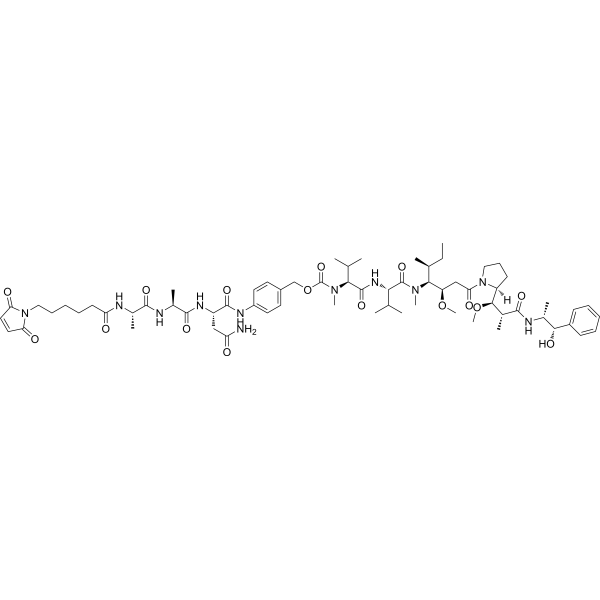
Mc-Alanyl-Alanyl-Asparagine-PAB-MMAE (compound S6) is a potent anticancer agent, which can be specific activated by tumor microenvironment. Mc-Alanyl-Alanyl-Asparagine-PAB-MMAE can suppress tumor growth in mice (extracted from patent CN104147612A) .
loading...
    loading...
Cat. No.: HY-131347
CAS No.: 2377916-66-8
Purity:  98.25%
Target:  

PD-1/PD-L1

Research Areas:  

Inflammation/Immunology Cancer

PD-1/PD-L1-IN-NP19 is a PD-1/PD-L1 inhibitor, with an IC50 of 12.5 nM for human PD-1/PD-L1 interaction. PD-1/PD-L1-IN-NP19 could activate the immune microenvironment in tumor, which may contribute to its antitumor effects .
loading...
    loading...
Cat. No.: HY-160053
Target:  

PDGFR

Research Areas:  

Cancer

Gint4.T aptamer sodium is a nuclease-resistant RNA aptamer-based antagonist targeting platelet-derived growth factor receptor beta (PDGFRβ) (Kd: 9.6 nM). Gint4.T aptamer sodium inhibits PDGFRβ heterodimerization and EGFR transactivation. It can significantly inhibit cell migration and proliferation, induce differentiation and prevent tumor growth in vivo. Gint4.T aptamer sodium specifically inhibits PDGFRβ-mediated tropism of mesenchymal stem cells (MSCs) toward the tumor microenvironment .
loading...
    loading...
Cat. No.: HY-163081
CAS No.: 3024030-10-9
Target:  

PARP

Research Areas:  

Cancer

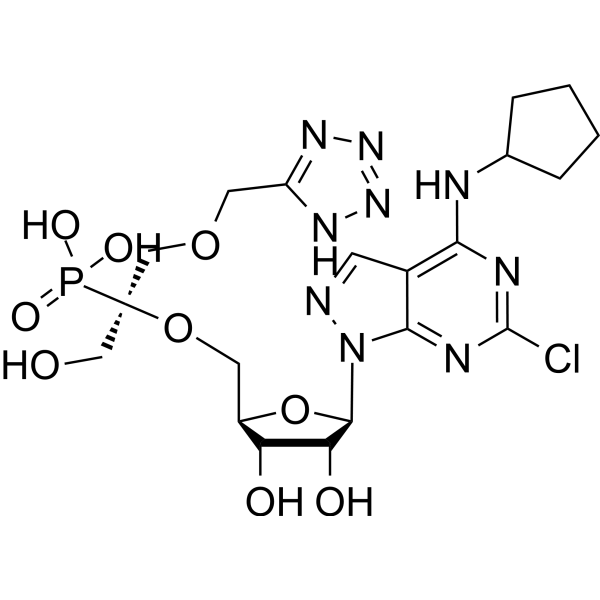
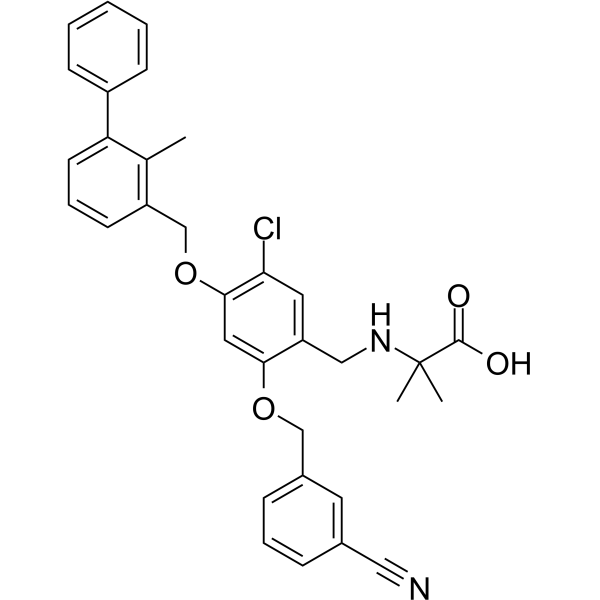
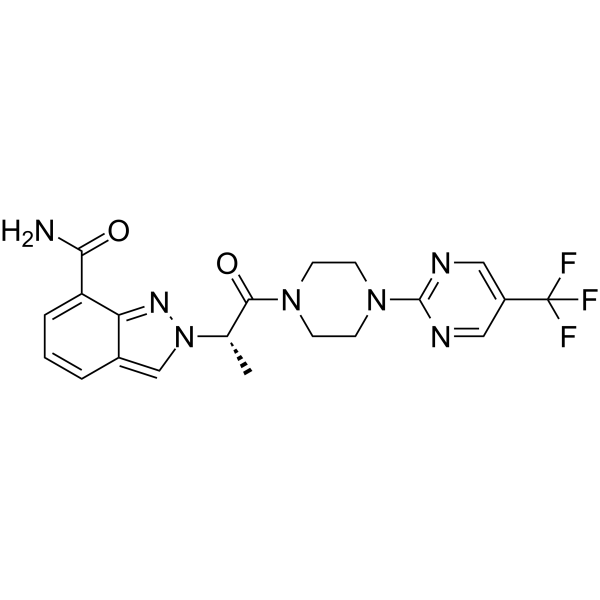
PARP7-IN-17 is a potent inhibitor of PARP7 with IC50 of 4.5 nM that has oral bioavailability. PARP7-IN-17 displays antitumor effect .
loading...
    loading...
Cat. No.: HY-P4116A
Synonyms: pHLIP TFA
Target:  

Inhibitory Antibodies

Research Areas:  

Metabolic Disease Cancer

pH-Low Insertion Peptide TFA (pHLIP TFA) is a short, pH-responsive peptide capable of inserting across a cell membrane to form a transmembrane helix at acidic pH. pH-Low Insertion Peptide TFA targets the acidic tumor microenvironment for tumors at early and metastatic stages with high specificity, used as a specific ligand. pH-Low Insertion Peptide TFA successfully modifys polylysine polymers to have the pH-responsive capability. pH-Low Insertion Peptide TFA -based targeting of cancer presents an opportunity to monitor metabolic changes and to selectively deliver imaging and therapeutic agents to tumors .
loading...
    loading...
Cat. No.: HY-170779
CAS No.: 3078291-78-5
Target:  

FAP

Research Areas:  

Cancer

DOTA-NI-FAPI-04 is a FAP inhibitor (IC50 = 7.44 nM). By integrating FAP targeting with hypoxia-sensitive groups (nitroimidazole), DOTA-NI-FAPI-04 significantly enhances tumor uptake and retention capabilities. DOTA-NI-FAPI-04 chelates metallic isotopes (such as 68Ga and 177Lu) through DOTA to produce radioactive probes ([68Ga]Ga/DOTA-NI-FAPI-04 and [177Lu]Lu/DOTA-NI-FAPI-04), which can be used for research in tumor diagnostics and therapeutic agents. DOTA-NI-FAPI-04 holds dual targeting potential in the fields of cancer imaging, tumor microenvironment analysis, and radionuclide therapy, particularly suitable for scenarios where the tumor stroma and hypoxic regions synergistically interact .
loading...
    loading...
Cat. No.: HY-164429
CAS No.: 2418533-90-9
Target:  

Integrin Elastase

Research Areas:  

Cancer

VIP236 is a small-molecule drug conjugate targeting αvβ3 integrin. VIP236 achieves tumor homing via specific binding to αvβ3 integrin and delivers its payload to the tumor microenvironment. The linker of VIP236 is cleavable by neutrophil elastase, which is highly expressed in the tumor microenvironment, to release the payload 7-ethylcamptothecin. This payload induces DNA damage by inhibiting topoisomerase 1, thereby exerting anti-tumor effects. VIP236 exhibits excellent plasma stability and tumor targeting property, with a tumor/plasma payload ratio 10-fold higher than that of the single administration. It effectively induces tumor regression, reduces metastasis formation, and shows good tolerance in mouse models. VIP236 has been used in studies related to non-small cell lung cancer, clear cell renal cell carcinoma, colon cancer, triple-negative breast cancer, small cell lung cancer, and metastatic solid tumors .
loading...
    loading...
Cat. No.: HY-161248
Target:  

Microtubule/Tubulin

Research Areas:  

Cancer

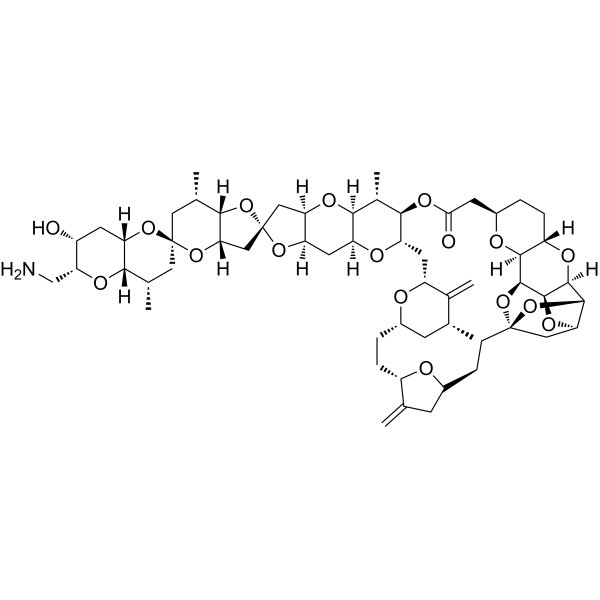
E7130 is a microtubule inhibitor, which ameliorates the tumor microenvironment through suppression of cancer-associated fibroblasts (CAF) and promotion of tumor vasculature remodeling .
loading...
    loading...
Cat. No.: HY-168887
CAS No.: 3084542-49-1
Target:  

STING

Research Areas:  

Cancer

ZSA-51 is a potent and orally active STING agonist. ZSA-51 shows anticancer activity. ZSA-51 remodeles immune microenvironment both in tumor and lymph node .
loading...
    loading...
Cat. No.: HY-176772
CAS No.: 3106015-71-5
Research Areas:  

Cancer

QHL-1618 is a tumor microenvironment-activated drug conjugate. QHL-1618 inhibits the tumor growth in various tumor models, such as HT-1080 xenograft, CT-26 xenograft .
loading...
    loading...
Cat. No.: HY-P2632A
CAS No.: 2100275-49-6
Synonyms: RADA16 hydrochloride
Target:  

Inhibitory Antibodies

Research Areas:  

Neurological Disease

RAD16-I hydrochloride, a soft nanofibrous self-assembling peptide, is a suitable microenvironment for human mesenchymal stem cells’ (hMSC) proliferation and differentiation into chondrocytes . RAD16-I is a well-studied ionic complementary peptide was used as a model to check potential amyloid-like staining properties of SAPNFs .
loading...
    loading...
Cat. No.: HY-P99723
CAS No.: 2168561-26-8
Synonyms: BCD-135

Target:  

PD-1/PD-L1

Research Areas:  

Cancer

Manelimab (BCD-135) is a monoclonal antibody targeting PD-L1 with PD-L1 inhibitory activity. Manelimab blocks the interaction between PD-L1 and PD-1 to abrogate the immunosuppressive signals of T cells in the tumor microenvironment. Manelimab is applicable for tumor-related research .
loading...
    loading...
Cat. No.: HY-178078
CAS No.: 1800077-28-4
Target:  

Drug Intermediate

Research Areas:  

Cancer

PTX-SS-COOH is the proform that can be grafted to the sulfhydryl modified gelatin to form the redox sensitive amphiphilic polymer. The nanoparticle (BSA/Gel-SS-PTX/PTX-SS-COOH NPs) demonstrates an excellent anticancer efficiency. PTX-SS-COOH can be applied in the research of targeted delivery for solid tumors (such as breast cancer and melanoma) by utilizing the unique characteristics of the tumor microenvironment (high GSH level) .
loading...
    loading...
Cat. No.: HY-174421
Target:  

FAP

Research Areas:  

Cancer

FAPI-JNU is a molecule targeting fibroblast activation protein (FAP). FAPI-JNU specifically binds to FAP highly expressed in the tumor microenvironment, and uses radionuclides [ 68Ga]Ga or [ 177Lu]Lu to achieve tumor imaging diagnosis. [177Lu]Lu−FAPI−JNU can effectively target and inhibit tumor growth in tumor-bearing mice. FAPI-JNU is promising for research of FAP-positive tumors (such as various solid tumors) .
loading...
    loading...

