
1012 Results for "

cell interaction

" in MedChemExpress (MCE) Product Catalog:
Products (1012)

1012 Results for "cell interaction" in MCE Product Catalog:

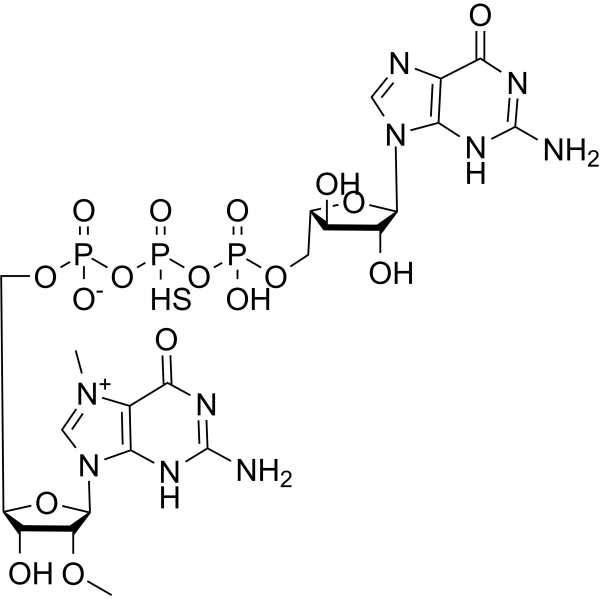
Cat. No.: HY-145969
CAS No.: 1093268-63-3
Synonyms: 3'-O-Me-m7G(5')ppp(5')G
β-S-ARCA (3'-O-Me-m7G(5')ppp(5')G) is a mRNA 7-methylguanosine (m7G) cap analog carrying a phosphorothioate (PS) moiety. β-S-ARCA binds eIF4E via electrostatic interactions between its β-sulfur atom and positively charged Arg and Lys residues in the protein binding site. β-S-ARCA prevents the decapping by Dcp2, increases the mRNA half-life, enhances cap-dependent translation, and increases protein expression in cells. β-S-ARCA has been applied in researching experimental mRNA-based anticancer vaccines .
loading...
    loading...
Cat. No.: HY-159912
CAS No.: 3027484-09-6
Target:  

YAP

Research Areas:  

Cancer

pan-TEAD-IN-1 (Compound 3) is an orally active pan-TEAD inhibitor targeting the palmitoylation site of TEAD, disrupting its interaction with the coactivators YAP/TAZ, thereby suppressing the transcriptional upregulation of oncogenes (e.g., Ctgf and Cyr61) in the Hippo signaling pathway. pan-TEAD-IN-1 exhibits excellent activity with a luciferase IC50 of 0.36 nM and an H226 cell IC50 of 1.52 nM. It also shows favorable pharmacokinetics (AUC0–∞ = 228.7 μg/mL·min, T1/2 = 183.9 min). In TEAD-dependent xenograft mouse models, pan-TEAD-IN-1 significantly inhibited tumor growth, showing promise for research in TEAD-dependent cancers .
loading...
    loading...
Cat. No.: HY-164111
CAS No.: 1128096-58-1
Target:  

JAK

Research Areas:  

Neurological Disease

JNK-IN-17 (Compound 9J) is a selective and potent JNK inhibitor with IC50 values of 0.039, 0.079 μM for JNK1 and JNK3. JNK-IN-17 can inhibit c-Jun phosphorylation with an IC50 of 0.082 μM in Streptozotocin (HY-13753)-infuced INS-1 pancreatic islet β cells. JNK-IN-17 shows inhibition rate ≤ 33% on the four main P450 subtypes (2C9, 2D6, 3A4, 1A2) in human liver microsomes, indicating a relatively low risk of drug interactions. JNK-IN-17 can be used for researches of neurological and metabolic disease, such as Parkinson's disease .
loading...
    loading...
Cat. No.: HY-169921
Target:  

c-Myc Apoptosis

Research Areas:  

Cancer

c-Myc inhibitor 15 (Compound A5) is a selective c-Myc inhibitor that exerts anticancer effects by disrupting the interaction between c-Myc and Max, leading to the degradation of c-Myc protein and the induction of apoptosis. Its IC50 values are 4.08 μM and 7.86 μM in A549 and NCI-H1299 lung cancer cell lines, respectively, demonstrating strong cytotoxic activity. In a syngeneic tumor model, c-Myc inhibitor 15 exhibited outstanding antitumor efficacy, achieving a tumor growth inhibition rate of 76.4% and significantly reducing c-Myc protein expression levels. c-Myc inhibitor 15 holds promise for research related to c-Myc-driven lung cancers .
loading...
    loading...
Cat. No.: HY-174347
CAS No.: 2758818-41-4
Research Areas:  

Cancer

Hsp90-Cdc37-IN-4, a Celastrol (HY-13067) derivative, inhibits the Hsp90-Cdc37 protein-protein interaction (PPI). Hsp90-Cdc37-IN-4 selectively inhibits casein kinase 2 (CK2), reducing phosphorylation of its substrate Cdc37 at Serine 13. Hsp90-Cdc37-IN-4 induces G0/G1 cell cycle arrest and triggers apoptosis via the mitochondrial pathway. Hsp90-Cdc37-IN-4 demonstrates potent anti-breast cancer activity .
loading...
    loading...
Cat. No.: HY-176288
eIF4E/eIF4G PPI-IN-1 is an eIF4E/eIF4G interaction inhibitor with a KD of 20.2 μM for eIF4E protein. eIF4E/eIF4G PPI-IN-1 plays an antitumor role in multiple modes of action including regulating the activity of eIF4E by inhibiting the Ras/MAPK/eIF4E signaling pathway, apoptosis and cell migration. eIF4E/eIF4G PPI-IN-1 suppresses the growth of HepG2 xenografts in nude mice and was relatively nontoxic to mice .
loading...
    loading...
Cat. No.: HY-178343
Target:  

Aurora Kinase Apoptosis

Research Areas:  

Cancer

Aurora A-IN-5 is a potent and highly selective Aurora A inhibitor (IC50 = 0.02 μM), showing 362-fold selectivity for over Aurora B. Aurora A-IN-5 shows its selectivity through unique C−H/π interactions, enhanced hydrophobic contacts, an open binding pocket, and tighter protein packing. Aurora A-IN-5 suppresses Aurora A autophosphorylation, thereby inhibiting cancer cell proliferation by inducing G2/M phase arrest, triggering apoptosis, and suppressing colony formation. Aurora A-IN-5 inhibits tumor growth in MDA-MB-231 xenograft mouse models. Aurora A-IN-5 can be used for breast, cervical, prostate, and lymphoma cancer research .
loading...
    loading...
Cat. No.: HY-182757
CAS No.: 2812381-74-9
Y1693 is an orally active RANKL inhibitor with a Kd of 5.03 μM for hRANKL. Y1693 inhibits the activation of the downstream c-fos/NFATc1 signaling pathway by blocking its interaction with RANK. Y1693 significantly inhibits RANKL-induced osteoclast differentiation, F-actin ring formation and bone resorptive activity, while downregulating the mRNA and protein expressions of TRAP, cathepsin K, c-fos and NFATc1. Y1693 shows no obvious cytotoxicity to bone marrow-derived macrophages and osteoclast precursor cells, and exhibits favorable ADME properties. Y1693 improves ovariectomy-induced osteoporosis in mice and reverses ligation-induced periodontal alveolar bone loss. Y1693 is applicable to research related to osteoporosis and periodontal diseases .
loading...
    loading...
Cat. No.: HY-184204
Target:  

Keap1-Nrf2 p62 Ferroptosis

Research Areas:  

Cancer

Keap1-p-p62-IN-1 is a potent and selective Keap1-p-p62 inhibitor with an IC50 of 0.11 μM. Keap1-p-p62-IN-1 shows 18.73-fold selectivity over Keap1-Nrf2 interaction. Keap1-p-p62-IN-1 normalizes Nrf2 ubiquitination, sensitizes cells to Sorafenib (HY-10201)-induced ferroptosis. Keap1-p-p62-IN-1 can be used for the research of p62 aberrant hepatocellular carcinoma .
loading...
    loading...
Cat. No.: HY-187470
CAS No.: 3135155-78-8
Research Areas:  

Cancer

PROTAC AURKA degrader-4 is a AURKA PROTAC degrader with a DC50 of 25.62 nM (Jurkat cells). PROTAC AURKA degrader-4 recruits the CRBN E3 ubiquitin ligase via the ubiquitin-proteasome system. PROTAC AURKA degrader-4 disrupts both the catalytic and non-catalytic functions of AURKA, including its interactions with TPX2 and c-Myc. PROTAC AURKA degrader-4 induces G2/M phase arrest and apoptosis. PROTAC AURKA degrader-4 exhibits enhanced antiproliferative activity and in vivo antitumor efficacy in models with high CRBN and AURKA expression. PROTAC AURKA degrader-4 can be used for the research of acute lymphoblastic leukemia .
loading...
    loading...
Cat. No.: HY-N0373R
CAS No.: 58749-23-8
Licochalcone B (Standard) is the analytical standard of Licochalcone B. This product is intended for research and analytical applications. Licochalcone B is an extract from the root of Glycyrrhiza uralensis. Licochalcone B inhibits amyloid β (42) self-aggregation (IC50=2.16 μM) and disaggregate pre-formed Aβ42 fibrils, reduce metal-induced Aβ42 aggregation through chelating metal ionsLicochalcone B inhibits phosphorylation of NF-κB p65 in LPS signaling pathway. Licochalcone B inhibits growth and induces apoptosis of NSCLC cells. Licochalcone B specifically inhibits the NLRP3 inflammasome by disrupting NEK7‐NLRP3 interaction .
loading...
    loading...
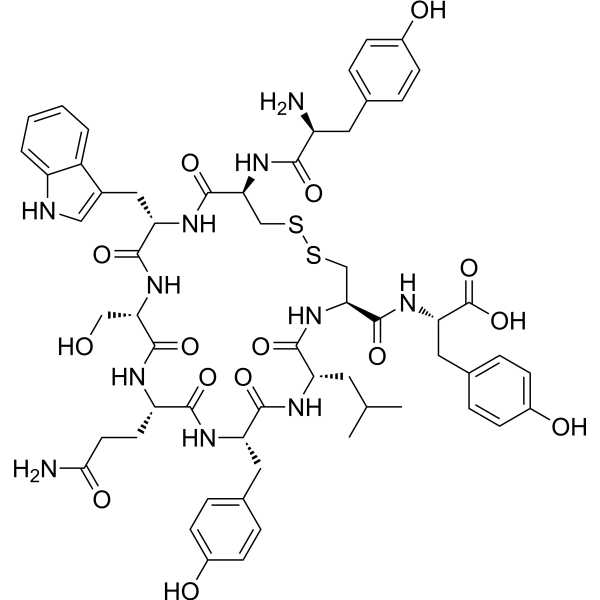
Cat. No.: HY-P2612
CAS No.: 199999-60-5
Research Areas:  

Inflammation/Immunology

WP9QY is an inhibitor targeting TNFα and RANKL, which blocks the TNFα-TNFR1 interaction and inhibits TNFα-mediated apoptosis, cytotoxicity and bone destruction. WP9QY inhibits osteoclastogenesis and promotes osteoblast differentiation, induces chondrocyte proliferation and glycosaminoglycan production, and synergizes with TGF-β3 to promote chondrogenesis. WP9QY effectively repairs full-thickness articular cartilage defects in rabbits via intra-articular injection, and inhibits methylmercury-induced reduction of NeuN-positive cells in mouse brain slices. WP9QY can be applied to the research of diseases related to methylmercury-induced neuronal death, cartilage injury, osteoarthritis and bone loss .
loading...
    loading...
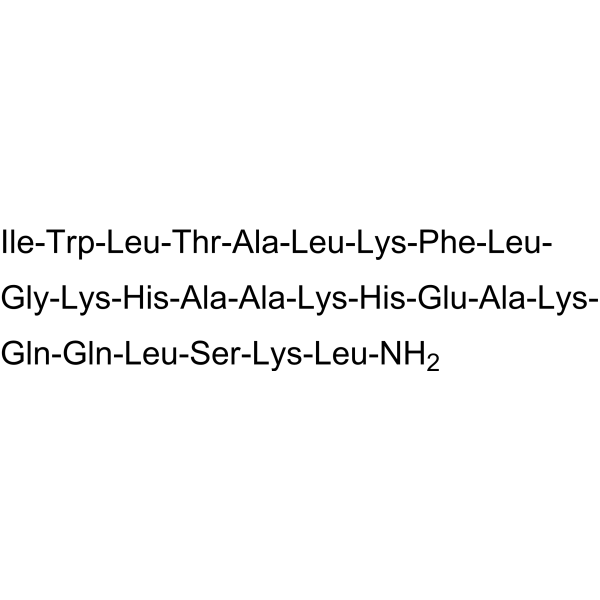
Cat. No.: HY-P4121
CAS No.: 1898254-09-5
Target:  

Potassium Channel

Research Areas:  

Inflammation/Immunology Cancer

L17E is an attenuated cationic amphiphilic lytic (ACAL) peptide that can be used to deliver a variety of macromolecules, including proteins, antibodies, and DNA nanostructures. L17E inserts and cleaves the membrane structure through electrostatic interaction, enabling intracellular escape. The efficiency of L17E-mediated delivery is strongly correlated with the expression level of KCNN4 (the gene encoding the calcium-activated potassium channel KCa3.1). L17E also promotes the cellular uptake of macromolecules by inducing micropinocytosis. L17E can be further optimized and improved through dimerization strategies and in combination with other delivery systems, such as nuclear localization signal peptides and cell membrane-coated nanoparticles .
loading...
    loading...
Cat. No.: HY-P992511

Target:  

PD-1/PD-L1 CTLA-4 VEGFR

Research Areas:  

Cancer

CS2009 is a trispecific antibody targeting PD-1, CTLA-4 and VEGFA. CS2009 blocks the interactions of PD-1/PD-L1, CTLA-4/CD80 and VEGFA/VEGFR2, mediates checkpoint inhibition, and suppresses tumor angiogenesis. CS2009 reactivates PD-1/CTLA-4 double-positive tumor-infiltrating T lymphocytes, induces T cell activation, enhances tumor growth inhibition, promotes vascular normalization, improves T lymphocyte infiltration, and converts the immunosuppressive tumor microenvironment into an immunocompetent one. CS2009 can be used for the research of various advanced solid tumors .
loading...
    loading...
Cat. No.: HY-P99488
CAS No.: 2574591-89-0
Synonyms: JSP-191; AMG-191

Target:  

c-Kit

Research Areas:  

Inflammation/Immunology Cancer

Briquilimab (JSP-191 or AMG-191) is a humanized IgG1 monoclonal antibody that binds human CD117 (c-Kit). Briquilimab blocks the interaction between CD117 receptor and stem cell factor on various CD117 expressing tissues. Briquilimab can lead to inhibition of SCF/c-Kit signaling and MC apoptosis. Briquilimab is a non-toxic approach to target and deplete HSC, enabling blood and immune reconstitution with minimal toxicity with the other agents being used for transient immune suppression to prevent immunologic rejection. Briquilimab can be used in various disease research such as severe combined immunodeficiency (SCID), myelodyplastic syndromes (MDS), acute myeloid leukemia (AML), chronic spontaneous urticarial (CSU), chronic inducible urticarial (CIndU) and asthema .
loading...
    loading...
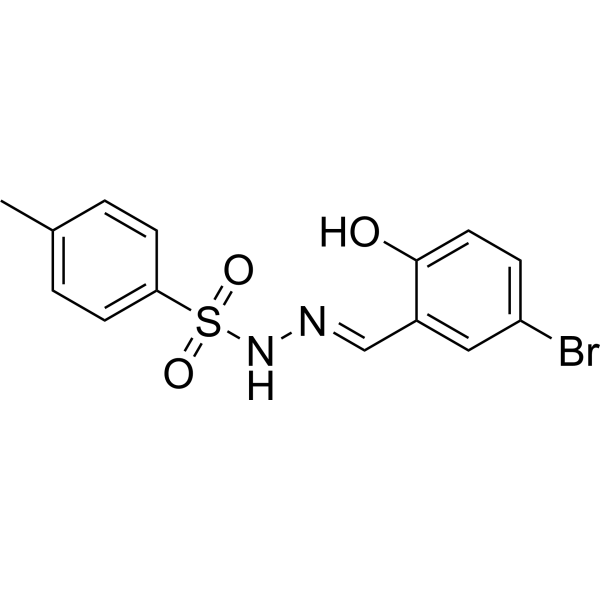
Cat. No.: HY-W133627
CAS No.: 118719-16-7
Target:  

Molecular Glues

Research Areas:  

Cancer

dCeMM1 is a molecular glue degrader that targets RBM39. dCeMM1 serves as a positive control for the screening of DCAF15-dependent molecular glue degraders. dCeMM1 promotes the DCAF15-RBM39 interaction, thereby recruiting RBM39 to the CRL4 DCAF15 E3 ubiquitin ligase complex, inducing ubiquitination and subsequent proteasomal degradation of RBM39. Meanwhile, dCeMM1 stabilizes DCAF15 by mediating neo-substrate recruitment to protect DCAF15 from autodegradation. dCeMM1 reduces the viability of leukemia cells in a neddylation-dependent and proteasome-dependent manner, and can be applied in leukemia-related research .
loading...
    loading...
Cat. No.: HY-L198
140 compounds

Unlike the 20 natural amino acids commonly found within living organisms, non-natural amino acids are synthesized through chemical or biosynthetic methods, thereby being endowed with unique chemical properties or biological activities. In drug development, these amino acids can be utilized to design novel pharmaceutical molecules that may exhibit superior pharmacological characteristics, such as increased selectivity, improved pharmacokinetic profiles, or reduced toxicity. In biomedical research, uon-natural amino acids can act as biological markers or probes for investigating biological processes like cell signaling, protein conformation, and protein-protein interactions. In addition, non-natural amino acids can also be used in the field of agriculture to develop new pesticides, plant growth regulators and so on.

loading...
    loading...
Cat. No.: HY-181420
CAS No.: 3029184-80-0
Research Areas:  

Cancer

(S,R,S)-BBO-11818 is an orally active, highly selective (relative to NRAS and HRAS), non-covalent pan-KRAS inhibitor (IC50=28-120 nM). (S,R,S)-BBO-11818 specifically binds to the Switch-II/Helix 3 pocket, disrupts the KRAS:RAF1 interaction by inducing conformational changes, and blocks the MAPK signaling pathway. (S,R,S)-BBO-11818 exhibits significant anti-tumor activity, which not only inhibits cell proliferation and induces apoptosis, but also drives tumor regression in xenograft models. (S,R,S)-BBO-11818 produces synergistic effects when combined with Cetuximab (HY-P9905), anti-PD-1 antibody or PI3Kα inhibitor. (S,R,S)-BBO-11818 is used in the research of KRAS mutation-related malignancies such as pancreatic cancer, non-small cell lung cancer and colorectal cancer .
loading...
    loading...
Cat. No.: HY-183355
KRAS G12D-IN-37 is a KRAS G12D inhibitor. KRAS G12D-IN-37 shows antiproliferative activity against KRAS G12D mutant tumor cells and minimal cytotoxicity toward normal cells. KRAS G12D-IN-37 binds stably to KRAS G12D via hydrogen bond interactions with residues His 95, Arg 68, and Asp 12, and inhibits downstream ERK/AKT signaling pathways. KRAS G12D-IN-37 elevates ROS levels, induces apoptosis, disrupts mitochondrial membrane potential. KRAS G12D-IN-37 downregulates the level of anti-apoptotic protein Bcl-2, and upregulates the levels of pro-apoptotic proteins Bax and caspase 3. KRAS G12D-IN-37 can be used for the research of cancer, such as gastric adenocarcinoma and colorectal cancer .
loading...
    loading...

