
1016 Results for "

staphylococcus aureus

" in MedChemExpress (MCE) Product Catalog:
Products (1016)

1016 Results for "staphylococcus aureus" in MCE Product Catalog:

Cat. No.: HY-181674
Research Areas:  

Infection

ZHO-197 is a dual bacterial peptide deformylase and methionine aminopeptidase inhibitor with antibacterial activity. ZHO-197 exhibits an Escherichia coli peptide deformylase IC50 of 0.021 μM and a human peptide deformylase IC50 of 3.289 μM. ZHO-197 displays broad-spectrum antibacterial activity against gram-positive and gram-negative bacterial strains. ZHO-197 can be used for the research of bacterial infection .
loading...
    loading...
Cat. No.: HY-N10343A
CAS No.: 21087-74-1
epi-Progoitrin potassium is a naturally occurring glucosinolate. epi-Progoitrin potassium exhibits no biological activity, showing no effects on H3N2 influenza virus, various pathogenic bacteria, or respiratory burst in mouse macrophages .
loading...
    loading...
Cat. No.: HY-N21935
CAS No.: 49863-48-1
Verdamicin is an aminoglycoside antibiotic isolated from Micromonospora grisea, exhibiting broad-spectrum antibacterial activity against Gram-negative and Gram-positive bacteria. Verdamicin inhibits bacterial protein synthesis by binding to the 30S ribosomal subunit. Verdamicin exerts bactericidal effects against Gram-negative and Gram-positive isolates. Verdamicin can be used for research on bacterial infections .
loading...
    loading...
Cat. No.: HY-30234B
CAS No.: 17162-20-8
Clemizole sulfate is an orally active, blood-brain barrier permeable TRPC5 inhibitor, with an IC50 value of 1.05-1.34 μM against mouse TRPC5. Clemizole sulfate blocks TRPC1:TRPC5, TRPC3, TRPC4, TRPC6, TRPC7, hERG, hKCNQ1/hKCNE1 and hKv1.5 channels, and activates TRPA1; it modulates 5HT-2B and HTR2A receptors; it inhibits HCV RNA replication, CrtN enzymatic activity, oxidative stress, neuroinflammation, cell apoptosis and bacterial virulence; it maintains blood-brain barrier (BBB) integrity; it enhances DNA repair capacity; it improves cell viability; and it alters cardiac electrophysiological properties. Clemizole sulfate can be used in the research of Dravet syndrome, hepatitis C virus infection, Staphylococcus aureus skin infection, Cisplatin (HY-17394)-induced nephrotoxicity, STXBP1-related diseases, traumatic brain injury and xeroderma pigmentosum type C .
loading...
    loading...
Cat. No.: HY-30234S
CAS No.: 1251554-64-9
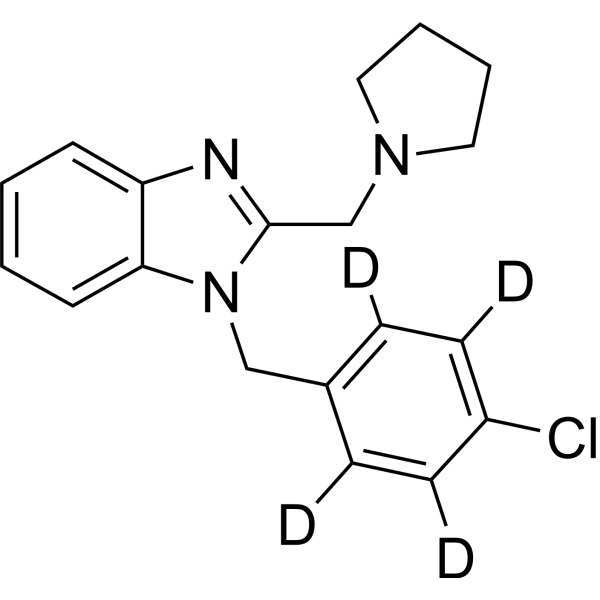
Clemizole-d4 is the deuterated-labeled Clemizole (HY-30234). Clemizole is an orally active, blood-brain barrier permeable TRPC5 inhibitor, with an IC50 value of 1.05-1.34 μM against mouse TRPC5. Clemizole blocks TRPC1:TRPC5, TRPC3, TRPC4, TRPC6, TRPC7, hERG, hKCNQ1/hKCNE1 and hKv1.5 channels, and activates TRPA1; it modulates 5HT-2B and HTR2A receptors; it inhibits HCV RNA replication, CrtN enzymatic activity, oxidative stress, neuroinflammation, cell apoptosis and bacterial virulence; it maintains blood-brain barrier (BBB) integrity; it enhances DNA repair capacity; it improves cell viability; and it alters cardiac electrophysiological properties. Clemizole can be used in the research of Dravet syndrome, hepatitis C virus infection, Staphylococcus aureus skin infection, Cisplatin (HY-17394)-induced nephrotoxicity, STXBP1-related diseases, traumatic brain injury and xeroderma pigmentosum type C .
loading...
    loading...
Cat. No.: HY-121362
CAS No.: 537-09-7
Purity:  99.71%
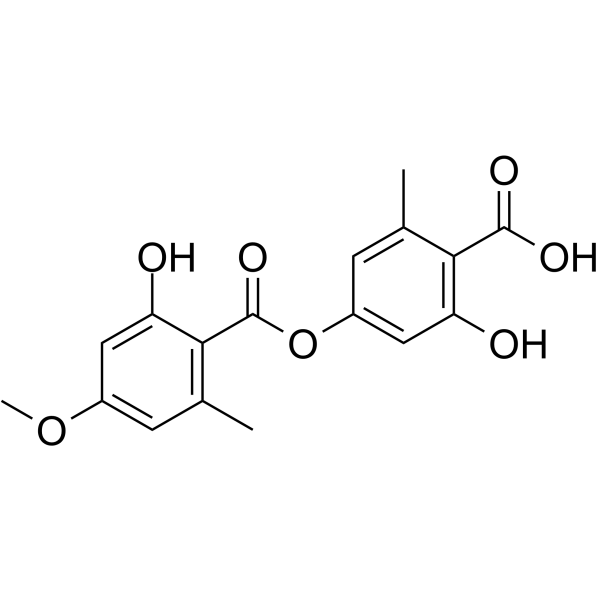
Evernic Acid is an orally active thioredoxin reductase 1 (TrxR1) inhibitor and antiproliferative agent. Evernic Acid inhibits the proliferation and migration of human breast cancer cells. Evernic Acid blocks the NF-κB pathway by inhibiting p65 nuclear translocation and IκBα phosphorylation, thereby suppressing downstream inflammatory mediators. Evernic Acid acts as an antioxidant, anti-inflammatory agent and neuroprotective agent, protects neurons from cell death, mitochondrial dysfunction and oxidative stress damage, reduces astrocyte activation, and ameliorates dopaminergic neuron loss and neuroinflammation. Evernic Acid inhibits enoyl reductases FabI and FabZ of Plasmodium falciparum. Evernic Acid downregulates the expression of lasB and rhlA genes in Pseudomonas aeruginosa, inhibits quorum sensing and biofilm formation, and exerts antibacterial activity against Gram-positive bacteria, Gram-negative bacteria and fungi. Evernic Acid is applicable to research related to breast cancer, Parkinson's disease, bacterial infections and fungal infections .
loading...
    loading...
Cat. No.: HY-126387
CAS No.: 11015-37-5
Purity:  ≥99.0%
Moenomycin complex is a class of antibacterial agents and PBP inhibitors, with Kd values ranging from 94 nM to 1690 nM against various bacterial PBPs. Moenomycin complex inhibits bacterial growth by blocking the transglycosylase activity of class A penicillin-binding proteins (PBPs). Moenomycin complex is used in the research of bacterial infections .
loading...
    loading...
Cat. No.: HY-135751
CAS No.: 488-04-0
Research Areas:  

Infection Cancer

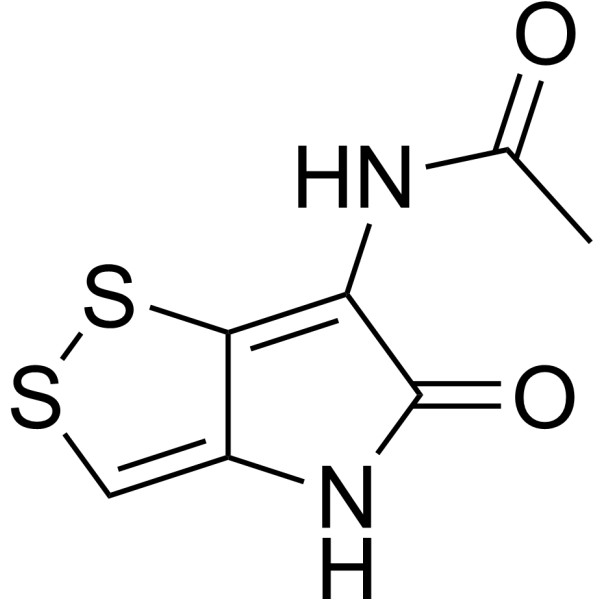
Holomycin is an antibiotic with dithiolopyrrolone structure. Holomycin can inhibit bacterial RNA synthesis. Holomycin has antitumor activity. Holomycin can be used for the research of bacterial infection .
loading...
    loading...
Cat. No.: HY-187837
CAS No.: 1426216-93-4
Synonyms: OPS-2071
Abimufloxacin (OPS-2071) is a broad-spectrum quinolone antibacterial agent. Abimufloxacin inhibits the supercoiling activity of DNA gyrase, the decatenation activity of topoisomerase IV, the activation and proliferation of T cells, macrophage activity, as well as the production of TNF-α and IFN-γ. Abimufloxacin exhibits activity against enteropathogenic Gram-positive bacteria, Gram-negative bacteria, quinolone-resistant bacteria, and Crohn's disease-associated bacteria (including Clostridioides difficile and Campylobacter jejuni). Abimufloxacin alleviates colonic inflammation in a mouse model of T cell-mediated colitis. Abimufloxacin can be used in research related to diseases such as intestinal infections and Crohn's disease .
loading...
    loading...
Cat. No.: HY-189124
Target:  

Bacterial Topoisomerase

Research Areas:  

Infection

Antibacterial agent 372 is a potent antibacterial agent. Antibacterial agent 372 is a DNA gyrase inhibitor that binds to the ATP-binding pocket of the GyrB subunit, downregulates gyrB gene expression, and impedes DNA replication and supercoiling. Antibacterial agent 372 exhibits broad-spectrum antibacterial activity against Gram-positive and Gram-negative bacteria. Antibacterial agent 372 can be used for research on microbial infections .
loading...
    loading...
Cat. No.: HY-206972
CAS No.: 26063-00-3
Research Areas:  

Metabolic Disease

Poly (3-hydroxybutyrate) is a bacterially derived (R)-3-hydroxybutyrate homopolymer and a degradable biomaterial. Poly (3-hydroxybutyrate) degrades in vivo via lipases and esterases, breaking down into 3-Hydroxybutyric acid (HY-113378). Poly (3-hydroxybutyrate) can be compounded with 15% Hydroxyapatite (HA) (HY-D0835A) or 7.5-10% nanobioglass for use as a bone scaffold .
loading...
    loading...
Cat. No.: HY-D3430
PTPA-QM is a low-cytotoxicity protein probe that can be used for live-cell imaging and tissue section staining (Lys. Ex/Em = 385/615 nm). PTPA-QM can intercalate into the β-sheet layered structure of β-amyloid fibrils, form intermolecular interactions with amino acid residues, restrict intramolecular rotation and trigger fluorescence activation for imaging purposes. PTPA-QM is applicable to Alzheimer's disease-related research. Maximum excitation/emission wavelength: 448/605 nm .
loading...
    loading...
Cat. No.: HY-W015786
CAS No.: 622-62-8
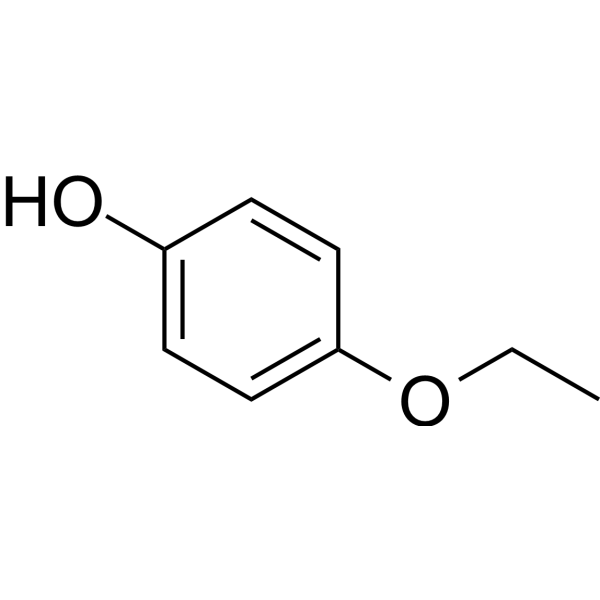
4-Ethoxyphenol is a phenolic compound. 4-Ethoxyphenol serves as a reliable standard for product identification by GC-MS and HPLC, and exhibits antilarval activity against Balanus amphitrite larval settlement. 4-Ethoxyphenol is used for the study of larval settlement .
loading...
    loading...
Cat. No.: HY-W015786R
CAS No.: 622-62-8
4-Ethoxyphenol (Standard) is the analytical standard of 4-Ethoxyphenol (HY-W015786). This product is intended for research and analytical applications. 4-Ethoxyphenol is a phenolic compound. 4-Ethoxyphenol serves as a reliable standard for product identification by GC-MS and HPLC, and exhibits antilarval activity against Balanus amphitrite larval settlement. 4-Ethoxyphenol is used for the study of larval settlement .
loading...
    loading...
Cat. No.: HY-W019922
CAS No.: 7783-40-6
Magnesium fluoride is a biochemical reagent. Magnesium fluoride nanoparticles act as an antibacterial and antibiofilm agent with activity against pathogenic bacteria. Magnesium fluoride can be used for the research of bacteria-related infections .
loading...
    loading...
Cat. No.: HY-W039953
CAS No.: 98924-81-3
Synonyms: N-azidoacetylglucosamine-tetraacylated
Research Areas:  

Infection

Ac4GlcNAz (N-azidoacetylglucosamine-tetraacylated) is an azido-containing fully acetylated N-acetylglucosamine analog, a metabolic glycan marker, and also an inducer of S-glycosylation. Ac4GlcNAz can be taken up by bacteria, processed via endogenous carbohydrate biosynthesis pathways, and integrated into glycans by replacing natural monosaccharides. Under alkali promotion, Ac4GlcNAz undergoes β-elimination to form α,β-unsaturated aldehydes, which then bind to cysteine residues via Michael addition. Ac4GlcNAz can be integrated into glycoproteins. Ac4GlcNAz is applicable to research related to Helicobacter pylori infection .
loading...
    loading...
Cat. No.: HY-108964
CAS No.: 99-49-0
Purity:  99.70%
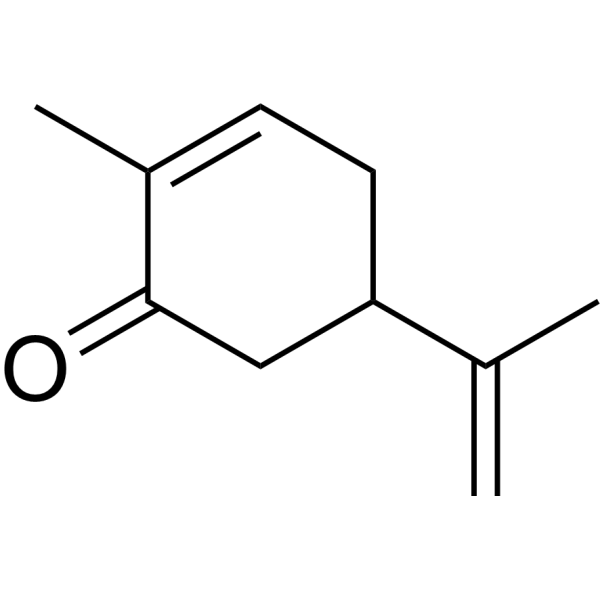
Carvone is a ketone monoterpene found in the essential oils from plants of the genus Mentha. Carvone has such effects as anticancer, antimicrobial, antioxidant, anti-inflammatory, antispasmodic, antinociceptive, anticonvulsant .
loading...
    loading...
Cat. No.: HY-123779
CAS No.: 193282-45-0
Target:  

Bacterial Fungal

Research Areas:  

Infection

RWJ-49815 is a histidine kinase inhibitor. RWJ-49815 inhibits the autokinase activity of purified GST-Sln1 and the autophosphorylation of KinA in vitro. RWJ-49815 acts as a fungal growth inhibitor . RWJ-49815 serves as a bactericide against Gram-positive pathogenic bacteria. RWJ-49815 is applicable to research related to fungal infections and Gram-positive bacterial infections .
loading...
    loading...
Cat. No.: HY-187512
Target:  

Bacterial Fungal

Research Areas:  

Infection Inflammation/Immunology

DprE1-IN-16 is a DprE1 inhibitor against Mycobacterium tuberculosis, with an IC50 value of 11.74 μM. DprE1-IN-16 binds within the catalytic site of DprE1, forming hydrogen bonds, π-cation interactions, π-sulfur interactions and hydrophobic contacts with Lys134, Gly117, Tyr415, Lys418, Cys387 and Val365. DprE1-IN-16 can be used in the research of bacterial and fungal infections as well as tuberculosis .
loading...
    loading...
Cat. No.: HY-W110755
CAS No.: 26062-79-3
Research Areas:  

Infection

Poly diallyldimethylammonium chloride is a cationic polymer with quaternary ammonium side groups, which exhibits excellent flocculation performance and thermal stability. Poly diallyldimethylammonium chloride also possesses microbicidal activity. Poly diallyldimethylammonium chloride can be used in studies on bacterial and fungal infections, as well as in research related to water treatment, textile printing and dyeing, papermaking chemical industry and other fields, with a wide range of applications .
loading...
    loading...

