1018 Results for "

staphylococcus aureus

" in MedChemExpress (MCE) Product Catalog:
Products (1018)

1018 Results for "staphylococcus aureus" in MCE Product Catalog:

Cat. No.: HY-N17436
CAS No.: 138870-92-5
Demethoxyhexahydrocurcumin is a Curcumin (HY-N0005) biotransformation metabolite and diarylheptanoid with antioxidant and antimicrobial activities. Demethoxyhexahydrocurcumin scavenges free radicals, inhibits cancer cell viability, and suppresses microbial growth. Demethoxyhexahydrocurcumin can be used for the research of colorectal cancer .
loading...
    loading...
Cat. No.: HY-N21846
CAS No.: 82516-67-4
U-62162 is an Antibiotic. U-62162 is found in Streptomyces verdensis. U-62162 inhibits the growth of Gram-positive bacteria. U-62162 exhibits no in vivo protective effect in animals with experimental S. aureus infection .
loading...
    loading...
Cat. No.: HY-P0307B
CAS No.: 393511-85-8
Research Areas:  

Neurological Disease

Penetratin-Cys is a cell-penetrating peptide derived from Antennapedia Peptide (HY-P0307) via C-terminal cysteine modification. Penetratin-Cys acts as a cytotoxin and reduces the viability of differentiated neuronal cells. Penetratin-Cys localizes to the perinuclear region and binds to the Golgi apparatus. Penetratin-Cys can be used in research related to neurological disorders .
loading...
    loading...
Cat. No.: HY-P10159
CAS No.: 1809102-71-3
Target:  

Antibiotic Bacterial

Research Areas:  

Infection

DJK-5 is an antimicrobial peptide that targets and degrades guanosine pentaphosphate and tetraphosphate (pppGpp and ppGpp). DJK-5 kills bacteria within dentinal tubules, dental plaque and preformed oral biofilms, delays biofilm recovery, reduces the abundance of extracellular polysaccharides and the structural integrity of biofilm matrices, and inhibits the formation and biomass accumulation of dental plaque biofilms. DJK-5 permeabilizes bacterial membranes, induces bacterial morphological changes, inhibits bacterial growth, and exerts a synergistic effect on bacterial biofilms when used in combination with traditional antibiotics and Colistin (HY-113678). DJK-5 exhibits protease resistance and broad-spectrum antibiofilm activity, though its activity decreases in fetal bovine serum. DJK-5 can be used in studies of pulpitis, mixed biofilm infections, skin abscesses, dental caries, infections associated with failed root canal therapy, and Pseudomonas aeruginosa biofilm-related respiratory tract infections .
loading...
    loading...
Cat. No.: HY-W353842
CAS No.: 32426-11-2
Research Areas:  

Infection

Octyl decyldimethyl ammonium chloride, a quaternary ammonium salt, is an antibacterial agent. Octyl decyldimethyl ammonium chloride disrupts cell membranes, leading to cytotoxicity. Octyl decyldimethyl ammonium chloride has risk of skin irritation and increases pro-inflammatory IL-1α secretion .
loading...
    loading...
Cat. No.: HY-N22017
CAS No.: 2341324-20-5
(4,5-Dichloro-1H-pyrrol-2-yl)(3-hexyl-2,4-dihydroxyphenyl) methanone is an antibacterial agent discovered from Streptomyces armeniacus. (4,5-Dichloro-1H-pyrrol-2-yl)(3-hexyl-2,4-dihydroxyphenyl) methanone inhibits the growth of Gram-positive bacteria and shows no activity against the tested Gram-negative bacteria. (4,5-Dichloro-1H-pyrrol-2-yl)(3-hexyl-2,4-dihydroxyphenyl) methanone is a biosynthetic intermediate of Armeniaspirol A-C (HY-N15548) (HY-N15550) (HY-N15551). (4,5-Dichloro-1H-pyrrol-2-yl)(3-hexyl-2,4-dihydroxyphenyl) methanone can be used in studies related to infections caused by Gram-positive bacteria such as Staphylococcus aureus, Enterococcus faecalis, and Bacillus subtilis .
loading...
    loading...
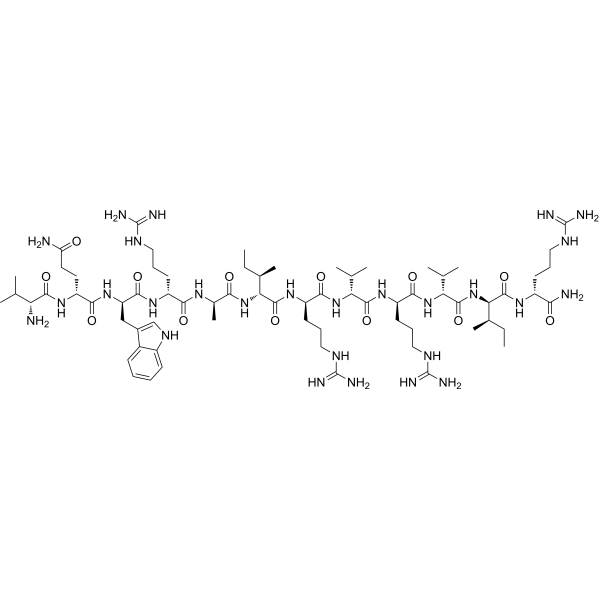
Cat. No.: HY-P11242
Cm-CATH2 is an antimicrobial peptide discovered from Chelonia mydas. Cm-CATH2 has a potent, broad-spectrum and rapid bactericidal ability by rapidly destroying the integrity of bacterial cell membranes. It shows strong activity against Gram-positive bacteria (such as VREF, Staphylococcus aureus), Gram-negative bacteria (such as Escherichia coli, Klebsiella pneumoniae), and fungi (such as Candida albicans) with MICs ranges from 1.17 to 18.75 μg/mL. Cm-CATH2 is also effective against various aquatic pathogenic bacteria. Cm-CATH2 not only inhibits biofilm formation but can also remove the formed biofilms. Cm-CATH2 has immunomodulatory functions and chemotactic effects on immune cells, and can inhibit the production of pro-inflammatory cytokines by macrophages stimulated by LPS (HY-D1056). Cm-CATH2 prevents the activation of NF-κB by inhibiting the degradation of IκBα, and also inhibits the phosphorylation of MAPK signaling pathways (p38, JNK, ERK). Cm-CATH2 demonstrates strong anti-infective ability in mouse peritonitis models and pneumonia models .
loading...
    loading...
Cat. No.: HY-182816
CAS No.: 3080330-34-0
Research Areas:  

Infection

Topoisomerase I-IN-22 is an inhibitor of MRSA DNA Topoisomerase I with an IC50 of 0.85 μg/mL. Topoisomerase I-IN-22 can specifically disrupt the cell membrane structure of MRSA, enter the interior of bacteria and inhibit the activity of DNA Topoisomerase I, thereby interfering with the processes of DNA replication and transcription. Topoisomerase I-IN-22 can be used for the research of MRSA infection .
loading...
    loading...
Cat. No.: HY-187932
CAS No.: 77360-52-2
Research Areas:  

Infection

Ceftiolene is a cephalosporin that inhibits Gram-negative bacteria. Ceftiolene binds to PBP. Ceftiolene induces bacterial lysis, autolytic activity, filamentation, and porin regulation. Ceftiolene can be used in research on bacterial infections and Pseudomonas aeruginosa infections .
loading...
    loading...
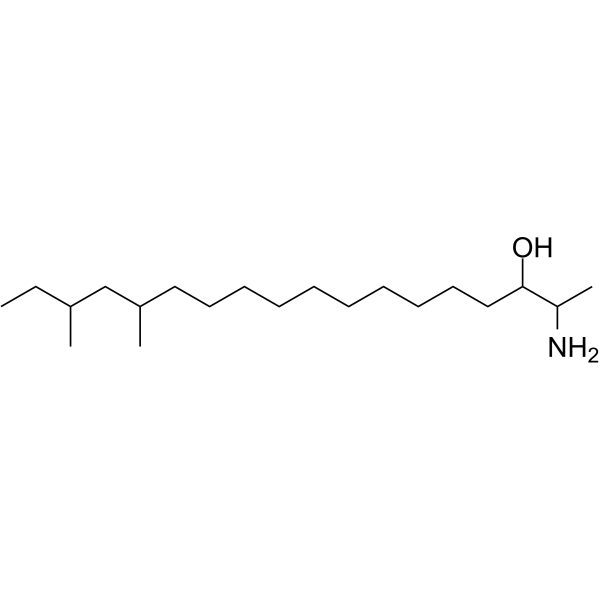
Cat. No.: HY-N10184
CAS No.: 540770-33-0
Synonyms: FKI-0550
Paecilaminol is an amino alcohol and NADH-fumarate reductase inhibitor (IC50 = 5.1 μM against Ascaris suum) that also inhibits both helminth and mammalian mitochondrial complexes I and III, exhibiting antifungal, antibacterial, nematocidal, insecticidal, and cancer cell growth-inhibitory activities. Paecilaminol can be used in research on helminth infections .
loading...
    loading...
Cat. No.: HY-N10343
CAS No.: 19237-18-4
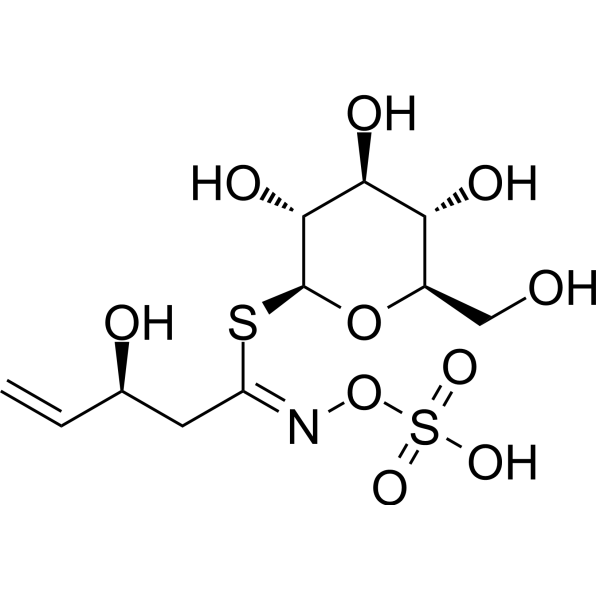
epi-Progoitrin is a naturally occurring glucosinolate. epi-Progoitrin exhibits no biological activity, showing no effects on H3N2 influenza virus, various pathogenic bacteria, or respiratory burst in mouse macrophages .
loading...
    loading...
Cat. No.: HY-N13274
CAS No.: 3625-52-3
Synonyms: Lacceroic acid
Dotriacontanoic acid (Lacceroic acid) is a fatty acid found in Limnophila polystachya Benth. Dotriacontanoic acid exhibits anti-bacterial activity against multiple gram-negative bacteria .
loading...
    loading...
Cat. No.: HY-N20633
CAS No.: 1378990-15-8
Pimprinol A is a hydroxylated pimprinine derivative isolated from the terrestrial actinomycete Streptomyces sp. Lv3-13. Pimprinol A is a natural bacterial alkaloid .
loading...
    loading...
Cat. No.: HY-W010790
CAS No.: 27668-52-6
Target:  

Bacterial Fungal

Research Areas:  

Infection

Dimethyloctadecyl[3-(trimethoxysilyl) propyl]ammonium chloride is a quaternary ammonium silane monomer-based disinfectant/antimicrobial agent. Dimethyloctadecylammonium chloride exhibits bactericidal activity against Gram-positive and Gram-negative bacteria, as well as fungicidal activity against Candida albicans in solution; it can form a hydrophobic glass coating that displays bactericidal activity against Gram-positive and Gram-negative bacteria but has limited fungicidal activity against Candida albicans .
loading...
    loading...
Cat. No.: HY-W077690
CAS No.: 1207-75-6
Target:  

Bacterial

Research Areas:  

Infection

3-(2-Hydroxyethyl)quinazoline-2,4(1H,3H)-dione is an metal chelating agent and anti-bacterial agent. 3-(2-Hydroxyethyl)quinazoline-2,4(1H,3H)-dione shows inhibitory activity against gram-positive and gram-negative bacterial strains .
loading...
    loading...
Cat. No.: HY-W747255
CAS No.: 38932-40-0
Target:  

Antibiotic

Research Areas:  

Infection Metabolic Disease

Cephalexin sodium is an orally active cephalosporin Antibiotic. Cephalexin sodium disrupts bacterial cell wall synthesis and inhibits the growth of susceptible Gram-positive bacteria and some Gram-negative bacteria. Cephalexin sodium induces acute renal failure when overdosed in laboratory animals. Cephalexin sodium can be used in studies related to bacterial infections .
loading...
    loading...
Cat. No.: HY-126731
CAS No.: 69245-38-1
Rudolfomycin is an anthracycline Antibiotic, composed of the aglycone ε-pyrromycinone and three glycosyl sugar units. Rudolfomycin inhibits the growth of mammalian tumors and exhibits antibacterial activity against Gram-positive bacteria. Rudolfomycin can be used in the research of leukemia and Gram-positive bacterial infections .
loading...
    loading...
Cat. No.: HY-126929
CAS No.: 81534-36-3
Synonyms: TXN-B
Trioxacarcin B (TXN-B) is a potent cytotoxic agent and DNA-targeted inhibitor. Trioxacarcin B disrupts DNA function and induces apoptosis in cancer cells. Trioxacarcin B not only effectively inhibits the growth of various Gram-positive and Gram-negative bacteria as well as Plasmodium falciparum, but also blocks the colony formation of cancer stem cells, significantly reduces tumor volume and prolongs survival in preclinical in vivo models. The activity of Trioxacarcin B is highly dependent on its intact spiro-epoxide structure; it loses efficacy once this moiety undergoes hydrolysis, and Trioxacarcin B shows no activity against fungi, microalgae and small RNA viruses. Trioxacarcin B can be used for research on bacterial infections, malaria, and various cancers including colon cancer and melanoma .
loading...
    loading...
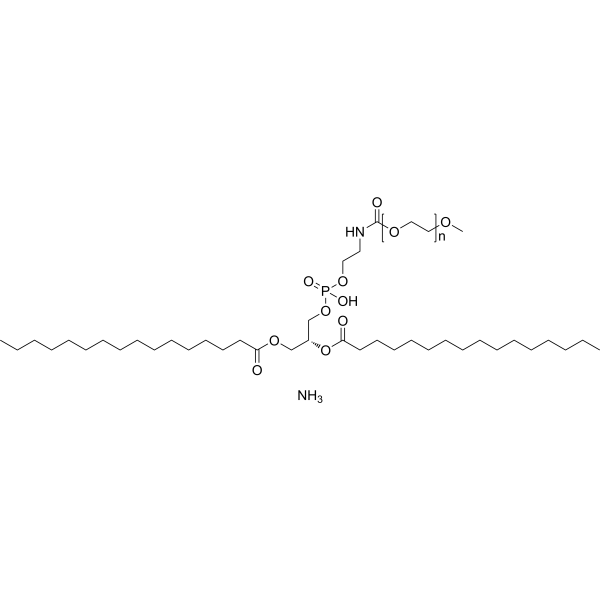
Cat. No.: HY-144012H
CAS No.: 474922-84-4
Synonyms: 16:0 PEG5000 PE; 1,2-Dipalmitoyl-sn-glycero-3-phosphoethanolamine-N-[methoxy(polyethylene glycol)-5000] ammonium
Target:  

Liposome

Research Areas:  

Others

DPPE-PEG5000 (16:0 PEG5000 PE) is a polymer-lipid conjugate and LipoParticle stabilizer with a PEG chain of 5,000 g/mol molecular weight attached to its polar head, and it can be internalized by biological membranes. DPPE-PEG5000 enables LipoParticle to maintain colloidal stability after 20-fold dilution in PBS or cell culture medium, and prevents aggregate formation during lyophilization and rehydration. DPPE-PEG5000 helps enhance the non-cytotoxic property of LipoParticle formulations against human osteoblasts. DPPE-PEG5000 serves as a PEG lipid functional end group for synthesizing liposomes (LPs), is used in the design of conjugated polymer nanoparticles, and applies to research related to bone and joint infections .
loading...
    loading...
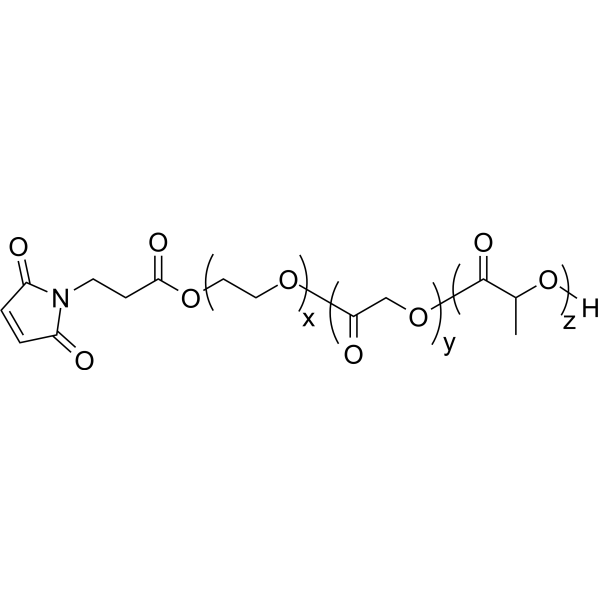
Cat. No.: HY-148775
Purity:  ≥95.0%
PLGA-PEG-MAL (60kDa-3.4kDa, LA:GA ratio 75:25) is a biodegradable amphipathic polymeric nanocarrier of poly (lactic-co-glycolic acid)-block-poly (ethylene glycol) (PLGA-PEG-Mal) that allows covalent modification of functional molecules. PLGA-PEG-MAL (60kDa-3.4kDa, LA:GA ratio 75:25) modified with Angiopep-2 can cross the blood-brain barrier and exhibits targeting selectivity for glioblastoma cells. PLGA-PEG-MAL (60kDa-3.4kDa, LA:GA ratio 75:25) can capture tumor-derived protein antigens, and exerts immunomodulatory effects when conjugated with anti-OX40 antibody; when used in combination with A2-CL/Dbait nanoparticles and radiotherapy, it prolongs survival time and reduces tumor volume in glioblastoma mouse models. PLGA-PEG-MAL (60kDa-3.4kDa, LA:GA ratio 75:25) can be used for studies related to bacterial wound infections and glioblastoma .
loading...
    loading...