1010 Results for "

vascularization

" in MedChemExpress (MCE) Product Catalog:
Products (1010)

1010 Results for "vascularization" in MCE Product Catalog:

Cat. No.: HY-B0377S1
Synonyms: MK-208-13C
Famotidine- 13C (MK-208- 13C) is the 13C-labeled Famotidine (HY-B0377). Famotidine (MK-208) is an orally active and highly selective histamine H2 receptor antagonist. It inhibits gastric acid secretion by blocking the Gs signaling pathway, and regulates intracellular cAMP and ERK pathways. Famotidine inhibits TLR3-mediated inflammatory pathways, and reduces the expression of various inflammatory mediators and interferon-related genes. Famotidine scavenges DPPH and nitric oxide free radicals, alleviates oxidative stress damage in gastric tissue, inhibits proMMP-9, improves vascular endothelial permeability, and restores the normal physiological functions of neutrophils and eosinophils. Famotidine crosses intestinal epithelial cells via facilitated diffusion and passive diffusion, blocks paracellular cation transport, and increases intestinal transepithelial electrical resistance. Famotidine reduces serum levels of transaminases and alkaline phosphatase, exerts analgesic effects and gastric protective effects simultaneously. Famotidine can be used in studies related to COVID-19, liver injury and acute gastric ulcer .
loading...
    loading...
Cat. No.: HY-N0448A
CAS No.: 107257-18-1
(±)-10-Gingerol is the racemic form of 10-Gingerol (HY-N0448). 10-Gingerol is an AMPK agonist, which is found in the ginger oleoresin from fresh rhizome with anti-inflammatory, antioxidant and anti-proliferative activities. 10-Gingerol suppresses neointimal hyperplasia and inhibits vascular smooth muscle cell proliferation. 10-Gingerol exhibits substantial scavenging activities with an IC50 value of 10.47 μM against DPPH radical, an IC50 value of 1.68 μM against superoxide radical and an IC50 value of 1.35 μM against hydroxyl radical. 10-Gingerol inhibits the proliferation of MDA-MB-231 tumor cell line with an IC50 of 12.1 μM. 10-Gingerol suppresses the proliferation, migration, invasion, and induced apoptosis through targeting the PI3K/Akt signaling pathway in MDA-MB-231/IR cells. 10-Gingerol can be used in research on various common cancers such as ovarian cancer and colon cancer, as well as colitis and neurodegenerative diseases .
loading...
    loading...
Cat. No.: HY-W1143867
CAS No.: 2226-71-3
4’-Phosphopantetheine is an orally active coenzyme A (CoA) precursor. 4’-Phosphopantetheine is membrane-permeable and acts as a CoA precursor, a prosthetic group, and a reactive oxygen species (ROS) inhibitor. 4’-Phosphopantetheine binds covalently to rat liver fatty acid synthase, modifies the conserved serine residue in the PKS/NRPS carrier protein domain, and serves as a substrate for CoA synthase and PPAT. 4’-Phosphopantetheine undergoes non-catalytic exchange on rat liver fatty acid synthase, with a faster turnover rate than that of the enzyme complex, and restores intracellular CoA levels in cells with impaired de novo biosynthesis. 4’-Phosphopantetheine rescues phenotypes induced by CoA deficiency, normalizes PKAN-related biomarkers, restores mitochondrial enzyme activity, and alleviates vascular endothelial damage. 4’-Phosphopantetheine shows biological stability in serum, acts as a prosthetic group and degradation product of ACP, and inhibits the formation of atherosclerotic plaques. 4’-Phosphopantetheine can be used in the research of brain iron accumulation neurodegenerative diseases, pantothenate kinase-associated neurodegeneration, CoASY protein-associated neurodegenerative diseases, coronary heart disease, and atherosclerosis .
loading...
    loading...
Cat. No.: HY-W707517
CAS No.: 2707433-64-3
Synonyms: MK-208-d4
Famotidine-d4 (MK-208-d4) is the deuterated-labeled Famotidine (HY-B0377). Famotidine (MK-208) is an orally active and highly selective histamine H2 receptor antagonist. It inhibits gastric acid secretion by blocking the Gs signaling pathway, and regulates intracellular cAMP and ERK pathways. Famotidine inhibits TLR3-mediated inflammatory pathways, and reduces the expression of various inflammatory mediators and interferon-related genes. Famotidine scavenges DPPH and nitric oxide free radicals, alleviates oxidative stress damage in gastric tissue, inhibits proMMP-9, improves vascular endothelial permeability, and restores the normal physiological functions of neutrophils and eosinophils. Famotidine crosses intestinal epithelial cells via facilitated diffusion and passive diffusion, blocks paracellular cation transport, and increases intestinal transepithelial electrical resistance. Famotidine reduces serum levels of transaminases and alkaline phosphatase, exerts analgesic effects and gastric protective effects simultaneously. Famotidine can be used in studies related to COVID-19, liver injury and acute gastric ulcer .
loading...
    loading...
Cat. No.: HY-W777002
CAS No.: 1185241-48-8
Synonyms: MK-208-13C3
Famotidine- 13C3 (MK-208- 13C3) is the 13C3-labeled Famotidine (HY-B0377). Famotidine (MK-208) is an orally active and highly selective histamine H2 receptor antagonist. It inhibits gastric acid secretion by blocking the Gs signaling pathway, and regulates intracellular cAMP and ERK pathways. Famotidine inhibits TLR3-mediated inflammatory pathways, and reduces the expression of various inflammatory mediators and interferon-related genes. Famotidine scavenges DPPH and nitric oxide free radicals, alleviates oxidative stress damage in gastric tissue, inhibits proMMP-9, improves vascular endothelial permeability, and restores the normal physiological functions of neutrophils and eosinophils. Famotidine crosses intestinal epithelial cells via facilitated diffusion and passive diffusion, blocks paracellular cation transport, and increases intestinal transepithelial electrical resistance. Famotidine reduces serum levels of transaminases and alkaline phosphatase, exerts analgesic effects and gastric protective effects simultaneously. Famotidine can be used in studies related to COVID-19, liver injury and acute gastric ulcer .
loading...
    loading...
Cat. No.: HY-108649
CAS No.: 1047980-83-5
MRS2768 is a potent, selective, and metabolically stable P2Y2 receptor agonist with an EC50 of 1.89 μM for the human P2Y2 receptor. MRS2768 activates Gq/PLC/PKC signaling, leading to downstream phosphorylation of Akt, eNOS, and ERK, with effects varying by cell type. MRS2768 inhibits ENaC via Gq/PKC/Src/Akt to promote natriuresis and lower blood pressure in the kidney. MRS2768 activates eNOS to increase NO secretion in endothelial cells. MRS2768 drives proliferation via PI3K/Akt in fibroblasts and cancer cells. MRS2768 exerts anti-apoptotic effects through PKC/Src/Akt in cardiomyocytes. MRS2768 can be applied to investigate P2Y2-dependent pathological processes, including acute kidney injury, chronic kidney disease and renal fibrosis, DOCA-salt induced hypertension, myocardial infarction, pulmonary arterial hypertension, pancreatic cancer, cardiac fibrosis, dry eye disease, as well as shear stress-mediated vascular remodeling and atherosclerosis .
loading...
    loading...
Cat. No.: HY-B0377S
CAS No.: 2744683-81-4
Synonyms: MK-208-13C,d3
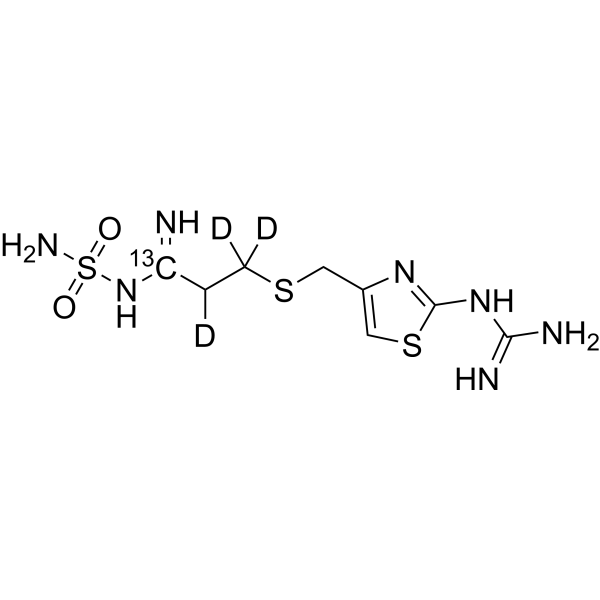
Famotidine- 13C,d3 (MK-208- 13C,d3) is the deuterated, 13C-labeled Famotidine (HY-B0377). Famotidine (MK-208) is an orally active and highly selective histamine H2 receptor antagonist. It inhibits gastric acid secretion by blocking the Gs signaling pathway, and regulates intracellular cAMP and ERK pathways. Famotidine inhibits TLR3-mediated inflammatory pathways, and reduces the expression of various inflammatory mediators and interferon-related genes. Famotidine scavenges DPPH and nitric oxide free radicals, alleviates oxidative stress damage in gastric tissue, inhibits proMMP-9, improves vascular endothelial permeability, and restores the normal physiological functions of neutrophils and eosinophils. Famotidine crosses intestinal epithelial cells via facilitated diffusion and passive diffusion, blocks paracellular cation transport, and increases intestinal transepithelial electrical resistance. Famotidine reduces serum levels of transaminases and alkaline phosphatase, exerts analgesic effects and gastric protective effects simultaneously. Famotidine can be used in studies related to COVID-19, liver injury and acute gastric ulcer .
loading...
    loading...
Cat. No.: HY-108649A
CAS No.: 2567869-47-8
Purity:  98.7%
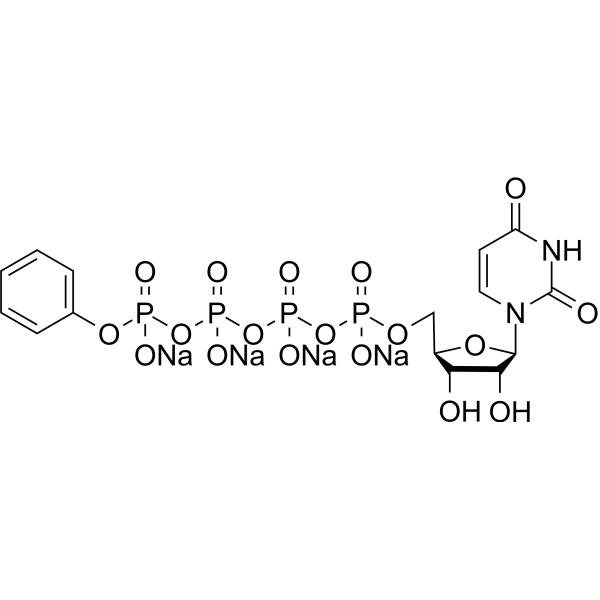
MRS2768 tetrasodium salt is a potent, selective, and metabolically stable P2Y2 receptor agonist with an EC50 of 1.89 μM for the human P2Y2 receptor. MRS2768 tetrasodium salt activates Gq/PLC/PKC signaling, leading to downstream phosphorylation of Akt, eNOS, and ERK, with effects varying by cell type. MRS2768 tetrasodium salt inhibits ENaC via Gq/PKC/Src/Akt to promote natriuresis and lower blood pressure in the kidney. MRS2768 tetrasodium salt activates eNOS to increase NO secretion in endothelial cells. MRS2768 tetrasodium salt drives proliferation via PI3K/Akt in fibroblasts and cancer cells. MRS2768 tetrasodium salt exerts anti-apoptotic effects through PKC/Src/Akt in cardiomyocytes. MRS2768 tetrasodium salt can be applied to investigate P2Y2-dependent pathological processes, including acute kidney injury, chronic kidney disease and renal fibrosis, DOCA-salt induced hypertension, myocardial infarction, pulmonary arterial hypertension, pancreatic cancer, cardiac fibrosis, dry eye disease, as well as shear stress-mediated vascular remodeling and atherosclerosis .
loading...
    loading...
Cat. No.: HY-N0353R
CAS No.: 13657-68-6
Synonyms: (+)-Curdione (Standard)
Curdione (Standard) is the analytical standard of Curdione. This product is intended for research and analytical applications. Curdione ((+)-Curdione) is an orally active sesquiterpenoid. Curdione inhibits platelet aggregation. Curdione induces ferroptosis in colorectal cancer via m6A methylation mediated by METTL14 and YTHDF2. Curdione inhibits ferroptosis in Isoproterenol (HY-B0468)-induced myocardial infarction by regulating the Keap1/Trx1/GPX4 signaling pathway, suppressing oxidative stress (ROS) and apoptosis. Curdione ameliorates Doxorubicin (HY-15142)-induced cardiotoxicity by inhibiting oxidative stress (ROS) and activating the Nrf2/HO-1 pathway. Curdione ameliorates sepsis-induced lung injury by inhibiting platelet-mediated neutrophil extracellular trap formation. Curdione ameliorates Bleomycin (HY-17565A)-induced pulmonary fibrosis by inhibiting TGF-β-induced fibroblast-to-myofibroblast differentiation. Curdione exhibits neuroprotective effects against focal cerebral ischemia-reperfusion injury in rats. Curdione exerts antiproliferative effects against human uterine leiomyosarcoma by targeting IDO1. Curdione protects vascular endothelial cells and atherosclerosis by regulating DNMT1-mediated ERBB4 promoter methylation. Curdione inhibits inducible prostaglandin E2 production (IC50 = 1.1 μM) and cyclooxygenase 2 expression .
loading...
    loading...
Cat. No.: HY-L045
4,317 compounds

Oxygen homeostasis regulation is the most fundamental cellular process for adjusting physiological oxygen variations, and its irregularity leads to various human diseases, including cancer. Hypoxia is closely associated with cancer development, and hypoxia/oxygen-sensing signaling plays critical roles in the modulation of cancer progression.

Hypoxia-inducible factor 1 (HIF-1) is a transcription factor that functions as a master regulator of oxygen homeostasis. A variety of HF-1 target genes have been identified thus far which encode proteins that play key roles in critical developmental and physiological processes including angiogenesis/vascular remodeling, erythropoiesis, glucose transport, glycolysis, iron transport, and cell proliferation/survival.

HIF-1 is a heterodimeric transcription factor consisting of a constitutively expressed β-subunit and an oxygen-regulated α-subunit. The unique feature of HIF-1 is the regulation of HIF-1α expression and activity based upon the cellular O2 concentration. Under normoxic conditions, hydroxylation of HIF-1α on these different proline residues is essential for HIF proteolytic degradation by promoting interaction with the von Hippel-Lindau tumor-suppressor protein (pVHL) through hydrogen bonding to the hydroxyproline-binding pocket in the pVHL β-domain. As oxygen levels decrease, hydroxylation of HIF decreases; HIF-1α then no longer binds pVHL, and becomes stabilized, allowing more of the protein to translocate to the cell’s nucleus, where it acts as a transcription factor, upregulating (often within minutes) the production of proteins that stimulate blood perfusion in tissues and thus tissue oxygenation.

MCE offers a unique collection of 4,317 oxygen sensing related compounds targeting HIF/HIF Prolyl-Hydroxylase, MAPK/ERK, PI3K/AKT signaling pathways, etc. MCE Oxygen Sensing Compound Library is a useful tool to study hypoxia, oxidative stress and discover new anti-cancer drugs.

