
188 Results for "

Membrane structure

" in MedChemExpress (MCE) Product Catalog:
Products (188)

188 Results for "Membrane structure" in MCE Product Catalog:

Art. -Nr.: HY-178196
Target:  

Fungal MMP Apoptosis

Forschungsgebiete:  

Infection

SDH-IN-32 is a succinate dehydrogenase (SDH) inhibitor with an IC50 of 2.74 μM. SDH-IN-32 exhibits excellent antifungal activity. SDH-IN-32 can destroy the cell membrane structure and increase the permeability of the cell membrane. SDH-IN-32 can decrease the mitochondrial membrane potential (MMP), thereby inducing cell apoptosis and inhibiting the normal growth of mycelia. SDH-IN-32 can be used for the research of infection .
loading...
    loading...
Art. -Nr.: HY-N6718R
CAS. Nr.: 480-49-9
Filipin III (Standard) is the analytical standard of Filipin III (HY-N6718). This product is intended for research and analytical applications. Filipin III is the major component of Filipin, a 28-membered ring pentaene macrolide antifungal antibiotic produced by S. filipinensis, S. avermitilis and S. miharaensis. Filipin interacts with membrane sterols causing the alteration of membrane structure .
loading...
    loading...
Art. -Nr.: HY-K0606

MCE Methenamine Silver Stain Kit For Basement Membrane (PASM) is developed based on the classical staining principle. Through an optimized staining system and standardized reagent combination, it enables clear visualization of basement membranes and related reticular structures in tissue sections. This method is particularly widely used in renal pathology research, where it is commonly applied to examine morphological alterations of the glomerular capillary basement membrane, such as thickening, rupture, folding, double-contour (tram-track) appearance, or abnormal proliferation caused by inflammatory injury. In addition, this method can also be applied to the histological investigation and morphological observation of glomerular diseases, diabetic nephropathy, and other basement membrane–associated pathological changes.

loading...
    loading...
Art. -Nr.: HY-101887R
CAS. Nr.: 54375-47-2
Calcein Blue (Standard) is the analytical standard of Calcein Blue (HY-101887). This product is intended for research and analytical applications. Calcein Blue, a membrane-impermeant fluorescent dye, is a coumarin derivative that contains an iminodiacetic acid structure. Calcein Blue is also a metallofluorochromic indicator .
loading...
    loading...
Art. -Nr.: HY-179611
Target:  

Bacterial

Forschungsgebiete:  

Infection

LP-03 is an antibacterial agent with selective activity against Methicillin-resistant Staphylococcus aureus (MRSA). Its minimum inhibitory concentration (MIC) is 6.2 μM. LP-03 has an inhibitory effect on biofilm formation, but it is unable to effectively remove the formed biofilms. LP-03 can enhance membrane permeability, disrupt the membrane structure of MRSA cells, and does not cause significant membrane depolarization. LP-03 has no hemolytic toxicity and shows low mammalian cell toxicity. It can be used for research on MRSA infections .
loading...
    loading...
Art. -Nr.: HY-165180
CAS. Nr.: 70005-46-8
Synonyms: Psychosine 3′-O-sulfate sodium; Psychosine 3′-sulfate sodium
Forschungsgebiete:  

Metabolic Disease

Lyso-sulfatide (bovine) sodium is a phospholipid component derived from sphingolipid catabolism and a potent factor Xa inhibitor and anticoagulant. Lyso-sulfatide (bovine) sodium binds directly to factor Xa and inhibits prothrombin activation mediated by the prothrombinase complex, thereby prolonging factor Xa-induced plasma clotting time and suppressing thrombin generation. Lyso-sulfatide (bovine) sodium serves as a reliable lipid membrane mimic for studying cell membrane structure, function, and molecular interactions .
loading...
    loading...
Art. -Nr.: HY-167813
CAS. Nr.: 85405-05-6
1-O-Palmityl-2-O-methyl-rac-glycero-3-phosphocholine is a synthetic phospholipid analogue with activity in studying lipid interactions and membrane asymmetry. 1-O-Palmityl-2-O-methyl-rac-glycero-3-phosphocholine is used to explore the overall stability of lipid bilayers. 1-O-Palmityl-2-O-methyl-rac-glycero-3-phosphocholine is of great significance for the study of membrane structure and function.
loading...
    loading...
Art. -Nr.: HY-153271
CAS. Nr.: 67389-41-7
Target:  

Bacterial

Forschungsgebiete:  

Infection

Antifungal agent 147 (compound 2) is a lipophilic antibacterial agent with dark toxicity. Antifungal agent 147 shows a phototoxic effect on S. aureus and E. coli. Antifungal agent 147 can penetrate the bacterial cell membrane and disturb its structure, leading to dark toxicity. Antifungal agent 147 can be used for bacteria infection research .
loading...
    loading...
Art. -Nr.: HY-D3437
Target:  

Fluorescent Dye

Forschungsgebiete:  

Others

LRhod-PM is a photo-activated plasma membrane fluorescent probe based on a self-initiating photo-oxidation cascade mechanism. LRhod-PM, a non-fluorescent reduced rhodamine, is oxidized to the fluorescent form Rhod-PM upon visible light irradiation. LRhod-PM has maximum excitation and emission wavelengths of 560 nm and 585 nm, respectively. LRhod-PM enables wash-free labeling of the plasma membrane of living cells, including fine structures such as filopodia and tunneling nanotubes. LRhod-PM can be used in studies related to single-molecule localization super-resolution imaging of living cells .
loading...
    loading...
Art. -Nr.: HY-L265
558 compounds

Cholesterol is a crucial lipid that maintains cell membrane structure, serves as a precursor for the synthesis of steroid hormones and bile acids, and plays an important role in cell signal transduction and membrane function regulation. Intracellular cholesterol levels are precisely controlled by multiple processes, including synthesis, uptake, transport, esterification, storage, and efflux. Dysregulation of cholesterol metabolism is closely associated with diseases such as atherosclerosis, fatty liver disease, metabolic syndrome, and various cancers.

The Cholesterol Metabolism Compound Library contains 558 compounds and focuses on cholesterol metabolism and homeostatic regulation. It provides an efficient tool for mechanistic studies of cholesterol metabolism and for drug discovery in metabolism‑related diseases.

Art. -Nr.: HY-126377
CAS. Nr.: 15163-36-7
Reinheit:  ≥98.0%
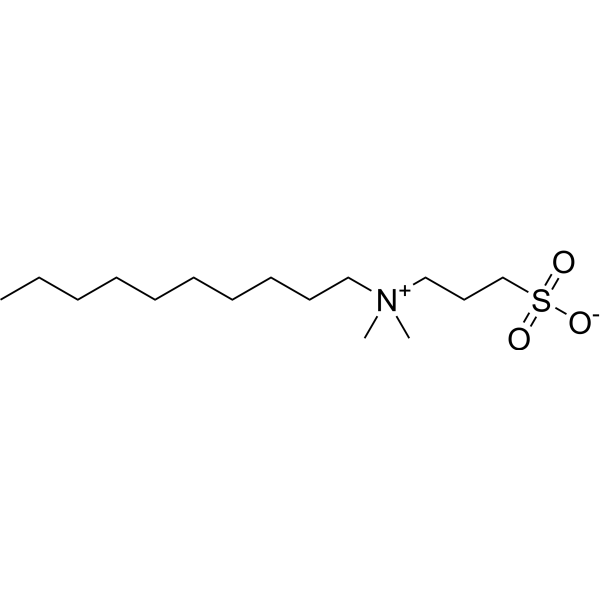
Sulfobetaine 10, is a zwitterionic surfactant commonly used in biochemistry and biophysics. It is commonly used to dissolve membrane proteins and other hydrophobic molecules in aqueous solutions. Sulfobetaine 10 has both positively and negatively charged groups in its structure, which allows it to maintain a neutral charge in solution and reduces its tendency to denature proteins. It is considered a mild, non-denaturing surfactant and is widely used in protein research.
loading...
    loading...
Art. -Nr.: HY-182816
CAS. Nr.: 3080330-34-0
Forschungsgebiete:  

Infection

Topoisomerase I-IN-22 is an inhibitor of MRSA DNA Topoisomerase I with an IC50 of 0.85 μg/mL. Topoisomerase I-IN-22 can specifically disrupt the cell membrane structure of MRSA, enter the interior of bacteria and inhibit the activity of DNA Topoisomerase I, thereby interfering with the processes of DNA replication and transcription. Topoisomerase I-IN-22 can be used for the research of MRSA infection .
loading...
    loading...
Art. -Nr.: HY-DY1082
CAS. Nr.: 220524-71-0
Green DND-26 (solution) is a green fluorescently labeled lysosomal probe with a maximum excitation/emission wavelength of 504/511 nm. The structure is composed of a fluorescein group and linked weak bases, which can freely cross the cell membrane and generally gather on spherical organelles. Green DND-26 is suitable for observing the internal biosynthesis and related pathogenesis of lysosomes .
Solvent and concentration: DMSO: 2 mM
loading...
    loading...
Art. -Nr.: HY-D3148
CAS. Nr.: 1804107-88-7
Target:  

Fluorescent Dye

Forschungsgebiete:  

Others

TPE-Ph-In is a mitochondria-targeted voltage-sensitive probe that can be used for mitochondrial membrane potential detection, mitochondrial imaging of animal and plant cells and tissues, mouse sperm activity indication, and detection of mitochondrial membrane potential changes associated with early apoptosis. TPE-Ph-In is non-fluorescent in solution, but emits strong fluorescence when aggregated via restriction of intramolecular rotation/movement, and its fluorescence intensity is directly correlated with local probe concentration or mitochondrial membrane potential level. TPE-Ph-In can penetrate cell membranes, target mitochondria through charge-dependent accumulation, has low cytotoxicity and high photostability, and enables super-resolution imaging of plant mitochondrial fission, fusion and cristae structures. The excitation wavelengths of TPE-Ph-In include 450 nm, 488 nm, and 489 nm, while its emission wavelengths include 551-661 nm, 660 nm, and 694 nm. TPE-Ph-In can be used for studies on mitochondrial dysfunction associated with early apoptosis .
loading...
    loading...
Art. -Nr.: HY-P11783
CAS. Nr.: 86711-55-9
Target:  

Fungal

Forschungsgebiete:  

Infection

Surfactin C2 is a lipopeptide produced by Bacillus subtilis A18 with antifungal activity. Surfactin C2 acts against Heterobasidion annosum and Heterobasidion parviporum. Surfactin C2 exerts its activity mainly through membrane‑active effects to disrupt fungal cell structures and inhibit mycelial growth. Surfactin C2 can be used for the research of butt rot and root rot of conifers .
loading...
    loading...
Art. -Nr.: HY-W414390
CAS. Nr.: 260804-65-7
Synonyms: 2-Cyclohexylethyl-4-O-(alpha-D-glucopyranosyl)-beta-D-glucopyranoside, 98%
2-Cyclohexylethyl-4-O-(α-D-glucopyranosyl)-β-D-glucopyranoside, 98% (2-Cyclohexylethyl-4-O-(alpha-D-glucopyranosyl)-beta-D-glucopyranoside, 98%) is a detergent that can be used for the purification and crystallization of membrane-bound proteins in their native structure. It can self-assemble into micelles and vesicles in aqueous solution and can be used for the study of biomembrane models.
loading...
    loading...
Art. -Nr.: HY-162543
CAS. Nr.: 384833-00-5
Synonyms: 18:1 Lissamine rhodamine PE
Target:  

Fluorescent Dye

Forschungsgebiete:  

Others

18:1 Liss Rhod (18:1 Lissamine rhodamine) PE is a fluorescent phospholipid and fluorescent probe.18:1 Liss Rhod PE admixes into phospholipid inks for large-scale monitoring of dip-pen nanolithography-generated lithographic structures via fluorescence microscopy.18:1 Liss Rhod PE undergoes phase separation or self-quenching under certain conditions in thin lipid membrane stacks .
loading...
    loading...
Art. -Nr.: HY-P5589
CAS. Nr.: 131463-18-8
Synonyms: PlnA
Plantaricin A is an antimicrobial peptide that can be derived from Lactobacillus plantarum. Plantaricin A has a synergistic effect with Ciprofloxacin. Plantaricin A shows anti-microbial activity. Plantaricin A increases the membrane potential of S. aureus and the level of intracellular ROS. Plantaricin A inhibits the function of the efflux pump by binding it and altering the structure of MepA, NorA, and LmrS. Plantaricin A significantly relieves inflammation, and promotes wound healing. Plantaricin A permeabilizes cancerous rat pituitary cells [1][2].
loading...
    loading...
Art. -Nr.: HY-W007656
CAS. Nr.: 294-90-6
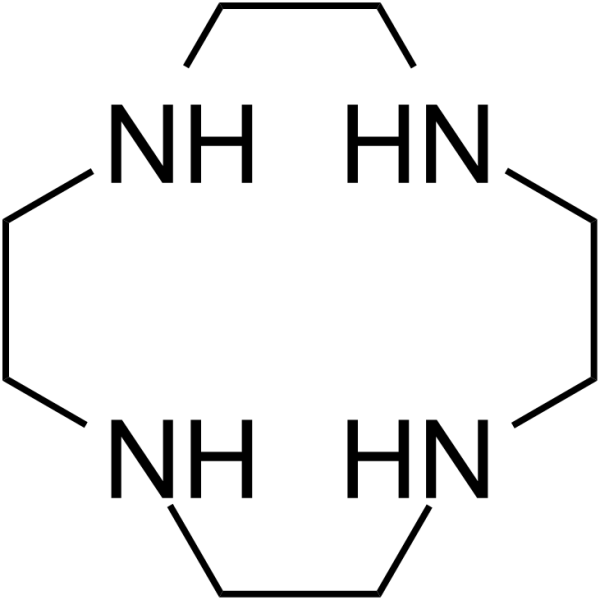
Cyclen is a macrocyclic tetraamine chelating agent. Cyclen is the aza analogue of crown ether, used as a precursor for MRI contrast agents, and is an intermediate for the preparation of effective macrocyclic chelates. Cyclen is employed as a structural regulator through interfacial polymerization of polyethleneimine (PEI) and trimesoyl chloride (TMC) to develop polyamide NF membrane with efficient Li +/Mg 2+ separation performance. Cyclen has specific cavity structure and exhibits selective coordination properties for Li + ions [1][2].
loading...
    loading...
Art. -Nr.: HY-DY2025
Target:  

Fluorescent Dye

Forschungsgebiete:  

Neurological Disease

Luxol Fast Blue Staining Solution is a copper phthalocyanine-based histological dye that specifically binds to lipid-rich structures such as myelin sheaths and mitochondria, staining them blue-green. Luxol Fast Blue Staining Solution is suitable for displaying myelin sheaths in neural tissues, staining mitochondria in tissues such as kidney/liver, and staining sections for phase contrast microscopy. It is often used in combination with PAS, Phloxine or Cresyl Violet to enhance structural contrast .
loading...
    loading...

