

188 Results for "

Membrane structure

" in MedChemExpress (MCE) Product Catalog:
Products (188)

188 Results for "Membrane structure" in MCE Product Catalog:

Cat. No.: HY-148978R
CAS No.: 321883-23-2
Resorantel (Standard) is the analytical standard of Resorantel. This product is intended for research and analytical applications. 18:0,18:1 PS sodium is the dominant phosphatidylserine subtype in cells, exosomes and HIV particles. It is abundant in the brain and is essential for maintaining membrane structure, lipid raft organization and intracellular trafficking. 18:0,18:1 PS sodium mediates interleaflet membrane coupling through cholesterol-dependent interactions with very long-chain sphingolipids, and can induce the clustering of glycosylphosphatidylinositol-anchored proteins. In addition, clusters formed by the binding of 18:0,18:1 PS sodium to cholesterol not only facilitate the proper distribution of cholesterol in lipid bilayers, but also effectively protect cholesterol from oxidative damage .
loading...
    loading...
Cat. No.: HY-DY2038
Target:  

Fluorescent Dye

Research Areas:  

Infection

Lignin Staining Solution (Pianeze Method) is a multichromatic staining solution for plant histology composed of malachite green, Martius yellow and acid fuchsin. Lignin Staining Solution (Pianeze Method) enables lignified secondary walls to appear bright green, non-lignified secondary walls to appear red, and tracheid pit membranes to appear pale red after long-time immersion. Lignin Staining Solution (Pianeze Method) can be used to distinguish lignified cell walls from non-lignified structures and observe the morphology of pit membranes in plant tissue sections such as fern rhizomes. Lignin Staining Solution (Pianeze Method) can be applied to relevant studies on flax wilt and root rot .
loading...
    loading...
Cat. No.: HY-111071
CAS No.: 934628-27-0
Purity:  99.58%
Synonyms: CG-400549
Target:  

Antibiotic Bacterial

Research Areas:  

Infection

Nilofabicin (CG-400549) is an anti-bacterialagent that targets FabI. Nilofabicin shows high selectivity for the genus Staphylococcus and weak activity against most Gram-negative bacteria. Nilofabicin inhibits bacterial fatty acid biosynthesis, blocks phospholipid synthesis, and disrupts the structure of bacterial cell membranes. Nilofabicin exhibits in vivo antibacterial efficacy in a mouse model of systemic Staphylococcus aureus infection. Nilofabicin can be used in studies related to bacterial infections .
loading...
    loading...
Cat. No.: HY-W250145
CAS No.: 8005-03-6
Synonyms: Nigrosine
Research Areas:  

Others

Acid Black 2 (Nigrosine) is an alcohol-soluble absorber used to mimic skin pigmentation in tissue-mimicking phantoms. Acid Black 2 acts as an absorber in silicone-based thin tissue phantoms to simulate varying melanosome volume fractions in skin. Acid Black 2 can be used as a component of Eosin-Nigrosin Sperm Viability Staining Solution (HY-DY2022) to assess sperm viability and identify the integrity of the membrane structure and function of inactive sperm .
loading...
    loading...
Cat. No.: HY-178988
Target:  

Bacterial

Research Areas:  

Infection

Antibacterial agent 299 (Compound P5) is a highly effective antibacterial agent against Xanthomonas oryzae pv. oryzae (Xoo), with an EC₅₀ value of 6.9 μg/mL. Antibacterial agent 299 integrates into bacterial membranes, disrupts membrane structure, inhibits biofilm formation, and thus exerts antibacterial effects. Antibacterial agent 299 also shows inhibitory activity against Xanthomonas oryzae pv. oryzicola (Xoc) (EC₅₀ = 32.5 ± 3.0 μg/mL), but its activity against Xanthomonas axonopodis pv. citri (Xac) is weaker. Antibacterial agent 299 demonstrated excellent control efficacy in a rice bacterial blight (BLB) model. Antibacterial agent 299 can be used for BLB research .
loading...
    loading...
Cat. No.: HY-189069
Target:  

Fungal

Research Areas:  

Infection

Antifungal agent 176 is an antifungal agent. Antifungal agent 176 disrupts the cell wall and cell membrane integrity of Phomopsis sp., leading to electrolyte leakage and malondialdehyde accumulation. Antifungal agent 176 induces dissipation of mitochondrial membrane potential in Phomopsis sp., indicating impaired mitochondrial function. Antifungal agent 176 exhibits protective efficacy against kiwifruit soft rot caused by Phomopsis sp. Antifungal agent 176 can be used in studies related to Phomopsis sp. infections such as kiwifruit soft rot .
loading...
    loading...
Cat. No.: HY-107343R
CAS No.: 81926-94-5
Synonyms: Ethyl docosahexaenoate (Standard)
Docosahexaenoic acid ethyl ester (Standard) is the analytical standard of Docosahexaenoic acid ethyl ester. This product is intended for research and analytical applications. Docosahexaenoic acid ethyl ester (Ethyl docosahexaenoate) is a 90% concentrated ethyl ester of docosahexaenoic acid manufactured from the microalgal oil. Docosahexaenoic acid ethyl ester enhances 6-hydroxydopamine-induced neuronal damage by induction of lipid peroxidation in mouse striatum. Docosahexaenoic acid (DHA) is a key component of the cell membrane, and its peroxidation is inducible due to the double-bond chemical structure. Docosahexaenoic acid has neuroprotective effects .
loading...
    loading...
Cat. No.: HY-107343S
CAS No.: 2692624-15-8
Synonyms: Ethyl docosahexaenoate-d5
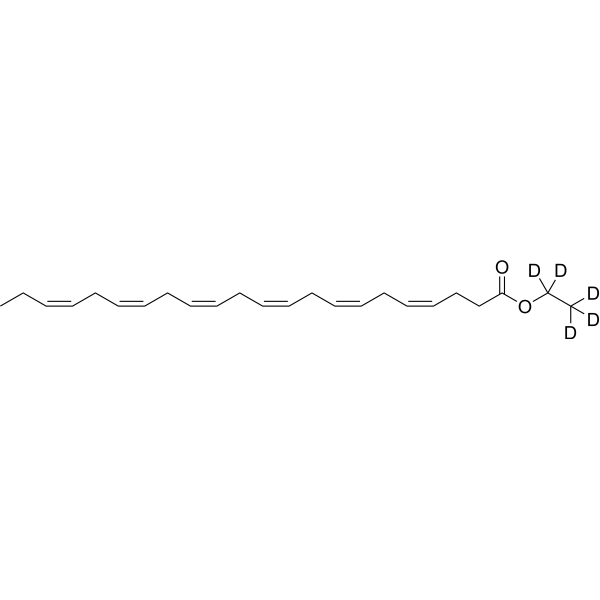
Docosahexaenoic acid ethyl ester-d5 is the deuterium labeled Docosahexaenoic acid ethyl ester. Docosahexaenoic acid ethyl ester (Ethyl docosahexaenoate) is a 90% concentrated ethyl ester of docosahexaenoic acid manufactured from the microalgal oil. Docosahexaenoic acid ethyl ester enhances 6-hydroxydopamine-induced neuronal damage by induction of lipid peroxidation in mouse striatum. Docosahexaenoic acid (DHA) is a key component of the cell membrane, and its peroxidation is inducible due to the double-bond chemical structure. Docosahexaenoic acid has neuroprotective effects .
loading...
    loading...
Cat. No.: HY-107343S1
CAS No.: 159146-01-7
Synonyms: Ethyl docosahexaenoate-d5-1
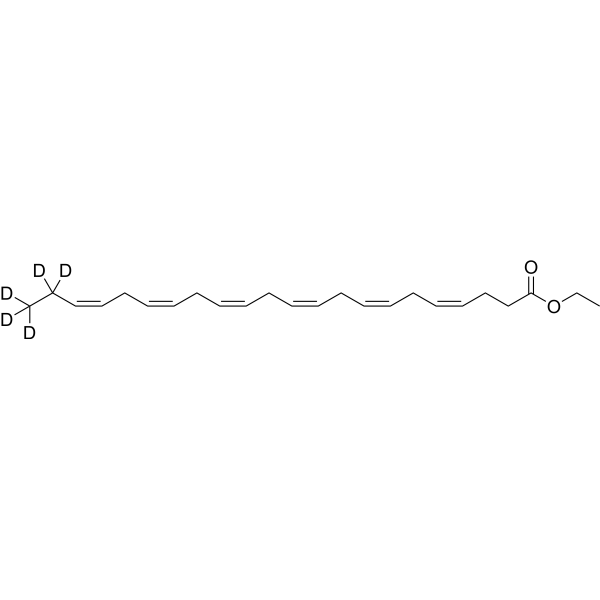
Docosahexaenoic acid ethyl ester-d5-1 is the deuterium labeled Docosahexaenoic acid ethyl ester. Docosahexaenoic acid ethyl ester (Ethyl docosahexaenoate) is a 90% concentrated ethyl ester of docosahexaenoic acid manufactured from the microalgal oil. Docosahexaenoic acid ethyl ester enhances 6-hydroxydopamine-induced neuronal damage by induction of lipid peroxidation in mouse striatum. Docosahexaenoic acid (DHA) is a key component of the cell membrane, and its peroxidation is inducible due to the double-bond chemical structure. Docosahexaenoic acid has neuroprotective effects .
loading...
    loading...
Cat. No.: HY-121527
CAS No.: 1300-94-3
Purity:  98.26%
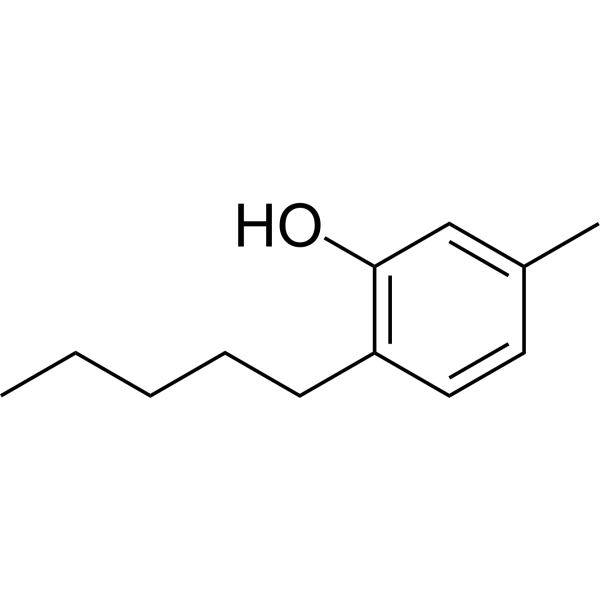
Amylmetacresol is a phenolic compound with topical antibacterial and antiviral activity. Amylmetacresol works by destroying the protein structure of the virus surface or interfering with the function of the virus lipid membrane. Amylmetacresol inhibits the attachment and replication of respiratory viruses such as human Rhinovirus 1a and influenza virus A, without significant effect on viruses such as HRV8. Amylmetacresol is mainly applied topically to the throat to relieve viral sore throats. Amylmetacresol is more active against enveloped viruses than non-enveloped viruses .
loading...
    loading...
Cat. No.: HY-124424
CAS No.: 333415-38-6
Purity:  99.71%
Target:  

Potassium Channel

Research Areas:  

Others Neurological Disease

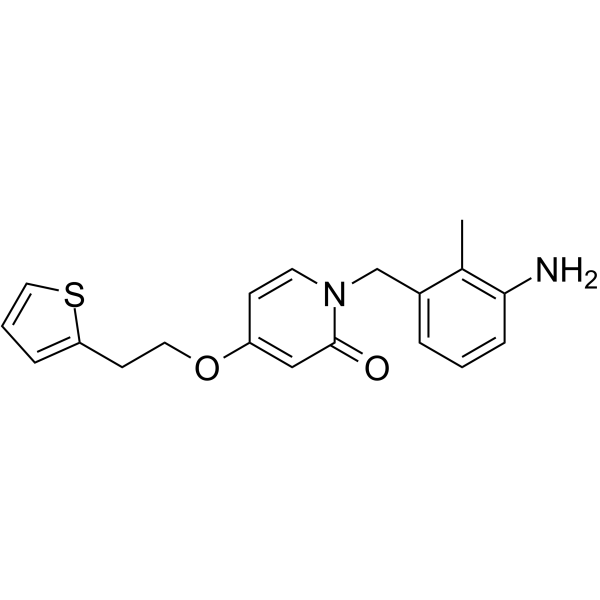
VU0071063 is a potent and specific Kir6.2/SUR1 opener (EC50=7.44 μM) and can be used for investigating Kir6.2/SUR1 expressed in the pancreas and brain. VU0071063 inhibits insulin secretion by inducing hyperpolarization of β-cell membrane potential. VU0071063 chemotype has a very steep structure-activity relationships .
loading...
    loading...
Cat. No.: HY-161948
CAS No.: 3055534-10-3
Target:  

Ferroptosis

Research Areas:  

Cancer

Ferroptosis inducer-4 (Compound 5) is a ferroptosis (Ferroptosis) inducer with a structure featuring terminal double bonds introduced at the sn-2 position of phospholipids. Ferroptosis inducer-4 exhibits significant cytotoxicity towards HT-1080 cells, with an IC50 of 18 μM. This cytotoxic mechanism involves the generation of lipid peroxides and oxidative damage to the cell membrane triggered by the terminal double bonds. Ferroptosis inducer-4 can be used for research on ferroptosis regulation .
loading...
    loading...
Cat. No.: HY-169183
Target:  

Myosin

Research Areas:  

Others

Myokinasib-II is a MLCK1 inhibitor with an IC50 of 4.4 μM. Myokinasib-II induces cell cortex softening, impairs cell migration capacity, induces multinucleation, reduces cell stiffness, alters membrane tether dynamics, decreases actomyosin tension and changes nuclear morphology. Myokinasib-II is a MLCK1 chemical biology probe with a unique structure that does not depolymerize tubulin and maintains cell viability even under high-concentration treatment in fibroblasts .
loading...
    loading...
Cat. No.: HY-W040194
CAS No.: 81777-89-1
Research Areas:  

Metabolic Disease

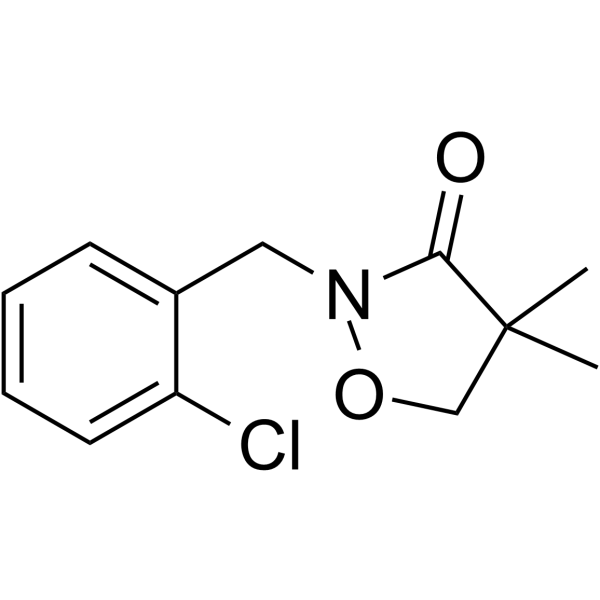
Clomazone is a broad spectrum herbicide, mainly used to control annual broadleaf weeds and grass weeds in various crops such as rice, soybeans, and peanuts. Clomazone inhibits carotenoid biosynthesis, and treated plants show typical "albinism" symptoms due to the destruction of chloroplast membrane structure leading to chlorophyll degradation. Clomazone exhibits multiple toxic effects on non-target organisms, including aquatic lethality, developmental malformations, liver damage, mitochondrial dysfunction, and hematotoxicity .
loading...
    loading...
Cat. No.: HY-141613S
Synonyms: (2S,8R,19Z)DOPS-d3 ammonium
(2S,8R,19Z)1,2-Dioleoyl-sn-glycero-3-phospho-L-serine-d3 ammonium ((2S,8R,19Z)DOPS-d3 ammonium) is the deuterium labeled (2S,8R,19Z)1,2-Dioleoyl-sn-glycero-3-phospho-L-serine ammonium (HY-141613). 1,2-Dioleoyl-sn-glycero-3-phospho-L-serine sodium (DOPS-NA) is a ubstitute for Phosphoserine/phosphatidylserine. 1,2-Dioleoyl-sn-glycero-3-phospho-L-serine sodium can be used together with DOPC and DOPE in lipid mixtures for the synthesis of liposomes. 1,2-Dioleoyl-sn-glycero-3-phospho-L-serine sodium can self-assemble into single-layer or double-layer membrane structures, similar to cell membranes, and possesses high membrane fluidity and flexibility. 1,2-Dioleoyl-sn-glycero-3-phospho-L-serine is widely applied in membrane biology, cell membrane research, lipid preparation, and drug delivery systems .
loading...
    loading...
Cat. No.: HY-156675
CAS No.: 2119725-22-1
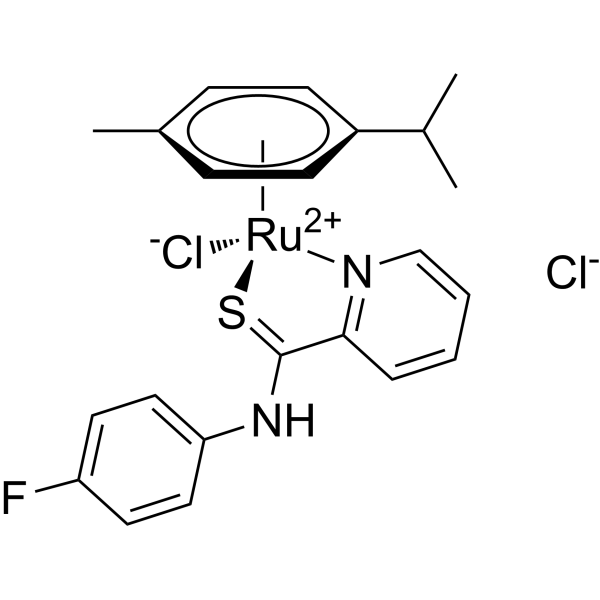
Plecstatin‑1 is a metal complex that drives the aggregation and collapse of the plectin network, and disrupts the cytoskeletal structures of α‑tubulin and F‑actin. Plecstatin-1 triggers oxidative stress, mediates the phosphorylation of eIF2α, and induces molecular features associated with immunogenic cell death, including calreticulin membrane exposure, membrane localization of HSP70/HSP90, ATP secretion, and HMGB‑1 release. Plecstatin-1 induces apoptosis via the intrinsic mitochondrial pathway and exerts anti-invasive activity. Plecstatin‑1 inhibits sphere proliferation and reduces clonogenicity in the 3D tumor spheroid model of colon cancer cells. Plecstatin-1 is applicable to relevant research on colorectal cancer .
loading...
    loading...
Cat. No.: HY-184980
CAS No.: 2180967-88-6
Target:  

Urease Fungal

Research Areas:  

Infection

Urease-IN-23 is a cryptococcal urease inhibitor with antifungal activity. AF55 exhibits mixed-type inhibition against cryptococcal urease, binds to both the nickel ion site at the enzyme's catalytic center and the allosteric site, impairs urease catalytic efficiency, simultaneously disrupts fungal virulence structures and damages cell membrane integrity. The IC50 and Ki values of Urease-IN-23 against cryptococcal urease are 54.92 nM and 149.1 nM, respectively. Urease-IN-23 significantly reduces the capsule thickness of Cryptococcus neoformans and Cryptococcus gattii, increases fungal cell membrane permeability, and completely blocks melanin synthesis. Urease-IN-23 shows no toxicity in the Galleria mellonella larval model. Urease-IN-23 can be used in studies related to fungal infections .
loading...
    loading...
Cat. No.: HY-D1991
CAS No.: 906664-68-4
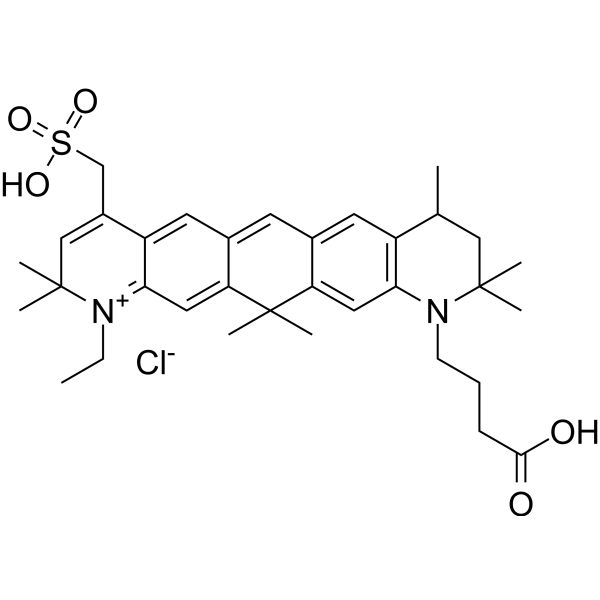
ATTO 647 is a carborhodamine fluorophore and imaging tracer with photostable properties. ATTO 647 serves as a fluorescent probe to investigate cell membrane structure and diffusion characteristics. When conjugated with wheat germ agglutinin, ATTO 647 specifically binds to N-acetyl-β-D-glucosamine and sialic acid residues on membrane glycoproteins, enabling single-molecule tracing of glycoprotein diffusion. ATTO 647 exhibits highly stable fluorescence properties with significantly reduced blinking in mounting media such as ROXS (AA/MV) and ROXS (TX/TQ), whereas its brightness properties vary in Ibidi-MM and Vectashield. ATTO 647 can also be used to label histone H2B-GFP in fixed cells for confocal microscopy photobleaching experiments .
loading...
    loading...
Cat. No.: HY-P4121
CAS No.: 1898254-09-5
Target:  

Potassium Channel

Research Areas:  

Inflammation/Immunology Cancer

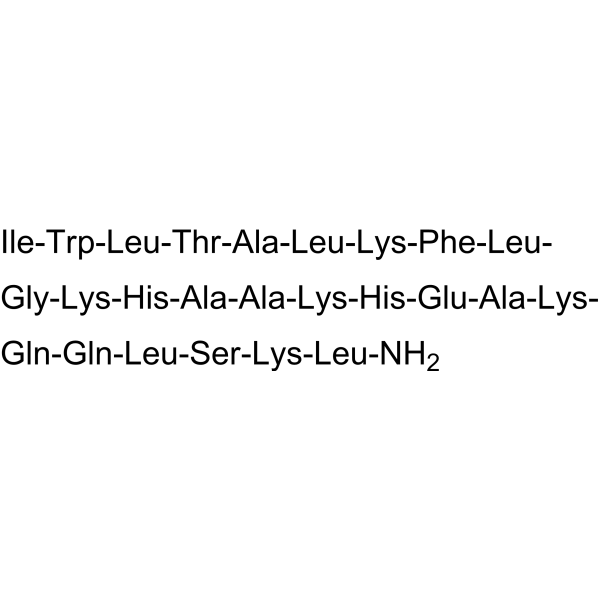
L17E is an attenuated cationic amphiphilic lytic (ACAL) peptide that can be used to deliver a variety of macromolecules, including proteins, antibodies, and DNA nanostructures. L17E inserts and cleaves the membrane structure through electrostatic interaction, enabling intracellular escape. The efficiency of L17E-mediated delivery is strongly correlated with the expression level of KCNN4 (the gene encoding the calcium-activated potassium channel KCa3.1). L17E also promotes the cellular uptake of macromolecules by inducing micropinocytosis. L17E can be further optimized and improved through dimerization strategies and in combination with other delivery systems, such as nuclear localization signal peptides and cell membrane-coated nanoparticles .
loading...
    loading...
Cat. No.: HY-P1889
CAS No.: 721885-31-0
Target:  

Bcl-2 Family Amyloid-β

Research Areas:  

Neurological Disease

Bim BH3, Peptide IV is an 42-binding peptide and the pro-apoptotic BH3 domain of the BIM protein. Bim BH3, Peptide IV binds 42 with a Kd of 7.1 μM. Bim BH3, Peptide IV modulates 42 structure, fibrillization pathways, aggregate morphology, and membrane interactions, inhibiting fibril formation while enhancing protofibril assembly. Bim BH3, Peptide IV promotes 42 β-sheet formation and accelerates aggregation. Bim BH3, Peptide IV enhances 42 membrane internalization and bilayer stiffening. Bim BH3, Peptide IV induces neuronal cell death by enhancing BH3-induced membrane interactions of 42 prefibrillar species. Bim BH3, Peptide IV can be used for research on Alzheimer's disease .
loading...
    loading...

