146 Results for "

circulation

" in MedChemExpress (MCE) Product Catalog:
Products (146)

146 Results for "circulation" in MCE Product Catalog:

Cat. No.: HY-110207R
CAS No.: 677773-91-0
SM-324405 (Standard) is the analytical standard of SM-324405 (HY-110207). This product is intended for research and analytical applications. SM-324405 is a TLR7 agonistic antedrug (EC50 = 50 nM), with pEC50 values of 7.3 and 6.6 for human TLR7 and Rat TLR7, respectively. SM-324405 is used for immunoresearch of allergic diseases. An antedrug is defined as a locally active compound that is designed to be rapidly metabolized to an inactive form upon entry into the circulation and prevents systemic toxicity by losing its agonistic activity in a plasmatic environment .
loading...
    loading...
Cat. No.: HY-185390
Synonyms: Liposomal verteporfin
Liposomal verteporfin is a liposome-encapsulated form of Verteporfin (HY-B0146). Verteporfin is a photosensitizer used in photodynamic therapy, which generates reactive oxygen species (ROS) upon irradiation at 690 nm to mediate photodynamic effects. Liposomal verteporfin can promote the release of Oxaliplatin (HY-17371) from endolysosomes via photochemical internalization (PCI), prolong the drug circulation time and enable sustained release, accumulate the drug in neovascular vessels, and enhance its cytotoxicity in tumor models. Liposomal verteporfin can be used in studies related to neovascular eye diseases and pancreatic cancer [1][2] [3].
loading...
    loading...
Cat. No.: HY-B1090
CAS No.: 298-57-7
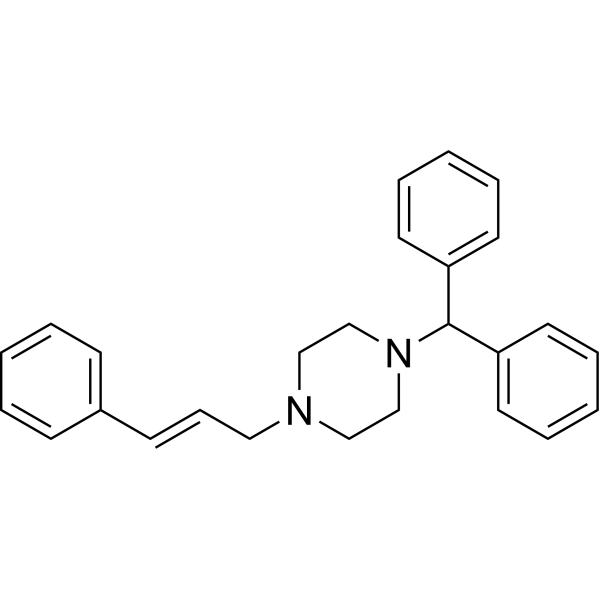
Cinnarizine is an orally active, effective and selective inhibitor of L-type calcium channel Cav1.3 with an IC50 of 1.5 μM (in vestibular hair cells). Cinnarizine can cross the blood-brain barrier and regulate calcium homeostasis and dopamine neurotransmission. Cinnarizine inhibits the influx of calcium ions into smooth muscle cells by blocking L-type calcium channels, thereby relaxing vascular smooth muscle, improving cerebral circulation and reducing blood viscosity, while antagonizing dopamine receptors. Cinnarizine can be used in the study of vestibular vertigo, Meniere's disease and cerebrovascular diseases .
loading...
    loading...
Cat. No.: HY-129680
CAS No.: 90-54-0
Target:  

Adrenergic Receptor

Research Areas:  

Cardiovascular Disease

Etafenone is an antiarrhythmic agent and vasodilator. Etafenone exerts β-adrenergic agonistic effects. Etafenone inhibits the automaticity of sinoatrial nodes, atrioventricular junctions and Purkinje fibers, prolongs action potential duration and refractory period, slows the rising rate of action potentials, and prolongs conduction time. Etafenone enhances collateral circulation after coronary occlusion and suppresses ventricular premature beats. Etafenone delays ischemic myocardial energy imbalance, improves the recovery of high-energy phosphates after ischemia, and reduces myocardial oxygen consumption. Etafenone can be used in research related to ischemic heart disease, arrhythmia and angina pectoris .
loading...
    loading...
Cat. No.: HY-144013H
CAS No.: 474922-77-5
Purity:  99%
Synonyms: DSPE-mPEG5000 ammonium; 1,2-Distearoyl-sn-glycero-3-phosphoethanolamine-N-[methoxy(polyethylene glycol)-5000] ammonium
Target:  

Liposome

Research Areas:  

Cancer

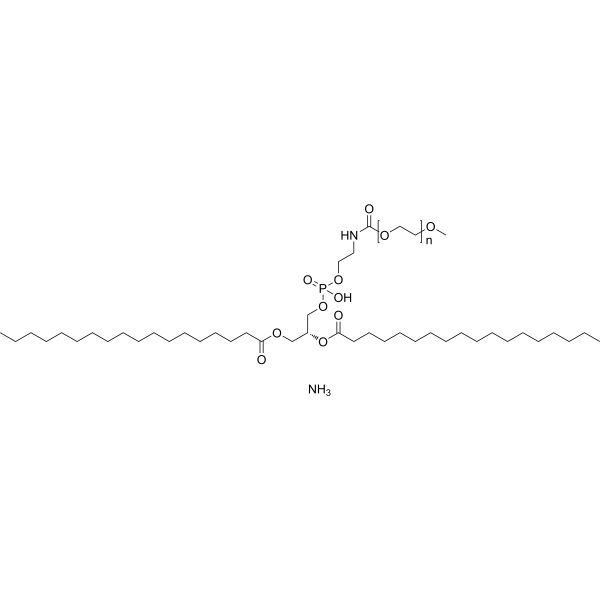
18:0 mPEG5000 PE (DSPE-mPEG5000) ammonium is a kind of amphiphilic polymer material. 18:0 mPEG5000 PE ammonium combines hydrophobic lipids (18:0 stearic acid chain) with hydrophilic polyethylene glycol (5 kDa) chains to form amphiphilic molecules, which are used to construct stable liposomes/nanoparticles, thereby enhancing drug delivery, prolonging circulation time, and achieving targeted effects through its functional terminal groups (usually biotin or carboxyl groups). 18:0 mPEG5000 PE ammonium can be used for the research of nanoprobes and drug delivery .
loading...
    loading...
Cat. No.: HY-133668
CAS No.: 2306-33-4
Purity:  96.78%
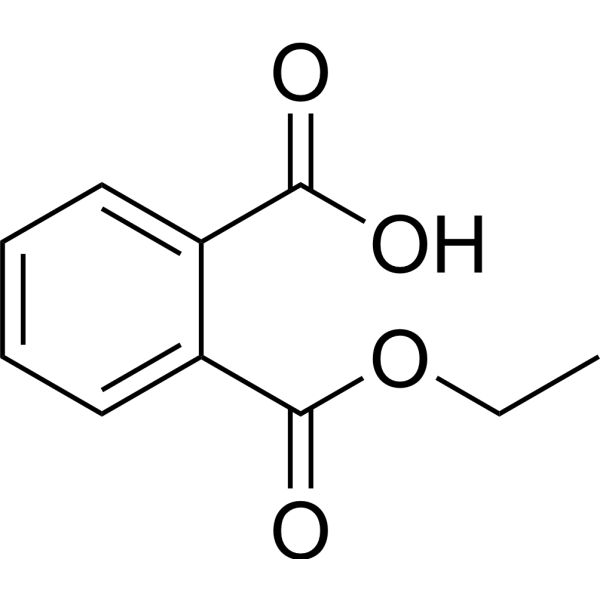
Monoethyl phthalate is an orally active PDX-1 activator and the major hydrolytic metabolite of Diethyl phthalate (HY-Y0284) in vivo, with reproductive toxicity. Monoethyl phthalate targets aromatase (aromatase/CYP19A1) and PPAR to induce cell proliferation. The plasma protein binding rate of Monoethyl phthalate in rats and humans is lower than that of Diethyl phthalate. It exhibits significant enterohepatic circulation in rats and mainly accumulates in liver tissues. Monoethyl phthalate shows no estrogenic activity in estrogen-dependent human breast cancer cells. Monoethyl phthalate can be used in studies of reproductive toxicity and related environmental endocrine disruption mechanisms .
loading...
    loading...
Cat. No.: HY-168943
PLGA nanoparticles, 100nm, are biodegradable tumor-targeting nanocarriers that can serve as drug delivery enhancers and multidrug resistance inhibitors. PLGA nanoparticles, 100nm, passively enriched through the EPR effect and actively targeted via ligand-mediated endocytosis, can encapsulate various antitumor active molecules. PLGA nanoparticles, 100nm can specifically recognize multiple types of tumor cells and improve cellular uptake, cytotoxicity and antiproliferative effects after modification with ligands such as transferrin, folic acid, and RGD. PLGA nanoparticles, 100nm can encapsulate various therapeutic drugs and can be surface modified to achieve targeting, imaging, and prolonged circulation time, making them suitable for cancer-related research .
loading...
    loading...
Cat. No.: HY-168943A
PLGA nanoparticles, 200nm, are biodegradable tumor-targeting nanocarriers that can serve as drug delivery enhancers and multidrug resistance inhibitors. PLGA nanoparticles, 200nm, passively enriched through the EPR effect and actively targeted via ligand-mediated endocytosis, can encapsulate various antitumor active molecules. PLGA nanoparticles, 200nm can specifically recognize multiple types of tumor cells and improve cellular uptake, cytotoxicity and antiproliferative effects after modification with ligands such as transferrin, folic acid, and RGD. PLGA nanoparticles, 200nm can encapsulate various therapeutic drugs and can be surface modified to achieve targeting, imaging, and prolonged circulation time, making them suitable for cancer-related research .
loading...
    loading...
Cat. No.: HY-168943B
PLGA nanoparticles, 500nm, are biodegradable tumor-targeting nanocarriers that can serve as drug delivery enhancers and multidrug resistance inhibitors. PLGA nanoparticles, 500nm, passively enriched through the EPR effect and actively targeted via ligand-mediated endocytosis, can encapsulate various antitumor active molecules. PLGA nanoparticles, 500nm can specifically recognize multiple types of tumor cells and improve cellular uptake, cytotoxicity and antiproliferative effects after modification with ligands such as transferrin, folic acid, and RGD. PLGA nanoparticles, 500nm can encapsulate various therapeutic drugs and can be surface modified to achieve targeting, imaging, and prolonged circulation time, making them suitable for cancer-related research .
loading...
    loading...
Cat. No.: HY-183596
CAS No.: 2941355-21-9
Target:  

Drug Intermediate

Research Areas:  

Cancer

L-His-BPA is a prodrug of L-p-Boronophenylalanine (L-BPA) (HY-W087830), formed by the peptide bond linkage of L-histidine (L-His) (HY-N0832) and L-BPA. L-His-BPA is rapidly cleaved by endogenous proteases to de novo release L-BPA in the systemic circulation. When used in combination with neutron irradiation, L-His-BPA induces complete and durable tumor regression, elicits cancer vaccine responses, and produces abscopal inhibitory effects on unirradiated distant tumors. L-His-BPA can be used in studies of boron neutron capture therapy (BNCT) for relapsed/advanced solid tumors .
loading...
    loading...
Cat. No.: HY-W403933
CAS No.: 2458-08-4
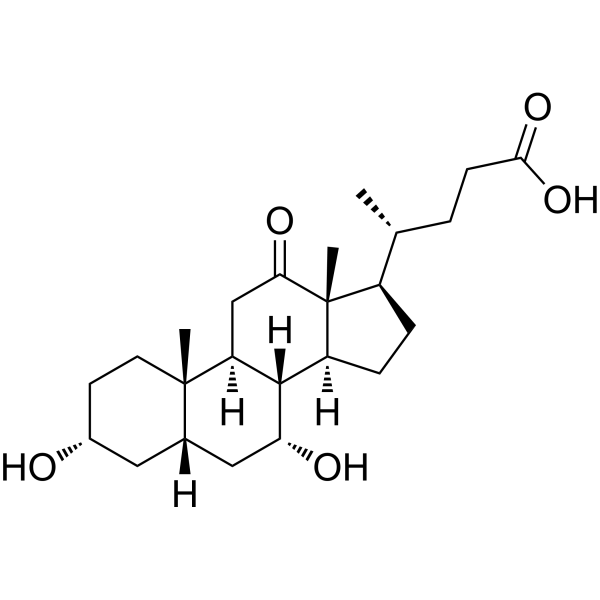
12-Ketochenodeoxycholic acid is an anomalous bile acid and Chenodeoxycholic acid (HY-76847) precursor. 12-Ketochenodeoxycholic acid can be used for the research of hepatobiliary diseases .
loading...
    loading...
Cat. No.: HY-168943C
PLGA nanoparticles, 1μm, are biodegradable tumor-targeting nanocarriers that can serve as drug delivery enhancers and multidrug resistance inhibitors. PLGA nanoparticles, 1μm, passively enriched through the EPR effect and actively targeted via ligand-mediated endocytosis, can encapsulate various antitumor active molecules. PLGA nanoparticles, 1μm can specifically recognize multiple types of tumor cells and improve cellular uptake, cytotoxicity and antiproliferative effects after modification with ligands such as transferrin, folic acid, and RGD. PLGA nanoparticles, 1μm can encapsulate various therapeutic drugs and can be surface modified to achieve targeting, imaging, and prolonged circulation time, making them suitable for cancer-related research .
loading...
    loading...
Cat. No.: HY-133668S
CAS No.: 1219806-03-7
Purity:  98.27%
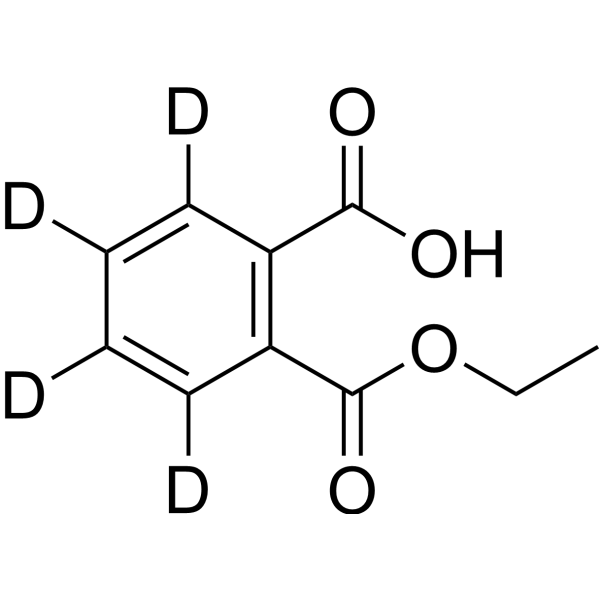
Monoethyl phthalate-d4 is the deuterium labeled Monoethyl phthalate. Monoethyl phthalate is an orally active PDX-1 activator and the major hydrolytic metabolite of Diethyl phthalate (HY-Y0284) in vivo, with reproductive toxicity. Monoethyl phthalate targets aromatase (aromatase/CYP19A1) and PPAR to induce cell proliferation. The plasma protein binding rate of Monoethyl phthalate in rats and humans is lower than that of Diethyl phthalate. It exhibits significant enterohepatic circulation in rats and mainly accumulates in liver tissues. Monoethyl phthalate shows no estrogenic activity in estrogen-dependent human breast cancer cells. Monoethyl phthalate can be used in studies of reproductive toxicity and related environmental endocrine disruption mechanisms .
loading...
    loading...
Cat. No.: HY-149465
CAS No.: 2298391-60-1
Research Areas:  

Neurological Disease Cancer

STF-1623 is a highly potent, selective, cell-impermeable non-covalent ENPP1 inhibitor, with IC50 values of 0.6 nM and 800 nM against human ENPP1 and ENPP3, respectively. STF-1623 inhibits the hydrolysis of extracellular cGAMP by ENPP1, elevates intratumoral cGAMP levels, and indirectly enhances local cGAS-STING signaling and anti-tumor immunity in tumors. STF-1623 exhibits target-dependent retention in ENPP1-highly expressing tumors, while it undergoes rapid clearance in systemic circulation, and can penetrate into the CSF and brain parenchyma. STF-1623 can be used in studies related to breast cancer, pancreatic cancer, colorectal cancer, glioblastoma, and tumor immunology .
loading...
    loading...
Cat. No.: HY-U00134
CAS No.: 2179-37-5
Synonyms: Bencyclane; Benzcyclan
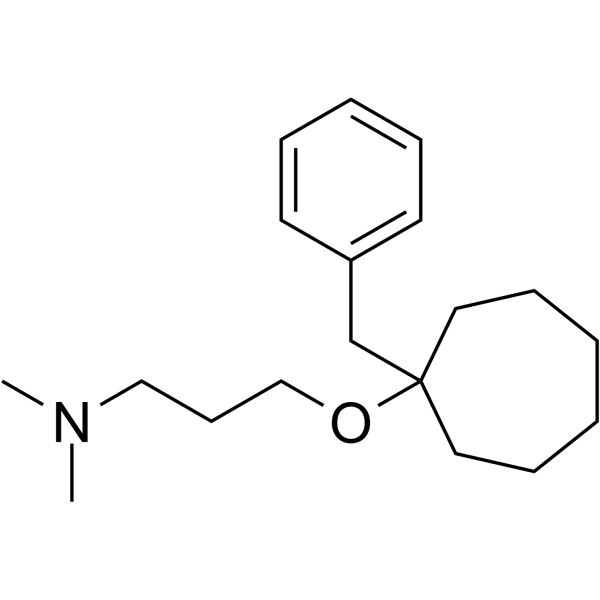
Benzcyclane (Bencyclane; Benzcyclan) is a vasodilator with serotonin receptor antagonism. Benzcyclane exerts atypical serotonin antagonistic effects in rabbit superior mesenteric arteries. Benzcyclane relaxes high K +-induced contractions in rabbit basilar arteries and superior mesenteric arteries, and selectively inhibits sympathetic nerve stimulation-induced contractions in rabbit pulmonary arteries. Benzcyclane exerts non-competitive norepinephrine antagonistic effects in rabbit superior mesenteric arteries, and slightly reduces the maximum contractile response induced by histamine. Benzcyclane relaxes smooth muscles, induces transient hypotension, inhibits thrombosis, and accelerates blood fibrinolytic activity. Benzcyclane increases cerebral glucose content/uptake, enhances hypoxia tolerance in mice, and increases cerebral blood supply in dogs. Benzcyclane is applicable to studies related to cerebral vascular circulation .
loading...
    loading...
Cat. No.: HY-U00134A
CAS No.: 14286-84-1
Synonyms: Bencyclane fumarate; Benzcyclan fumarate
Benzcyclane fumarate (Bencyclane fumarate; Benzcyclan fumarate) is a vasodilator with serotonin receptor antagonism. Benzcyclane fumarate exerts atypical serotonin antagonistic effects in rabbit superior mesenteric arteries. Benzcyclane fumarate relaxes high K +-induced contractions in rabbit basilar arteries and superior mesenteric arteries, and selectively inhibits sympathetic nerve stimulation-induced contractions in rabbit pulmonary arteries. Benzcyclane fumarate exerts non-competitive norepinephrine antagonistic effects in rabbit superior mesenteric arteries, and slightly reduces the maximum contractile response induced by histamine. Benzcyclane fumarate relaxes smooth muscles, induces transient hypotension, inhibits thrombosis, and accelerates blood fibrinolytic activity. Benzcyclane fumarate increases cerebral glucose content/uptake, enhances hypoxia tolerance in mice, and increases cerebral blood supply in dogs. Benzcyclane fumarate is applicable to studies related to cerebral vascular circulation .
loading...
    loading...
Cat. No.: HY-169323
CAS No.: 2921735-87-5
Synonyms: Mal-Exo-EEVC-MMAE
Research Areas:  

Cancer

APL-1091 (Mal-Exo-EEVC-MMAE) is an ADC payload-linker conjugate (Drug-Linker Conjugates for ADC). APL-1091 is formed by the conjugation of the Mal-Exo-EEVC (HY-169353) linker and MMAE (HY-15162), a microtubule inhibitor. APL-1091 resists aggregation at high drug-to-antibody ratio (DAR), exhibits excellent plasma stability, and reduces premature payload release. When conjugated with Trastuzumab (HY-P9907), APL-1091 displays anti-tumor activity in gastric cancer xenograft models. APL-1091 can be used for ADC synthesis and gastric cancer-related research .
loading...
    loading...
Cat. No.: HY-P992426

Target:  

Tau Protein

Research Areas:  

Neurological Disease

NS101 is an anti-FAM19A5 antibody with an IC50 of 0.2 nM and a Kd of 111 pM, as well as blood-brain barrier permeability. NS101 binds to key amino acid residues of FAM19A5, thereby blocking the interaction of LRRC4B and disrupting the FAM19A5-LRRC4B complex. NS101 increases the dendritic spine density in hippocampal neurons and the prefrontal cortex, normalizes the dendritic spine elimination rate, elevates the frequencies of mEPSC and fEPSP, and promotes the transport of brain-derived FAM19A5 into the peripheral circulation. NS101 improves cognitive function in mouse models of Alzheimer's disease. NS101 can be used for research on Alzheimer's disease. The recommended isotype control is human IgG1 kappa (HY-P99001) .
loading...
    loading...

