
165 Results for "

Stimulating effect

" in MedChemExpress (MCE) Product Catalog:
Products (165)

165 Results for "Stimulating effect" in MCE Product Catalog:

Cat. No.: HY-164090
CAS No.: 482-67-7
Target:  

P2Y Receptor

Research Areas:  

Cardiovascular Disease

Adenosine 3'-phosphate 5'-phosphosulfate, an adenine nucleotide derivative, is a selective P2Y1 antagonist with no effect on P2Y2, P2Y4, or P2Y6 receptors. Adenosine 3'-phosphate 5'-phosphosulfate can competitive inhibit ADP-induced platelet aggregation, as well as the ability of ADP to cause shape change and increases in Ca 2+ in platelets, but had no effect on the inhibition of stimulated adenylate cyclase by ADP. Adenosine 3'-phosphate 5'-phosphosulfate is a co-substrate used for the sulfonation of glycans. Adenosine 3'-phosphate 5'-phosphosulfate can be used for Golgi-resident PAP-specific 3'-phosphatase-coupled sulfotransferase assays, which as donor substrate to transfer a sulfonate group .
loading...
    loading...
Cat. No.: HY-19689
CAS No.: 90043-86-0
Synonyms: NIK-247; Amiridine
Ipidacrine (NIK-247; Amiridine) hydrochloride is orally active and blood-brain-barrier-penetrant AChE and BuChE inhibitors with IC50 values of 1 μM and 1.9 μM, respectively, which is also a partial agonist of M2-cholinergic receptors and a reversible cholinesterase inhibitor. Ipidacrine hydrochloride has a stimulating effect on neuromuscular transmission and excitation along the nerve fibres with a moderately anti-pain effect. Ipidacrine hydrochloride is an aminopyridines and is structurally similar to Tacrine (HY-111338). Ipidacrine hydrochloride is effective in various amnesia models, improves erectile function and inhibits K + and Na +-channels in the neuronal membrane in diabetic rats. Ipidacrine hydrochloride is promising for research of Alzheimer’s disease, ischaemic stroke, idiopathic neuropathy of the facial nerve, diabetes mellitus-induced erectile dysfunction and other deficits in central or peripheral cholinergic deseases .
loading...
    loading...
Cat. No.: HY-N9422
CAS No.: 936827-87-1
Target:  

P2Y Receptor

Research Areas:  

Cardiovascular Disease

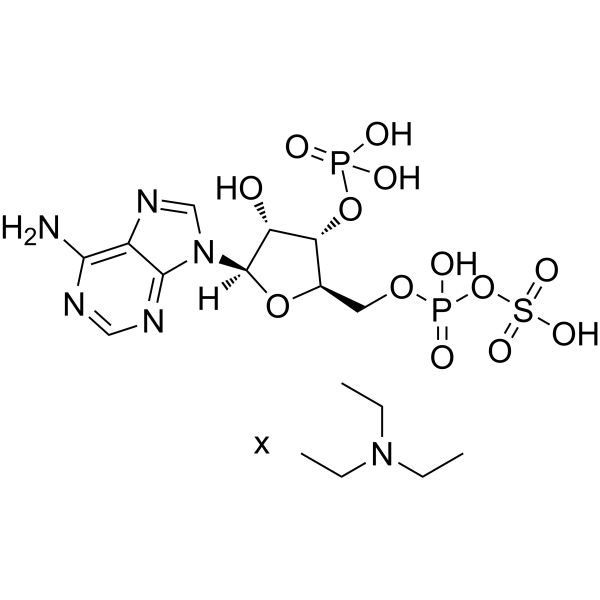
Adenosine 3'-phosphate 5'-phosphosulfate triethylamine, an adenine nucleotide derivative, is a selective P2Y1 antagonist with no effect on P2Y2, P2Y4, or P2Y6 receptors. Adenosine 3'-phosphate 5'-phosphosulfate triethylamine can competitive inhibit ADP-induced platelet aggregation, as well as the ability of ADP to cause shape change and increases in Ca 2+ in platelets, but had no effect on the inhibition of stimulated adenylate cyclase by ADP. Adenosine 3'-phosphate 5'-phosphosulfate triethylamine is a co-substrate used for the sulfonation of glycans. Adenosine 3'-phosphate 5'-phosphosulfate triethylamine can be used for Golgi-resident PAP-specific 3'-phosphatase-coupled sulfotransferase assays, which as donor substrate to transfer a sulfonate group .
loading...
    loading...
Cat. No.: HY-P0004R
CAS No.: 50-57-7
Synonyms: Lysine vasopressin (Standard); [Lys8]-Vasopressin (Standard)
Lysipressin (Standard) is the analytical standard of Lysipressin (HY-P0004). This product is intended for research and analytical applications. Lysipressin (Lysine vasopressin ; [Lys8]-Vasopressin ) is a neurohypophyseal nonapeptide with dual cardiovascular regulatory activities of peripheral pressor action and central hypotensive action, and it also regulates pain perception in the body. Lysipressin is an Oxytocin Receptor agonist, with a Ki value of 10.2 nM for porcine OT receptor. Lysipressin stimulates contraction of rabbit bladder smooth muscle via V1-vasopressin receptor. The central hypotensive effect of Lysipressin depends on the sympathetic tone pathway. Lysipressin dose-dependently prolongs tail-flick latency in rats, producing a stable central antinociceptive effect. Lysipressin can be used in studies related to cardiovascular regulation, hypertension and pain .
loading...
    loading...
Cat. No.: HY-W250153
CAS No.: 109434-21-1
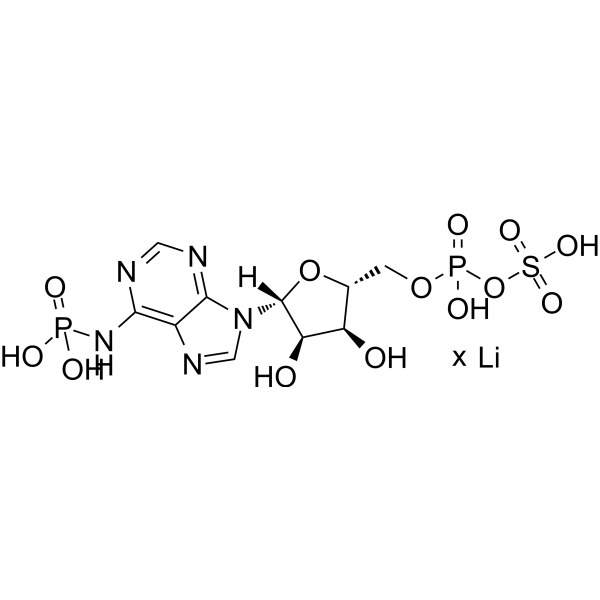
Adenosine 3'-phosphate 5'-phosphosulfate lithium, an adenine nucleotide derivative, is a selective P2Y1 antagonist with no effect on P2Y2, P2Y4, or P2Y6 receptors. Adenosine 3'-phosphate 5'-phosphosulfate lithium can competitive inhibit ADP-induced platelet aggregation, as well as the ability of ADP to cause shape change and increases in Ca 2+ in platelets, but had no effect on the inhibition of stimulated adenylate cyclase by ADP. Adenosine 3'-phosphate 5'-phosphosulfate lithium is a co-substrate used for the sulfonation of glycans. Adenosine 3'-phosphate 5'-phosphosulfate lithium can be used for Golgi-resident PAP-specific 3'-phosphatase-coupled sulfotransferase assays, which as donor substrate to transfer a sulfonate group .
loading...
    loading...
Cat. No.: HY-W250153A
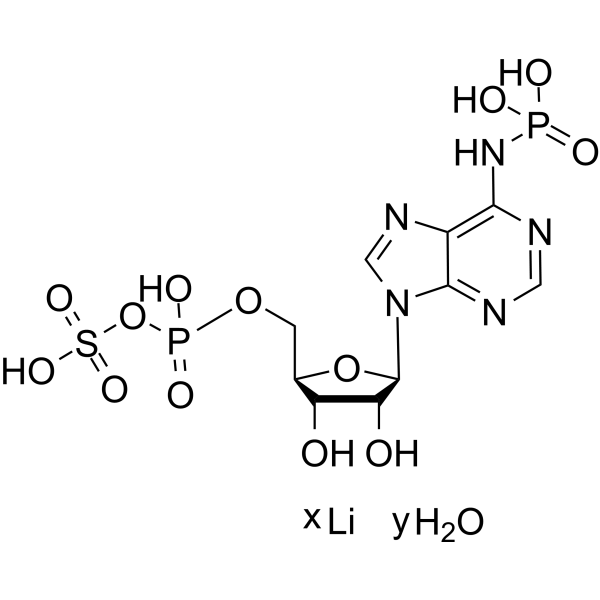
Adenosine 3'-phosphate 5'-phosphosulfate lithium hydrate, an adenine nucleotide derivative, is a selective P2Y1 antagonist with no effect on P2Y2, P2Y4, or P2Y6 receptors. Adenosine 3'-phosphate 5'-phosphosulfate lithium hydrate can competitive inhibit ADP-induced platelet aggregation, as well as the ability of ADP to cause shape change and increases in Ca 2+ in platelets, but had no effect on the inhibition of stimulated adenylate cyclase by ADP. Adenosine 3'-phosphate 5'-phosphosulfate lithium hydrate is a co-substrate used for the sulfonation of glycans. Adenosine 3'-phosphate 5'-phosphosulfate lithium hydrate can be used for Golgi-resident PAP-specific 3'-phosphatase-coupled sulfotransferase assays, which as donor substrate to transfer a sulfonate group .
loading...
    loading...
Cat. No.: HY-19261
CAS No.: 169042-78-8
Research Areas:  

Metabolic Disease

T-0632 is a CCK A receptor antagonist that exhibits significant pharmacological properties in in vitro studies. T-0632 competitively inhibits the binding of [125I]CCK-8 to rat pancreatic CCK A receptors with a K_i value of 0.24 nM, which is significantly lower than the K_i value for guinea pig CCK B receptors. T-0632 has higher selectivity in inhibiting CCK-8-stimulated pancreatic enzyme release, with an IC_50 value of 5.0 nM, which is more advantageous than L-364,718 and loxiglumide. In rabbit gallbladder smooth muscle, the antagonistic effects of T-0632 and loxiglumide are reversible, while L-364,718 shows a persistent inhibitory effect. These results indicate that T-0632 is a highly potent, reversible and more selective CCK A receptor antagonist.
loading...
    loading...
Cat. No.: HY-W060417
CAS No.: 1019158-02-1
Target:  

Interleukin Related

Research Areas:  

Inflammation/Immunology Cancer

iST2-1 is an Stimulation-2 (ST2) inhibitor with an IC50 value of 46.65 μM, blocks interaction between ST2 and IL-33, inhibits downstream signaling. iST2-1 functions as an immunomodulator, reduces proliferation of CD4 + and CD8 + T cells, increases regulatory T cell populations, reduces IFN-γ +CD4 + T cell populations, increases Foxp3 +CD4 + regulatory T cell populations in the gastrointestinal tract. iST2-1 reduces plasma soluble ST2 and IFN-γ levels, reduces graft-versus-host disease scores, improves survival in graft-versus-host disease animal models, preserves graft-versus-tumor effect. iST2-1 can be used for the research of graft-versus-host disease .
loading...
    loading...
Cat. No.: HY-108839
CAS No.: 198153-51-4
Synonyms: Ro 25-8310/000
Target:  

IFNAR

Research Areas:  

Infection

Peginterferon alfa-2a (Ro 25-8310/000) is a 40 kDa branched pegylated IFN alfa-2a with antiviral and immunomodulatory activities. Peginterferon alfa-2a binds to the Interferon Receptor on the surface of target cells, induces the formation of ISGF3, and promotes the expression of effector proteins such as interferon-stimulated genes (ISGs) and Mx proteins, thereby exerting sustained antiviral effects. Peginterferon alfa-2a is applicable to research on virus infections associated with chronic hepatitis C and chronic hepatitis B .
loading...
    loading...
Cat. No.: HY-W027553R
CAS No.: 62732-44-9
Synonyms: NIK-247 free base (Standard); Amiridine free base (Standard)
Ipidacrine (Standard) is the analytical reference standard of Ipidacrine. This product is used for research and analytical applications. Ipidacrine is orally active and blood-brain-barrier-penetrant AChE and BuChE inhibitors with IC50 values of 1 μM and 1.9 μM, respectively, which is also a partial agonist of M2-cholinergic receptors and a reversible cholinesterase inhibitor. Ipidacrine has a stimulating effect on neuromuscular transmission and excitation along the nerve fibres with a moderately anti-pain effect. Ipidacrine is an aminopyridines and is structurally similar to Tacrine (HY-111338). Ipidacrine is effective in various amnesia models, improves erectile function and inhibits K + and Na +-channels in the neuronal membrane in diabetic rats. Ipidacrine is promising for research of Alzheimer’s disease, ischaemic stroke, idiopathic neuropathy of the facial nerve, diabetes mellitus-induced erectile dysfunction and other deficits in central or peripheral cholinergic deseases .
loading...
    loading...
Cat. No.: HY-103160AR
CAS No.: 58337-38-5
EHNA hydrochloride (Standard) is the analytical standard of EHNA hydrochloride (HY-103160A). This product is intended for research and analytical applications. EHNA hydrochloride is a potent and selective dual inhibitor of cyclic nucleotide phosphodiesterase 2 (PDE2)(IC50=4 μM) and adenosine deaminase (ADA). EHNA hydrochloride exerts a concentration inhibition of the cGMP-stimulated PDE II (cGs-PDE)(IC50:0.8 μM (human), 2 μM (porcine myocardium)), but has smaller inhibitory effect on the unstimulated PDE2 activity. EHNA hydrochloride play roles in mediating diverse pharmacological responses, including antiviral, antitumour and antiarrhythmic effects .
loading...
    loading...
Cat. No.: HY-107915R
CAS No.: 829-74-3
Synonyms: (-)-Cobefrin (Standard); (-)-α-Methylnoradrenaline (Standard); (-)-Nordefrin (Standard)
Research Areas:  

Others

Levonordefrin (Standard) is the analytical standard of Levonordefrin. This product is intended for research and analytical applications. Levonordefrin ((-)-Cobefrin; (-)-α-Methylnoradrenaline; (-)-Nordefrin) is an α-adrenergic receptor agonist with blood pressure regulatory properties. Levonordefrin is a key metabolite responsible for the hypotensive effect of α-methyldopa. By stimulating central α-adrenergic receptors in the nucleus tractus solitarius region of the medulla oblongata, Levonordefrin induces centrally mediated hypotension and bradycardia. When administered intravenously, Levonordefrin increases mean arterial blood pressure in a dose-dependent manner. Levonordefrin is applicable for research on the pathophysiology of hypertension and drug metabolism .
loading...
    loading...
Cat. No.: HY-187646
CAS No.: 2231259-57-5
Target:  

Drug Derivative

Research Areas:  

Cancer

IACS-9439-Cl is a derivative of IACS-9439. IACS-9439 is an orally active and selective colony-stimulating factor 1 receptor (CSF1R) inhibitor with a Kd of 1 nM. IACS-9439-Cl reduces the population of tumor-associated macrophages. IACS-9439-Cl promotes the polarization of macrophages toward the M1 anti-tumor phenotype and decreases the M2 pro-tumor phenotype, thereby exerting a tumor growth inhibitory effect. IACS-9439-Cl can be used in cancer-related research .
loading...
    loading...
Cat. No.: HY-P99361
CAS No.: 1062149-33-0
Synonyms: PDL192; ABT-361; Anti-TNFRSF12A/TWEAKR/CD266 Reference Antibody (enavatuzumab)

Target:  

TNF Receptor

Research Areas:  

Cancer

Enavatuzumab (PDL192; ABT-361) is a humanized IgG1 monoclonal antibody targeting the receptor of TNF-like weak inducer of apoptosis (TWEAK). TWEAK (Fn14; TNFRSF12A), the natural ligand of the TWEAK receptor (TweakR), stimulates multiple cellular responses. Enavatuzumab induces tumor growth inhibition through direct TweakR signaling and antibody dependent cell-mediated cytotoxicity (ADCC). Enavatuzumab can actively recruits and activates myeloid effectors to kill tumor cells. Enavatuzumab inhibits the growth of various human TweakR-positive cancer cell lines and xenografts in vitro and in vivo .
loading...
    loading...
Cat. No.: HY-N0755R
CAS No.: 17306-46-6
Rhoifolin (Standard) is the analytical standard of Rhoifolin. This product is intended for research and analytical applications. Rhoifolin is a flavone glycoside can be isolated from Rhus succedanea. Rhoifolin has anti-diabetic effect acting through enhanced adiponectin secretion, tyrosine phosphorylation of insulin receptor-β and glucose transporter 4 (GLUT 4) translocation. Rhoifolin has an anti-inflammatory action via multi-level regulation of inflammatory mediators. Rhoifolin ameliorates titanium particle-stimulated osteolysis and attenuates osteoclastogenesis via RANKL-induced NF-κB and MAPK pathways. Rhoifolin also has cytotoxic activity against different cancer cell lines .
loading...
    loading...
Cat. No.: HY-N4053
CAS No.: 2880-49-1
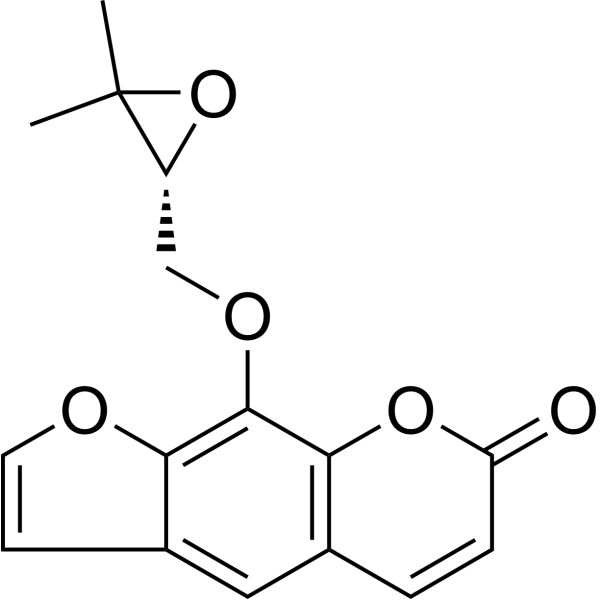
Heraclenin is a linear furanocoumarin natural product. Heraclenin binds to the type III effector protein XopQ and chitin deacetylase, exhibits antibacterial activity against Xanthomonas oryzae pv. oryzae, and displays antifungal activity against Colletotrichum lindemuthianum. Heraclenin stimulates Runx2 mRNA expression, induces osteoblast differentiation and mineralization. Heraclenin induces Chk1 phosphorylation, G2/M cell cycle arrest, DNA fragmentation, apoptosis, chromosomal aberrations, sister chromatid exchange, and inhibits proliferation. Heraclenin can be used for research on osteoporosis, melanoma, T-cell lymphoma, and leukemia .
loading...
    loading...
Cat. No.: HY-W339833
CAS No.: 325465-45-0
1-Myristoyl-2-hydroxy-sn-glycero-3-phosphate sodium is a kind of activity that promotes platelet aggregation and stimulates smooth muscle contraction. 1-Myristoyl-2-hydroxy-sn-glycero-3-phosphate sodium can enhance cell chemotaxis and cytoskeletal rearrangement. 1-Myristoyl-2-hydroxy-sn-glycero-3-phosphate sodium can also promote Ca2+ mobilization and neurotransmitter release. 1-Myristoyl-2-hydroxy-sn-glycero-3-phosphate sodium also has a certain effect on cell proliferation.
loading...
    loading...
Cat. No.: HY-W027553S1
Synonyms: NIK-247-d9 free base
Ipidacrine-d9 (NIK-247-d9 (free base)) is the deuterium labeled Ipidacrine (HY-W027553). Ipidacrine is orally active and brain-penetrant AChE and BuChE inhibitors with IC50 values of 1 μM and 1.9 μM, respectively, which is also a partial agonist of M2-cholinergic receptors and a reversible cholinesterase inhibitor. Ipidacrine has a stimulating effect on neuromuscular transmission and excitation along the nerve fibres with a moderately anti-pain effect. Ipidacrine is an aminopyridines and is structurally similar to Tacrine (HY-111338). Ipidacrine is effective in various amnesia models, improves erectile function and inhibits K+ and Na+-channels in the neuronal membrane in diabetic rats. Ipidacrine is promising for research of Alzheimer’s disease, ischaemic stroke, idiopathic neuropathy of the facial nerve, diabetes mellitus-induced erectile dysfunction and other deficits in central or peripheral cholinergic deseases .
loading...
    loading...
Cat. No.: HY-136427
CAS No.: 79220-94-3
Purity:  98.08%
KRM-III is an orally active TCR inhibitor and NFAT inhibitor with an IC50 of 5 μM against NFAT. KRM-III has no effect on the activation of nuclear factor-κB. KRM-III inhibits T cell proliferation induced by T cell antigen receptor stimulation. KRM-III abrogates anti-CD3 antibody-induced cell activation in vivo. KRM-III reduces paw pad swelling in delayed-type hypersensitivity induced by Bovine serum albumin (HY-D0842). KRM-III alleviates the severity of experimental autoimmune encephalomyelitis (EAE) in mice. KRM-III can be used in studies related to experimental autoimmune encephalomyelitis .
loading...
    loading...
Cat. No.: HY-101005
CAS No.: 16503-22-3
Synonyms: Nα-Methylhistamine dihydrochloride
Research Areas:  

Infection

N-Methylhistamine dihydrochloride (Nα-Methylhistamine dihydrochloride) is a non-selective Histamine receptor agonist. N-Methylhistamine dihydrochloride activates histamine H1, H2 and H3 receptors; it stimulates central H1 receptors by activating sympathetic α and β adrenergic receptors to inhibit intestinal transit, exerts dose-dependent inhibition on intestinal transit, reduces histamine turnover in mouse brains, and increases gastric acid secretion without altering plasma gastrin concentrations. N-Methylhistamine dihydrochloride produces a pH-dependent, voltage-independent potentiating effect on acid-sensing ion channel 1a, and shows no significant activity toward homologous ASIC2a channels. N-Methylhistamine dihydrochloride can be used in studies related to Helicobacter pylori infection .
loading...
    loading...

