165 Results for "

Stimulating effect

" in MedChemExpress (MCE) Product Catalog:
Products (165)

165 Results for "Stimulating effect" in MCE Product Catalog:

Cat. No.: HY-188067
CAS No.: 497180-72-0
Target:  

Imidazoline Receptor

Research Areas:  

Cardiovascular Disease

LNP-911 is a ligand for the I1 imidazoline receptor. LNP-911 allosterically modulates I1Rs and enhances the effect of agonists on Forskolin (HY-15371)-stimulated cAMP accumulation. LNP-911 exists mainly as a stable imine tautomer. After radioiodination, LNP-911 serves as a selective high-affinity radioligand for characterization studies of I1Rs in membrane preparations. LNP-911 can be used in hypertension-related research .
loading...
    loading...
Cat. No.: HY-179302
CAS No.: 104260-74-4
Research Areas:  

Cardiovascular Disease

SD3A is an antiplatelet agent. SD3A inhibits granule secretion and GP IIb/IIIa activation. SD3A inhibits mitochondrial function. SD3A has an antiaggregant effect on washed platelets stimulated with Collagen. SD3A results in reduced thrombus formation without affecting coagulation .
loading...
    loading...
Cat. No.: HY-P2027
CAS No.: 103412-40-4
Target:  

Bradykinin Receptor

B 4310 is a non-organ-selective Bradykinin antagonist. B 4310 induces uterine contraction in rats. B 4310 blocks bradykinin-mediated responses, including substance P release, plasma extravasation, venous contraction, prostaglandin E2 release and trigeminal nerve stimulation, but exerts no effect on angiotensin II, acetylcholine or capsaicin pathways. B 4310 exerts a reversible antagonistic effect on bradykinin-induced nociceptors. B 4310 serves as a tool for investigating the biological effects of bradykinin .
loading...
    loading...
Cat. No.: HY-108278R
CAS No.: 1222-57-7
Research Areas:  

Endocrinology

Zolimidine (Standard) is the analytical standard of Zolimidine (HY-108278). This product is intended for research and analytical applications. Zolimidine, a derivate of imidazopyridine, is an orally active antiulcer agent. Zolimidine stimulates mucus secretion in intestinal mucosal cells and enhacnes intestinal wall more resistant to ulceration. Zolimidine exhibits gastroprotective effect in duodenal ulcer research .
loading...
    loading...
Cat. No.: HY-167212
CAS No.: 50733-99-8
Research Areas:  

Others

AHR-5645B free base inhibits the binding of 3H-spiperone to membrane sites in the bovine anterior pituitary and blocks the persistent inhibitory effect of dopamine on prolactin secretion. AHR-5645B free base stimulates prolactin secretion in male Sprague-Dawley rats in vivo .
loading...
    loading...
Cat. No.: HY-184003
CAS No.: 3071928-57-6
Target:  

Potassium Channel

Research Areas:  

Inflammation/Immunology

LY3972406 is an orally active, selective Kv1.3 antagonist. LY3972406 acts on chronically stimulated effector memory T cells without affecting naive central memory T cells. LY3972406 induces mild, non-adverse skin irritation in Rattus norvegicus. LY3972406 is applicable for the research of autoimmune diseases .
loading...
    loading...
Cat. No.: HY-N8353
CAS No.: 149598-71-0
Target:  

Others

Stachybotramide is a natural fungal metabolite with the property of modulating the activity of cholesteryl ester transfer protein (CETP). Stachybotramide stimulates the transfer of cholesteryl esters (CE) from high-density lipoprotein (HDL) to very-low-density lipoprotein (VLDL) and low-density lipoprotein (LDL), increasing the transfer efficiency by 1.3- to 1.5-fold. Stachybotramide slightly reduced the transfer of cholesteryl esters from LDL and VLDL to HDL at 0.5 mM. The effect of Stachybotramide on the transfer of triglycerides (TG) from HDL was not significant. By these results, Stachybotramide was shown to preferentially stimulate the CETP-mediated transfer of cholesteryl esters from HDL to VLDL and LDL .
loading...
    loading...
Cat. No.: HY-182543
CAS No.: 148717-47-9
Target:  

CaSR

Research Areas:  

Others

NPS-467 is a calcium-sensing receptor (CaR) activator and stereospecific agent with only its R-enantiomer active. NPS-467 increases the sensitivity of the CaR to activation by extracellular calcium. NPS-467 stimulates stanniocalcin (STC) secretion in trout and induces inhibition of gill calcium transport in trout. NPS-467 has no effect on serum calcitonin levels in trout .
loading...
    loading...
Cat. No.: HY-P10768B
Target:  

PACAP Receptor

Research Areas:  

Inflammation/Immunology

Ro 25-1553 acetate is a selective VIP2 receptor (VPAC2 receptor) agonist. Ro 25-1553 acetate exhibits bronchodilatory effects on tracheal smooth muscle contractions induced by nerve stimulation or Carbachol (HY-B1208). Ro 25-1553 acetate produces a superimposed effect when combined with Formoterol and Salmeterol (HY-14302). Ro 25-1553 acetate can be used for the study of bronchoconstriction .
loading...
    loading...
Cat. No.: HY-P991753

Target:  

CXCR

Research Areas:  

Infection

Anti-Mouse CCL5 Antibody (R6G9) is a neutralizing agent that binds to CCL5 to inhibit its chemotactic activity towards CD4 + T cells .Anti-Mouse CCL5 Antibody (R6G9) does not suppress CD4 + T cell migration towards infection-derived liver cells, reduce CD4 + T cell hepatic accumulation, or impair CD4 + T cell migratory capacity .Anti-Mouse CCL5 Antibody (R6G9) serves as a tool to assess CCL5’s role in in vivo target cell killing by LCMV-specific CD8 + effector T cells .Anti-Mouse CCL5 Antibody (R6G9) can be used for the research of malaria infection and lymphocytic choriomeningitis virus infection .
loading...
    loading...
Cat. No.: HY-N18279
CAS No.: 298-45-3
Bulbocapnine is an aporphine isoquinoline alkaloid that exerts antagonistic effects on dopamine Receptor) and α-adrenergic receptors, as well as anti-peroxidative effects. The Ki value of bulbocapnine for tyrosine hydroxylase (TH) is 0.20 mM. Bulbocapnine reduces intracellular dopamine content, inhibits TH activity, and decreases Ca 2+ concentration. Bulbocapnine antagonizes the dose-dependent inhibitory effect of dopamine on the heart rate acceleration induced by stimulating the postganglionic fibers of the right cardiac accelerator nerve .
loading...
    loading...
Cat. No.: HY-W027553
CAS No.: 62732-44-9
Synonyms: NIK-247 free base; Amiridine free base
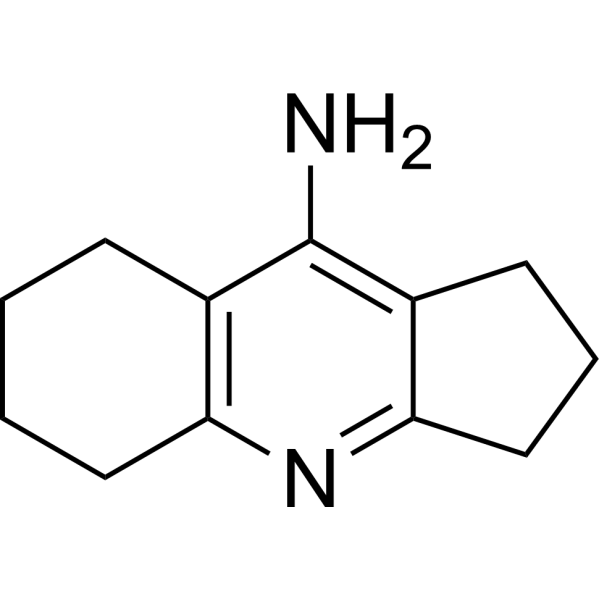
Ipidacrine is orally active and brain-penetrant AChE and BuChE inhibitors with IC50 values of 1 μM and 1.9 μM, respectively, which is also a partial agonist of M2-cholinergic receptors and a reversible cholinesterase inhibitor. Ipidacrine has a stimulating effect on neuromuscular transmission and excitation along the nerve fibres with a moderately anti-pain effect. Ipidacrine is an aminopyridines and is structurally similar to Tacrine (HY-111338). Ipidacrine is effective in various amnesia models, improves erectile function and inhibits K + and Na +-channels in the neuronal membrane in diabetic rats. Ipidacrine is promising for research of Alzheimer’s disease, ischaemic stroke, idiopathic neuropathy of the facial nerve, diabetes mellitus-induced erectile dysfunction and other deficits in central or peripheral cholinergic deseases .
loading...
    loading...
Cat. No.: HY-103160B
CAS No.: 51350-19-7
EHNA is a potent and selective dual inhibitor of cyclic nucleotide phosphodiesterase 2 (PDE2)(IC50=4 μM) and adenosine deaminase (ADA). EHNA exerts a concentration inhibition of the cGMP-stimulated PDE II (cGs-PDE)(IC50:0.8 μM (human), 2 μM (porcine myocardium)), but has smaller inhibitory effect on the unstimulated PDE2 activity. EHNA play roles in mediating diverse pharmacological responses, including antiviral, antitumour and antiarrhythmic effects .
loading...
    loading...
Cat. No.: HY-107915
CAS No.: 829-74-3
Purity:  98.35%
Synonyms: (-)-Cobefrin; (-)-α-Methylnoradrenaline; (-)-Nordefrin
Target:  

Adrenergic Receptor

Research Areas:  

Cardiovascular Disease

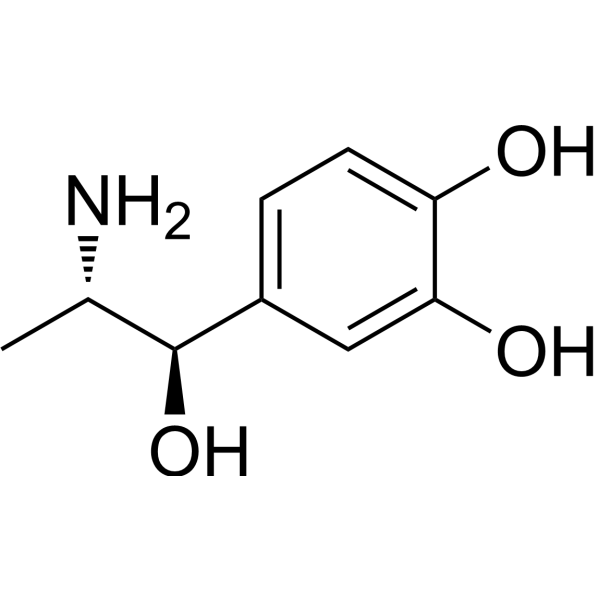
Levonordefrin ((-)-Cobefrin; (-)-α-Methylnoradrenaline; (-)-Nordefrin) is an α-adrenergic receptor agonist with blood pressure regulatory properties. Levonordefrin is a key metabolite responsible for the hypotensive effect of α-methyldopa. By stimulating central α-adrenergic receptors in the nucleus tractus solitarius region of the medulla oblongata, Levonordefrin induces centrally mediated hypotension and bradycardia. When administered intravenously, Levonordefrin increases mean arterial blood pressure in a dose-dependent manner. Levonordefrin is applicable for research on the pathophysiology of hypertension and drug metabolism .
loading...
    loading...
Cat. No.: HY-23133
CAS No.: 961-45-5
Target:  

Adenosine Receptor

Research Areas:  

Neurological Disease

8-Phenyltheophylline is an adenosine receptor (adenosine receptor) antagonist. 8-Phenyltheophylline blocks adenosine-stimulated cAMP accumulation, inhibits tissue-selective cAMP hydrolysis, and antagonizes the inhibitory effects of adenosine. 8-Phenyltheophylline enhances apomorphine-induced rotational behavior in lesioned rats, reverses the analgesic effect of morphine in the rat hot plate test, and slightly enhances contractile responses of the atrium and ileum. 8-Phenyltheophylline can be used in studies related to unilateral nigrostriatal pathway injury .
loading...
    loading...
Cat. No.: HY-N2326
CAS No.: 1219922-30-1
Target:  

nAChR

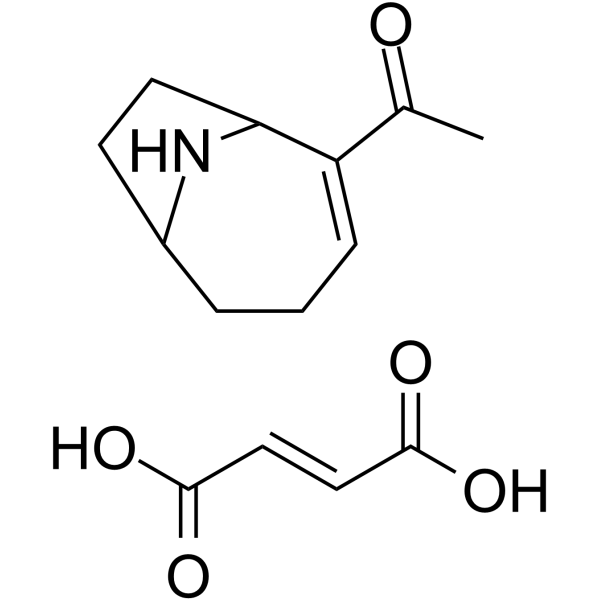
(±)-Anatoxin A fumarate is a natural alkaloid isolated from freshwater cyanobacterium.(±)-Anatoxin A fumarate is a potent nicotinic receptor agonist and exhibits Ki values of 1.25 nM and 1.84 μM for binding to α4β2- and α7-type nicotinic receptors in rat brain membranes, respectively. (±)-Anatoxin A fumarate stimulates [ 3H]-dopamine release from rat striatal synaptosomes (EC50=134 nM). (±)-Anatoxin A fumarate has toxic effect on fish .
loading...
    loading...
Cat. No.: HY-P0039
CAS No.: 136207-23-3
Target:  

Bombesin Receptor

Research Areas:  

Cancer

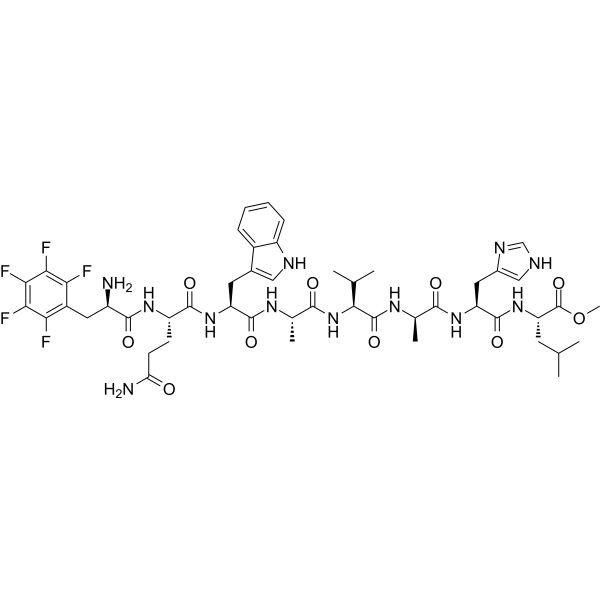
BIM-26226 is a selective gastrin-releasing peptide receptor (GRPR) (IC50 = 6 nM) and bombesin receptor (BN receptor) antagonist. BIM-26226 antagonizes BN- or GRP-stimulated amylase release with IC50 values of 0.3 nM and 0.2 nM, respectively. BIM-26226 is specific for the GRP-preferring BN receptor subtype with no interference with GRP receptor system. BIM-26226 can induce the synthesis of somatostatin receptor but has no significant effect on tumor growth .
loading...
    loading...
Cat. No.: HY-118387
CAS No.: 498577-53-0
Target:  

Potassium Channel

Research Areas:  

Cardiovascular Disease

AVE-0118 is a Kv1.5 potassium channel blocker and antiarrhythmic agent. AVE-0118 blocks neuronal Kv1.5 potassium channels, thereby enhancing the release of norepinephrine. AVE-0118 enhances field stimulation-induced neurogenic contraction, an effect sensitive to α1-adrenergic receptor blockade. AVE-0118 terminates persistent atrial fibrillation in some dogs. AVE-0118 is applicable to research related to atrial fibrillation and persistent atrial fibrillation .
loading...
    loading...
Cat. No.: HY-123525
CAS No.: 550310-04-8
Target:  

GABA Receptor

Research Areas:  

Neurological Disease

COR628 is a positive allosteric modulator of GABA(B) receptors with the activity of enhancing GABA-induced GTPγS stimulation. COR628 showed significant activity in in vitro studies but did not exhibit endogenous agonist activity. COR628 has shown efficacy in experiments in mice by enhancing the sedation/hypnosis induced by baclofen, shortening the onset time and extending the duration of loss of righting reflex when combined with non-sedating doses of baclofen . The cytotoxic effect of COR628 is comparable to or higher than that of GS39783 or BHF177 in concentration .
loading...
    loading...
Cat. No.: HY-182599
CAS No.: 129927-37-3
Target:  

Calcium Channel mAChR

Research Areas:  

Neurological Disease

RCC-36 hydrochloride is an L-type calcium channel inhibitor and competitive muscarinic receptor antagonist. RCC-36 hydrochloride inhibits L-type calcium currents in voltage- and concentration-dependent fashion with no effect on cardiac K + currents. RCC-36 hydrochloride suppresses maximum acetylcholine-induced contractile responses, inhibits detrusor muscle contractions induced by potassium chloride, calcium chloride, and electric field stimulation, including atropine-resistant contractions. RCC-36 hydrochloride can be used for the research of urinary frequency, urinary incontinence, and bladder overactivity .
loading...
    loading...

