
140 Results for "

renal function

" in MedChemExpress (MCE) Product Catalog:
Products (140)

140 Results for "renal function" in MCE Product Catalog:

Cat. No.: HY-183138
CAS No.: 86408-45-9
Target:  

Drug Metabolite

Research Areas:  

Cardiovascular Disease

N-Demethyldiltiazem is a metabolite of Diltiazem (HY-B0632). N-Demethyldiltiazem increases coronary blood flow, modulates cardiac function, decreases systemic blood pressure and heart rate, and alters papillary muscle developed tension .
loading...
    loading...
Cat. No.: HY-W145519
CAS No.: 9005-27-0
Hydroxyethyl starch (MW170-230 kDa) is a type of hydroxyethyl starch with a molecular weight of 170-230 kDa. A medium-molecular-weight hydroxyethyl starch (HES 200/0.62) exhibits minimal intravascular hydrolysis. The rapidly degradable medium-molecular-weight Hydroxyethyl starch 200/0.5 causes almost no coagulation disorders and improves hemorheological parameters .
loading...
    loading...
Cat. No.: HY-112879R
CAS No.: 1334850-99-5
Mito-TEMPO (Standard) is the analytical standard of Mito-TEMPO (HY-112879). This product is intended for research and analytical applications. Mito-TEMPO is a mitochondria-targeted antioxidant. Mito-TEMPO induces mitophagy by activating the PINK1/ParKin pathway, inhibits NLRP3 inflammasome activation, restores mitochondrial membrane potential, and improves renal function and podocyte injury. Mito-TEMPO regulates Ca 2+ homeostasis, inhibits Bnip3 overexpression, shortens action potential duration, and exerts antiarrhythmic effects. Mito-TEMPO reverses premature senescence, reduces trabecular bone loss, and decreases cell apoptosis. Mito-TEMPO can be used in studies of chronic Kidney disease, age-related cardiac dysfunction, postmenopausal osteoporosis, and ischemic stroke .
loading...
    loading...
Cat. No.: HY-119649S
CAS No.: 2483830-60-8
Purity:  ≥98.0%
Synonyms: IKI220-15N18O
Flonicamid- 15N, 18O (IKI220- 15N, 18O) is the 18O , 15N-labeled Flonicamid (HY-119649). Flonicamid (IKI220) is an antifeedant Insecticide active against Hemiptera, Thysanoptera, and piercing-sucking pests including aphids of all species, developmental stages and morphs. Flonicamid inhibits the inward rectifier potassium channel NlKir1, blocking stylet penetration, salivation, sap feeding, honeydew secretion, and fluid secretion by isolated Malpighian tubules. Flonicamid reduces renal excretory function in female Culex pipiens pallens. Flonicamid rapidly disrupts insect feeding behavior without neurotoxic poisoning symptoms, induces irreversible starvation, and increases the mortality of nymph progeny of adult aphids exposed to this agent .
loading...
    loading...
Cat. No.: HY-122940
CAS No.: 644-06-4
Purity:  99.95%
Synonyms: Ageratochromene
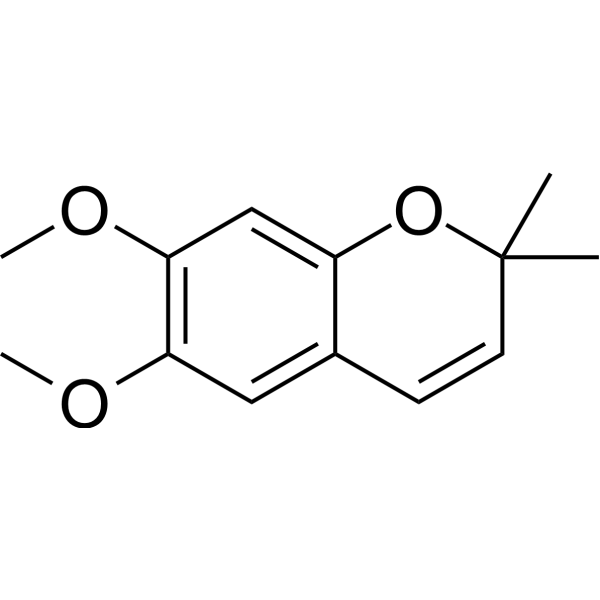
Precocene II (Ageratochromene) is a plant larva hormone antagonists that inhibits the biosynthesis of juvenile hormone. Precocene II inhibits corpora allata function and downregulates juvenile hormone levels, while exerting multiple effects including inducing precocious metamorphosis, forming macropterous morphs, inhibiting ovarian growth, producing cytotoxicity, disrupting insect development, and causing sterility and kidney damage. Precocene II blocks normal nymphal development, causes renal tubular damage and increases blood urea nitrogen levels, and also blocks juvenile hormone biosynthesis in vitro. Precocene II undergoes oxidative metabolism catalyzed by NADPH-dependent monooxygenase to generate a variety of metabolites. Precocene II can be applied in studies related to insect growth regulation and nephrotoxicity .
loading...
    loading...
Cat. No.: HY-153149
CAS No.: 945457-84-1
Synonyms: FM101
LJ-2698 (FM101) is an orally active adenosine A3 receptor (Adenosine A3 Receptor) antagonist . LJ-2698 blocks adenosine A3 receptor-dependent pro-inflammatory JNK, ERK, and NF-κB signaling pathways. LJ-2698 prevents alveolar cavity enlargement, restores pulmonary function, and inhibits matrix metalloproteinase activity and pulmonary cell apoptosis (apoptosis) in mice . LJ-2698 induces mitochondrial dysfunction, necroptosis, and intrinsic apoptosis. LJ-2698 ameliorates renal injury in mice with diabetic nephropathy, and alleviates diet-induced hepatic inflammation and fibrosis. LJ-2698 can be used in the research of emphysema, diabetic nephropathy, and metabolic dysfunction-associated steatotic liver disease .
loading...
    loading...
Cat. No.: HY-N3225
CAS No.: 33606-81-4
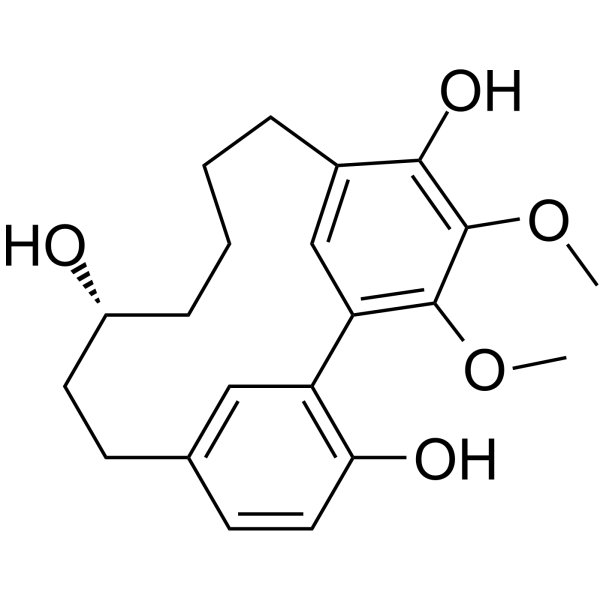
Myricanol is a diarylheptanoid and a Nampt activator. Myricanol exerts anti-inflammatory effects and alleviates glucocorticoid-induced muscle atrophy by increasing Sirtuin 1 (SIRT1) and PRDX5 activities while regulating inflammatory factors. Myricanol exhibits growth inhibition and induces apoptosis in human lung adenocarcinoma A549 cells. Myricanol promotes autophagy-mediated clearance of microtubule-associated protein tau to exert neuroprotective effects. Myricanol protects cardiovascular function by inhibiting PDGFRβ and NF-κB signaling pathways. Myricanol activates mitochondrial transcription factor A (TFAM) expression to exert anti-renal fibrosis effects. Myricanol improves insulin resistance through AMPK activation .
loading...
    loading...
Cat. No.: HY-W008385R
CAS No.: 156-86-5
Synonyms: L-Homoarginine (Standard)
H-HoArg-OH (Standard) (L-Homoarginine (Standard)) is the analytical standard of H-HoArg-OH (HY-W008385). This product is intended for research and analytical applications. H-HomoArg-OH (L-Homoarginine) is an orally active endogenous non-protein amino acid. H-HomoArg-OH acts as a weak alternative substrate for NOS and interferes with NO production, selectively inhibits tissue-nonspecific alkaline phosphatase (TNAP), and suppresses the uptake of arginine by y +-type transporters (system y +). H-HomoArg-OH increases tissue hArg concentrations in vivo, regulates amino acid homeostasis, and improves renal function and pathological features of diabetic nephropathy. H-HomoArg-OH can be used in studies related to diabetes and cardiomyopathy .
loading...
    loading...
Cat. No.: HY-W008385S
CAS No.: 1332075-41-8
Synonyms: L-Homoarginine-d4
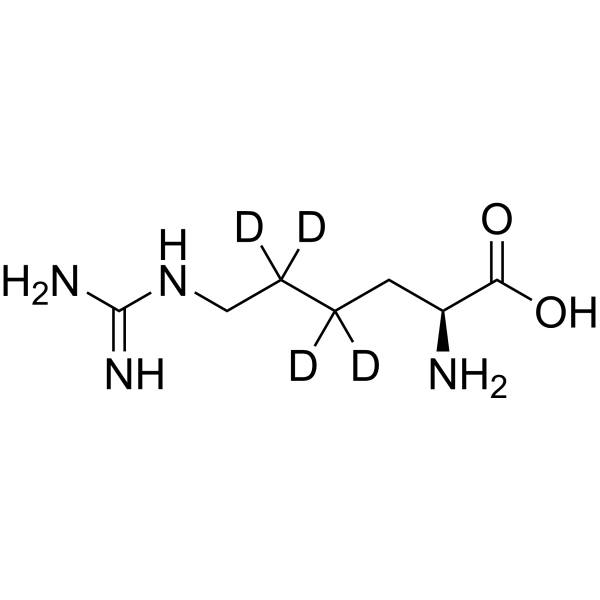
H-HoArg-OH-d4 (L-Homoarginine-d4) is the d4-labeled H-HoArg-OH (HY-W008385). H-HoArg-OH (L-Homoarginine) is an orally active endogenous non-protein amino acid. H-HoArg-OH acts as a weak alternative substrate for NOS and interferes with NO production, selectively inhibits tissue-nonspecific alkaline phosphatase (TNAP), and suppresses the uptake of arginine by y +-type transporters (system y +). H-HoArg-OH increases tissue hArg concentrations in vivo, regulates amino acid homeostasis, and improves renal function and pathological features of diabetic nephropathy. H-HoArg-OH can be used in studies related to diabetes and cardiomyopathy .
loading...
    loading...
Cat. No.: HY-102093A
CAS No.: 151801-76-2
Target:  

Others

Research Areas:  

Others

ZD 7155 is an AT1R selective antagonist with renal function modulating activity. The effects of ZD 7155 on glomeruli and tubules were measured in 1- (N = 9) and 6-week-old (N = 13) lambs. Pretreatment with ZD 7155 after L-NAME infusion did not alter glomerular function in 1- or 6-week-old lambs. During postnatal development, Ang II modulates the effects of NO on electrolyte handling via AT1R and AT2R. In 6-week-old lambs, selective inhibition of AT1R and AT2R increased the excretion of Na+, K+, and Cl-. In 6-week-old lambs, pretreatment with ZD 7155 and PD 123319 followed by the addition of L-NAME increased urine flow rate by 200%, free water clearance by 50%, and decreased urine osmolality by 40%. The same trends of changes in these variables were also observed when L-NAME was added to ZD 7155 or PD 123319, although to a lesser extent.
loading...
    loading...
Cat. No.: HY-101126A
CAS No.: 1418143-09-5
Synonyms: TP-3654 hydrochloride
Research Areas:  

Cancer

Nuvisertib hydrochloride (TP-3654 hydrochloride) is an orally active second-generation pan-PIM kinase inhibitor with Ki values of 5 nM, 239 nM, and 42 nM against PIM-1, PIM-2, and PIM-3, respectively. Nuvisertib hydrochloride inhibits JAK-independent inflammatory and survival signaling pathways, reduces the production of proinflammatory cytokines, restores apoptotic sensitivity, inhibits mTORC1, MYC, and TGF-β signaling pathways, and decreases the expression of fibrosis markers. Nuvisertib hydrochloride selectively impairs the transport function of ABCG2, resensitizes multidrug-resistant cancer cells to cytotoxic drugs, and overcomes JAK2 inhibitor resistance. Nuvisertib hydrochloride can be used in research related to myelofibrosis, renal cell carcinoma, multidrug-resistant cancer, advanced solid tumors, urothelial carcinoma, and prostate adenocarcinoma .
loading...
    loading...
Cat. No.: HY-N18656
CAS No.: 90131-48-9
Category:  

Extract

Target:  

Bacterial

Terminalia chebula extract is an extract from the Terminalia chebula tree. Rich in bioactive compounds such as tannins, flavonoids, phenols, and organic acids like gallic acid and ellagic acid, this extract demonstrates a wide range of pharmacological activities. It acts as a natural laxative, supports digestive health, and exhibits potent antioxidant, anti-inflammatory, and antibacterial properties, effectively targeting various pathogenic bacteria, including Helicobacter pylori, Staphylococcus aureus, and Escherichia coli. Terminalia Chebula Extract also shows significant hepatoprotective effects, shielding the liver from damage through antioxidant and anti-inflammatory mechanisms. It has nephroprotective properties, alleviating renal dysfunction and enhancing kidney health by modulating inflammatory pathways. Additionally, the extract demonstrates neuroprotective activity, reducing neuronal damage and improving memory function. It has potential anti-diabetic effects, enhancing glucose uptake and reducing oxidative stress.
loading...
    loading...
Cat. No.: HY-W012340S
CAS No.: 2483830-23-3
Synonyms: L-Homoarginine-13C7,15N4 hydrochloride
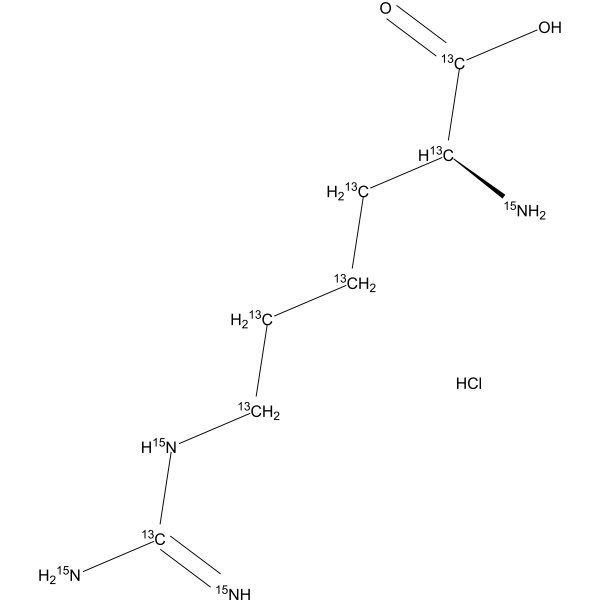
H-HomoArg-OH- 13C7, 15N4 hydrochloride (L-Homoarginine- 13C7, 15N4 hydrochloride) is the 15N, 13C-labeled H-HomoArg-OH (hydrochloride) (HY-W012340). H-HomoArg-OH hydrochloride (L-Homoarginine hydrochloride) is an orally active endogenous non-protein amino acid. H-HomoArg-OH hydrochloride acts as a weak alternative substrate for NOS and interferes with NO production, selectively inhibits tissue-nonspecific alkaline phosphatase (TNAP), and suppresses the uptake of arginine by y +-type transporters (system y +). H-HomoArg-OH hydrochloride increases tissue hArg concentrations in vivo, regulates amino acid homeostasis, and improves renal function and pathological features of diabetic nephropathy. H-HomoArg-OH hydrochloride can be used in studies related to diabetes and cardiomyopathy .
loading...
    loading...
Cat. No.: HY-122940R
CAS No.: 644-06-4
Synonyms: Ageratochromene (Standard)
Precocene II (Standard) is the analytical standard of Precocene II (HY-122940). This product is intended for research and analytical applications. Precocene II (Ageratochromene) is a plant larva hormone antagonists that inhibits the biosynthesis of juvenile hormone. Precocene II inhibits corpora allata function and downregulates juvenile hormone levels, while exerting multiple effects including inducing precocious metamorphosis, forming macropterous morphs, inhibiting ovarian growth, producing cytotoxicity, disrupting insect development, and causing sterility and kidney damage. Precocene II blocks normal nymphal development, causes renal tubular damage and increases blood urea nitrogen levels, and also blocks juvenile hormone biosynthesis in vitro. Precocene II undergoes oxidative metabolism catalyzed by NADPH-dependent monooxygenase to generate a variety of metabolites. Precocene II can be applied in studies related to insect growth regulation and nephrotoxicity .
loading...
    loading...
Cat. No.: HY-N0772R
CAS No.: 24699-16-9
Isomangiferin (Standard) is the analytical standard of Isomangiferin (HY-N0772). This product is intended for research and analytical applications. Isomangiferin is an orally active xanthone C-glucoside, and its chemical structure is similar to Mangiferin (HY-N0290). Isomangiferin is an effective VEGFR-2 kinase inhibitor, which can induces cell apoptosis, inhibit the growth, metastasis and angiogenesis of breast cancer. Isomangiferin exerts anti-inflammatory effects by inhibiting the HMGB1/NLRP3/NF-κB signaling pathway, thereby improving the renal function indicators of diabetic mice. Isomangiferin exhibits inhibitory effects on various bacteria and herpes simplex virus type 1 (HSV-1). Isomangiferin promotes the migration and osteogenic differentiation of bone marrow mesenchymal stem cells (BMSCs) and reduces cell apoptosis and the production of ROS by activating the AMPK/ACC pathway, thereby facilitating fracture healing.
loading...
    loading...
Cat. No.: HY-101126R
CAS No.: 1361951-15-6
Synonyms: TP-3654 (Standard)
Research Areas:  

Cancer

Nuvisertib (Standard) (TP-3654 (Standard)) is the analytical standard of Nuvisertib (HY-101126). This product is intended for research and analytical applications. Nuvisertib (TP-3654) is an orally active second-generation pan-PIM kinase inhibitor with Ki values of 5 nM, 239 nM, and 42 nM against PIM-1, PIM-2, and PIM-3, respectively. Nuvisertib inhibits JAK-independent inflammatory and survival signaling pathways, reduces the production of proinflammatory cytokines, restores apoptotic sensitivity, inhibits mTORC1, MYC, and TGF-β signaling pathways, and decreases the expression of fibrosis markers. Nuvisertib selectively impairs the transport function of ABCG2, resensitizes multidrug-resistant cancer cells to cytotoxic drugs, and overcomes JAK2 inhibitor resistance. Nuvisertib can be used in research related to myelofibrosis, renal cell carcinoma, multidrug-resistant cancer, advanced solid tumors, urothelial carcinoma, and prostate adenocarcinoma .
loading...
    loading...
Cat. No.: HY-P1615
CAS No.: 1006388-38-0
Synonyms: UPARANT
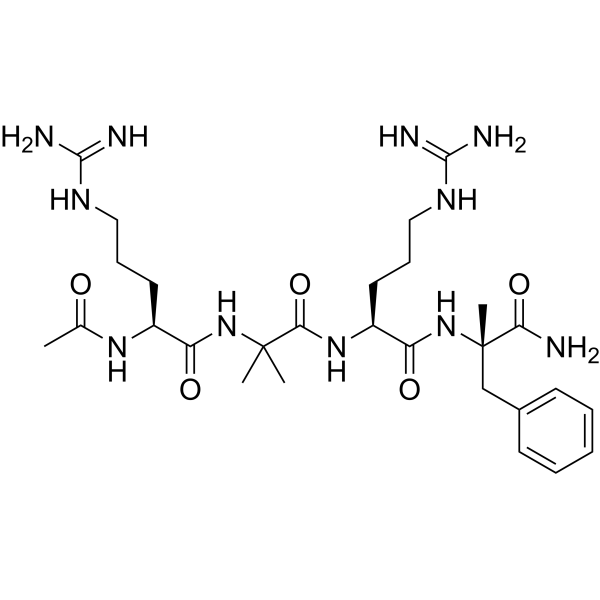
Cenupatide (UPARANT) is a uPAR and FPR antagonist with anti-angiogenic, anti-inflammatory, and vascular barrier regulatory activities, as well as high stability and resistance to enzymatic degradation in blood/plasma. Cenupatide blocks the uPAR-FPR interaction, reduces VEGF-induced phosphorylation levels of AKT, VEGFR-2, STAT3, JNK, p38 MAPK, ERK1/2, and NF-κB p65, and inhibits αvβ3 integrin activation. Cenupatide suppresses endothelial cell migration, invasion, tube formation, and angiogenic signaling pathways, restores tight junctions and blood-retinal barrier integrity, reduces pro-inflammatory marker levels, and inhibits apoptosis. Cenupatide reduces retinal neovascularization, renal fibrosis, and vascular leakage, and restores visual function in preclinical models. Cenupatide is applicable to research related to retinopathy, diabetic complications, ocular diseases, cancer, and inflammatory diseases .
loading...
    loading...
Cat. No.: HY-13687R
CAS No.: 873225-46-8
IKK 16 (Standard) is the analytical standard of IKK 16. This product is intended for research and analytical applications. IKK 16 hydrochloride is an orally active IKK inhibitor. IKK 16 hydrochloride shows IC50s of 40 nM, 70 nM, 200 nM, and 50 nM for IKK2, IKK complex, IKK1, and LRRK 2, respectively. IKK 16 hydrochloride is also a pan-PKD inhibitor, inhibiting PKD1, PKD2, and PKD3 with IC50s of 153.9, 115, and 99.7 nM, respectively. IKK 16 hydrochloride is also an ABCB1 inhibitor, interfering with the binding of ABCB1 to its substrates. IKK 16 hydrochloride protects against LPS (HY-D1056)-induced multiple organ dysfunction by reducing the acute inflammatory response induced by endotoxin exposure. IKK 16 hydrochloride can restore renal function and alleviate fibrosis in acute kidney injury. IKK 16 hydrochloride attenuates cardiac dysfunction associated with polymicrobial sepsis in mice with type 2 diabetes mellitus (T2DM) by inhibiting the NF-κB pathway.
loading...
    loading...
Cat. No.: HY-162677
CAS No.: 1610794-70-1
Research Areas:  

Cardiovascular Disease

MT-1207 is an orally active, selective adrenergic α1 and 5-HT2A receptor antagonist. The IC50 values of MT-1207 for α1A, α1B, α1D, and 5-HT2A are <0.1 nM, 0.15 nM, 1.40 nM, and 0.27 nM, respectively. MT-1207 induces vasodilation, improves baroreflex sensitivity, and reduces heart rate in isolated hearts. MT-1207 lowers blood pressure, protects the heart, brain, and kidneys, improves cognition, delays stroke, reduces mortality, and lowers uric acid without impairing renal function in SHR/2K1C/2K2C models. MT-1207 exhibits high plasma protein binding, resistance to plasma esterases, and NADPH-dependent hepatic metabolism. MT-1207 can be used for research related to hypertension .
loading...
    loading...
Cat. No.: HY-L194
1,282 compounds

Heat-clearing and detoxification is a specific treatment method in the research of traditional Chinese medicine (TCM), which is clinically used to treat infectious diseases with remarkable effect. Over the past decades, the research of heat-clearing and detoxification treatment has been one of the most active fields of combining traditional Chinese and western medicines, and has made remarkable achievements. Nowadays, the application field of heat-clearing and detoxification traditional Chinese medicine is not only limited to antibacterial and antiviral, but also has made progress in the research fields of anti-inflammatory reaction, anti-endotoxin, anti-peroxidative damage, anti-inflammatory cytokines, enhancement of immune function, protection of cellular organelles, and maintenance of calcium homeostasis. In addition to this, clearing heat and removing toxins has also made significant research progress in non-infectious diseases, for example, in tumors, cardiovascular diseases, renal diseases, blood diseases, geriatrics, and diabetes, all of which have shown good curative effect.

MCE can supply 1,282 monomer component from more than a hundred sources of heat-clearing and detoxification TCM, which can be used in TCM studies, drug development and mechanism-based studies.

