
1529 Results for "

migration.

" in MedChemExpress (MCE) Product Catalog:
Products (1529)

1529 Results for "migration." in MCE Product Catalog:

Cat. No.: HY-W766368
Synonyms: C6-Cer-13C2,d2; N-Hexanoylsphingosine-13C2,d2
Research Areas:  

Cancer

C6 Ceramide- 13C2,d2 (C6-Cer- 13C2,d2) is the deuterium labeled and 13C-labeled C6 Ceramide (HY-19542). C6 Ceramide (C6-Cer) is a short-chain, cell-permeable ceramide pathway activator with anticancer activity. C6 Ceramide-mediated miR-29b expression participates in the progression of multiple myeloma through suppressing the proliferation, migration and angiogenesis of endothelial cells by targeting Akt signal pathway. C6 Ceramide exhibits multiple anti-cancer properties including cell cycle arrest, Apoptosis, inhibition of tumor growth and enhances the effects of chemotherapy in drug-resistant cancer cells. C6-ceramide can be used as an adjuvant for chemotherapeutic agents, to enhance anti-tumor effects .
loading...
    loading...
Cat. No.: HY-Y0106R
CAS No.: 699-83-2
2,6-Dihydroxyacetophenone (Standard) is the analytical standard of 2,6-Dihydroxyacetophenone (HY-Y0106). This product is intended for research and analytical applications. 2,6-Dihydroxyacetophenone, a polyphenolic derivative of Acetophenone (HY-Y0989), is an orally active mTOR inhibitor. 2,6-Dihydroxyacetophenone shows antioxidant activity. 2,6-Dihydroxyacetophenone inhibits cell growth and proliferation in CRC cells. 2,6-Dihydroxyacetophenone arrests at G0/G1 phase of cell cycle, induces apoptosis and suppresses cell migration in CRC cells. 2,6-Dihydroxyacetophenone inhibits xanthine oxidase (XOD) with an IC50 of 1.24 mM. 2,6-dihydroxyacetophenone improves uric acid metabolism in hyperuricemia mice, reduces plasma cholesterol in hypercholesterolemic rats, and inhibits lipid accumulation in HFD-induced obese mice. 2,6-Dihydroxyacetophenone can be used for the study of colorectal cancer (CRC), hyperuricemia and hypercholesterolemia .
loading...
    loading...
Cat. No.: HY-Y0317I
CAS No.: 7757-82-6
Synonyms: Disodium sulfate, meets analytical specification of Ph. Eur. BP USP
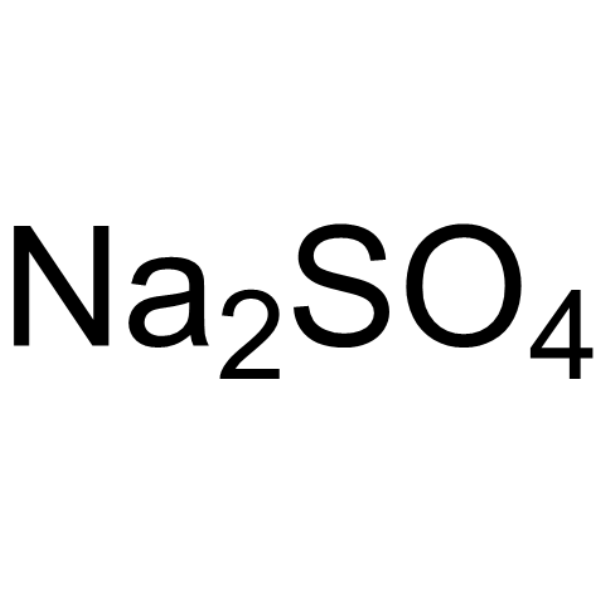
Sodium sulfate anhydrous (Disodium sulfate), meets analytical specification of Ph. Eur. BP USP is an orally active multifunctional ionic salt that serves as a protein precipitant, collagen fibril bundling inducer, and chlorine-free sodium source. Sodium sulfate anhydrous, meets analytical specification of Ph. Eur. BP USP promotes collagen fibril bundling to increase matrix pore size, alters cancer cell morphology and regulates their migration direction via geometric signals, and separates plasma/serum proteins or concentrates proteins at 37°C without causing thermal denaturation. In poultry farming applications, Sodium sulfate anhydrous, meets analytical specification of Ph. Eur. BP USP improves laying performance and eggshell quality, and is safe and effective at an addition level of 0.3-1.5%, while a high concentration of 3.0% causes negative physiological effects. Sodium sulfate anhydrous, meets analytical specification of Ph. Eur. BP USP can be widely applied in scientific research on cervical cancer and related fields .
loading...
    loading...
Cat. No.: HY-P87017
Synonyms: 11S regulator complex beta subunit antibody; 11S regulator complex subunit beta antibody; Activator of multicatalytic protease subunit 2 antibody; Cell migration inducing protein 22 antibody; MCP activator 31 kD subunit antibody; PA28 beta antibody; PA28b antibody; PA28beta antibody; Proteasome (prosome macropain) activator subunit 2 (PA28 beta) antibody; Proteasome (prosome macropain) activator subunit 2 antibody; 11S regulator complex beta subunit antibody; 11S regulator complex subunit beta antibody; Activator of multicatalytic protease subunit 2 antibody; Cell migration inducing protein 22 antibody; MCP activator 31 kD subunit antibody; PA28 beta antibody; PA28b antibody; PA28beta antibody; Proteasome (prosome macropain) activator subunit 2 (PA28 beta) antibody; Proteasome (prosome macropain) activator subunit 2 antibody; Proteasome activator 28 beta antibody; Proteasome activator 28 subunit beta antibody; Proteasome activator complex subunit 2 antibody; Proteasome activator hPA28 subunit beta antibody; Proteasome activator subunit 2 antibody; PSME 2 antibody; PSME2 antibody; PSME2_HUMAN antibody; REG beta antibody; REG-beta antibody; REGbeta antibody;

Host:  

Rabbit

Application:  

WB, ICC/IF, IHC-P, FC

Reactivity:  

Human, Mouse, Rat

loading...
    loading...
Cat. No.: HY-12388AS
CAS No.: 1189971-04-7
Purity:  99.81%
Synonyms: Desmethylclomipramine-d3 hydrochloride;Norclomipramine-d3 hydrochloride
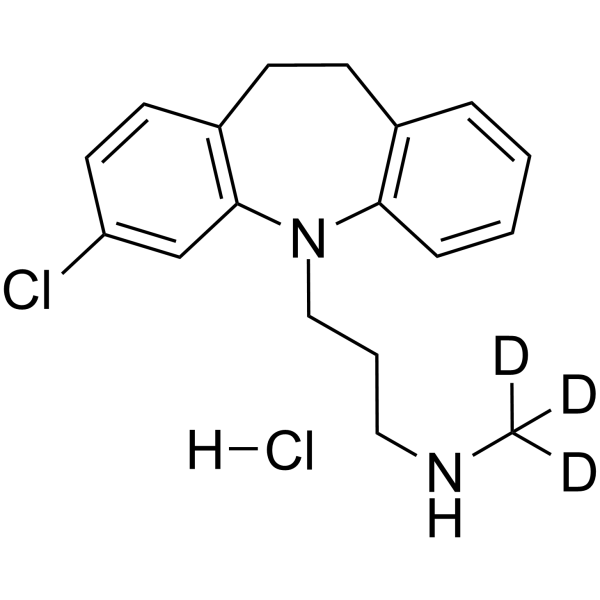
N-Desmethyl clomipramine-d3 hydrochloride (Desmethylclomipramine-d3 hydrochloride; Norclomipramine-d3 hydrochloride) is the deuterated-labeled N-Desmethyl clomipramine hydrochloride (HY-12388A). N-Desmethyl clomipramine hydrochloride is the orally active major active metabolite of the tricyclic antidepressant Clomipramine (HY-B0457A), possessing multiple activities including anti-inflammatory, antioxidant, antibacterial, and antiparasitic effects. N-Desmethyl clomipramine hydrochloride blocks autophagosome-lysosome fusion, leading to the accumulation of LC3-II, p62, ATG7, WIPI2, and ATG5-12, reactivates the p53/p21 pathway, induces apoptosis through C-PARP and C-CAS3, and inhibits the proliferation, migration, and invasion of renal cancer cells. N-Desmethyl clomipramine hydrochloride inhibits LdTOPIA, inducing R-loop accumulation in the nucleus of Leishmania, ultimately causing parasite death. N-Desmethyl clomipramine hydrochloride can be used for research on depression, metastatic renal cell carcinoma, and leishmaniasis .
loading...
    loading...
Cat. No.: HY-12388S
Synonyms: Desmethylclomipramine-d7; Norclomipramine-d7
N-Desmethyl clomipramine-d7 (Desmethylclomipramine-d7; Norclomipramine-d7) is the deuterated-labeled N-Desmethyl clomipramine (HY-12388). N-Desmethyl clomipramine is the orally active major active metabolite of the tricyclic antidepressant Clomipramine (HY-B0457A), possessing multiple activities including anti-inflammatory, antioxidant, antibacterial, and antiparasitic effects. N-Desmethyl clomipramine blocks autophagosome-lysosome fusion, leading to the accumulation of LC3-II, p62, ATG7, WIPI2, and ATG5-12, reactivates the p53/p21 pathway, induces apoptosis through C-PARP and C-CAS3, and inhibits the proliferation, migration, and invasion of renal cancer cells. N-Desmethyl clomipramine inhibits LdTOPIA, inducing R-loop accumulation in the nucleus of Leishmania, ultimately causing parasite death. N-Desmethyl clomipramine can be used for research on depression, metastatic renal cell carcinoma, and leishmaniasis .
loading...
    loading...
Cat. No.: HY-12388S1
Synonyms: Desmethylclomipramine-d6; Norclomipramine-d6
N-Desmethyl clomipramine-d6 (Desmethylclomipramine-d6; Norclomipramine-d6) is the deuterated-labeled N-Desmethyl clomipramine (HY-12388). N-Desmethyl clomipramine (Desmethylclomipramine; Norclomipramine) is the orally active major active metabolite of the tricyclic antidepressant Clomipramine (HY-B0457A), possessing multiple activities including anti-inflammatory, antioxidant, antibacterial, and antiparasitic effects. N-Desmethyl clomipramine blocks autophagosome-lysosome fusion, leading to the accumulation of LC3-II, p62, ATG7, WIPI2, and ATG5-12, reactivates the p53/p21 pathway, induces apoptosis through C-PARP and C-CAS3, and inhibits the proliferation, migration, and invasion of renal cancer cells. N-Desmethyl clomipramine inhibits LdTOPIA, inducing R-loop accumulation in the nucleus of Leishmania, ultimately causing parasite death. N-Desmethyl clomipramine can be used for research on depression, metastatic renal cell carcinoma, and leishmaniasis .
loading...
    loading...
Cat. No.: HY-125535
CAS No.: 1290069-19-0
OSU-53 is an orally active AMPK activator and mTOR inhibitor, with an IC50 of 0.3 μM for AMPK, an EC50 of 2-5 μM for AMPK, and an IC50 of 8.23 μM for mTOR. OSU-53 inhibits the Akt signaling pathway, directly activates AMPK by binding to its autoinhibitory domain, reduces IKKβ-mediated phosphorylation of Foxo3a, blocks Akt-mediated phosphorylation of MDM2, and promotes the nuclear localization and stabilization of Foxo3a, while directly inhibiting mTOR. OSU-53 inhibits epithelial-mesenchymal transition (EMT), induces epithelial phenotype, suppresses invasion and metastasis, induces autophagy, inhibits the activation of ERK and Akt, reduces the secretion of nitric oxide and proinflammatory cytokines, and inhibits the migration of MDSC; at high doses, it induces MDSC apoptosis, attenuates the immunosuppressive effect of MDSC, reduces MDSC levels, and blocks incision-induced mechanical hyperalgesia. OSU-53 can be used in studies related to breast cancer, prostate cancer, thyroid cancer, melanoma and postoperative pain .
loading...
    loading...
Cat. No.: HY-169134
Research Areas:  

Cancer

PROTAC 20S proteasome subunit β5 degrader 1 is a PROTAC degrader targeting the 20S proteasome subunit β5, with a DC50 of 0.11 μM. PROTAC 20S proteasome subunit β5 degrader 1 forms a ternary complex with the CRBN E3 ligase, induces ubiquitination of the 20S proteasome subunit β5, and promotes its degradation via the proteasomal pathway. PROTAC 20S proteasome subunit β5 degrader 1 disrupts cell cycle progression, promotes apoptosis, and inhibits cell proliferation and migration. PROTAC 20S proteasome subunit β5 degrader 1 exhibits significant proliferation-inhibitory activity against various tumor cells, suppresses tumor growth in in vivo xenograft models, and overcomes the resistance of multiple myeloma cells to Bortezomib (HY-10227). PROTAC 20S proteasome subunit β5 degrader 1 can be used in studies related to pharyngeal cancer and drug-resistant multiple myeloma .
loading...
    loading...
Cat. No.: HY-176498
CAS No.: 1246952-34-0
Synonyms: BMX
NBM-T-BMX-OS01 (BMX) is a derivative of Osthole (HY-N0054). NBM-T-BMX-OS01 attenuates the phosphorylation levels of ERK and Akt in an AMPK-dependent manner. NBM-T-BMX-OS01 induces oxidative stress through the production of ROS. NBM-T-BMX-OS01 enhances Cisplatin-induced cell proliferation inhibition, colony formation inhibition, apoptosis (apoptosis) and cell cycle arrest. NBM-T-BMX-OS01 inhibits VEGF-induced phosphorylation of VEGFR2 and FAK. NBM-T-BMX-OS01 inhibits VEGF-induced endothelial cell proliferation, migration and tube formation, as well as microvessel sprouting in rat aortic rings and angiogenesis induced by colorectal cancer cells. NBM-T-BMX-OS01 inhibits the growth of subcutaneous colorectal cancer xenografts in nude mice. NBM-T-BMX-OS01 can be used in studies related to lung cancer, colorectal cancer and angiogenesis .
loading...
    loading...
Cat. No.: HY-182380
CAS No.: 1632152-27-2
ODZ10117 is a STAT3 and NLRP3 inhibitor with a human STAT3 SH2 domain IC50 of 7.5 μM. ODZ10117 binds to the STAT3 SH2 domain, suppressing tyrosine phosphorylation, dimerization, nuclear translocation, and transcriptional activity. ODZ10117 binds to NLRP3, impairs NEK7 interaction, prevents inflammasome formation, and inhibits caspase-1 and IL-1β cleavage.ODZ10117 reduces MSU (HY-B2130A)-induced IL-1β release, lowers LPS (HY-D1056)-induced sepsis mortality, and exhibits anti-inflammatory effects. ODZ10117 induces apoptosis, suppresses breast cancer cell migration and invasion, reduces tumor growth and lung metastasis, and extends survival in breast cancer models. ODZ10117 can be used for the research of Monosodium urate (HY-B2130A)-induced peritonitis, LPS-induced sepsis, breast cancer, glioblastoma, and Alzheimer's disease .
loading...
    loading...
Cat. No.: HY-189126
CAS No.: 1240580-64-6
Research Areas:  

Cancer

YL064 is a multi-target STAT3-c-MYC inhibitor that directly binds to ATXN3 and inhibits its deubiquitinating activity, thereby promoting the ubiquitination and proteasomal degradation of oncogenic substrates of ATXN3. YL064 inhibits the phosphorylation of STAT3-Tyr705 without altering the total protein level of STAT3; meanwhile, it directly binds to the SH2 domain of STAT3 to block the dimerization, nuclear translocation, and DNA-binding activity of STAT3. YL064 directly targets the C-terminal HLH-Zip domain of c-Myc, upregulates the phosphorylation of c-Myc at the Thr58 site, and induces the ubiquitination and proteasome-dependent degradation of c-Myc. YL064 suppresses tumor cell proliferation, induces G2/M cell cycle arrest, reduces cell migration and invasion capacities, and triggers cancer cell apoptosis. YL064 can be used in related research on breast cancer, prostate cancer, diffuse large B-cell lymphoma, and multiple myeloma .
loading...
    loading...
Cat. No.: HY-B1829AR
CAS No.: 2392-39-4
Synonyms: Dexamethasone 21-phosphate disodium (Standard)
Dexamethasone phosphate (Dexamethasone 21-phosphate) disodium (Standard) is the analytical standard of Dexamethasone phosphate disodium (HY-B1829A). This product is intended for research and analytical applications. Dexamethasone phosphate (Dexamethasone 21-phosphate) disodium is a prodrug form of the glucocorticoid Dexamethasone (HY-14648). Dexamethasone phosphate disodium is produced by introducing a phosphate ester group at the 21-position of the Dexamethasone molecule, forming a salt with sodium ions, thereby significantly improving water solubility. Dexamethasone phosphate disodium inhibits LPS (HY-D1056)-induced degradation of IRAK-1 and IRAK-4, and blocks LPS-induced activation of TRAF6, p-TAK1 and p-JNK. Dexamethasone phosphate disodium inhibits the secretion of RANTES, TGF-β1 and NO, promotes the production of MIP-1α and IL-10, and blocks microglial migration. Dexamethasone phosphate disodium is almost completely converted to Dexamethasone in rat blood, and supports transdermal delivery via iontophoresis. Dexamethasone phosphate disodium can be used in research related to steroid-dependent ulcerative colitis, chemotherapy-induced vomiting, allergic asthma and acute colitis (inflammatory bowel disease).
loading...
    loading...
Cat. No.: HY-N0168AS1
CAS No.: 2750534-85-9
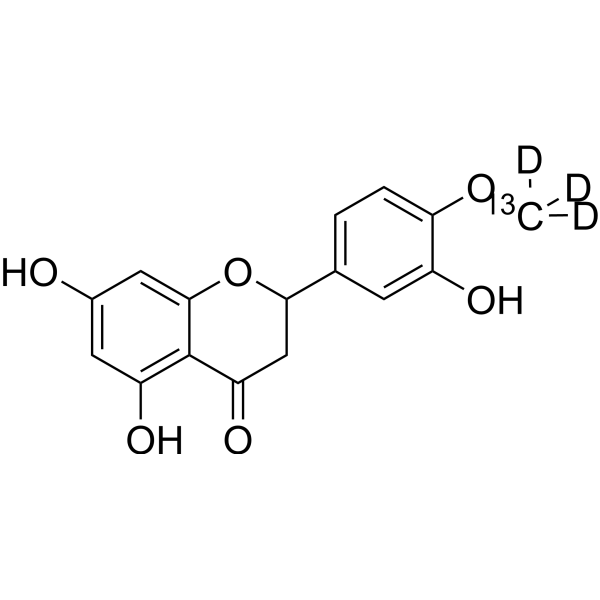
(Rac)-Hesperetin- 13C,d3 is the 13C- and deuterium labeled (Rac)-Hesperetin. (Rac)-Hesperetin is the racemate of Hesperetin (HY-N0168), an orally active multi-target inhibitor. (Rac)-Hesperetin exhibits significant anti-tumor and anti-inflammatory activities by blocking the TGF-β1-mediated Fyn/RhoA signaling axis and the TLR4-MyD88-NF-κB inflammatory pathway. (Rac)-Hesperetin inhibits the formation of actin stress fibers and the migration and invasion of cancer cells, and is suitable for triple-negative breast cancer research. In inflammation models, (Rac)-Hesperetin effectively alleviates lung injury by reducing the release of pro-inflammatory mediators and regulating the activity of oxidative stress enzymes, and is suitable for acute lung injury research. (Rac)-Hesperetin also interferes with the entry and early replication processes of channel catfish virus, inhibits viral gene expression and progeny virus production, thereby protecting cells from virus-induced cytopathic effects .
loading...
    loading...
Cat. No.: HY-N0448R
CAS No.: 23513-15-7
10-Gingerol (Standard) is the analytical standard of 10-Gingerol (HY-N0448). This product is intended for research and analytical applications. 10-Gingerol is an AMPK agonist, which is found in the ginger oleoresin from fresh rhizome with anti-inflammatory, antioxidant and anti-proliferative activities. 10-Gingerol suppresses neointimal hyperplasia and inhibits vascular smooth muscle cell proliferation. 10-Gingerol exhibits substantial scavenging activities with an IC50 value of 10.47 μM against DPPH radical, an IC50 value of 1.68 μM against superoxide radical and an IC50 value of 1.35 μM against hydroxyl radical. 10-Gingerol inhibits the proliferation of MDA-MB-231 tumor cell line with an IC50 of 12.1 μM. 10-Gingerol suppresses the proliferation, migration, invasion, and induced apoptosis through targeting the PI3K/Akt signaling pathway in MDA-MB-231/IR cells. 10-Gingerol is promising for research of ulcerative colitis .
loading...
    loading...
Cat. No.: HY-N4118A
CAS No.: 6014-81-9
Synonyms: (-)-Cephaeline dihydrobromide; NSC 32944 dihydrobromide
Cephaeline dihydrobromide ((-)-Cephaeline dihydrobromide; NSC 32944 dihydrobromide) is a ferroptosis inducer, with broad-spectrum anticancer and antiviral activities. Cephaeline dihydrobromide induces ferroptosis (Ferroptosis) by upregulating p53, inhibiting NRF2, activating ULK3, downregulating the expressions of SLC7A11 and GPX4 in a p53-dependent manner, reducing GSH and mitochondrial membrane potential, and increasing lipid peroxidation and iron accumulation. Cephaeline dihydrobromide inhibits cancer cell proliferation, migration and tumor growth. Cephaeline dihydrobromide inhibits Ebola virus (EBOV) VLP entry and infection, with IC50 values of 3.27 μM and 22.18 μM respectively; it also inhibits Zika virus (ZIKV) NS5 RdRp activity (IC50 = 976 nM), and binds to severe acute respiratory syndrome coronavirus 2 (SARS-CoV-2) RdRp and N protein, with Kd values of 8.9 μM and 53.8 μM respectively. Cephaeline dihydrobromide can be used in studies related to breast cancer, lung cancer, COVID-19, EBOV and ZIKV infections .
loading...
    loading...
Cat. No.: HY-P3009
CAS No.: 9002-05-5
Bovine Factor Xa is a serine protease that plays a central role in blood coagulation, with prothrombin as its physiological substrate. Bovine Factor Xa catalyzes the conversion of prothrombin to thrombin, activates factor VIII, and hydrolyzes peptide, thioester, and amide substrates. Bovine Factor Xa cleaves protease-activated receptors 1 and 2 to activate intracellular signal transduction. Bovine Factor Xa regulates multiple cellular pathways, mediates various cellular activities, tissue remodeling and cancer cell migration, and inhibits apoptosis in some cancer cells. Bovine Factor Xa protects hippocampal neurons against glutamate-induced damage. Bovine Factor Xa participates in embryonic vascular development and regulates immune hematopoiesis; its activity is inhibited by soybean trypsin inhibitor, and cannot be enhanced by phospholipids. Bovine Factor Xa regulates immune responses and macrophage polarization, and participates in fibrosis, vascular remodeling and tumor progression through non-coagulant effects. Bovine Factor Xa can be used in research related to atherosclerosis, fibrosis, asthma, cancer, thromboinflammation, sepsis, etc .
loading...
    loading...
Cat. No.: HY-P3009A
CAS No.: 9002-05-5
Canine Factor Xa is a serine protease that plays a central role in blood coagulation, with prothrombin as its physiological substrate. Canine Factor Xa catalyzes the conversion of prothrombin to thrombin, activates factor VIII, and hydrolyzes peptide, thioester, and amide substrates. Canine Factor Xa cleaves protease-activated receptors 1 and 2 to activate intracellular signal transduction. Canine Factor Xa regulates multiple cellular pathways, mediates various cellular activities, tissue remodeling and cancer cell migration, and inhibits apoptosis in some cancer cells. Canine Factor Xa protects hippocampal neurons against glutamate-induced damage. Canine Factor Xa participates in embryonic vascular development and regulates immune hematopoiesis; its activity is inhibited by soybean trypsin inhibitor, and cannot be enhanced by phospholipids. Canine Factor Xa regulates immune responses and macrophage polarization, and participates in fibrosis, vascular remodeling and tumor progression through non-coagulant effects. Canine Factor Xa can be used in research related to atherosclerosis, fibrosis, asthma, cancer, thromboinflammation, sepsis, etc .
loading...
    loading...
Cat. No.: HY-P3009B
CAS No.: 9002-05-5
Porcine Factor Xa is a serine protease that plays a central role in blood coagulation, with prothrombin as its physiological substrate. Porcine Factor Xa catalyzes the conversion of prothrombin to thrombin, activates factor VIII, and hydrolyzes peptide, thioester, and amide substrates. Porcine Factor Xa cleaves protease-activated receptors 1 and 2 to activate intracellular signal transduction. Porcine Factor Xa regulates multiple cellular pathways, mediates various cellular activities, tissue remodeling and cancer cell migration, and inhibits apoptosis in some cancer cells. Porcine Factor Xa protects hippocampal neurons against glutamate-induced damage. Porcine Factor Xa participates in embryonic vascular development and regulates immune hematopoiesis; its activity is inhibited by soybean trypsin inhibitor, and cannot be enhanced by phospholipids. Porcine Factor Xa regulates immune responses and macrophage polarization, and participates in fibrosis, vascular remodeling and tumor progression through non-coagulant effects. Porcine Factor Xa can be used in research related to atherosclerosis, fibrosis, asthma, cancer, thromboinflammation, sepsis, etc .
loading...
    loading...
Cat. No.: HY-P3009C
CAS No.: 9002-05-5
Porcine Factor Xa is a serine protease that plays a central role in blood coagulation, with prothrombin as its physiological substrate. Porcine Factor Xa catalyzes the conversion of prothrombin to thrombin, activates factor VIII, and hydrolyzes peptide, thioester, and amide substrates. Porcine Factor Xa cleaves protease-activated receptors 1 and 2 to activate intracellular signal transduction. Porcine Factor Xa regulates multiple cellular pathways, mediates various cellular activities, tissue remodeling and cancer cell migration, and inhibits apoptosis in some cancer cells. Porcine Factor Xa protects hippocampal neurons against glutamate-induced damage. Porcine Factor Xa participates in embryonic vascular development and regulates immune hematopoiesis; its activity is inhibited by soybean trypsin inhibitor, and cannot be enhanced by phospholipids. Porcine Factor Xa regulates immune responses and macrophage polarization, and participates in fibrosis, vascular remodeling and tumor progression through non-coagulant effects. Porcine Factor Xa can be used in research related to atherosclerosis, fibrosis, asthma, cancer, thromboinflammation, sepsis, etc .
loading...
    loading...

