190 Results for "

element

" in MedChemExpress (MCE) Product Catalog:
Products (190)

190 Results for "element" in MCE Product Catalog:

Cat. No.: HY-P82398
Synonyms: KHSRP; FUBP2; Far upstream element-binding protein 2; FUSE-binding protein 2; KH type-splicing regulatory protein; KSRP; p75

Host:  

Rabbit

Application:  

WB, IHC-P, ICC/IF, IP

Reactivity:  

Human, Mouse, Rat

loading...
    loading...
Cat. No.: HY-104067
CAS No.: 1596-56-1
Purity:  99.50%
Synonyms: NASTRp
Research Areas:  

Cancer

Naphthol AS-MX phosphate (NASTRp) is a small molecule inhibitor of the CREB (cyclic adenosine phosphate reaction element binding protein)-CBP (CREB binding protein) transcription factor complex. Naphthol AS-MX phosphate shows antitumor activity against lung cancer cells, inhibiting tumor cell proliferation (IC50=3.701 μmol/L), colony formation, and anchored independent growth in soft AGAR. Naphthol AS-MX phosphate can be used in the study of KRAS mutated lung cancer, especially for KRAS mutated lung cancer with poor chemotherapy resistance and prognosis .
loading...
    loading...
Cat. No.: HY-114727
CAS No.: 18741-24-7
Purity:  98.55%
Research Areas:  

Inflammation/Immunology

PDE7-IN-4 is a phosphodiesterase 7 (PDE7) inhibitor with activity that increases intracellular cyclic adenosine monophosphate (cAMP) levels. PDE7-IN-4 shows potential inhibitory effects in neurotransmission and anti-inflammatory applications. PDE7-IN-4 exerts its biological activity by acting on the cAMP/cAMP response element binding protein (CREB) pathway. The development of PDE7-IN-4 aims to improve its pharmacokinetic characteristics to more effectively target neurodegenerative diseases and other inflammation-related diseases .
loading...
    loading...
Cat. No.: HY-124834
CAS No.: 75483-04-4
Target:  

Keap1-Nrf2 Apoptosis

Research Areas:  

Cancer

Nrf2 activator-10 (Compound AI-1) is a PI3K-dependent inducer for antioxidant response element (ARE) (EC50 is 2.7 μM) and an activator for Nrf2. Nrf2 activator-10 modifies Keap1, blocks Cul3-Keap1 ubiquitin ligase complex, activates the transcription of Nrf2. Nrf2 activator-10 protects cells from H2O2-induced apoptosis.
loading...
    loading...
Cat. No.: HY-135581S1
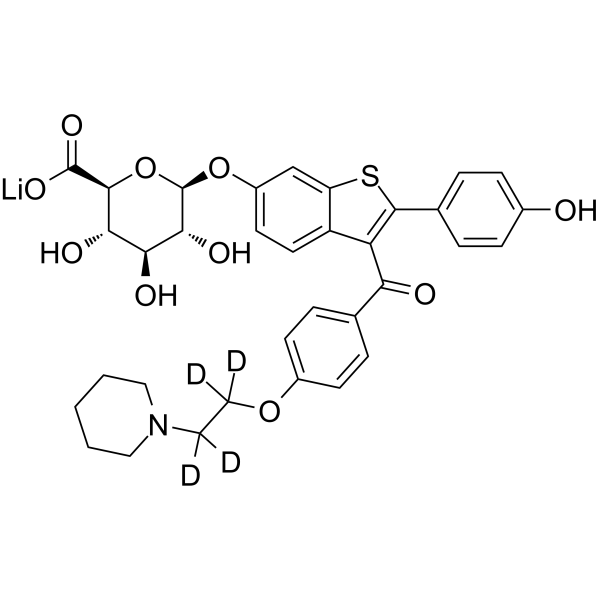
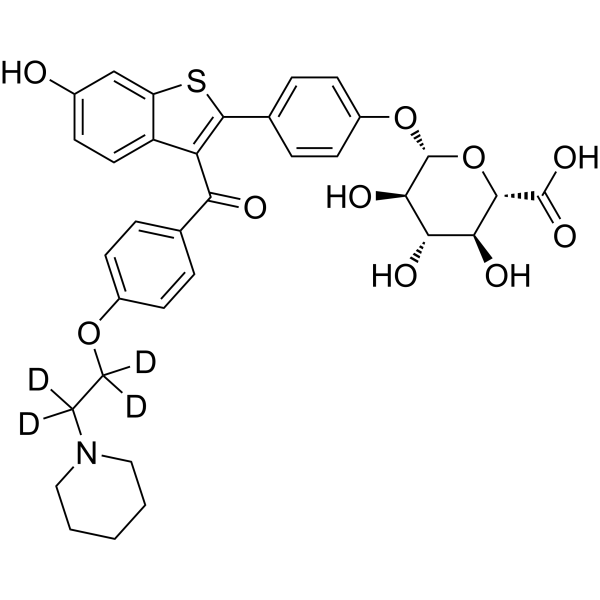
Raloxifene 6-glucuronide-d4 (lithium) is deuterium labeled Raloxifene 6-glucuronide. Raloxifene 6-glucuronide is a primary metabolite of Raloxifene. Raloxifene 6-glucuronide is mediated mostly by UGT1A1 and UGT1A8. Raloxifene 6-glucuronide binds to estrogen receptor with an IC50 of 290 μM. Raloxifene is a selective and nonsteroidal estrogen receptor modulator. Raloxifene activates TGFβ3 promoter as a full agonist at nanomolar concentrations, and inhibits the estrogen response element-containing vitellogenin promoter expression .
loading...
    loading...
Cat. No.: HY-135582S1
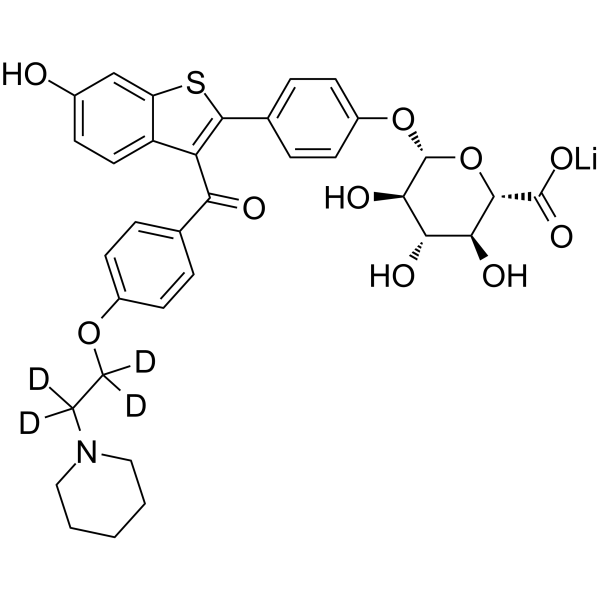
Raloxifene 4'-glucuronide-d4 (lithium) is deuterium labeled Raloxifene 4'-glucuronide. Raloxifene 4'-glucuronide is a primary metabolite of Raloxifene. Raloxifene 4'-glucuronide formation is mediated mostly by UGT1A10 and UGT1A8. Raloxifene 4'-glucuronide binds to estrogen receptor with an IC50 of 370 μM. . Raloxifene is a selective estrogen receptor modulator. Raloxifene activates TGFβ3 promoter as a full agonist at nanomolar concentrations, and inhibits the estrogen response element-containing vitellogenin promoter expression .
loading...
    loading...
Cat. No.: HY-P81679A
Synonyms: XBP1; TREB5; XBP2; X-box-binding protein 1; XBP-1; Tax-responsive element-binding protein 5

Host:  

Rabbit

Application:  

WB, IP

Reactivity:  

Human, Mouse

loading...
    loading...
Cat. No.: HY-P86893
Synonyms: CJS antibody; Gli 2 antibody; GLI family zinc finger 2 antibody; GLI Kruppel family member GLI2 antibody; GLI2 antibody; GLI2_HUMAN antibody; Glioma associated oncogene family zinc finger antibody; HPE9 antibody; Oncogene GLI2 antibody; PHS2 antibody; CJS antibody; Gli 2 antibody; GLI family zinc finger 2 antibody; GLI Kruppel family member GLI2 antibody; GLI2 antibody; GLI2_HUMAN antibody; Glioma associated oncogene family zinc finger antibody; HPE9 antibody; Oncogene GLI2 antibody; PHS2 antibody; Tax helper protein 1 antibody; Tax helper protein 2 antibody; Tax helper protein antibody; Tax responsive element 2 holding protein antibody; Tax responsive element 25 bp sequence binding protein antibody; THP antibody; THP1 antibody; THP2 antibody; Zinc finger protein GLI2 antibody;

Host:  

Rabbit

Application:  

WB

Reactivity:  

Human, Mouse, Rat

loading...
    loading...
Cat. No.: HY-135582S
CAS No.: 1279033-52-1
Raloxifene 4'-glucuronide-d4 is deuterated labeled Raloxifene 4'-glucuronide (HY-135582). Raloxifene 4'-glucuronide is a primary metabolite of Raloxifene. Raloxifene 4'-glucuronide formation is mediated mostly by UGT1A10 and UGT1A8. Raloxifene 4'-glucuronide binds to estrogen receptor with an IC50 of 370 μM. . Raloxifene is a selective estrogen receptor modulator. Raloxifene activates TGFβ3 promoter as a full agonist at nanomolar concentrations, and inhibits the estrogen response element-containing vitellogenin promoter expression .
loading...
    loading...
Cat. No.: HY-123577
CAS No.: 2098621-17-9
Research Areas:  

Cancer

TPC-144 is a LSD1/KDM1A inhibitor. TPC-144 inhibits LSD1, and leads to a decrease in the protein level of DNMT1, causing low methylation of the LINE-1 element. TPC-144 can also produce a synergistic effect with Decitabine (HY-A0004) (a DNMT inhibitor), jointly promoting DNA demethylation and thereby inducing differentiation and apoptosis of leukemia cells. TPC-144 has also demonstrated anti-tumor efficacy in acute myeloid leukemia (AML) models. TPC-144 can be used for the study of AML .
loading...
    loading...
Cat. No.: HY-154835
CAS No.: 1513855-74-7
Research Areas:  

Others

N6-[[(4-Azidophenyl)methoxy]carbonyl]-L-lysine is an unnatural lysine analog and a substrate of the PABKRS mutant PylRS. N6-[[(4-Azidophenyl)methoxy]carbonyl]-L-lysine enables site-specific genetic integration into proteins via amber stop codon suppression; it undergoes Staudinger reduction with phosphine compounds, followed by a self-elimination reaction to release native lysine. N6-[[(4-Azidophenyl)methoxy]carbonyl]-L-lysine serves as a genetically encoded element for the temporal chemical control of protein SUMOylation and nuclear translocation in living mammalian cells, and also acts as a bioorthogonal reaction handle for bioconjugation reactions .
loading...
    loading...
Cat. No.: HY-183058
CAS No.: 2140164-84-5
Research Areas:  

Cancer

EZM8266 is an orally active and selective G9a (EHMT2) histone methyltransferase inhibitor with a human EHMT2 IC50 of 1 pM. EZM8266 reduces repressive H3K9me2 marks at immune-stimulatory gene and endogenous retroviral element promoters. EZM8266 reduces colony formation, migration, and invasion of cancer cells. EZM8266 enhances IFN-γ response, increases MHC class I expression, and enhances CXCL10-mediated T cell recruitment in cancer cells. EZM8266 can be used for the research of hepatocellular carcinoma .
loading...
    loading...
Cat. No.: HY-121255
CAS No.: 482-22-4
Purity:  ≥99.0%
Synonyms: (R)-Cryptopleurine; NSC 19912
Target:  

TMV

Research Areas:  

Cancer

(–)-Cryptopleurine is an alkaloid that has been found in Lauraceae and has diverse biological activities. It inhibits the growth of human A375 melanoma, A431 epidermoid carcinoma, A549 lung, MES-SA uterine sarcoma, and MCF-7 breast cancer cells (IC50=3 nM for all).2 (–)-Cryptopleurine inhibits hypoxia-induced gene expression in a hypoxia response element (HRE) reporter assay (IC50=8.7 nM).3 (–)-Cryptopleurine (500 μg/mL) prevents lesion formation in tobacco (N. tabacum) plants infected with tobacco mosaic virus (TMV). It also inhibits protein synthesis by yeast and mammalian ribosomes.
loading...
    loading...
Cat. No.: HY-121900
CAS No.: 862901-87-9
Purity:  99.79%
Target:  

PPAR

Research Areas:  

Metabolic Disease Endocrinology

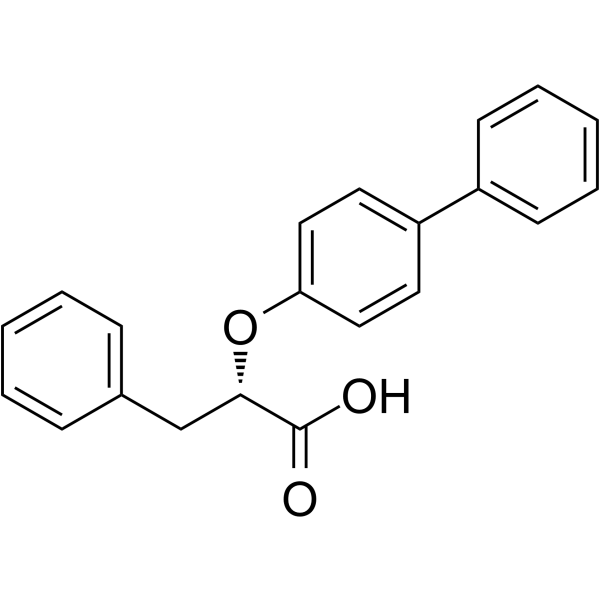
LT175, a dual PPARα/γ ligand, is an orally active partial agonist against PPARγ(hPPARα:EC50=0.22 μm; mPPARα:EC50=0.26 μm; hPPARγ:EC50=0.48 μm). LT175 interacts with PPARγ and affects the recruitment of the coregulators cyclic-AMP response element-binding protein-binding protein and nuclear corepressor 1 (NCoR1). LT175 interacts with PPARγ in a hydrophobic region called “diphenyl pocket”. LT175 has potent insulin-sensitizing effects and reduced adipogenic properties .
loading...
    loading...
Cat. No.: HY-151761
CAS No.: 2084913-49-3
Purity:  99.69%
Research Areas:  

Others

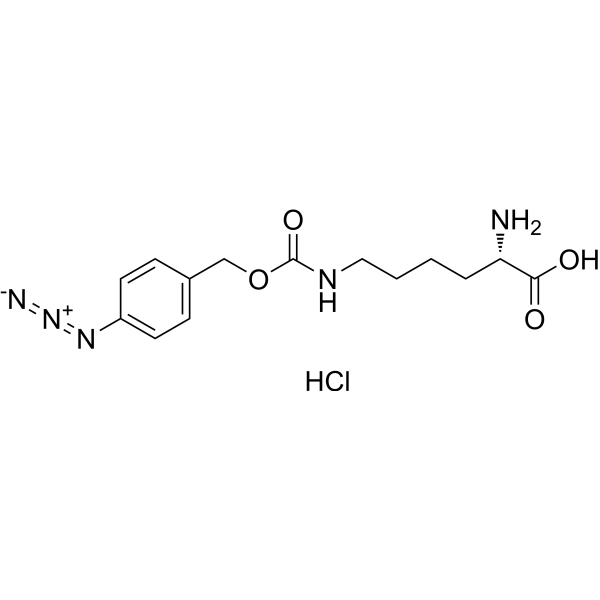
H-L-Lys (4-N3-Z)-OH hydrochloride is an unnatural lysine analog and a substrate of the PABKRS mutant PylRS. H-L-Lys (4-N3-Z)-OH hydrochloride enables site-specific genetic integration into proteins via amber stop codon suppression; it undergoes Staudinger reduction with phosphine compounds, followed by a self-elimination reaction to release native lysine. H-L-Lys (4-N3-Z)-OH hydrochloride serves as a genetically encoded element for the temporal chemical control of protein SUMOylation and nuclear translocation in living mammalian cells, and also acts as a bioorthogonal reaction handle for bioconjugation reactions .
loading...
    loading...
Cat. No.: HY-158205
CAS No.: 1895934-61-8
Synonyms: 4-Hydroperoxy-2-decenoic acid ethyl ester
HPO-DAEE (4-Hydroperoxy-2-decenoic acid ethyl ester) elicits nuclear accumulation of Nrf2 and activated antioxidant response element (ARE). HPO-DAEE induces antioxidant genes upregulation (eg: HO-1) through Nrf2-ARE signaling. HPO-DAEE induces reactive oxygen species generation. HPO-DAEE also inhibits histone deacetylase and upregulate expression of extracellular superoxide dismutase via histone acetylation. HPO-DAEE protects against 6-hydroxydopamine-induced cell death via activation of Nrf2-ARE and eIF2α-ATF4 pathways .
loading...
    loading...
Cat. No.: HY-184611
Selenium (Se) is an essential trace element for the human body, playing a vital role in various physiological activities. In the body, selenium is bound to selenocysteine, an amino acid used to synthesize several selenoproteins. Selenium is often the active site of these proteins, playing a crucial role in maintaining intracellular redox balance. Chitosan-stabilized selenium nanoparticles (CS-SeNPs) are nanomaterials using the biopolymer chitosan (CS) as a stabilizer. Through electrostatic interactions, chitosan coats the surface of selenium nanoparticles (Se NPs), improving their dispersibility, stability, and biocompatibility. Se NPs themselves are characterized by low toxicity and high bioactivity, and the introduction of chitosan further enhances their functionality and application potential, making them widely recognized in biomedicine, food, and agriculture.
loading...
    loading...
Cat. No.: HY-P81306
Synonyms: SAFB; HAP; HET; SAFB1; Scaffold attachment factor B1; SAF-B; SAF-B1; HSP27 estrogen response element-TATA box-binding protein; HSP27 ERE-TATA-binding protein

Host:  

Mouse

Application:  

WB, ICC/IF, ChIP

Reactivity:  

Human

loading...
    loading...
Cat. No.: HY-P81306A
Synonyms: SAFB; HAP; HET; SAFB1; Scaffold attachment factor B1; SAF-B; SAF-B1; HSP27 estrogen response element-TATA box-binding protein; HSP27 ERE-TATA-binding protein

Host:  

Rabbit

Application:  

WB, IHC-F, IHC-P, ICC/IF

Reactivity:  

Human, Mouse

loading...
    loading...
Cat. No.: HY-184309
Target:  

HSP Apoptosis

Research Areas:  

Cancer

HSF1-IN-3 is a heat shock transcription factor 1 (HSF1) inhibitor with a Kd value of 23.8 μM against HSF1-DBD. HSF1-IN-3 inhibits the proliferation of cancer cells and induces their apoptosis, with stronger activity in androgen-dependent prostate cancer cells. HSF1-IN-3 reduces the expression of HSP70 and HSP90, downstream effectors of HSF1, and attenuates HSE-driven transcriptional activity. HSF1-IN-3 can be used in the research of cancers such as prostate cancer and leukemia .
loading...
    loading...