1918 Results for "

phase

" in MedChemExpress (MCE) Product Catalog:
Products (1918)

1918 Results for "phase" in MCE Product Catalog:

Cat. No.: HY-N2183R
CAS No.: 18609-17-1
Synonyms: Quercetin 3-O-sophoroside (Standard)
Baimaside (Standard) is the analytical standard of Baimaside. This product is intended for research and analytical applications. Baimaside (Quercetin 3-O-sophoroside) is a flavonoid cholinergic function modulator that binds to SARS-CoV-2-related targets. Baimaside regulates the expression of cholinergic system-related proteins and acetylcholine levels, improves scopolamine-induced learning and memory impairment, protects hippocampal neurons, inhibits pollen protein fluorescence, and protects pollen DNA. Its biosynthesis is regulated by multiple enzymes. Baimaside is completely absorbed in rats, undergoes phase Ⅱ metabolism and gut microbiota decomposition, and inhibits the invasion and proliferation of SARS-CoV-2 and its variants, making it suitable for research related to Alzheimer's disease and COVID-19 .
loading...
    loading...
Cat. No.: HY-W142437
CAS No.: 571-58-4
1,4-Dimethylnaphthalene acts as a sprout inhibitor, Antifungal agent and sporulation inhibitor. 1,4-Dimethylnaphthalene can be isolated from dormant potatoes. 1,4-Dimethylnaphthalene induces the expression of cell cycle regulators associated with G1-to-S phase transition arrest, reduces oxidative stress levels, downregulates specific transcripts including germin-like proteins and MYB transcription factors, and modulates transcripts regulated by ABI1/ABI2/ABI3 without altering endogenous ABA levels. 1,4-Dimethylnaphthalene inhibits postharvest sprouting of potato tubers. 1,4-Dimethylnaphthalene can be used in studies related to fungal infections .
loading...
    loading...
Cat. No.: HY-118048
CAS No.: 1198160-14-3
Purity:  99.79%
Target:  

Sodium Channel

Research Areas:  

Neurological Disease

NAV 26 (Compound 26) is a selective NaV1.7 inhibitor with an IC50 of 0.37 μM. NAV 26 is applicable for pain-related research .
loading...
    loading...
Cat. No.: HY-181657
CAS No.: 3102899-89-5
Research Areas:  

Cancer

EGFR-IN-200 is an inhibitor targeting EGFR, TNF-α, and the IL-6/GP130 complex, which potently targets human EGFR (IC50=0.03 μM), TNF-α (IC50=3.1 μM), and the IL-6/GP130 complex (IC50=1.6 μM). EGFR-IN-200 binds to the ATP pocket of EGFR, the trimer interface of TNF-α, and the cytokine-receptor interface of IL-6/GP130, induces G2/M cell cycle arrest, apoptosis, and antiproliferative activity. EGFR-IN-200 exhibits high gastrointestinal absorbability, low BBB permeability, and complies with the Lipinski's rule. EGFR-IN-200 can be used for the research of lung cancer and breast adenocarcinoma .
loading...
    loading...
Cat. No.: HY-184166
Target:  

mTOR Apoptosis

Research Areas:  

Cancer

COH-17 is a potent mTOR inhibitor. COH-17 exhibits selective anticancer activity against breast cancer cells, showing significant anticancer effects through inhibiting mTOR, inducing apoptosis and arresting the cell cycle. COH-17 can be used for the research of breast cancer .
loading...
    loading...
Cat. No.: HY-D0142
CAS No.: 59572-10-0
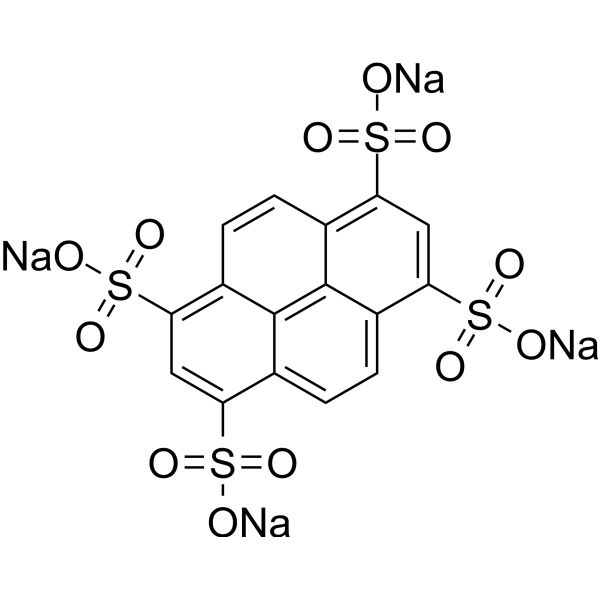
Pyrene-1,3,6,8-tetrasulfonic acid tetrasodium is a fluorescent dye and pH indicator, also as a ligand of multifunctional metal-organic framework. Pyrene-1,3,6,8-tetrasulfonic acid tetrasodium has been used to detect CO2 release. Pyrene-1,3,6,8-tetrasulfonic acid tetrasodium acts as a water-soluble fluorescent dye for fluorescence quenching assays monitoring gramicidin ion-channel activity . Ex/Em = 396/404 nm.
loading...
    loading...
Cat. No.: HY-N17442
CAS No.: 75410-53-6
Echinoside A is a saponin. Echinoside A can be isolated from sea cucumber. Echinoside A inhibits the catalytic activity of Top2α, reduces the noncovalent binding of Top2α to DNA. Echinoside A activates Caspase-3 and induces PARP cleavage. Echinoside A induces Apoptosis. Echinoside A has anticancer activity against prostate cancer, hepatocellular carcinoma, and S-180 sarcoma. Echinoside A exhibits antifungal activity against a variety of fungi, with a minimum growth inhibitory concentration range of 3.12 to 50.0 μg/mL, including potent activity against Aspergillus and Penicillium species .
loading...
    loading...
Cat. No.: HY-N21661
CAS No.: 1016260-24-4
Kadsuracoccinic acid C is a 3,4-seco-lanostane type triterpenoid found in the rhizomes of Kadsura coccinea .
loading...
    loading...
Cat. No.: HY-W585928
CAS No.: 35787-74-7
Target:  

Drug Metabolite

Research Areas:  

Neurological Disease

Di-o-cresyl phosphate is a urinary metabolite of tri-o-cresyl phosphate (HY-W011086), o,o,m-tricresyl phosphate, and o,o,p-tricresyl phosphate, and serves as a biomarker for monitoring exposure to ortho-isomers of tricresyl phosphate. Di-o-cresyl phosphate is not a metabolite of mono-o-tricresyl phosphate. Di-o-cresyl phosphate can be used in studies related to delayed neuropathy (OPIDN) .
loading...
    loading...
Cat. No.: HY-167655
CAS No.: 147508-06-3
Target:  

Androgen Receptor

Research Areas:  

Others

KF-19418 is a hair follicle stimulator with hair growth promoting activity. KF-19418 stimulates proliferation of cultured hair bulb cells from newborn mice. KF-19418 accelerates hair regrowth in hair-clipped mouse alopecia model following topical application. KF-19418 can be used for the research of alopecia .
loading...
    loading...
Cat. No.: HY-184896
CAS No.: 3032314-99-8
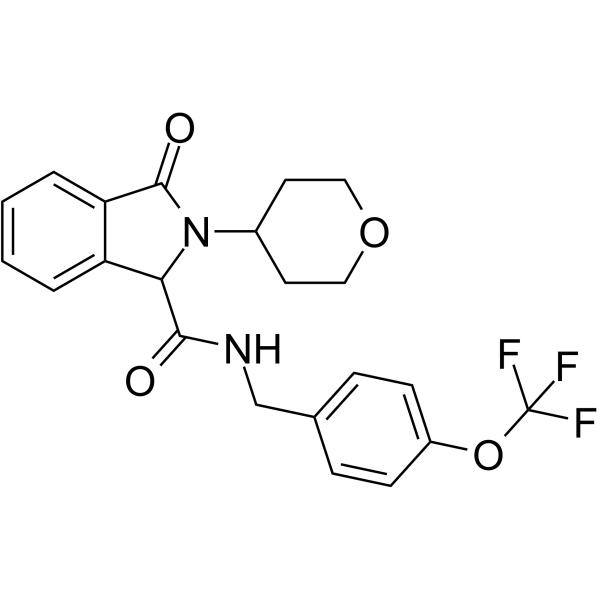
XYD113 is an orally active, selective GSPT1 Molecular glue degrader. XYD113 promotes the formation of the CRBN-GSPT1 ternary complex and mediates GSPT1 degradation in a CRBN-dependent manner via the ubiquitin-proteasome system. XYD113 downregulates genes associated with the occurrence and progression of prostate cancer (c-Myc, AR, AR-V7, KLK3, KLK2, TMPRSS2). XYD113 exhibits anticancer activity against prostate cancer. XYD113 can be used in the research of prostate cancer .
loading...
    loading...
Cat. No.: HY-100395
CAS No.: 36098-33-6
Purity:  99.94%
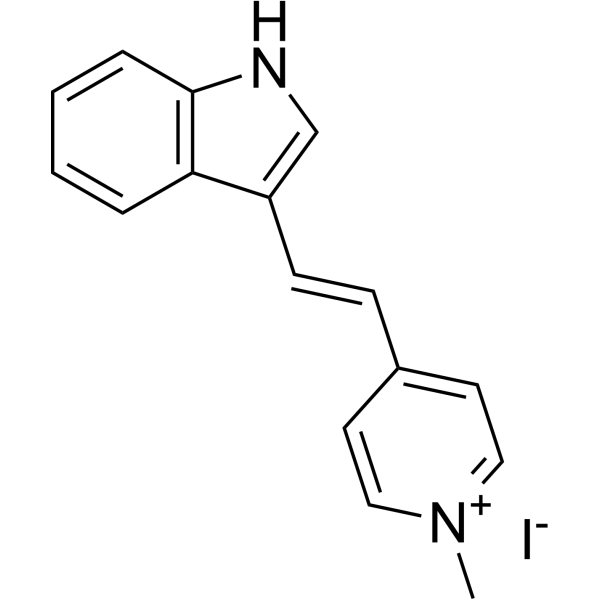
F16 is a mitochondrial permeability transition pore (PTP) modulator with an EC50 of 30 μM in mice. F16 promotes PTP opening, accumulates in cancer cell mitochondria, and induces mitochondrial depolarization, swelling, cristae disruption, outer membrane rupture, ATP depletion, reactive oxygen species (ROS) production, cytochrome c release and mitochondrial uncoupling. F16 induces cell cycle arrest at the G1 (occasionally G2) phase, reduces the phosphotyrosine content of Neu, as well as the levels of phosphorylated PKB/Akt and phosphorylated MAP kinase, downregulates the protein expression levels of Neu and PKB, triggers apoptosis in cells with moderate Bcl-2 expression, and induces necrosis in cells with overexpressed Bcl-2. F16 can be used in research related to breast cancer and gastric cancer .
loading...
    loading...
Cat. No.: HY-101036R
CAS No.: 87-67-2
Choline bitartrate (Standard) is the analytical standard of Choline bitartrate (HY-101036). This product is intended for research and analytical applications. Choline bitartrate is an orally active methylxanthine-derived choline salt of theophylline. Choline bitartrate exhibits weak antihistaminic and anticholinergic activities and can enhance the effects of histamine and acetylcholine. Choline bitartrate relaxes bronchial smooth muscle, dilates coronary and peripheral blood vessels, increases urine output and electrolyte excretion, stimulates central nervous system motor activity, and induces transient hypotension following a pressor phase. Choline bitartrate modulates sleep architecture by increasing wakefulness time and reducing slow-wave sleep, without altering the frequency or severity of nocturnal hypoxemia, apnea, or hypopnea events. Choline bitartrate is used in studies of bronchospasm, nocturnal asthma, and chronic asthma .
loading...
    loading...
Cat. No.: HY-114510
CAS No.: 1020399-52-3
PRMT/HKMT-IN-1 is an epigenetic multi-target protein arginine methyltransferases (PRMTs) and histone lysine methyltransferases (HKMTs) inhibitor. PRMT/HKMT-IN-1 inhibits Aspergillus nidulans RmtA with an IC50 of 29 μM. PRMT/HKMT-IN-1 inhibits human PRMT1, p300/CBP HAT, CARM1, SET7, SIRT1 and SIRT2. PRMT/HKMT-IN-1 inhibits methylation of histone H3K4, H4R3, and H3R17 residues. CBP/p300-IN-23 induces apoptosis, arrests cell cycle in S phase, and triggers granulocytic differentiation in leukemia cells. PRMT/HKMT-IN-1 can be used for the research of leukemia .
loading...
    loading...
Cat. No.: HY-119979
CAS No.: 501-26-8
Purity:  98.02%
Synonyms: Cardanol C15:1
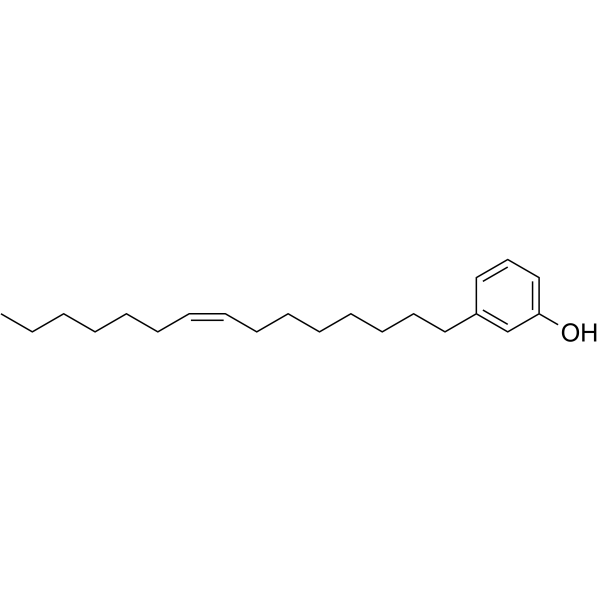
Cardanol monoene (Cardanol C15:1) is a phenolic compound which can be found in cashew nut shell liquid. Cardanol monoene can inhibit cancer cells proliferation, migration, cause S phase arrest, induce apoptosis, ROS production and mitochondrial depolarization. Cardanol monoene downregulates MMP-2, MMP-9, cyclinA1 expression, regulates CDK2, p53, Bax, cytochrome c, cleaved caspase-3, cleaved PARP, Apaf-1 expression and Bax/Bcl-2 ratio. Cardanol monoene shows weak DPPH radical scavenging activity and AChE inhibition activity. Cardanol monoene is lethal to Artemia salina nauplii. Cardanol monoene. Cardanol monoene can be used for the research of cancer, infection and inflamation .
loading...
    loading...
Cat. No.: HY-121605S
RL71-d6 is a deuterium labeled RL71 (HY-121605). RL71 is a curcuminoid anticancer agent that exhibits potent cytotoxicity against a variety of ER-negative breast cancer cells. RL71 (1 μM) induces cell cycle arrest in the G2/M phase and induces apoptosis in SKBr3 cells. RL7 also decreases HER2/neu phosphorylation and increases p27. RL71 also significantly reduced the phosphorylation of Akt and transiently increased the stress kinases JNK1/2 and p38 MAPK. Furthermore, RL71 exhibited anti-angiogenic potential in vitro, inhibiting the migration of HUVEC cells and the ability of these cells to form tubular networks .
loading...
    loading...
Cat. No.: HY-123450
CAS No.: 1257628-57-1
Purity:  99.60%
Target:  

Bcr-Abl Apoptosis PDGFR

Research Areas:  

Cancer

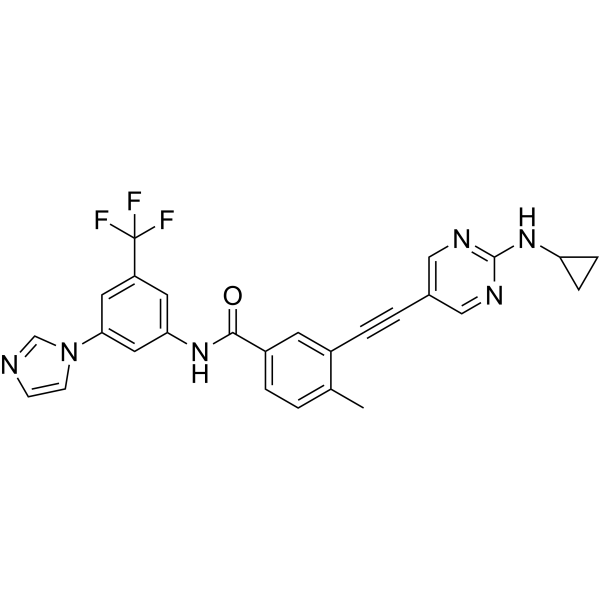
S116836, a potent, orally active BCR-ABL tyrosine kinase inhibitor, blocks both wild-type as well as T315I Bcr-Abl. S116836 arrests the cells in the G0/G1 phase of cell cycle, induces apoptosis, increases ROS production, and decreases GSH production in BaF3/WT and BaF3/T315I cells. S116836 also inhibits SRC, LYN, HCK, LCK and BLK, and receptor tyrosine kinases such as FLT3, TIE2, KIT, PDGFR-β. Antitumor activies . S116836 is a click chemistry reagent, it contains an Alkyne group and can undergo copper-catalyzed azide-alkyne cycloaddition (CuAAc) with molecules containing Azide groups.
loading...
    loading...
Cat. No.: HY-126051
CAS No.: 1381782-08-6
Synonyms: (-)-Viriditoxin
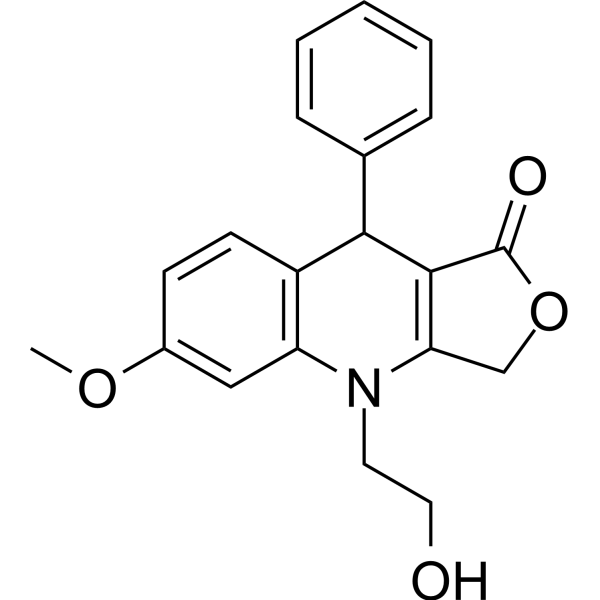
Viriditoxin ((-)-Viriditoxin) is a mycotoxin . Viriditoxin promotes tubulin polymerization, and inhibits FtsZ polymerization and GTPase activity. Viriditoxin exhibits cytotoxicity against cancer cells, induces apoptosis, inhibits cell migration and colony formation, induces G2/M phase arrest, and triggers autophagic cell death. Viriditoxin activates caspase-3, cleaves PARP, promotes cytochrome c release, and induces ROS production. Viriditoxin possesses broad-spectrum antibacterial activity against Gram-positive pathogenic bacteria, fish pathogenic bacteria, and permeabilized Gram-negative bacteria. Viriditoxin can be used in research related to ovarian cancer, lung cancer, nasopharyngeal carcinoma, colon cancer, neuroblastoma, prostate cancer, leukemia, lymphoma, bacterial infections, and streptococcosis .
loading...
    loading...
Cat. No.: HY-126287
CAS No.: 2366216-76-2
Target:  

Trk Receptor Apoptosis

Research Areas:  

Cancer

JND4135 is a Type II TRK inhibitor with IC50 values of 2.79, 3.19, and 3.01 nM against TRKA, TRKB, TRKC, respectively. JND4135 can overcome resistance from TRK xDFG and other mutant forms in the BaF3 stable model, inhibiting phosphorylation of both WT and xDFG mutant TRKs, along with their downstream signaling molecules. JND4135 can induce G0/G1 phase arrest and apoptosis in BaF3–CD74-TRKA-G667C cells. JND4135 shows tumor growth inhibition activity in the BaF3-CD74-TRKA-G667C mouse xenograft model .
loading...
    loading...
Cat. No.: HY-12929
CAS No.: 1629908-92-4
Purity:  99.86%
Synonyms: SU093
Target:  

Pim Apoptosis

Research Areas:  

Cancer

NSC756093 (SU093) is a GBP1:PIM1 interaction inhibitor. NSC756093 binds to GBP1-PIM1 with a Kd of 38 nM. NSC756093 suppresses proliferation, reduces migration, induces G1 phase cell-cycle arrest, and increases apoptotic cell death in ovarian cancer cells. NSC756093 reduces cellular proteasomal activity, induces accumulation of ubiquitinated proteins, and restrains tumor progression and lung metastasis in murine ovarian cancer xenograft models. NSC756093 increases sensitivity of prostate cancer cells to Docetaxel (HY-B0011) and sensitizes GBP1-overexpressing ovarian cancer cells to Paclitaxel (HY-B0015). NSC756093 can be used for the research of prostate cancer and ovarian cancer .
loading...
    loading...

