169 Results for "

HO-1/Nrf2

" in MedChemExpress (MCE) Product Catalog:
Products (169)

169 Results for "HO-1/Nrf2" in MCE Product Catalog:

Cat. No.: HY-N0113A
CAS No.: 62493-39-4
Synonyms: Ordenina sulfate; Peyocactine sulfate
Hordenine sulfate (Ordenina sulfate; Peyocactine sulfate) is a multifunctional alkaloid with oral activity and blood-brain barrier penetration. Hordenine sulfate inhibits LPS-induced phosphorylation of p38, JNK, ERK1/2, p65, IκB, and AKT, prevents p65 nuclear translocation, and suppresses inflammatory cytokines and mediators. Hordenine sulfate promotes M2 macrophage polarization, restores blood-milk barrier integrity, alleviates oxidative stress by reducing ROS and MDA, and attenuates LPS-induced lung injury and pulmonary edema. Hordenine sulfate inhibits cAMP production, CREB phosphorylation, and MITF expression, thereby suppressing melanin synthesis in melanocytes and reconstructed epidermis. Hordenine sulfate activates the Wnt/β-catenin signaling pathway, promotes dermal papilla cell proliferation and hair shaft elongation, and accelerates hair regeneration. Hordenine sulfate activates DRD2, acts as a D3R partial agonist, α2A-AR full agonist, and 5-HT2A-R antagonist, and inhibits SERT and DAT. Hordenine sulfate inhibits α-synuclein accumulation and ameliorates motor deficits in Parkinson's disease models. Hordenine sulfate limits alcohol intake, reduces relapse drinking behavior, and modulates alcohol-induced conditioned place preference. Hordenine sulfate can be used for research on mastitis, skin pigmentation, acute lung injury, foodborne diseases, hair loss, Parkinson's disease, bacterial infections, and alcohol use disorder [1] [2] .
loading...
    loading...
Cat. No.: HY-N0113BR
CAS No.: 6027-23-2
Synonyms: Ordenina hydrochloride (Standard); Peyocactine hydrochloride (Standard)
Hordenine hydrochloride (Standard) (Ordenina hydrochloride (Standard); Peyocactine hydrochloride (Standard)) is the analytical standard of Hordenine hydrochloride (HY-N0113B). This product is intended for research and analytical applications. Hordenine hydrochloride (Ordenina hydrochloride; Peyocactine hydrochloride) is a multifunctional alkaloid with oral activity and blood-brain barrier penetration. Hordenine hydrochloride inhibits LPS-induced phosphorylation of p38, JNK, ERK1/2, p65, IκB, and AKT, prevents p65 nuclear translocation, and suppresses inflammatory cytokines and mediators. Hordenine hydrochloride inhibits melanin synthesis in melanocytes and reconstructed epidermis. Hordenine hydrochloride activates the Wnt/β-catenin signaling pathway. Hordenine hydrochloride activates DRD2, acts as a D3R partial agonist, α2A-AR full agonist, and 5-HT2A-R antagonist, and inhibits SERT and DAT. Hordenine hydrochloride inhibits α-synuclein accumulation and ameliorates motor deficits in Parkinson's disease models. Hordenine hydrochloride limits alcohol intake, reduces relapse drinking behavior. Hordenine hydrochloride can be used for research on mastitis, skin pigmentation, acute lung injury, foodborne diseases, hair loss, Parkinson's disease, bacterial infections, and alcohol use disorder [1] [2] .
loading...
    loading...
Cat. No.: HY-N0113BS
Synonyms: Ordenina-d6 hydrochloride; Peyocactine-d6 hydrochloride
Hordenine-d6 hydrochloride (Ordenina-d6 hydrochloride; Peyocactine-d6 hydrochloride) is the deuterated-labeled Hordenine hydrochloride (HY-N0113B). Hordenine hydrochloride (Ordenina hydrochloride; Peyocactine hydrochloride) is a multifunctional alkaloid with oral activity and blood-brain barrier penetration. Hordenine hydrochloride inhibits LPS-induced phosphorylation of p38, JNK, ERK1/2, p65, IκB, and AKT, prevents p65 nuclear translocation, and suppresses inflammatory cytokines and mediators. Hordenine hydrochloride inhibits melanin synthesis in melanocytes and reconstructed epidermis. Hordenine hydrochloride activates the Wnt/β-catenin signaling pathway. Hordenine hydrochloride activates DRD2, acts as a D3R partial agonist, α2A-AR full agonist, and 5-HT2A-R antagonist, and inhibits SERT and DAT. Hordenine hydrochloride inhibits α-synuclein accumulation and ameliorates motor deficits in Parkinson's disease models. Hordenine hydrochloride limits alcohol intake, reduces relapse drinking behavior. Hordenine hydrochloride can be used for research on mastitis, skin pigmentation, acute lung injury, foodborne diseases, hair loss, Parkinson's disease, bacterial infections, and alcohol use disorder [1] [2] .
loading...
    loading...
Cat. No.: HY-N0113R
CAS No.: 539-15-1
Synonyms: Ordenina (Standard); Peyocactine (Standard)
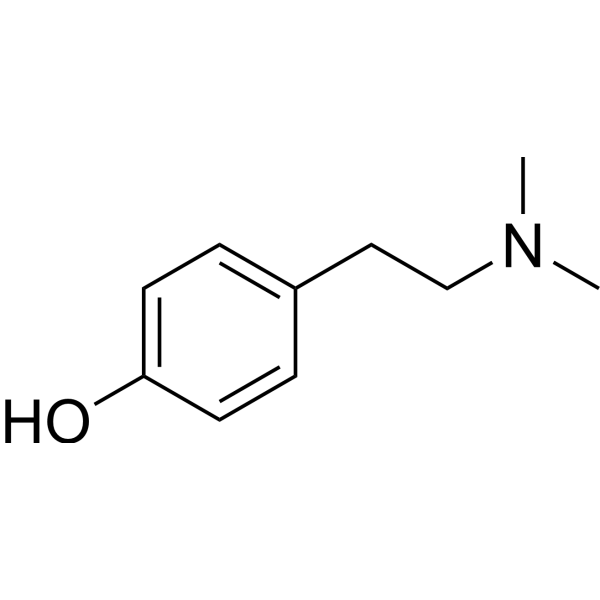
Hordenine (Standard) (Ordenina (Standard); Peyocactine (Standard)) is the analytical standard of Hordenine (HY-N0113). This product is intended for research and analytical applications. Hordenine (Ordenina; Peyocactine) is a multifunctional alkaloid with oral activity and blood-brain barrier penetration. Hordenine inhibits LPS-induced phosphorylation of p38, JNK, ERK1/2, p65, IκB, and AKT, prevents p65 nuclear translocation, and suppresses inflammatory cytokines and mediators. Hordenine promotes M2 macrophage polarization, restores blood-milk barrier integrity, alleviates oxidative stress by reducing ROS and MDA, and attenuates LPS-induced lung injury and pulmonary edema. Hordenine inhibits cAMP production, CREB phosphorylation, and MITF expression, thereby suppressing melanin synthesis in melanocytes and reconstructed epidermis. Hordenine activates the Wnt/β-catenin signaling pathway, promotes dermal papilla cell proliferation and hair shaft elongation, and accelerates hair regeneration. Hordenine activates DRD2, acts as a D3R partial agonist, α2A-AR full agonist, and 5-HT2A-R antagonist, and inhibits SERT and DAT. Hordenine inhibits α-synuclein accumulation and ameliorates motor deficits in Parkinson's disease models. Hordenine limits alcohol intake, reduces relapse drinking behavior, and modulates alcohol-induced conditioned place preference. Hordenine can be used for research on mastitis, skin pigmentation, acute lung injury, foodborne diseases, hair loss, Parkinson's disease, bacterial infections, and alcohol use disorder [1] [2] .
loading...
    loading...
Cat. No.: HY-N0113S
CAS No.: 1346598-66-0
Synonyms: Ordenina-d6; Peyocactine-d6
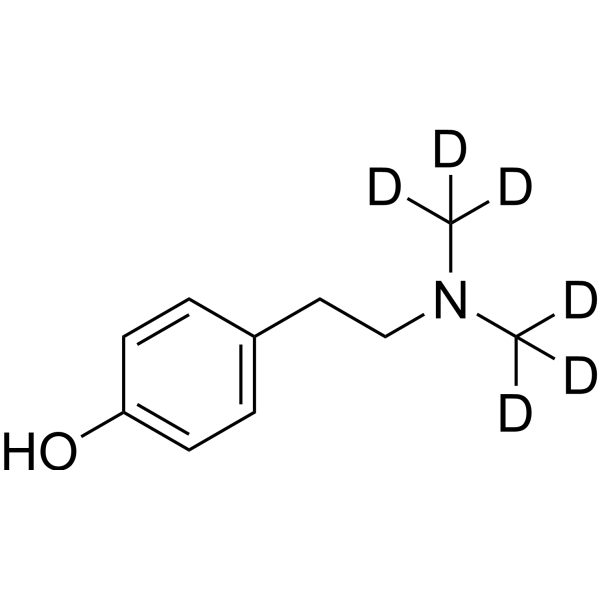
Hordenine-d6 (Ordenina-d6; Peyocactine-d6) is the deuterated-labeled Hordenine (HY-N0113). Hordenine (Ordenina; Peyocactine) is a multifunctional alkaloid with oral activity and blood-brain barrier penetration. Hordenine inhibits LPS-induced phosphorylation of p38, JNK, ERK1/2, p65, IκB, and AKT, prevents p65 nuclear translocation, and suppresses inflammatory cytokines and mediators. Hordenine promotes M2 macrophage polarization, restores blood-milk barrier integrity, alleviates oxidative stress by reducing ROS and MDA, and attenuates LPS-induced lung injury and pulmonary edema. Hordenine inhibits cAMP production, CREB phosphorylation, and MITF expression, thereby suppressing melanin synthesis in melanocytes and reconstructed epidermis. Hordenine activates the Wnt/β-catenin signaling pathway, promotes dermal papilla cell proliferation and hair shaft elongation, and accelerates hair regeneration. Hordenine activates DRD2, acts as a D3R partial agonist, α2A-AR full agonist, and 5-HT2A-R antagonist, and inhibits SERT and DAT. Hordenine inhibits α-synuclein accumulation and ameliorates motor deficits in Parkinson's disease models. Hordenine limits alcohol intake, reduces relapse drinking behavior, and modulates alcohol-induced conditioned place preference. Hordenine can be used for research on mastitis, skin pigmentation, acute lung injury, foodborne diseases, hair loss, Parkinson's disease, bacterial infections, and alcohol use disorder [1] [2] .
loading...
    loading...
Cat. No.: HY-W016969
CAS No.: 112-12-9
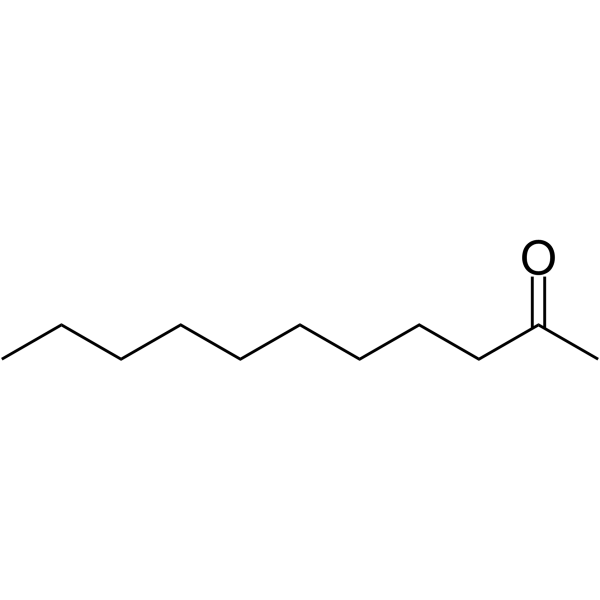
2-Undecanone is an orally active organic ketone. 2-Undecanone exerts antibacterial effects by inhibiting bacterial chaperone systems and interfering with the refolding of heat-inactivated proteins. 2-Undecanone also ameliorates asthmatic inflammation and airway remodeling by blocking the NF-κB pathway, and activates the Nrf2 pathway to reduce oxidative damage and prevent lung cancer induced by Benzo[a]pyrene (HY-107377). 2-Undecanone can be used in research related to cancer, asthma and infections [1] [2] .
loading...
    loading...
Cat. No.: HY-N1326
CAS No.: 4290-13-5
Synonyms: Santamarin; Balchanin
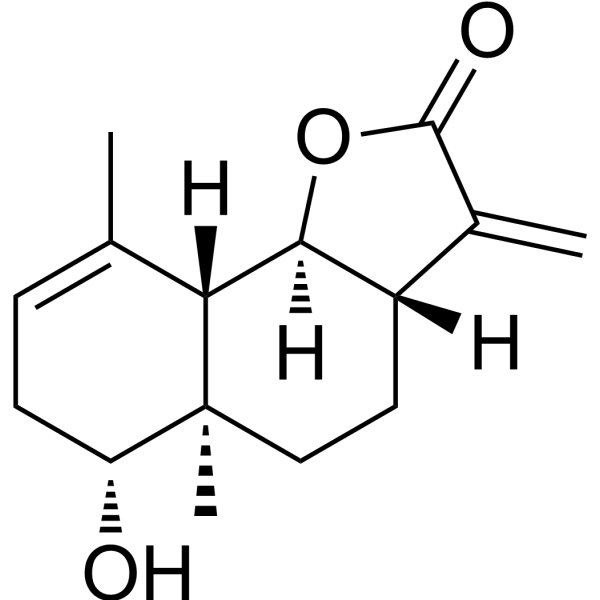
Santamarine (Santamarin; Balchanin) is a sesquiterpene lactone found in Artemisia scoparia. Santamarine shows anti-inflammatory, antioxidant, anticancer and anti-photoaging activities. Santamarine suppresses UVA-induced phosphorylation of JNK and p38 MAPK, nuclear translocation of phosphorylated c-Fos and c-Jun, and AP-1-mediated MMP-1 transcription and secretion. Santamarine suppresses NF-κB signaling, iNOS, COX-2, TNF-α, and IL-1β production. Santamarine inhibits thioredoxin reductase activity, induces ROS production, mitochondrial apoptosis, G2/M cell cycle arrest, and DNA damage, and reduces cancer cell growth. Santamarine can be used for the photoaging, inflammatory diseases and cancer [1] [2] .
loading...
    loading...
Cat. No.: HY-133114
CAS No.: 191330-56-0
Purity:  99.97%
Synonyms: EZM-K
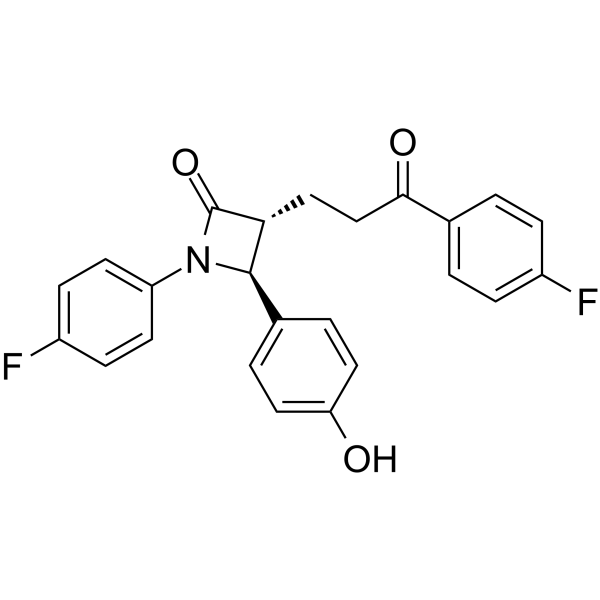
Ezetimibe ketone is an orall active Nrf2 activator and ROS inhibitor. Ezetimibe ketone attenuates H2O2-induced reactive oxygen species production and reduces H2O2-induced apoptosis in renal tubular epithelial cells. Ezetimibe ketone suppresses renal tubular injury and inflammation [1].
loading...
    loading...
Cat. No.: HY-112749
CAS No.: 1374524-68-1
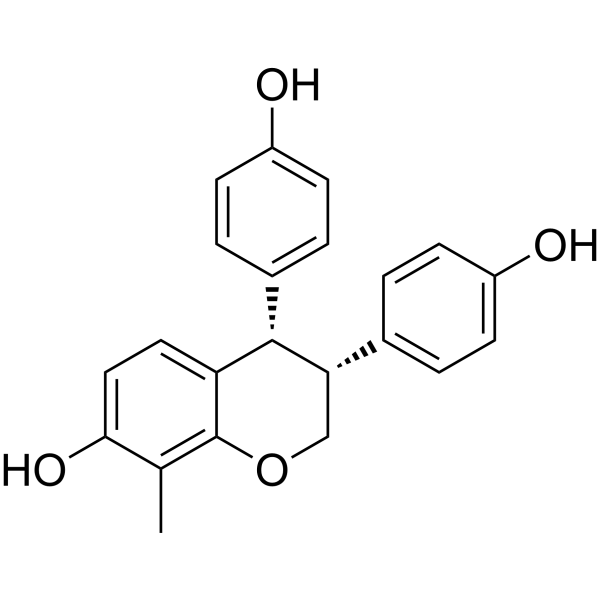
ME-344 is an Isoflavone. ME-344 increases mitochondrial ROS generation. ME-344 inhibits tubulin polymerization. ME-344 inhibits HO-1 and impacts its mitochondrial translocation. ME-344 induces Apoptosis through Caspase 3 activation. ME-344 synergizes with Vinblastine in leukemia cells. ME-344 displays anti-tumor activity against leukemia and lung tumor. ME-344 can be used in the research of lung cancer, acute myeloid leukemia, and HER2-negative breast cancer [1] [2] .
loading...
    loading...

