192 Results for "

loading

" in MedChemExpress (MCE) Product Catalog:
Products (192)

192 Results for "loading" in MCE Product Catalog:

Cat. No.: HY-184314
CAS No.: 3122934-62-4
Target:  

Fungal

Research Areas:  

Infection

Antifungal agent-166 is an antifungal agent. The combination of Antifungal agent-166 and Fluconazole exerts synergistic bacteriostatic effects against fluconazole-resistant Candida albicans. Antifungal agent-166 exhibits bacteriostatic activity against both Candida glabrata and Cryptococcus neoformans. Antifungal agent-166 reverses the fluconazole resistance of strains by downregulating ergosterol synthesis-related genes, drug resistance-related genes and virulence-related genes. Antifungal agent-166 can enhance the efficacy of Fluconazole in Galleria mellonella and mouse candidiasis models, reduce fungal load and improve survival rate. Antifungal agent-166 can be used in the research of fungal infections .
loading...
    loading...
Cat. No.: HY-P11468
Target:  

Bacterial Antibiotic

Research Areas:  

Cardiovascular Disease Infection

wkwkwNGwkwkw-NH2 is a self-assembling β-hairpin antimicrobial peptide. wkwkwNGwkwkw-NH2 self-assembles into nanofibers. wkwkwNGwkwkw-NH2 interacts with LPS on the surface of the bacterial membrane and then disrupts the bacterial outer membrane, inner membrane, and cytoplasmic membrane to exert its antibacterial effects. wkwkwNGwkwkw-NH2 has high antibacterial activity and low hemolytic activity. wkwkwNGwkwkw-NH2 significantly reduces the S. aureus ATCC 25923 load at the skin wound. wkwkwNGwkwkw-NH2 displays synergistic effects when combined with antibiotics. wkwkwNGwkwkw-NH2 facilitates wound healing .
loading...
    loading...
Cat. No.: HY-W008034S
CAS No.: 1325307-52-5
Synonyms: Fmoc-L-Trp(Boc)-OH-13C11,15N2
Fmoc-Trp(Boc)-OH- 13C11, 15N2 (Fmoc-L-Trp(Boc)-OH- 13C11, 15N2) is the 13C-labeled and 15N-labeled Fmoc-Trp(Boc)-OH (HY-W008034). Fmoc-Trp(Boc)-OH (Fmoc-L-Trp(Boc)-OH) is an amino acid derivative with protective groups. Fmoc-Trp(Boc)-OH can self-assemble into stable and pH-responsive spherical nanoparticles, which can load and release bioactive molecules, with good biocompatibility and high cell uptake rate. Fmoc-Trp(Boc)-OH can be used in research on drug delivery .
loading...
    loading...
Cat. No.: HY-113718
CAS No.: 1037366-37-2
Research Areas:  

Infection

DS21412020 is a fluoroquinolone antibacterial agent. DS21412020 inhibits bacterial DNA gyrase (GyrA) and topoisomerase IV, leading to DNA breaks. DS21412020 exhibits significant activity against Gram-positive bacteria such as Staphylococcus aureus (MIC = 0.006 μg/mL), Streptococcus pneumoniae (MIC = 0.05 μg/mL), and Methicillin (HY-121544)-resistant Staphylococcus aureus (MIC = 0.2 μg/mL), and Gram-negative bacteria such as Escherichia coli (MIC = 0.006 μg/mL) and Pseudomonas aeruginosa (MIC = 0.78 μg/mL). DS21412020 significantly reduces bacterial load in mouse pneumonia and MRSA infection models. DS21412020 can be used in the development of next-generation quinolone antibiotics .
loading...
    loading...
Cat. No.: HY-N21694
CAS No.: 303084-57-3
Ciliatoside A is a naturally bioactive compound that exhibits significant anti-inflammatory, antiviral, and neuroprotective activities. Ciliatoside A serves as a mitophagy inducer and NLRP3 inflammasome inhibitor, activating AMPK, SIRT1, and the PINK1/Parkin axis, and inhibiting pyroptosis and apoptosis. Ciliatoside A promotes autophagic flux, autophagosome-lysosome fusion, mTOR inhibition, and p62-dependent HBc degradation; reduces Aβ aggregation, plaque deposition, microglial/astrocyte activation, and bacterial load; and maintains neuronal integrity, mitochondrial membrane potential, and ATP production. Ciliatoside A is used in research on Alzheimer's disease, Klebsiella pneumoniae-induced pneumonia, hepatitis B virus infection, and inflammation .
loading...
    loading...
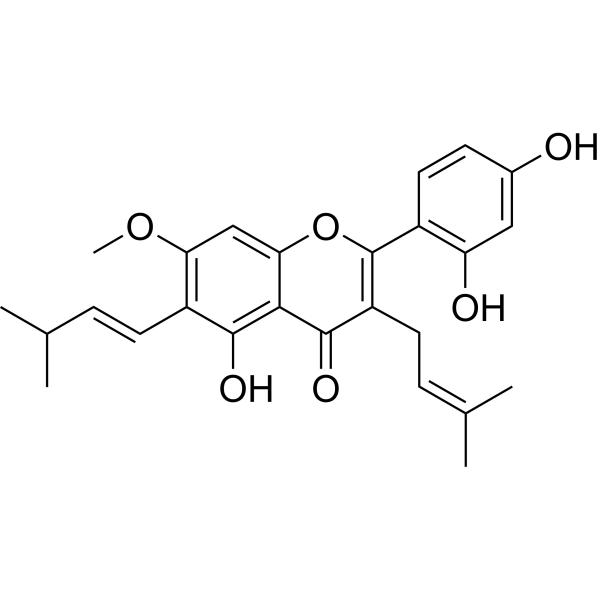
Cat. No.: HY-N2902
CAS No.: 7608-44-8
Artocarpin is an orally active apoptosis inducer. Artocarpin targets NF-κB, Erk1/2, p38 MAPK, AktS473, p53, Akt 1 kinase and Akt 2 kinase. Artocarpin induces reactive oxygen species (ROS) production, mediates p53-dependent and p53-independent apoptotic signaling pathways, induces G1-phase cell cycle arrest, and triggers autophagic cell death. Artocarpin exerts cytotoxic and bactericidal effects on cancer cells, reduces bacterial load, and exhibits anti-inflammatory, analgesic and anti-angiogenic activities .
loading...
    loading...
Cat. No.: HY-P11582
Target:  

Bacterial

Research Areas:  

Infection

CyLip-20 is a cyclic lipopeptide antimicrobial peptide that targets Gram-positive and Gram-negative bacteria. CyLip-20 exhibits low hemolytic activity and mild in vivo toxicity. CyLip-20 disrupts the integrity of bacterial outer membrane, inner membrane and cytoplasmic membrane by binding to bacterial lipopolysaccharide (LPS), triggering membrane permeabilization, depolarization and leakage of intracellular contents, and inhibits bacterial biofilm formation. In animal models, CyLip-20 reduces the bacterial load in skin wounds of mice infected with MRSA, promotes wound healing, decreases the levels of inflammatory cytokines and reduces inflammatory cell infiltration. CyLip-20 can be used in research related to MRSA skin wound infections .
loading...
    loading...
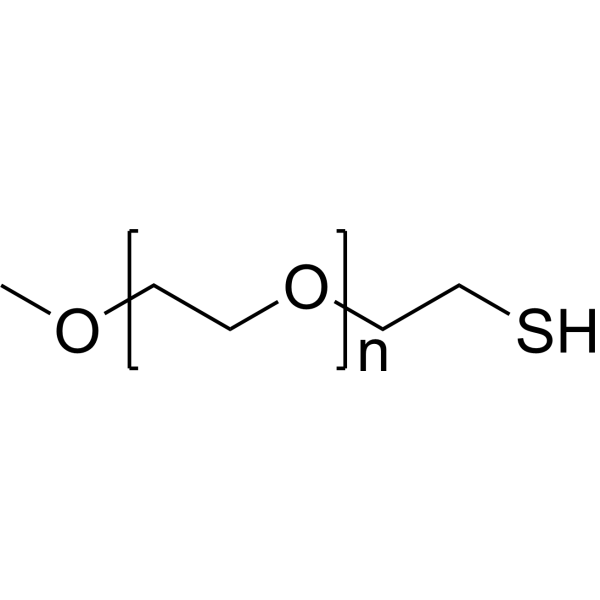
Cat. No.: HY-W591476
CAS No.: 134874-49-0
Synonyms: mPEG1000-SH
m-PEG1000-thiol (mPEG1000-SH) is a surface modifier that can modify DNA thiolation and is used in the synthesis of gold nanorods (AuNR). m-PEG1000-thiol can load thiolated DNA onto AuNR, form a covalent bond with the surface of gold nanoparticles through the thiol group, and stabilize the nanoparticles by the steric hindrance effect of the polyethylene glycol chain, preventing aggregation and enhancing its biocompatibility. m-PEG1000-thiol can also provide a platform for the subsequent coupling of biomolecules (such as DNA, antibodies) by replacing surfactants (such as CTAB) on the surface of nanoparticles, thereby exerting its activity in promoting the functionalization of nanomaterials [2].
loading...
    loading...
Cat. No.: HY-173338
CAS No.: 1438403-50-9
Target:  

DNA/RNA Synthesis

Research Areas:  

Infection

MSRV-IN-1 (Compound M3) is an inhibitor targeting aquatic rhabdoviruses (such as MSRV, SVCV and IHNV). Its IC50 values for inhibiting MSRV, SVCV and IHNV are 0.92 μM, 2.92 μM and 2.78 μM respectively. MSRV-IN-1 does not act directly on the virions but rather inhibits viral replication by altering the cell cycle arrest state in the S phase induced by the virus and disrupting the viral replication environment. When administered intraperitoneally at a dose of 20 mg/kg, MSRV-IN-1 can significantly increase the survival rate of largemouth bass infected with MSRV by 35.98% and reduce the viral loads in the liver, spleen and kidney. MSRV-IN-1 can be used in the research of diseases related to rhabdoviruses in aquaculture .
loading...
    loading...
Cat. No.: HY-181286
Target:  

Cytochrome P450

Research Areas:  

Infection

ETX1975-3 is an orally active inhibitor and bactericide targeting the bd cytochrome oxidase of Mycobacterium tuberculosis. ETX1975-3 disrupts electron transfer between the b-heme centers of the target enzyme, and in combination with Q203 (HY-101040), exerts bactericidal activity against both replicating and non-replicating Mycobacterium tuberculosis, and reduces bacterial loads in acute mouse models. ETX1975-3 retains activity against clinical isolates of multidrug-resistant/extensively drug-resistant Mycobacterium tuberculosis and non-tuberculous mycobacteria, while possessing favorable preclinical ADMET properties. ETX1975-3 can be used in studies related to tuberculosis and non-tuberculous mycobacterial infections .
loading...
    loading...
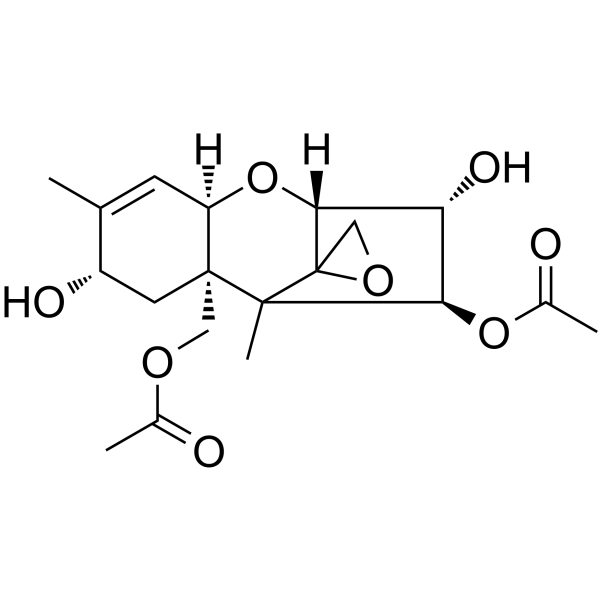
Cat. No.: HY-N6799
CAS No.: 36519-25-2
Neosolaniol is an orally active type A trichothecene mycotoxin, and it is a metabolite of T-2 Toxin (HY-N6792) in human cancer cells and renal epithelial cells. Neosolaniol targets Bax, Bcl-2, caspase 3, caspase 8, and cytochrome c, thereby inducing apoptosis, emesis and anorexia. Neosolaniol reduces intracellular ATP levels, elevates ROS levels, decreases mitochondrial membrane potential, induces mitochondrial damage, and exerts toxicity on Leydig cells. Neosolaniol downregulates the expression of intestinal tight junction proteins in broilers and increases the load of Salmonella enteritidis in the cecum of broilers. Neosolaniol can be used in research related to anorexia, lymphoma, Fusarium melonis rot, and Salmonella infection .
loading...
    loading...
Cat. No.: HY-W923278
CAS No.: 73547-70-3
Synonyms: GR20263 dihydrochloride
Target:  

Antibiotic Bacterial

Research Areas:  

Infection

Ceftazidime (GR20263) dihydrochloride is a cephalosporin β-lactam antibiotic. Ceftazidime dihydrochloride exhibits activity against susceptible Enterobacteriaceae, multidrug-resistant Gram-negative bacteria, Pseudomonas aeruginosa, and bacteria producing Ambler class A, C, and some class D β-lactamases, but shows no activity against microorganisms producing metallo-β-lactamases. Ceftazidime dihydrochloride reduces bacterial loads in mouse models of splenic, hepatic, and thigh infections, but has low efficacy against ESBL- and KPC-producing Enterobacteriaceae. Ceftazidime dihydrochloride can be used in research related to complicated urinary tract infections, complicated intra-abdominal infections, hospital-acquired pneumonia, carbapenemase-producing Klebsiella pneumoniae infections, carbapenem-resistant Enterobacterales infections, and severe Gram-negative bacterial infections .
loading...
    loading...
Cat. No.: HY-185978
CAS No.: 2133456-91-2
Target:  

GABA Receptor

Research Areas:  

Neurological Disease

GL-II-73 is a selective, orally active and blood-brain barrier permeable positive allosteric modulator of α5GABAA receptor, acting on the benzodiazepine-binding site of GABAA receptors. The binding selectivity of GL-II-73 for the α5 subtype is 6-, 11- and 12.5-fold higher than that for the α2, α1 and α3 subtypes, respectively . GL-II-73 reverses pilocarpine-induced hyperactivation of dopamine neurons in the ventral tegmental area, improves working memory and pyramidal neuron dendritic morphology in 5xFAD mice, but does not reduce β-amyloid load . GL-II-73 can be used in research related to Alzheimer's disease and temporal lobe epilepsy with comorbid psychosis .
loading...
    loading...
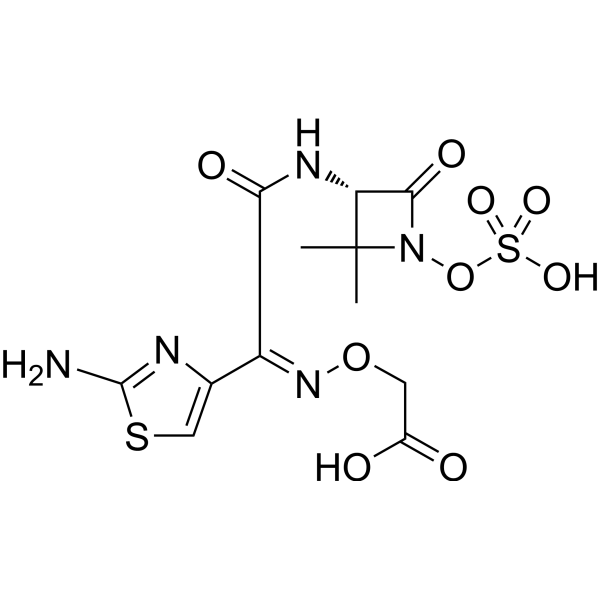
Cat. No.: HY-U00380
CAS No.: 102507-71-1
Research Areas:  

Infection

Tigemonam is an orally active monobactam antibiotic with a Ki of 0.86 μM against Enterobacter cloacae P99 β-lactamase and 50.8 μM against Escherichia coli TEM-1 β-lactamase. Tigemonam binds to penicillin-binding proteins 1a, 3, and 4, inhibits bacterial cell wall synthesis, and exhibits bactericidal activity against aerobic gram-negative bacteria including Enterobacteriaceae, Haemophilus influenzae, and Neisseria gonorrhoeae. Tigemonam resists hydrolysis by multiple β-lactamase enzymes, reduces bacterial load in systemic, pyelonephritic, lung, and thigh muscle infections in rodents, and shows minimal difference between minimum inhibitory and bactericidal concentrations. Tigemonam can be used for the research of gram-negative bacterial infections, acute pyelonephritis, lung infection, and thigh muscle infection .
loading...
    loading...
Cat. No.: HY-138298B
CAS No.: 1826843-81-5
Synonyms: T-DXd (DAR2); DS-8201 (DAR2); DS-8201a (DAR2)
Research Areas:  

Cancer

Trastuzumab deruxtecan (DAR2) (T-DXd (DAR2); DS-8201 (DAR2); DS-8201a (DAR2)) is a low-drug-load derivative control preparation of Trastuzumab deruxtecan (HY-138298A) with a drug-to-antibody ratio (DAR) of 2. Trastuzumab deruxtecan (T-DXd; DS-8201a; DS-8201) is an anti-human epidermal growth factor receptor 2 (HER2) antibody-drug conjugate (ADC). Trastuzumab deruxtecan is composed of a humanized anti-HER2 antibody, an enzymatically cleavable peptide-linker, a topoisomerase I inhibitor (a toxin component of Dxd), and the drug-linker conjugate for ADC is Deruxtecan (HY-13631E). Trastuzumab deruxtecan can be used for the research of HER2-positive breast cancer and gastric cancer .
loading...
    loading...
Cat. No.: HY-138298C
CAS No.: 1826843-81-5
Synonyms: T-DXd (DAR4); DS-8201 (DAR4); DS-8201a (DAR4)
Research Areas:  

Cancer

Trastuzumab deruxtecan (DAR4) (T-DXd (DAR4); DS-8201 (DAR4); DS-8201a (DAR4)) is a low-drug-load derivative control preparation of Trastuzumab deruxtecan (HY-138298A) with a drug-to-antibody ratio (DAR) of 4. Trastuzumab deruxtecan (T-DXd; DS-8201a; DS-8201) is an anti-human epidermal growth factor receptor 2 (HER2) antibody-drug conjugate (ADC). Trastuzumab deruxtecan is composed of a humanized anti-HER2 antibody, an enzymatically cleavable peptide-linker, a topoisomerase I inhibitor (a toxin component of Dxd), and the drug-linker conjugate for ADC is Deruxtecan (HY-13631E). Trastuzumab deruxtecan can be used for the research of HER2-positive breast cancer and gastric cancer .
loading...
    loading...
Cat. No.: HY-138298D
CAS No.: 1826843-81-5
Synonyms: T-DXd (DAR6); DS-8201 (DAR6); DS-8201a (DAR6)
Research Areas:  

Cancer

Trastuzumab deruxtecan (DAR6) (T-DXd (DAR6); DS-8201 (DAR6); DS-8201a (DAR6)) is a low-drug-load derivative control preparation of Trastuzumab deruxtecan (HY-138298A) with a drug-to-antibody ratio (DAR) of 6. Trastuzumab deruxtecan (T-DXd; DS-8201a; DS-8201) is an anti-human epidermal growth factor receptor 2 (HER2) antibody-drug conjugate (ADC). Trastuzumab deruxtecan is composed of a humanized anti-HER2 antibody, an enzymatically cleavable peptide-linker, a topoisomerase I inhibitor (a toxin component of Dxd), and the drug-linker conjugate for ADC is Deruxtecan (HY-13631E). Trastuzumab deruxtecan can be used for the research of HER2-positive breast cancer and gastric cancer .
loading...
    loading...
Cat. No.: HY-184587
Antibacterial agent 356 is an orally active antibacterial agent. Antibacterial agent 356 binds to the Mrr1 transcription factor, inhibits the expression of the MDR1 efflux pump gene, reduces the efflux of Rhodamine 123, and increases the accumulation of intracellular substrates in drug-resistant Candida albicans cells. Antibacterial agent 356 induces mitochondrial membrane potential reduction and ROS accumulation in Candida albicans, inhibits the yeast-hypha transition process, and suppresses its biofilm formation. Antibacterial agent 356 reverses efflux pump-mediated drug resistance in azole-resistant Candida albicans with overexpressed Mdr1. Antibacterial agent 356 improves the survival rate of Galleria mellonella larvae infected with azole-resistant Candida albicans*CA632, and reduces the renal fungal load and renal tissue damage in infected BALB/c mice. Antibacterial agent 356 can be used for the research of Candida albicans infection .
loading...
    loading...
Cat. No.: HY-186316
CAS No.: 2769053-56-5
KDS12025 is a blood-brain barrier-permeable, orally active H2O2-decomposing peroxidase enhancer. KDS12025 enhances the H2O2-decomposing pseudoperoxidase activity of Hb without altering oxygen transport function, and reduces intracellular H2O2 load. KDS12025 reduces abnormal H2O2 levels and inhibits the production of COL1. KDS12025 restores cerebral blood flow, maintains neuronal excitability, membrane properties, synaptic connections and corticospinal tract fibers, reduces cerebral edema and exerts neuroprotective effects. KDS12025 improves motor function and overall neurological function. KDS12025 can be used in the research of ischemic stroke, Alzheimer's disease, Parkinson's disease, amyotrophic lateral sclerosis, aging-related neurodegenerative diseases and rheumatoid arthritis .
loading...
    loading...
Cat. No.: HY-187563
Research Areas:  

Infection

RNP-11 is a selective COX-2 inhibitor with an IC50 of 42.85 μg/mL against human COX-2, and also acts as a bactericide and anti-inflammatory agent. RNP-11 inhibits the production of pro-inflammatory cytokines (IL-6, TNF-α, IL-1β, disrupts bacterial cell membranes and induces bacterial cell death. RNP-11 exhibits activity against strains of Staphylococcus and Enterococcus, including Methicillin (HY-121544)-resistant Staphylococcus aureus and Vancomycin (HY-B0671)-resistant Enterococcus faecium. RNP-11 reduces the load of Staphylococcus aureus, exerting dual effects of pathogen clearance and inflammatory response alleviation in a mouse skin infection model,. RNP-11 can be used in research related to infections caused by Staphylococcus, Staphylococcus aureus and Enterococcus faecium .
loading...
    loading...

