193 Results for "

APP

" in MedChemExpress (MCE) Product Catalog:
Products (193)

193 Results for "APP" in MCE Product Catalog:

Cat. No.: HY-P4919
CAS No.: 1802078-31-4
Target:  

Beta-secretase

Research Areas:  

Others

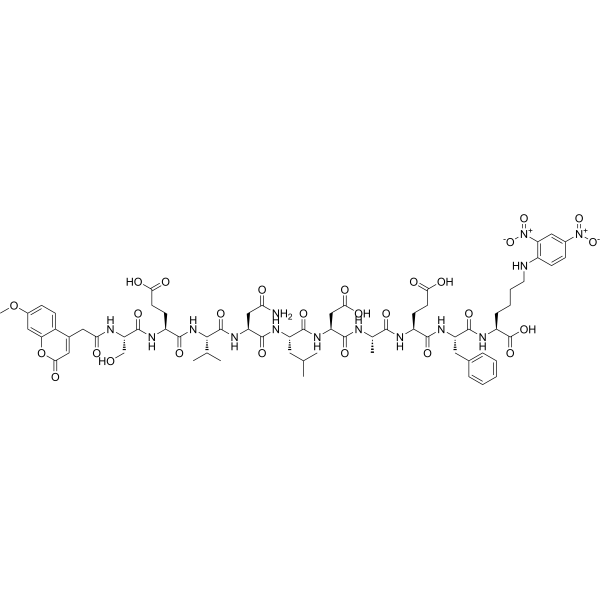
Mca-SEVNLDAEFK(Dnp) is a Beta-secretase 1 (BACE-1) peptide FRET substrate, containing the 'Swedish' Lys-Met/Asn-Leu mutation of the amyloid precursor protein (APP) β-secretase cleavage site. Cleavage at -Leu-Asp- of Mca-SEVNLDAEFK(Dnp) liberates the highly fluorescent 7-methoxycoumarin (Mca) fragment from the proximity quenching effect of the 2,4-dinitrophenyl (Dnp) internal quencher resulting in a large and easily detectable increase in fluorescence intensity.
loading...
    loading...
Cat. No.: HY-P5331
Target:  

Inhibitory Antibodies

Research Areas:  

Others

[Asn23]-beta-Amyloid (1-42), iowa mutation is a biological active peptide. (Several mutations in the beta amyloid precursor gene cause autosomal dominant Alzheimer's Disease in a number of kindreds. The Iowa mutation, where Asp 23 is replaced with Asn, is associated with severe cerebral amyloid beta-protein angiopathy (CAA). The affected individuals share a missense mutation in APP at position 694. The mutated beta-amyloid peptide aggregates more rapidly and forms toxic fibrils.)
loading...
    loading...
Cat. No.: HY-P5365
CAS No.: 374796-72-2
Target:  

Inhibitory Antibodies

Research Areas:  

Others

[Asn23] β-Amyloid (1-40), Iowa mutation is a biological active peptide. (Several mutations in the beta amyloid precursor gene cause autosomal dominant Alzheimer's Disease in a number of kindreds. The Iowa mutation, where Asp 23 is replaced with Asn, is associated with severe cerebral amyloid beta-protein angiopathy (CAA). The affected individuals share a missense mutation in APP at position 694. The mutated beta-amyloid peptide aggregates more rapidly and forms toxic fibrils.)
loading...
    loading...
Cat. No.: HY-161723
CAS No.: 2358754-22-8
Research Areas:  

Neurological Disease

LH2-051, a lysosome-enhancing compound (LYEC), is a brain-penetrant dopamine transporter (DAT) inhibitor (Ki: 0.95 μM). LH2-051 inhibits DAT-mediated dopamine uptake with an IC50 of 3.0 μM. LH2-051 promotes nuclear translocation of TFEB and lysosome biogenesis. LH2-051 improves the memory of amyloid precursor protein (APP)/Presenilin 1 (PS1) mice. LH2-051 can be used for the study of Alzheimer’s disease .
loading...
    loading...
Cat. No.: HY-168859
Target:  

JNK GSK-3 Amyloid-β

Research Areas:  

Neurological Disease

JNK3 inhibitor-9 (Compound 24a) is a potent, selective and BBB-permeable JNK3 inhibitor with an IC50 value of 12 nM. JNK3 inhibitor-9 also potently inhibits GSK3α/β (IC50s: 14 and 35 nM, respectively) involved in Tau phosphorylation. JNK3 inhibitor-9 reduces c-Jun and APP phosphorylation. JNK3 inhibitor-9 protects neurons from 1-42 toxicity .
loading...
    loading...
Cat. No.: HY-147927A
CAS No.: 1802891-23-1
Target:  

Enteropeptidase

Research Areas:  

Metabolic Disease

(S)-Human enteropeptidase-IN-1 (Compound 6c) is an orally active enteropeptidase inhibitor with low systemic exposure (IC50 (initial): 26 nM; IC50 (app): 1.8 nM). (S)-Human enteropeptidase-IN-1 promotes increased fecal protein output and effectively reduces body weight in a diet-induced obese (DIO) rat model. (S)-Human enteropeptidase-IN-1 inhibits enteropeptidase via a reversible covalent mechanism and prolongs the enzyme inactivation time. (S)-Human enteropeptidase-IN-1 can be used in anti-obesity research .
loading...
    loading...
Cat. No.: HY-152846
CAS No.: 2268739-68-8
Synonyms: GDC-8264
Flizasertib (GDC-8264) is an orally active, reversible and selective RIP1 inhibitor with Ki app values of 0.00071 μM and 0.0013 μM for human and cynomolgus monkey RIP1 kinase, respectively. Flizasertib blocks RIP1 autophosphorylation but does not affect RIP1 protein stability. Flizasertib inhibits pro-inflammatory cytokines (CCL3, CCL4, and IL-1β) production. Flizasertib results in inhibition of colitis and ileitis. Flizasertib can be used in the research of cardiac surgery-associated acute kidney injury .
loading...
    loading...
Cat. No.: HY-168241
CAS No.: 1639925-34-0
Research Areas:  

Infection

Flucopride (Compound 4a) is an AChE inhibitor (IC50: 24 nM), and a partial 5-HT4R agonist (Ki: 9.6 nM for (h)5-HT4R). Flucopride promotes the non-amyloidogenic processing of APP in COS-7 transiently expressing (h)5-HT4R (EC50: 23.0 nM). Flucopride may has good gastrointestinal track (GIT) penetration, and blood-brain barrier (BBB) cross-membrane penetration (PAMPA assay) .
loading...
    loading...
Cat. No.: HY-N13064
CAS No.: 123702-96-5
2,2′,4,4′-Tetrahydroxychalcone (Compound 18) is a selective and potent BACE1 inhibitor with an IC50 of 0.62 μM. 2,2′,4,4′-Tetrahydroxychalcone is a derivative of Isoliquiritigenin (HY-N0102) found in Glycyrrhiza uralensis. 2,2′,4,4′-Tetrahydroxychalcone can block the β-cutting step of amyloid precursor protein (APP), thereby reducing the production of β-amyloid () peptide. 2,2′,4,4′-Tetrahydroxychalcone can be used for research of Alzheimer’s disease .
loading...
    loading...
Cat. No.: HY-W747599
CAS No.: 68652-37-9
Synonyms: ​Tetrasialoganglioside GQ1b sodium
Ganglioside GQ1b (​Tetrasialoganglioside GQ1b) (bovine) sodium is a central and peripheral nervous system ganglioside and an immunostimulator. Ganglioside GQ1b (bovine) sodium modulates NMDA receptor signaling via ERK1/2, PKA, CREB, NR2A, NR2B, and GSK3β, and increases BDNF expression. Ganglioside GQ1b (bovine) sodium reduces pathology, tau phosphorylation, and APP levels. Ganglioside GQ1b (bovine) sodium can be used for the research of Alzheimer’s disease .
loading...
    loading...
Cat. No.: HY-161953
Target:  

OGA

Research Areas:  

Neurological Disease

O-GlcNAcase-IN-2 (compound 81) is an orally effective, blood-brain barrier-permeable OGA inhibitor (IC50=4.93 nM). O-GlcNAcase-IN-2 can increase the O-GlcNAcylation level of proteins and phosphorylation of tau (p-Ser199, p-Thr205 and p-Ser396) in the OA-damaged SH-SY5Y cell model. O-GlcNAcase-IN-2 can also improve cognitive impairment in APP/PS1 mice and has potential anti-Alzheimer's disease (AD) effects .
loading...
    loading...
Cat. No.: HY-P74345
Purity:  ≥ 95%, as determined by reducing SDS-PAGE.
Synonyms: CTSB; Keratolytic Winter Erythema (Oudtshoorn Skin Disease); Cathepsin B; Epididymis Secretory Sperm Binding Protein; APP Secretase; Amyloid Precursor Protein Secretase; Cathepsin B1; Cysteine Protease; APPS; RECEUP; CPSB; KWE
Species:  
Rat
Source:  
HEK293
loading...
    loading...
Cat. No.: HY-13438A
CAS No.: 1421852-78-9
Target:  

Beta-secretase

Research Areas:  

Cancer

AZD3839 fumarate is an orally available, selective, reversible inhibitor of the β-site amyloid precursor protein cleaving enzyme BACE1 that can cross the blood-brain barrier. AZD3839 fumarate inhibits recombinant human BACE1 with a Ki=26.1 nM. AZD3839 fumarate inhibits A40 production in SH-SY5Y cells with an IC50 of 4.8 nM. AZD3839 fumarate binds to BACE1 and reduces the Aβ amyloid produced by the cleavage of amyloid precursor protein (APP) by BACE1 and γ-secretase. AZD3839 fumarate can be used in the field of Alzheimer's disease research .
loading...
    loading...
Cat. No.: HY-174367
CAS No.: 923865-06-9
Target:  

RUNX Apoptosis

Research Areas:  

Cancer

RUNX1/ETO-IN-1 is a RUNX1-ETO oncogenic fusion protein inhibitor that specifically targets the NHR2 oligomerization domain. RUNX1/ETO-IN-1 directly interacts with the NHR2 (KD,app = 39 μM). RUNX1/ETO-IN-1 exhibits anti-leukemic activity by inducing apoptosis and promoting differentiation in RUNX1/ETO-translocated AML cells. RUNX1/ETO-IN-1 remains essentially uncharged at physiological pH, demonstrating superior membrane permeability.
loading...
    loading...
Cat. No.: HY-182367
Target:  

GPR39

Research Areas:  

Neurological Disease

TMN-OMe is a blood-brain barrier-permeable GPR39 agonist and a radiotracer for positron emission tomography (PET). TMN-OMe activates GPR39 by recruiting β-arrestin, exhibits highly selective binding ability in the mouse brain, and enables quantitative analysis of GPR39 at the in vivo level. TMN-OMe shows specific uptake in GPR39 knockout mice, Alzheimer's disease model (APP/PS1) mice, and blocking experiments. TMN-OMe facilitates in-depth exploration of changes in GPR39-related mechanisms in neurological diseases and is widely used in Alzheimer's disease research .
loading...
    loading...
Cat. No.: HY-P705678
Purity:  ≥ 90%, as determined by reducing SDS-PAGE.
Synonyms: CTSB; Keratolytic Winter Erythema (Oudtshoorn Skin Disease); Cathepsin B; Epididymis Secretory Sperm Binding Protein; APP Secretase; Amyloid Precursor Protein Secretase; Cathepsin B1; Cysteine Protease; APPS; RECEUP; CPSB; KWE
Species:  
Human
Source:  
HEK293
loading...
    loading...
Cat. No.: HY-126242S
CAS No.: 1609391-90-3
Purity:  99.62%
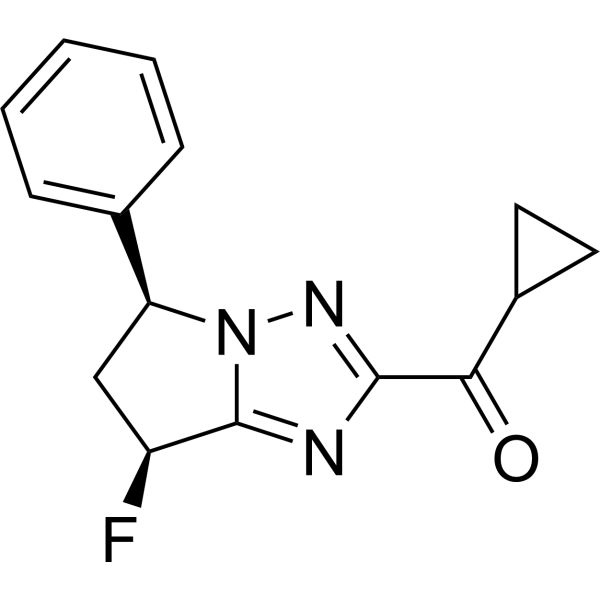
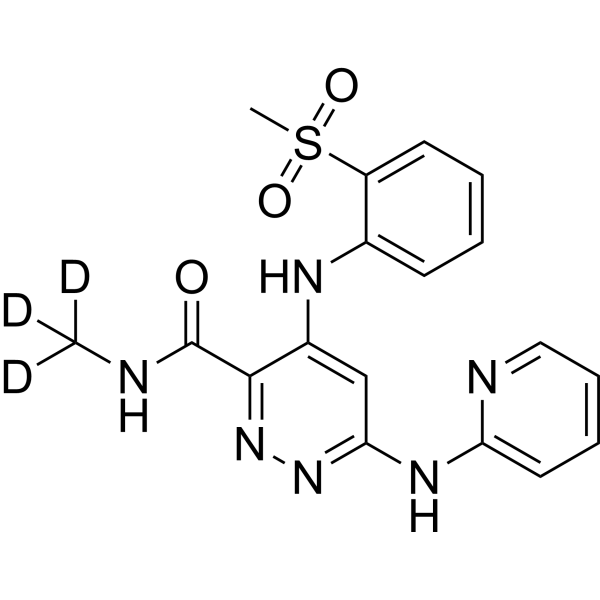
Tyk2-IN-7 is an orally active TYK2 JH2 inhibitor, binds to TYK2 JH2 domain with IC50 and Ki.app of 0.00053 μM and 0.00007 μM, respectively. Tyk2-IN-7 provides a highly selective alternative to conventional TYK2 orthosteric inhibitors, inhibits TYK2/JAK1/JAK2 kinase domain. Tyk2-IN-7 can inhibit the IL-23 and IFN-α signaling pathways. Tyk2-IN-7 is commonly used in the study of inflammatory conditions such as colitis .
loading...
    loading...
Cat. No.: HY-P992356

Target:  

Topoisomerase

Research Areas:  

Cancer

GENA-104A16 is a humanized monoclonal antibody targeting CNTN4, with multiple functions including immunostimulation, cytotoxicity and immunoregulation. By binding to CNTN4, GENA-104A16 blocks its interaction with APP, thereby restoring T cell function, inducing tumor cell death and regulating tumor-infiltrating immune cell populations. GENA-104A16 also exerts topoisomerase I inhibitory activity via the payload Exatecan (HY-13631). GENA-104A16 can be used in research related to colon cancer liver metastasis and other CNTN4-expressing solid tumors .
loading...
    loading...
Cat. No.: HY-103490R
CAS No.: 1111556-37-6
Synonyms: EDHS-206 (Standard)
Takinib (Standard) is the analytical standard of Takinib. This product is intended for research and analytical applications. Takinib (EDHS-206) is an orally active and selective TAK1 inhibitor (IC50=9.5 nM), more than 1.5 log more potent than the second and third ranked targets, IRAK4 (120 nM) and IRAK1 (390 nM), respectively. Takinib is an inhibitor of autophosphorylated TAK1 that non-competitively binds within the ATP binding pocket. Takinib induces apoptosis following TNFα stimulation in cell models of rheumatoid arthritis and metastatic breast cancer. Takinib is also a P. falciparum protein kinase 9 (PfPK9) inhibitor (KD(app) of 0.46 μM) .
loading...
    loading...
Cat. No.: HY-176036
CAS No.: 3070323-06-4
MS1262 is a blood-brain barrier-permeable, selective inhibitor of histone methyltransferases G9a (EHMT2) and GLP (EHMT1), with an IC50 of 19 nM and a Kd of 74 nM against G9a, and an IC50 of 6 nM and a Kd of 19 nM against GLP. MS1262 reduces the dimethylation level of histone H3 lysine 9 and decreases the size of plaques. MS1262 restores hippocampal long-term potentiation (LTP) and miniature excitatory postsynaptic current (sEPSC) frequency, ameliorates spatial memory deficits, and reverses anxiety-like and depression-like behaviors in AD model mice. MS1262 reverses the expression/phosphorylation levels of early AD biomarkers, providing support for stage-specific diagnosis of AD. MS1262 reduces the risk of thrombus rupture. MS1262 can be used in research related to Alzheimer's disease, colorectal cancer, and triple-negative breast cancer .
loading...
    loading...