32 Results for "

α-2a adrenergic receptor

" in MedChemExpress (MCE) Product Catalog:
Products (32)

32 Results for "α-2a adrenergic receptor" in MCE Product Catalog:

9
9 Publications Verification
Cat. No.: HY-B0527A
CAS No.: 549-18-8
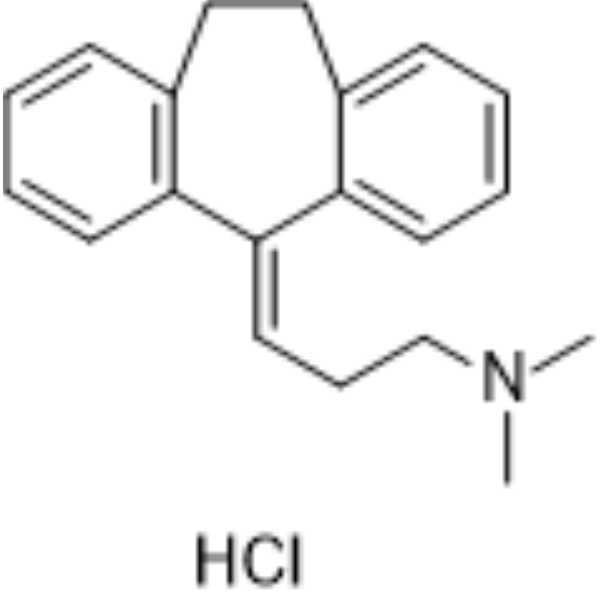
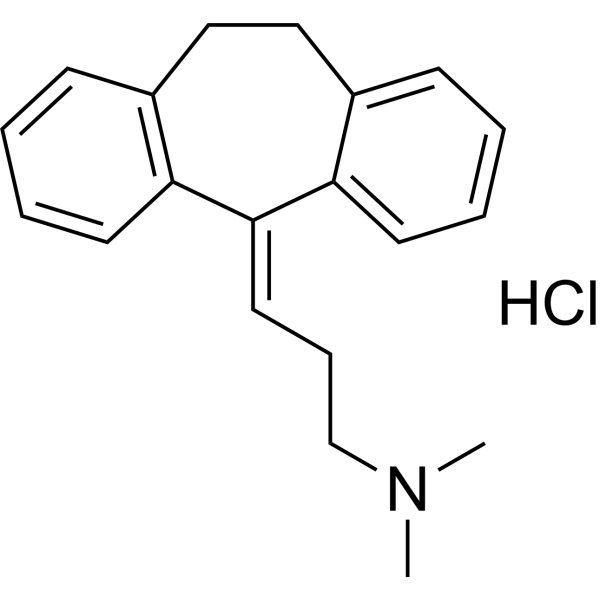
Amitriptyline hydrochloride is an orally active tricyclic antidepressant (TCA). Amitriptyline hydrochloride mainly exerts its antidepressant effect by blocking SERT (Ki = 3.45 nM) and NET (Ki = 13.3 nM), thereby increasing the concentrations of 5-hydroxytryptamine (5-HT) and norepinephrine (NE) in the synaptic cleft. Amitriptyline hydrochloride is also an agonist at α2A and TrkA/TrkB receptors, thereby exerting analgesic and neurotrophic activities (inhibiting cell apoptosis). Amitriptyline hydrochloride can reduce inflammation, angiogenesis and fibrosis. Amitriptyline hydrochloride binds to DAT (with Ki = 2.58 μM). Amitriptyline hydrochloride has high affinity for a series of receptors and can antagonize muscarinic cholinergic receptors (M1/M2/M3/M4/M5 receptors) (Ki = 11-24 nM), H1 receptors (Ki = 0.5-1.1 nM), adrenergic α1 receptors (Ki = 4.4 nM), etc., resulting in a series of side effects. Amitriptyline hydrochloride can block sodium channels and hERG potassium channel (IC50 = 4.78 μM) and it has cardiotoxicity .
loading...
    loading...
9
9 Publications Verification
Cat. No.: HY-B0527
CAS No.: 50-48-6
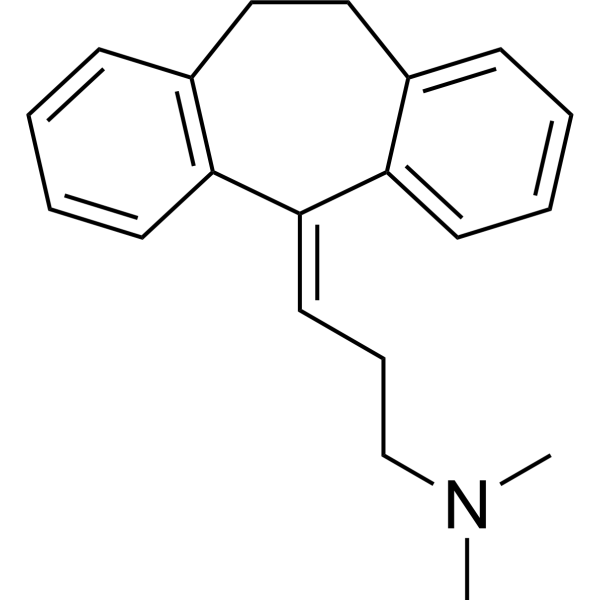
Amitriptyline is an orally active tricyclic antidepressant (TCA). Amitriptyline mainly exerts its antidepressant effect by blocking SERT (Ki = 3.45 nM) and NET (Ki = 13.3 nM), thereby increasing the concentrations of 5-hydroxytryptamine (5-HT) and norepinephrine (NE) in the synaptic cleft. Amitriptyline is also an agonist at α2A and TrkA/TrkB receptors, thereby exerting analgesic and neurotrophic activities (inhibiting cell apoptosis). Amitriptyline can reduce inflammation, angiogenesis and fibrosis. Amitriptyline binds to DAT (with Ki = 2.58 μM). Amitriptyline has high affinity for a series of receptors and can antagonize muscarinic cholinergic receptors (M1/M2/M3/M4/M5 receptors) (Ki = 11-24 nM), H1 receptors (Ki = 0.5-1.1 nM), adrenergic α1 receptors (Ki = 4.4 nM), etc., resulting in a series of side effects. Amitriptyline can block sodium channels and hERG potassium channel (IC50 = 4.78 μM) and it has cardiotoxicity .
loading...
    loading...
3
3 Cited Publications
Cat. No.: HY-113236
CAS No.: 614-35-7
Purity:  98.04%
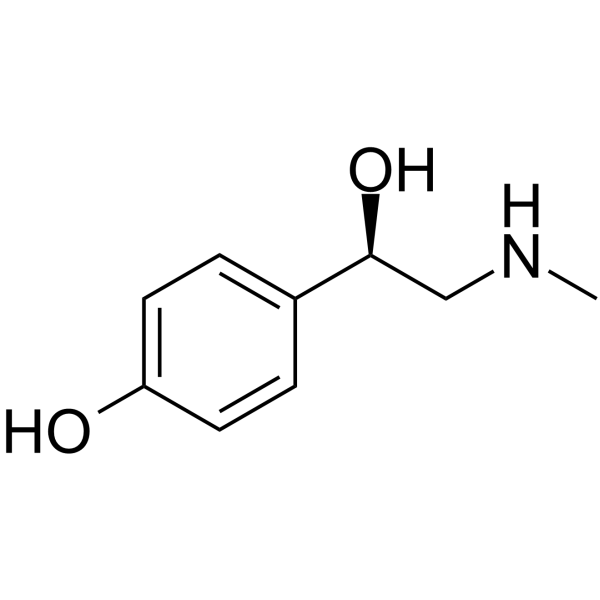
p-Synephrine is an orally active alkaloid dietary supplement without indirect sympathomimetic activity or cardiovascular stimulatory activity. p-Synephrine stimulates AMPK phosphorylation and mediates Glut4 translocation to increase glucose consumption and lactate production in skeletal muscle cells. p-Synephrine also downregulates the p38 MAPK and NF-κB signaling pathways to inhibit pro-inflammatory cytokine production and alter oxidative metabolism. p-Synephrine exhibits low subchronic toxicity in mice. p-Synephrine can be applied to research related to systemic inflammatory response syndrome, obesity, and type 2 diabetes .
loading...
    loading...
Cat. No.: HY-B1052
CAS No.: 21498-08-8
Synonyms: Baq-168; MDL-14042
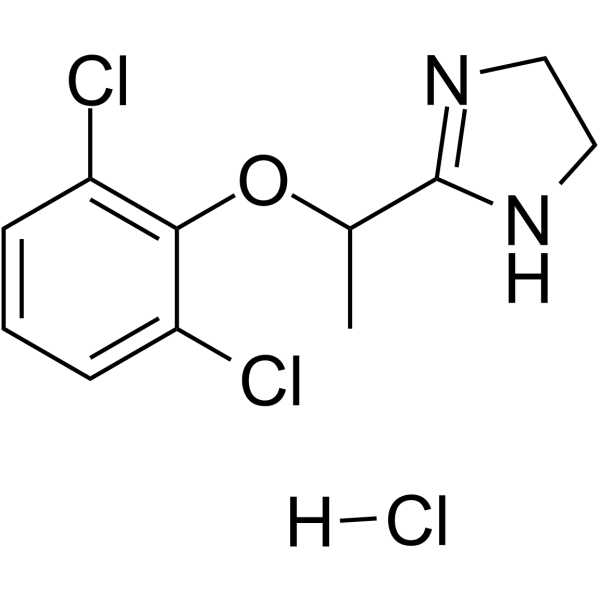
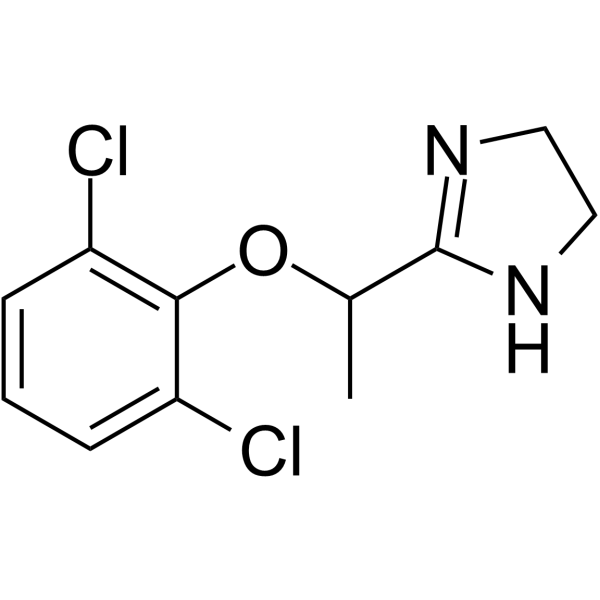
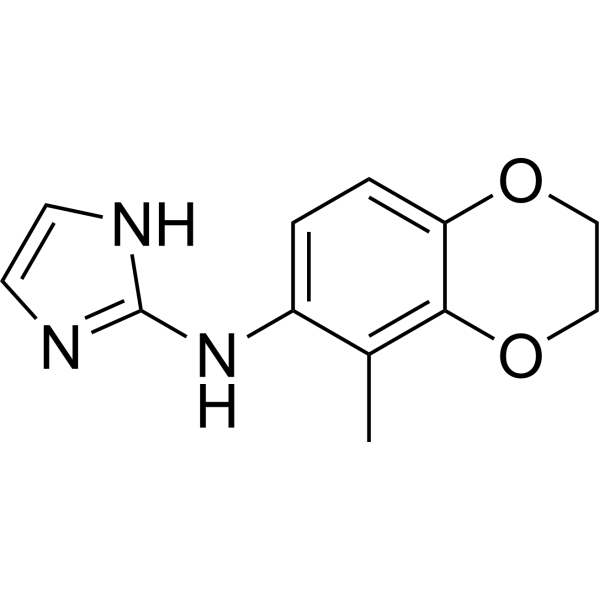
Lofexidine hydrochloride (Baq-168) is an orally active agonist of the imidazoline I1 receptor (imidazoline I1 receptor) (Ki: 1.9 nM) and α2-adrenergic receptor (α2-adrenergic receptor). Lofexidine hydrochloride binds to the α2A-adrenergic receptor, reduces sympathetic outflow, lowers blood pressure, and exhibits vasoconstrictive effects. Lofexidine hydrochloride regulates the expression of c-fos and alleviates opioid withdrawal symptoms. Lofexidine hydrochloride is applicable to research on opioid addiction and withdrawal .
loading...
    loading...
Cat. No.: HY-12716A
CAS No.: 681806-46-2
Purity:  ≥99.0%
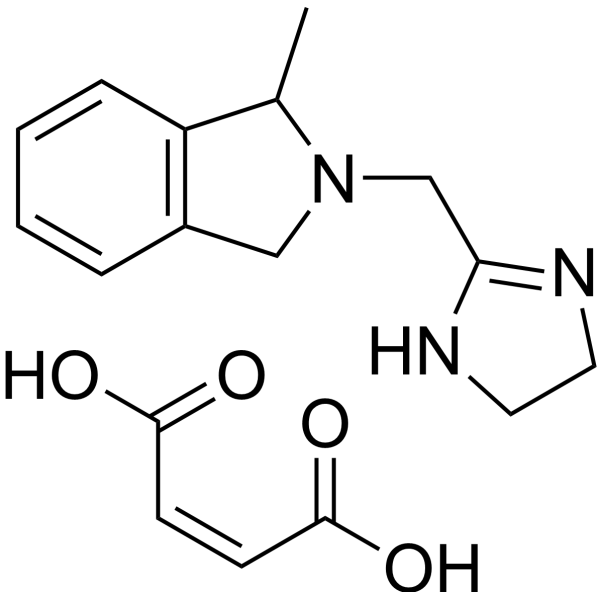
BRL-44408 maleate is a selective, blood-brain barrier-permeable α2A-adrenergic receptor antagonist with a Ki value of 8.56 nM against human targets. BRL-44408 maleate exhibits activities such as antidepressant, analgesic effects and attenuation of sepsis-induced acute lung injury by regulating the release of neurotransmitters such as norepinephrine and dopamine, or inhibiting signaling pathways including ERK1/2, p38MAPK and p65. BRL-44408 maleate can be used in studies related to acute respiratory distress syndrome, depression and visceral pain .
loading...
    loading...
Cat. No.: HY-B1052A
CAS No.: 31036-80-3
Synonyms: Baq-168 free base; MDL-14042 free base
Lofexidine (Baq-168 free base) is an orally active agonist of the imidazoline I1 receptor (imidazoline I1 receptor) (Ki: 1.9 nM) and α2-adrenergic receptor (α2-adrenergic receptor). Lofexidine binds to the α2A-adrenergic receptor, reduces sympathetic outflow, lowers blood pressure, and exhibits vasoconstrictive effects. Lofexidine regulates the expression of c-fos and alleviates opioid withdrawal symptoms. Lofexidine is applicable to research on opioid addiction and withdrawal .
loading...
    loading...
Cat. No.: HY-B0527AR
CAS No.: 549-18-8
Amitriptyline hydrochloride (Standard) is the analytical standard of Amitriptyline hydrochloride (HY-B0527A). This product is intended for research and analytical applications. Amitriptyline hydrochloride is an orally active tricyclic antidepressant (TCA). Amitriptyline hydrochloride mainly exerts its antidepressant effect by blocking SERT (Ki = 3.45 nM) and NET (Ki = 13.3 nM), thereby increasing the concentrations of 5-hydroxytryptamine (5-HT) and norepinephrine (NE) in the synaptic cleft. Amitriptyline hydrochloride is also an agonist at α2A and TrkA/TrkB receptors, thereby exerting analgesic and neurotrophic activities (inhibiting cell apoptosis). Amitriptyline hydrochloride can reduce inflammation, angiogenesis and fibrosis. Amitriptyline hydrochloride binds to DAT (with Ki = 2.58 μM). Amitriptyline hydrochloride has high affinity for a series of receptors and can antagonize muscarinic cholinergic receptors (M1/M2/M3/M4/M5 receptors) (Ki = 11-24 nM), H1 receptors (Ki = 0.5-1.1 nM), adrenergic α1 receptors (Ki = 4.4 nM), etc., resulting in a series of side effects. Amitriptyline hydrochloride can block sodium channels and hERG potassium channel (IC50 = 4.78 μM) and it has cardiotoxicity.
loading...
    loading...
Cat. No.: HY-101610
CAS No.: 167626-17-7
Target:  

Adrenergic Receptor

OPC-28326 is a selective peripheral vasodilator and an angatonist of α2-adrenergic receptor, with Ki of 2040, 285, and 55 nM for α2A-, α2B- and α2C-adrenoceptors, respectively.
loading...
    loading...
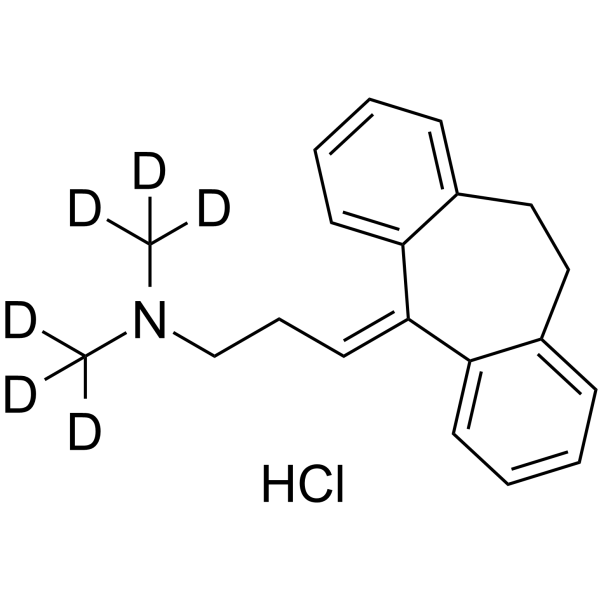
Cat. No.: HY-B0527AS
CAS No.: 203645-63-0
Amitriptyline-d6 hydrochloride is the deuterium labeled Amitriptyline hydrochloride (HY-B0527A). Amitriptyline hydrochloride is an orally active tricyclic antidepressant (TCA). Amitriptyline hydrochloride mainly exerts its antidepressant effect by blocking SERT (Ki = 3.45 nM) and NET (Ki = 13.3 nM), thereby increasing the concentrations of 5-hydroxytryptamine (5-HT) and norepinephrine (NE) in the synaptic cleft. Amitriptyline hydrochloride is also an agonist at α2A and TrkA/TrkB receptors, thereby exerting analgesic and neurotrophic activities (inhibiting cell apoptosis). Amitriptyline hydrochloride can reduce inflammation, angiogenesis and fibrosis. Amitriptyline hydrochloride binds to DAT (with Ki = 2.58 μM). Amitriptyline hydrochloride has high affinity for a series of receptors and can antagonize muscarinic cholinergic receptors (M1/M2/M3/M4/M5 receptors) (Ki = 11-24 nM), H1 receptors (Ki = 0.5-1.1 nM), adrenergic α1 receptors (Ki = 4.4 nM), etc., resulting in a series of side effects. Amitriptyline hydrochloride can block sodium channels and hERG potassium channel (IC50 = 4.78 μM) and it has cardiotoxicity.
loading...
    loading...
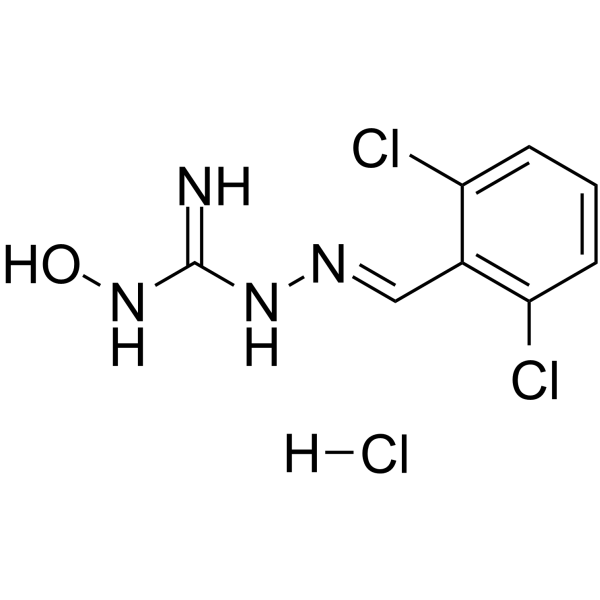
Cat. No.: HY-U00123A
CAS No.: 23256-40-8
Synonyms: Hydroxyguanabenz hydrochloride
Target:  

Adrenergic Receptor

Research Areas:  

Neurological Disease

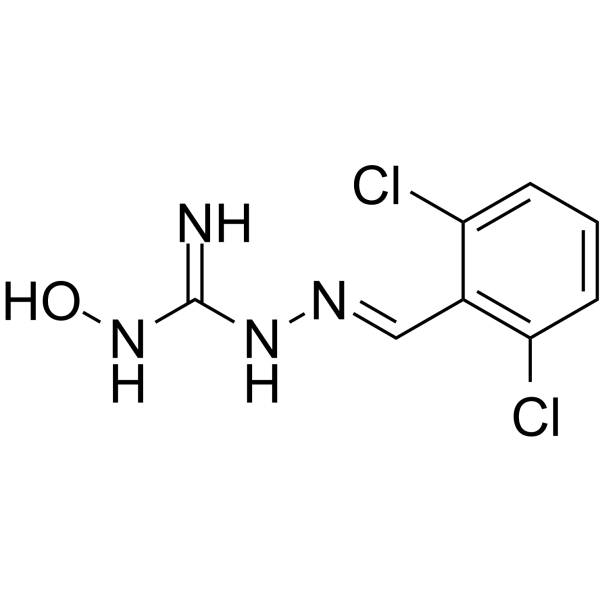
Guanoxabenz (Hydroxyguanabenz) hydrochloride is an α2 adrenergic receptor agonist, with a Ki of 4000 nM and the fully activated form 40 nM for an α2A adrenoceptor .
loading...
    loading...
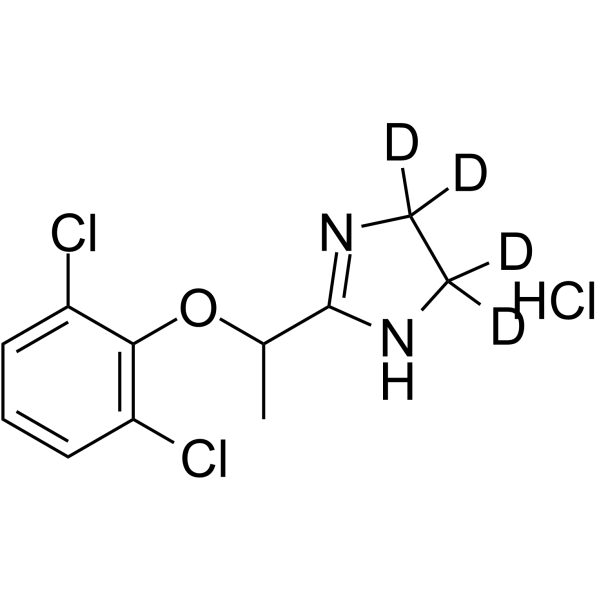
Cat. No.: HY-B1052S
CAS No.: 1206845-57-9
Synonyms: Baq-168-d4; MDL-14042-d4
Lofexidine-d4 hydrochloride (Baq-168-d4) is the deuterium labeled Lofexidine hydrochloride (HY-B1052). Lofexidine hydrochloride (Baq-168) is an orally active agonist of the imidazoline I1 receptor (imidazoline I1 receptor) (Ki: 1.9 nM) and α2-adrenergic receptor (α2-adrenergic receptor). Lofexidine hydrochloride binds to the α2A-adrenergic receptor, reduces sympathetic outflow, lowers blood pressure, and exhibits vasoconstrictive effects. Lofexidine hydrochloride regulates the expression of c-fos and alleviates opioid withdrawal symptoms. Lofexidine hydrochloride is applicable to research on opioid addiction and withdrawal .
loading...
    loading...
Cat. No.: HY-12716
CAS No.: 118343-19-4
BRL-44408 is a selective, blood-brain barrier-permeable α2A-adrenergic receptor antagonist with a Ki value of 8.56 nM against human targets. BRL-44408 exhibits activities such as antidepressant, analgesic effects and attenuation of sepsis-induced acute lung injury by regulating the release of neurotransmitters such as norepinephrine and dopamine, or inhibiting signaling pathways including ERK1/2, p38MAPK and p65. BRL-44408 can be used in studies related to acute respiratory distress syndrome, depression and visceral pain .
loading...
    loading...
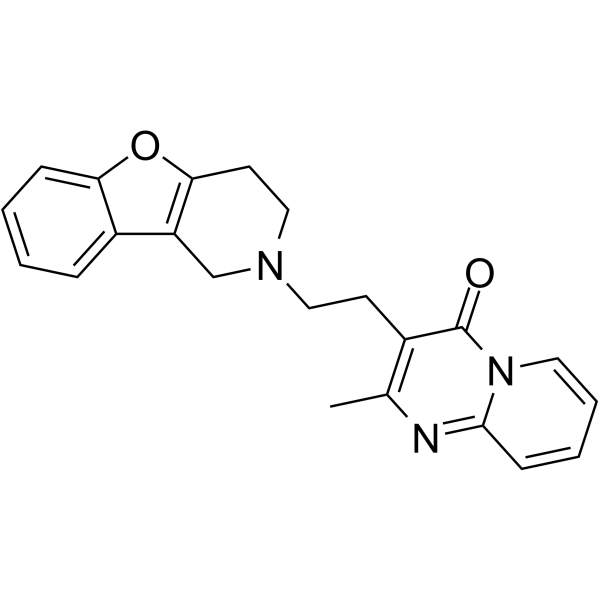
Cat. No.: HY-U00117
CAS No.: 214548-46-6
Synonyms: R107474
Target:  

Adrenergic Receptor

Research Areas:  

Neurological Disease Endocrinology

Lusaperidone (R107474) is an α2 adrenergic receptor antagonist with Kis of 0.13 and 0.15 nM for α2A and α2C, respectively.
loading...
    loading...
Cat. No.: HY-U00244
CAS No.: 63-12-7
Synonyms: P2647; BZQ; Benzoquinamide
Research Areas:  

Metabolic Disease

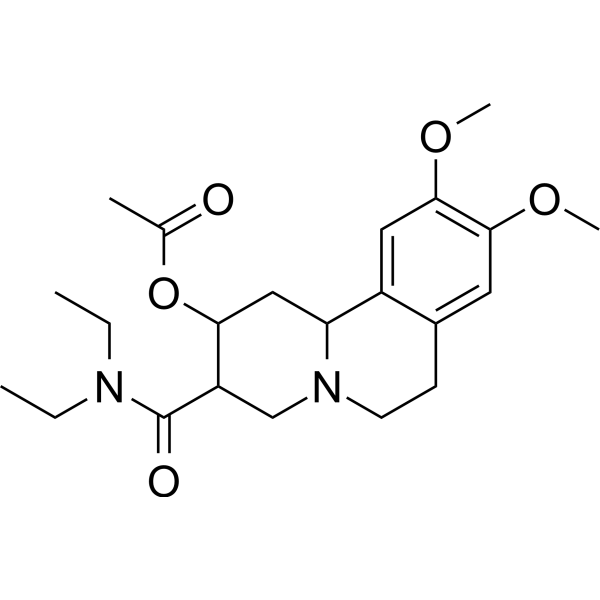
Benzquinamide (P2647; BZQ; Benzoquinamide) is an orally active binder of dopamine receptors and adrenergic receptors. Benzquinamide specifically targets dopamine D2, D3, D4 receptors and α-2A, α-2B, α-2C adrenergic receptors. Benzquinamide regulates blood pressure and heart rate, attenuates the pressor effect of adrenaline, and exhibits activities such as antiemesis, anxiolysis, and reduction of histamine-induced bronchoconstriction. Benzquinamide has good safety and does not deplete serotonin or norepinephrine in the brain. Benzquinamide can be used in studies related to nausea/vomiting, mental disorders, anxiety states, neurosis, and psychosis .
loading...
    loading...
Cat. No.: HY-117046
CAS No.: 1025725-91-0
AVN-101 is a potent, brain-penetrant and orally active 5-HT7 receptor antagonist (Ki of 153 pM), with slightly lesser potency toward 5-HT6, 5-HT2A, and 5HT-2C receptors (Ki values of 2.04 nM, 1.56  nM, and 1.17  nM, respectively). AVN-101 also exhibits a rather high affinity toward histamine H1 (Ki of 0.58 nM) and adrenergic α2A, α2B, and α2C (Ki= 0.41-3.6 nM) receptors. AVN-101 can be studied in such diseases as general anxiety disorders, depression, schizophrenia, Alzheimer’s disease, and multiple sclerosis .
loading...
    loading...
Cat. No.: HY-U00123
CAS No.: 24047-25-4
Synonyms: Hydroxyguanabenz
Target:  

Adrenergic Receptor

Guanoxabenz is an α2 adrenergic receptor agonist, with a Ki of 4000 nM and the fully activated form 40 nM for an α2A adrenoceptor .
loading...
    loading...
Cat. No.: HY-162620
CAS No.: 2971825-58-6
Target:  

Adrenergic Receptor

Research Areas:  

Cancer

α2A-AR agonist 1 (Compound B9) is a selective agonist for α2-adrenergic receptor (α2A-AR) with EC50 of 0.23 nM. α2A-AR agonist 1 exhibits a hypnotic effect, with ED50 of 0.138 mg/kg in the loss of righting reflex (LORR) experiment. α2A-AR agonist 1 exhibits metabolic stability in mouse liver microsomes .
loading...
    loading...
Cat. No.: HY-W042920A
CAS No.: 15052-05-8
Target:  

Adrenergic Receptor

Research Areas:  

Neurological Disease

TDIQ hydrochloride is an analog of Amphetamine with high affinity for α2-adrenergic receptor. TDIQ hydrochloride is a selective α2-adrenoceptor ligand with the Ki values of 75 nM, 95 nM, and 65 nM for α2A-, α2B-, and α2C-adrenergic receptors, respectively .
loading...
    loading...
Cat. No.: HY-106444
CAS No.: 150586-58-6
Synonyms: MPV 1730; JP-1730
Target:  

Adrenergic Receptor

Research Areas:  

Neurological Disease

Fipamezole (MPV 1730; JP-1730) is a potent and orally active α2-adrenergic receptor antagonist with Ki values of 9.2 nM, 17 nM, and 55 nM for human α2A, α2B, and α2C, receptors, respectively. Fipamezole is an anti-dyskinetic agent, and can be used for the study of Parkinson's disease .
loading...
    loading...
Cat. No.: HY-100300
CAS No.: 171102-29-7
Purity:  99.49%
Target:  

Adrenergic Receptor

AGN 192836 is a potent and selective α2 adrenergic agonist with EC50s of 8.7, 41 and 6.6 nM for α2A, α2B and α2C receptor, respectively.
loading...
    loading...

