Search Result
Results for "
β-arrestin-2 recruitment
" in MedChemExpress (MCE) Product Catalog:
-
- HY-145404
-
|
|
Opioid Receptor
|
Metabolic Disease
|
|
Mitragynine pseudoindoxyl is a potent orally active agonist of the μ-opioid receptor (MOR-1, Ki=0.8 nM) and an antagonist of the δ-opioid receptor (DOR-1, Ki=3.0 nM). Mitragynine pseudoindoxyl has moderate affinity for the κ-opioid receptor (KOR-1, Ki=24 nM) and does not recruit β-arrestin-2, acting through G protein-mediated signaling pathways without β-arrestin-2-related activation. Mitragynine pseudoindoxyl produces potent analgesic activity through a mixed μ-agonist/δ-antagonist mechanism, with low side effects such as physical dependence, respiratory depression, and constipation, and no rewarding or aversive behaviors. Mitragynine pseudoindoxyl reduces hyperactivity, inhibits GI transit, and enhances characteristics, making it a potential analgesic .
|
-
-
- HY-19867A
-
|
TG-0054 hydrobromide
|
CXCR
|
Cardiovascular Disease
Cancer
|
|
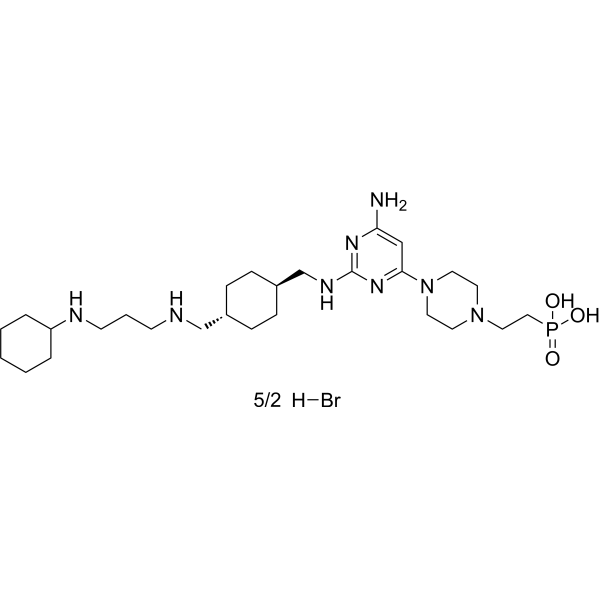
Burixafor (TG-0054) hydrobromide is a potent CXCR4 antagonist with a pIC50 of 7.4. Burixafor hydrobromide inhibits the binding of CXCL12 to CXCR4, antagonizes CXCL12-induced recruitment of Gαᵢ and β-arrestin2, and blocks the downstream Gαᵢ-mediated inhibitory effect on cAMP signal transduction. Burixafor hydrobromide mobilizes CD34 + hematopoietic stem/progenitor cells (HSPC) from the bone marrow to the peripheral blood. Burixafor hydrobromide can be used for research on autologous hematopoietic stem cell transplantation (ASCT) .
|
-
-
- HY-P1102
-
TC14012
4 Publications Verification
|
CXCR
HIV
|
Infection
Cancer
|
|
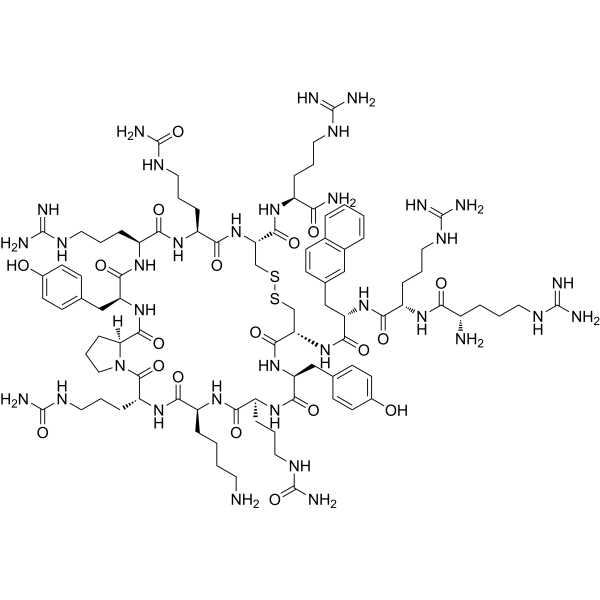
TC14012, a serum-stable derivative of T140, is a selective and peptidomimetic CXCR4 antagonist with an IC50 of 19.3 nM. TC14012 is a potent CXCR7 agonist with an EC50 of 350 nM for recruiting β-arrestin 2 to CXCR7. TC14012 has anti-HIV activity and anti-cancer activity .
|
-
-
- HY-W010907
-
|
|
GPR35
ERK
|
Neurological Disease
|
|
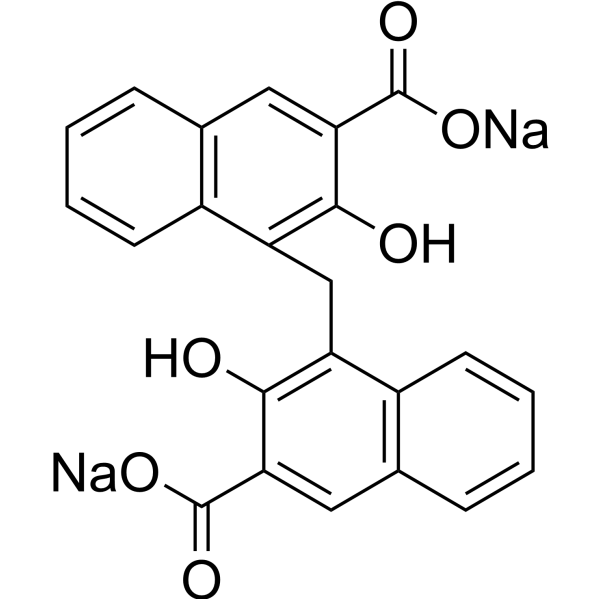
Pamoic acid disodium is a potent GPR35 agonist with an EC50 value of 79 nM. Pamoic acid disodium induces GPR35 internalization and activates ERK1/2 with EC50 values of 22 nM and 65 nM, respectively. Pamoic acid disodium potently recruits β-arrestin2 to GPR35 and has an antinociceptive effect .
|
-
-
- HY-164795
-
|
|
Neurotensin Receptor
Arrestin
iGluR
ERK
Sodium Channel
|
Neurological Disease
|
|
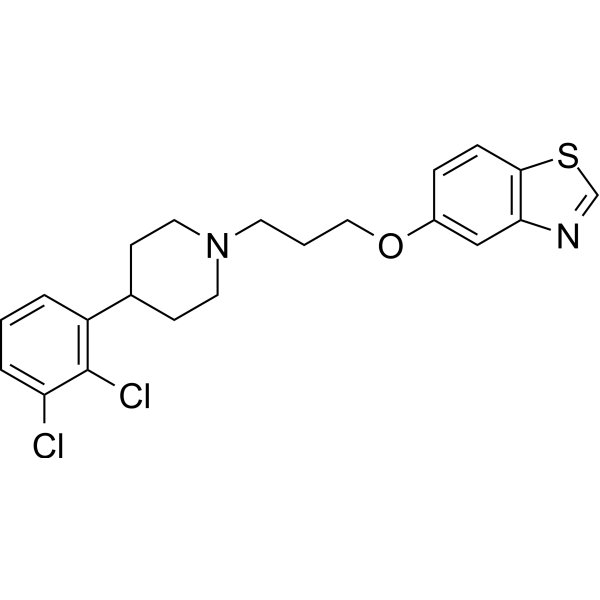
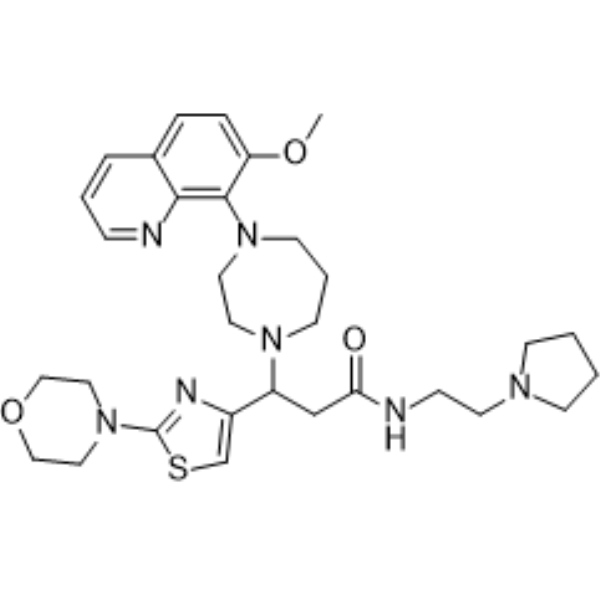
SBI-810 is a blood-brain barrier-permeable NTSR1 modulator. SBI-810 promotes the recruitment of β-arrestin-2 to NTSR1 and antagonizes NTSR1-mediated Gq activation. SBI-810 inhibits excitatory synaptic transmission, NMDA receptor and extracellular signal-regulated kinase (ERK) signaling in spinal nociceptive neurons, reduces surface expression of Nav1.7 and action potential firing in primary sensory neurons, and attenuates C-fiber responses. SBI-810 effectively alleviates acute and chronic pain in various rodent models through peripheral and central modulation. SBI-810 is applicable to research related to multiple pain disorders .
|
-
-
- HY-164795A
-
|
|
Neurotensin Receptor
Arrestin
iGluR
ERK
Sodium Channel
|
Neurological Disease
|
|
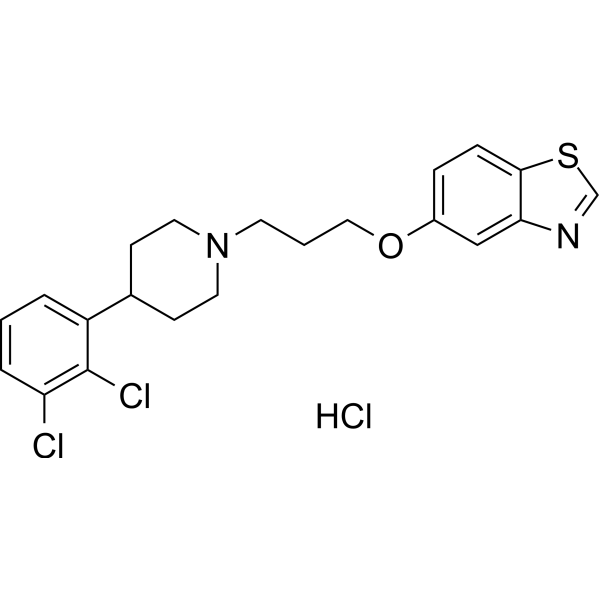
SBI-810 hydrochloride is a blood-brain barrier-permeable NTSR1 modulator. SBI-810 hydrochloride promotes the recruitment of β-arrestin-2 to NTSR1 and antagonizes NTSR1-mediated Gq activation. SBI-810 hydrochloride inhibits excitatory synaptic transmission, NMDA receptor and extracellular signal-regulated kinase (ERK) signaling in spinal nociceptive neurons, reduces surface expression of Nav1.7 and action potential firing in primary sensory neurons, and attenuates C-fiber responses. SBI-810 hydrochloride effectively alleviates acute and chronic pain in various rodent models through peripheral and central modulation. SBI-810 hydrochloride is applicable to research related to multiple pain disorders .
|
-
-
- HY-111385
-
|
|
Dopamine Receptor
5-HT Receptor
Arrestin
|
Neurological Disease
|
|
UNC9994 hydrochloride is a functionally selective, β-arrestin–biased dopamine D2 receptor (D2R) agonist that selectively activates β-arrestin recruitment and signaling. UNC9994 hydrochloride shows a binding affinity with a Ki of 79 nM for D2R. UNC9994 hydrochloride is also an antagonist of Gi-regulated cAMP production and partial agonist for D2R/β-arrestin-2 interactions. UNC9994 hydrochloride shows antipsychotic-like activity .
|
-
-
- HY-123813
-
|
|
CXCR
Arrestin
|
Cancer
|
|
CCX-777 is an orthosteric binder and partial agonist of CXCR7/ACKR3. CCX-777 induces the recruitment of β-arrestin 2 and affects the rebinding of chemokines to ACKR3. CCX-777 functions to stabilize the ACKR3 receptor and promotes the formation of a monodisperse, stable complex of the receptor in DDM/CHS micelles. CCX-777 is widely used in cancer-related research .
|
-
-
- HY-117829
-
UNC9994
2 Publications Verification
|
Dopamine Receptor
5-HT Receptor
Histamine Receptor
Arrestin
|
Neurological Disease
|
|
UNC9994, an analog of Aripiprazole, is a functionally selective β-arrestin-biased dopamine D2 receptor (D2R) agonist with EC50 <10 nM for β-arrestin-2 recruitment to D2 receptors. UNC9994 is simultaneously partial agonists of β-arrestin-2 translocation and antagonists of Gi-regulated cAMP production. Antipsychotic Activity .
|
-
-
- HY-119486A
-
|
(Rac)-PF-06649751; (Rac)-CVL-751
|
Dopamine Receptor
Arrestin
|
Neurological Disease
|
|
(Rac)-Tavapadon ((Rac)-PF-06649751) is a potent and selective noncatechol dopamine D1 receptor agonist. (Rac)-Tavapadon displays potent full agonism in the GS activation assay as well as partial agonism in the β-arrestin2 recruitment assay (GS-cAMP, EC50=0.8 nM; β-arrestin2, EC50=68 nM). (Rac)-Tavapadon has antiparkinsonian activity .
|
-
-
- HY-100677
-
|
|
CXCR
|
Endocrinology
|
|
VUF11207 (Compound 29) is a CXCR7 agonist and a high-potency CXCR7 (pKi of 8.1) ligand that induces recruitment of β-arrestin2 (pEC50 of 8.8) and subsequent internalization (pEC50 of 7.9) of CXCR7 .
|
-
-
- HY-108656
-
|
|
P2Y Receptor
Arrestin
|
Cardiovascular Disease
|
|
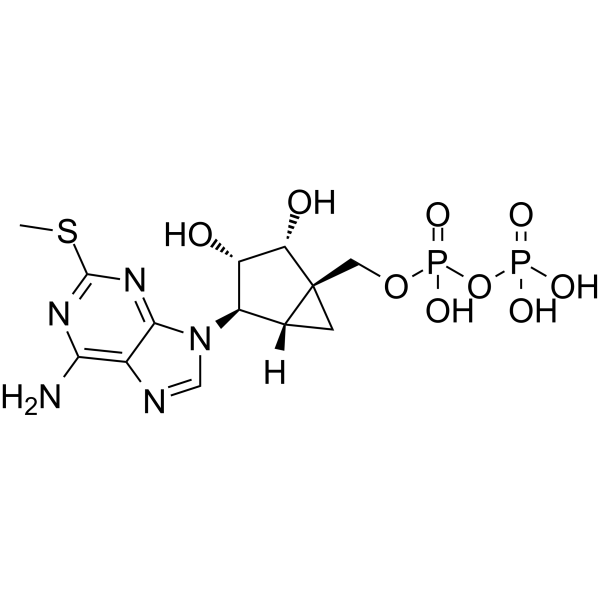
MRS2365 is a potent and selective P2Y1 receptor (EC50=0.4 nM) /[ 35S]GTPγS binding/β-arrestin 2 recruitment agonist with an EC50 of 0.4 nM. MRS2365 relieves mechanical allodynia and increases mechanical sensitivity. MRS2365 shows little agonist or antagonist activity at the P2Y12 or P2Y13 receptors .
|
-
-
- HY-108656A
-
|
|
P2Y Receptor
Arrestin
|
Cardiovascular Disease
|
|
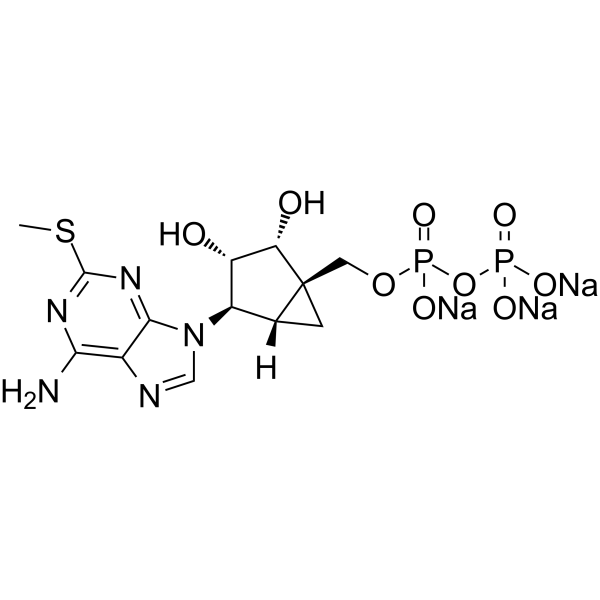
MRS2365 trisodium is a potent and selective P2Y1 receptor (EC50=0.4 nM)/[ 35S]GTPγS binding/β-arrestin 2 recruitment agonist. MRS2365 trisodium relieves mechanical allodynia and increases mechanical sensitivity .
|
-
-
- HY-110302
-
|
|
Opioid Receptor
|
Neurological Disease
|
|
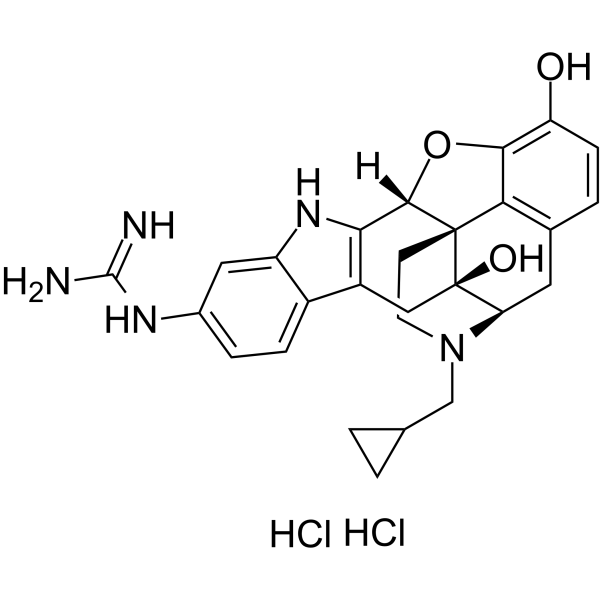
6'-GNTI dihydrochloride, a κ-opioid receptor (KOR) agonist, displays bias toward the activation of G protein-mediated signaling over β-arrestin2 recruitment. 6'-GNTI 6'-GNTI dihydrochloride only activates the Akt pathway in striatal neurons .
|
-
-
- HY-175306
-
|
|
EBI2/GPR183
Arrestin
|
Inflammation/Immunology
Cancer
|
|
GPR183 inverse agonist-1 (Compound 78) is a GPR183 inverse agonist. GPR183 inverse agonist-1 inhibits the GPR183-mediated Gi activation and β-arrestin2 recruitment, and blocks PBMC migration. GPR183 inverse agonist-1 can be used for inflammatory, autoimmune and neoplastic disorders research .
|
-
-
- HY-163277
-
|
|
Opioid Receptor
|
Inflammation/Immunology
|
|
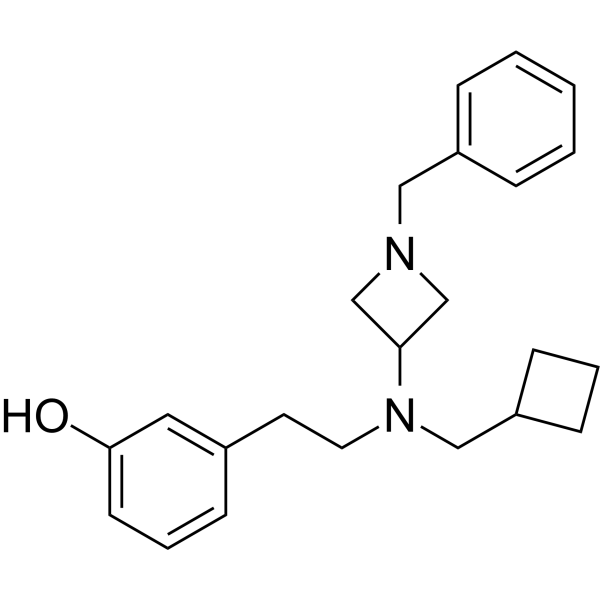
PIPE-3297 (compound 25) is a selective kappa opioid receptor (KOR) agonist, which activates the G-protein signaling with EC50 of 1.1 nM and exhibits low β-arrestin-2 recruitment activity (10%). PIPE-3297 induces myelination and reveals an anti-inflammatory activity .
|
-
-
- HY-175366
-
|
|
Opioid Receptor
Arrestin
|
Neurological Disease
|
|
DOR agonist 3 (Compound 10) is a δ-opioid receptor (DOR)-selective positive allosteric modulator. DOR agonist 3 enhances G protein signaling while reducing β-arrestin2 recruitment. DOR agonist 3 is promising for research of chronic pain and depression .
|
-
-
- HY-138951
-
-
-
- HY-P3346
-
|
|
Apelin Receptor (APJ)
|
Cardiovascular Disease
|
|
NH2-c[X-R-L-S-X]-K-G-P-(D-1Nal) (compound 39) is a potent APJ agonist, with a Ki of 0.6 nM. NH2-c[X-R-L-S-X]-K-G-P-(D-1Nal) can activate Gαi1 (EC50=0.8 nM) and recruit β-arrestin2 (EC50=31 nM). NH2-c[X-R-L-S-X]-K-G-P-(D-1Nal) exhibits prolonged cardiac effects .
|
-
-
- HY-P11246
-
|
|
RXFP Receptor
|
Metabolic Disease
|
|
A13:B7-24-GG is an engineered analogue of insulin-like peptide 5 (INSL5), a selective RXFP4 agonist with a Ki value of 2.29 nM. A13:B7-24-GG has an extremely low binding affinity for RXFP3 (Ki = 602.56 nM) and an inhibitory effect on cAMP (EC50) of 1.17 nM. Activation of RXFP4 by A13:B7-24-GG leads to the recruitment of β-Arrestin2, with an EC50 of 22.39 nM. A13:B7-24-GG can be used for research on chronic constipation .
|
-
-
- HY-179471
-
|
|
GPR84
|
Inflammation/Immunology
|
|
PSB-17365 is a potent GPR84 agonist with EC50 values of 2.5 nM and 100 nM in a cAMP accumulation assay and a β-arrestin 2 recruitment assay, respectively .
|
-
-
- HY-150057
-
|
|
Cannabinoid Receptor
|
Others
|
|
CB1R Allosteric modulator 4 is a positive allosteric modulator of cannabinoid type-1 (CB1R) with good biological activity. CB1R Allosteric modulator 4 inhibits cAMP production and shows robust activity in β-arrestin-2 recruitment .
|
-
-
- HY-P1102A
-
|
|
CXCR
HIV
|
Infection
Cancer
|
|
TC14012 TFA, a serum-stable derivative of T140, is a selective and peptidomimetic CXCR4 antagonist with an IC50 of 19.3 nM. TC14012 TFA is a potent CXCR7 agonist with an EC50 of 350 nM for recruiting β-arrestin 2 to CXCR7. TC14012 TFA has anti-HIV activity and anti-cancer activity .
|
-
-
- HY-115615
-
|
|
CXCR
|
Endocrinology
|
|
VUF11207 (Compound 29) TFA is a CXCR7 agonist (pKi of 8.1) that induces recruitment of β-arrestin2 (pEC50 of 8.8) and subsequent internalization (pEC50 of 7.9) of CXCR7 .
|
-
-
- HY-161717
-
|
|
Adenosine Receptor
|
Cardiovascular Disease
|
|
MRS5663 (Compound 3a) is an A3AR agonist, with an EC50 of 5.62 nM for β-arrestin2 recruitment assay. MRS5663 has a cytoprotective effect on skeletal muscle ischemia-reperfusion injury/claudication model .
|
-
-
- HY-W664041
-
|
|
Dopamine Receptor
|
Neurological Disease
|
|
Noncatechol agonist-1 (19) is a Noncatechol agonist with full efficacy at both D1R-G protein and D1R-β-arrestin2 pathways, with pEC50 values of 8.41 for D1R-mediated cAMP production and 7.7 for β-arrestin2 recruitment, respectively .
|
-
-
- HY-155183
-
|
|
Adenosine Receptor
|
Inflammation/Immunology
Cancer
|
|
A3AR agonist 1 (Compound 12) is an A3AR agonist (Ki: 25.8 nM). A3AR agonist 1 stimulates β-arrestin2 recruitment, with an EC50 value of 5.17 nM. A3AR agonist 1 can be used for research of inflammatory diseases, ischemia, cancer, neuropathic pain, liver diseases, etc .
|
-
-
- HY-173052
-
|
|
CXCR
CCR
Arrestin
|
Inflammation/Immunology
|
|
SLW131 is a CCR7 antagonist with a Ki value of 9.85 nM. SLW131 inhibits CCL19-induced Go protein activation with an IC50 of 29.4 μM, and suppresses β-arrestin2 recruitment with an IC50 of 6.0 μM. SLW131 serves as a probe for investigating the biological functions of CCR7 in cells. SLW131 is applicable to research related to rheumatoid arthritis .
|
-
-
- HY-119234
-
|
|
CXCR
|
Inflammation/Immunology
|
|
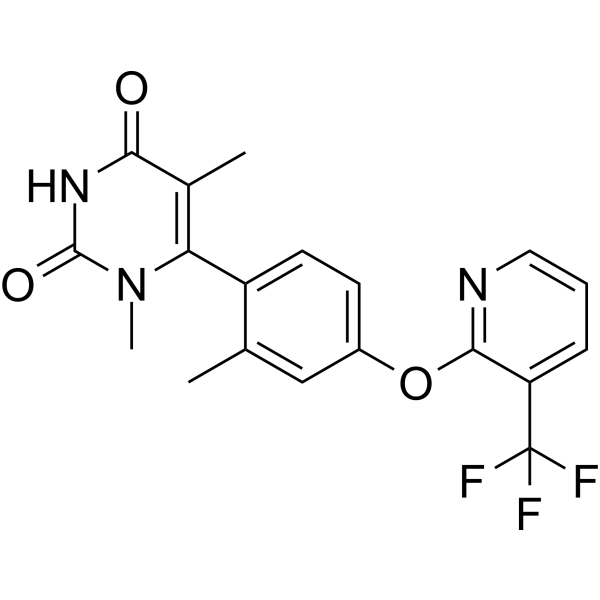
CX4338 is a CXCL8-mediated chemokine inhibitor with the activity of inhibiting CXCR2-mediated cell migration. CX4338 selectively inhibits CXCR2-mediated β-arrestin-2 recruitment and receptor internalization while enhancing CXCR2-mediated MAPK activation. CX4338 also inhibited CXCL8-induced chemotaxis, showing efficacy in CXCR2-overexpressing cells and human neutrophils. In vivo, CX4338 significantly reduced LPS-induced neutrophil numbers in mouse bronchoalveolar lavage fluid. The mechanism of action of CX4338 is to selectively inhibit CXCR2-mediated β-arrestin-2 activation, which is sufficient to inhibit CXCL8-mediated chemotaxis .
|
-
-
- HY-171069
-
|
|
Free Fatty Acid Receptor
|
Metabolic Disease
|
|
FFA2 agonist-1 (Compound 4) is the agonist for Free fatty acid receptor 2 (FFA2/GPR43) with an EC50 of 81 nM. FFA2 agonist-1 exhibits activity in β-arrestin-2 recruitment assay and cAMP inhibition assay with EC50 of 1.2 μM and 0.53 μM. FFA2 agonist-1 leads to appetite regulating
peptide YY (PYY) mucosal responses, inhibits the fat accumulation, intestinal functions and food intake, and can be used for obesity research .
|
-
-
- HY-155184
-
|
|
Adenosine Receptor
|
Neurological Disease
Inflammation/Immunology
Cancer
|
|
A3AR agonist 2 (Compound 19) a selective A3AR agonist (Ki: 22.1 nM). A3AR agonist 2 stimulates β-arrestin2 recruitment, with EC50 value of 4.36 nM. A3AR agonist 2 can be used for research of inflammatory diseases, ischemia, cancer, neuropathic pain, liver diseases, and other chronic conditions . A3AR agonist 2 is a click chemistry reagent, it contains an Alkyne group and can undergo copper-catalyzed azide-alkyne cycloaddition (CuAAc) with molecules containing Azide groups.
|
-
-
- HY-174466
-
|
|
5-HT Receptor
Arrestin
|
Neurological Disease
|
|
5-HT2AR ligand 1 (Compound 2 cis) is a 5-HT2AR ligand with nanomolar affinity for 5-HT2AR (Ki: 32 nM). 5-HT2AR ligand 1 is capable of inducing β-arrestin 2 recruitment. 5-HT2AR ligand 1 can be used in the research of neurological diseases .
|
-
-
- HY-165453
-
|
|
Histamine Receptor
|
Inflammation/Immunology
|
|
VUF14480 is a partial agonist of histamine H4 (hH4) receptor-mediated G protein signalling and β-arrestin2 recruitment. VUF14480 binds covalently to hH4 receptor (pKi: 6.3 for hH4-WT receptor). VUF14480 partially induces hH4 receptor-mediated G protein activation and β-arrestin2 recruitment. VUF14480 can be used in the research of inflammatory diseases .
|
-
-
- HY-47412
-
|
|
Dopamine Receptor
|
Neurological Disease
|
|
Cariprazine impurity 1 is a dopamine D2 receptor (D2R) agonist. Cariprazine impurity 1 modulates D2R-mediated Gi/o signaling pathway to inhibit cAMP production, and regulates D2R-mediated β-arrestin2 recruitment pathway .
|
-
-
- HY-179606
-
|
|
Transmembrane Glycoprotein
Arrestin
ERK
Epigenetic Reader Domain
|
Neurological Disease
|
|
RWT9996 is a balanced GPR17 antagonist. RWT9996 has an inhibitory effect on G protein activation and β-arrestin-2 recruitment induced by MDL-29951. RWT9996 inhibits the phosphorylation of ERK/CREB and the accumulation of inositol phosphate (b IP1) induced by MDL-29951. RWT9996 can be used for the study of neurological diseases .
|
-
-
- HY-19867
-
|
TG-0054
|
CXCR
|
Cancer
|
|
Burixafor (TG-0054) is a potent CXCR4 antagonist with a pIC50 of 7.4. Burixafor inhibits the binding of CXCL12 to CXCR4, antagonizes CXCL12-induced recruitment of Gαᵢ and β-arrestin2, and blocks the downstream Gαᵢ-mediated inhibitory effect on cAMP signal transduction. Burixafor mobilizes CD34 + hematopoietic stem/progenitor cells (HSPC) from the bone marrow to the peripheral blood. Burixafor can be used for research on autologous hematopoietic stem cell transplantation (ASCT) .
|
-
-
- HY-181822
-
|
|
Formyl Peptide Receptor (FPR)
Arrestin
PKA
Interleukin Related
|
Cardiovascular Disease
|
|
BMS-986331 is an orally active selective N-Formyl Peptide Receptor 2 (FPR2) agonist with an EC50 of 0.5 nM in humans and 1 nM in rats. BMS-986331 activates Gαi2, GαoA, Gα12, Gα13 signaling pathways, recruits β-arrestin1 and β-arrestin2, and inhibits downstream cAMP. BMS-986331 induces the expression and release of the pro-resolution cytokine IL-10. BMS-986331 improves cardiac structure and function in a rat model of heart failure induced by permanent coronary artery occlusion. BMS-986331 can be used for the research of heart failure .
|
-
-
- HY-181102
-
|
|
G protein-coupled Bile Acid Receptor 1
|
Metabolic Disease
Inflammation/Immunology
|
|
TGR5 agonist 10 is a selective, allosteric and orally active Takeda G protein coupled receptor 5 (TGR5) agonist with EC50s of 0.8 μM and 0.6 μM for human TGR5 and mouse TGR5, respectively. TGR5 agonist 10 demonstrates selectivity for TGR5 over FXR. TGR5 agonist 10 activates hTGR5 and mTGR5 to induce cAMP accumulation, and positively modulates lithocholic acid functional activity and potency at hTGR5, with higher selectivity for cAMP formation over β-arrestin2 recruitment. TGR5 agonist 10 exerts glucose-lowering effects in Mus musculus oral glucose tolerance tests. TGR5 agonist 10 can be used for the research of diabetes .
|
-
-
- HY-123813A
-
|
|
CXCR
Arrestin
|
Cancer
|
|
CCX-777 formic is an orthosteric binder and partial agonist of CXCR7/ACKR3. CCX-777 formic induces the recruitment of β-arrestin 2 and affects the rebinding of chemokines to ACKR3. CCX-777 formic functions to stabilize the ACKR3 receptor and promotes the formation of a monodisperse, stable complex of the receptor in DDM/CHS micelles. CCX-777 formic is widely used in cancer-related research .
|
-
-
- HY-180845
-
|
|
G protein-coupled Bile Acid Receptor 1
|
Metabolic Disease
|
|
TGR5 agonist 9 is a highly selective and orally active TGR5 allosteric agonist with EC₅₀ values for hTGR5 and mTGR5 of 0.48 and 0.49 μM, respectively. TGR5 agonist 9 can recruit β-arrestin 1 (EC₅₀ = 78.8 μM) and β-arrestin 2 (EC₅₀ = 12.3 μM), and has a higher efficacy in cAMP accumulation (EC₅₀ = 0.48 μM). TGR5 agonist 9 exhibits a significant hypoglycemic effect in the ICR mouse model. TGR5 agonist 9 can be used for research on diabetes .
|
-
-
- HY-P1102
-
TC14012
4 Publications Verification
|
CXCR
HIV
|
Infection
Cancer
|
|
TC14012, a serum-stable derivative of T140, is a selective and peptidomimetic CXCR4 antagonist with an IC50 of 19.3 nM. TC14012 is a potent CXCR7 agonist with an EC50 of 350 nM for recruiting β-arrestin 2 to CXCR7. TC14012 has anti-HIV activity and anti-cancer activity .
|
-
- HY-138951
-
-
- HY-P11246
-
|
|
RXFP Receptor
|
Metabolic Disease
|
|
A13:B7-24-GG is an engineered analogue of insulin-like peptide 5 (INSL5), a selective RXFP4 agonist with a Ki value of 2.29 nM. A13:B7-24-GG has an extremely low binding affinity for RXFP3 (Ki = 602.56 nM) and an inhibitory effect on cAMP (EC50) of 1.17 nM. Activation of RXFP4 by A13:B7-24-GG leads to the recruitment of β-Arrestin2, with an EC50 of 22.39 nM. A13:B7-24-GG can be used for research on chronic constipation .
|
-
- HY-P1102A
-
|
|
CXCR
HIV
|
Infection
Cancer
|
|
TC14012 TFA, a serum-stable derivative of T140, is a selective and peptidomimetic CXCR4 antagonist with an IC50 of 19.3 nM. TC14012 TFA is a potent CXCR7 agonist with an EC50 of 350 nM for recruiting β-arrestin 2 to CXCR7. TC14012 TFA has anti-HIV activity and anti-cancer activity .
|
入力情報は安全に管理されます. ※ 必須入力項目.
Inquiry Information
- 製品名:
- 製品番号:
- 数量:
- MCE 日本正規代理店:

