1. Search Result
Search Result
Results for "

AR and AR-V7 degrader

" in MedChemExpress (MCE) Product Catalog:
Cat. No. Product Name Target Research Areas Chemical Structure
  • HY-148771
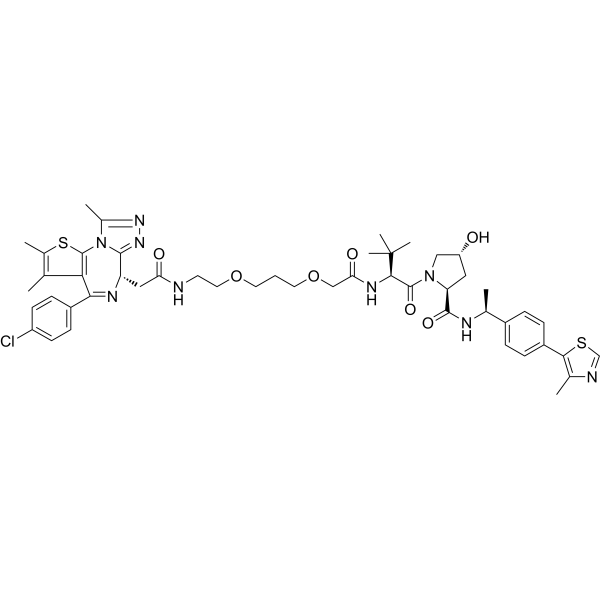
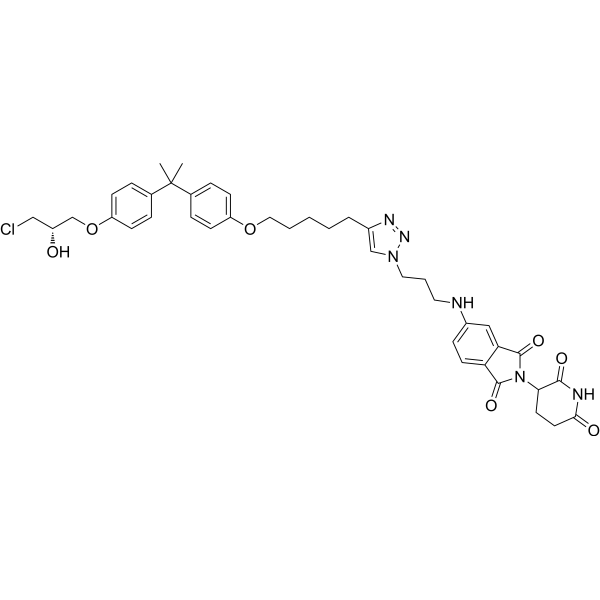
    MTX-23
    1 Publications Verification

    PROTAC AR-V7 degrader-2

    PROTACs Androgen Receptor Apoptosis Cancer
    MTX-23 is an AR-based PROTAC. MTX-23 inhibits CaP cellular proliferation by degrading AR-V7 and AR-FL. MTX-23 induces apoptosis .
    MTX-23
  • HY-145479
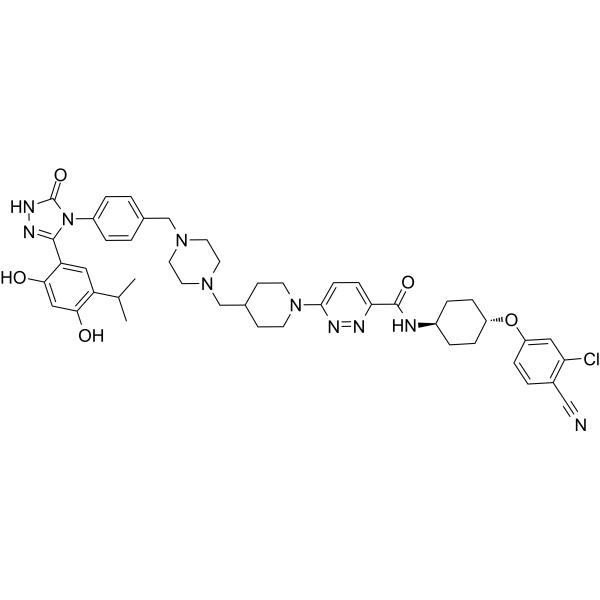
    PROTAC AR-V7 degrader-1
    1 Publications Verification

    PROTACs Androgen Receptor Cancer
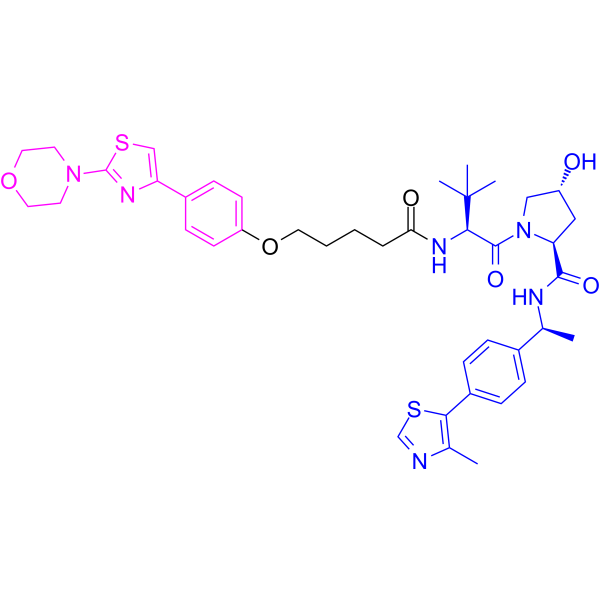
    PROTAC AR-V7 degrader-1 is an orally active and selective AR-V7 PROTAC degrader with a DC50 of 0.32 μM (in 22Rv1 cells). PROTAC AR-V7 degrader-1 can inhibit the proliferation of tumor cells and exhibit anti-tumor activity. PROTAC AR-V7 degrader-1 can be used for the research of cancers such as prostate cancer .(Pink: VPC-14228 (HY-117669); Black: linker (HY-W041652); Blue: VHL Ligand (HY-112078))
    PROTAC AR-V7 degrader-1
  • HY-173626

    Androgen Receptor Cancer
    EN1441 is a covalent degrader targeting the androgen receptor (AR) with an EC50 value of 4.2 μM and its truncated variant AR-V7. EN1441 selectively and potently degrades both AR and AR-V7 in androgen-independent prostate cancer cells. EN1441 is promising for research of androgen-independent prostate cancers .
    EN1441
  • HY-162412

    PROTACs Adrenergic Receptor Apoptosis Cancer
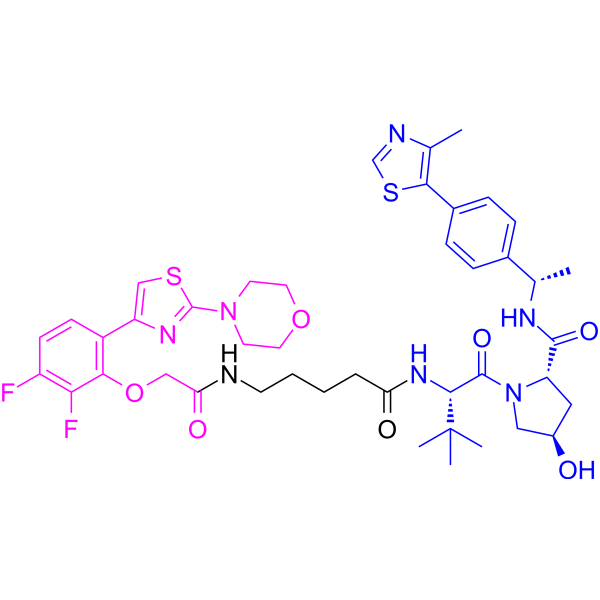
    PROTAC AR/AR-V7 degrader-1 (27c) is a PROTAC-based and dual AR, AR-V7 degrader, with DC50 values of 2.67 and 2.64 μM for AR and AR-V7, respectively. PROTAC AR/AR-V7 degrader-1 (27c) induces apoptosis (Red: AR antagonist; Blue: E3 ligase ligand; Black: linker) .
    PROTAC AR/AR-V7 degrader-1
  • HY-149433

    PROTACs Androgen Receptor Apoptosis Cancer
    BWA-522 is an orally active PROTAC degrader targeting full-length androgen receptor (AR-FL) and androgen receptor splice variant 7 (AR-V7). BWA-522 antagonizes the N-terminal domain (AR-NTD) of the androgen receptor, suppresses AR downstream signaling proteins and induces cancer cells apoptosis. BWA-522 inhibits tumor growth in LNCaP xenograft mouse model. BWA-522 can be used for the research of prostate cancer .
    BWA-522
  • HY-170329

    PROTACs Androgen Receptor Apoptosis Cancer
    PROTAC AR Degrader-8 is the PROTAC degrader for androgen receptor (AR) that degrades AR-FL with DC50s of 0.018 μM and 0.14 μM in 22Rv1 cell and LNCaP cell, degrades AR-V7 with DC50 of 0.026 μM in 22Rv1 cell. PROTAC AR Degrader-8 inhibits the proliferation of cancer cell 22Rv1 and LNCaP with IC50 values of 0.038 μM and 1.11 μM. PROTAC AR Degrader-8 arrests cell cycle at G2/M phase, induces apoptosis in 22Rv1 cell. PROTAC AR Degrader-8 exhibits anticancer efficacy in mouse and zebrafish model. PROTAC AR Degrader-8 can be used for the research of prostate cancer, castration-resistant prostate cancer .
    PROTAC AR Degrader-8
  • HY-164552

    Apoptosis Androgen Receptor Cancer
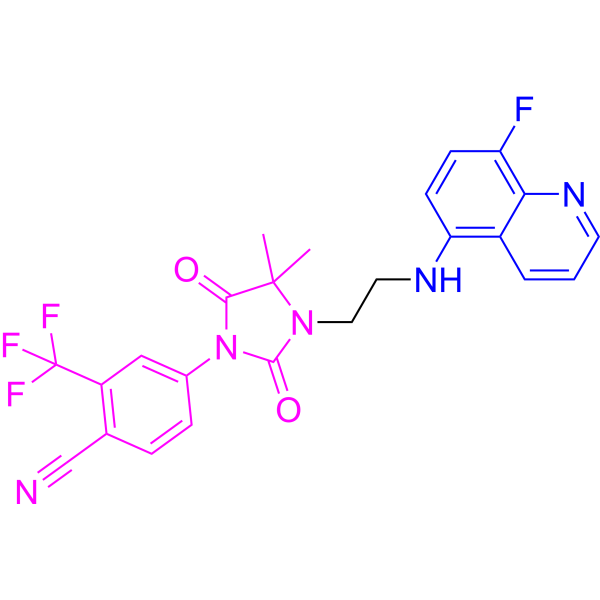
    ZNU-IMB-Z15 (Compound Z15) is an antagonist of the androgen receptor (AR) and also a selective degrader of AR and ARV7. ZNU-IMB-Z15 can directly bind to the ligand-binding domain (LBD) and activation function-1 region of AR, and promote AR degradation through the proteasome pathway. ZNU-IMB-Z15 effectively inhibits the transcriptional activity of AR, AR mutants, and AR splice variants (ARVs), downregulating the mRNA and protein levels of AR downstream target genes, thereby overcoming the resistance to second-generation antiandrogen drugs induced by AR LBD mutations, AR amplification, and ARVs in castration-resistant prostate cancer (CRPC). ZNU-IMB-Z15 can inhibit the proliferation of AR-positive CRPC cell lines and induce their apoptosis, demonstrating anticancer activity both in vivo and in vitro .
    ZNU-IMB-Z15
  • HY-W877989

    Ligands for E3 Ligase Cancer
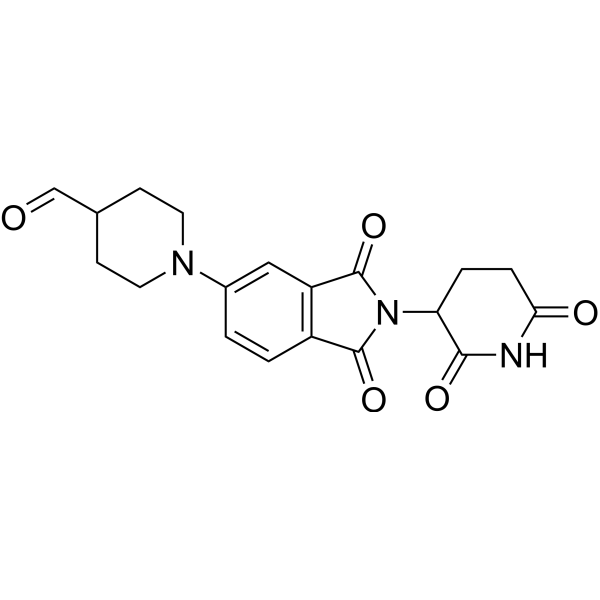
    BWA-522 intermediate-1 is an intermediate in the synthesis of PROTAC BWA-522 (HY-149433) and serves as a ligand molecule for cereblon E3 ubiquitin ligase. BWA-522 is an orally active small molecule protein-targeting chimera (PROTAC) that has significant degradation effects on AR-FL and AR-V7 .
    BWA-522 intermediate-1
  • HY-175455

    PROTACs Androgen Receptor Akt Cancer
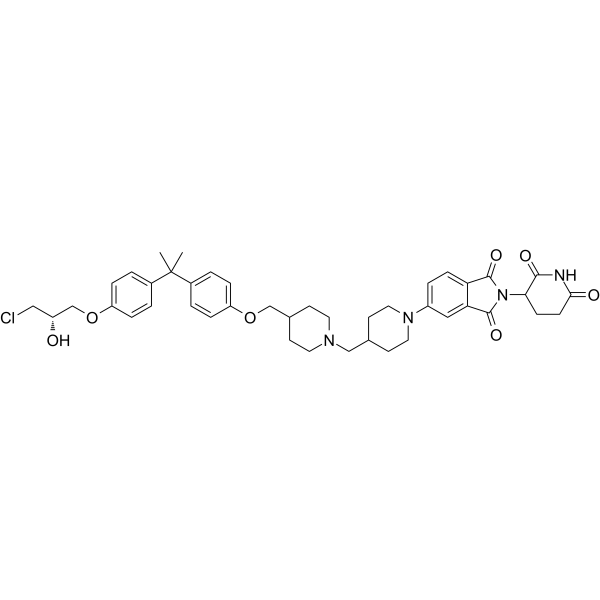
    LYA914 is an orally active AR/AR-V7 PROTAC degrader. LYA914 targets the proteolytic degradation of the conserved DNA binding domain (DBD) of the androgen receptor (AR). LYA914 exhibits potent antiproliferative effects in Enzalutamide (HY-70002)-insensitive/resistant cells. LYA914 inhibits tumor growth in VCaP/LNCaP tumor mouse models. LYA914 can be used to study castration-resistant prostate cancer (CRPC). (Pink: AR-DBD ligand-1: HY-175456, Blue: Thalidomide: HY-14658, Pink + Black: AR-DBD ligand-Linker Conjugate 1: HY-175457, Black: Boc-piperidine-oxopiperidin: HY-175458) .
    LYA914
  • HY-176128

    PROTACs Androgen Receptor Apoptosis PARP Caspase Cancer
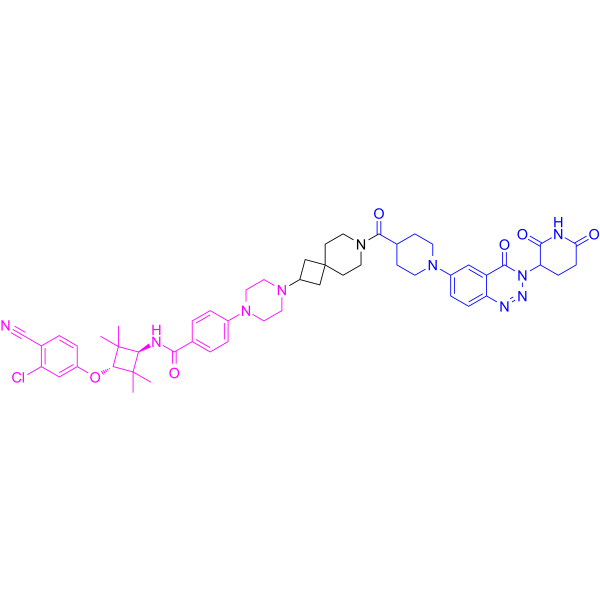
    BWA-6047 is an oral active PROTAC degrader targeting AR/AR-V7 and GSPT1 with DC50 values of 3.7, 3.0 and 1.2 nM in 22Rv1 cells. BWA-6047 suppresses the expression of AR downstream target genes and and transcriptional activity. BWA-6047 inhibits cancer cells proliferation, causes G1 phase cell cycle arrest and induces apoptosis. BWA-6047 increases cleaved-PARP-1 and cleaved-caspase-3 levels. BWA-6047 reduces growth of LNCaP xenograft tumors in mice models without obvious toxicity. BWA-6047 can be used for the research of prostate cancer .
    BWA-6047
  • HY-400766

    Drug Intermediate Cancer
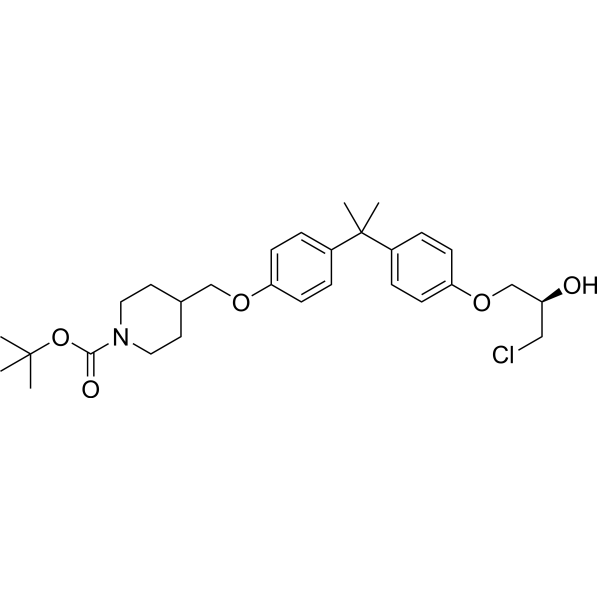
    BWA-522 intermediate-2 is a BWA-522 intermediate. BWA-522 is an orally available small molecule protein-targeting chimera (PROTACs) with significant degradation effect on AR-FL and AR-V7 .
    BWA-522 intermediate-2
  • HY-179056

    PROTACs PSMA Androgen Receptor HSP Apoptosis Cancer
    Psa-AR is a PROTAC degrader targeting PSMA, with a Kd of 7.2 nM. Psa-AR exhibits strong degradation capabilities for AR, AR-V7, and HSP90, and induces cell apoptosis. Psa-AR demonstrates potent tumor suppressive activity in the 22Rv1 xenograft tumor model. Psa-AR can be used in the research of castration-resistant prostate cancer .
    Psa-AR
  • HY-169387

    AUTOTACs Cancer
    YT 6-2-PEG3-C2-NH2 is the p62/SQSTM1 targeting, autophagy-targeting ligand-linker conjugate of AUTOTAC ATC-324 (HY-169385), which is an bivalent AR (Androgen Receptor) degrader. ATC-324 can reduce nuclear AR levels and downregulate target gene expression of AR and AR-v7, and also has a degradation effect on common AR mutants in PCa .
    YT 6-2-PEG3-C2-NH2
  • HY-176067

    Androgen Receptor Cancer
    LO-4-25 is a covalent degrader targeting the androgen receptor (AR) and its truncated variant AR-V7. LO-4-25 covalently binds to the E3 ubiquitin ligase CUL4 DCAF16, promoting the ubiquitination of AR and AR-V7, which subsequently are recognized and degraded by the proteasome, reducing the protein levels of AR and AR-V7 in cells. LO-4-25 is promising for research of androgen-independent prostate cancers .
    LO-4-25
  • HY-149434

    Androgen Receptor PROTACs Apoptosis Cancer
    PROTAC AR-NTD antagonist 1 (compound 18) is a small molecule protein-targeting chimera (PROTACs) targeting the Androgen Receptor AR-V7. PROTAC AR-NTD antagonist 1 antagonizes the N-terminal domain of AR (AR-NTD), degrades AR-V7 protein, and induces apoptosis in prostate cancer (PC) cells. The efficiencies of PROTAC AR-NTD antagonist 1 in degrading AR-V7 in VCaP cells were 62.2% (1 μM) and 71.1% (5 μM), respectively .
    PROTAC AR-NTD degrader 1
  • HY-W041652

    ADC Linker Cancer
    5-Hydroxypentanoic acid is a PROTAC linker. 5-Hydroxypentanoic acid can be used in the synthesis of PROTAC AR-V7 degrader-1 (HY-145479) .
    5-Hydroxypentanoic acid
  • HY-169388

    AUTACs Cancer
    YT 6-2 is the p62/SQSTM1 targeting, autophagy-targeting ligand (ATL) of AUTOTAC ATC-324 (HY-169385), which is an bivalent AR (Androgen Receptor) degrader. ATC-324 can reduce nuclear AR levels and downregulate target gene expression of AR and AR-v7, and also has a degradation effect on common AR mutants in PCa .
    YT 6-2
  • HY-149914

    Androgen Receptor Cancer
    WCA-814 is an androgen receptor (AR) antagonist-Hsp90 inhibitor conjugate. WCA-814 induces the degradation of full-length and AR-V7. WCA-814 has cytotoxic effect in prostatic cancer cells (IC50: 171.2 nM, 26.5 nM for LNCaP, 22Rv1 cell) .
    WCA-814
  • HY-W854844B

    Molecular Glues E1/E2/E3 Enzyme Cancer
    JP-2-196 hydrochloride is a covalent molecular glue degrader targeting RNF126. JP-2-196 hydrochloride induces the formation of a ternary complex between RNF126 and target proteins (e.g., BRD4, AR-V7), promoting their ubiquitination and proteasomal degradation. JP-2-196 hydrochloride is promising for research of cancers (e.g., prostate cancer, leukemia) .
    JP-2-196 hydrochloride
  • HY-178938

    Molecular Glues Androgen Receptor Caspase Apoptosis Endocrinology Cancer
    AR Degrader-3 is an orally active molecular glue that targets AR/ARV7 and induces the degradation of AR and ARV7 through the ubiquitin-proteasome pathway (UPP). AR Degrader-3 directly interacts with the ligand-binding domain (LBD) and the N-terminal domain (NTD) of AR. AR Degrader-3 effectively suppresses the transcriptional activity of wild-type AR (AR-WT), AR mutants, and ARV7. AR Degrader-3 downregulates the mRNA and protein levels of downstream AR target genes, thereby overcoming antiandrogen resistance mediated by ARV7 and AR point mutations. AR Degrader-3 induces apoptosis in Enzalutamide (HY-70002) (ENZa)-resistant cells and increases cleaved caspase-3 protein levels. AR Degrader-3 can be used for the study of castration-resistant prostate cancer (CRPC) .
    AR Degrader-3
  • HY-169385

    AUTOTACs Androgen Receptor Cancer
    ATC-324 is an bivalent AR (Androgen Receptor) degrader based on the protein degradation technology platform AUTOphagy-TArgeting Chimera (AUTOTAC). ATC-324 induces the formation of AR/p62 complex, leading to autophagy-lysosomal degradation of AR. ATC-324 can reduce nuclear AR levels and downregulate target gene expression of AR and AR-v7, and also has a degradation effect on common AR mutants in PCa . ATC-324 is composed of target-binding ligand (TBL) Enzalutamide (HY-70002) and p62/SQSTM1 autophagy-targeting ligand (ATL) YT 6-2 analog-1 (HY-169386), connected by Boc-NH-PEG4-CH2CH2NH2 (HY-W008352). Among them, the active control of the target protein ligand is Enzalutamide carboxylic acid (HY-70002B), and the conjugate composed of the autophagy-targeting ligand and the linker is YT 6-2-PEG3-C2-NH2 (HY-169387).
    ATC-324
  • HY-181727

    Androgen Receptor HSP CDK Cancer
    AR/AR-V7 degrader-1 is an orally active AR and AR-V7 degrader. AR/AR-V7 degrader-1 disrupts the interaction between AR/AR-V7 and HSP90, leading to their ubiquitination and degradation in castration-resistant prostate cancer cells. AR/AR-V7 degrader-1 regulates the expression of cell cycle-related proteins in prostate cancer cells (downregulates CDK4, CDK6, Cyclin D1, Cyclin E1; upregulates P21) and induces G0/G1 phase arrest. AR/AR-V7 degrader-1 inhibits the proliferation and migration of prostate cancer cells. AR/AR-V7 degrader-1 suppresses the growth of castration-resistant prostate cancer tumors in nude mice and induces the degradation of AR and AR-V7 in tumor tissues. AR/AR-V7 degrader-1 is applicable to the research of castration-resistant prostate cancer .
    AR/AR-V7 degrader-1
  • HY-170820

    Molecular Glues Bcl-2 Family CDK EGFR HSP Androgen Receptor c-Myc Cancer
    XYD049 is a CRBN-based molecular glue degrader targeting GSPT1, with a DC50 of 19 nM. XYD049 mediates the formation of a ternary complex between CRBN and GSPT1, thereby triggering CRBN- and proteasome-dependent degradation of GSPT1. By degrading GSPT1, XYD049 downregulates castration-resistant prostate cancer (CRPC)-related oncogenes, including BCL2, CDK2, E2F3, EGFR, HSP90B1, TMPRSS2, AR, AR-V7, PSA and c-Myc. XYD049 inhibits cancer cell growth and suppresses tumor growth in mice. XYD049 can be used for research on castration-resistant prostate cancer. XYD049 consists of a linker (black part) NH2-C5-NH-Boc (HY-W004710), a CRBN-based E3 ligase ligand (blue part) Thalidomide 4-fluoride (HY-41547), and a target protein ligand (red part) GSPT1 ligand-1 (HY-170821), among which the E3 ligase ligand plus linker forms the conjugate E3 Ligase Ligand-linker Conjugate 158 (HY-170822) .
    XYD049
  • HY-401056

    Drug Intermediate Cancer
    BWA-522 intermediate-3 is a BWA-522 intermediate. BWA-522 is an orally available small molecule protein-targeting chimera (PROTACs) with significant degradation effect on AR-FL and AR-V7 .
    BWA-522 intermediate-3
  • HY-169386

    AUTOTACs Cancer
    YT 6-2 analog-1 (compound 2-3) is the p62/SQSTM1 targeting, autophagy-targeting ligand (ATL) of AUTOTAC ATC-324 (HY-169385), which is an bivalent AR (Androgen Receptor) degrader. ATC-324 can reduce nuclear AR levels and downregulate target gene expression of AR and AR-v7, and also has a degradation effect on common AR mutants in PCa .
    YT 6-2 analog-1
  • HY-176068

    Androgen Receptor Cancer
    3-Cl-Pyridine-amide-acrylaldehyde-piperazine is a synthetic intermediate of LO-4-25 (HY-176067). LO-4-25 is an androgen receptor (AR) DNA binding domain ligand linked via a linker to the truncated fumaramide handle. LO-4-25 shows robust degradation of both AR and AR-V7 in 22Rv1 cells .
    3-Cl-Pyridine-amide-acrylaldehyde-piperazine
  • HY-182331

    PROTACs RAR/RXR Androgen Receptor Apoptosis Caspase MDM-2/p53 Cancer
    WCF-598 is a RXRγ (Kd: 234.2 nM) PROTAC degrader. WCF-598 induces RXRγ degradation via the ubiquitin-proteasome pathway and binds directly to RXRγ. WCF-598 indirectly induces AR-V7 degradation, impairs the stability of the RXRγ-AR-V7 complex, downregulates AR-V7 levels, and inhibits the transcription of downstream target genes of AR-V7. WCF-598 induces tumor cell apoptosis, inhibits cell proliferation, activates the p53 signaling pathway, and suppresses cell cycle progression. WCF-598 can be used for the research of prostate cancer .
    WCF-598
  • HY-403733B

    Androgen Receptor Prostaglandin Receptor Cancer
    (+)-JJ-450 is a non-competitive antagonist targeting the androgen receptor (AR) that inhibits AR nuclear localization and transcriptional activity in the absence of androgen. (+)-JJ-450 is less active than (-)-JJ-450 (HY-403733A) in inhibiting prostate-specific antigen (PSA) expression in LN95 cells, possibly because (+)-JJ-450 targets the ligand binding domain (LBD) of AR. (+)-JJ-450 inhibits the transcriptional activity of AR and its splice variants (e.g., ARv7) by promoting the degradation of unliganded AR in the nucleus and reducing the binding of AR to androgen response elements (AREs). (+)-JJ-450 can be used in castration-resistant prostate cancer (CRPC) studies that are resistant to enzalutamide (MDV3100) (HY-70003) .
    (+)-JJ-450
  • HY-171808

    Androgen Receptor PROTACs Apoptosis Cancer
    ITRI-90 is an orally active androgen receptor (AR) PROTAC degrader. ITRI-90 effectively degrades both full-length AR (AR-FL) and the splice variant AR-V7 protein via the ubiquitin-proteasome system, thereby inhibiting AR transcriptional activity and the target gene expression. ITRI-90 significantly inhibits the proliferation of prostate cancer cells and induces apoptosis, include Enzalutamide-resistant growth cell. ITRI-90 exhibits favorable pharmacokinetic properties and demonstrates potent antitumor efficacy in vivo. ITRI-90 can be used for prostate cancer research .
    ITRI-90

Inquiry Online

Your information is safe with us. * Required Fields.

Salutation


Country or Region *

Applicant Name *


Organization Name *

Department *


Email Address *


Product Name *

Cat. No.


Requested quantity *

Phone Number *


Remarks

Inquiry Online

Inquiry Information

Product Name:
Cat. No.:
Quantity:
MCE Japan Authorized Agent:

