Search Result
Results for "
AS1-6
" in MedChemExpress (MCE) Product Catalog:
113
Isotope-Labeled Compounds
| Cat. No. |
Product Name |
Target |
Research Areas |
Chemical Structure |
-
- HY-113038AS1
-
|
2-Hydroxyglutarate-d4 disodium; 2-Hydroxyglutaric acid-d4 disodium; 2-Hydroxypentanedioic acid-d4 disodium
|
Histone Demethylase
Endogenous Metabolite
|
Cancer
|
|
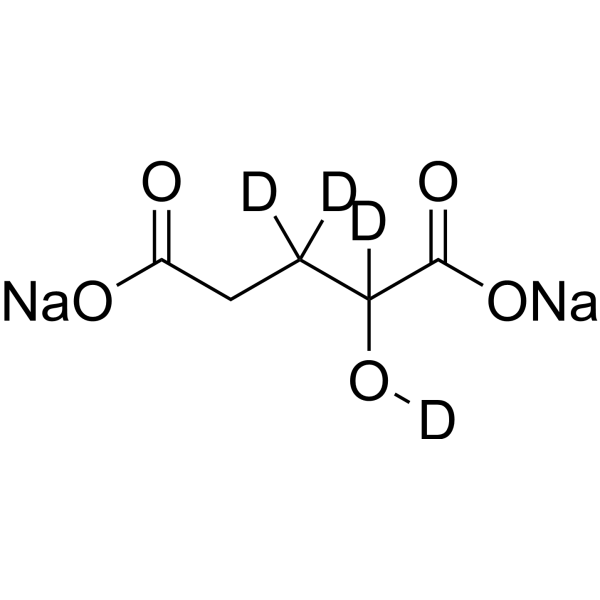
α-Hydroxyglutaric acid-d4 (disodium) is the deuterium labeled α-Hydroxyglutaric acid disodium . α-Hydroxyglutaric acid (2-Hydroxyglutarate) disodium is an α-hydroxy acid form of glutaric acid. α-Hydroxyglutaric acid disodium is a competitive inhibitor of multiple α-ketoglutarate-dependent dioxygenases, including histone demethylases and the TET family of 5-methlycytosine (5mC) hydroxylases .
|
-
-
- HY-15142AS1
-
|
Hydroxydaunorubicin-13C,d3 TFA
|
Isotope-Labeled Compounds
Antibiotic
Endogenous Metabolite
|
Infection
Cancer
|
|
Doxorubicin- 13C,d3 TFA is the deuterium and 13C labeled Doxorubicin. Doxorubicin (Hydroxydaunorubicin), a cytotoxic anthracycline antibiotic, is an anti-cancer chemotherapy agent. Doxorubicin inhibits topoisomerase II with an IC50 of 2.67 μM, thus stoppin
|
-
-
- HY-17504AS1
-
|
ZD 4522-d6
|
Isotope-Labeled Compounds
Autophagy
Bacterial
HMG-CoA Reductase (HMGCR)
Potassium Channel
|
Cardiovascular Disease
Metabolic Disease
Cancer
|
|
Rosuvastatin-d6 (ZD 4522-d6) is deuterium labeled Rosuvastatin. Rosuvastatin (ZD 4522) is a competitive HMG-CoA reductase inhibitor with an IC50 of 11 nM. Rosuvastatin potently blocks hERG current with an IC50 of 195 nM, delayed cardiac repolarization, and thereby prolonged action potential durations (APDs) and corrected QT interval (QTc) intervals. Rosuvastatin reduces the expression of the mature hERG and the interaction of heat shock protein 70 (Hsp70) with the hERG protein. Rosuvastatin effectively lowers low-density lipoprotein (LDL) cholesterol, triglycerides, and C-reactive protein levels .
|
-
-
- HY-118861AS1
-
-
-
- HY-N0455AS1
-
|
(S)-(+)-Arginine-15N4 hydrochloride
|
Isotope-Labeled Compounds
NO Synthase
Endogenous Metabolite
|
Others
|
|
L-Arginine- 15N4 (hydrochloride) is the 15N-labeled L-Arginine hydrochloride. L-Arginine hydrochloride ((S)-(+)-Arginine hydrochloride) is the nitrogen donor for synthesis of nitric oxide, a potent vasodilator that is deficient during times of sickle cell crisis .
|
-
-
- HY-107322AS1
-
|
Mepirodipine-d5; YM-09730-5-d5 Free bASe
|
Isotope-Labeled Compounds
|
Others
|
|
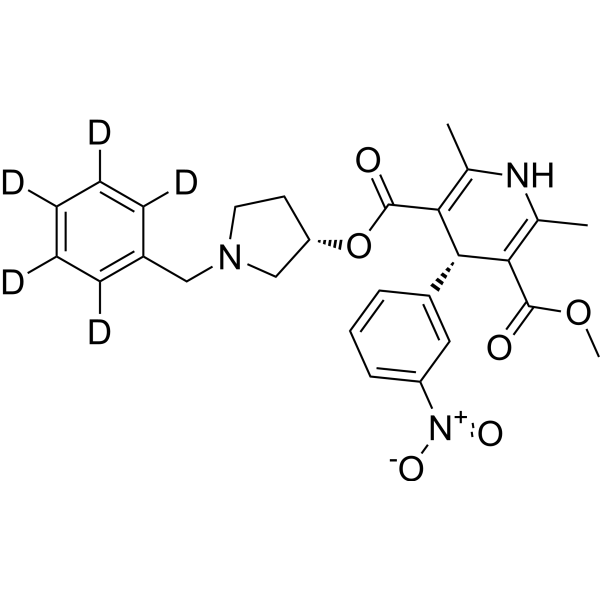
Barnidipine-d5 is the deuterium-labeled Barnidipine (HY-107322A). Barnidipine-d5 (Mepirodipine) is an L-type calcium antagonist (CaA) with high affinity for [ 3H] initrendipine binding sites (Ki=0.21 nmol/l), has selective action against CaA receptors . Barnidipine-d5 (Mepirodipine) is an antihypertensive agent and acts by the reduction of peripheral vascular resistance secondary to its vasodilatory action .
|
-
-
- HY-113143AS1
-
-
-
- HY-10255AS1
-
|
|
Isotope-Labeled Compounds
VEGFR
PDGFR
IRE1
Mitophagy
Autophagy
Apoptosis
|
Cancer
|
|
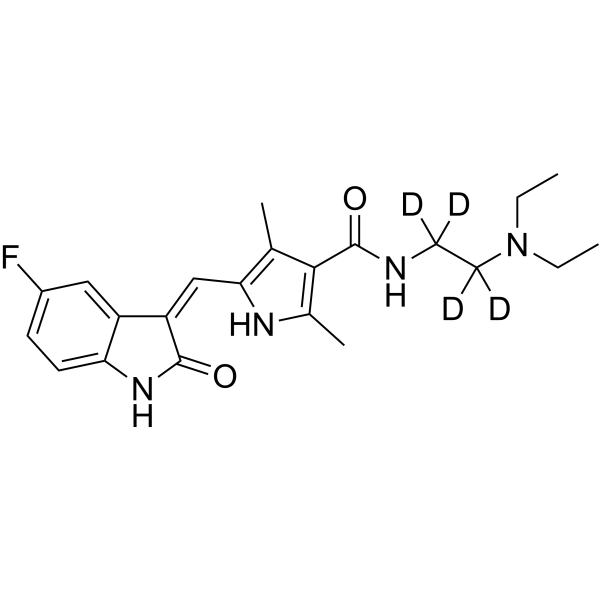
Sunitinib-d4 is the deuterium labeled Sunitinib. Sunitinib (SU 11248) is a multi-targeted receptor tyrosine kinase inhibitor with IC50s of 80 nM and 2 nM for VEGFR2 and PDGFRβ, respectively . Sunitinib, an ATP-competitive inhibitor, effectively inhibits autophosphorylation of Ire1α by inhibiting autophosphorylation and consequent RNase activation .
|
-
-
- HY-N2024AS1
-
|
|
Isotope-Labeled Compounds
Endogenous Metabolite
Glycosidase
|
Metabolic Disease
|
|
Maltose monohydrate- 13C12 is the 13C labeled isotope of Maltose monohydrate. Maltose monohydrate is a disaccharide composed of two glucose molecules linked together. Maltose monohydrate is an endogenous metabolic product in plants, yeast, or bacteria, and it participates in carbon source storage and metabolism. Maltose monohydrate is a key core metabolite and main transport form in the temporary starch degradation, carbon output, and subsequent sucrose synthesis metabolism of the night chloroplast. In X. dendrorhous, maltose can act as a sugar donor and is converted into isomaltulose by α-glucosidase. Maltose monohydrate can act as a osmotic agent, supporting continuous capillary ultrafiltration and preventing severe metabolic disorders.
|
-
-
- HY-10585AS1
-
|
Sodium Valproate-d14; VPA-d14 sodium; 2-Propylpentanoic acid-d14 sodium
|
Isotope-Labeled Compounds
HDAC
Autophagy
Mitophagy
HIV
Notch
Endogenous Metabolite
|
Cancer
|
|
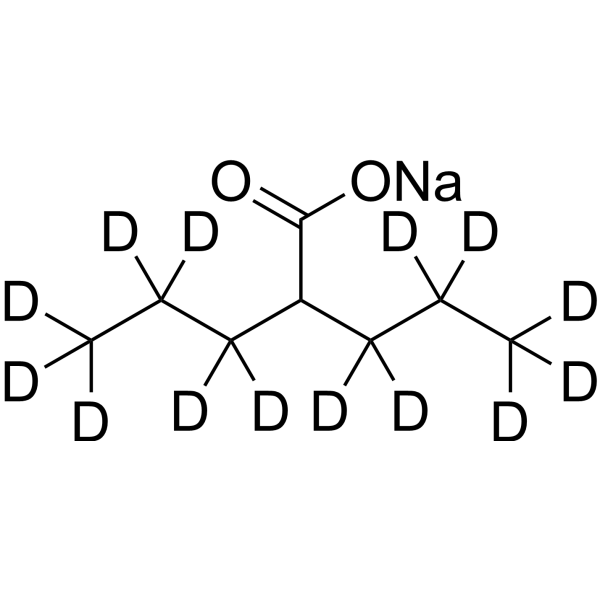
Valproic acid-d14 (sodium) is deuterium labeled Valproic acid (sodium). Valproic acid sodium salt (Sodium Valproate) is an HDAC inhibitor, with IC50 in the range of 0.5 and 2 mM, also inhibits HDAC1 (IC50, 400 μM), and induces proteasomal degradation of HDAC2. Valproic acid sodium salt activates Notch1 signaling and inhibits proliferation in small cell lung cancer (SCLC) cells. Valproic acid sodium salt is used in the treatment of epilepsy, bipolar disorder and prevention of migraine headaches.
|
-
-
- HY-113308AS1
-
|
|
Isotope-Labeled Compounds
Calcium Channel
Ferroptosis
PI3K
Reactive Oxygen Species (ROS)
Akt
HBV
|
Metabolic Disease
|
|
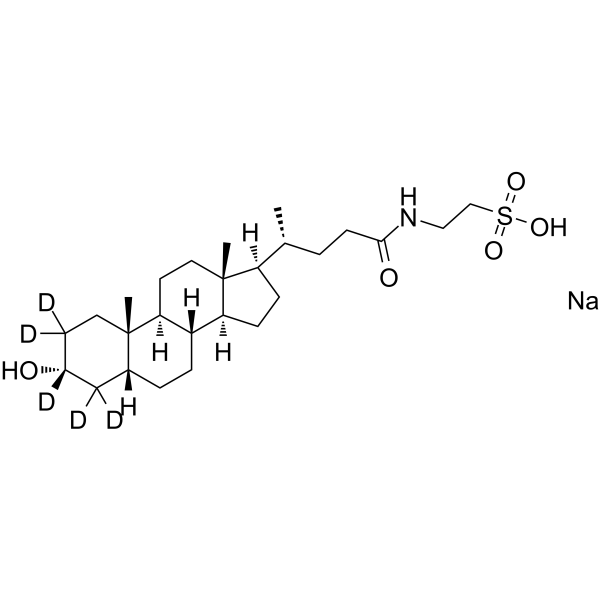
Taurolithocholic Acid-d5 (sodium) is the deuterium labeled Taurolithocholic acid sodium salt. Taurolithocholic Acid sodium salt is an orally active bile acid and antiviral agent. Taurolithocholic Acid sodium salt upregulates FADS2 by activating the TGR5-PI3K/AKT-SREBP2 signaling axis, inhibits SFTSV-induced ferroptosis, viral replication and viral entry of HBV/HDV, while reducing the release of IL-1β, lipid ROS and LDH. While exerting antiviral protective effects, Taurolithocholic Acid sodium salt also stimulates the recycling of hepatocellular membrane transporters, impairs canalicular bile acid secretion function, and induces hepatocyte cholestasis, apoptosis and acute hepatocellular injury. Taurolithocholic Acid sodium salt serves as an experimental model compound for hepatocellular cholestasis. At concentrations ≤200 μM, Taurolithocholic Acid sodium salt shows no cytotoxicity and does not activate the interferon pathway. Taurolithocholic Acid sodium salt not only protects mice from lethal SFTSV infection but also is suitable for studies related to severe fever with thrombocytopenia syndrome and cholestasis .
|
-
-
- HY-106224AS1
-
|
Hypocretin-1-13C18,15N3 (human, rat, mouse) TFA
|
Isotope-Labeled Compounds
Orexin Receptor (OX Receptor)
|
Neurological Disease
|
|
Orexin A- 13C18, 15N3 (human, rat, mouse) ((Hypocretin-1- 13C18, 15N3 (human, rat, mouse)) TFA is the 13C- and 15N-labeled Orexin A (human, rat, mouse) (HY-106224). Orexin A (human, rat, mouse) (Hypocretin-1 (human, rat, mouse)), a 33 amino acid excitatory neuropeptide, orchestrates diverse central and peripheral processes. Orexin A (human, rat, mouse) binds and activates two types of G protein-coupled receptors, the orexin-1 receptor (OX1R) and the orexin-2 receptor (OX2R). Orexin A (human, rat, mouse) has a role in the regulation of feeding behavior. Orexin A (human, rat, mouse) is an effective anti-nociceptive and anti-hyperalgesic agent in mice and rats .
|
-
-
- HY-14258AS1
-
|
(S)-Citalopram-d4 oxalate; (S)-(+)-Citalopram-d4 oxalate
|
Isotope-Labeled Compounds
Serotonin Transporter
|
Neurological Disease
|
|
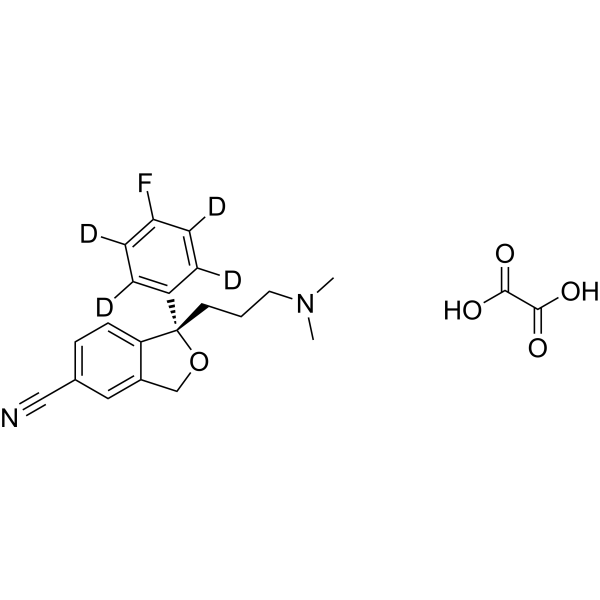
Escitalopram-d4 (oxalate) is deuterium labeled Escitalopram (oxalate). Escitalopram ((S)-Citalopram) oxalate, the S-enantiomer of racemic Citalopram, is a selective serotonin reuptake inhibitor (SSRI) with a Ki of 0.89 nM. Escitalopram oxalate has ~30 fold higher binding affinity than its R(-)-enantiomer and shows selectivity over both dopamine transporter (DAT) and norepinephrine transporter (NET). Escitalopram oxalate is an antidepressant for the research of major depression .
|
-
-
- HY-13631AS1
-
-
-
- HY-17425AS1
-
|
|
Isotope-Labeled Compounds
HSV
Antibiotic
|
Infection
|
|
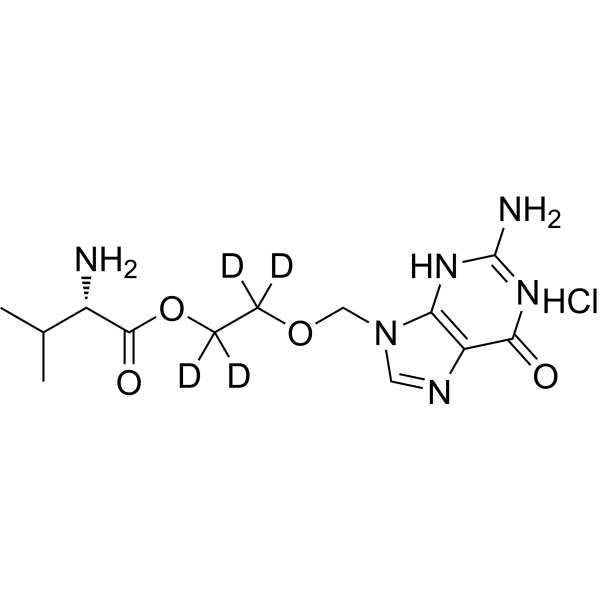
Valacyclovir-d4 (hydrochloride) is the deuterium labeled Valacyclovir hydrochloride. Valacyclovir hydrochloride (Valaciclovir hydrochloride) is an orally active antiviral agent for herpes simplex, herpes zoster, and herpes B. Valacyclovir hydrochloride inhibits HSV-1 W (50=2.9 μg/ml). Valacyclovir hydrochloride is a proagent of Aciclovir (HY-17422) .
|
-
-
- HY-B1776AS1
-
|
|
Isotope-Labeled Compounds
Endogenous Metabolite
|
Metabolic Disease
|
|
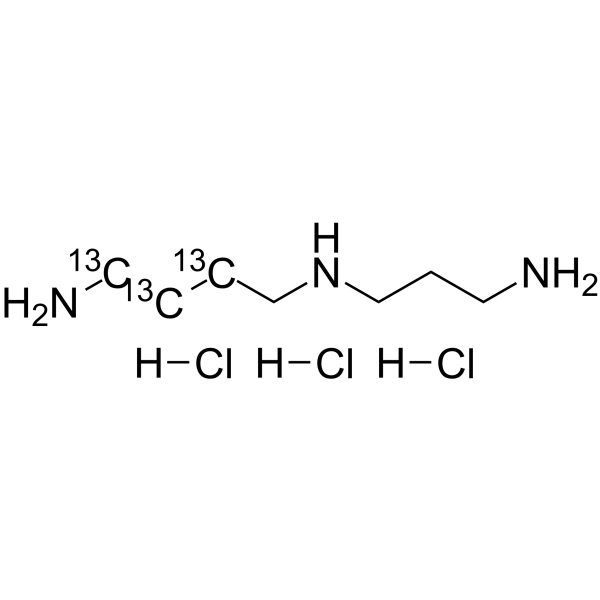
Spermidine- 13C4 (hydrochloride) is the 13C-labeled Spermidine trihydrochloride. Spermidine hydrochloride maintains cell membrane stability, increases antioxidant enzymes activities, improving photosystem II (PSII), and relevant gene expression. Spermidine hydrochloride significantly decreases the H2O2 and O2.- contents .
|
-
-
- HY-13571AS1
-
|
|
Isotope-Labeled Compounds
Glucocorticoid Receptor
|
Inflammation/Immunology
Endocrinology
|
|
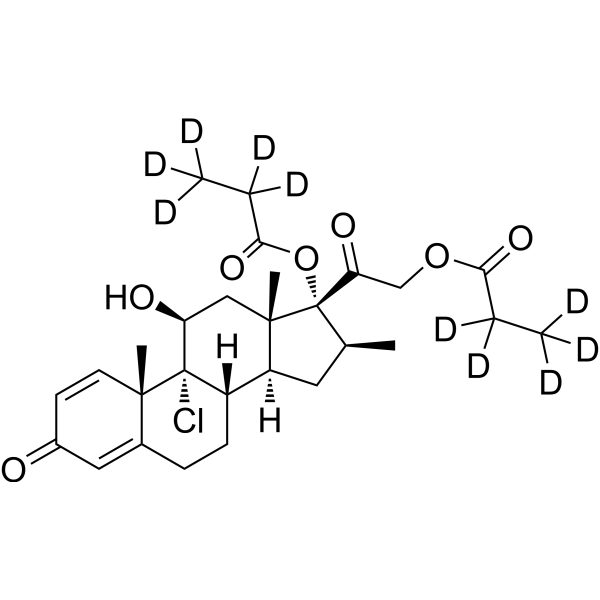
Beclometasone dipropionate-d10 is the deuterium labeled Beclometasone dipropionate. Betamethasone dipropionate, the proagent of Betamethasone, is an orally active and potent glucocorticoid with anti-inflammatory and immunosuppressive activity. Betamethasone appears to be an effective inhibitor of LPS-induced inflammation and MMP release .
|
-
-
- HY-114360AS1
-
|
|
Isotope-Labeled Compounds
TNF Receptor
Interleukin Related
|
Inflammation/Immunology
|
|
Taurohyodeoxycholic acid-d4 (sodium) is a deuterated labeled Taurohyodeoxycholic acid (sodium) . Taurohyodeoxycholic acid (THDCA) sodium is the taurine-conjugated form of the secondary bile acid hyodeoxycholic acid. Taurohyodeoxycholic acid can also reduce the activity and expression of myeloperoxidase TNF-α and IL-6, as well as colonic damage in TNBS-induced ulcerative colitis mouse model.
|
-
-
- HY-121272AS1
-
-
-
- HY-107370AS1
-
|
(Rac)-Tomoxetine-d5 hydrochloride; (Rac)-LY 139603-d5
|
Isotope-Labeled Compounds
|
Others
|
|
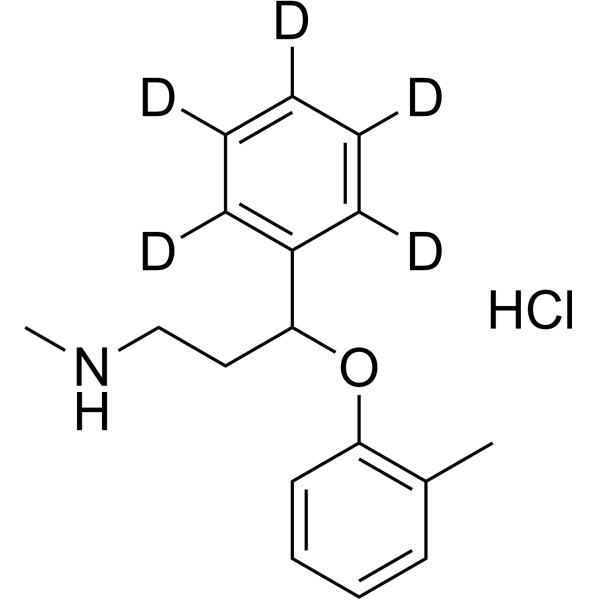
(Rac)-Atomoxetine-d5 (hydrochloride) is the deuterium labeled (Rac)-Atomoxetine hydrochloride .
|
-
-
- HY-15407AS1
-
-
-
- HY-113056AS1
-
|
|
Isotope-Labeled Compounds
Apoptosis
Endogenous Metabolite
|
Cancer
|
|
N1-Acetylspermidine-d3 hydrochloride is the deuterium labeled N1-Acetylspermidine hydrochloride (HY-113056A). N1-Acetylspermidine hydrochloride is an acetyl derivative of polyamines and a substrate for polyamine oxidase (PAO). N1-Acetylspermidine hydrochloride can promote Apoptosis in combination with Procyanidins. N1-Acetylspermidine hydrochloride has a certain cleavage efficiency at apurinic sites of DNA. N1-Acetylspermidine hydrochloride can be used in colorectal cancer research .
|
-
-
- HY-17042AS1
-
|
|
Isotope-Labeled Compounds
Histamine Receptor
|
Inflammation/Immunology
|
|
Cetirizine-d8 (dihydrochloride) is a deuterium labeled Cetirizine. Cetirizine, a second-generation antihistamine and the carboxylated metabolite of hydroxyzine, is a specific, orally active and long-acting histamine H1-receptor antagonist. Cetirizine marks antiallergic properties and inhibits eosinophil chemotaxis during the allergic response .
|
-
-
- HY-10019AS1
-
|
|
Isotope-Labeled Compounds
nAChR
|
Inflammation/Immunology
|
|
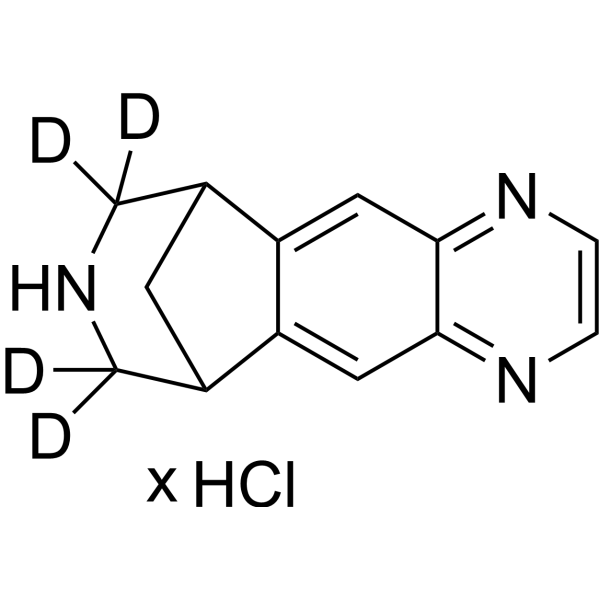
Varenicline-d4 hydrochloride is a deuterium labeled Varenicline (dihydrochloride) (HY-10019A) . Varenicline (CP 526555) dihydrochloride is a potent partial agonist for α4β2 nicotinic acetylcholine receptor (nAChR) with an EC50 value of 2.3 μM. Varenicline dihydrochloride is a full agonist for α3β4 and α7 nAChRs with EC50 values of 55 μM and 18 μM, respectively . Varenicline dihydrochloride is a nicotinic ligand based on the structure of cytosine, and has the potential for smoking cessation treatment .
|
-
-
- HY-12784AS1
-
|
Chlorguanide triazine-d6 hydrochloride
|
Isotope-Labeled Compounds
Antifolate
DNA/RNA Synthesis
STAT
Parasite
|
Infection
|
|
Cycloguanil-d6 (Chlorguanide triazine-d6) hydrochloride is the deuterium labeled Cycloguanil hydrochloride (HY-12784A). Cycloguanil hydrochloride is a dihydrofolate reductase (DHFR) inhibitor with an IC50 of 10.8 μM against human DHFR. Cycloguanil hydrochloride blocks the folate metabolic pathway, thereby affecting nucleotide synthesis and interfering with DNA replication. Cycloguanil hydrochloride inhibits DHFR in Plasmodium and is thus used in malaria research. Cycloguanil hydrochloride also potently inhibits DHFR in human cancer cells and blocks the transcriptional activity of STAT3, thereby exhibiting anticancer activity .
|
-
-
- HY-103641AS1
-
|
(2R)-Octyl-2-HG-d17
|
Isotope-Labeled Compounds
Others
|
Cancer
|
|
(2R)-Octyl-α-hydroxyglutarate-d17 ((2R)-Octyl-2-HG-d17) is deuterium labeled (2R)-Octyl-α-hydroxyglutarate (HY-103641). (2R)-Octyl-α-hydroxyglutarate is a modified form of S-isomer 2-Hydroxyglutarate .
|
-
-
- HY-10163AS1
-
-
-
- HY-32351AS1
-
|
25-Hydroxy Vitamin D3-13C5 monohydrate
|
Isotope-Labeled Compounds
VD/VDR
Endogenous Metabolite
|
Metabolic Disease
|
|
Calcifediol- 13C5 monohydrate is the 13C-labeled Calcifediol monohydrate. Calcifediol monohydrate (25-hydroxy Vitamin D3 monohydrate), is an effective VDR ligand and VD supplement. Calcifediol is a prohormone of the vitamin D endocrine system (VDES) and is hydroxylated in the liver to produce the active form, calcitriol. Calcifediol can rapidly increase serum VD levels .
|
-
-
- HY-135336AS1
-
|
(S)-(-)-Verapamil hydrochloride-d6
|
Isotope-Labeled Compounds
Apoptosis
Leukotriene Receptor
Calcium Channel
|
Cancer
|
|
(S)-Verapamil-d6 ((S)-(-)-Verapamil-d6) hydrochloride is the deuterium labeled (S)-Verapamil hydrochloride. (S)-Verapamil hydrochloride (S(-)-Verapamil hydrochloride) inhibits leukotriene C4 (LTC4) and calcein transport by MRP1. (S)-Verapamil hydrochloride leads to the death of potentially resistant tumor cells .
|
-
-
- HY-17503AS1
-
-
-
- HY-109101AS1
-
|
|
Isotope-Labeled Compounds
DNA/RNA Synthesis
|
Neurological Disease
|
|
Risdiplam-hydroxylate-d3 is a Risdiplam-hydroxylate tritium substitute. Risdiplam (RG7916) is an orally administered, centrally and peripherally distributed SMN2 pre-mRNA splicing modifier that increases survival motor neuron (SMN) protein levels .
|
-
-
- HY-113208AS1
-
|
11β-13,14-Dihydro-15-keto PGF2α-d4; 11-epi-13,14-Dihydro-15-keto PGF2α-d4
|
Isotope-Labeled Compounds
|
Others
|
|
11β-13,14-Dihydro-15-keto Prostaglandin F2α-d4 is is the deuterium labeled 11β-13,14-dihydro-15-keto Prostaglandin F2α.
|
-
-
- HY-10353AS1
-
-
-
- HY-13502AS1
-
|
Mitozantrone-d8 hydrochloride; NSC 301739-d8 hydrochloride
|
Isotope-Labeled Compounds
Endogenous Metabolite
Apoptosis
Orthopoxvirus
PKC
Topoisomerase
|
Infection
Cancer
|
|
Mitoxantrone-d8 (hydrochloride) (Mitozantrone-d8 (hydrochloride)) is deuterium labeled Mitoxantrone (dihydrochloride). Mitoxantrone dihydrochloride is a potent topoisomerase II inhibitor. Mitoxantrone dihydrochloride also inhibits protein kinase C (PKC) activity with an IC50 of 8.5 μM. Mitoxantrone dihydrochloride induces apoptosis of B-CLL (B-chronic lymphocytic leukaemia) cells. Mitoxantrone dihydrochloride shows antitumor activity . Mitoxantrone dihydrochloride also has anti-orthopoxvirus activity with EC50s of 0.25 μM and and 0.8 μM for cowpox and monkeypox, respectively .
|
-
-
- HY-13256AS1
-
-
-
- HY-117743AS1
-
-
-
- HY-76938AS1
-
-
-
- HY-113468AS1
-
|
3-Methoxy-L-tyrosine-d3 hydrate; 3-O-Methyl-L-DOPA-d3 hydrate
|
Isotope-Labeled Compounds
Drug Metabolite
Interleukin Related
|
Neurological Disease
Inflammation/Immunology
|
|
3-O-Methyldopa-d3 (hydrate) is the deuterium labeled 3-O-Methyldopa. 3-O-Methyldopa (3-Methoxy-L-tyrosine) hydrate is a metabolite of L-DOPA (HY-N0304) that can cross the blood-brain barrier (BBB). 3-O-Methyldopa hydrate inhibits the astrocyte-mediated protective effect of L-DOPA (HY-N0304) on dopaminergic neurons. In addition, 3-O-Methyldopa hydrate has certain antidepressant and neuroprotective activities. 3-O-Methyldopa hydrate can be used in the research of nervous system diseases such as depression and Parkinson's disease .
|
-
-
- HY-126857AS1
-
-
-
- HY-113359AS1
-
-
-
- HY-13757AS1
-
|
ICI 47699-d3; (Z)-Tamoxifen-d3; trans-Tamoxifen-d3
|
Isotope-Labeled Compounds
Estrogen Receptor/ERR
Apoptosis
Autophagy
HSP
|
Cancer
|
|
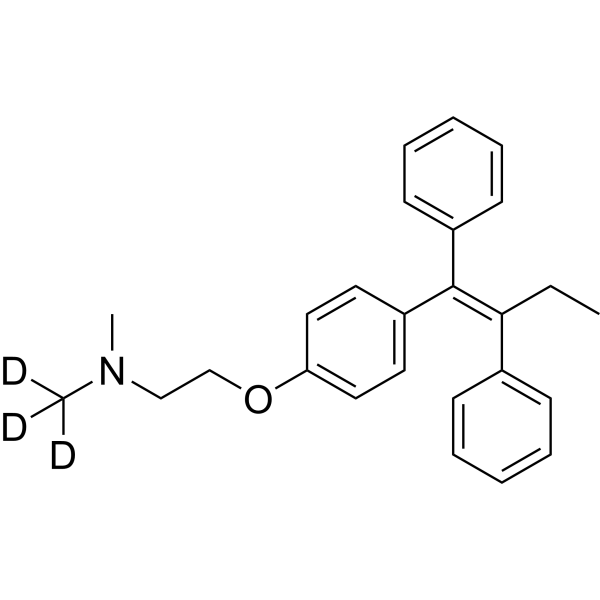
Tamoxifen-d3 is the deuterium labeled Tamoxifen . Tamoxifen (ICI 47699) is an orally active, selective estrogen receptor modulator (SERM) which blocks estrogen action in breast cells and can activate estrogen activity in other cells, such as bone, liver, and uterine cells . Tamoxifen is a potent Hsp90 activator and enhances the Hsp90 molecular chaperone ATPase activity. Tamoxifen also potent inhibits infectious EBOV Zaire and Marburg (MARV) with IC50 of 0.1 μM and 1.8 μM, respectively . Tamoxifen activates autophagy and induces apoptosis . Tamoxifen also can induce gene knockout of CreER(T2) transgenic mouse .
|
-
-
- HY-14749AS1
-
|
|
Isotope-Labeled Compounds
Parasite
|
Cancer
|
|
Pyronaridine tetraphosphate- 13C2,d4 is the deuterium and 13C-labeled Pyronaridine tetraphosphate (HY-14749A). Pyronaridine tetraphosphate is an orally active Mannich base anti-malarial agent. Pyronaridine tetraphosphate is active against P. falciparum and Echinococcus granulosus infection .
|
-
-
- HY-90009AS1
-
-
-
- HY-17416AS1
-
|
|
Adrenergic Receptor
Isotope-Labeled Compounds
|
Neurological Disease
Endocrinology
|
|
Guanfacine- 15N3, 13C2 is 15N and 13C labeled Guanfacine (HY-17416A). Guanfacine is an orally active noradrenergic α2A agonist and has high selective for the α2A receptor subtype. Guanfacine has effects in producing hypotension and sedation. Guanfacine can be used for the research of a variety of prefrontal cortex (PFC) cognitive disorders, including tourette's syndrome and attention deficit hyperactivity disorder (ADHD) .
|
-
-
- HY-119695AS1
-
-
-
- HY-133171AS1
-
-
-
- HY-10581AS1
-
-
-
- HY-17395AS1
-
|
TDT 067-d3
|
Isotope-Labeled Compounds
Antibiotic
Fungal
Bacterial
|
Infection
|
|
Terbinafine-d3 (TDT 067-d3) is deuterium labeled Terbinafine. Terbinafine (TDT 067) is an orally active and potent antifungal agent. Terbinafine is a potent non-competitive inhibitor of squalene epoxidase from Candida, with a Ki of 30 nM. Terbinafine also shows antibacterial activity against certain Gram-positive and Gram-negative bacteria . Terbinafine is a click chemistry reagent, it contains an Alkyne group and can undergo copper-catalyzed azide-alkyne cycloaddition (CuAAc) with molecules containing Azide groups.
|
-
-
- HY-12773AS1
-
|
GPV-129-d5-1 hydrochloride
|
Isotope-Labeled Compounds
|
Others
|
|
5-Hydroxy Propafenone-d5-1 (hydrochloride) is deuterium labeled 5-Hydroxy Propafenone (Hydrochloride).
|
-
-
- HY-122524AS1
-
|
|
Isotope-Labeled Compounds
Nucleoside Antimetabolite/Analog
Endogenous Metabolite
DNA/RNA Synthesis
|
Others
|
|
7-Methylguanosine- 13C iodide is the 13C-labeled 7-Methylguanosine iodide (HY-122524A). 7-Methylguanosine iodide is an iodide of 7-Methylguanosine (HY-122524). 7-Methylguanosine is a modified nucleoside widely present in various RNAs and a key metabolite of the 5'-cap structure of eukaryotic mRNA. 7-Methylguanosine plays important roles in stabilizing RNA structures, regulating translation, and other aspects.
|
-
- HY-113424AS1
-
|
1,2-Dioleoyl-sn-glycero-3-phosphocholine-d31
|
Isotope-Labeled Compounds
|
Others
|
|
DOPC-d31 (1,2-Dioleoyl-sn-glycero-3-phosphocholine-d31) is the deuterium labeled DOPC (HY-113424A). 1,2-Dioleoyl-sn-glycero-3-phosphocholine (DOPC) is a phospholipid and is commonly used alone, or with other components, in the generation of micelles, liposomes, and other types of artificial membranes.
|
-
- HY-137522AS1
-
|
3'-Azido-3'-deoxythymidine β-D-glucuronide-13C6
|
Isotope-Labeled Compounds
Drug Metabolite
|
Others
|
|
Zidovudine Glucuronide- 13C6 (3'-Azido-3'-deoxythymidine β-D-glucuronide- 13C6) is 13C labeled Zidovudine O-β-D-glucuronide. Zidovudine O-β-D-glucuronide (3'-Azido-3'-deoxythymidine β-D-glucuronide) sodium is the major metabolite of Zidovudine. Zidovudine is a nucleoside reverse transcriptase inhibitor (NRTI), widely used to treat HIV infection .
|
-
- HY-15283AS1
-
|
(±)-Clopidogrelum-d4
|
Isotope-Labeled Compounds
P2Y Receptor
|
Cardiovascular Disease
Inflammation/Immunology
|
|
(±)-Clopidogrel-d4 ((±)-Clopidogrelum-d4) is the deuterium labeled (±)-Clopidogrel (HY-107867). (±)-Clopidogrel is a platelet P2Y12 receptor inhibitor and an adenosine diphosphate (ADP) receptor antagonist. (±)-Clopidogrel inhibits the binding of ADP to its receptors on the membranes of platelet cells, and blocks ADP-mediated activation of the glycoprotein GPIIb/IIIa complex. (±)-Clopidogrel reduces vascular inflammation and angiotensin II induced-abdominal aortic aneurysm progression. (±)-Clopidogrel has anti-inflammatory effects .
|
-
- HY-B0303AS1
-
-
- HY-B1811AS1
-
|
Arginine vASopressin-d5 TFA; Antidiuretic hormone-d5 TFA
|
Isotope-Labeled Compounds
|
Neurological Disease
|
|
Vasopressin-d5 TFA is the TFA salt form of Vasopressin-d5 (HY-B1811S1). Vasopressin-d5 TFA is an isotope-labeled compound of Vasopressin (HY-B1811). Vasopressin is a cyclic nonapeptide that is synthesized centrally in the hypothalamus. Vasopressin participates in the hypothalamic-pituitary-adrenal axis and regulates pituitary corticotropin secretion by potentiating the stimulatory effects of the corticotropin-releasing factor. Vasopressin also can act as a neurotransmitter, exerting its action by binding to specific G protein-coupled receptors .
|
-
- HY-B0282AS1
-
-
- HY-Y0261AS1
-
|
|
Isotope-Labeled Compounds
|
Others
|
|
Ammonium sulphate,≥99.0%,AR- 15N2 is the deuterium labeled Ammonium sulphate,≥99.0%,AR . Ammonium sulphate,≥99.0%,AR is an inorganic sulfate salt used for molecular biology .
|
-
- HY-W006057AS16
-
|
|
Endogenous Metabolite
|
Others
|
|
Sodium 3-methyl-2-oxobutanoate- 13C5 is the 13C labeled Sodium 3-methyl-2-oxobutanoate . Sodium 3-methyl-2-oxobutanoate is a precursor of pantothenic acid in Escherichia coli .
|
-
- HY-B0356AS1
-
-
- HY-A0070AS1
-
|
Triiodothyronine-13C9,15N; 3,3',5-Triiodo-L-thyronine-13C9,15N; T3-13C9,15N
|
Thyroid Hormone Receptor
Endogenous Metabolite
|
Cancer
|
|
Liothyronine- 13C9, 15N is the 13C and 15N labeled Liothyronine . Liothyronine is an active form of thyroid hormone. Liothyronine is a potent thyroid hormone receptors TRα and TRβ agonist with Kis of 2.33 nM for hTRα and hTRβ, respectively .
|
-
- HY-B0141AS1
-
-
- HY-N0168AS1
-
|
|
Isotope-Labeled Compounds
NF-κB
TGF-beta/Smad
|
Neurological Disease
Cancer
|
|
(Rac)-Hesperetin- 13C,d3 is the 13C- and deuterium labeled (Rac)-Hesperetin. (Rac)-Hesperetin is the racemate of Hesperetin (HY-N0168), an orally active multi-target inhibitor. (Rac)-Hesperetin exhibits significant anti-tumor and anti-inflammatory activities by blocking the TGF-β1-mediated Fyn/RhoA signaling axis and the TLR4-MyD88-NF-κB inflammatory pathway. (Rac)-Hesperetin inhibits the formation of actin stress fibers and the migration and invasion of cancer cells, and is suitable for triple-negative breast cancer research. In inflammation models, (Rac)-Hesperetin effectively alleviates lung injury by reducing the release of pro-inflammatory mediators and regulating the activity of oxidative stress enzymes, and is suitable for acute lung injury research. (Rac)-Hesperetin also interferes with the entry and early replication processes of channel catfish virus, inhibits viral gene expression and progeny virus production, thereby protecting cells from virus-induced cytopathic effects .
|
-
- HY-B0548AS1
-
|
Vistaril-d4' dihydrochloride; Atarax-d4' dihydrochloride
|
Histamine Receptor
|
Inflammation/Immunology
Endocrinology
|
|
Hydroxyzine-d4 (dihydrochloride) is the deuterium labeled Hydroxyzine dihydrochloride. Hydroxyzine dihydrochloride, a benzodiazepine antihistamine agent, acts as a orally active histamine?H1-receptor and serotonin antagonist. Hydroxyzine dihydrochloride has anxiolytic effect and can be used forthe research of generalised anxiety disorder .
|
-
- HY-B0176AS1
-
|
|
Isotope-Labeled Compounds
Serotonin Transporter
|
Neurological Disease
|
|
(±)-cis-Sertraline-d3 (hydrochloride) is the deuterium labeled Sertraline hydrochloride. Sertraline hydrochloride is an antidepressant of the selective serotonin reuptake inhibitor (SSRI) class. Sertraline hydrochloride is researched for a number of diseases, such as major depressive disorder and obsessive .
|
-
- HY-B0334AS1
-
|
CP45899-d2 sodium
|
Bacterial
Antibiotic
|
Infection
|
|
Sulbactam-d2 (sodium) is the deuterium labeled Sulbactam sodium . Sulbactam (CP45899) sodium is a competitive, irreversible beta-lactamase inhibitor. Sulbactam sodium shows antimicrobial activity against multidrug-resistant (MDR) acinetobacter calcoaceticus--Acinetobacter baumannii (Acb) complex .
|
-
- HY-B0317AS1
-
|
|
Calcium Channel
Isotope-Labeled Compounds
|
Cardiovascular Disease
|
|
Amlodipine-d9 maleate is deuterated labeled Amlodipine maleate (HY-B0317A). Amlodipine maleate is a dihydropyridine calcium channel blocker, acts as an orally active antianginal agent. Amlodipine maleate blocks the voltage-dependent L-type calcium channels, thereby inhibiting the initial influx of calcium. Amlodipine maleate can be used for the research of high blood pressure and cancer .
|
-
- HY-W020772AS1
-
-
- HY-D0205AS1
-
|
Carbocysteine-13C3-1
|
Isotope-Labeled Compounds
Keap1-Nrf2
NF-κB
PERK
Apoptosis
|
Infection
Inflammation/Immunology
|
|
Carbocisteine- 13C3-1 (Carbocysteine- 13C3-1) is 13C labeled Carbocisteine. Carbocisteine is an orally active mucolytic agent. Carbocisteine attenuates the phosphorylation of NF-κB p65 and ERK1/2. Carbocisteine modulates Nrf2/HO-1 and NFκB interplay. Carbocisteine inhibits Apoptosis. Carbocisteine is used in chronic obstructive pulmonary disease (COPD) research .
|
-
- HY-B0806AS1
-
|
|
Isotope-Labeled Compounds
Parasite
Antifolate
|
Infection
|
|
Proguanil-d6 hydrochloride is the deuterium labeled Proguanil hydrochloride (HY-B0806A). Proguanil hydrochloride, an antimalarial proagent, is metabolized to the active metabolite Cycloguanil (HY-12784). Proguanil hydrochloride is a dihydrofolate reductase (DHFR) inhibitor .
|
-
- HY-B0178AS1
-
|
Guanidinium-d5 chloride; Aminoformamidine-d5 hydrochloride
|
Endogenous Metabolite
|
Metabolic Disease
|
|
Guanidine-d5 (hydrochloride) is the deuterium labeled Guanidine hydrochloride . Guanidine hydrochloride (Guanidinium chloride) a strong chaotrope, is also a strong denaturant of proteins .
|
-
- HY-B0477AS1
-
-
- HY-B1617AS1
-
|
|
Isotope-Labeled Compounds
Estrogen Receptor/ERR
|
Metabolic Disease
Endocrinology
|
|
Zuclomiphene-d5 citrate is the deuterium labeled Zuclomiphene citrate (HY-B1617A). Zuclomiphene citrate is a cis isomer of Clomiphene citrate (HY-B0463). Zuclomiphene citrate is orally active and has an antiestrogenic effect. Zuclomiphene can reduce cholesterol levels. Zuclomiphene citrate can be for the researches of endocrinology and metabolic disease .
|
-
- HY-N2037AS1
-
|
Norcoclaurine-d4-1 hydrochloride; Demethyl-Coclaurine-d4-1 hydrochloride
|
Isotope-Labeled Compounds
MAP3K
MDM-2/p53
Apoptosis
ROS Kinase
|
Infection
Cardiovascular Disease
Endocrinology
Cancer
|
|
Higenamine-d4-1 (Norcoclaurine-d4-1) hydrochloride is deuterium labeled Higenamine (hydrochloride). Higenamine hydrochloride is a selective LSD1 inhibitor (IC50=1.47 μM) that can be isolated from aconite. Higenamine hydrochloride has anti-inflammatory and antibacterial activity. Higenamine (Norcoclaurine) can attenuate IL-1β-induced Apoptosis through ROS-mediated PI3K/Akt signaling pathway. Higenamine hydrochloride protects brain cells from oxygen deprivation. Higenamine can promote bone formation in osteoporosis through the SMAD2/3 pathway. Higenamine hydrochloride can be used to study cancer, inflammation, cardiorenal syndrome and other diseases .
|
-
- HY-B0172AS1
-
|
3β-Hydroxy-5α-cholanic acid-d4
|
Isotope-Labeled Compounds
Others
|
Inflammation/Immunology
|
|
Isoallolithocholic acid-d4 (3β-Hydroxy-5α-cholanic acid-d4) is deuterium labeled Isoallolithocholic acid. Isoallolithocholic acid (3β-Hydroxy-5α-cholanic acid), a derivative of Lithocholic acid (HY-10219), is a T cell regulator. Isoallolithocholic acid enhances regulatory T cells (Tregs) differentiation .
|
-
- HY-B0431AS1
-
|
|
Isotope-Labeled Compounds
Adrenergic Receptor
|
Cardiovascular Disease
Endocrinology
Cancer
|
|
Phenoxybenzamine (benzyl-2,3,4,5,6-d5) (hydrochloride) is the deuterium labeled Phenoxybenzamine hydrochloride. Phenoxybenzamine hydrochloride is a nonselective, irreversible, orally active α-adrenoceptor antagonist that is commonly used for the research of hypertension, specifically caused by pheochromocytoma. Phenoxybenzamine hydrochloride also shows antitumor activity[1][2][3].
|
-
- HY-B1355AS1
-
|
|
Isotope-Labeled Compounds
COX
Bacterial
|
Infection
Inflammation/Immunology
Cancer
|
|
Oxyphenbutazone- 13C6 is the 13C6 labeled Oxyphenbutazone (HY-B1355A). Oxyphenbutazone is a phenylbutazone derivative, with anti-inflammatory effect. Oxyphenbutazone is a non-selective COX inhibitor. Oxyphenbutazone is the metabolite of Phenylbutazone (HY-B0230). Oxyphenbutazone selectively kills non-replicating Mycobaterium tuberculosis .
|
-
- HY-B1490AS1
-
|
|
Serotonin Transporter
Isotope-Labeled Compounds
Apoptosis
Autophagy
|
Others
|
|
Imipramine-d4 is deuterium labeled Imipramine. Imipramine is an orally active tertiary amine tricyclic antidepressant. Imipramine is a Fascin1 inhibitor with antitumor activities. Imipramine also inhibits serotonin transporter with an IC50 value of 32 nM. Imipramine stimulates U-87MG glioma cells autophagy and induces HL-60 cell apoptosis. Imipramine shows neuroprotective and immunomodulatory effects .
|
-
- HY-B0192AS1
-
-
- HY-U00051AS1
-
|
|
Isotope-Labeled Compounds
|
Neurological Disease
|
|
(R)-Propiomazine-d6 hydrochloride is deuterium labeled Propiomazine hydrochloride. Propiomazine hydrochloride is an orally active antihistamine agent. Propiomazine hydrochloride is a potent prolactin (PRL) release stimulant, whose effect depends on the antagonism of the dopaminergic system and can inhibit the secretion of luteinizing hormone (LH). Propiomazine hydrochloride is mainly used for anesthesia assistance, mental disorders and anxiety-induced sedation, and can also be used in research related to insomnia.
|
-
- HY-B1272AS1
-
-
- HY-N0059AS1
-
-
- HY-B0802AS1
-
-
- HY-B0426AS1
-
-
- HY-B0103AS1
-
|
DU-23000-d4 maleate
|
Serotonin Transporter
|
Neurological Disease
|
|
Fluvoxamine-d4 (maleate) is the deuterium labeled Fluvoxamine maleate. Fluvoxamine maleate (DU-23000 maleate) is an antidepressant which functions pharmacologically as a selective serotonin reuptake inhibitor.
|
-
- HY-B1773AS1
-
|
|
Isotope-Labeled Compounds
Apoptosis
NF-κB
Bacterial
PPAR
COX
NO Synthase
Autophagy
HSV
Endogenous Metabolite
|
Infection
Neurological Disease
Inflammation/Immunology
Cancer
|
|
Sodium propionate- 13C-1 is the 13C-labeled Propionate sodium (HY-B1773A). Sodium propionate is an orally active short-chain fatty acid. Sodium propionate can be produced by intestinal bacteria from the metabolism of dietary fiber. Sodium propionate increases PPAR-γ, inhibits NF-κB activation, and reduces COX-2 expression and NO production. Sodium propionate also induces Apoptosis and Autophagy. Sodium propionate reduces HSV-1-induced keratitis. Sodium propionate has anticancer effects against glioblastoma. Sodium propionate exhibits neuroprotective, antioxidant, and anti-inflammatory activities. Sodium propionate can be used in the research of spinal cord injury and Alzheimer's disease .
|
-
- HY-B1322AS1
-
-
- HY-N0117AS1
-
-
- HY-W006057AS1
-
-
- HY-B0304AS1
-
-
- HY-B0623AS1
-
|
SKF 101468-d7 hydrochloride
|
Dopamine Receptor
|
Neurological Disease
|
|
Ropinirole-d7 hydrochloride is the deuterium labeled Ropinirole hydrochloride . Ropinirole (SKF 101468) hydrochloride is an orally active, potent D3/D2 receptor agonist with a Ki of 29 nM for D2 receptor. Ropinirole hydrochloride has pEC50s of 7.4, 8.4 and 6.8 for hD2, hD3 and hD4 receptors, respectively. Ropinirole hydrochloride has no affinity for the D1 receptors. Ropinirole hydrochloride has the potential for Parkinson's disease .
|
-
- HY-B0161AS1
-
|
(S)-Duloxetine-d7 hydrochloride; LY248686-d7 hydrochloride
|
Isotope-Labeled Compounds
Serotonin Transporter
|
Neurological Disease
Cancer
|
|
Duloxetine-d7 hydrochloride ((S)-Duloxetine-d7 hydrochloride) is the deuterium labeled Duloxetine hydrochloride (HY-B0161A). Duloxetine hydrochloride ((S)-Duloxetine hydrochloride) is a serotonin-norepinephrine reuptake inhibitor (SNRI) with a Ki of 4.6 nM, used for treatment of major depressive disorder and generalized anxiety disorder (GAD) .
|
-
- HY-B0400AS1
-
-
- HY-B0499AS1
-
-
- HY-B0524AS1
-
-
- HY-A0024AS1
-
-
- HY-B0109AS1
-
|
L671152 hydrochloride-d5; MK507 hydrochlorid-d5
|
Isotope-Labeled Compounds
Carbonic Anhydrase
|
Cardiovascular Disease
Others
|
Dorzolamide-d5(hydrochloride) (L671152 hydrochloride-d5) is deuterium labeled Dorzolamide (hydrochloride). Dorzolamide (L671152) hydrochloride is a potent carbonic anhydrase II inhibitor, with IC50 values of 0.18 nM and 600 nM for red blood cell CA-II and CA-I respectively. Dorzolamide possesses anti-tumor activity .
|
-
- HY-B0612AS1
-
|
|
Isotope-Labeled Compounds
Calcium Channel
|
Cardiovascular Disease
|
|
Lercanidipine- 13C,d3-1 (hydrochloride) is deuterium labeled Lercanidipine (hydrochloride). Lercanidipine hydrochloride is a lipophilic third-generation dihydropyridine-calcium channel blocker (DHP-CCB). Lercanidipine hydrochloride has long lasting antihypertensive action and reno-protective effect .
|
-
- HY-A0248AS1
-
|
|
Isotope-Labeled Compounds
Bacterial
|
Infection
|
|
Polymyxin B1-D-Leu-d7 TFA is the deuterium labeled Polymyxin B1 (HY-A0248A). Polymyxin B1 is a potent antimicrobial lipopeptide first derived from Bacilus polymyxa. Polymyxin B1 is the major component in Polymyxin B (HY-A0248). Polymyxin B1 can induce lysis of bacterial cells through interaction with their membranes. Polymyxin B1 has the potential for multidrug-resistant Gram-negative bacterial infections treatment .
|
-
- HY-W236847AS1
-
-
- HY-181123
-
|
|
COX
|
Neurological Disease
Inflammation/Immunology
|
|
AS1-6 is a selective COX-2 inhibitor with an IC50 of 2.7 μM. AS1-6 has an IC50 of 12.6 μM for COX-1. AS1-6 exerts significant anti-inflammatory and analgesic activities. AS1-6 can be used in research on non-steroidal anti-inflammatory agents .
|
-
- HY-B0185AS1
-
|
Lignocaine-d6 hydrochloride
|
Sodium Channel
MEK
ERK
NF-κB
Apoptosis
|
Cardiovascular Disease
Cancer
|
|
Lidocaine-d6 (hydrochloride) is deuterium labeled Lidocaine (hydrochloride). Lidocaine hydrochloride (Lignocaine hydrochloride) inhibits sodium channels involving complex voltage and using dependence . Lidocaine hydrochloride decreases growth, migration and invasion of gastric carcinoma cells via up-regulating miR-145 expression and further inactivation of MEK/ERK and NF-κB signaling pathways. Lidocaine hydrochloride is an amide derivative and a agent to treat ventricular arrhythmia and an effective tumor-inhibitor .
|
-
- HY-B0520AS1
-
|
|
Dopamine Receptor
Histamine Receptor
mAChR
|
Cancer
|
|
Benztropine-d3 (mesylate) is the deuterium labeled Benztropine mesylate . Benztropine mesylate (Benzatropine mesylate) is an orally active centrally acting anticholinergic agent that can be used for Parkinson's disease research. Benztropine mesylate is an anti-histamine agent and a dopamine re-uptake inhibitor. Benztropine mesylate is also a human D2 dopamine receptor allosteric antagonist. Benztropine mesylate also has anti-CSCs (cancer stem cells) effects .
|
-
- HY-B0661AS1
-
-
- HY-B0162AS1
-
-
- HY-B0139AS1
-
|
5-Fluorocytosine-15N2 hydrochloride; NSC 103805-15N2 hydrochloride; Ro 2-9915-15N2 hydrochloride
|
Isotope-Labeled Compounds
Antibiotic
Fungal
|
Others
|
|
Flucytosine- 15N2 (5-Fluorocytosine- 15N2) hydrochloride is the 15N-labeled Flucytosine hydrochloride (HY-B0139). Flucytosine (5-Fluorocytosine) is an antifungal compound with oral activity. Flucytosine is a widely used cytotoxic drug that, after further metabolism, produces fluorinated ribonucleotides and deoxyribonucleotides, inhibits DNA and protein synthesis, and has multiple effects such as inhibiting candida and candida neoplasm infection and producies cytotoxicity to cancer cells.
|
-
- HY-B0502AS1
-
-
- HY-B0144AS1
-
|
NK-104-d5 sodium
|
Apoptosis
HMG-CoA Reductase (HMGCR)
Mitophagy
Autophagy
|
Metabolic Disease
Cancer
|
|
Pitavastatin-d5 (sodium) is the deuterium labeled Pitavastatin sodium. Pitavastatin (NK-104) is a potent hydroxymethylglutaryl-CoA (HMG-CoA) reductase inhibitor. Pitavastatin inhibits cholesterol synthesis from acetic acid with an IC50 of 5.8 nM in HepG2 cells. Pitavastatin is an efficient hepatocyte low-density lipoprotein-cholesterol (LDL-C) receptor inducer. Anti-cancer activity.
|
-
- HY-B0451AS1
-
-
- HY-B0196AS1
-
|
Wy 45030-d6 hydrochloride
|
Serotonin Transporter
|
Neurological Disease
|
|
Venlafaxine-d6 (hydrochloride) is the deuterium labeled Venlafaxine hydrochloride. Venlafaxine hydrochloride (Wy 45030 hydrochloride) is an orally active, potent serotonin (5-HT)/norepinephrine (NE) reuptake dual inhibitor. Venlafaxine is an antidepressant .
|
-
- HY-B0515AS1
-
|
|
Apoptosis
Isotope-Labeled Compounds
|
Cancer
|
|
Ibandronic acid-d3 is the deuterium labeled Ibandronic acid. Ibandronic acid is a highly potent nitrogen-containing bisphosphonate used for the treatment of osteoporosis.
|
-
- HY-P1339AS1
-
|
Human orexin B-13C18,15N3 TFA
|
Isotope-Labeled Compounds
Orexin Receptor (OX Receptor)
|
Cardiovascular Disease
Neurological Disease
|
|
Orexin B, human- 13C18, 15N3 (Human orexin B- 13C18, 15N3) TFA is the 13C- and 15N-labeled Orexin B, human (HY-P1339). Orexin B, human is the agonist for Orexin Receptor, with Kis of 420 nM and 36 nM for OX1 and OX2. Orexin B, human participates in the regulation of appetite, wakefulness, cardiovascular function and neuroendocrine .
|
-
- HY-A0023AS1
-
-
- HY-B0656AS1
-
|
LY307640-d3 sodium
|
Isotope-Labeled Compounds
Proton Pump
Apoptosis
|
Inflammation/Immunology
Cancer
|
|
Rabeprazole-d3 sodium the deuterium labeled Rabeprazole sodium (HY-B0656A). Rabeprazole sodium (LY307640 sodium) is a second-generation proton pump inhibitor (PPI) that irreversibly inactivates gastric H+/K+-ATPase. Rabeprazole sodium induces apoptosis. Rabeprazole sodium acts as an uridine nucleoside ribohydrolase (UNH) inhibitor with an b>IC50 of 0.3 μM. Rabeprazole sodium can be used for the research of gastric ulcerations and gastroesophageal reflux .
|
-
- HY-B0207AS1
-
-
| Cat. No. |
Product Name |
Target |
Research Area |
-
- HY-106224AS1
-
|
Hypocretin-1-13C18,15N3 (human, rat, mouse) TFA
|
Isotope-Labeled Compounds
Orexin Receptor (OX Receptor)
|
Neurological Disease
|
|
Orexin A- 13C18, 15N3 (human, rat, mouse) ((Hypocretin-1- 13C18, 15N3 (human, rat, mouse)) TFA is the 13C- and 15N-labeled Orexin A (human, rat, mouse) (HY-106224). Orexin A (human, rat, mouse) (Hypocretin-1 (human, rat, mouse)), a 33 amino acid excitatory neuropeptide, orchestrates diverse central and peripheral processes. Orexin A (human, rat, mouse) binds and activates two types of G protein-coupled receptors, the orexin-1 receptor (OX1R) and the orexin-2 receptor (OX2R). Orexin A (human, rat, mouse) has a role in the regulation of feeding behavior. Orexin A (human, rat, mouse) is an effective anti-nociceptive and anti-hyperalgesic agent in mice and rats .
|
-
- HY-P1339AS1
-
|
Human orexin B-13C18,15N3 TFA
|
Isotope-Labeled Compounds
Orexin Receptor (OX Receptor)
|
Cardiovascular Disease
Neurological Disease
|
|
Orexin B, human- 13C18, 15N3 (Human orexin B- 13C18, 15N3) TFA is the 13C- and 15N-labeled Orexin B, human (HY-P1339). Orexin B, human is the agonist for Orexin Receptor, with Kis of 420 nM and 36 nM for OX1 and OX2. Orexin B, human participates in the regulation of appetite, wakefulness, cardiovascular function and neuroendocrine .
|
-
- HY-A0248AS1
-
|
|
Isotope-Labeled Compounds
Bacterial
|
Infection
|
|
Polymyxin B1-D-Leu-d7 TFA is the deuterium labeled Polymyxin B1 (HY-A0248A). Polymyxin B1 is a potent antimicrobial lipopeptide first derived from Bacilus polymyxa. Polymyxin B1 is the major component in Polymyxin B (HY-A0248). Polymyxin B1 can induce lysis of bacterial cells through interaction with their membranes. Polymyxin B1 has the potential for multidrug-resistant Gram-negative bacterial infections treatment .
|
| Cat. No. |
Product Name |
Category |
Target |
Chemical Structure |
| Cat. No. |
Product Name |
Chemical Structure |
-
- HY-113038AS1
-
|
|
|
α-Hydroxyglutaric acid-d4 (disodium) is the deuterium labeled α-Hydroxyglutaric acid disodium . α-Hydroxyglutaric acid (2-Hydroxyglutarate) disodium is an α-hydroxy acid form of glutaric acid. α-Hydroxyglutaric acid disodium is a competitive inhibitor of multiple α-ketoglutarate-dependent dioxygenases, including histone demethylases and the TET family of 5-methlycytosine (5mC) hydroxylases .
|
-
-
- HY-15142AS1
-
|
|
|
Doxorubicin- 13C,d3 TFA is the deuterium and 13C labeled Doxorubicin. Doxorubicin (Hydroxydaunorubicin), a cytotoxic anthracycline antibiotic, is an anti-cancer chemotherapy agent. Doxorubicin inhibits topoisomerase II with an IC50 of 2.67 μM, thus stoppin
|
-
-
- HY-17504AS1
-
|
|
|
Rosuvastatin-d6 (ZD 4522-d6) is deuterium labeled Rosuvastatin. Rosuvastatin (ZD 4522) is a competitive HMG-CoA reductase inhibitor with an IC50 of 11 nM. Rosuvastatin potently blocks hERG current with an IC50 of 195 nM, delayed cardiac repolarization, and thereby prolonged action potential durations (APDs) and corrected QT interval (QTc) intervals. Rosuvastatin reduces the expression of the mature hERG and the interaction of heat shock protein 70 (Hsp70) with the hERG protein. Rosuvastatin effectively lowers low-density lipoprotein (LDL) cholesterol, triglycerides, and C-reactive protein levels .
|
-
-
- HY-118861AS1
-
|
|
|
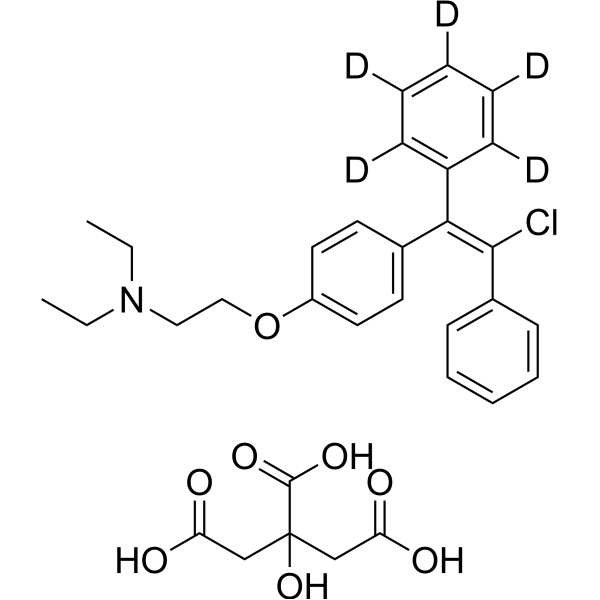
Clomiphene-d5 (citrate) is the deuterium labeled Enclomiphene citrate. Enclomiphene citrate is a potent and orally active oestrogen receptor antagonist, with antioestrogenic property .
|
-
-
- HY-N0455AS1
-
|
|
|
L-Arginine- 15N4 (hydrochloride) is the 15N-labeled L-Arginine hydrochloride. L-Arginine hydrochloride ((S)-(+)-Arginine hydrochloride) is the nitrogen donor for synthesis of nitric oxide, a potent vasodilator that is deficient during times of sickle cell crisis .
|
-
-
- HY-107322AS1
-
|
|
|
Barnidipine-d5 is the deuterium-labeled Barnidipine (HY-107322A). Barnidipine-d5 (Mepirodipine) is an L-type calcium antagonist (CaA) with high affinity for [ 3H] initrendipine binding sites (Ki=0.21 nmol/l), has selective action against CaA receptors . Barnidipine-d5 (Mepirodipine) is an antihypertensive agent and acts by the reduction of peripheral vascular resistance secondary to its vasodilatory action .
|
-
-
- HY-113143AS1
-
|
|
|
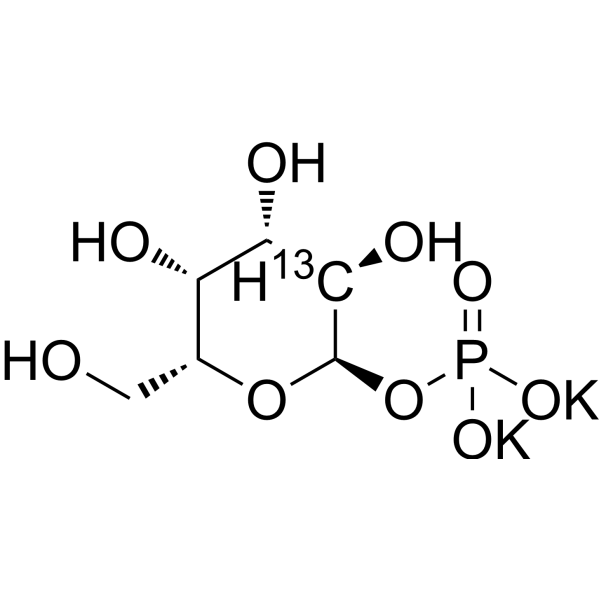
Galactose 1-phosphate- 13C-1 (potassium) is the 13C labeled Galactose 1-phosphate Potassium salt. Galactose 1-phosphate Potassium salt is is an intermediate in the galactose metabolism and nucleotide sug .
|
-
-
- HY-10255AS1
-
|
|
|
Sunitinib-d4 is the deuterium labeled Sunitinib. Sunitinib (SU 11248) is a multi-targeted receptor tyrosine kinase inhibitor with IC50s of 80 nM and 2 nM for VEGFR2 and PDGFRβ, respectively . Sunitinib, an ATP-competitive inhibitor, effectively inhibits autophosphorylation of Ire1α by inhibiting autophosphorylation and consequent RNase activation .
|
-
-
- HY-N2024AS1
-
|
|
|
Maltose monohydrate- 13C12 is the 13C labeled isotope of Maltose monohydrate. Maltose monohydrate is a disaccharide composed of two glucose molecules linked together. Maltose monohydrate is an endogenous metabolic product in plants, yeast, or bacteria, and it participates in carbon source storage and metabolism. Maltose monohydrate is a key core metabolite and main transport form in the temporary starch degradation, carbon output, and subsequent sucrose synthesis metabolism of the night chloroplast. In X. dendrorhous, maltose can act as a sugar donor and is converted into isomaltulose by α-glucosidase. Maltose monohydrate can act as a osmotic agent, supporting continuous capillary ultrafiltration and preventing severe metabolic disorders.
|
-
-
- HY-10585AS1
-
|
|
|
Valproic acid-d14 (sodium) is deuterium labeled Valproic acid (sodium). Valproic acid sodium salt (Sodium Valproate) is an HDAC inhibitor, with IC50 in the range of 0.5 and 2 mM, also inhibits HDAC1 (IC50, 400 μM), and induces proteasomal degradation of HDAC2. Valproic acid sodium salt activates Notch1 signaling and inhibits proliferation in small cell lung cancer (SCLC) cells. Valproic acid sodium salt is used in the treatment of epilepsy, bipolar disorder and prevention of migraine headaches.
|
-
-
- HY-113308AS1
-
|
|
|
Taurolithocholic Acid-d5 (sodium) is the deuterium labeled Taurolithocholic acid sodium salt. Taurolithocholic Acid sodium salt is an orally active bile acid and antiviral agent. Taurolithocholic Acid sodium salt upregulates FADS2 by activating the TGR5-PI3K/AKT-SREBP2 signaling axis, inhibits SFTSV-induced ferroptosis, viral replication and viral entry of HBV/HDV, while reducing the release of IL-1β, lipid ROS and LDH. While exerting antiviral protective effects, Taurolithocholic Acid sodium salt also stimulates the recycling of hepatocellular membrane transporters, impairs canalicular bile acid secretion function, and induces hepatocyte cholestasis, apoptosis and acute hepatocellular injury. Taurolithocholic Acid sodium salt serves as an experimental model compound for hepatocellular cholestasis. At concentrations ≤200 μM, Taurolithocholic Acid sodium salt shows no cytotoxicity and does not activate the interferon pathway. Taurolithocholic Acid sodium salt not only protects mice from lethal SFTSV infection but also is suitable for studies related to severe fever with thrombocytopenia syndrome and cholestasis .
|
-
-
- HY-106224AS1
-
|
|
|
Orexin A- 13C18, 15N3 (human, rat, mouse) ((Hypocretin-1- 13C18, 15N3 (human, rat, mouse)) TFA is the 13C- and 15N-labeled Orexin A (human, rat, mouse) (HY-106224). Orexin A (human, rat, mouse) (Hypocretin-1 (human, rat, mouse)), a 33 amino acid excitatory neuropeptide, orchestrates diverse central and peripheral processes. Orexin A (human, rat, mouse) binds and activates two types of G protein-coupled receptors, the orexin-1 receptor (OX1R) and the orexin-2 receptor (OX2R). Orexin A (human, rat, mouse) has a role in the regulation of feeding behavior. Orexin A (human, rat, mouse) is an effective anti-nociceptive and anti-hyperalgesic agent in mice and rats .
|
-
-
- HY-14258AS1
-
|
|
|
Escitalopram-d4 (oxalate) is deuterium labeled Escitalopram (oxalate). Escitalopram ((S)-Citalopram) oxalate, the S-enantiomer of racemic Citalopram, is a selective serotonin reuptake inhibitor (SSRI) with a Ki of 0.89 nM. Escitalopram oxalate has ~30 fold higher binding affinity than its R(-)-enantiomer and shows selectivity over both dopamine transporter (DAT) and norepinephrine transporter (NET). Escitalopram oxalate is an antidepressant for the research of major depression .
|
-
-
- HY-13631AS1
-
|
|
|
Exatecan-d3 (DX8951f-d3) mesylate is deuterium-labeled Exatecan mesylate (HY-13631A). Exatecan mesylate is a DNA topoisomerase I inhibitor, with an IC50 of 0.975 μg/mL .
|
-
-
- HY-17425AS1
-
|
|
|
Valacyclovir-d4 (hydrochloride) is the deuterium labeled Valacyclovir hydrochloride. Valacyclovir hydrochloride (Valaciclovir hydrochloride) is an orally active antiviral agent for herpes simplex, herpes zoster, and herpes B. Valacyclovir hydrochloride inhibits HSV-1 W (50=2.9 μg/ml). Valacyclovir hydrochloride is a proagent of Aciclovir (HY-17422) .
|
-
-
- HY-B1776AS1
-
1 Publications Verification
|
|
Spermidine- 13C4 (hydrochloride) is the 13C-labeled Spermidine trihydrochloride. Spermidine hydrochloride maintains cell membrane stability, increases antioxidant enzymes activities, improving photosystem II (PSII), and relevant gene expression. Spermidine hydrochloride significantly decreases the H2O2 and O2.- contents .
|
-
-
- HY-13571AS1
-
|
|
|
Beclometasone dipropionate-d10 is the deuterium labeled Beclometasone dipropionate. Betamethasone dipropionate, the proagent of Betamethasone, is an orally active and potent glucocorticoid with anti-inflammatory and immunosuppressive activity. Betamethasone appears to be an effective inhibitor of LPS-induced inflammation and MMP release .
|
-
-
- HY-114360AS1
-
|
|
|
Taurohyodeoxycholic acid-d4 (sodium) is a deuterated labeled Taurohyodeoxycholic acid (sodium) . Taurohyodeoxycholic acid (THDCA) sodium is the taurine-conjugated form of the secondary bile acid hyodeoxycholic acid. Taurohyodeoxycholic acid can also reduce the activity and expression of myeloperoxidase TNF-α and IL-6, as well as colonic damage in TNBS-induced ulcerative colitis mouse model.
|
-
-
- HY-121272AS1
-
|
|
|
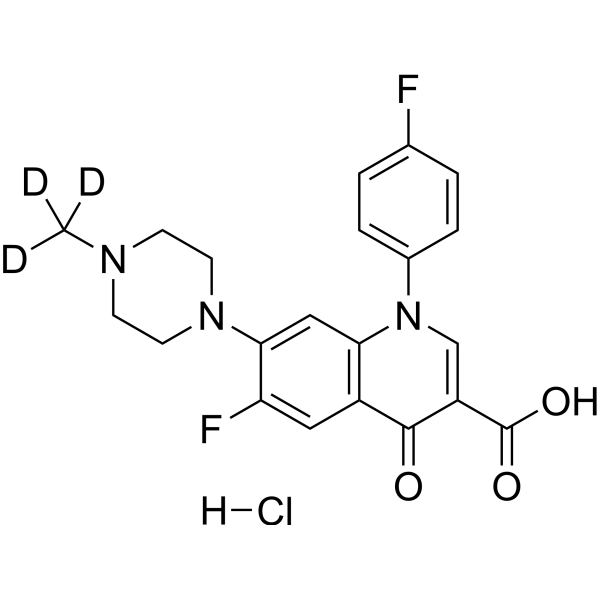
Difloxacin-d3 (hydrochloride) is the deuterium labeled Difloxacin (hydrochloride) .
|
-
-
- HY-107370AS1
-
|
|
|
(Rac)-Atomoxetine-d5 (hydrochloride) is the deuterium labeled (Rac)-Atomoxetine hydrochloride .
|
-
-
- HY-15407AS1
-
|
|
|
Sacubitril-d4 hemicalcium salt is the deuterium labeled Sacubitril hemicalcium salt (HY-15407A). Sacubitril hemicalcium salt is a potent NEP inhibitor with an IC50 of 5 nM .
|
-
-
- HY-113056AS1
-
|
|
|
N1-Acetylspermidine-d3 hydrochloride is the deuterium labeled N1-Acetylspermidine hydrochloride (HY-113056A). N1-Acetylspermidine hydrochloride is an acetyl derivative of polyamines and a substrate for polyamine oxidase (PAO). N1-Acetylspermidine hydrochloride can promote Apoptosis in combination with Procyanidins. N1-Acetylspermidine hydrochloride has a certain cleavage efficiency at apurinic sites of DNA. N1-Acetylspermidine hydrochloride can be used in colorectal cancer research .
|
-
-
- HY-17042AS1
-
|
|
|
Cetirizine-d8 (dihydrochloride) is a deuterium labeled Cetirizine. Cetirizine, a second-generation antihistamine and the carboxylated metabolite of hydroxyzine, is a specific, orally active and long-acting histamine H1-receptor antagonist. Cetirizine marks antiallergic properties and inhibits eosinophil chemotaxis during the allergic response .
|
-
-
- HY-10019AS1
-
|
|
|
Varenicline-d4 hydrochloride is a deuterium labeled Varenicline (dihydrochloride) (HY-10019A) . Varenicline (CP 526555) dihydrochloride is a potent partial agonist for α4β2 nicotinic acetylcholine receptor (nAChR) with an EC50 value of 2.3 μM. Varenicline dihydrochloride is a full agonist for α3β4 and α7 nAChRs with EC50 values of 55 μM and 18 μM, respectively . Varenicline dihydrochloride is a nicotinic ligand based on the structure of cytosine, and has the potential for smoking cessation treatment .
|
-
-
- HY-12784AS1
-
|
|
|
Cycloguanil-d6 (Chlorguanide triazine-d6) hydrochloride is the deuterium labeled Cycloguanil hydrochloride (HY-12784A). Cycloguanil hydrochloride is a dihydrofolate reductase (DHFR) inhibitor with an IC50 of 10.8 μM against human DHFR. Cycloguanil hydrochloride blocks the folate metabolic pathway, thereby affecting nucleotide synthesis and interfering with DNA replication. Cycloguanil hydrochloride inhibits DHFR in Plasmodium and is thus used in malaria research. Cycloguanil hydrochloride also potently inhibits DHFR in human cancer cells and blocks the transcriptional activity of STAT3, thereby exhibiting anticancer activity .
|
-
-
- HY-103641AS1
-
|
|
|
(2R)-Octyl-α-hydroxyglutarate-d17 ((2R)-Octyl-2-HG-d17) is deuterium labeled (2R)-Octyl-α-hydroxyglutarate (HY-103641). (2R)-Octyl-α-hydroxyglutarate is a modified form of S-isomer 2-Hydroxyglutarate .
|
-
-
- HY-10163AS1
-
|
|
|
Dabigatran-d5 (hydrochloride) is the deuterium labeled Dabigatran hydrochloride .
|
-
-
- HY-32351AS1
-
|
|
|
Calcifediol- 13C5 monohydrate is the 13C-labeled Calcifediol monohydrate. Calcifediol monohydrate (25-hydroxy Vitamin D3 monohydrate), is an effective VDR ligand and VD supplement. Calcifediol is a prohormone of the vitamin D endocrine system (VDES) and is hydroxylated in the liver to produce the active form, calcitriol. Calcifediol can rapidly increase serum VD levels .
|
-
-
- HY-135336AS1
-
|
|
|
(S)-Verapamil-d6 ((S)-(-)-Verapamil-d6) hydrochloride is the deuterium labeled (S)-Verapamil hydrochloride. (S)-Verapamil hydrochloride (S(-)-Verapamil hydrochloride) inhibits leukotriene C4 (LTC4) and calcein transport by MRP1. (S)-Verapamil hydrochloride leads to the death of potentially resistant tumor cells .
|
-
-
- HY-17503AS1
-
|
|
|
Metoprolol-d6 (succinate) is deuterium labeled Metoprolol (succinate). Metoprolol succinate is an orally active, selective β1-adrenoceptor antagonist. Metoprolol succinate shows anti-inflammation, antitumor and anti-angiogenic properties .
|
-
-
- HY-109101AS1
-
|
|
|
Risdiplam-hydroxylate-d3 is a Risdiplam-hydroxylate tritium substitute. Risdiplam (RG7916) is an orally administered, centrally and peripherally distributed SMN2 pre-mRNA splicing modifier that increases survival motor neuron (SMN) protein levels .
|
-
-
- HY-113208AS1
-
|
|
|
11β-13,14-Dihydro-15-keto Prostaglandin F2α-d4 is is the deuterium labeled 11β-13,14-dihydro-15-keto Prostaglandin F2α.
|
-
-
- HY-10353AS1
-
|
|
|
Raltegravir- 13C,d3 potassium is 13C labeled Raltegravir potassium (HY-10353A). Raltegravir (MK 0518) potassium is a potent integrase (IN) inhibitor, used to treat HIV infection.
|
-
-
- HY-13502AS1
-
|
|
|
Mitoxantrone-d8 (hydrochloride) (Mitozantrone-d8 (hydrochloride)) is deuterium labeled Mitoxantrone (dihydrochloride). Mitoxantrone dihydrochloride is a potent topoisomerase II inhibitor. Mitoxantrone dihydrochloride also inhibits protein kinase C (PKC) activity with an IC50 of 8.5 μM. Mitoxantrone dihydrochloride induces apoptosis of B-CLL (B-chronic lymphocytic leukaemia) cells. Mitoxantrone dihydrochloride shows antitumor activity . Mitoxantrone dihydrochloride also has anti-orthopoxvirus activity with EC50s of 0.25 μM and and 0.8 μM for cowpox and monkeypox, respectively .
|
-
-
- HY-13256AS1
-
|
|
|
Desmethyl Erlotinib-d4-1 (OSI-420-d4-1 (free base); CP-373420-d4-1) is deuterium-labeled Desmethyl Erlotinib (HY-13256A) .
|
-
-
- HY-117743AS1
-
|
|
|
Eprosartan-d6 hydrochloride is deuterated labeled Eprosartan.
|
-
-
- HY-76938AS1
-
|
|
|
Actarit-d6 sodium is deuterated labeled Actarit.
|
-
-
- HY-113468AS1
-
|
|
|
3-O-Methyldopa-d3 (hydrate) is the deuterium labeled 3-O-Methyldopa. 3-O-Methyldopa (3-Methoxy-L-tyrosine) hydrate is a metabolite of L-DOPA (HY-N0304) that can cross the blood-brain barrier (BBB). 3-O-Methyldopa hydrate inhibits the astrocyte-mediated protective effect of L-DOPA (HY-N0304) on dopaminergic neurons. In addition, 3-O-Methyldopa hydrate has certain antidepressant and neuroprotective activities. 3-O-Methyldopa hydrate can be used in the research of nervous system diseases such as depression and Parkinson's disease .
|
-
-
- HY-126857AS1
-
|
|
|
5-Hydroxyomeprazole- 13C,d2 sodium is 13C and deuterated labeled 5-Hydroxyomeprazole sodium (HY-126857A).
|
-
-
- HY-113359AS1
-
|
|
|
Uridine 5'-diphosphate- 13C9 (UDP-13C9 ) dilithium is 13C-labeled Uridine 5'-diphosphate (HY-113359). Uridine 5'-diphosphate is a P2Y6 receptor agonist with an EC50 of 0.013 μM for human P2Y6 receptor .
|
-
-
- HY-13757AS1
-
|
|
|
Tamoxifen-d3 is the deuterium labeled Tamoxifen . Tamoxifen (ICI 47699) is an orally active, selective estrogen receptor modulator (SERM) which blocks estrogen action in breast cells and can activate estrogen activity in other cells, such as bone, liver, and uterine cells . Tamoxifen is a potent Hsp90 activator and enhances the Hsp90 molecular chaperone ATPase activity. Tamoxifen also potent inhibits infectious EBOV Zaire and Marburg (MARV) with IC50 of 0.1 μM and 1.8 μM, respectively . Tamoxifen activates autophagy and induces apoptosis . Tamoxifen also can induce gene knockout of CreER(T2) transgenic mouse .
|
-
-
- HY-14749AS1
-
|
|
|
Pyronaridine tetraphosphate- 13C2,d4 is the deuterium and 13C-labeled Pyronaridine tetraphosphate (HY-14749A). Pyronaridine tetraphosphate is an orally active Mannich base anti-malarial agent. Pyronaridine tetraphosphate is active against P. falciparum and Echinococcus granulosus infection .
|
-
-
- HY-90009AS1
-
|
|
|
Tadalafil- 13C2,d3-1 (IC-351- 13C2,d3-1) is the deuterium and 13C-labeled Tadalafil (HY-90009A). Tadalafil (IC-351) is a PDE5 inhibitor with an IC50 value of 1.8 nM.
|
-
-
- HY-17416AS1
-
|
|
|
Guanfacine- 15N3, 13C2 is 15N and 13C labeled Guanfacine (HY-17416A). Guanfacine is an orally active noradrenergic α2A agonist and has high selective for the α2A receptor subtype. Guanfacine has effects in producing hypotension and sedation. Guanfacine can be used for the research of a variety of prefrontal cortex (PFC) cognitive disorders, including tourette's syndrome and attention deficit hyperactivity disorder (ADHD) .
|
-
-
- HY-119695AS1
-
|
|
|
Simvastatin acid-d9 ammonium is deuterated labeled Simvastatin acid ammonium (HY-119695A). Simvastatin acid (Tenivastatin) ammonium is a potent HMG-CoA reductase (HMGCR) inhibitor. Simvastatin acid ammonium reduces Indoxyl sulfate-mediated reactive oxygen species (ROS) production in human cardiomyocytes. Simvastatin acid ammonium can also modulates OATP3A1 expression in cardiomyocytes and HEK293 cells transfected with the OATP3A1 gene .
|
-
-
- HY-133171AS1
-
|
|
|
(R)-Norfluoxetine-d5 Phthalimide (Phenyl-d5) is the deuterium labeled (R)-Norfluoxetine Phthalimide (Phenyl) .
|
-
-
- HY-10581AS1
-
|
|
|
Gatifloxacin-d4 (AM-1155-d4; BMS-206584-d4; PD135432-d4) hydrochloride is deuterium-labeled Gatifloxacin (hydrochloride) (HY-10581A) .
|
-
-
- HY-17395AS1
-
|
|
|
Terbinafine-d3 (TDT 067-d3) is deuterium labeled Terbinafine. Terbinafine (TDT 067) is an orally active and potent antifungal agent. Terbinafine is a potent non-competitive inhibitor of squalene epoxidase from Candida, with a Ki of 30 nM. Terbinafine also shows antibacterial activity against certain Gram-positive and Gram-negative bacteria . Terbinafine is a click chemistry reagent, it contains an Alkyne group and can undergo copper-catalyzed azide-alkyne cycloaddition (CuAAc) with molecules containing Azide groups.
|
-
-
- HY-12773AS1
-
|
|
|
5-Hydroxy Propafenone-d5-1 (hydrochloride) is deuterium labeled 5-Hydroxy Propafenone (Hydrochloride).
|
-
-
- HY-122524AS1
-
|
|
|
7-Methylguanosine- 13C iodide is the 13C-labeled 7-Methylguanosine iodide (HY-122524A). 7-Methylguanosine iodide is an iodide of 7-Methylguanosine (HY-122524). 7-Methylguanosine is a modified nucleoside widely present in various RNAs and a key metabolite of the 5'-cap structure of eukaryotic mRNA. 7-Methylguanosine plays important roles in stabilizing RNA structures, regulating translation, and other aspects.
|
-
- HY-113424AS1
-
|
|
|
DOPC-d31 (1,2-Dioleoyl-sn-glycero-3-phosphocholine-d31) is the deuterium labeled DOPC (HY-113424A). 1,2-Dioleoyl-sn-glycero-3-phosphocholine (DOPC) is a phospholipid and is commonly used alone, or with other components, in the generation of micelles, liposomes, and other types of artificial membranes.
|
-
- HY-137522AS1
-
|
|
|
Zidovudine Glucuronide- 13C6 (3'-Azido-3'-deoxythymidine β-D-glucuronide- 13C6) is 13C labeled Zidovudine O-β-D-glucuronide. Zidovudine O-β-D-glucuronide (3'-Azido-3'-deoxythymidine β-D-glucuronide) sodium is the major metabolite of Zidovudine. Zidovudine is a nucleoside reverse transcriptase inhibitor (NRTI), widely used to treat HIV infection .
|
-
- HY-15283AS1
-
|
|
|
(±)-Clopidogrel-d4 ((±)-Clopidogrelum-d4) is the deuterium labeled (±)-Clopidogrel (HY-107867). (±)-Clopidogrel is a platelet P2Y12 receptor inhibitor and an adenosine diphosphate (ADP) receptor antagonist. (±)-Clopidogrel inhibits the binding of ADP to its receptors on the membranes of platelet cells, and blocks ADP-mediated activation of the glycoprotein GPIIb/IIIa complex. (±)-Clopidogrel reduces vascular inflammation and angiotensin II induced-abdominal aortic aneurysm progression. (±)-Clopidogrel has anti-inflammatory effects .
|
-
- HY-B0303AS1
-
|
|
|
Diphenhydramine-d5 (hydrochloride) is the deuterium labeled Diphenhydramine hydrochloride. Diphenhydramine hydrochloride is a first-generation histamine H1-receptor antagonist with anti-cholinergic effect. Diphenhydramine hydrochloride can across the ovine blood-brain barrier (BBB) .
|
-
- HY-B1811AS1
-
|
|
|
Vasopressin-d5 TFA is the TFA salt form of Vasopressin-d5 (HY-B1811S1). Vasopressin-d5 TFA is an isotope-labeled compound of Vasopressin (HY-B1811). Vasopressin is a cyclic nonapeptide that is synthesized centrally in the hypothalamus. Vasopressin participates in the hypothalamic-pituitary-adrenal axis and regulates pituitary corticotropin secretion by potentiating the stimulatory effects of the corticotropin-releasing factor. Vasopressin also can act as a neurotransmitter, exerting its action by binding to specific G protein-coupled receptors .
|
-
- HY-B0282AS1
-
|
|
|
Acetylcholine-d4 (bromide) is the deuterium labeled Acetylcholine bromide .
|
-
- HY-Y0261AS1
-
|
|
|
Ammonium sulphate,≥99.0%,AR- 15N2 is the deuterium labeled Ammonium sulphate,≥99.0%,AR . Ammonium sulphate,≥99.0%,AR is an inorganic sulfate salt used for molecular biology .
|
-
- HY-W006057AS16
-
|
|
|
Sodium 3-methyl-2-oxobutanoate- 13C5 is the 13C labeled Sodium 3-methyl-2-oxobutanoate . Sodium 3-methyl-2-oxobutanoate is a precursor of pantothenic acid in Escherichia coli .
|
-
- HY-B0356AS1
-
|
|
|
Ciprofloxacin- 13C3, 15N (Bay-09867- 13C3, 15N) monohydrochloride is 13C- and 15N-labeled Ciprofloxacin (monohydrochloride) (HY-B0356A) .
|
-
- HY-B0185AS1
-
|
|
|
Lidocaine-d6 (hydrochloride) is deuterium labeled Lidocaine (hydrochloride). Lidocaine hydrochloride (Lignocaine hydrochloride) inhibits sodium channels involving complex voltage and using dependence . Lidocaine hydrochloride decreases growth, migration and invasion of gastric carcinoma cells via up-regulating miR-145 expression and further inactivation of MEK/ERK and NF-κB signaling pathways. Lidocaine hydrochloride is an amide derivative and a agent to treat ventricular arrhythmia and an effective tumor-inhibitor .
|
-
- HY-A0070AS1
-
|
|
|
Liothyronine- 13C9, 15N is the 13C and 15N labeled Liothyronine . Liothyronine is an active form of thyroid hormone. Liothyronine is a potent thyroid hormone receptors TRα and TRβ agonist with Kis of 2.33 nM for hTRα and hTRβ, respectively .
|
-
- HY-B0141AS1
-
|
|
|
Alpha-Estradiol-d2 is the deuterium labeled Alpha-Estradiol. Alpha-Estradiol is a weak estrogen and a 5α-reductase inhibitor which is used as a topical medication in the treatment of androgenic alopecia .
|
-
- HY-N0168AS1
-
|
|
|
(Rac)-Hesperetin- 13C,d3 is the 13C- and deuterium labeled (Rac)-Hesperetin. (Rac)-Hesperetin is the racemate of Hesperetin (HY-N0168), an orally active multi-target inhibitor. (Rac)-Hesperetin exhibits significant anti-tumor and anti-inflammatory activities by blocking the TGF-β1-mediated Fyn/RhoA signaling axis and the TLR4-MyD88-NF-κB inflammatory pathway. (Rac)-Hesperetin inhibits the formation of actin stress fibers and the migration and invasion of cancer cells, and is suitable for triple-negative breast cancer research. In inflammation models, (Rac)-Hesperetin effectively alleviates lung injury by reducing the release of pro-inflammatory mediators and regulating the activity of oxidative stress enzymes, and is suitable for acute lung injury research. (Rac)-Hesperetin also interferes with the entry and early replication processes of channel catfish virus, inhibits viral gene expression and progeny virus production, thereby protecting cells from virus-induced cytopathic effects .
|
-
- HY-B0548AS1
-
|
|
|
Hydroxyzine-d4 (dihydrochloride) is the deuterium labeled Hydroxyzine dihydrochloride. Hydroxyzine dihydrochloride, a benzodiazepine antihistamine agent, acts as a orally active histamine?H1-receptor and serotonin antagonist. Hydroxyzine dihydrochloride has anxiolytic effect and can be used forthe research of generalised anxiety disorder .
|
-
- HY-B0176AS1
-
|
|
|
(±)-cis-Sertraline-d3 (hydrochloride) is the deuterium labeled Sertraline hydrochloride. Sertraline hydrochloride is an antidepressant of the selective serotonin reuptake inhibitor (SSRI) class. Sertraline hydrochloride is researched for a number of diseases, such as major depressive disorder and obsessive .
|
-
- HY-B0334AS1
-
|
|
|
Sulbactam-d2 (sodium) is the deuterium labeled Sulbactam sodium . Sulbactam (CP45899) sodium is a competitive, irreversible beta-lactamase inhibitor. Sulbactam sodium shows antimicrobial activity against multidrug-resistant (MDR) acinetobacter calcoaceticus--Acinetobacter baumannii (Acb) complex .
|
-
- HY-B0317AS1
-
|
|
|
Amlodipine-d9 maleate is deuterated labeled Amlodipine maleate (HY-B0317A). Amlodipine maleate is a dihydropyridine calcium channel blocker, acts as an orally active antianginal agent. Amlodipine maleate blocks the voltage-dependent L-type calcium channels, thereby inhibiting the initial influx of calcium. Amlodipine maleate can be used for the research of high blood pressure and cancer .
|
-
- HY-W020772AS1
-
|
|
|
Aminoguanidine- 13C, 15N4 sulfate (1:2) is the 13C, 15N labeled Aminoguanidine sulfate (1:2).
|
-
- HY-D0205AS1
-
|
|
|
Carbocisteine- 13C3-1 (Carbocysteine- 13C3-1) is 13C labeled Carbocisteine. Carbocisteine is an orally active mucolytic agent. Carbocisteine attenuates the phosphorylation of NF-κB p65 and ERK1/2. Carbocisteine modulates Nrf2/HO-1 and NFκB interplay. Carbocisteine inhibits Apoptosis. Carbocisteine is used in chronic obstructive pulmonary disease (COPD) research .
|
-
- HY-B0806AS1
-
|
|
|
Proguanil-d6 hydrochloride is the deuterium labeled Proguanil hydrochloride (HY-B0806A). Proguanil hydrochloride, an antimalarial proagent, is metabolized to the active metabolite Cycloguanil (HY-12784). Proguanil hydrochloride is a dihydrofolate reductase (DHFR) inhibitor .
|
-
- HY-B0178AS1
-
|
|
|
Guanidine-d5 (hydrochloride) is the deuterium labeled Guanidine hydrochloride . Guanidine hydrochloride (Guanidinium chloride) a strong chaotrope, is also a strong denaturant of proteins .
|
-
- HY-B0477AS1
-
|
|
|
Quinapril-d5 hydrochloride (CI-906-d5) is the deuterium labeled Quinapril hydrochloride. Quinapril hydrochloride (CI-906) is a prodrug that belongs to the angiotensin-converting enzyme (ACE) inhibitor class of medications .
|
-
- HY-B1617AS1
-
|
|
|
Zuclomiphene-d5 citrate is the deuterium labeled Zuclomiphene citrate (HY-B1617A). Zuclomiphene citrate is a cis isomer of Clomiphene citrate (HY-B0463). Zuclomiphene citrate is orally active and has an antiestrogenic effect. Zuclomiphene can reduce cholesterol levels. Zuclomiphene citrate can be for the researches of endocrinology and metabolic disease .
|
-
- HY-N2037AS1
-
|
|
|
Higenamine-d4-1 (Norcoclaurine-d4-1) hydrochloride is deuterium labeled Higenamine (hydrochloride). Higenamine hydrochloride is a selective LSD1 inhibitor (IC50=1.47 μM) that can be isolated from aconite. Higenamine hydrochloride has anti-inflammatory and antibacterial activity. Higenamine (Norcoclaurine) can attenuate IL-1β-induced Apoptosis through ROS-mediated PI3K/Akt signaling pathway. Higenamine hydrochloride protects brain cells from oxygen deprivation. Higenamine can promote bone formation in osteoporosis through the SMAD2/3 pathway. Higenamine hydrochloride can be used to study cancer, inflammation, cardiorenal syndrome and other diseases .
|
-
- HY-B0172AS1
-
|
|
|
Isoallolithocholic acid-d4 (3β-Hydroxy-5α-cholanic acid-d4) is deuterium labeled Isoallolithocholic acid. Isoallolithocholic acid (3β-Hydroxy-5α-cholanic acid), a derivative of Lithocholic acid (HY-10219), is a T cell regulator. Isoallolithocholic acid enhances regulatory T cells (Tregs) differentiation .
|
-
- HY-B0431AS1
-
|
|
|
Phenoxybenzamine (benzyl-2,3,4,5,6-d5) (hydrochloride) is the deuterium labeled Phenoxybenzamine hydrochloride. Phenoxybenzamine hydrochloride is a nonselective, irreversible, orally active α-adrenoceptor antagonist that is commonly used for the research of hypertension, specifically caused by pheochromocytoma. Phenoxybenzamine hydrochloride also shows antitumor activity[1][2][3].
|
-
- HY-B1355AS1
-
|
|
|
Oxyphenbutazone- 13C6 is the 13C6 labeled Oxyphenbutazone (HY-B1355A). Oxyphenbutazone is a phenylbutazone derivative, with anti-inflammatory effect. Oxyphenbutazone is a non-selective COX inhibitor. Oxyphenbutazone is the metabolite of Phenylbutazone (HY-B0230). Oxyphenbutazone selectively kills non-replicating Mycobaterium tuberculosis .
|
-
- HY-B1490AS1
-
|
|
|
Imipramine-d4 is deuterium labeled Imipramine. Imipramine is an orally active tertiary amine tricyclic antidepressant. Imipramine is a Fascin1 inhibitor with antitumor activities. Imipramine also inhibits serotonin transporter with an IC50 value of 32 nM. Imipramine stimulates U-87MG glioma cells autophagy and induces HL-60 cell apoptosis. Imipramine shows neuroprotective and immunomodulatory effects .
|
-
- HY-B0192AS1
-
|
|
|
Alfuzosin-d7 (hydrochloride) is the deuterium labeled Alfuzosin hydrochloride. Alfuzosin hydrochloride is an α1 adrenergic receptor antagonist used to treat benign prostatic hyperplasia (BPH).
|
-
- HY-U00051AS1
-
|
|
|
(R)-Propiomazine-d6 hydrochloride is deuterium labeled Propiomazine hydrochloride. Propiomazine hydrochloride is an orally active antihistamine agent. Propiomazine hydrochloride is a potent prolactin (PRL) release stimulant, whose effect depends on the antagonism of the dopaminergic system and can inhibit the secretion of luteinizing hormone (LH). Propiomazine hydrochloride is mainly used for anesthesia assistance, mental disorders and anxiety-induced sedation, and can also be used in research related to insomnia.
|
-
- HY-B1272AS1
-
|
|
|
Desipramine-d3 is the deuterium labeled Desipramine (HY-B1272A). Desipramine is a first-generation tricyclic antidepressant. Desipramine selectively binds to norepinephrine transporter and blocks neuronal norepinephrine reuptake. Desipramine activates MAPK signaling via ERK1/2, JNK, and p38, represses NF-κB and AP-1 activity, and induces apoptosis via ROS elevation, mitochondrial membrane potential reduction, and intracellular calcium increase. Desipramine also shows anyi-inflammatory activity, inhibiting TNF-α production. Desipramine can be used for the research of hepatocellular cancer, inflammation, and neurological diseases .
|
-
- HY-N0059AS1
-
|
|
|
L-(+)-Lyxose- 13C-1 is the 13C labeled L-Lyxose .
|
-
- HY-B0802AS1
-
|
|
|
Terbutaline-d3 is the deuterium labeled Terbutaline .
|
-
- HY-B0426AS1
-
|
|
|
(Z)-Olopatadine-d3 (hydrochloride) is deuterium labeled Olopatadine (hydrochloride).
|
-
- HY-B0103AS1
-
|
|
|
Fluvoxamine-d4 (maleate) is the deuterium labeled Fluvoxamine maleate. Fluvoxamine maleate (DU-23000 maleate) is an antidepressant which functions pharmacologically as a selective serotonin reuptake inhibitor.
|
-
- HY-B1773AS1
-
|
|
|
Sodium propionate- 13C-1 is the 13C-labeled Propionate sodium (HY-B1773A). Sodium propionate is an orally active short-chain fatty acid. Sodium propionate can be produced by intestinal bacteria from the metabolism of dietary fiber. Sodium propionate increases PPAR-γ, inhibits NF-κB activation, and reduces COX-2 expression and NO production. Sodium propionate also induces Apoptosis and Autophagy. Sodium propionate reduces HSV-1-induced keratitis. Sodium propionate has anticancer effects against glioblastoma. Sodium propionate exhibits neuroprotective, antioxidant, and anti-inflammatory activities. Sodium propionate can be used in the research of spinal cord injury and Alzheimer's disease .
|
-
- HY-B1322AS1
-
|
|
|
Amodiaquine-d10 hydrochloride is deuterated labeled Amodiaquine (HY-B1322A). Amodiaquine (Amodiaquin), a 4-aminoquinoline class of antimalarial agent, is a potent and orally active histamine N-methyltransferase inhibitor. Amodiaquine is also a Nurr1 agonist and specifically binds to Nurr1-LBD (ligand binding domain) with an EC50 of ~20 μM. Anti-inflammatory effect .
|
-
- HY-N0117AS1
-
|
|
|
(Z)-Indirubin-d8 is the deuterium labeled (Z)-Indirubin .
|
-
- HY-W006057AS1
-
|
|
|
Sodium 3-methyl-2-oxobutanoate-d hydrate is the deuterium labeled Sodium 3-methyl-2-oxobutanoate. Sodium 3-methyl-2-oxobutanoate is a precursor of pantothenic acid in Escherichia coli .
|
-
- HY-B0304AS1
-
|
|
|
Dapoxetine-d6 (LY-210448-d6) hydrochloride is the deuterium labeled Dapoxetine hydrochloride. Dapoxetine hydrochloride is a short-acting selective serotonin reuptake inhibitor (SSRI)
|
-
- HY-B0623AS1
-
|
|
|
Ropinirole-d7 hydrochloride is the deuterium labeled Ropinirole hydrochloride . Ropinirole (SKF 101468) hydrochloride is an orally active, potent D3/D2 receptor agonist with a Ki of 29 nM for D2 receptor. Ropinirole hydrochloride has pEC50s of 7.4, 8.4 and 6.8 for hD2, hD3 and hD4 receptors, respectively. Ropinirole hydrochloride has no affinity for the D1 receptors. Ropinirole hydrochloride has the potential for Parkinson's disease .
|
-
- HY-B0161AS1
-
|
|
|
Duloxetine-d7 hydrochloride ((S)-Duloxetine-d7 hydrochloride) is the deuterium labeled Duloxetine hydrochloride (HY-B0161A). Duloxetine hydrochloride ((S)-Duloxetine hydrochloride) is a serotonin-norepinephrine reuptake inhibitor (SNRI) with a Ki of 4.6 nM, used for treatment of major depressive disorder and generalized anxiety disorder (GAD) .
|
-
- HY-B0400AS1
-
|
|
|
L-Sorbitol- 13C-1 is the 13C labeled L-Sorbitol .
|
-
- HY-B0499AS1
-
|
|
|
Otilonium-d4 (bromide) is deuterium labeled Otilonium (bromide).
|
-
- HY-B0524AS1
-
|
|
|
Betahistine- 13C,d3 (dihydrochloride) is the 13C- and deuterium labeled Betahistine (dihydrochloride). Betahistine dihydrochloride is an orally active histamine H1 receptor agonist and a H3 receptor antagonist . Betahistine dihydrochloride is used for the study of rheumatoid arthritis (RA) .
|
-
- HY-A0024AS1
-
|
|
|
(Rac)-Tolterodine-d5 is deuterium labeled (rac)-Tolterodine.
|
-
- HY-B0109AS1
-
|
|
Dorzolamide-d5(hydrochloride) (L671152 hydrochloride-d5) is deuterium labeled Dorzolamide (hydrochloride). Dorzolamide (L671152) hydrochloride is a potent carbonic anhydrase II inhibitor, with IC50 values of 0.18 nM and 600 nM for red blood cell CA-II and CA-I respectively. Dorzolamide possesses anti-tumor activity .
|
-
- HY-B0612AS1
-
|
|
|
Lercanidipine- 13C,d3-1 (hydrochloride) is deuterium labeled Lercanidipine (hydrochloride). Lercanidipine hydrochloride is a lipophilic third-generation dihydropyridine-calcium channel blocker (DHP-CCB). Lercanidipine hydrochloride has long lasting antihypertensive action and reno-protective effect .
|
-
- HY-A0248AS1
-
|
|
|
Polymyxin B1-D-Leu-d7 TFA is the deuterium labeled Polymyxin B1 (HY-A0248A). Polymyxin B1 is a potent antimicrobial lipopeptide first derived from Bacilus polymyxa. Polymyxin B1 is the major component in Polymyxin B (HY-A0248). Polymyxin B1 can induce lysis of bacterial cells through interaction with their membranes. Polymyxin B1 has the potential for multidrug-resistant Gram-negative bacterial infections treatment .
|
-
- HY-W236847AS1
-
|
|
|
3-Ethoxy-4-methoxy-Dopamine-d7 (hydrochloride) is the deuterium labeled 3-Ethoxy-4-methoxy-Dopamine hydrochloride .
|
-
- HY-B0520AS1
-
|
|
|
Benztropine-d3 (mesylate) is the deuterium labeled Benztropine mesylate . Benztropine mesylate (Benzatropine mesylate) is an orally active centrally acting anticholinergic agent that can be used for Parkinson's disease research. Benztropine mesylate is an anti-histamine agent and a dopamine re-uptake inhibitor. Benztropine mesylate is also a human D2 dopamine receptor allosteric antagonist. Benztropine mesylate also has anti-CSCs (cancer stem cells) effects .
|
-
- HY-B0661AS1
-
|
|
|
Tamsulosin-d4 (hydrochloride) is deuterium labeled Tamsulosin (hydrochloride). Tamsulosin hydrochloride ((R)-(-)-YM12617) is an inhibitor of α1-adrenergic receptor. Tamsulosin hydrochloride is used for the research of prostatic hyperplasia. Tamsulosin hydrochloride attenuates abdominal aortic aneurysm growth in animal models .
|
-
- HY-B0162AS1
-
|
|
|
Ivabradine-d3 (hydrochloride) is the deuterium labeled Ivabradine hydrochloride. Ivabradine hydrochloride is a new If inhibitor with IC50 of 2.9 μM, and used as a pure heart rate lowering agent.
|
-
- HY-B0139AS1
-
|
|
|
Flucytosine- 15N2 (5-Fluorocytosine- 15N2) hydrochloride is the 15N-labeled Flucytosine hydrochloride (HY-B0139). Flucytosine (5-Fluorocytosine) is an antifungal compound with oral activity. Flucytosine is a widely used cytotoxic drug that, after further metabolism, produces fluorinated ribonucleotides and deoxyribonucleotides, inhibits DNA and protein synthesis, and has multiple effects such as inhibiting candida and candida neoplasm infection and producies cytotoxicity to cancer cells.
|
-
- HY-B0502AS1
-
|
|
|
Enrofloxacin-d5 (hydriodide) is the deuterium labeled Enrofloxacin (monohydrochloride). Enrofloxacin monohydrochloride (BAY Vp 2674 monohydrochloride) is an effective antibiotic with an MIC90 of 0.312 μg/mL for Mycoplasma bovis.
|
-
- HY-B0144AS1
-
|
|
|
Pitavastatin-d5 (sodium) is the deuterium labeled Pitavastatin sodium. Pitavastatin (NK-104) is a potent hydroxymethylglutaryl-CoA (HMG-CoA) reductase inhibitor. Pitavastatin inhibits cholesterol synthesis from acetic acid with an IC50 of 5.8 nM in HepG2 cells. Pitavastatin is an efficient hepatocyte low-density lipoprotein-cholesterol (LDL-C) receptor inducer. Anti-cancer activity.
|
-
- HY-B0451AS1
-
|
|
|
Dopamine- 13C6 (hydrochloride) is the 13C labeled Dopamine hydrochloride (ASL279) .
|
-
- HY-B0196AS1
-
|
|
|
Venlafaxine-d6 (hydrochloride) is the deuterium labeled Venlafaxine hydrochloride. Venlafaxine hydrochloride (Wy 45030 hydrochloride) is an orally active, potent serotonin (5-HT)/norepinephrine (NE) reuptake dual inhibitor. Venlafaxine is an antidepressant .
|
-
- HY-B0515AS1
-
|
|
|
Ibandronic acid-d3 is the deuterium labeled Ibandronic acid. Ibandronic acid is a highly potent nitrogen-containing bisphosphonate used for the treatment of osteoporosis.
|
-
- HY-P1339AS1
-
|
|
|
Orexin B, human- 13C18, 15N3 (Human orexin B- 13C18, 15N3) TFA is the 13C- and 15N-labeled Orexin B, human (HY-P1339). Orexin B, human is the agonist for Orexin Receptor, with Kis of 420 nM and 36 nM for OX1 and OX2. Orexin B, human participates in the regulation of appetite, wakefulness, cardiovascular function and neuroendocrine .
|
-
- HY-A0023AS1
-
|
|
|
Alogliptin-d3 is the deuterium labeled Alogliptin. Alogliptin (SYR-322 free base) is a potent, selective and orally active inhibitor of DPP-4 with an IC50 of <10 nM, and exhibits greater than 10,000-fold selectivity over DPP-8 and DPP-9. Alogliptin can be used for the research of type 2 diabetes .
|
-
- HY-B0656AS1
-
|
|
|
Rabeprazole-d3 sodium the deuterium labeled Rabeprazole sodium (HY-B0656A). Rabeprazole sodium (LY307640 sodium) is a second-generation proton pump inhibitor (PPI) that irreversibly inactivates gastric H+/K+-ATPase. Rabeprazole sodium induces apoptosis. Rabeprazole sodium acts as an uridine nucleoside ribohydrolase (UNH) inhibitor with an b>IC50 of 0.3 μM. Rabeprazole sodium can be used for the research of gastric ulcerations and gastroesophageal reflux .
|
-
- HY-B0207AS1
-
|
|
|
Pyridostigmine-d3 (bromide) is the deuterium labeled Pyridostigmine bromide. Pyridostigmine bromide is a parasympathomimetic and a reversible cholinesterase inhibitor.
|
-
| Cat. No. |
Product Name |
|
Classification |
-
- HY-13256AS1
-
|
OSI-420-d4-1 free bASe; CP-373420-d4-1
|
|
Alkynes
|
|
Desmethyl Erlotinib-d4-1 (OSI-420-d4-1 (free base); CP-373420-d4-1) is deuterium-labeled Desmethyl Erlotinib (HY-13256A) .
|
Your information is safe with us. * Required Fields.
Inquiry Information
- Product Name:
- Cat. No.:
- Quantity:
- MCE Japan Authorized Agent:

