14 Results for "

ATR-IN-1

" in MedChemExpress (MCE) Product Catalog:
Products (14)

14 Results for "ATR-IN-1" in MCE Product Catalog:

Cat. No.: HY-12924
CAS No.: 1639974-69-8
Target:  

ATM/ATR

Research Areas:  

Cancer

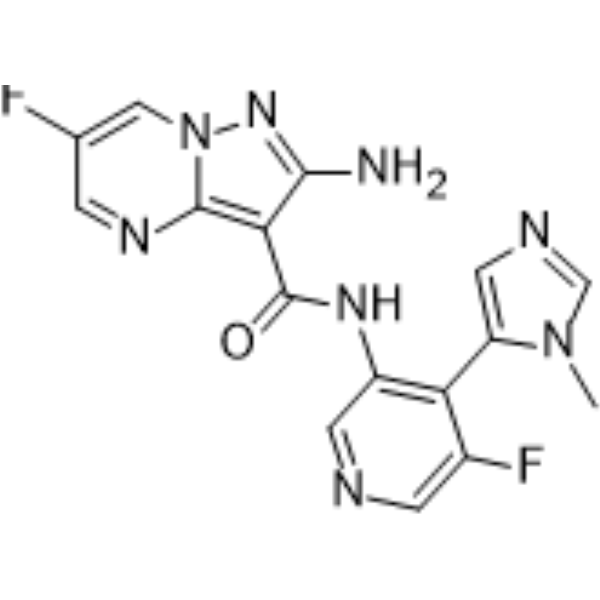
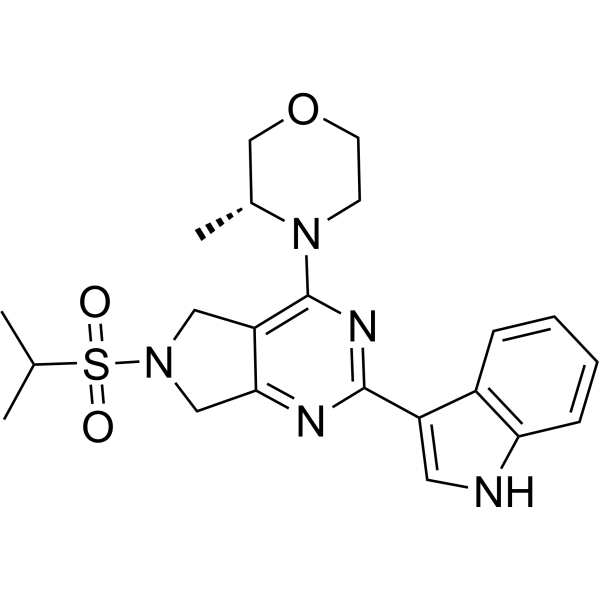
ATR-IN-1 is a selective ATR inhibitor with an IC50 of 0.5 nM. ATR-IN-1 inhibits the growth of ATM-deficient melanoma. ATR-IN-1 shows no hERG inhibitory effect. ATR-IN-1 can be used for research on melanoma [1].
loading...
    loading...
2
2 Cited Publications
Cat. No.: HY-111451
CAS No.: 1613200-51-3
Purity:  99.75%
Synonyms: M1774; ATR INhibitor 1
Target:  

ATM/ATR

Research Areas:  

Cancer

Tuvusertib (M1774; ATR inhibitor 1) is a selective and orally active ATR inhibitor extracted from patent WO2015187451A1, compound I-l, with a Ki value below 1 μΜ [1].
loading...
    loading...
Cat. No.: HY-157764
CAS No.: 2925916-30-7
Research Areas:  

Cancer

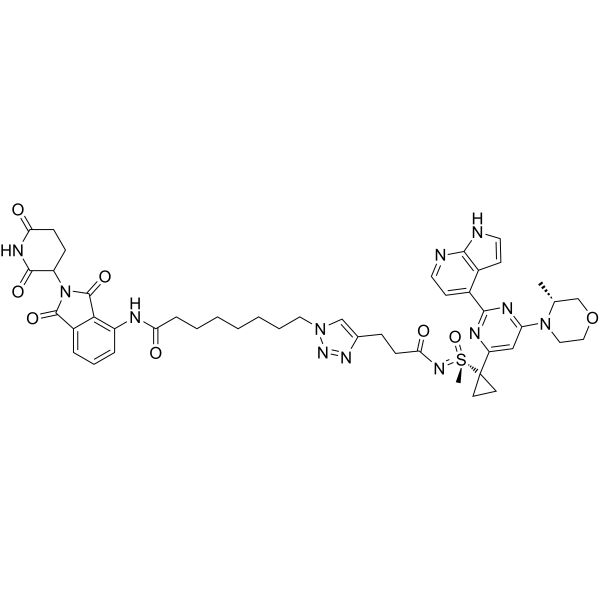
PROTAC ATR degrader-1 is a ATR PROTAC degrader. PROTAC ATR degrader-1 promotes ubiquitination and degradation of ATR. PROTAC ATR degrader-1 facilitates the progression of cells through the G2/M phase, thereby impairing DNA repair and inducing Apoptosis. PROTAC ATR degrader-1 exerts anticancer effects against colorectal cancer either alone or in combination with Cisplatin (HY-17394). PROTAC ATR degrader-1 can be used in research related to colorectal cancer [1].
loading...
    loading...
Cat. No.: HY-164496
CAS No.: 1161826-19-2
Target:  

DNA/RNA Synthesis

Research Areas:  

Neurological Disease Cancer

KL-50 is an orally active N3-(2-fluoroethyl) imidazotetrazine DNA alkylating agent with selectivity for MGMT-deficient cells. KL-50 introduces a 2-fluoroethyl group at the O6 position of guanine, forming O6-(2-fluoroethyl) guanine (O6FEtG) lesions and further generating DNA interstrand crosslinks (ICLs). KL-50 induces DNA double-strand breaks, activates ATR-CHK1 and ATM-CHK2 DNA damage responses, and causes cell cycle arrest and micronucleus formation. KL-50 can be used for glioblastoma and DNA damage response research [1] .
loading...
    loading...
Cat. No.: HY-174828
Target:  

PARP ATM/ATR Apoptosis

Research Areas:  

Cancer

ATR/PARP1-IN-1 is a potent ATR and PARP1 dual inhibitor with IC50s of 17.3 nM and 0.38 nM, respectively. ATR/PARP1-IN-1 effectively reduces cell viability, induces apoptosis and DNA damage. ATR/PARP1-IN-1 significantly impairs triple-negative breast cancer (TNBC) colony formation, migration, and invasion. ATR/PARP1-IN-1 suppresses tumor growth effectively in MDA-MB-468 xenografted mice, with no significant body weight change [1].
loading...
    loading...
Cat. No.: HY-147190
CAS No.: 2648989-61-9
Target:  

ATM/ATR

Research Areas:  

Cancer

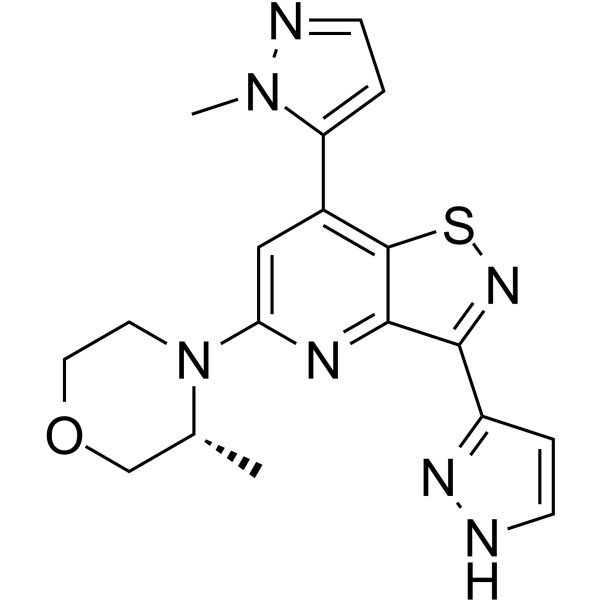
ATR-IN-19 (Compound 15 R-configure) is an ATR inhibitor .
loading...
    loading...
Cat. No.: HY-147021
CAS No.: 1350456-66-4
Target:  

ADC Linkers

Research Areas:  

Cancer

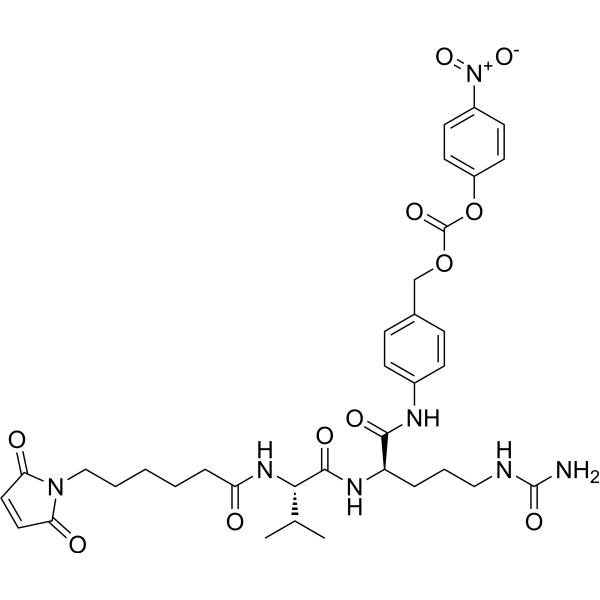
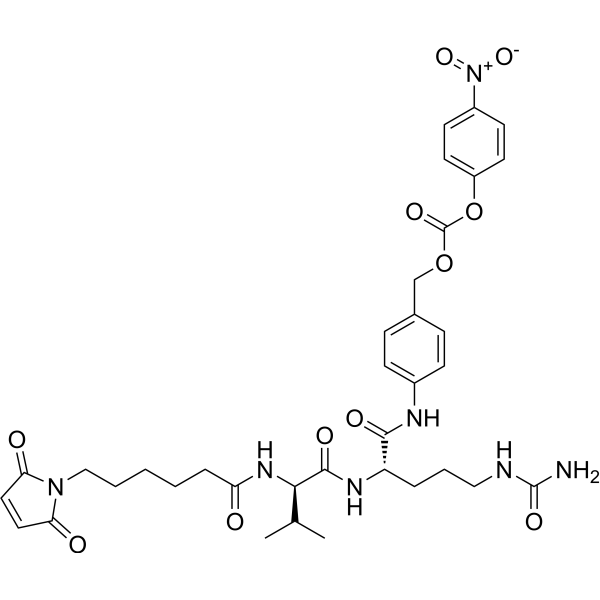
MC-Val-D-Cit-PAB-PNP is a peptide linker that can be used for the synthesis of Antibody-Drug Conjugates (ADCs). MC-Val-D-Cit-PAB-PNP can be used to construct antibody-drug conjugates loaded with ATR/CHK1 inhibitors [1].
loading...
    loading...
Cat. No.: HY-149213
CAS No.: 4734-59-2
Purity:  99.20%
Synonyms: J54; J3-54
Research Areas:  

Cancer

LSD1/TLK1-IN-1 is an orally active LSD1, TLK1, TLK2, TTK inhibitor with an LSD1 IC50 of 0.247 μM. LSD1/TLK1-IN-1 suppresses phosphorylation of Nek1 at T141 and Rad9 at S328, abrogates the TLK1>Nek1>ATR>Chk1 axis, protects H3K4me1/2 from demethylation, and does not affect LSD2, MAO-A, or MAO-B. LSD1/TLK1-IN-1 induces apoptosis, bypasses cell-cycle arrest, suppresses tumor growth, downregulates PD-L1 expression, enhances T-cell killing response, inhibits gastric cancer cell proliferation. LSD1/TLK1-IN-1 can be used for the research of prostate cancer and gastric cancer [1] .
loading...
    loading...
Cat. No.: HY-147021A
CAS No.: 1350456-64-2
Target:  

ADC Linkers

Research Areas:  

Cancer

MC-D-Val-Cit-PAB-PNP is a peptide linker that can be used for the synthesis of Antibody-Drug Conjugates (ADCs). MC-D-Val-Cit-PAB-PNP can be used to construct antibody-drug conjugates loaded with ATR/CHK1 inhibitors [1].
loading...
    loading...
Cat. No.: HY-144436
Target:  

ATM/ATR

Research Areas:  

Cancer

ATR-IN-12 (Compound 5g) is a potent inhibitor of ataxia telangiectasia and Rad3-related (ATR) kinase with an IC50 value of 0.007 μM. ATR-IN-12 displays good anti-tumor activity and significantly reduces the phosphorylation level of ATR and its downstream signaling protein. ATR-IN-12 is a promising lead compound for subsequent agent discovery targeting ATR kinase .
loading...
    loading...
Cat. No.: HY-173147
Target:  

CDK

Research Areas:  

Cancer

CDK2-IN-42 (Compound H63) is a CDK12 inhibitor with an IC50 value of 10 nM. CDK2-IN-42 has anti-ESCC (Esophageal Squamous Cell Carcinoma) cell activity. It can block transcriptional elongation, downregulate the core genes in the G1 phase to induce cell cycle arrest, and alter the CDK12-ATM/ATR-CHEK1/CHEK2 signaling axis, resulting in DNA damage. CDK2-IN-42 can effectively inhibit tumor growth in a xenograft mouse model of human ESCC KYSE150. CDK2-IN-42 holds great promise for research in the field of cancer [1].
loading...
    loading...
Cat. No.: HY-111451S
Synonyms: M1774-d3; ATR INhibitor 1-d3
Tuvusertib-d3 (M1774-d3) is the deuterium labeled Tuvusertib (HY-111451). Tuvusertib (M1774; ATR inhibitor 1) is a selective and orally active ATR inhibitor with a Ki value below 1 μΜ.
loading...
    loading...
Cat. No.: HY-111451R
CAS No.: 1613200-51-3
Synonyms: M1774 (Standard); ATR INhibitor 1 (Standard)
Research Areas:  

Cancer

Tuvusertib (Standard) is the analytical standard of Tuvusertib (HY-111451). This product is intended for research and analytical applications. Tuvusertib (M1774; ATR inhibitor 1) is a selective and orally active ATR inhibitor extracted from patent WO2015187451A1, compound I-l, with a Ki value below 1 μΜ [1].
loading...
    loading...
Cat. No.: HY-181035
Target:  

PROTACs CDK

Research Areas:  

Cancer

DN1679 is a potent, selective and orally active CRBN-dependent CDK12/13 PROTAC dual degrader. DN1679 shows DC50 of 8.8/9.8 nM (MDA-MB-231), 5.1/6.4 nM (MDA-MB-157) and 17.2/15.8 nM (MDA-MB-468) for CDK12/13. DN1679 can downregulate DNA damage response gene mRNA levels, such as ATM, ATR, BRCA1 and RAD51. DN1679 demonstrates a potent synergistic anti-tumor effect companied with Olaparib (HY-10162). DN1679 can be used for research of triple-negative breast cance [1].
loading...
    loading...
  • 1

