33 Results for "

Alpha 7 nAChR Inhibitors

" in MedChemExpress (MCE) Product Catalog:
Products (33)

33 Results for "Alpha 7 nAChR Inhibitors" in MCE Product Catalog:

50
50 Publications Verification
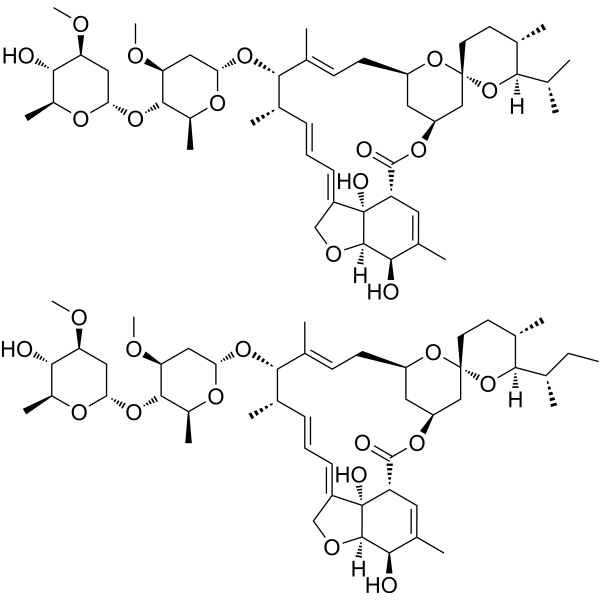
Cat. No.: HY-15310
CAS No.: 70288-86-7
Purity:  98.28%
Synonyms: MK-933; CD-5024; K-237
Ivermectin (MK-933) is a broad-spectrum anti-parasite agent. Ivermectin (MK-933) is a specific inhibitor of Impα/β1-mediated nuclear import and has potent antiviral activity towards both HIV-1 and dengue virus. It is a positive allosteric effector of P2X4 and the α7 neuronal nicotinic acetylcholine receptor (nAChRs). Ivermectin also inhibits bovine herpesvirus1 (BoHV-1) replication and inhibits BoHV-1 DNA polymerase nuclear import . Ivermectin is a candidate therapeutic against SARS-CoV-2/COVID-19 .
loading...
    loading...
50
50 Publications Verification
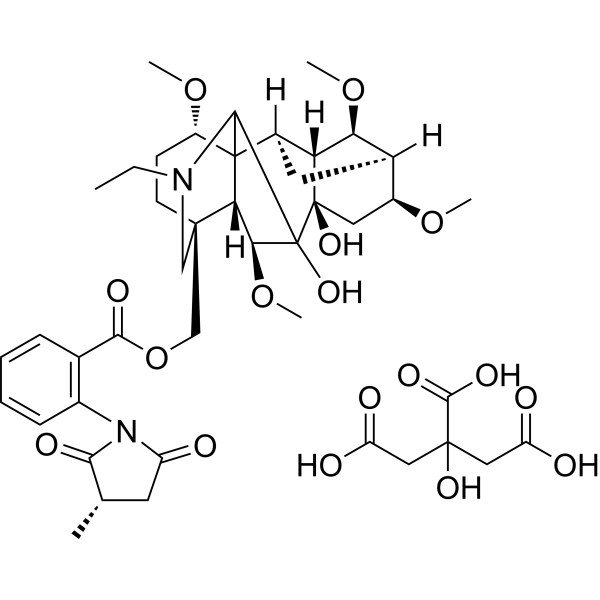
Cat. No.: HY-N2332A
CAS No.: 351344-10-0
Synonyms: MLA citrate
Methyllycaconitine (MLA) citrate is a blood-brain barrier-permeable antagonist of α7 nicotinic acetylcholine receptor (α7nAChR) with an IC50 of 2 nM. Methyllycaconitine citrate inhibits25-35-induced autophagy by restoring the mTOR pathway, and prevents reactive oxygen species (ROS) production, microglial activation, reduced dopamine uptake, loss of dopaminergic terminals and catecholamine secretion. Methyllycaconitine citrate induces hippocampal glutamate efflux, enhances long-term potentiation, and improves memory acquisition. Methyllycaconitine citrate can be used in research related to Alzheimer's disease, cerebral palsy, Parkinson's disease and schizophrenia .
loading...
    loading...
14
14 Cited Publications
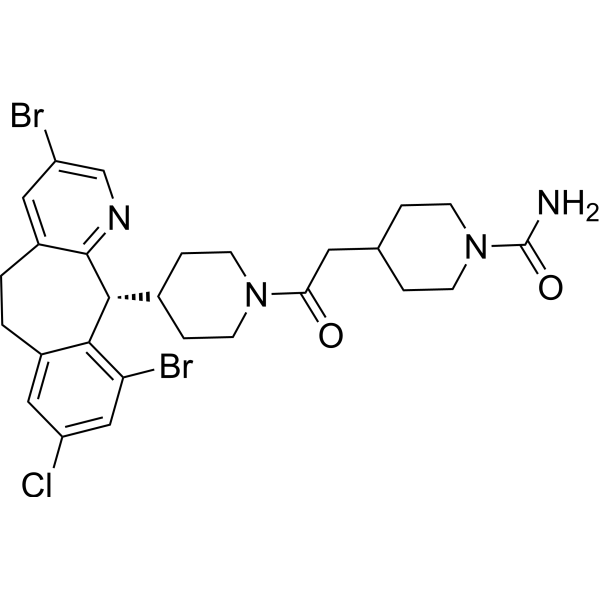
Cat. No.: HY-15136
CAS No.: 193275-84-2
Purity:  99.60%
Synonyms: Sch66336
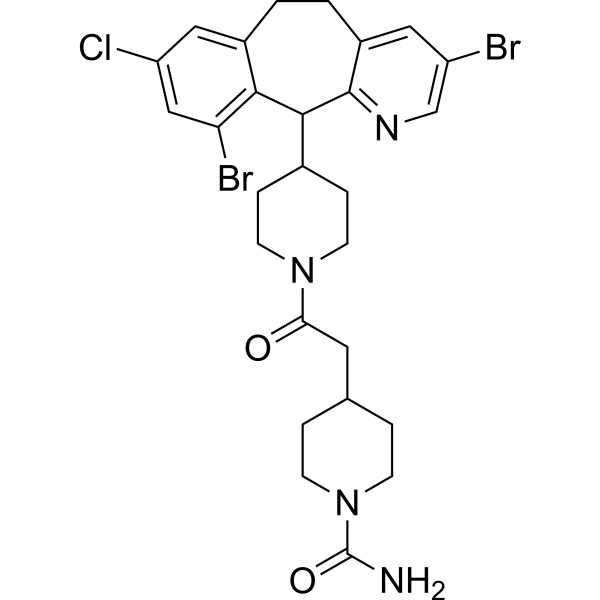
Lonafarnib (Sch66336) is an orally active, blood-brain barrier penetrant farnesyltransferase (FPTase) inhibitor. Lonafarnib increases the phosphorylation levels of Akt, CaMKII and CREB, upregulates BDNF expression in the hippocampus, elevates the content of α7nAChR on cell membranes, and blocks the isoprenylation of H-Ras. Lonafarnib repairs synapses and reverses spatial memory deficits in Aβ1-42 model mice. Lonafarnib inhibits RSV fusion and replication, and alleviates virus-induced lung injury. Lonafarnib activates the lysosomal and autophagic pathways, and reduces the phosphorylation and aggregation of tau. Lonafarnib acts synergistically with Sorafenib (HY-10201) to promote apoptosis, and inhibits the proliferation and invasion of melanoma cells. Lonafarnib inhibits the farnesylation of progerin, repairs nuclear membrane defects, and activates the cGAS-STING-STAT1 signaling pathway. Lonafarnib can be used in research related to diseases including Alzheimer's disease, viral infections, melanoma, and progeria .
loading...
    loading...
5
5 Cited Publications
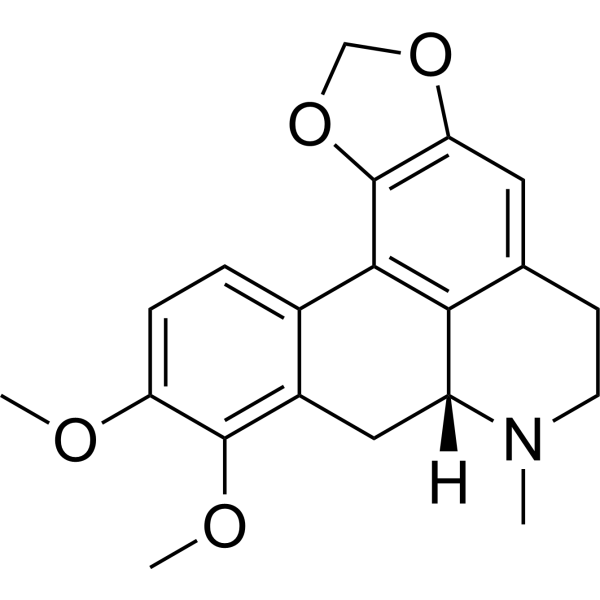
Cat. No.: HY-N2255
CAS No.: 25127-29-1
Crebanine is an isoquinoline-like alkaloid that can be derived from Stephania. Crebanine is an antagonist of the α7-nAChR with an IC50 of 19.1 μM. Crebanine suppresses the proliferation, migration, and invasion of cancer cells, triggers reactive oxygen species (ROS) burst, and promotes apoptosis. Crebanine inhibits the AKT/FoxO3a, NF-κB and MAPK signaling pathways. Crebanine attenuates NOX2 hyperactivation, exhibits antioxidant properties by reducing reactive oxygen species and peroxidation in microglia cells. Crebanine inhibits voltage-dependent Na + current in guinea-pig ventricular myocytes. Crebanine has high inhibitory activity against gram-positive animal pathogenic bacteria. Crebanine ameliorates ischemia-reperfusion brain damage in middle cerebral artery occlusion and reperfusion (MCAO/R) rats. Crebanine significantly improves Scopolamine (HY-N0296)-induced cognitive deficits in ICR mice. Crebanine can be used for the study of hepatocellular carcinoma (HCC), cerebral ischemia and Alzheimer's disease .
loading...
    loading...
2
2 Cited Publications
Cat. No.: HY-W052144
CAS No.: 13078-04-1
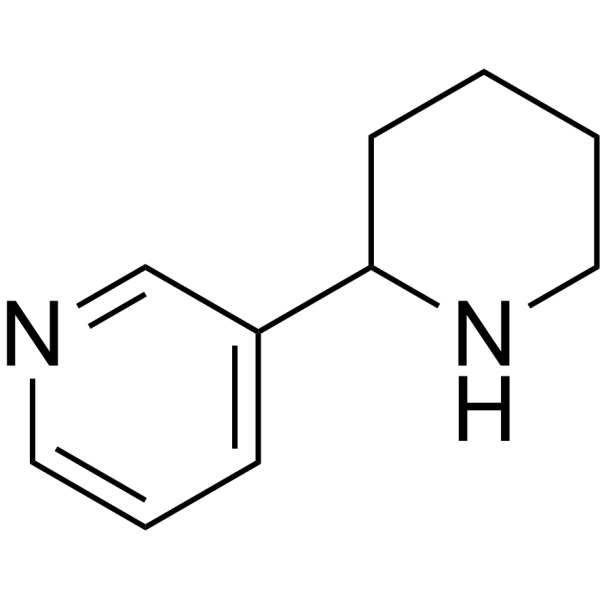
(±) Anabasine is the racemic form of Anabasine (HY-B1532). (±) Anabasine stimulates the release of [ 3H]-Dopamine from mouse striatal synaptosomes. (±) Anabasine inhibits the high-affinity binding of [ 3H]-S-(-)-Nicotine to the striatal membrane. Anabasine is an agonist of α7nAChR and possesses anti-inflammatory and insecticidal activities .
loading...
    loading...
1
1 Cited Publications
Cat. No.: HY-106901AS
Purity:  ≥96.0%
Synonyms: HI-6-d4
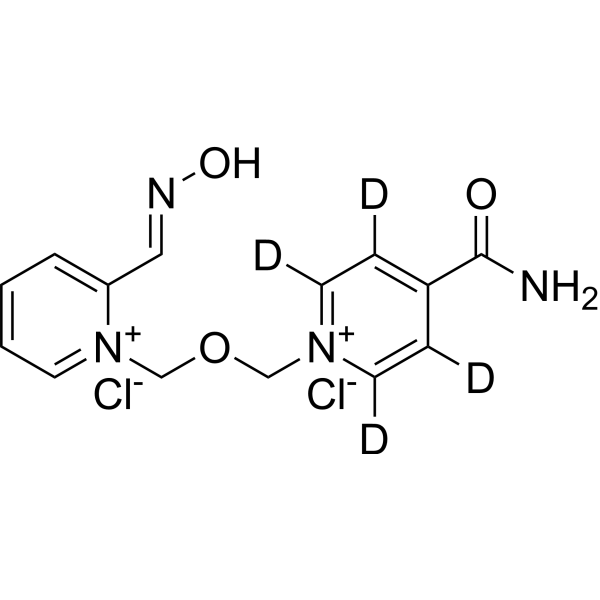
Asoxime-d4 dichloride (HI-6-d4) is the deuterium labeled Asoxime dichloride. Asoxime dichloride is an orally active thiosemicarbazone-based antidote. Asoxime dichloride is a reversible inhibitor of AChE, and its core mechanism of action is to re-activate AChE inhibited by nerve toxins, thereby restoring the cholinergic nerve function. Asoxime dichloride significantly restores the function of poisoned muscles without reactivating AChE. Asoxime dichloride is an antagonist of acetylcholine receptors (AChRs), including nicotinic receptor and α7 nAChR. Asoxime dichloride can serve as an effective immunomodulator, improving the immune effect of the nervous system.
loading...
    loading...
Cat. No.: HY-172236
CAS No.: 1020634-41-6
Synonyms: BNC210; IW-2143
Target:  

nAChR

Research Areas:  

Neurological Disease

Soclenicant (BNC210) is an orally active α7 nAChR negative alteration modulator (NAM) with no apparent side effects. Soclenicant exhibits acute anxiolytic activity in rodent models of anxiety. Soclenicant inhibits rat and human α7 nAChR currents (in stably transfected cell lines) induced by acetylcholine, nicotine, choline, and the a7-specific agonist PNU-282987 (HY-12560A) with IC50 values in the range of 1.2 to 3 μM. Soclenicant can be used in studies of anxiety, trauma, and stressor-related disorders .
loading...
    loading...
Cat. No.: HY-146066
CAS No.: 2108714-20-9
Purity:  99.54%
α7 nAchR-JAK2-STAT3 agonist 1 is a potent α7 nAchR-JAK2-STAT3 agonist, with an IC50 value of 0.32 μM for nitric oxide (NO). α7 nAchR-JAK2-STAT3 agonist 1 effectively suppresses the expression of iNOS, IL-1β, and IL-6 in murine RAW264.7 macrophages. α7 nAchR-JAK2-STAT3 agonist 1 can inhibit LPS-induced NO release, NF-κB activation and cytokine production. α7 nAchR-JAK2-STAT3 can be used for researching sepsis .
loading...
    loading...
Cat. No.: HY-18060
CAS No.: 639489-84-2
Synonyms: TC-5619
Target:  

nAChR

Research Areas:  

Neurological Disease

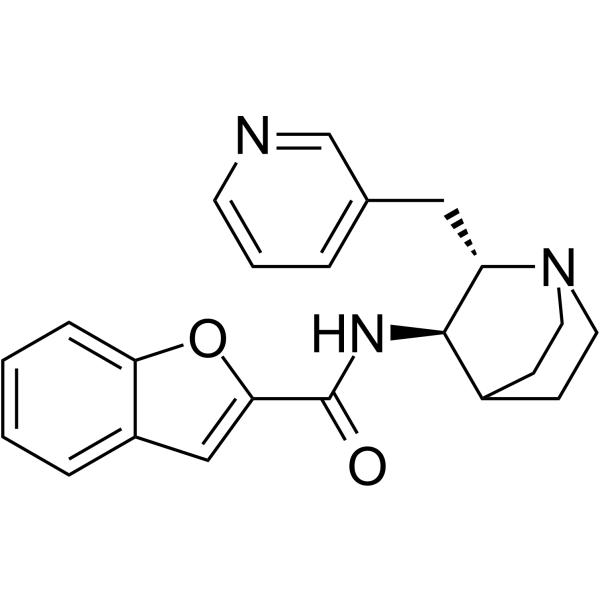
Bradanicline (TC-5619) is an orally active agonist of α7 nAChR with moderate blood-brain barrier penetration. Bradanicline exhibits high affinity and subtype selectivity for human α7 nAChR. Bradanicline possesses antitussive activity that depends on sustained receptor binding and activation. Bradanicline requires systemic administration to dose-dependently inhibit cough induced by citric acid, bradykinin and inhaled nicotine. Bradanicline is well tolerated in preclinical studies and is widely used in research related to chronic refractory cough .
loading...
    loading...
Cat. No.: HY-106901A
CAS No.: 34433-31-3
Purity:  98.47%
Synonyms: HI-6
Research Areas:  

Neurological Disease

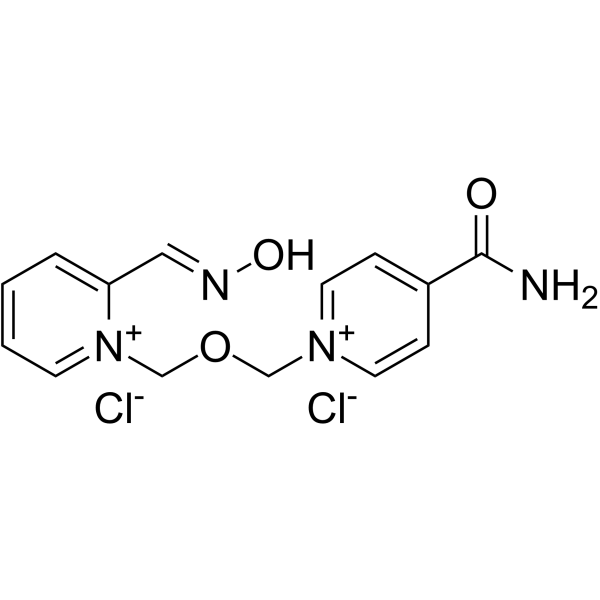
Asoxime dichloride (HI-6) is an orally active thiosemicarbazone-based antidote. Asoxime dichloride is a reversible inhibitor of AChE, and its core mechanism of action is to re-activate AChE inhibited by nerve toxins, thereby restoring the cholinergic nerve function. Asoxime dichloride significantly restores the function of poisoned muscles without reactivating AChE. Asoxime dichloride is an antagonist of acetylcholine receptors (AChRs), including nicotinic receptor and α7 nAChR. Asoxime dichloride can serve as an effective immunomodulator, improving the immune effect of the nervous system .
loading...
    loading...
Cat. No.: HY-N8249
CAS No.: 168706-29-4
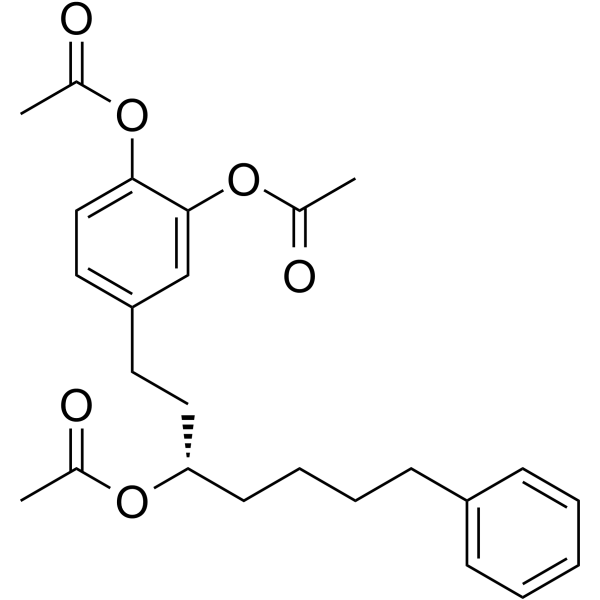
Cynandione A is an acetophenone that can be isolated from Cynanchum Wilfordii Radix. Cynandione A protects hepatocytes and cortical neurons from toxicity and improves neurological deficits in a rat model of cerebral ischemia. On the other hand, cynandione A has significant anti-inflammatory effects and inhibits inflammation by activating macrophage α7 nAChR and IL-10 expression .
loading...
    loading...
Cat. No.: HY-161671
Target:  

nAChR

GAT2711 is a full agonist of α9 nAChR with an EC50 of 230 nM. GAT2711 shows 340-fold selective for α9 over α7 nAChRs. GAT2711 inhibits ATP-induced IL-1β release in THP-1 cells. GAT2711 retains full analgesic activity in α7 nAChR knockout mice .
loading...
    loading...
Cat. No.: HY-W698871
CAS No.: 1020719-08-7
(±) Anabasine-d4 is the d4-labeled (±) Anabasine (HY-W052144). (±) Anabasine is the racemic form of Anabasine (HY-B1532). (±) Anabasine stimulates the release of [ 3H]-Dopamine from mouse striatal synaptosomes. (±) Anabasine inhibits the high-affinity binding of [ 3H]-S-(-)-Nicotine to the striatal membrane. Anabasine is an agonist of α7nAChR and possesses anti-inflammatory and insecticidal activities .
loading...
    loading...
Cat. No.: HY-15136B
CAS No.: 193275-86-4
Synonyms: Sch66336 racemate
(Rac)-Lonafarnib (Sch66336 racemate) is an isomer of Lonafarnib (HY-15136). Lonafarnib (Sch66336) is an orally active, blood-brain barrier penetrant farnesyltransferase (FPTase) inhibitor. Lonafarnib increases the phosphorylation levels of Akt, CaMKII and CREB, upregulates BDNF expression in the hippocampus, elevates the content of α7nAChR on cell membranes, and blocks the isoprenylation of H-Ras. Lonafarnib repairs synapses and reverses spatial memory deficits in Aβ1-42 model mice. Lonafarnib inhibits RSV fusion and replication, and alleviates virus-induced lung injury. Lonafarnib activates the lysosomal and autophagic pathways, and reduces the phosphorylation and aggregation of tau. Lonafarnib acts synergistically with Sorafenib (HY-10201) to promote apoptosis, and inhibits the proliferation and invasion of melanoma cells. Lonafarnib inhibits the farnesylation of progerin, repairs nuclear membrane defects, and activates the cGAS-STING-STAT1 signaling pathway. Lonafarnib can be used in research related to diseases including Alzheimer's disease, viral infections, melanoma, and progeria .
loading...
    loading...
Cat. No.: HY-146066A
Purity:  98.45%
Target:  

nAChR JAK STAT NO Synthase

Research Areas:  

Others

(R)-α7 nAchR-JAK2-STAT3 agonist 1 is the R-enantiomer of α7 nAchR-JAK2-STAT3 agonist 1 (HY-146066). α7 nAchR-JAK2-STAT3 agonist 1 is a potent α7 nAchR-JAK2-STAT3 agonist, with an IC50 value of 0.32 μM for nitric oxide (NO). α7 nAchR-JAK2-STAT3 agonist 1 effectively suppresses the expression of iNOS, IL-1β, and IL-6 in murine RAW264.7 macrophages. α7 nAchR-JAK2-STAT3 agonist 1 can inhibit LPS-induced NO release, NF-κB activation and cytokine production. α7 nAchR-JAK2-STAT3 can be used for researching sepsis .
loading...
    loading...
Cat. No.: HY-P5823
CAS No.: 1391936-86-9
Target:  

nAChR

Research Areas:  

Neurological Disease

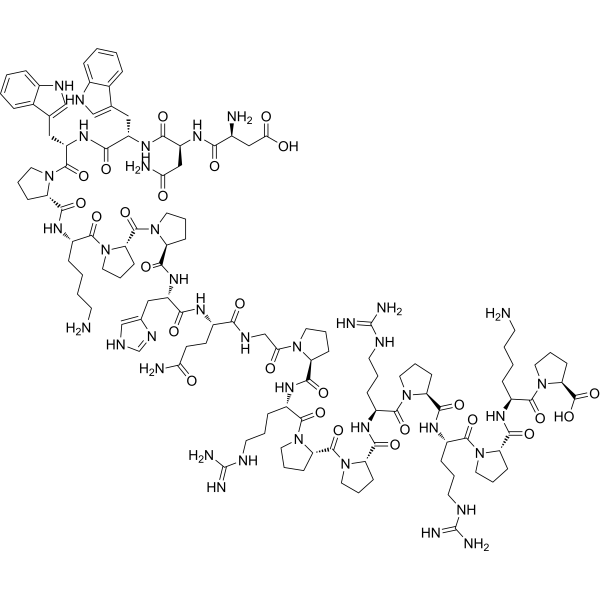
Azemiopsin is a potent nicotinic acetylcholine receptor (nAChR) inhibitor with IC50s of 0.18 μM and 22 μM against T. californica nAChR and human α7 nAChR, respectively. Azemiopsin blocks acetylcholine-induced currents in Xenopus oocytes heterologously expressing human muscle-type nAChR .
loading...
    loading...
Cat. No.: HY-126049
CAS No.: 88929-35-5
Purity:  98.78%
Synonyms: (S)-(-)-Oxiracetam; (S)-ISF2522
Target:  

Apoptosis

Research Areas:  

Neurological Disease

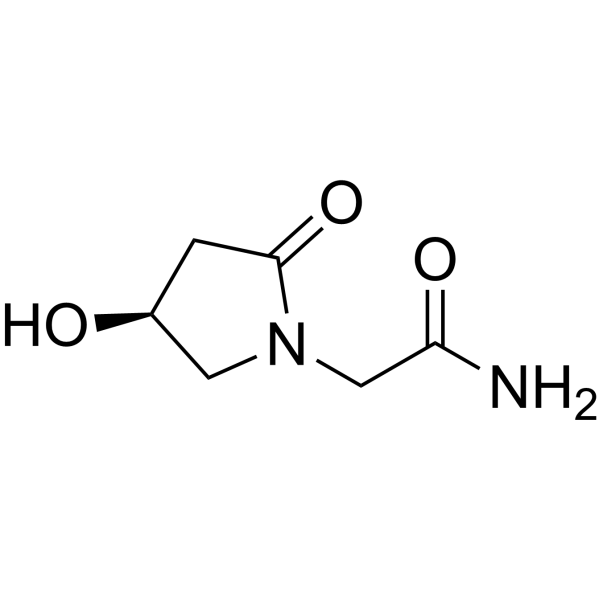
(S)-oxiracetam (S-ORC) is an inhibitor targeting apoptosis. S-ORC reduces brain infarct size and lessens neurological dysfunction in middle cerebral artery occlusion/reperfusion (MCAO/R) models. S-ORC prevents neuronal apoptosis via activating PI3K/Akt/GSK3β signaling pathway via α7 nAChR after ischemic stroke. S-ORC can prevent neuronal death after ischemic stroke .
loading...
    loading...
Cat. No.: HY-114791
CAS No.: 552-72-7
Lobelanidine is an antagonist for nicotinic acetylcholine receptor (nAChR), which inhibits α7 nAChR response and α3β2/α3β4 nAChR responses, with IC50 of 2.8 and 8.2 μM .
loading...
    loading...
Cat. No.: HY-59201A
CAS No.: 848591-90-2
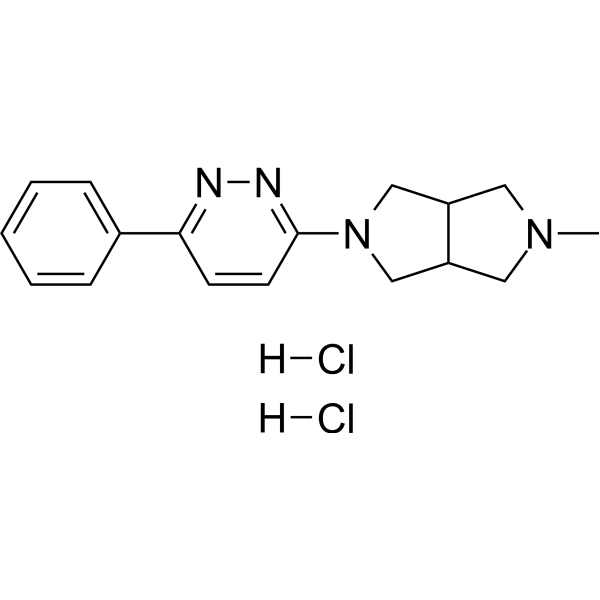
A-582941 dihydrochloride is a selective, orally active, blood-brain barrier-permeable α7 nAChR agonist, with Ki values of 10.8 nM and 17 nM in rat brain and human frontal cortex, respectively. A-582941 dihydrochloride exhibits agonistic activity at 5-HT3 receptors, with a Ki of 150 nM. A-582941 dihydrochloride triggers phosphorylation of ERK1/2 and CREB, inhibits GSK-3β via Ser-9 phosphorylation, increases acetylcholine release, induces the expression of Arc and c-Fos, activates brain regions associated with working memory and attention, and reduces cell death caused by nerve growth factor (NGF) deprivation. A-582941 dihydrochloride is applicable for the research of Alzheimer's disease and schizophrenia .
loading...
    loading...
Cat. No.: HY-15136R
CAS No.: 193275-84-2
Synonyms: Sch66336 (Standard)
Lonafarnib (Standard) (Sch66336 (Standard)) is the analytical standard of Lonafarnib (HY-15136). This product is intended for research and analytical applications. Lonafarnib (Sch66336) is an orally active, blood-brain barrier penetrant farnesyltransferase (FPTase) inhibitor. Lonafarnib increases the phosphorylation levels of Akt, CaMKII and CREB, upregulates BDNF expression in the hippocampus, elevates the content of α7nAChR on cell membranes, and blocks the isoprenylation of H-Ras. Lonafarnib repairs synapses and reverses spatial memory deficits in Aβ1-42 model mice. Lonafarnib inhibits RSV fusion and replication, and alleviates virus-induced lung injury. Lonafarnib activates the lysosomal and autophagic pathways, and reduces the phosphorylation and aggregation of tau. Lonafarnib acts synergistically with Sorafenib (HY-10201) to promote apoptosis, and inhibits the proliferation and invasion of melanoma cells. Lonafarnib inhibits the farnesylation of progerin, repairs nuclear membrane defects, and activates the cGAS-STING-STAT1 signaling pathway. Lonafarnib can be used in research related to diseases including Alzheimer's disease, viral infections, melanoma, and progeria .
loading...
    loading...

