1. Search Result
Search Result
Results for "

Analytical methods

" in MedChemExpress (MCE) Product Catalog:

20

Inhibitors & Agonists

1

Screening Libraries

2

Fluorescent Dyes

4

Biochemical Assay Reagents

3

Natural
Products

1

Isotope-Labeled Compounds

Cat. No. Product Name Target Research Areas Chemical Structure
  • HY-B0263
    Thiabendazole
    4 Publications Verification

    Tiabendazole; 2-(4-Thiazolyl)benzimidazole

    Environmental Pollutants Mitochondrial Metabolism Parasite Caspase VEGFR MDM-2/p53 CDK Interleukin Related Infection Cardiovascular Disease Inflammation/Immunology Cancer
    Thiabendazole is an orally available benzimidazole fungicide with repellent and anticancer activities. Thiabendazole can result in developmental malformations. Thiabendazole can be used for modeling .
    Thiabendazole
  • HY-W004563
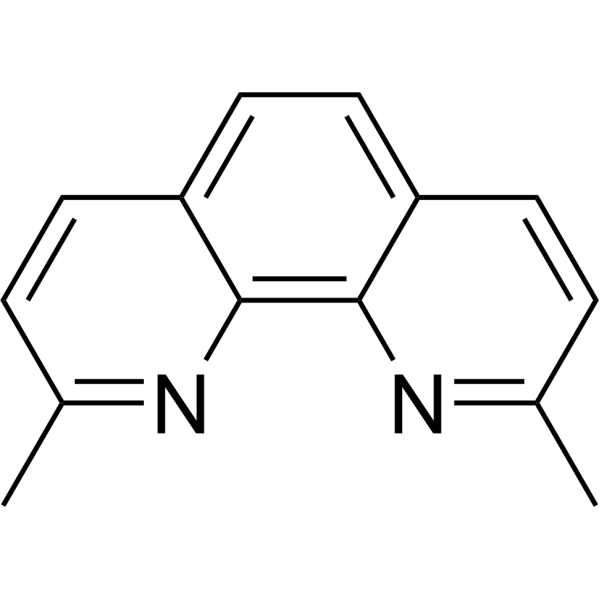
    Neocuproine
    1 Publications Verification

    Biochemical Assay Reagents Others
    Neocuproine is an organic compound commonly used as a complexing reagent and copper ion detector. It can form stable complexes with copper ions, and can play a catalytic role in certain chemical reactions and analytical methods. In addition, this compound is also widely used in some biomedical fields, such as in the study of copper metabolism disorders and neurodegenerative diseases
    Neocuproine
  • HY-W110793

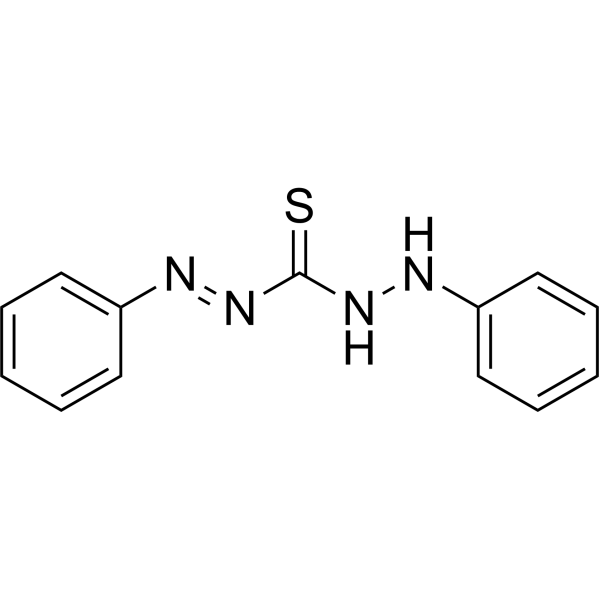
    Diphenylthiocarbazone

    Biochemical Assay Reagents Metabolic Disease
    Dithizone can be toxic to pancreatic islet cells and cause experimental diabetes. Dithizone can be used for in vitro in vivo staining of transplanted islets and cytoplasmic granules of bone marrow cells. Dithizone can be used as a chelating agent and colorimetric indicator for the detection and extraction of various heavy metals, including lead and mercury, in analytical and biochemical applications. Dithizone forms stable colored complexes with metal ions and can be quantitatively analyzed by methods such as spectrophotometry .
    Dithizone
  • HY-W127680

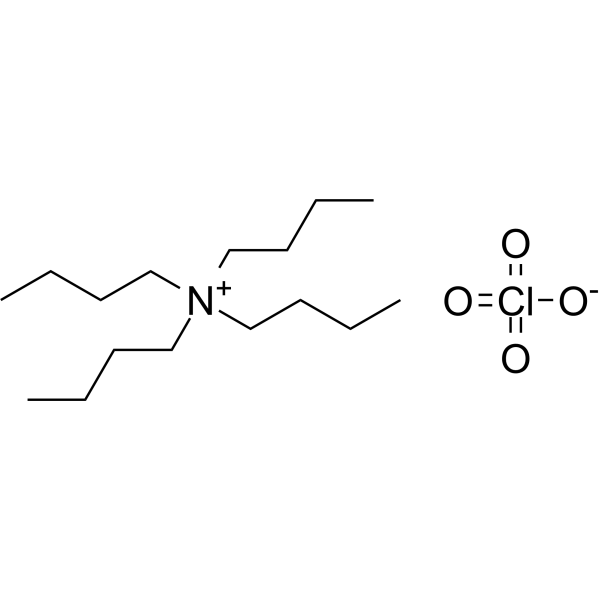
    Tetra-n-butylammonium perchlorate

    Biochemical Assay Reagents Others
    Tetrabutylammonium perchlorate is an organic compound containing ammonium ions and perchlorate ions. It is commonly used as an electrolyte in electrochemistry and as a source of perchlorate anion in analytical chemistry. Tetrabutylammonium perchlorate has a variety of applications in the production of batteries, fuel cells and electronic components due to its high ionic conductivity and stability under extreme conditions. In addition, it can be used as a reference standard in analytical methods such as ion chromatography.
    Tetrabutylammonium perchlorate
  • HY-112053R

    2,2-Diphenyl-1-picrylhydrazyl (Standard)

    Reactive Oxygen Species (ROS) Reference Standards Metabolic Disease
    DPPH (Standard) is the analytical standard of DPPH. This product is intended for research and analytical applications. DPPH (2,2-Diphenyl-1-picrylhydrazyl) is a stable free radical that can be used to measure the radical scavenging activity of antioxidants. The odd electron of nitrogen atom in DPPH is reduced by receiving a hydrogen atom from antioxidants to the corresponding hydrazine. DPPH method may be utilized in aqueous and nonpolar organic solvents and can be used to examine both hydrophilic and lipophilic antioxidants .
    DPPH (Standard)
  • HY-W127676

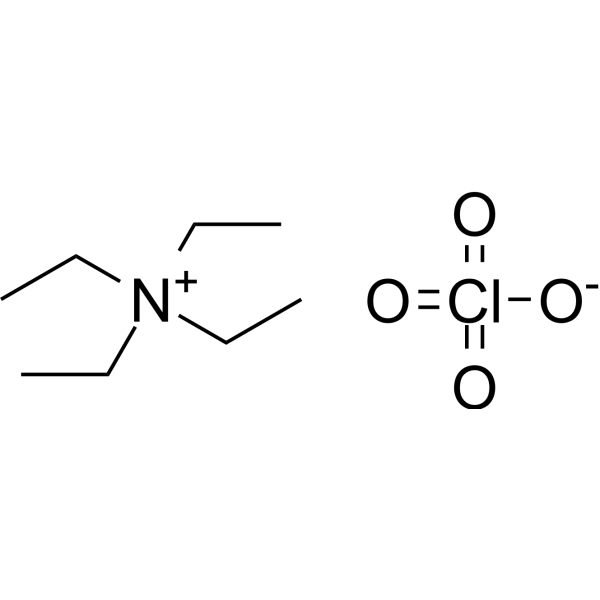
    N,N,N-Triethylethanaminium perchlorate

    Biochemical Assay Reagents Others
    Tetraethylammonium perchlorate is an organic compound containing ammonium ions and perchlorate ions. It is commonly used as an electrolyte in electrochemistry and as a source of perchlorate anion in analytical chemistry. Due to its high ionic conductivity and stability under extreme conditions, tetraethylammonium perchlorate has a variety of applications in the production of batteries, fuel cells and electronic components. In addition, it can be used as a reference standard in analytical methods such as ion chromatography.
    Tetraethylammonium perchlorate
  • HY-B1849R

    Reference Standards Environmental Pollutants Herbicide Others
    Hexazinone (Standard) is the analytical standard of Hexazinone. This product is intended for research and analytical applications. Hexazinone is a triazinone herbicide with high mobility and persistence in soil. Hexazinone is mainly degraded by soil microorganisms, and its degradation and mineralization processes are significantly affected by soil texture (faster in clay loam) and application method (mixed application can improve its bioavailability and mineralization rate). Hexazinone exhibits mild to moderate acute oral toxicity and has significant eye irritation .
    Hexazinone (Standard)
  • HY-N7059R

    Reference Standards Bacterial Reactive Oxygen Species (ROS) Infection
    Lactobionic acid (Standard) is an analytical standard for lactobionic acid. This product is intended for use in research and analytical applications. Lactobionic acid is a bionic acid that can be naturally found in the Caspian Sea yogurt and chemically constituted of a gluconic acid bonded to a galactose. Lactobionic acid has antioxidant, antimicrobial, chelating, stabilizer, acidulant, and moisturizing properties. Lactobionic acid can be obtained by electrolytic methods, microbial fermentation or biocatalytic approaches. Lactobionic acid can be used in foodstuffs, to produce new functional products and against food-borne pathogens. Lactobionic acid inhibits DNA repair and protein synthesis, induction of oxidative stress and inhibition of metabolic pathways against MRSA .
    Lactobionic acid (Standard)
  • HY-130207

    NSC-743380

    Endogenous Metabolite DNA/RNA Synthesis Cancer
    Oncrasin-72 (NSC-743380) is an RNA polymerase II inhibitor with activity in inhibiting growth and inducing cell death in human cancer cells. Oncrasin-72 exhibits antitumor activity through JNK activation and STAT3 inhibition. Analytical method development and validation for Oncrasin-72 is essential for quantifying its concentration in biological fluids for pharmacokinetic studies. This method was able to successfully quantify Oncrasin-72 in different dose groups when applied in rat plasma .
    Oncrasin-72
  • HY-133167R

    Insecticide Reference Standards Others
    Clothianidin (Standard) is the analytical standard of Clothianidin. This product is intended for research and analytical applications. Clothianidin is a neonicotinoid insecticide. Clothianidin shows excellent long-term control effect in small doses against various insect pests such as Coleoptera, Thysanoptera, Lepidoptera, Diptera, Homoptera, Heteroptera, Orthoptera and Isoptera families. Clothianidin has various application methods and high safety for crops .
    Clothianidin (Standard)
  • HY-D0018R

    Dichlorophenylindophenol sodium (Standard); DCPIP sodium (Standard); Indochlorophenol sodium (Standard)

    Biochemical Assay Reagents Reference Standards Others
    DCIP (sodium) (Standard) is the analytical standard of DCIP (sodium). This product is intended for research and analytical applications. DCIP sodium is a blue dye commonly used in various biochemical and biotechnological applications as an indicator of redox reactions. DCIP sodium has unique chemical properties that change color according to the oxidation state of the substance being tested. It is commonly used in enzyme assays, such as measuring the activity of succinate dehydrogenase, or in protein quantification methods, such as the Lowry assay.
    DCIP sodium (Standard)
  • HY-103382R

    Reference Standards Fungal Infection
    Phenyramidol (Hydrochloride) (Standard) is the analytical standard of Phenyramidol (Hydrochloride). This product is intended for research and analytical applications. Phenyramidol hydrochloride is an anticoagulant and analgesic with activity that increases detection sensitivity in biological samples. Phenyramidol hydrochloride can be oxidized in aqueous media by electrochemical methods to achieve its quantitative analysis. The detection of Phenyramidol hydrochloride using an amino-functionalized multi-walled carbon nanotube-modified glassy carbon electrode showed significant enhancement of the current peak .
    Arcyriaflavin A (Standard)
  • HY-W015786R

    Reference Standards Bacterial Infection Metabolic Disease
    L-Amoxicillin (Standard) is the analytical standard of L-Amoxicillin. This product is intended for research and analytical applications. L-Amoxicillin is an antibiotic with activity against a wide range of bacterial infections. L-Amoxicillin is commonly used in antibacterial combinations when used in combination with the β-lactamase inhibitor potassium clavulanic acid. The related substances analysis method for L-Amoxicillin has been developed and validated according to the International Conference on Harmonization (ICH) guidelines, ensuring its effectiveness and accuracy in mixtures. L-Amoxicillin and some of its impurities have been further analyzed in stress testing and stability studies, providing support for optimizing its application .
    4-Ethoxyphenol (Standard)
  • HY-129836R

    Antibiotic Reference Standards Infection
    L-Amoxicillin (Standard) is the analytical standard of L-Amoxicillin. This product is intended for research and analytical applications. L-Amoxicillin is an antibiotic with activity against a wide range of bacterial infections. L-Amoxicillin is commonly used in antibacterial combinations when used in combination with the β-lactamase inhibitor potassium clavulanic acid. The related substances analysis method for L-Amoxicillin has been developed and validated according to the International Conference on Harmonization (ICH) guidelines, ensuring its effectiveness and accuracy in mixtures. L-Amoxicillin and some of its impurities have been further analyzed in stress testing and stability studies, providing support for optimizing its application .
    L-Amoxicillin (Standard)
  • HY-151997S

    1,2-Olein-3-laurin-13C3; TG(18:1/18:1/12:0)-13C3

    Isotope-Labeled Compounds Others
    1,2-Dioleoyl-3-lauroyl-rac-glycerol- 13C3 is the 13C-labeled 1,2-Dioleoyl-3-lauroyl-rac-glycerol (HY-165089), 1,2-Dioleoyl-3-lauroyl-rac-glycerol (1,2-Olein-3-laurin) is a triglyceride identified by specific analytical methods in human milk, infant formula, other mammalian milk, and vegetable oils, with specific structural and distribution characteristics.
    1,2-Dioleoyl-3-lauroyl-rac-glycerol-13C3
  • HY-N1442R

    Orange II (Standard); D&C Orange NO. 4 (Standard)

    Biochemical Assay Reagents Reference Standards Others
    Acid orange 7 (Standard) is the analytical standard of Acid orange 7 (HY-1442). This product is intended for research and analytical applications. Acid Orange 7 (Orange II; D&C Orange NO. 4) is an azo dye widely used in the textile, food and cosmetic industries. Acid Orange 7 is mainly used as a colorant by combining with fibers and other substances through azo bonds. Acid Orange 7 has a maximum absorption wavelength at 484-485 nm, and the concentration is measured using a UV-visible spectrophotometer. Acid Orange 7 is difficult to degrade and has a certain degree of toxicity. Acid Orange 7 is often used to study various sewage treatment technologies and photocatalytic degradation reactions, and to evaluate the removal effects of different treatment methods on organic pollutants .
    Acid orange 7 (Standard)
  • HY-165089

    1,2-Olein-3-laurin; TG(18:1/18:1/12:0)

    Endogenous Metabolite Others
    1,2-Dioleoyl-3-lauroyl-rac-glycerol (1,2-Olein-3-laurin) is a triglyceride identified by specific analytical methods in human milk, infant formula, other mammalian milk, and vegetable oils, with specific structural and distribution characteristics.
    1,2-Dioleoyl-3-lauroyl-rac-glycerol
  • HY-122792R

    Endogenous Metabolite Reference Standards Cardiovascular Disease
    Phenyramidol (Hydrochloride) (Standard) is the analytical standard of Phenyramidol (Hydrochloride). This product is intended for research and analytical applications. Phenyramidol hydrochloride is an anticoagulant and analgesic with activity that increases detection sensitivity in biological samples. Phenyramidol hydrochloride can be oxidized in aqueous media by electrochemical methods to achieve its quantitative analysis. The detection of Phenyramidol hydrochloride using an amino-functionalized multi-walled carbon nanotube-modified glassy carbon electrode showed significant enhancement of the current peak .
    Phenyramidol Hydrochloride (Standard)
  • HY-165092

    1-Arachidin-2-palmitin-3-olein; TG(20:0/16:0/18:1)

    Others Others
    1-Arachidoyl-2-palmitoyl-3-oleoyl-rac-glycerol (1-Arachidin-2-palmitin-3-olein) is a triglyceride with specific structural and distribution characteristics identified by specific analytical methods in human milk, infant formula, other mammalian milk, and vegetable oils.
    1-Arachidoyl-2-palmitoyl-3-oleoyl-rac-glycerol
  • HY-165094

    1-Myristin-2-linolein-3-palmitin; TG(14:0/18:2/16:0)

    Endogenous Metabolite Others
    1-Myristoyl-2-linoleoyl-3-palmitoyl-rac-glycerol (1-Myristin-2-linolein-3-palmitin) is a triglyceride with specific structural and distribution characteristics identified by specific analytical methods in human milk, infant formula, other mammalian milk, and vegetable oils.
    1-Myristoyl-2-linoleoyl-3-palmitoyl-rac-glycerol

Inquiry Online

Your information is safe with us. * Required Fields.

Salutation


Country or Region *

Applicant Name *


Organization Name *

Department *


Email Address *


Product Name *

Cat. No.


Requested quantity *

Phone Number *


Remarks

Inquiry Online

Inquiry Information

Product Name:
Cat. No.:
Quantity:
MCE Japan Authorized Agent:

