






Search Result
Results for "
Apoptosis kit
" in MedChemExpress (MCE) Product Catalog:
3
Isotope-Labeled Compounds
| Cat. No. |
Product Name |
Target |
Research Areas |
Chemical Structure |
-
- HY-16749
-
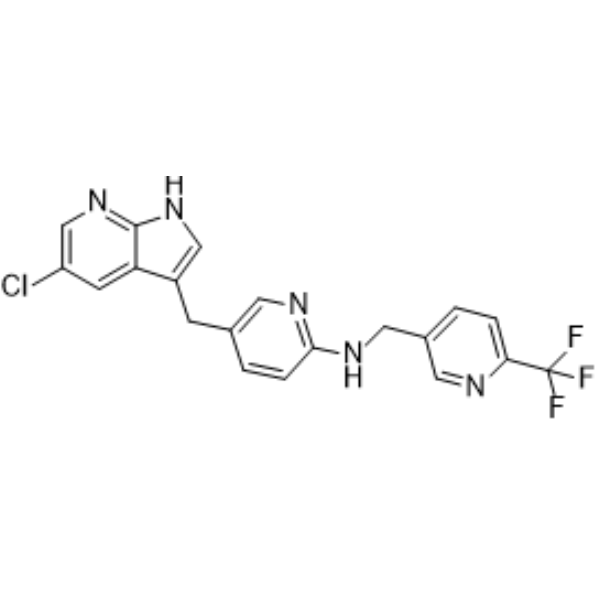
Pexidartinib
Maximum Cited Publications
144 Publications Verification
PLX-3397
|
c-Fms
c-Kit
Apoptosis
|
Cancer
|
|
Pexidartinib (PLX-3397) is a potent, orally active, selective, and ATP-competitive colony stimulating factor 1 receptor (CSF1R or M-CSFR) and c-Kit inhibitor, with IC50s of 20 and 10 nM, respectively. Pexidartinib (PLX-3397) exhibits 10- to 100-fold selectivity for c-Kit and CSF1R over other related kinases. Pexidartinib (PLX-3397) induces cell apoptosis and has anti-tumor activity. Pexidartinib has limited permeability to the blood-brain barrier, primarily through ABCB1 .
|
-
-
- HY-13016
-
|
XL184; BMS-907351
|
VEGFR
c-Met/HGFR
c-Kit
TAM Receptor
FLT3
Apoptosis
|
Cancer
|
|
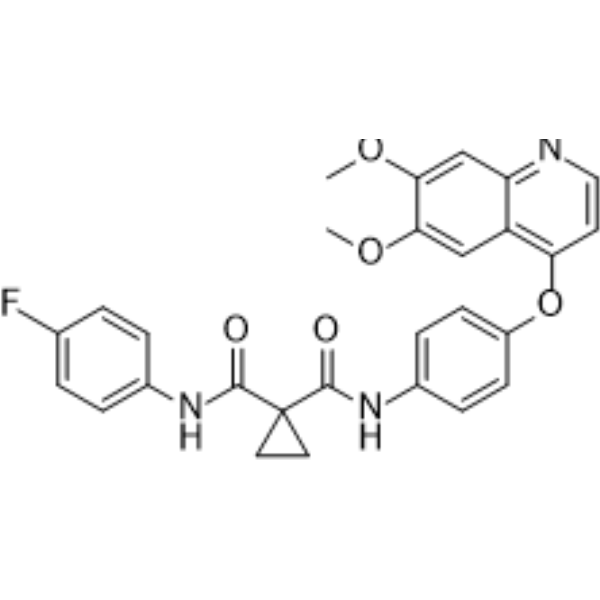
Cabozantinib is a potent and orally active inhibitor of VEGFR2 and MET, with IC50 values of 0.035, and 1.3 nM, respectively. Cabozantinib displays strong inhibition of KIT, RET, AXL, TIE2, and FLT3 (IC50=4.6, 5.2, 7, 14.3, and 11.3 nM, respectively). Cabozantinib shows antiangiogenic activity. Cabozantinib disrupts tumor vasculature and promotes tumor and endothelial cell apoptosis .
|
-
-
- HY-16749A
-
|
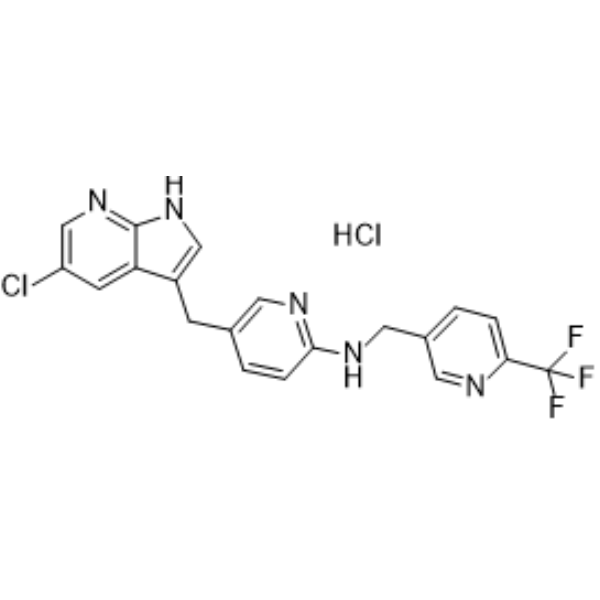
PLX-3397 hydrochloride
|
c-Fms
c-Kit
Apoptosis
|
Cancer
|
|
Pexidartinib hydrochloride (PLX-3397 hydrochloride) is a potent, orally active, selective, and ATP-competitive colony stimulating factor 1 receptor (CSF1R or M-CSFR) and c-Kit inhibitor, with IC50s of 20 and 10 nM, respectively. Pexidartinib hydrochloride exhibits 10- to 100-fold selectivity for c-Kit and CSF1R over other related kinases. Pexidartinib hydrochloride induces cell apoptosis and has anti-cancer activity .
|
-
-
- HY-13001
-
|
AC220
|
FLT3
Apoptosis
PDGFR
c-Kit
|
Cancer
|
|
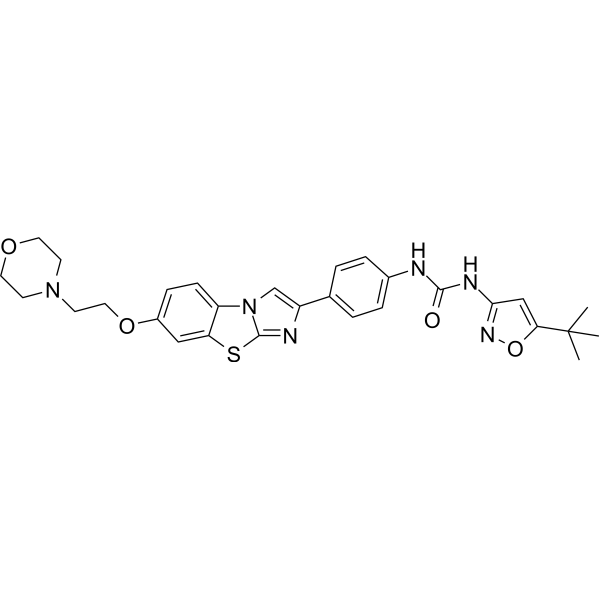
Quizartinib (AC220) is an orally active, potent and selective FLT3 inhibitor. Quizartinib inhibits kinase activity of mutant-FLT3, -PDGFRA and -KIT isoforms and inhibits autophosphorylation. Quizartinib inhibits cellular proliferation, induces apoptosis in cancer cells. Quizartinib can be used for the research of cancer .
|
-
-
- HY-112306
-
|
DCC-2618
|
c-Kit
PDGFR
FLT3
VEGFR
Apoptosis
|
Cancer
|
|
Ripretinib (DCC-2618) is an orally bioavailable, selective KIT and PDGFRA switch-control inhibitor. Ripretinib (DCC-2618) targets and binds to both wild-type and mutant forms of KIT and PDGFRA specifically at their switch pocket binding sites, thereby preventing the switch from inactive to active conformations of these kinases and inactivating their wild-type and mutant forms. Ripretinib (DCC-2618) also inhibits multiple other kinase targets, such as FLT3 and KDR (or VEGFR-2) . DCC-2618 exerts antineoplastic effect and induces apoptosis .
|
-
-
- HY-108713
-
|
SHR1020
|
VEGFR
PDGFR
Apoptosis
|
Cancer
|
|
Famitinib (SHR1020), an orally active multi-targeted kinase inhibitor, inhibits the activity of c-kit, VEGFR-2 and PDGFRβ with IC50 values of 2.3 nM, 4.7 nM and 6.6 nM, respectively . Famitinib exerts powerful antitumor activity in human gastric cancer cells and xenografts. Famitinib triggers apoptosis .
|
-
-
- HY-P99488
-
|
JSP-191; AMG-191
|
c-Kit
|
Inflammation/Immunology
Cancer
|
|
Briquilimab (JSP-191 or AMG-191) is a humanized IgG1 monoclonal antibody that binds human CD117 (c-Kit). Briquilimab blocks the interaction between CD117 receptor and stem cell factor on various CD117 expressing tissues. Briquilimab can lead to inhibition of SCF/c-Kit signaling and MC apoptosis. Briquilimab is a non-toxic approach to target and deplete HSC, enabling blood and immune reconstitution with minimal toxicity with the other agents being used for transient immune suppression to prevent immunologic rejection. Briquilimab can be used in various disease research such as severe combined immunodeficiency (SCID), myelodyplastic syndromes (MDS), acute myeloid leukemia (AML), chronic spontaneous urticarial (CSU), chronic inducible urticarial (CIndU) and asthema .
|
-
-
- HY-14217
-
|
AC220 dihydrochloride
|
FLT3
Apoptosis
PDGFR
c-Kit
|
Cancer
|
|
Quizartinib (AC220) dihydrochloride is an orally active, potent and selective FLT3 inhibitor. Quizartinib dihydrochloride inhibits kinase activity of mutant-FLT3, -PDGFRA and -KIT isoforms and inhibits autophosphorylation. Quizartinib dihydrochloride inhibits cellular proliferation, induces apoptosis in cancer cells. Quizartinib dihydrochloride can be used for the research of cancer .
|
-
-
- HY-103274
-
|
|
Bcr-Abl
Src
c-Kit
Apoptosis
|
Neurological Disease
Cancer
|
|
PD180970 is a highly potent and ATP-competitive p210 Bcr-Abl kinase inhibitor, with an IC50 of 5 nM for inhibiting the autophosphorylation of p210 Bcr-Abl. PD180970 also inhibits Src and KIT kinase with IC50s of 0.8 nM and 50 nM, respectively. PD180970 indcues apoptosis of K562 leukemic cells, and can be used for chronic myelogenous leukemia research .
|
-
-
- HY-177578
-
|
|
Antibody-Drug Conjugates (ADCs)
c-Kit
Apoptosis
Microtubule/Tubulin
ERK
Akt
Caspase
|
Cancer
|
|
NN3201 is a c-Kit-targeting antibody-drug conjugate (ADC) with high affinity (KD = 0.19 pM). NN3201 is composed of 4-(3-Tosyl-2-(tosylmethyl)propanoyl)benzoic acid-glu(PEG24-Me)-val-cit-NH-benzyloxyformic acid-MMAE (HY-178219) and an anti-c-Kit human monoclonal antibody NN2101 (HY-P991293). NN3201 rapidly internalizes and inhibits stem cell factor (SCF)-driven signaling, thereby delivering its payload to induce cell cycle arrest and apoptosis. NN3201 exhibits no Fc-mediated effector functions antibody-dependent cell-mediated cytotoxicity (ADCC)/complement-dependent cytotoxicity (CDC) due to reduced FcγR binding. NN3201 exhibits significant c-Kit-dependent anti-tumor efficacies in various tumor models. NN3201 can be used in small cell lung cancer (SCLC) and gastrointestinal stromal tumor (GIST) and acute myeloid leukemia (AML) research [1][2].
|
-
-
- HY-10201S2
-
|
Bay 43-9006-13C,d3
|
Raf
VEGFR
FLT3
Autophagy
Apoptosis
Ferroptosis
|
Cancer
|
|
Sorafenib- 13C,d3 is the 13C- and deuterium labeled Sorafenib. Sorafenib (Bay 43-9006) is a potent and orally active Raf inhibitor with IC50s of 6 nM and 20 nM for Raf-1 and B-Raf, respectively. Sorafenib is a multikinase inhibitor with IC50s of 90 nM, 15 nM, 20 nM, 57 nM and 58 nM for VEGFR2, VEGFR3, PDGFRβ, FLT3 and c-Kit, respectively. Sorafenib induces autophagy and apoptosis. Sorafenib has anti-tumor activity. Sorafenib is a ferroptosis activator .
|
-
-
- HY-10201R
-
|
Bay 43-9006 (Standard)
|
Reference Standards
Raf
VEGFR
FLT3
Autophagy
Apoptosis
Ferroptosis
|
Cancer
|
|
Sorafenib (Standard) is the analytical standard of Sorafenib. This product is intended for research and analytical applications. Sorafenib (Bay 43-9006) is a potent and orally active Raf inhibitor with IC50s of 6 nM and 20 nM for Raf-1 and B-Raf, respectively. Sorafenib is a multikinase inhibitor with IC50s of 90 nM, 15 nM, 20 nM, 57 nM and 58 nM for VEGFR2, VEGFR3, PDGFRβ, FLT3 and c-Kit, respectively. Sorafenib induces autophagy and apoptosis. Sorafenib has anti-tumor activity. Sorafenib is a ferroptosis activator .
|
-
-
- HY-15814
-
|
|
Bcr-Abl
PDGFR
c-Kit
Src
JAK
Apoptosis
|
Cancer
|
|
HG-7-85-01 is a type II ATP competitive inhibitor of wild-type and gatekeeper mutations forms of Bcr-Abl, PDGFRα, Kit, and Src kinases. HG-7-85-01 inhibits T315I mutant Bcr-Abl kinase, KDR and RET with IC50s of 3 nM, 20 nM and 30 nM, and is only weak or no inhibition of other kinases (IC50>2 μM). HG-7-85-01 inhibits the cell proliferation, which is mediated by the induction of apoptosis, and inhibition of cell-cycle progression .
|
-
-
- HY-123450
-
|
|
Bcr-Abl
Apoptosis
PDGFR
|
Cancer
|
|
S116836, a potent, orally active BCR-ABL tyrosine kinase inhibitor, blocks both wild-type as well as T315I Bcr-Abl. S116836 arrests the cells in the G0/G1 phase of cell cycle, induces apoptosis, increases ROS production, and decreases GSH production in BaF3/WT and BaF3/T315I cells. S116836 also inhibits SRC, LYN, HCK, LCK and BLK, and receptor tyrosine kinases such as FLT3, TIE2, KIT, PDGFR-β. Antitumor activies . S116836 is a click chemistry reagent, it contains an Alkyne group and can undergo copper-catalyzed azide-alkyne cycloaddition (CuAAc) with molecules containing Azide groups.
|
-
-
- HY-13016R
-
|
XL184 (Standard); BMS-907351 (Standard)
|
Reference Standards
VEGFR
c-Met/HGFR
c-Kit
TAM Receptor
FLT3
Apoptosis
|
Cancer
|
|
Cabozantinib (Standard) is the analytical standard of Cabozantinib. This product is intended for research and analytical applications. Cabozantinib is a potent and orally active inhibitor of VEGFR2 and MET, with IC50 values of 0.035, and 1.3 nM, respectively. Cabozantinib displays strong inhibition of KIT, RET, AXL, TIE2, and FLT3 (IC50=4.6, 5.2, 7, 14.3, and 11.3 nM, respectively). Cabozantinib shows antiangiogenic activity. Cabozantinib disrupts tumor vasculature and promotes tumor and endothelial cell apoptosis .
|
-
-
- HY-16749R
-
|
PLX-3397 (Standard)
|
c-Fms
c-Kit
Apoptosis
Reference Standards
|
Cancer
|
|
Pexidartinib (Standard) is the analytical standard of Pexidartinib. This product is intended for research and analytical applications. Pexidartinib (PLX-3397) is a potent, orally active, selective, and ATP-competitive colony stimulating factor 1 receptor (CSF1R or M-CSFR) and c-Kit inhibitor, with IC50s of 20 and 10 nM, respectively. Pexidartinib (PLX-3397) exhibits 10- to 100-fold selectivity for c-Kit and CSF1R over other related kinases. Pexidartinib (PLX-3397) induces cell apoptosis and has anti-tumor activity .
|
-
-
- HY-108713A
-
|
SHR1020 malate
|
VEGFR
PDGFR
Apoptosis
|
Cancer
|
|
Famitinib (SHR1020) malate, an orally active multi-targeted kinase inhibitor, inhibits the activity of c-kit, VEGFR-2 and PDGFRβ with IC50 values of 2.3 nM, 4.7 nM and 6.6 nM, respectively. Famitinib malate induces cell apoptosis. Famitinib malate exerts powerful antitumor activity in human gastric cancer cells and xenografts, it can be used for the research of cancer .
|
-
-
- HY-178219
-
|
|
Drug-Linker Conjugates for ADC
Microtubule/Tubulin
Apoptosis
|
Cancer
|
|
Bis-sulfone-(PEG24)-Glu-Val-Cit-PAB-MMAE is a drug-linker conjugate for ADC. Bis-sulfone-(PEG24)-Glu-Val-Cit-PAB-MMAE contains a linker and bioactive small molecule toxins MMAE (HY-15162). Bis-sulfone-(PEG24)-Glu-Val-Cit-PAB-MMAE can conjugate with NN2101 (HY-P991293) (anti c-Kit) for synthesizing NN3201. NN3201 rapidly internalizes and inhibits SCF-driven signaling, thereby delivering its payload to induce cell cycle arrest and apoptosis. NN3201 exhibits significant c-Kit-dependent anti-tumor efficacies in various tumor models, such as small cell lung cancer (SCLC) and gastrointestinal stromal tumor (GIST) .
|
-
-
- HY-101034
-
|
CHMFL-ABL-kit-155
|
Bcr-Abl
c-Kit
Apoptosis
PDGFR
Discoidin Domain Receptor
|
Cancer
|
|
CHMFL-ABL/KIT-155 (CHMFL-ABL-KIT-155; compound 34) is a highly potent and orally active type II ABL/c-KIT dual kinase inhibitor (IC50s of 46 nM and 75 nM, respectively), and it also presents significant inhibitory activities to BLK (IC50=81 nM), CSF1R (IC50=227 nM), DDR1 (IC50=116 nM), DDR2 (IC50=325 nM), LCK (IC50=12 nM) and PDGFRβ (IC50=80 nM) kinases. CHMFL-ABL/KIT-155 (CHMFL-ABL-KIT-155) arrests cell cycle progression and induces apoptosis .
|
-
-
- HY-13016A
-
|
XL184 hydrochloride; BMS-907351 hydrochloride
|
VEGFR
c-Met/HGFR
c-Kit
TAM Receptor
FLT3
Apoptosis
|
Cancer
|
|
Cabozantinib hydrochloride is a potent and orally active inhibitor of VEGFR2 and MET, with IC50 values of 0.035 and 1.3 nM, respectively. Cabozantinib hydrochloride displays strong inhibition of KIT, RET, AXL, TIE2, and FLT3 (IC50=4.6, 5.2, 7, 14.3, and 11.3 nM, respectively). Cabozantinib hydrochloride shows antiangiogenic activity. Cabozantinib hydrochloride disrupts tumor vasculature and promotes tumor and endothelial cell apoptosis .
|
-
-
- HY-175281
-
|
|
PROTACs
Src
Discoidin Domain Receptor
Bcr-Abl
Apoptosis
|
Cancer
|
|
SJ11646 is a Dasatinib (HY-10181)-based LCK PROTAC degrader with a DC50 of 0.00838 pM. SJ11646 has potent cytotoxicity against LCK-activated T-cell acute lymphoblastic leukemia (T-ALL) cells and primary leukemia samples with drastically prolonged suppression of LCK signaling, and induces T-ALL apoptosis. SJ11646 binds to 51 human kinases with a high affinity (particularly ABL1, KIT, and DDR1). SJ11646 has superior antileukemic efficacy in T-ALL mice model. . Pink: LCK ligand (HY-107447); Blue: CRBN ligase ligand (HY-163169); Black: linker (HY-76667)
|
-
-
- HY-10638
-
|
|
c-Kit
Apoptosis
|
Cancer
|
|
AP23464 is an ATP-based inhibitor for Kit, that inhibits the phosphorylation of Kit wildtype and mutants, with IC50 of 5-85 nM. AP23464 inhibits the proliferation of Kit mutated cells (IC50 is 3-20 nM), arrests the cell cycle at G0/G1 phase, and induces apoptosis in Kit mutated cells .
|
-
-
- HY-16749AR
-
|
PLX-3397 hydrochloride (Standard)
|
c-Fms
c-Kit
Apoptosis
Reference Standards
|
Cancer
|
|
Pexidartinib (hydrochloride) (Standard) is the analytical standard of Pexidartinib (hydrochloride). This product is intended for research and analytical applications. Pexidartinib hydrochloride (PLX-3397 hydrochloride) is a potent, orally active, selective, and ATP-competitive colony stimulating factor 1 receptor (CSF1R or M-CSFR) and c-Kit inhibitor, with IC50s of 20 and 10 nM, respectively. Pexidartinib hydrochloride exhibits 10- to 100-fold selectivity for c-Kit and CSF1R over other related kinases. Pexidartinib hydrochloride induces cell apoptosis and has anti-cancer activity .
|
-
-
- HY-112306R
-
|
DCC-2618 (Standard)
|
c-Kit
PDGFR
FLT3
VEGFR
Apoptosis
Reference Standards
|
Cancer
|
|
Ripretinib (Standard) is the analytical standard of Ripretinib. This product is intended for research and analytical applications. Ripretinib (DCC-2618) is an orally bioavailable, selective KIT and PDGFRA switch-control inhibitor. Ripretinib (DCC-2618) targets and binds to both wild-type and mutant forms of KIT and PDGFRA specifically at their switch pocket binding sites, thereby preventing the switch from inactive to active conformations of these kinases and inactivating their wild-type and mutant forms. Ripretinib (DCC-2618) also inhibits multiple other kinase targets, such as FLT3 and KDR (or VEGFR-2) . DCC-2618 exerts antineoplastic effect and induces apoptosis .
|
-
-
- HY-13001R
-
|
AC220 (Standard)
|
Reference Standards
FLT3
Apoptosis
PDGFR
c-Kit
|
Cancer
|
|
Quizartinib (AC220) (Standard) is the analytical standard of Quizartinib (HY-13001). This product is intended for research and analytical applications. Quizartinib is an orally active, potent and selective FLT3 inhibitor. Quizartinib inhibits kinase activity of mutant-FLT3, -PDGFRA and -KIT isoforms and inhibits autophosphorylation. Quizartinib inhibits cellular proliferation, induces apoptosis in cancer cells. Quizartinib can be used for the research of cancer .
|
-
-
- HY-108713R
-
|
SHR1020 (Standard)
|
Reference Standards
VEGFR
PDGFR
Apoptosis
|
Cancer
|
|
Famitinib (Standard) is the analytical standard of Famitinib. This product is intended for research and analytical applications. Famitinib (SHR1020), an orally active multi-targeted kinase inhibitor, inhibits the activity of c-kit, VEGFR-2 and PDGFRβ with IC50 values of 2.3 nM, 4.7 nM and 6.6 nM, respectively . Famitinib exerts powerful antitumor activity in human gastric cancer cells and xenografts. Famitinib triggers apoptosis .
|
-
-
- HY-150026
-
|
|
VEGFR
PDGFR
FGFR
c-Kit
Akt
Src
Apoptosis
|
Cancer
|
|
Multi-kinase-IN-2 (compound 7h) is an orally active and potent angiokinase inhibitor. Multi-kinase-IN-2 exhibits excellent inhibitory activity against angiokinases including VEGFR-1/2/3, PDGFRα/β, and FGFR-1, as well as LYN and c-KIT kinases. Multi-kinase-IN-2 significantly attenuates phosphorylation of AKT and ERK proteins. Multi-kinase-IN-2 induces cell apoptosis. Multi-kinase-IN-2 shows anticancer activity .
|
-
-
- HY-179382
-
|
|
FLT3
Apoptosis
|
Cancer
|
|
HSB401 is an orally active FLT3 inhibitor (IC50: 28, 5, 72, 51 nM for FLT3-WT, FLT3-D835Y, FLT3-ITD-F691L, FLT3-ITD, respectively). HSB401 downregulates FLT3 signaling and induces cell cycle arrest and apoptosis. HSB401 spares c-KIT inhibition, thereby reducing the risk of myelosuppression. HSB401 significantly suppresses tumor growth in the MV4-11 xenograft mouse model. HSB401 can be used for the research of acute myeloid leukemia .
|
-
-
- HY-110071
-
|
|
c-Kit
|
Cancer
|
|
APcK110 is a potent Kit inhibitor that can be used for the research of acute myeloid leukemia (AML). APcK110 induces AML cell apoptosis .
|
-
-
- HY-149019
-
|
|
c-Kit
Apoptosis
|
Cancer
|
|
Antitumor agent-70 (compound 8b) has anti-tumor activity and can induce cell apoptosis. Antitumor agent-70 inhibits multiple myeloma with an IC50 value of 0.12 μM. Antitumor agent-70 is a potential multi-targeted kinase inhibitor especially for c-Kit .
|
-
-
- HY-147864
-
|
|
c-Fms
c-Kit
Apoptosis
|
Cancer
|
|
c-Fms-IN-12 (Compound 4g) is an FMS kinase inhibitor. c-Fms-IN-12 can also inhibits c-KIT. c-Fms-IN-12 is a potential broad-spectrum anticancer agent against multiple cancer types. c-Fms-IN-12 induces A549 cell apoptosis .
|
-
-
- HY-110293
-
|
|
FLT3
Apoptosis
|
Cancer
|
|
CHMFL-FLT3-122 is a potent, selective and orally active FLT3 kinase with an IC50 of 40 nM. CHMFL-FLT3-122 shows selectivity for FLT3 over BTK (IC50 of 421 nM) and c-KIT (IC50 of 559 nM) kinases. CHMFL-FLT3-122 induces apoptosis by arresting the cell cycle into the G0/G1 phase .
|
-
-
- HY-13001S
-
|
AC220-d8
|
Isotope-Labeled Compounds
Apoptosis
FLT3
PDGFR
c-Kit
|
Cancer
|
|
Quizartinib (AC220)-d8 is deuterium labeled Quizartinib (HY-13001). Quizartinib is an orally active, potent and selective FLT3 inhibitor. Quizartinib inhibits kinase activity of mutant-FLT3, -PDGFRA and -KIT isoforms and inhibits autophosphorylation. Quizartinib inhibits cellular proliferation, induces apoptosis in cancer cells. Quizartinib can be used for the research of cancer .
|
-
-
- HY-18187
-
|
|
Apoptosis
|
Cancer
|
|
Ki 23057 is a competitive, orally active inhibitor for tyrosine kinase, which inhibits the phosphorylation of K-samII/FGF-R2, VEGF-R1, VEGF-R2, PDGF-Rβ and c-Kit, with IC50s of 88, 69, 83, 100 and 480 nM. Ki 23057 inhibits the proliferation of sclerogastric cancer cells OCUM-2MD3 and OCUM-8, and induces apoptosis. Ki 23057 exhibits antitumor efficacy in mouse models .
|
-
-
- HY-10201AR
-
|
Bay 43-9006 tosylate (Standard)
|
Reference Standards
Raf
VEGFR
FLT3
Autophagy
Ferroptosis
Apoptosis
|
Cancer
|
|
Sorafenib tosylate (Standard) is the analytical standard of Sorafenib tosylate. This product is intended for research and analytical applications. Sorafenib tosylate (Bay 43-9006 tosylate) is a potent and orally active Raf inhibitor with IC50s of 6 nM and 20 nM for Raf-1 and B-Raf, respectively. Sorafenib tosylate is a multikinase inhibitor with IC50s of 90 nM, 15 nM, 20 nM, 57 nM and 58 nM for VEGFR2, VEGFR3, PDGFRβ, FLT3 and c-Kit, respectively. Sorafenib tosylate induces autophagy and apoptosis. Sorafenib Tosylate has anti-tumor activity. Sorafenib tosylate is a ferroptosis activator .
|
-
-
- HY-10201S4
-
|
Donafenib tosylate; Bay 43-9006-d3 tosylate
|
Isotope-Labeled Compounds
Raf
VEGFR
FLT3
Autophagy
Apoptosis
Ferroptosis
|
Cancer
|
|
Sorafenib-d3 (Donafenib-d3) tosylate is the deuterium labeled Sorafenib (HY-10201). Sorafenib is a potent and orally active Raf inhibitor with IC50s of 6 nM and 20 nM for Raf-1 and B-Raf, respectively. Sorafenib-d3tosylate is a multikinase inhibitor with IC50s of 90 nM, 15 nM, 20 nM, 57 nM and 58 nM for VEGFR2, VEGFR3, PDGFRβ, FLT3 and c-Kit, respectively. Sorafenib-d3tosylate induces autophagy and apoptosis. Sorafenib-d3tosylate has anti-tumor activity. Sorafenib is a ferroptosis activator .
|
-
-
- HY-179497
-
|
|
FLT3
VEGFR
Akt
STAT
ERK
Apoptosis
|
Cancer
|
FLT3-IN-37 (Compound 6z) is a potent inhibitor of FLT3-ITD, with IC50 values of 1.5 and 3.4 nM for FLT3-ITD and TEL-VEGFR2, respectively. FLT3-IN-37 exhibits high selectivity for wild-type FLT3 (WT) and c-Kit. FLT3-IN-37 inhibits FLT3 phosphorylation and downregulates the expression of p-Akt, p-STAT5, and p-ERK. FLT3-IN-37 exerts anti-leukemia effects by blocking the cell cycle and inducing apoptosis (apoptosis). FLT3-IN-37 can be used for research on acute myeloid leukemia (AML) .
|
-
-
- HY-K1073
-
Maximum Cited Publications
66 Publications Verification
|
|
MCE Annexin V-FITC/PI Apoptosis Detection Kit provides a rapid and convenient method to detect cell apoptosis and necrosis. After staining, live cells show little or no fluorescence (Annexin V-/PI-), early apoptosis cells show green fluorescence(Annexin V+/PI-), late apoptosis cells and necrosis cells show red and green fluorescence (Annexin V+/PI+).
|
-
- HY-K1078
-
|
|
|
MCE One Step TUNEL Apoptosis Detection Kit (FITC) provides a rapid and convenient method to detect cell apoptosis. After staining cells with this kit, live cells have no fluorescence, apoptosis cells show green fluorescence.
|
-
- HY-K1079
-
|
|
|
MCE One Step TUNEL Apoptosis Detection Kit (Cyanine 3) provides a rapid and convenient method to detect cell apoptosis. After staining cells with this kit, live cells have no fluorescence, apoptosis cells show red fluorescence.
|
-
- HY-K1070
-
4 Publications Verification
|
|
MCE Apoptosis and Necrosis Assay Kit provides a rapid and convenient method to detect cell apoptosis and necrosis.
|
-
- HY-K1072
-
2 Publications Verification
|
|
MCE Cell Apoptosis Analysis Kit (Hoechst staining) provides a rapid and convenient method to detect cell apoptosis.
|
-
- HY-K1071
-
|
|
|
MCE Cell Cycle and Apoptosis Analysis Kit (PI staining) provides a convenient method to detect cell cycle and cell apoptosis.
|
-
- HY-K1093
-
1 Publications Verification
|
|
MCE VF 647A-Annexin V/PI Apoptosis Detection Kit can be utilized to detect the level of cell apoptosis.
|
-
- HY-K1091A
-
|
|
|
MCE Biotin Apoptosis Detection Kit (TUNEL) can be used to detect apoptosis in cultured cells, as well as in frozen or paraffin sections.
|
-
- HY-K1096
-
|
|
|
MCE Annexin V-FITC/7-AAD Apoptosis Detection Kit can be utilized to detect the occurrence of early apoptosis.
|
-
- HY-K1076
-
|
|
|
Annexin V-mCherry Apoptosis Detection Kit provides a rapid and convenient method to detect cell apoptosis and necrosis. After staining, live cells show little or no fluorescence, apoptosis cells and necrosis cells show red fluorescence.
|
-
- HY-K1075
-
1 Publications Verification
|
|
MCE Annexin V-PE Apoptosis Detection Kit provides a rapid and convenient method to detect cell apoptosis and necrosis. After staining, live cells show little or no fluorescence, apoptosis cells and necrosis cells show red fluorescence.
|
-
- HY-K1077
-
2 Publications Verification
|
|
Annexin V-mCherry/SYTOX Green Apoptosis Detection Kit provides a rapid and convenient method to detect cell apoptosis and necrosis. After staining, live cells show little or no fluorescence, apoptosis cells show red fluorescence, necrosis cells show red and green fluorescence.
|
-
- HY-K1092
-
|
|
|
MCE YO-PRO-1/PI Apoptosis and Necrosis Detection Kit is a dual-fluorescence method based on the green fluorescent dye YO-PRO-1 (YP1) and the red fluorescent dye Propidium Iodide (PI) for detecting cell apoptosis and necrosis.
|
-
- HY-K1080
-
1 Publications Verification
|
|
MCE Annexin V-iFluor 488/PI Apoptosis Detection Kit provides a rapid and convenient method to detect cell apoptosis and necrosis. After staining, live cells show little or no fluorescence (Annexin V-/PI-),, early apoptosis cells show green fluorescence (Annexin V+/PI-), late apoptosis cells and necrosis cells show red and green fluorescence (Annexin V+/PI+).
|
| Cat. No. |
Product Name |
Target |
Research Area |
Image |
-
- HY-P99488
-
|
JSP-191; AMG-191
|
c-Kit
|
Inflammation/Immunology
Cancer
|
|
Briquilimab (JSP-191 or AMG-191) is a humanized IgG1 monoclonal antibody that binds human CD117 (c-Kit). Briquilimab blocks the interaction between CD117 receptor and stem cell factor on various CD117 expressing tissues. Briquilimab can lead to inhibition of SCF/c-Kit signaling and MC apoptosis. Briquilimab is a non-toxic approach to target and deplete HSC, enabling blood and immune reconstitution with minimal toxicity with the other agents being used for transient immune suppression to prevent immunologic rejection. Briquilimab can be used in various disease research such as severe combined immunodeficiency (SCID), myelodyplastic syndromes (MDS), acute myeloid leukemia (AML), chronic spontaneous urticarial (CSU), chronic inducible urticarial (CIndU) and asthema .
|
-
(5)
| Cat. No. |
Product Name |
Chemical Structure |
-
- HY-10201S2
-
1 Publications Verification
|
|
Sorafenib- 13C,d3 is the 13C- and deuterium labeled Sorafenib. Sorafenib (Bay 43-9006) is a potent and orally active Raf inhibitor with IC50s of 6 nM and 20 nM for Raf-1 and B-Raf, respectively. Sorafenib is a multikinase inhibitor with IC50s of 90 nM, 15 nM, 20 nM, 57 nM and 58 nM for VEGFR2, VEGFR3, PDGFRβ, FLT3 and c-Kit, respectively. Sorafenib induces autophagy and apoptosis. Sorafenib has anti-tumor activity. Sorafenib is a ferroptosis activator .
|
-
-
- HY-13001S
-
|
|
|
Quizartinib (AC220)-d8 is deuterium labeled Quizartinib (HY-13001). Quizartinib is an orally active, potent and selective FLT3 inhibitor. Quizartinib inhibits kinase activity of mutant-FLT3, -PDGFRA and -KIT isoforms and inhibits autophosphorylation. Quizartinib inhibits cellular proliferation, induces apoptosis in cancer cells. Quizartinib can be used for the research of cancer .
|
-
-
- HY-10201S4
-
|
|
|
Sorafenib-d3 (Donafenib-d3) tosylate is the deuterium labeled Sorafenib (HY-10201). Sorafenib is a potent and orally active Raf inhibitor with IC50s of 6 nM and 20 nM for Raf-1 and B-Raf, respectively. Sorafenib-d3tosylate is a multikinase inhibitor with IC50s of 90 nM, 15 nM, 20 nM, 57 nM and 58 nM for VEGFR2, VEGFR3, PDGFRβ, FLT3 and c-Kit, respectively. Sorafenib-d3tosylate induces autophagy and apoptosis. Sorafenib-d3tosylate has anti-tumor activity. Sorafenib is a ferroptosis activator .
|
-
Your information is safe with us. * Required Fields.
Inquiry Information
- Product Name:
- Cat. No.:
- Quantity:
- MCE Japan Authorized Agent:

