
53 Results for "

B-cell leukemia/lymphoma cells

" in MedChemExpress (MCE) Product Catalog:
Products (53)

53 Results for "B-cell leukemia/lymphoma cells" in MCE Product Catalog:

52
52 Publications Verification
Cat. No.: HY-15676
CAS No.: 1229705-06-9
Purity:  99.93%
Synonyms: RG7388
Idasanutlin (RG7388) is an orally bioavailable MDM2 inhibitor with an IC50 of 6 nM. Idasanutlin disrupts MDM2-p53 binding, stabilizes and activates p53, triggering cell cycle arrest, apoptosis, and reduced cancer cell viability. Idasanutlin reduces EGFR protein expression and phosphorylation, suppresses downstream SHP2, MEK1/2, ERK1/2, AKT, mTOR, p70(S6K1), and S6 signaling. Idasanutlin induces mitochondrial ROS production, drives p38 MAPK phosphorylation, upregulates NOXA, and mediates caspase-3-dependent apoptosis and gasdermin E-mediated pyroptosis. Idasanutlin can be used for the research of TP53-mutant non-small cell lung cancer, T-cell acute lymphoblastic leukemia, colorectal carcinoma, melanoma, diffuse large B-cell lymphoma, mantle cell lymphoma, non-Hodgkin lymphoma, severe fever with thrombocytopenia syndrome, neuroblastoma, acute lymphoblastic leukemia, relapsed or refractory acute myeloid leukemia, osteosarcoma, solid tumors, and hematological tumors .
loading...
    loading...
7
7 Cited Publications
Cat. No.: HY-12649
CAS No.: 429653-73-6
Purity:  98.10%
Target:  

Ras

Research Areas:  

Cancer

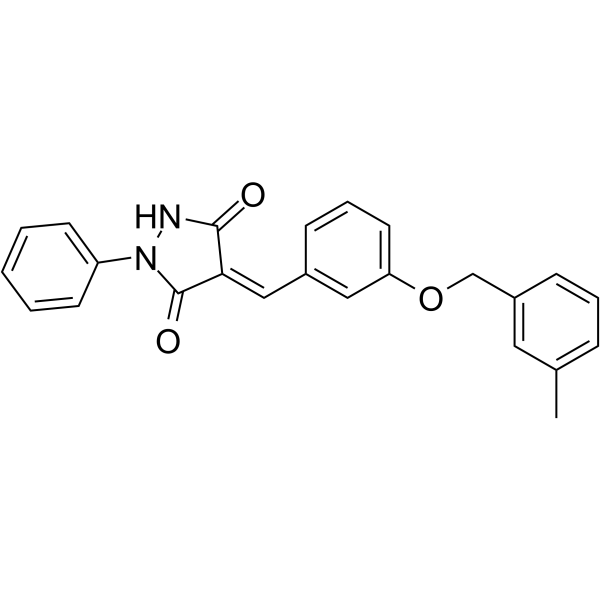
Y16 is a specific inhibitor of Leukemia-associated Rho guanine nucleotide exchange factor (LARG) with a Kd value of 76 nM. Y16 is active in blocking the interaction of LARG and related G-protein-coupled Rho GEFs with RhoA. Y16 shows no detectable effect on other diffuse B-cell lymphoma (Dbl) family Rho GEFs, Rho effectors, or a RhoGAP .
loading...
    loading...
6
6 Cited Publications
Cat. No.: HY-100653
CAS No.: 1869912-39-9
Purity:  99.20%
Research Areas:  

Cancer

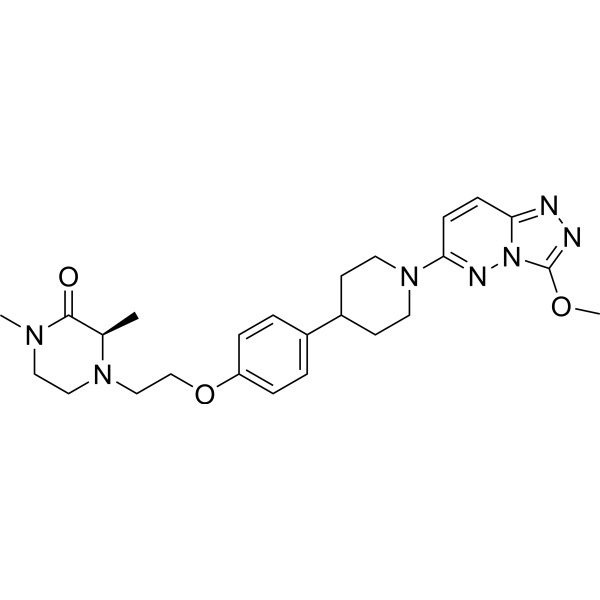
AZD5153 is a bivalent, selective, and orally active BET/BRD4 bromodomain inhibitor with an IC50 of value of 5 nM for full-length BRD4 (FL-BRD4). AZD5153 ligates two bromodomains in BRD4 simultaneously. AZD5153 can be used for the study of cancer, such as acute myeloid leukemia, multiple myeloma, and diffuse large B-cell lymphoma .
loading...
    loading...
5
5 Cited Publications
Cat. No.: HY-15322
CAS No.: 1370261-96-3
Purity:  99.38%
Synonyms: P505-15; PRT-2607; BIIB-057
Target:  

Syk Apoptosis Caspase

Research Areas:  

Inflammation/Immunology Cancer

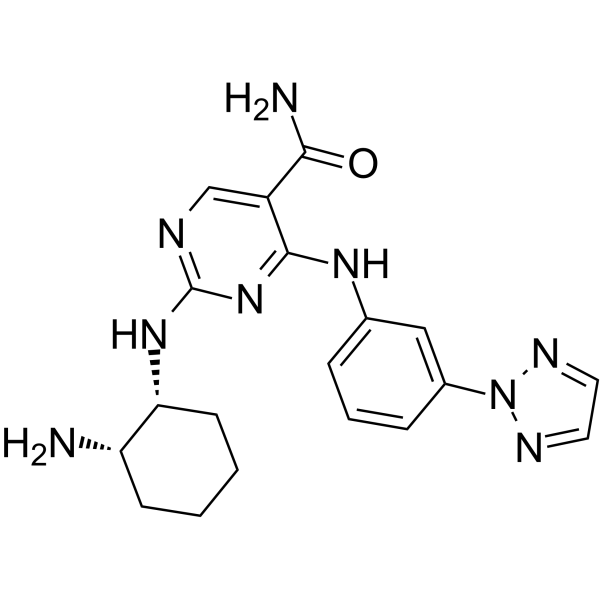
PRT062607 (P505-15; PRT-2607) is an orally active ATP-competitive Syk inhibitor with an IC50 value of 1 nM, and exhibits at least 80-fold selectivity over other kinases. PRT062607 blocks B cell antigen receptor-mediated activation, Fcε receptor 1-mediated basophil degranulation and microglial phagocytosis, and induces caspase-dependent apoptosis and microglial death. PRT062607 inhibits tumor growth and peripheral nerve injury-induced mechanical allodynia, and prevents neuronal loss. PRT062607 can be used in research related to rheumatoid arthritis, chronic lymphocytic leukemia, non-Hodgkin's lymphoma, neurodegenerative diseases and neuropathic pain .
loading...
    loading...
3
3 Cited Publications
Cat. No.: HY-15163
CAS No.: 1204918-72-8
Synonyms: TG02; SB1317
Target:  

JAK CDK FLT3

Research Areas:  

Cancer

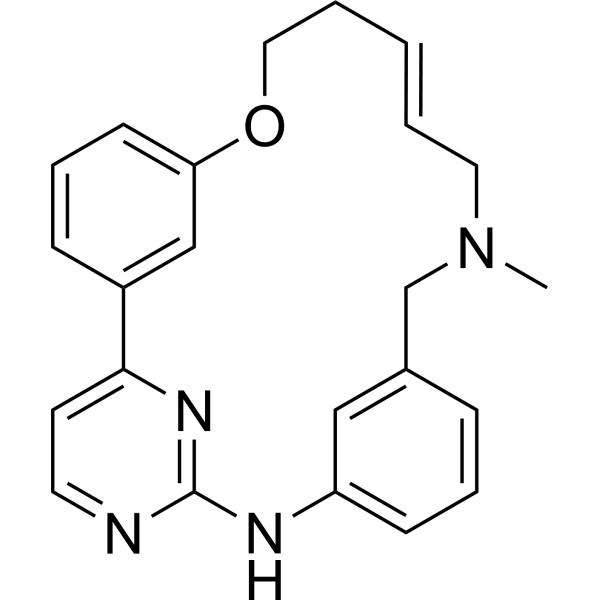
Zotiraciclib (TG02; SB1317) is an orally active JAK2/FLT3/CDK2 inhibitor with IC50 values of 13 nM, 73 nM and 56 nM , respectively. Zotiraciclib inhibits cancer cell proliferation, tumor growth and the activity of CYP2D6. Zotiraciclib exhibits high plasma protein binding rate, Caco-2 permeability and tissue distribution capacity, as well as metabolic stability in human and canine liver microsomes. Zotiraciclib achieves tumor growth inhibition in nude mouse models of colon cancer and lymphoma xenografts. Zotiraciclib can be used for research related to colon cancer, B-cell lymphoma, advanced leukemia, acute leukemia and multiple myeloma .
loading...
    loading...
1
1 Cited Publications
Cat. No.: HY-170451
CAS No.: 2713618-08-5
Synonyms: KT-253
Research Areas:  

Cancer

Seldegamadlin (KT-253) is a cereblon-recruiting PROTAC degrader of MDM2, with a DC50 of 0.4 nM. Seldegamadlin catalyzes the ubiquitination and proteasomal degradation of MDM2, disrupts the MDM2/p53 autoregulatory feedback loop, induces apoptosis, caspase activation and p53 target gene expression, and inhibits the growth of wild-type p53 hematologic tumor cells and solid tumor cells. Seldegamadlin is applicable for the research of acute myeloid leukemia, acute lymphoblastic leukemia, diffuse large B-cell lymphoma and wild-type p53 solid tumors .
loading...
    loading...
1
1 Cited Publications
Cat. No.: HY-129179
CAS No.: 2180923-05-9
Purity:  99.28%
Synonyms: APG-2575; Bcl-2/Bcl-xl inhibitor 1
Target:  

Bcl-2 Family Apoptosis

Research Areas:  

Cancer

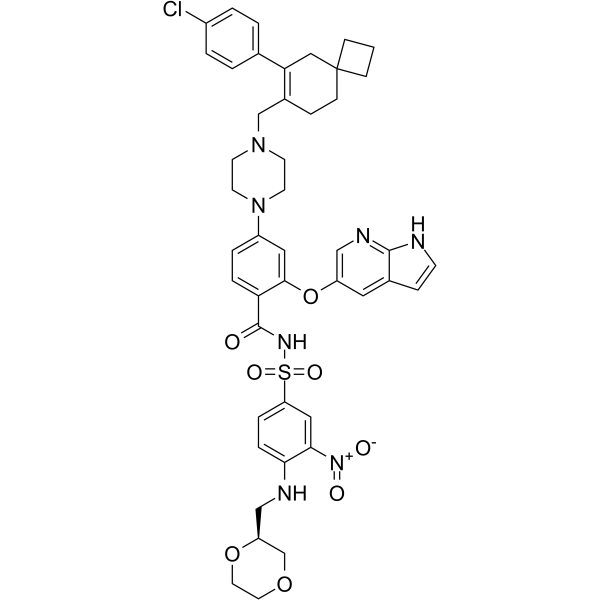
Lisaftoclax is an orally active, selective BCL-2 inhibitor with a Ki of < 0.1 nM against human BCL-2. Lisaftoclax selectively binds to BCL-2, disrupts the BCL-2:BIM complex, and antagonizes the antiapoptotic function of BCL-2. Lisaftoclax induces BAX/BAK-dependent, caspase-mediated apoptosis, upregulates the pro-death proteins BIM and Noxa, and downregulates mitochondrial respiratory function and ATP production. Lisaftoclax can be used in the research of hematological malignancies including chronic lymphocytic leukemia, multiple myeloma, and diffuse large B-cell lymphoma .
loading...
    loading...
1
1 Cited Publications
Cat. No.: HY-153084A
Target:  

mRNA CD19

Research Areas:  

Cancer

CD19 CAR mRNA (Human) expresses CAR protein that specifically targets human CD19. CD19 CAR mRNA can trigger transitory expression of CAR, allowing T cells to be targeted without permanent genetic modification. CD19 CAR mRNA targets CD19 which is a transmembrane glycoprotein primarily expressed on B lymphocytes and is important in B cell activation. CD19 CAR mRNA can be studied in cancer research such as lymphoma and leukemia .
loading...
    loading...
1
1 Cited Publications
Cat. No.: HY-157334
CAS No.: 3032265-06-5
Purity:  99.03%
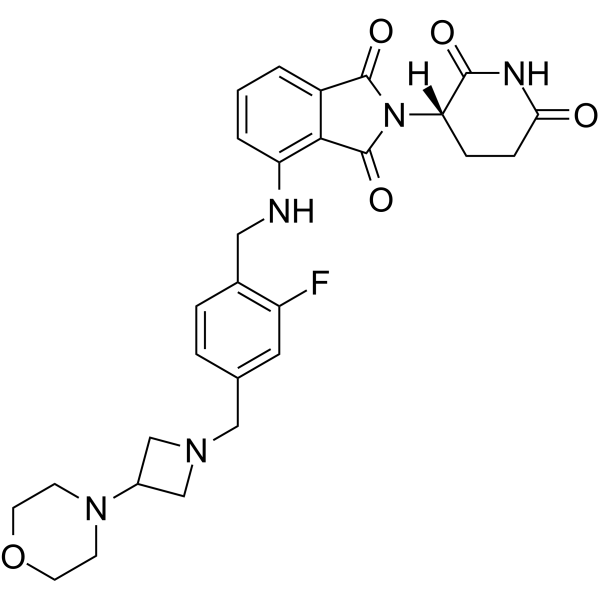
DEG-77 is a molecular glue targeting IKZF2 and CK1α, with DC50 values of 15.3 nM and 10 nM, respectively. DEG-77 exhibits significant anti-tumor activity, inducing increased transcriptional levels of the pro-apoptotic protein Bax and the cell cycle arrest protein p21. DEG-77 is applicable to the research of acute myeloid leukemia (AmL), diffuse large B-cell lymphoma and ovarian cancer.
loading...
    loading...
1
1 Cited Publications
Cat. No.: HY-13747
CAS No.: 13909-09-6
Purity:  ≥98.0%
Research Areas:  

Cancer

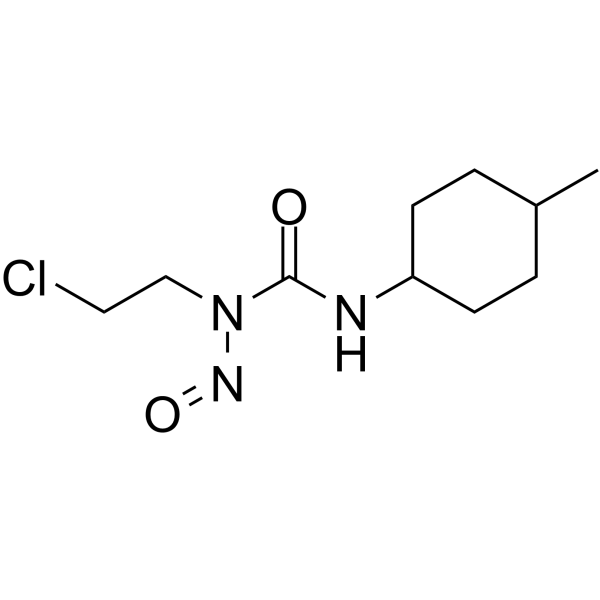
Semustine is an orally active, blood-brain barrier permeable antitumor alkylating agent with a binding affinity of 1.53 × 10 3 M -1 for guanine and thymine residues in bovine DNA. Semustine undergoes major groove-directed alkylation at guanine residues to form O6-chloroethylguanine and N1-O6-ethanoguanine adducts, and generates dG-dC interstrand crosslinks. Semustine induces partial B- to C-type transition of DNA, base stacking and helical structure distortion, mild dehydration, as well as partial DNA double-strand unwinding. Semustine can be used in research related to Lewis lung cancer, leukemia, Hodgkin's lymphoma, malignant melanoma, glioma, and diffuse large B-cell lymphoma .
loading...
    loading...
Cat. No.: HY-146237
CAS No.: 2379572-34-4
Purity:  98.04%
Synonyms: CC-99282
Research Areas:  

Cancer

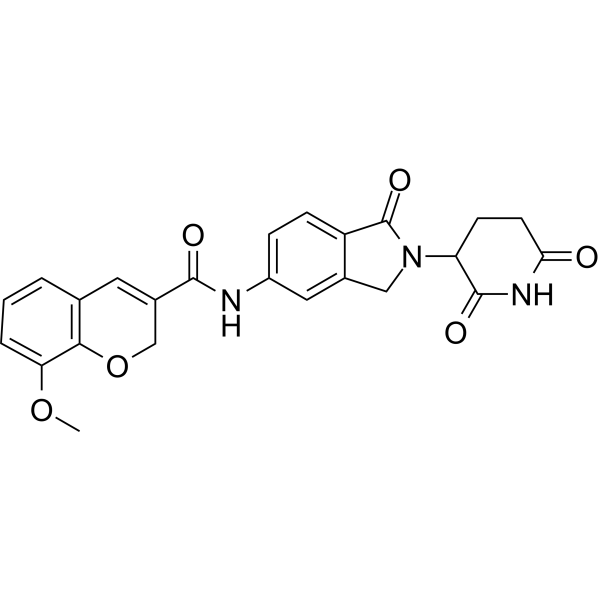
Golcadomide (CC-99282) is a blood-brain barrier-permeable, orally active Cereblon (CRBN) E3 ligase modulator. Golcadomide induces Cereblon to form a closed active conformation, thereby recruiting and triggering the ubiquitin-mediated proteasomal degradation of transcription factors IKZF1, IKZF3, Ikaros and Aiolos. Golcadomide is applicable to research related to relapsed or refractory non-Hodgkin lymphoma, chronic lymphocytic leukemia/small lymphocytic lymphoma, and diffuse large B-cell lymphoma .
loading...
    loading...
Cat. No.: HY-160141
CAS No.: 2736508-60-2
Synonyms: BGB-16673; BTK-IN-29
Target:  

PROTACs Btk NF-κB

Research Areas:  

Inflammation/Immunology Cancer

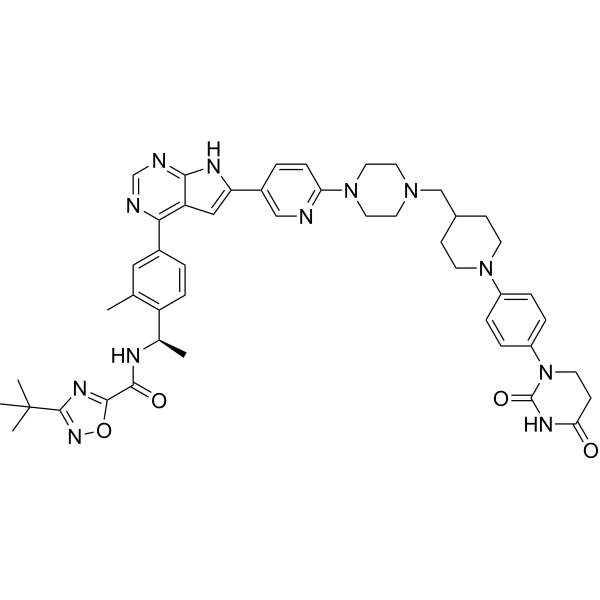
BGB-16673 (BGB-16673) is an orally active, selective BTK PROTAC degrader (IC50=0.69 nM). BGB-16673 ligates BTK to E3 ubiquitin ligase, causing BTK to undergo polyubiquitination, which is then recognized and degraded by the proteasome, thereby exerting efficient BTK degradation activity. BGB-16673 can be used in the research of B-cell malignancies such as chronic lymphocytic leukemia, small lymphocytic lymphoma, and mantle cell lymphoma .
loading...
    loading...
Cat. No.: HY-150105
CAS No.: 2448172-22-1
Purity:  98.72%
Synonyms: BMF-219; Menin-MLL inhibitor 21
Icovamenib (BMF-219) is a selective, orally active, irreversible Menin inhibitor. Icovamenib forms a stable and irreversible covalent bond with Menin. Icovamenib promotes selective and controlled proliferation of beta cells and improvement of beta cell function in ex vivo human islet cultures. Icovamenib enhances glycemic control in animal diabetic models. Icovamenib induces a dose-dependent enhancement in insulin secretion potentiated by the GLP-1 RA. Icovamenib can be used for the study of multiple hematologic malignancies, solid tumors, and diabetes mellitus, such as diffuse large B-cell lymphoma (DLBCL), multiple myeloma (MM) and chronic lymphocytic leukemia and type 2 diabetes .
loading...
    loading...
Cat. No.: HY-153357
CAS No.: 2416130-57-7
Purity:  98.16%
Target:  

PROTACs Btk c-Myc NF-κB

Research Areas:  

Inflammation/Immunology Cancer

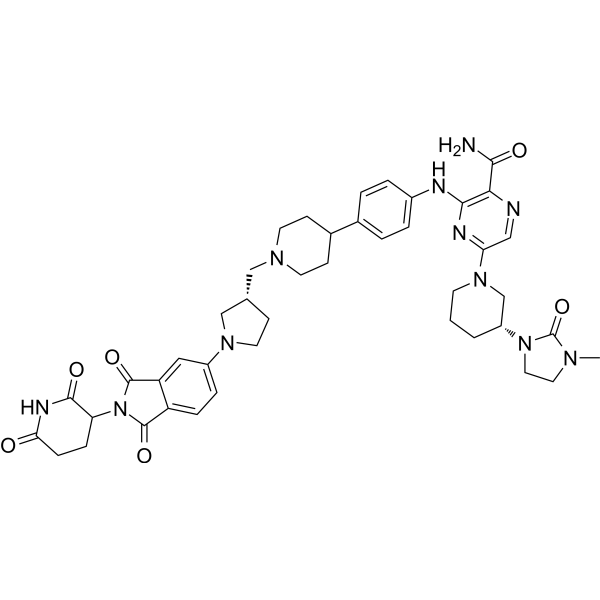
NRX-0492 is an orally active BTK PROTAC degrader, with a binding IC50 of 1.2 nM for both wild-type BTK and BTK T474I, and 2.7 nM for BTK C481S, and exhibits cellular DC50 values of 0.1 nM and 0.2 nM against wild-type BTK and BTK C481S, respectively. NRX-0492 catalyzes the ubiquitination and proteasomal degradation of wild-type and drug-resistant mutant BTK by recruiting the CRBN E3 ubiquitin ligase complex. NRX-0492 inhibits the BCR signaling pathway and its downstream NF-κB/MYC transcriptional program, achieves rapid and sustained degradation in primary CLL cells, and exhibits extremely low cytotoxicity. NRX-0492 degrades BTK, inhibits tumor cell proliferation and activation, and significantly suppresses tumor growth in xenograft models. NRX-0492 can be used in research related to chronic lymphocytic leukemia and diffuse large B-cell lymphoma .
loading...
    loading...
Cat. No.: HY-137438
CAS No.: 1858206-58-2
Purity:  99.75%
Synonyms: TG-1701
Target:  

Btk

Research Areas:  

Cancer

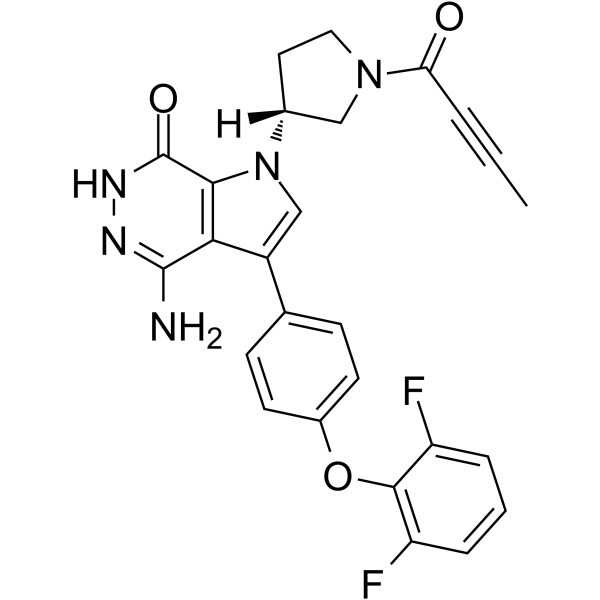
Edralbrutinib (TG-1701) is a highly selective, orally available irreversible BTK inhibitor, with an EC50 of 6.70 nM and a Kd of 3 nM against human BTK. Edralbrutinib inhibits downstream signaling of the B cell receptor, induces dephosphorylation of Ikaros Ser442/445, promotes nuclear exclusion of Ikaros, attenuates Ikaros gene signatures, and exerts anti-tumor activity. Edralbrutinib can be used in research related to B-cell non-Hodgkin lymphoma, chronic lymphocytic leukemia, mantle cell lymphoma, follicular lymphoma, and diffuse large B-cell lymphoma .
loading...
    loading...
Cat. No.: HY-P9959
CAS No.: 635715-01-4
Synonyms: CMC-544; PF-5208773; WAY-207294
Research Areas:  

Cancer

Inotuzumab ozogamicin (CMC-544) is an antibody-targeted chemotherapy agent composed of a humanized anti-CD22 antibody Inotuzumab (HY-P99264) conjugated to Calicheamicin (HY-19609). Inotuzumab ozogamicin and G544 bind human CD22 with similar affinities (Kd ≈ 150 pM). Inotuzumab ozogamicin has demonstrated efficacy against CD22 + B-cell non-Hodgkin’s lymphoma. Inotuzumab ozogamicin can be used in the research of acute lymphoblastic leukemia .
loading...
    loading...
Cat. No.: HY-150109
CAS No.: 2650188-32-0
Purity:  99.45%
Synonyms: Purinostat mesylate
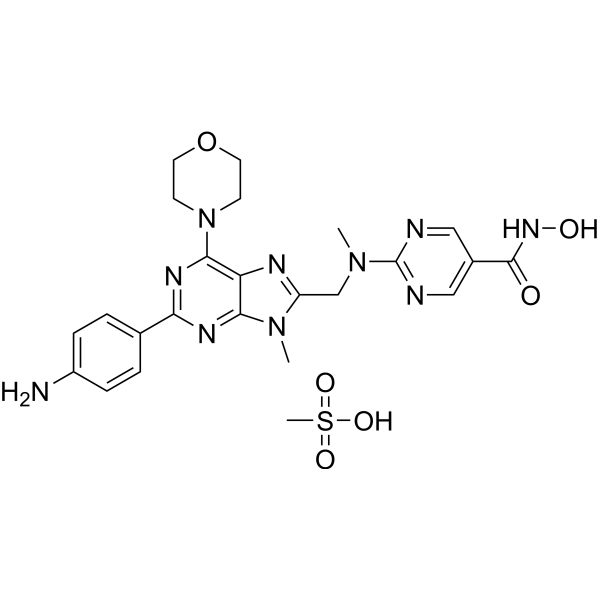
Puzerinostat mesylate (Purinostat mesylate) is a highly selective class I/IIb histone deacetylase (HDAC) inhibitor, with IC50 values of 0.81 nM, 1.4 nM, 1.7 nM, 3.8 nM, 11.5 nM, and 1.1 nM against HDAC1, HDAC2, HDAC3, HDAC8, HDAC6, and HDAC10, respectively. Puzerinostat mesylate enhances glutamine metabolism by upregulating GLS1. Puzerinostat mesylate induces cell Apoptosis and downregulates the expression of BCR-ABL and c-MYC. Puzerinostat mesylate delays the progression of Ph + B-cell acute lymphoblastic leukemia and prolongs the survival of relevant mouse models. Puzerinostat mesylate regulates the immune microenvironment. Puzerinostat mesylate can be used in research related to chronic myeloid leukemia, Philadelphia chromosome-positive B-cell acute lymphoblastic leukemia, relapsed/refractory multiple myeloma, relapsed/refractory lymphoma, diffuse large B-cell lymphoma, and double-expression lymphoma .
loading...
    loading...
Cat. No.: HY-P99950
CAS No.: 2484949-51-9
Synonyms: ALX148

Target:  

CD47

Research Areas:  

Cancer

Evorpacept (ALX148) is a high-affinity CD47-blocking fusion protein with an inactive human immunoglobulin Fc region. Evorpacept binds to CD47, blocks the interaction of the CD47-SIRPα immune checkpoint, and inhibits the binding of wild-type SIRPα to CD47. Evorpacept is applicable to research related to acute myeloid leukemia .
loading...
    loading...
Cat. No.: HY-160924
Research Areas:  

Cancer

MS147 is a VHL-based PROTAC degrader of BMI1 and RING1B (polycomb repressive complex 1 core components). MS147 directly binds EED and VHL E3 ligase, recruiting the ligase to the EED-BMI1/RING1B complex to induce time-dependent, ubiquitination-mediated degradation of BMI1 and RING1B. MS147 reduces histone H2A Lys119 mono-ubiquitination without altering histone H3 Lys27 tri-methylation and inhibits cancer cells proliferation. MS147 can be used for the research of cancer, such as chronic myelogenous leukemia and b-cell lymphoma .
loading...
    loading...
Cat. No.: HY-160698
CAS No.: 2661481-41-8
Synonyms: SGR-1505
Target:  

MALT1 Apoptosis

Research Areas:  

Cancer

SGR-1505 is an oral small molecule MALT1 inhibitor with anti-proliferative and antitumor activity.SGR-1505 inhibits MALT1 enzymatic activity to modulate NF-κB pathway gene expression.SGR-1505 induces modulation of cell cycle, DNA damage, and apoptosis-related genes in in vivo tumor samples.SGR-1505 exerts tumorostatic and regressive activity in ABC-DLBCL xenograft models.SGR-1505 can be used for the research of activated B cell-like diffuse large B cell lymphoma, non-Hodgkin B-cell lymphomas, chronic lymphocytic leukemia, and mature B cell neoplasms .
loading...
    loading...

