



Lisaftoclax
Based on 1 publication(s) in Google Scholar
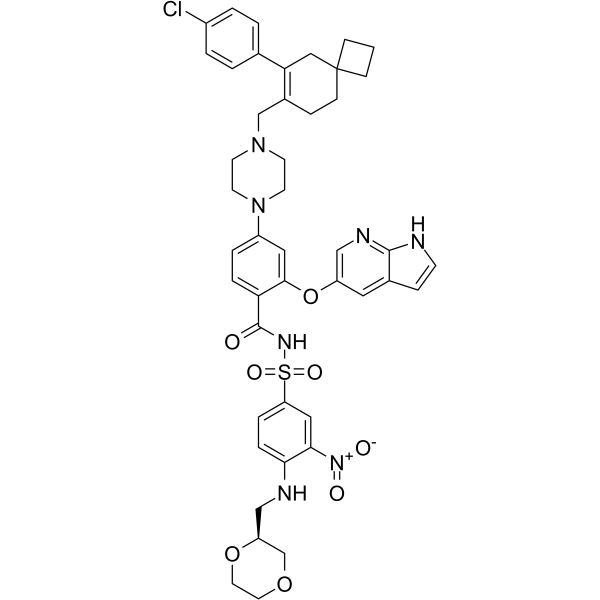
Lisaftoclax is an orally active, selective BCL-2 inhibitor with a Ki of < 0.1 nM against human BCL-2. Lisaftoclax selectively binds to BCL-2, disrupts the BCL-2:BIM complex, and antagonizes the antiapoptotic function of BCL-2. Lisaftoclax induces BAX/BAK-dependent, caspase-mediated apoptosis, upregulates the pro-death proteins BIM and Noxa, and downregulates mitochondrial respiratory function and ATP production. Lisaftoclax can be used in the research of hematological malignancies including chronic lymphocytic leukemia, multiple myeloma, and diffuse large B-cell lymphoma.
For research use only. We do not sell to patients.
- Purity : 99.78%
- CAS No.: 2180923-05-9
- Formula: C45H48ClN7O8S
- Molecular Weight:882.42
-
Storage:Powder -20°C, 3 years , 4°C, 2 years ; In solvent -80°C, 6 months , -20°C, 1 month

To place orders, for customer services and technical support, please contact: MedChemExpress USA
Tel: 609-228-6898 E-mail: [email protected] [email protected]


-
 Biological Activity
-
Chemical Information
-
Solvent & Solubility
- Purity & Documentation
- References
-
 Help & FAQs


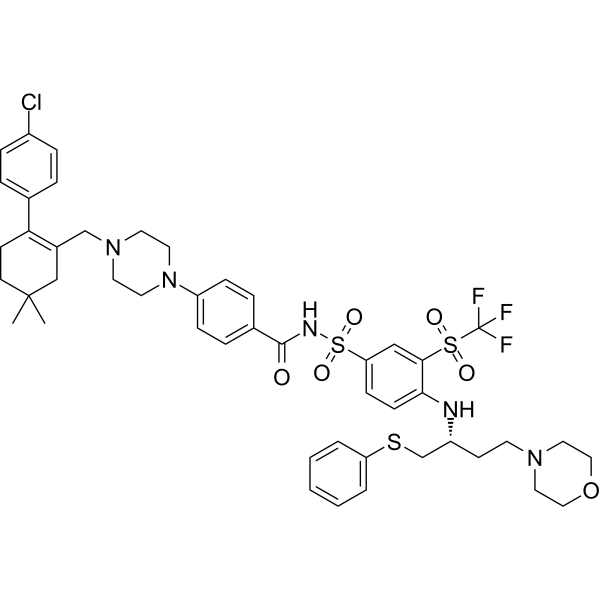
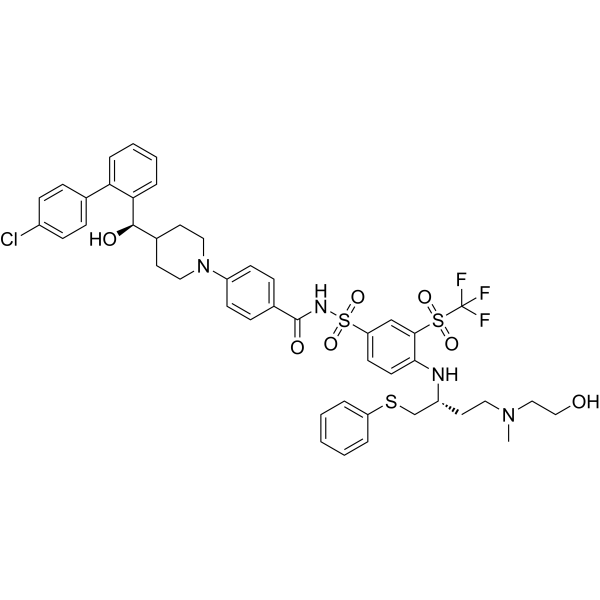
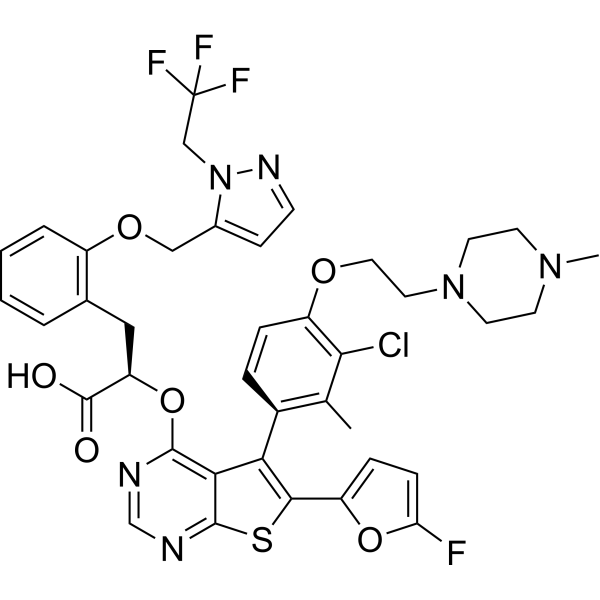
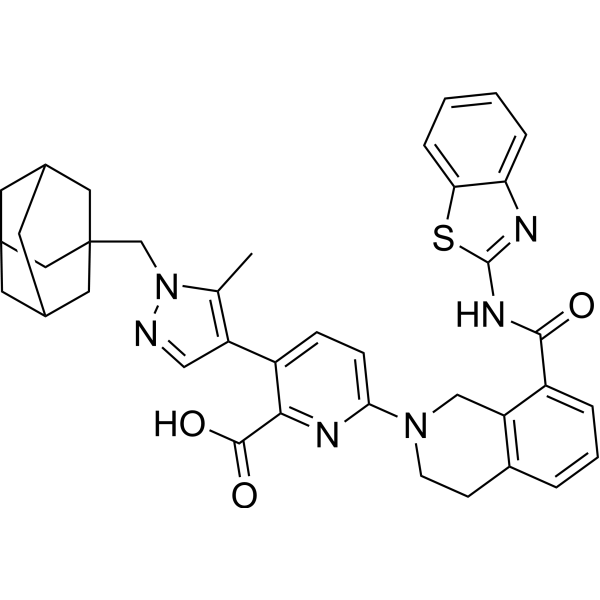
Publications Citing Use of MedChemExpress (MCE) Lisaftoclax
More

Biological Activity
Description
|
Bcl-2 |
Bcl-xL |
Cellular Effect
|
Cell Line

|
Type | Value | Description | References |
|---|---|---|---|---|
| RS4-11 | IC50 |
161 nM
Compound: 3; APG-2575
|
Inhibition of cell growth in human RS4-11 cells harboring Bcl-2 G101V mutant incubated for 2 days by CellTiter-Glo luminescent cell viability assay
Inhibition of cell growth in human RS4-11 cells harboring Bcl-2 G101V mutant incubated for 2 days by CellTiter-Glo luminescent cell viability assay
|
[PMID: 38695063] |
| RS4-11 | IC50 |
6.3 nM
Compound: 3; APG-2575
|
Inhibition of cell growth in human RS4-11 cells incubated for 2 days by CellTiter-Glo luminescent cell viability assay
Inhibition of cell growth in human RS4-11 cells incubated for 2 days by CellTiter-Glo luminescent cell viability assay
|
[PMID: 38695063] |
In Vitro
Lisaftoclax (serial dilution; 2 h) potently and selectively binds to recombinant human BCL-2 with a Ki < 0.1 nM, while it shows weak affinity for BCL-xL and MCL-1[2].
Lisaftoclax (serial dilution; 4 days) exerts no significant inhibitory effect on the viability of BCL-xL-dependent SKLU-1 cells or MCL-1-dependent NCI-H23 cells[2].
Lisaftoclax (serial dilution; 4 days) potently inhibits the viability of BCL-2-dependent RS4;11, HL-60 and MV-4-11 cells, with IC50 values of 3.6 nM, 2.4 nM and 1.9 nM, respectively[2].
Lisaftoclax (serial dilution; 4 h treatment) inhibits the viability of primary CD19+/CD5+ B cells derived from patients with chronic lymphocytic leukemia (CLL)[2].
Lisaftoclax (serial dilution; 3 days) potently inhibits the viability of MM and WM cell lines as well as primary human MM cells, with median IC50 values of 3.6 µM (MM cell lines), 3.0 µM (WM cell lines) and 1.33 µM (primary MM cells)[2].
Lisaftoclax potently inhibits the viability of RS4;11 leukemia cells, with an IC50 of 5.5 nM[5].
Lisaftoclax potently inhibits the activity of Molm13 leukemia cells, with an IC50 of 6.4 nM[5].
Lisaftoclax (30-50 nM, 0.1-1 μM; 1-24 h) selectively disrupts the BCL-2:BIM complex in a dose- and time-dependent manner in RS4;11, Toledo, SU-DHL-4, KMS-11 and BCWM.1 cells, and this complex disruption occurs concomitantly with increased apoptosis levels in RS4;11 cells[2].
Lisaftoclax (serial gradient dilution; 24 h) induces cytochrome c release and apoptosis in BCL-2-overexpressing O-BCL-2 cells in a BAX/BAK-dependent manner, while exhibits extremely low activity in cells overexpressing BCL-xL, MCL-1 or BFL-1/A1[2].
Lisaftoclax (1 μM; 24 hours) activates caspase-3/7 levels in multiple myeloma (MM) and Waldenström's macroglobulinemia (WM) cell lines[2].
Lisaftoclax (1 μM; 3 days) induces apoptosis in tumor cells derived from patients with primary multiple myeloma (MM) and Waldenström's macroglobulinemia (WM)[2].
Lisaftoclax (1 μM; 0.5-6 hours) rapidly upregulates the expression levels of pro-apoptotic proteins BIM and Noxa, and promotes the translocation of BIM to mitochondria in KMS-11 and BCWM.1 cells following treatment with 1 μM lisaftoclax for up to 6 hours[2].
Lisaftoclax (1 μM; 24 h) significantly impairs mitochondrial bioenergetic function in KMS-11 cells. Treatment with 1 μM Lisaftoclax for 24 h reduces the maximal respiratory rate, non-mitochondrial respiratory rate, spare respiratory capacity, and mitochondrial ATP production of the cells[2].
MedChemExpress (MCE) has not independently confirmed the accuracy of these methods. They are for reference only.
-
Cell Line:BCL-2-dependent cell lines (RS4;11, HL-60, MV-4-11)
-
Concentration:Serial dilutions
-
Incubation Time:4 days
-
Result:Inhibited cell viability with IC50 values of 3.6 nM in RS4;11 cells, 2.4 nM in HL-60 cells, and 1.9 nM in MV-4-11 cells.
-
Cell Line:BCL-xL-dependent SKLU-1 cells, MCL-1-dependent NCI-H23 cells
-
Concentration:Serial dilutions
-
Incubation Time:4 days
-
Result:Showed minimal effects on cell viability in BCL-xL-dependent SKLU-1 cells and no effect on viability in MCL-1-dependent NCI-H23 cells.
-
Cell Line:Multiple myeloma (MM) cell lines, Waldenström macroglobulinemia (WM) cell lines, primary human MM cells
-
Concentration:Serial dilutions
-
Incubation Time:3 days
-
Result:In MM cell lines, the median IC50 was 3.6 µM; in WM cell lines, the median IC50 was 3.0 µM.
In primary human MM cells, the median IC50 was 1.33 µM, which was ≥2 times lower than venetoclax's median IC50 of 3.01 µM.
-
Cell Line:Engineered cell lines (O-BCL-2, O-BCL-xL, O-MCL-1, O-BFL-1/A1, O-DKO [BAX/BAK double knockout])
-
Concentration:Serial dilutions
-
Incubation Time:24 h
-
Result:Induced cytochrome c release from O-BCL-2 mitochondria at a concentration 2 orders of magnitude lower than in O-BCL-xL mitochondria, with no effect on O-MCL-1 or O-BFL-1/A1 mitochondria.
Induced apoptosis in O-BCL-2 cells but not in O-BCL-xL, O-MCL-1, O-BFL-1/A1, or O-DKO cells.
-
Cell Line:KMS-11, BCWM.1 cell lines
-
Concentration:1 μM
-
Incubation Time:0.5, 1, 2, 6 hours (Western Blot); 4 hours (Immunofluorescence)
-
Result:Significantly increased BIM levels within 2 hours and Noxa levels within 1-6 hours.
More BIM accumulated in mitochondria of KMS-11 cells after treatment compared to vehicle or Venetoclax (HY-15531).
Parmacokinetics
In Vivo
Lisaftoclax (100 mg/kg; p.o.; once daily; for 15 consecutive days) significantly reduces tumor burden and prolongs survival in the KMS-11 multiple myeloma xenograft model, with enhanced apoptotic effects indicated by increased levels of activated caspase-3[2].
Lisaftoclax (100 mg/kg; p.o.; daily) inhibits tumor growth and prolongs survival in the BCWM.1 Waldenström's macroglobulinemia xenograft model, and its pro-apoptotic effect is confirmed by elevated levels of activated caspase-3[2].
Lisaftoclax (25-100 mg/kg; p.o.; daily) exhibits dose-dependent antitumor activity in the Toledo diffuse large B-cell lymphoma xenograft model, with the strongest inhibitory effect observed at the daily oral dose of 100 mg/kg[2].
Combination treatment with Lisaftoclax (100 mg/kg; p.o.; daily; monotherapy for 15 days, combined with Bendamustine (HY-13567) and Rituximab (HY-P9913) for 35 days), Bendamustine and Rituximab induces sustained complete tumor regression in the OCI-LY8 diffuse large B-cell lymphoma xenograft model, with superior efficacy compared to Lisaftoclax monotherapy and the BR dual-drug combination regimen[2].
Lisaftoclax (100 mg/kg; p.o.; once daily; for 29 consecutive days) exhibits anti-tumor activity and prolongs survival in an Ibrutinib (HY-10997)-resistant patient-derived xenograft model of Waldenström's macroglobulinemia[2].
Lisaftoclax (p.o.) exhibits in vivo anti-tumor activity against RS4;11 leukemia xenografts in nude mice without inducing body weight loss[5].
MedChemExpress (MCE) has not independently confirmed the accuracy of these methods. They are for reference only.
-
Animal Model:NOD/SCID or NSG (NOD.Cg-Prkdcscid Il2rgtm1Wjl/SzJ) (male, 6-8 weeks old)[2]
-
Dosage:3.125 mg/kg; 6.25 mg/kg; 12.5 mg/kg; 25 mg/kg; 50 mg/kg; 100 mg/kg
-
Administration:p.o.; daily; 15 days
-
Result:Achieved a treatment/control (T/C) ratio of 60% with 6.25 mg/kg dose by Day 15.
Achieved a T/C ratio of 4% with 100 mg/kg dose by Day 15.
Induced no significant body weight changes with any dose.
Triggered cleaved caspase-3 and poly (ADP-ribose) polymerase 1 (PARP-1) cleavage in tumor tissue with a single 6.25 mg/kg oral dose, with peak activity at 24 hours post-dose.
-
Animal Model:NSG (NOD.Cg-Prkdcscid Il2rgtm1Wjl/SzJ) (male, 6-8 weeks old)[2]
-
Dosage:25 mg/kg; 50 mg/kg; 100 mg/kg
-
Administration:p.o.; daily
-
Result:Exhibited dose-proportional tumor growth inhibition, with the greatest inhibition observed at the 100 mg/kg daily dose.
-
Animal Model:NSG (NOD.Cg-Prkdcscid Il2rgtm1Wjl/SzJ)[2]
-
Dosage:100 mg/kg (single agent); 100 mg/kg (combined with bendamustine and rituximab)
-
Administration:p.o.; daily; 15 days (single agent); p.o.; daily; 35 days (combined with bendamustine and rituximab)
-
Result:Induced sustained tumor regression with 100% complete response (6/6 mice) based on modified Response Evaluation Criteria in Solid Tumors (mRECIST) when combined with bendamustine and rituximab.
Demonstrated superior antitumor effects compared to lisaftoclax alone or the bendamustine and rituximab (BR) dual combination.
-
Animal Model:NSG (NOD.Cg-Prkdcscid Il2rgtm1Wjl/SzJ) (10 per group)[2]
-
Dosage:100 mg/kg
-
Administration:p.o.; daily; 15 days
-
Result:Significantly reduced tumor burden (total flux; P = 0.0010 vs vehicle) by Day 20.
Prolonged median survival to 25 days compared to vehicle control (21 days; P < 0.0500).
Increased cleaved caspase-3 staining intensity in tumors (P = 0.0220 vs vehicle).
Decreased Ki67 staining in tumors.
Induced no significant body weight loss.
-
Animal Model:NSG (NOD.Cg-Prkdcscid Il2rgtm1Wjl/SzJ)[2]
-
Dosage:100 mg/kg
-
Administration:p.o.; daily
-
Result:Achieved a T/C ratio of 25.12% by Day 15 with no apparent toxicity or weight loss.
Prolonged median survival to 29 days compared to vehicle (21 days; P = 0.0190).
Increased cleaved caspase-3 staining intensity in tumors (P = 0.0025 vs vehicle).
-
Animal Model:NSG (NOD.Cg-Prkdcscid Il2rgtm1Wjl/SzJ) (male, 6-8 weeks old, 8 per group)[2]
-
Dosage:100 mg/kg
-
Administration:p.o.; daily; 29 days
-
Result:Resulted in significantly lower tumor burden (T/C 17.56%) compared to venetoclax (P = 0.0002) or ibrutinib (P = 0.0003).
Prolonged median survival to 63 days compared to venetoclax (36 days; P = 0.002), vehicle (34 days), or ibrutinib (38 days).
Clinical Trial
| NCT Number | Sponsor | Condition | Start Date |
Phase
|
|---|---|---|---|---|
| NCT01329991 | Plexxikon| | 2011-05 | PHASE1 |


Chemical Information
-
CAS No. 2180923-05-9
-
Appearance Solid
-
Molecular Weight 882.42
-
Formula C45H48ClN7O8S
-
Color Light yellow to yellow
-
SMILES
O=C(NS(=O)(C1=CC=C(NC[C@@H]2OCCOC2)C([N+]([O-])=O)=C1)=O)C3=CC=C(N4CCN(CC(CC5)=C(C6=CC=C(Cl)C=C6)CC75CCC7)CC4)C=C3OC8=CN=C(NC=C9)C9=C8
-
Synonyms
APG-2575; Bcl-2/Bcl-xl inhibitor 1
-
Shipping
Room temperature in continental US; may vary elsewhere.
-
Storage
Powder -20°C 3 years 4°C 2 years In solvent -80°C 6 months -20°C 1 month


Publications (1)
-
Journal Impact Factor
-
Most Recent
-
Cell Rep Med
Venetoclax acts as an immunometabolic modulator to potentiate adoptive NK cell immunotherapy against leukemia. [Abstract]2024 Jun 18;5(6):101580. PMID: 38776913


Solvent & Solubility
In Vitro:
DMSO : 100 mg/mL (113.32 mM; Need ultrasonic; Hygroscopic DMSO has a significant impact on the solubility of product, please use newly opened DMSO)
Please refer to the solubility information to select the appropriate solvent. Once prepared, please aliquot and store the solution to prevent product inactivation from repeated freeze-thaw cycles.
Storage method and period of stock solution: -80°C, 6 months; -20°C, 1 month. When stored at -80°C, please use it within 6 months. When stored at -20°C, please use it within 1 month.
Please refer to the solubility information to select the appropriate solvent. Once prepared, please aliquot and store the solution to prevent product inactivation from repeated freeze-thaw cycles.
Storage method and period of stock solution: -80°C, 6 months; -20°C, 1 month. When stored at -80°C, please use it within 6 months. When stored at -20°C, please use it within 1 month.
Concentration (start) × Volume (start) = Concentration (final) × Volume (final)
In Vivo:
Select the appropriate dissolution method based on your experimental animal and administration route.
- For the following dissolution methods, please ensure to first prepare a clear stock solution using an In Vitro approach and then sequentially add co-solvents:
- To ensure reliable experimental results, the clarified stock solution can be appropriately stored based on storage conditions. As for the working solution for In Vivo experiments, it is recommended to prepare freshly and use it on the same day.
- The percentages shown for the solvents indicate their volumetric ratio in the final prepared solution. If precipitation or phase separation occurs during preparation, heat and/or sonication can be used to aid dissolution.
Add each solvent one by one: 10% DMSO 90% (20% SBE-β-CD in Saline)
Solubility: 2.5 mg/mL (2.83 mM); Suspended solution; Need ultrasonic
This protocol yields a suspended solution of 2.5 mg/mL. Suspended solution can be used for oral and intraperitoneal injection.
Taking 1 mL working solution as an example, add 100 μL DMSO stock solution (25.0 mg/mL) to 900 μL 20% SBE-β-CD in Saline, and mix evenly.
Preparation of 20% SBE-β-CD in Saline (4°C, storage for one week): 2 g SBE-β-CD powder is dissolved in 10 mL Saline, completely dissolve until clear.
In Vivo Dissolution Calculator
Please enter the basic information of animal experiments:
-
-
-
-
Recommended: Prepare an additional quantity of animals to account for potential losses during experiments.
Please enter your animal formula composition:
-
%DMSO +
Recommended: Keep the proportion of DMSO in working solution below 2% if your animal is weak.
-
%+
-
+%Tween-80 + +
-
%Saline +
The co-solvents required include: DMSO, . All of co-solvents are available by MedChemExpress (MCE). , Tween 80. All of co-solvents are available by MedChemExpress (MCE).
Working solution concentration: 0.22 mg/mL
Method for preparing stock solution: mg drug dissolved in μL DMSO. Stock solution concentration: mg/mL.
1. Take μL DMSO stock solution;
2. Add μL .
μL , mix evenly;
3. Then add μL Tween 80, mix evenly;
4. Then add μL
Please ensure that the stock solution in the first step is dissolved to a clear state, and add co-solvents in sequence. You can use ultrasonic heating (ultrasonic cleaner, recommended frequency 20-40 kHz), vortexing, etc. to assist dissolution.


Purity & Documentation
-
Data Sheet (292 KB)
-
SDS (254 KB)
- English - EN (254 KB)
- Français - FR (254 KB)
- Deutsch - DE (254 KB)
- Norwegian - NO (254 KB)
- Español - ES (254 KB)
- Swedish - SV (254 KB)
- Italian - IT (254 KB)
- Korean - KR (254 KB)
- Portuguese - PT (254 KB)
-
Handling Instructions (2659 KB)
References
[1]. Ailawadhi S, et al. Novel BCL-2 Inhibitor Lisaftoclax in Relapsed or Refractory Chronic Lymphocytic Leukemia and Other Hematologic Malignancies: First-in-Human Open-Label Trial. Clinical cancer research : an official journal of the American Association for Cancer Research. 2023 Jul 05;29(13):2385-2393. [Content Brief]
[2]. Deng J, et al. Lisaftoclax (APG-2575) Is a Novel BCL-2 Inhibitor with Robust Antitumor Activity in Preclinical Models of Hematologic Malignancy. Clinical cancer research : an official journal of the American Association for Cancer Research. 2022 Dec 15;28(24):5455-5468. [Content Brief]


Complete Stock Solution Preparation Table
Please refer to the solubility information to select the appropriate solvent. Once prepared, please aliquot and store the solution to prevent product inactivation from repeated freeze-thaw cycles.
Storage method and period of stock solution: -80°C, 6 months; -20°C, 1 month. When stored at -80°C, please use it within 6 months. When stored at -20°C, please use it within 1 month.
| Optional Solvent | Concentration Solvent Mass | 1 mg | 5 mg | 10 mg | 25 mg |
|---|---|---|---|---|---|
| DMSO | 1 mM | 1.1332 mL | 5.6662 mL | 11.3325 mL | 28.3312 mL |
| 5 mM | 0.2266 mL | 1.1332 mL | 2.2665 mL | 5.6662 mL | |
| 10 mM | 0.1133 mL | 0.5666 mL | 1.1332 mL | 2.8331 mL | |
| 15 mM | 0.0755 mL | 0.3777 mL | 0.7555 mL | 1.8887 mL | |
| 20 mM | 0.0567 mL | 0.2833 mL | 0.5666 mL | 1.4166 mL | |
| 25 mM | 0.0453 mL | 0.2266 mL | 0.4533 mL | 1.1332 mL | |
| 30 mM | 0.0378 mL | 0.1889 mL | 0.3777 mL | 0.9444 mL | |
| 40 mM | 0.0283 mL | 0.1417 mL | 0.2833 mL | 0.7083 mL | |
| 50 mM | 0.0227 mL | 0.1133 mL | 0.2266 mL | 0.5666 mL | |
| 60 mM | 0.0189 mL | 0.0944 mL | 0.1889 mL | 0.4722 mL | |
| 80 mM | 0.0142 mL | 0.0708 mL | 0.1417 mL | 0.3541 mL | |
| 100 mM | 0.0113 mL | 0.0567 mL | 0.1133 mL | 0.2833 mL |


Lisaftoclax Related Classifications
HY-129179 Related Classifications
 Powered by Bioz