1. Search Result
Search Result
Results for "

COX-2-IN-50

" in MedChemExpress (MCE) Product Catalog:

23

Inhibitors & Agonists

7

Natural
Products

Cat. No. Product Name Target Research Areas Chemical Structure
  • HY-B0367

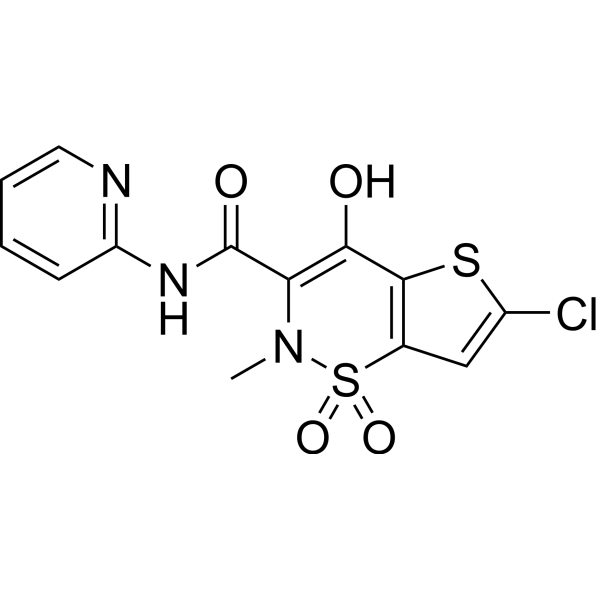
    Chlortenoxicam; Ro 13-9297

    Apoptosis COX NO Synthase Interleukin Related Prostaglandin Receptor TNF Receptor Inflammation/Immunology Cancer
    Lornoxicam (Chlortenoxicam) is an orally active oxycontin nonsteroidal anti-inflammatory drug (NSAID) with analgesic, anti-inflammatory, antipyretic and anticancer activities. Lornoxicam exhibits good inhibitory effects on both COX-1 and COX-2 (COX-1: IC50=0.005 μM; COX-2:IC50=0.008 μM) and inhibits the production of NO by iNOS (IC50=65 μM) and the proinflammatory cytokine IL-6 (IC50=54 μM). Lornoxicam also inhibits tumor cell proliferation and migration and induces tumor cell apoptosis. Lornoxicam can be used in the study of inflammatory pain, colorectal cancer and breast cancer .
    Lornoxicam
  • HY-W012399

    Environmental Pollutants Calcium Channel COX Lipoxygenase Inflammation/Immunology Cancer
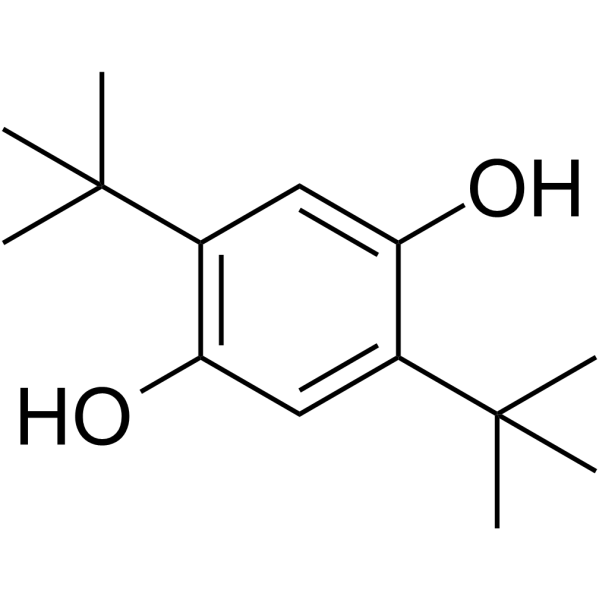
    2,5-Di-tert-butylhydroquinone (BHQ) (Compound 2), an indirect food additive, is a Sarco/endoplasmic reticulum Ca 2+ ATPase (SERCA) inhibitor with an IC50 of 400 nM. 2,5-Di-tert-butylhydroquinone disrupts the gating function of the residue Glu309 which prevents Ca 2+ from reaching their binding site. 2,5-Di-tert-butylhydroquinone regulates the activity of 5-lipoxygenase and COX-2 (IC50: 1.8 and 14.1 μM for 5-LO and COX-2, respectively) .
    2,5-Di-tert-butylhydroquinone
  • HY-16726

    CG100649

    COX Carbonic Anhydrase Cancer
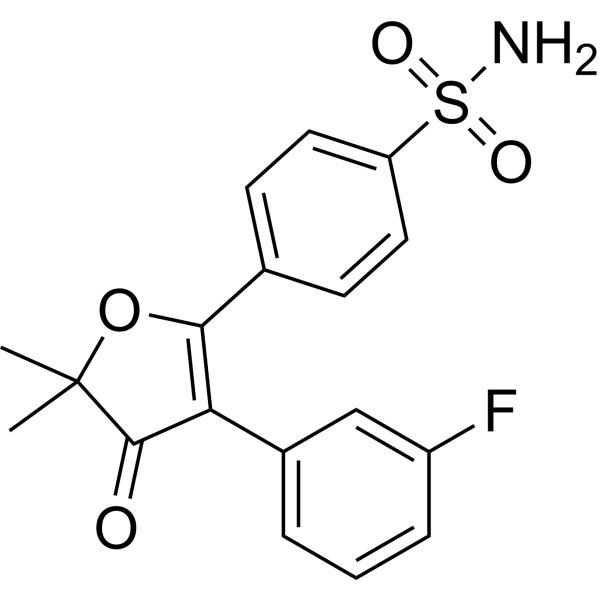
    Polmacoxib (CG100649) is a first-in-class, orally active nonsteroidal anti-inflammatory agent (NSAID) which is a dual inhibitor of COX-2 (IC50 around 0.1 μg/ml) and carbonic anhydrase . Polmacoxib inhibits colorectal adenoma and tumor growth in mouse models .
    Polmacoxib
  • HY-120824
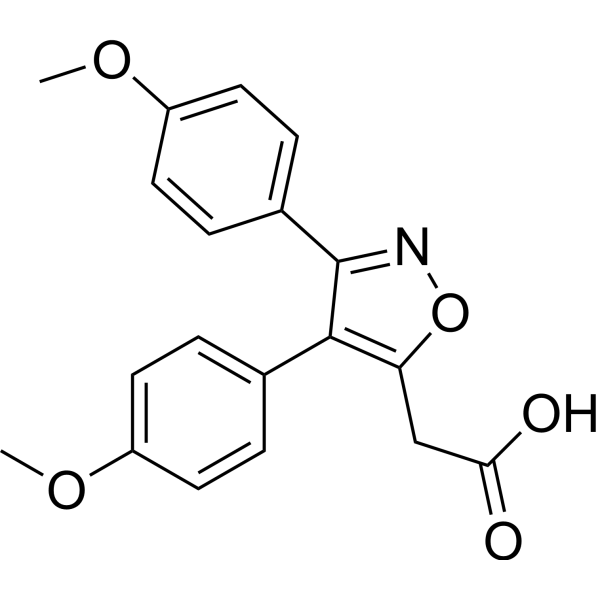
    Mofezolac
    2 Publications Verification

    COX Inflammation/Immunology
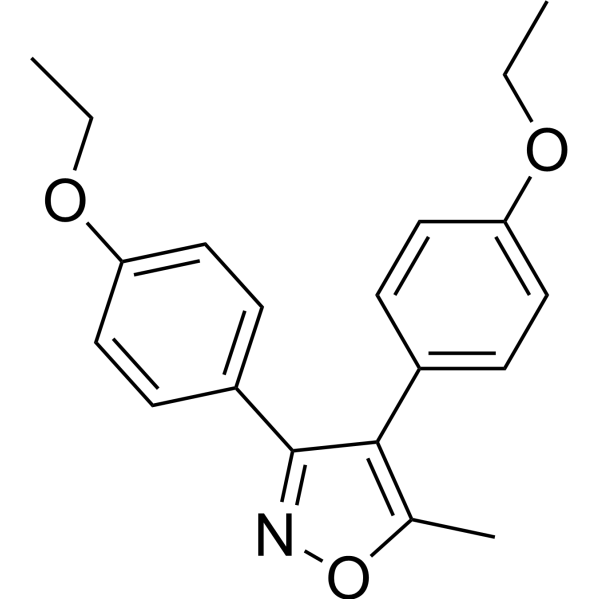
    Mofezolac, a non-steroidal anti-inflammatory drug (NSAID), is a selective, reversible and orally active COX-1 inhibitor with an IC50 of 1.44 nM. Mofezolac shows weak inhibitory activity on COX-2 (IC50 of 447 nM). Mofezolac can relieve pain and has anti-inflammatory activities .
    Mofezolac
  • HY-121537

    COX Akt Apoptosis Neurological Disease Inflammation/Immunology Cancer
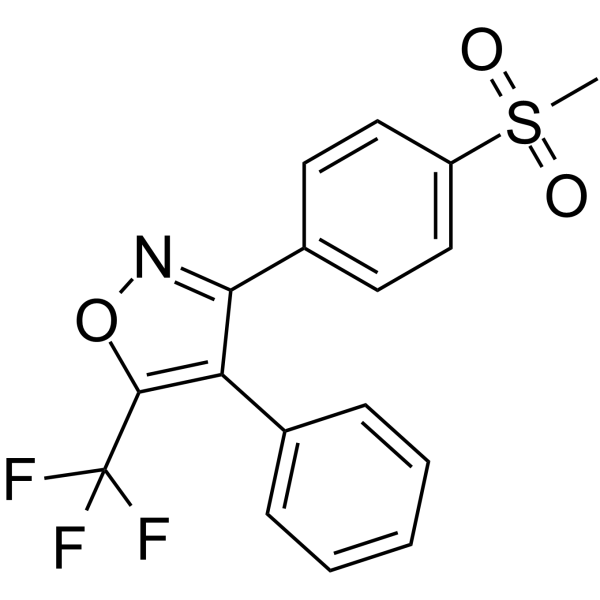
    CAY10404 is a potent and selective cyclooxygenase-2 (COX-2) inhibitor with an IC50 of 1 nM and a selectivity index (SI; COX-1 IC50/COX-2 IC50) of >500000. CAY10404 is a potent PKB/Akt and MAPK signaling pathways inhibitor and induces apoptosis in non-small cell lung cancer (NSCLC) cells. CAY10404, a diarylisoxazole, has good analgesic, anti-inflammatory, and anti-cancer activities .
    CAY10404
  • HY-121679

    COX Neurological Disease
    COX-2-IN-50 is a water-soluble COX-2 inhibitor with significant analgesic activity. The solubility of COX-2-IN-50 in water reaches 20.3 mg/mL, far exceeding the 1.6 μg/mL of its precursor compound PC407. COX-2-IN-50 demonstrates good biocompatibility and is suitable for the development of injectable dosage forms. COX-2-IN-50 has proven its analgesic effect in vivo and shows potential application value .
    COX-2-IN-50
  • HY-N1965

    NF-κB p38 MAPK COX Monoamine Oxidase MMP Interleukin Related TNF Receptor Reactive Oxygen Species (ROS) Metabolic Disease Inflammation/Immunology
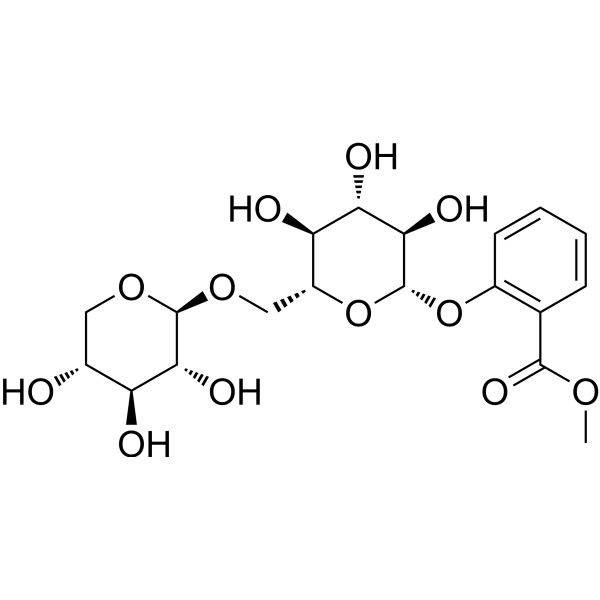
    Gaultherin is an orally active non-steroidal anti-inflammatory agent. Gaultherin selectively inhibits NF-κB, MAPK, COX-2 (IC50 = 0.35 mg/mL), LOX (IC50 = 0.56 mg/mL) and HYAL (IC50 = 28.58 μg/mL) to exert anti-inflammatory, antipyretic and analgesic effects. Gaultherin exhibits modest direct antioxidant capacity, greater in cell-based models. Gaultherin does not affect COX-1 so that avoids the common gastrointestinal side effects of Aspirin (HY-14654) .
    Gaultherin
  • HY-N0346

    Ethyl p-methoxycINnamate

    COX NF-κB TNF Receptor Interleukin Related Apoptosis VEGFR Bacterial Dengue Virus Caspase Cardiovascular Disease Infection Neurological Disease Metabolic Disease Inflammation/Immunology Cancer
    4-Methoxycinnamic acid ethyl ester (Ethyl p-methoxycinnamate) is an orally active natural compound found. 4-Methoxycinnamic acid ethyl ester exerts anti-inflammatory effects by inhibiting cyclooxygenase (COX-1 (IC50 = 1.12 μM) and COX-2 (IC50 = 0.83 μM)), NF-κB (IC50 = 88.7 μM) and cytokine production (TNF-α (IC50 = 96.84 μg/mL) and IL-1β (IC50 = 166.4 μg/mL)). 4-Methoxycinnamic acid ethyl ester inhibits tumor cell proliferation, migration and cancer metabolism and induces apoptosis.4-Methoxycinnamic acid ethyl ester inhibits VEGF expression, thereby inhibiting angiogenesis. 4-Methoxycinnamic acid ethyl ester has a significant inhibitory effect on dengue virus and Mycobacterium tuberculosis. 4-Methoxycinnamic acid ethyl ester has analgesic effects in rats .
    4-Methoxycinnamic acid ethyl ester
  • HY-162167

    COX Cardiovascular Disease Neurological Disease
    COX-1-IN-1 (compound 15a) is a selective inhibitor for cyclooxygenase (COX), with IC50s of 0.23 μM (COX-1) and >50 μM (COX-2), selective index (COX-2 IC50/COX-1 IC50) is 217. COX-1-IN-1 inhibits platelet aggregation .
    COX-1-IN-1
  • HY-16726R

    CG100649 (Standard)

    Reference Standards COX Carbonic Anhydrase Cancer
    Polmacoxib (Standard) is the analytical standard of Polmacoxib. This product is intended for research and analytical applications. Polmacoxib (CG100649) is a first-in-class, orally active nonsteroidal anti-inflammatory agent (NSAID) which is a dual inhibitor of COX-2 (IC50 around 0.1 μg/ml) and carbonic anhydrase . Polmacoxib inhibits colorectal adenoma and tumor growth in mouse models .
    Polmacoxib (Standard)
  • HY-152120

    Aiphanol

    COX VEGFR Inflammation/Immunology Cancer
    (±)-Aiphanol is a newly discovered stilbenolignan analog. (±)-Aiphanol exhibits significant anti-inflammatory activity, acting through inhibition of COX-1 and COX-2. The inhibitory effect on COX-1 (IC50 = 1.9 μM) is particularly strong, while the effect on COX-2 (IC50= 9.9 μM) is relatively weak .(±)-Aiphanol effectively inhibits VEGFR2 (IC50=0.92 μM). (±)-Aiphanol blocks angiogenesis and promotes apoptosis through inhibition of VEGFR2 and COX2 activity. (±)-Aiphanol is orally active .
    (±)-Aiphanol
  • HY-N1965R

    Reference Standards NF-κB p38 MAPK COX Reactive Oxygen Species (ROS) Monoamine Oxidase MMP Interleukin Related TNF Receptor Neurological Disease Inflammation/Immunology
    Gaultherin (Standard) is the analytical standard for Gaultherin (HY-N1965). Gaultherin is an orally active non-steroidal anti-inflammatory agent. Gaultherin selectively inhibits NF-κB, MAPK, COX-2 (IC50 = 0.35 mg/mL), LOX (IC50 = 0.56 mg/mL) and HYAL (IC50 = 28.58 μg/mL) to exert anti-inflammatory, antipyretic and analgesic effects. Gaultherin exhibits modest direct antioxidant capacity, greater in cell-based models. Gaultherin does not affect COX-1 so that avoids the common gastrointestinal side effects of Aspirin (HY-14654) .
    Gaultherin (Standard)
  • HY-121537R

    COX Akt Apoptosis Neurological Disease Inflammation/Immunology Cancer
    CAY10404 (Standard) is the analytical standard of CAY10404. This product is intended for research and analytical applications. CAY10404 is a potent and selective cyclooxygenase-2 (COX-2) inhibitor with an IC50 of 1 nM and a selectivity index (SI; COX-1 IC50/COX-2 IC50) of >500000. CAY10404 is a potent PKB/Akt and MAPK signaling pathways inhibitor and induces apoptosis in non-small cell lung cancer (NSCLC) cells. CAY10404, a diarylisoxazole, has good analgesic, anti-inflammatory, and anti-cancer activities .
    CAY10404 (Standard)
  • HY-W012399R

    Reference Standards Calcium Channel Lipoxygenase COX Inflammation/Immunology
    2,5-Di-tert-butylhydroquinone (Standard) is the analytical standard of 2,5-Di-tert-butylhydroquinone. This product is intended for research and analytical applications. 2,5-Di-tert-butylhydroquinone (BHQ) (Compound 2), an indirect food additive, is a Sarco/endoplasmic reticulum Ca 2+ ATPase (SERCA) inhibitor with an IC50 of 400 nM. 2,5-Di-tert-butylhydroquinone disrupts the gating function of the residue Glu309 which prevents Ca 2+ from reaching their binding site. 2,5-Di-tert-butylhydroquinone regulates the activity of 5-lipoxygenase and COX-2 (IC50: 1.8 and 14.1 μM for 5-LO and COX-2, respectively) .
    2,5-Di-tert-butylhydroquinone (Standard)
  • HY-N18218

    COX Lipoxygenase Inflammation/Immunology
    Speranskoside is a dual COX-2/15-LOX inhibitor with a COX-2 IC50 of 2.62 μg/mL and a 15-LOX IC50 of 5.51 μg/mL. Speranskoside can be used for the research of gastric ulcers .
    Speranskoside
  • HY-N16881

    COX HDAC Inflammation/Immunology
    Andrographidine E is a COX-2 (IC50 = 19 μM) and HDAC inhibitor, with high affinity for HDAC1 and HDAC3. Andrographidine E can specifically bind to macrophages and has potential immunotargeting properties. Andrographidine E can be used for studying inflammation .
    Andrographidine E
  • HY-181273

    COX Lipoxygenase Inflammation/Immunology
    COX-2/5-LOX-IN-7 (Hybrids 9) is a COX-2 (IC50 = 3.3 μM)/5-LOX (IC50 = 3.1 μM) inhibitor. COX-2/5-LOX-IN-7 can be used in research on diseases such as inflammation .
    COX-2/5-LOX-IN-7
  • HY-183188

    Androgen Receptor COX Infection Neurological Disease Metabolic Disease Inflammation/Immunology Cancer
    7-Methoxy-4H-chromen-4-one-o-carborane is an ER agonist and COX inhibitor with a COX-1 IC50 of 3.0 μM, COX-2 IC50 of 1.0 μM. 7-Methoxy-4H-chromen-4-one-o-carborane can be used for research on antimicrobial, anti-inflammatory, antitumor, neuroprotective, and estrogenic effects .
    7-Methoxy-4H-chromen-4-one-o-carborane
  • HY-181044

    Lipoxygenase COX Inflammation/Immunology Cancer
    COX-2/5-LOX-IN-6 (Compound 4c) is a potent and selective 5-LOX (IC50 = 0.10 μM) and COX-2 (IC50: 2.88 μM) inhibitor. COX-2/5-LOX-IN-6 displays potent anticancer activity against ovarian cancer. COX-2/5-LOX-IN-6 would not cause cytotoxic effects in noncancerous cells. COX-2/5-LOX-IN-6 is a potential anti-inflammatory agent .
    COX-2/5-LOX-IN-6
  • HY-160184

    COX Neurological Disease Inflammation/Immunology
    COX-1-IN-5 (example 13, compound PS13) is a potent and selective COX-1 inhibitor (COX-1 IC50 = 1 nM, COX-2 IC50 > 0.1 μM) exhibiting >1000-fold selectivity over COX-2. COX-1-IN-5 possesses strong anti-inflammatory, antipyretic, analgesic, antithrombotic, anti-cancer activities. COX-1-IN-5 can be used for COX-mediated diseases research, such as inflammatory conditions and pain. COX-1-IN-5 radiolabeled with 11C can be used as a selective PET tracer for whole‑body imaging of COX‑1 distribution and target engagement in vivo .
    COX-1-IN-5
  • HY-181612

    COX Calcium Channel Interleukin Related TNF Receptor Neurological Disease Inflammation/Immunology
    COX-2/CaV2.2-IN-1 is an orally active and selective dual COX-2/CaV2.2 inhibitor, exhibiting a COX-2 IC50 of 0.26 μM and a CaV2.2 IC50 of 0.29 μM. COX-2/CaV2.2-IN-1 suppresses inflammatory responses and inflammatory mediator (IL-6, TNF-α, NO) production. COX-2/CaV2.2-IN-1 produces pronounced analgesic effects in diverse models of inflammatory, neuropathic, and visceral pain. COX-2/CaV2.2-IN-1 can be used for the research of chronic pain .
    COX-2/CaV2.2-IN-1
  • HY-179439

    COX VEGFR HIF/HIF Prolyl-Hydroxylase Caspase Bcl-2 Family Apoptosis MMP Cancer
    Multi-kinase-IN-8 is a muti-kinase inhibitor. Multi-kinase-IN-8 inhibits COX-1 (IC50 of 12.6 μM), COX-2 (IC50 of 0.05 μM) and VEGFR-2 (IC50 of 0.12 nM). Multi-kinase-IN-8 inhibits tumor-associated carbonic anhydrases (CA IX and CA XII with Ki of 31.5 nM and 386.9 nM, respectively). Multi-kinase-IN-8 triggers cell cycle arrest and apoptosis through upregulation of Caspase 9 and Bax along with downregulation of Bcl 2. Multi-kinase-IN-8 suppresses PGE2, p-VEGFR-2, MMP-9 and HIF-1α and exhibits growth-inhibitory activity against breast cancer, lung cancer, and colorectal adenocarcinoma .
    Multi-kinase-IN-8
  • HY-181163

    Caspase COX Cytochrome P450 Steroid Sulfatase Apoptosis Cancer
    Caspase-3/7 activator 4 is a caspase-3 activator and caspase-7 activator. Caspase-3/7 activator 4 inhibits key enzymes in estrogen biosynthesis, including aromatase (IC50 = 38.3 nM) and steroid sulfatase (IC50 = 12.7 µM), and selectively suppresses COX-2 (IC50 = 5.38 µM). Caspase-3/7 activator 4 shows strong antioxidant activity (DPPH: IC50 = 16.26 µM). Caspase-3/7 activator 4 inhibits estrogen synthesis, suppresses estrogen availability, reduces prostaglandin production, increases caspase-3/7 expression, induces G0/G1 cell cycle arrest, induces apoptotic cell death, reduces circulating TNF-α and VEGFR-II levels, restores hepatorenal function markers and histoarchitecture, restores antioxidant defense enzyme activity, reduces lipid peroxidation, exerts antiproliferative activity against breast cancer cells, exerts antitumor activity in the Ehrlich ascites carcinoma models. Caspase-3/7 activator 4 can be used for the research of breast cancer, ehrlich ascites carcinoma .
    Caspase-3/7 activator 4

Inquiry Online

Your information is safe with us. * Required Fields.

Salutation


Country or Region *

Applicant Name *


Organization Name *

Department *


Email Address *


Product Name *

Cat. No.


Requested quantity *

Phone Number *


Remarks

Inquiry Online

Inquiry Information

Product Name:
Cat. No.:
Quantity:
MCE Japan Authorized Agent:

