
1. Search Result
Search Result
Pathways Recommended: Cell Cycle/DNA Damage
Results for "

CT DNA

" in MedChemExpress (MCE) Product Catalog:

7

Inhibitors & Agonists

1

Inhibitory Antibodies

1

Natural
Products

Cat. No. Product Name Target Research Areas Chemical Structure
  • HY-P990117

    Integrin Cardiovascular Disease Cancer
    Anti-Mouse/Rat/Human Osteopontin/SPP1 Antibody (MPIIIB10) is a mouse-derived Osteopontin/SPP1 IgG1 κ type antibody inhibitor. Anti-Mouse/Rat/Human Osteopontin/SPP1 Antibody (MPIIIB10) blocks Angiotensin II (HY-13948)-induced DNA synthesis and collagen gel contraction in cardiac fibroblasts. Anti-Mouse/Rat/Human Osteopontin/SPP1 Antibody (MPIIIB10) significantly inhibits tumor growth in CT26 or MC38 tumors mice models .
    Anti-Mouse/Rat/Human Osteopontin/SPP1 Antibody (MPIIIB10)
  • HY-179078

    OLIG2 Apoptosis Caspase PARP Neurological Disease Cancer
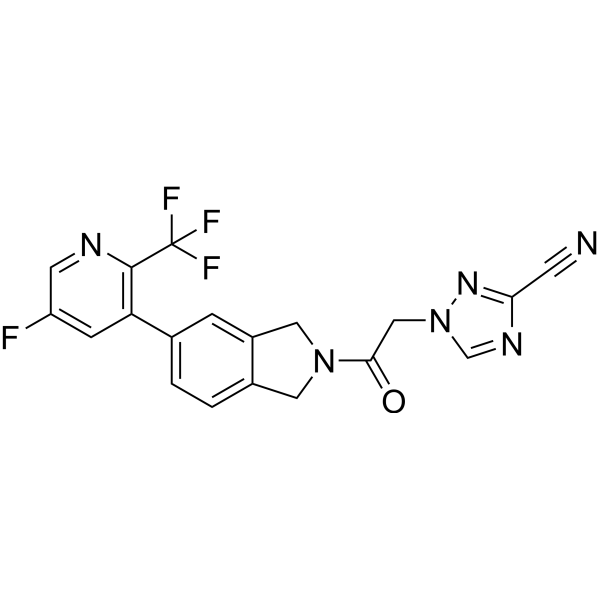
    CT-179 is a brain-penetrant and orally active OLIG2 inhibitor with a human IC50 of 1250 nM. CT-179 disrupts OLIG2 dimerization, phosphorylation, and DNA binding, blocking OLIG2-driven transcription. CT-179 induces G2/M phase arrest and increases G0 population. CT-179 induces apoptosis by reducing anti-apoptotic proteins and increasing cleaved caspase-3 and cleaved PARP. CT-179 can be used for the research of subgroup medulloblastoma .
    CT-179
  • HY-121309
    Doxorubicinone
    2 Publications Verification

    Adriamycin aglycone; Adriamycinone

    NF-κB TNF Receptor Interleukin Related Drug Derivative Inflammation/Immunology Cancer
    Doxorubicinone (Adriamycin aglycone) is the aglycone of the antibiotic Doxorubicin (HY-15142A), i.e., its sugar-free parent nucleus structure. Doxorubicinone does not induce DNA damage or bind to RelA, but still downregulates the expression of pro-inflammatory cytokines (such as TNF, IL-12, etc.) regulated by the NF-κB pathway. Doxorubicinone can be used in sepsis-related research .
    Doxorubicinone
  • HY-176806

    Doxorubicin-LNAA-Boc

    Drug Derivative Cancer
    Legubicin (Doxorubicin-LNAA-Boc) is a novel conjugate of Doxorubicin (HY-15142A) and a Legumain-cleavable peptide linker. Legubicin is activated by Legumain to release leucine-doxorubicin while sparing normal tissues. Legubicin inhibits tumor cell growth and reduces DNA binding in non-legumain expressing cells. Legubicin completely arrests tumor growth in mice bearing CT26 tumors. Legubicin can be used for the study of colon carcinoma (CRC) .
    Legubicin
  • HY-155693

    Topoisomerase Parasite Infection
    Topoisomerase II inhibitor 16 (compound CT3) is a selective, orally active, brain-penetrant and irreversible trypanosomal topoisomerase II inhibitor by stabilizing double-stranded DNA:enzyme cleavage complexes. Topoisomerase II inhibitor 16 has the potential for Chagas disease research .
    Topoisomerase II inhibitor 16
  • HY-162819

    Apoptosis Cancer
    Apoptosis inducer 26 (compound [AgCl(dap2SH)(PPh3)2]) is an autophagy inducer based on mononuclear Ag(I) ligands, with antibacterial and anticancer activities against a variety of bacterial strains and cancer cell lines. Apoptosis inducer 26 can effectively inhibit the growth of both Gram(+) and Gram(-) bacteria by causing the accumulation of Ag(I) ions in the bacterial periplasm. Apoptosis inducer 26 can intercalate between base pairs of CT DNA and induce apoptosis in A549 cells. Apoptosis inducer 26 also has the ability to scavenge free radicals, which can protect against oxidative stress .
    Apoptosis inducer 26
  • HY-182759

    DNA Alkylator/Crosslinker Topoisomerase Caspase Bcl-2 Family Apoptosis Cancer
    MN33-47 is a multi-target anti-tumor compound with broad-spectrum anti-proliferative activity. MN33-47 relieves the inhibition of the mitochondrial apoptosis pathway by downregulating the anti-apoptotic protein Bcl-2, while activating caspase-3 and inhibiting Topoisomerase I activity, thereby promoting its degradation through the ubiquitin-proteasome and autophagy-lysosome pathways. MN33-47 can also induce DNA cross-linking and G2/M cell cycle arrest, inhibit cancer cell migration and activate the mitochondrial apoptosis pathway, thus exerting potent anti-tumor effects. MN33-47 can improve the water solubility of SN-38 (HY-13704), and exhibits dose-dependent tumor growth inhibition effects in CT26 tumor-bearing mouse models without obvious toxic and side effects. MN33-47 can be used in related studies on colorectal adenocarcinoma, cervical adenocarcinoma, hepatocellular carcinoma, alveolar basal epithelial adenocarcinoma, gastric cancer and colon cancer .
    MN33-47

Inquiry Online

Your information is safe with us. * Required Fields.

Salutation


Country or Region *

Applicant Name *


Organization Name *

Department *


Email Address *


Product Name *

Cat. No.


Requested quantity *

Phone Number *


Remarks

Inquiry Online

Inquiry Information

Product Name:
Cat. No.:
Quantity:
MCE Japan Authorized Agent:

