1. Search Result
Search Result
Results for "

DNA damage response signaling

" in MedChemExpress (MCE) Product Catalog:

16

Inhibitors & Agonists

1

Natural
Products

Cat. No. Product Name Target Research Areas Chemical Structure
  • HY-123834
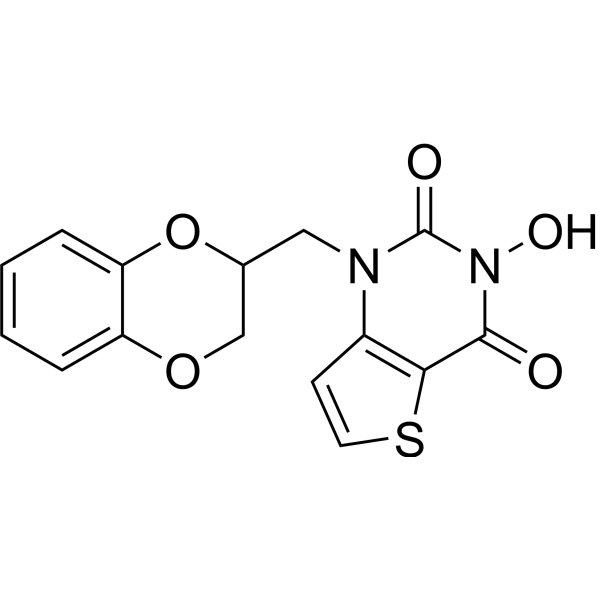
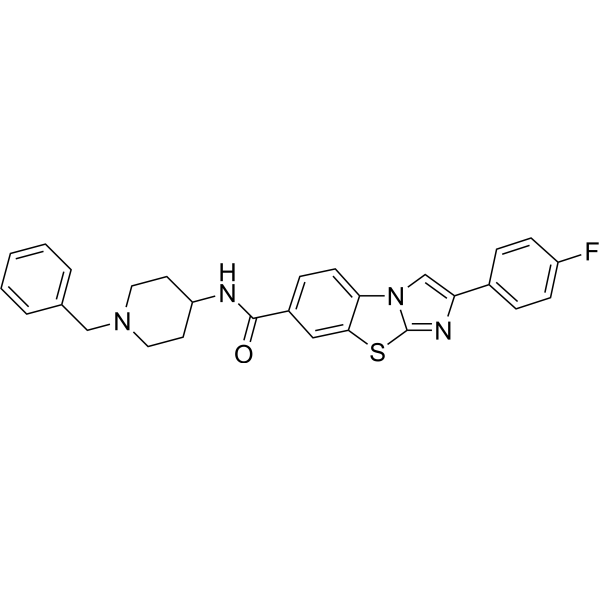
    FEN1-IN-1
    Maximum Cited Publications
    8 Publications Verification

    FLAP ATM/ATR Cancer
    FEN1-IN-1 (compound 1) is a small molecule flap endonuclease 1 (FEN1) inhibitor with antitumor activity. FEN1-IN-1 binds to the active site of FEN1 and partly achieves inhibition by the co-ordination of Mg 2+ ions. FEN1-IN-1 initiaties a DNA damage response and activates the ATM checkpoint signalling pathway, the phosphorylation of histone H2AX and the ubiquitination of FANCD2 in mammalian cells. FEN1-IN-1 is promising for research of cancers .
    FEN1-IN-1
  • HY-13703A
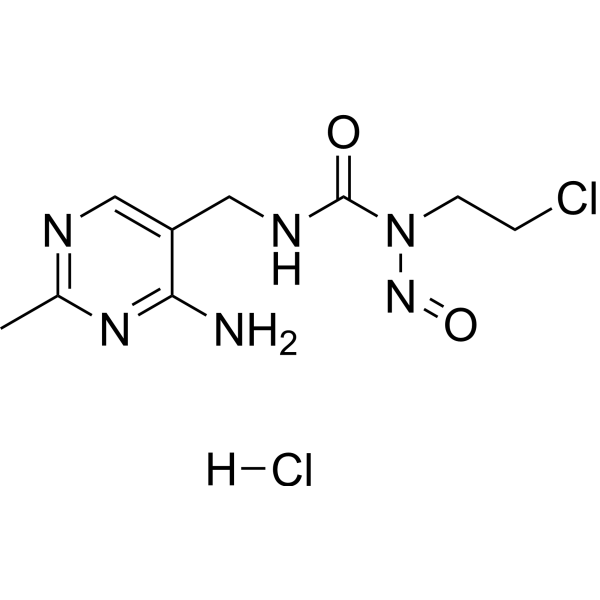
    Nimustine hydrochloride
    1 Publications Verification

    ACNU

    DNA Alkylator/Crosslinker DNA/RNA Synthesis Apoptosis p38 MAPK JNK AP-1 Cancer
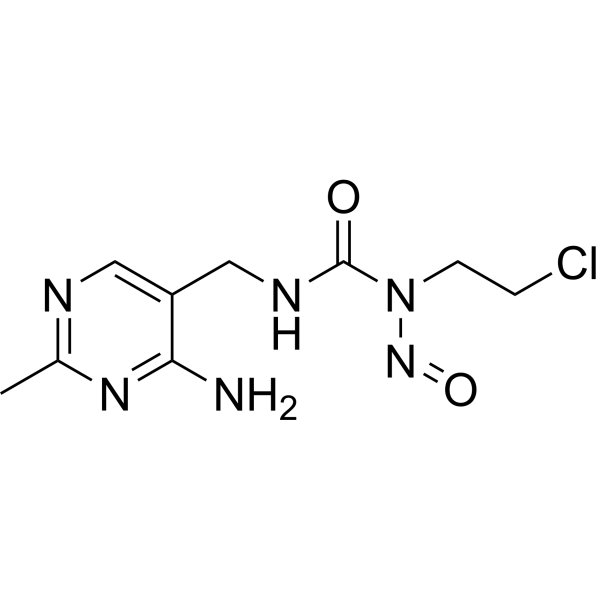
    Nimustine hydrochloride (ACNU) is the hydrochloride salt form of Nimustine (HY-13703). Nimustine hydrochloride is an alkylating agent, which induces DNA double-strand breaks (DSBs) and inter-strand crosslinks (ICLs), thereby activating the DNA damage response (DDR) signaling pathway. Nimustine hydrochloride activates p38 MAPK/JNK signaling pathway, and exhibits antitumor activity .
    Nimustine hydrochloride
  • HY-138155

    DNA/RNA Synthesis Cancer
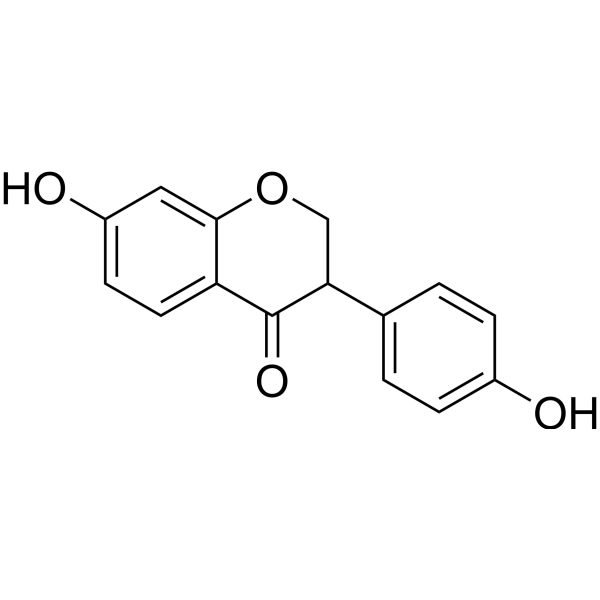
    NSC15520 is a small molecular inhibitor of Replication Protein A (RPA). NSC15520 specifically recognizes the RPA N-terminal DNA binding domain (DBD), and blocks the interaction of RPA with p53 or RAD9. NSC15520 also inhibtis helix destabilization of a duplex DNA (dsDNA) oligonucleotide, involves in DNA replication, DNA repair, DNA recombination, and DNA damage response signaling .
    NSC15520
  • HY-153339

    Eukaryotic Initiation Factor (eIF) Cancer
    E235 is an expression regulator of activates transcription factor 4 (ATF4). E235 reduces cell viability by activating integrated stress response (ISR) and DNA damage response signals. E235 has anti-proliferative activity and can be used for tumor research .
    E235
  • HY-135782

    Poly(ADP-ribose) Glycohydrolase (PARG) Cancer
    iso-ADP ribose is the small-molecule ligand for protein nucleic acid modification, comprising parts of two consecutive ADP-ribosyl units within the PAR chain. iso-ADP ribose specifically binds WWE, FHA and OB-fold domains, enabling PAR-dependent functional responses like ubiquitylation and supporting DNA damage signaling and repair. iso-ADP ribose can be used for cancer research .
    iso-ADP ribose
  • HY-151883

    Apoptosis MDM-2/p53 Cancer
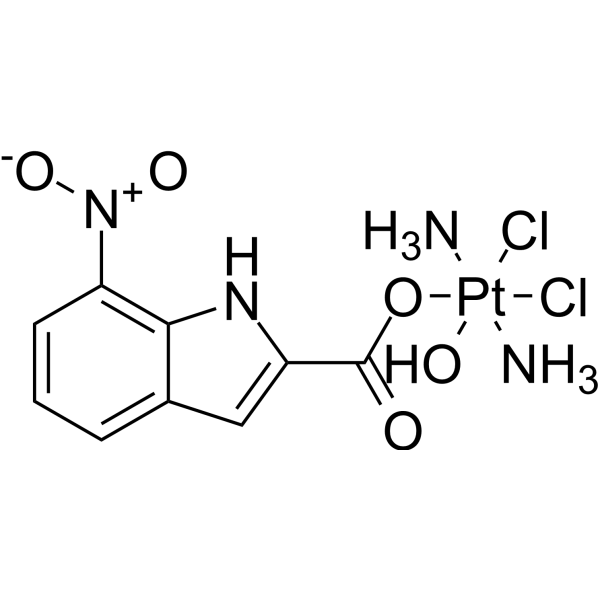
    APE1-IN-2 (compound AP1) is a Pt(IV) proagent, targeting a critical BER protein, apurinic/apyrimidinic endonuclease 1 (APE1). APE1-IN-2 shows anticancer activity. APE1-IN-2 induces intracellular accumulation of platinum and activates DNA damage response and apoptosis signals .
    APE1-IN-2
  • HY-155801

    Toll-like Receptor (TLR) NF-κB TNF Receptor MyD88 Apoptosis DNA/RNA Synthesis Cardiovascular Disease Infection Neurological Disease Inflammation/Immunology Cancer
    CRX 527 is a TLR4 agonist. CRX 527 activates the MyD88-dependent, TRIF-dependent, and TRAF6/NF-κB signaling pathways downstream of TLR4, mimics lipid A, and regulates antigen processing and presentation by dendritic cells. CRX 527 stimulates innate immune responses and enhances vaccine efficacy. CRX 527 maintains the structural integrity of hematopoietic tissues, spleen and intestine, alleviates radiation-induced damage, preserves intestinal homeostasis, and inhibits apoptosis, inflammatory responses, oxidative stress and DNA damage. CRX 527 can be used in the research of acute radiation syndrome, melanoma, HPV-related tumors and intracerebral hemorrhage .
    CRX 527
  • HY-135782A

    Poly(ADP-ribose) Glycohydrolase (PARG) Cancer
    iso-ADP ribose TEA is the small-molecule ligand for protein nucleic acid modification, comprising parts of two consecutive ADP-ribosyl units within the PAR chain. iso-ADP ribose TEA specifically binds WWE, FHA and OB-fold domains, enabling PAR-dependent functional responses like ubiquitylation and supporting DNA damage signaling and repair. iso-ADP ribose TEA can be used for cancer research .
    iso-ADP ribose TEA
  • HY-13703

    Apoptosis DNA Alkylator/Crosslinker DNA/RNA Synthesis p38 MAPK JNK AP-1 Cancer
    Nimustine is an alkylating agent, which induces DNA double-strand breaks (DSBs) and inter-strand crosslinks (ICLs), thereby activating the DNA damage response (DDR) signaling pathway. Nimustine activates p38 MAPK/JNK signaling pathway, and exhibits antitumor activity .
    Nimustine
  • HY-E70830

    DYRK Cancer
    Homeodomain interacting protein kinase 2 (HIPK2) is an evolutionary conserved serine/threonine kinase that regulates gene expression by phosphorylation of transcription factors and accessory components of the transcription machinery. HIPK2 is activated in response to DNA-damaging agents or morphogenic signals. HIPK2 Recombinant Human Active Protein Kinase is a recombinant HIPK2 protein that can be used to study HIPK2-related functions .
    HIPK2 Recombinant Human Active Protein Kinase
  • HY-169225A

    PDIC-NS

    STING Apoptosis Reactive Oxygen Species (ROS) Inflammation/Immunology Cancer
    PDIC-NN dimethanesulfonate (PDIC-NS) is a STING activator with anticancer activity. PDIC-NN dimethanesulfonate promotes the content and biostability of endogenous cyclic dinucleotides (CDNs). PDIC-NN dimethanesulfonate triggers ROS burst and causes serious damage to mitochondria. PDIC-NN dimethanesulfonate induces cell apoptosis and inhibits DNA replication. PDIC-NN dimethanesulfonate activates cGAS-STING signaling pathway, enhances the immunogenicity of tumor cells and activates a robust innate immune response .
    PDIC-NN dimethanesulfonate
  • HY-169225

    PDIC-NS free base

    STING Apoptosis Reactive Oxygen Species (ROS) Inflammation/Immunology Cancer
    PDIC-NN (PDIC-NS free base) is a STING activator with anticancer activity. PDIC-NN promotes the content and biostability of endogenous cyclic dinucleotides (CDNs). PDIC-NN triggers ROS burst and causes serious damage to mitochondria. PDIC-NN induces cell apoptosis and inhibits DNA replication. PDIC-NN activates cGAS-STING signaling pathway, enhances the immunogenicity of tumor cells and activates a robust innate immune response .
    PDIC-NN
  • HY-181786

    ATM/ATR Cancer
    ATM-IN-13 (A36) is an orally active, selective ATM kinase inhibitor with a human IC50 of 0.3 nM. ATM-IN-13 blocks the ATM-mediated DNA double-strand break repair signaling pathway, reduces the phosphorylation levels of ATM and p53, and inhibits ATM-dependent DNA damage response. ATM-IN-13 can be used in the research of colorectal cancer .
    ATM-IN-13
  • HY-171171

    DNA/RNA Synthesis Cancer
    NERx 329 is a replication protein A (RPA) inhibitor with an IC50 of 4.9 μM. NERx 329 blocks the interaction between RPA and single-stranded DNA, and induces functional RPA depletion, loss of single-stranded DNA gap protection, chromosome fragmentation and cell death. NERx 329 inhibits the DNA damage response signaling pathway, exhibits broad single-agent anticancer activity, and enhances the activity of DNA-damaging agents. NERx 329 can be used in research related to brca1-deficient breast cancer, non-small cell lung cancer, and brca1-deficient ovarian cancer .
    NERx 329
  • HY-167237

    Apoptosis Caspase CDK PARP Bcl-2 Family ERK Cancer
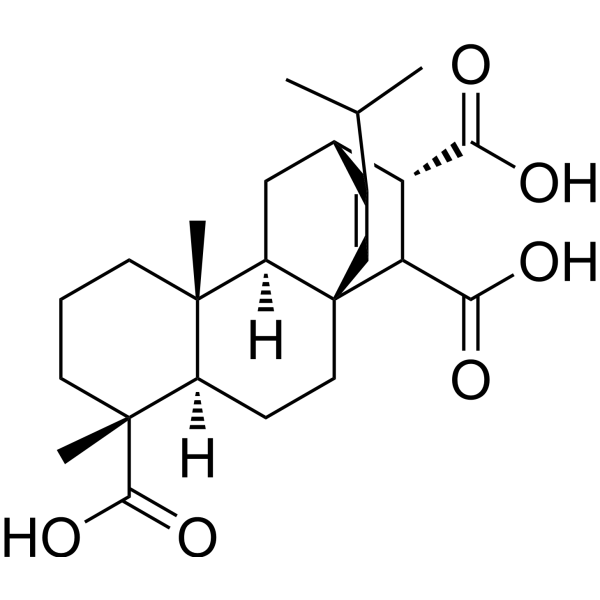
    Calactin is a glycoside that can be isolated from Asclepias curassavica L.. Calactin activates caspase-3, caspase-8, caspase-9, and phosphorylates ERK. Calactin induces DNA damage, apoptosis, PARP cleavage, G2/M phase cell cycle arrest, shifts Bax/Bcl-2 expression, and shows anti-proliferation effects in leukemia cells. Calactin can be used for the research of leukemia .
    Calactin
  • HY-W715812

    Fungal Apoptosis Caspase Reactive Oxygen Species (ROS) MDM-2/p53 SOD Bcl-2 Family PERK JNK p38 MAPK Cardiovascular Disease Infection Endocrinology Cancer
    Bromuconazole is a triazole fungicide with oral efficacy and blood-brain barrier permeability . Bromuconazole protects crops from various fungal contaminations. Bromuconazole exhibits cytotoxicity against a variety of cancer cells, induces G0/G1 cell cycle arrest and inhibits DNA synthesis in cancer cells, and triggers cytoskeletal structural disorder, genotoxic damage, apoptotic (apoptosis) cell death, and mitochondrial membrane depolarization. Bromuconazole activates caspase-3, induces excessive production of ROS, p53 and Bax, lipid peroxidation, increased activities of SOD and CAT, and downregulates Bcl-2. By upregulating p-ERK1/2 and p-JNK, Bromuconazole disrupts the MAPK signaling pathway, impairs the cellular stress response of human trophoblast cells and endometrial cells, and damages the implantation process . Bromuconazole is applicable to research related to glioma, colon cancer, reproductive injury (implantation dysfunction), and cardiac dysfunction .
    Bromuconazole

Inquiry Online

Your information is safe with us. * Required Fields.

Salutation


Country or Region *

Applicant Name *


Organization Name *

Department *


Email Address *


Product Name *

Cat. No.


Requested quantity *

Phone Number *


Remarks

Inquiry Online

Inquiry Information

Product Name:
Cat. No.:
Quantity:
MCE Japan Authorized Agent:

