
17 Results for "

DNA recognition

" in MedChemExpress (MCE) Product Catalog:
Products (17)

17 Results for "DNA recognition" in MCE Product Catalog:

3
3 Cited Publications
Cat. No.: HY-126020
CAS No.: 2290527-07-8
Purity:  99.90%
Target:  

DNA/RNA Synthesis RAD51

Research Areas:  

Cancer

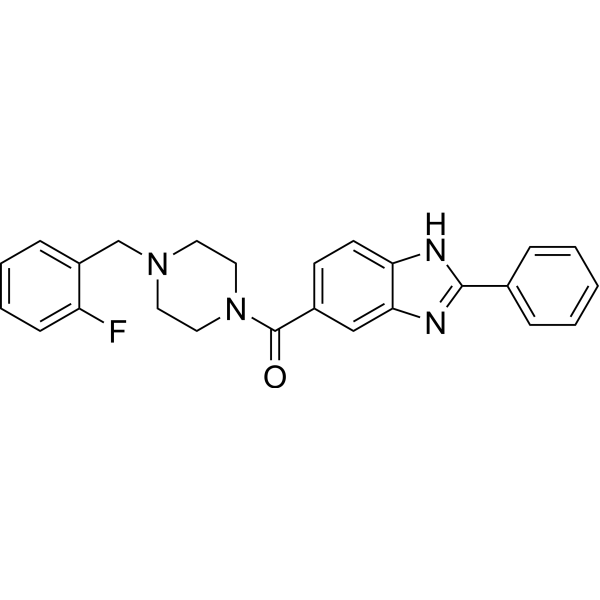
Bractoppin is a potent and selective agent-like inhibitor of phosphopeptide recognition by the human BRCA1 tandem(t) BRCT domain (binding IC50: 74 nM). Bractoppin diminishes BRCA1 recruitment to DNA breaks, in turn suppressing damage-induced G2 arrest and assembly of the recombinase, RAD51. Bractoppin preferentially inhibits BRCA1 tBRCT-dependent steps in the DNA damage response .
loading...
    loading...
2
2 Cited Publications
Cat. No.: HY-138830
CAS No.: 1818252-53-7
Purity:  99.81%
Target:  

Histone Demethylase

Research Areas:  

Neurological Disease

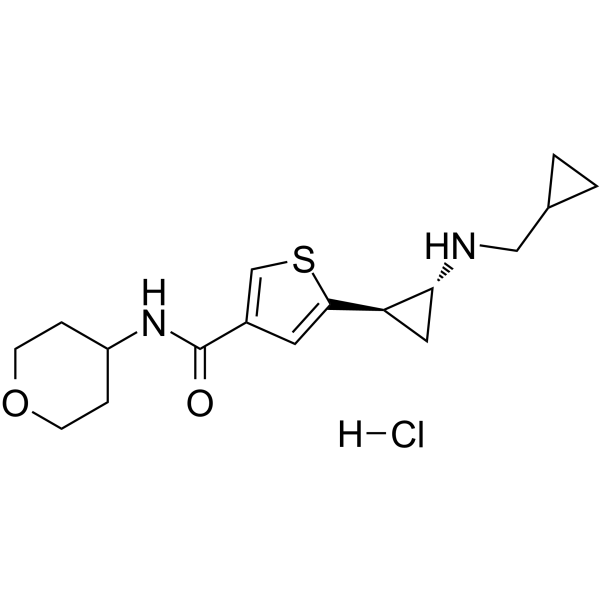
TAK-418 is an orally active, blood-brain barrier-penetrant LSD1 inhibitor with a human IC50 of 2.9 nM. TAK-418 irreversibly inhibits LSD1 by forming a compact flavin-FAD adduct with the catalytic domain FAD, blocking the demethylation of H3K4me1/2 and H3K9me1/2 without disrupting the LSD1-GFI1B interaction. TAK-418 restores normally dysregulated brain gene expression and DNA methylation, increases H3K4me1/2/3 and H3K9me2 at the Ucp2 locus, and induces Ucp2 mRNA expression. TAK-418 rescues defective H3K4 histone modifications, normalizes adult neurogenesis, and improves recognition memory, social behavior, and cognition in rodent models. TAK-418 can be used in research related to neurodevelopmental disorders, Alzheimer's disease, and autism spectrum disorders .
loading...
    loading...
1
1 Cited Publications
Cat. No.: HY-N0307
CAS No.: 114902-16-8
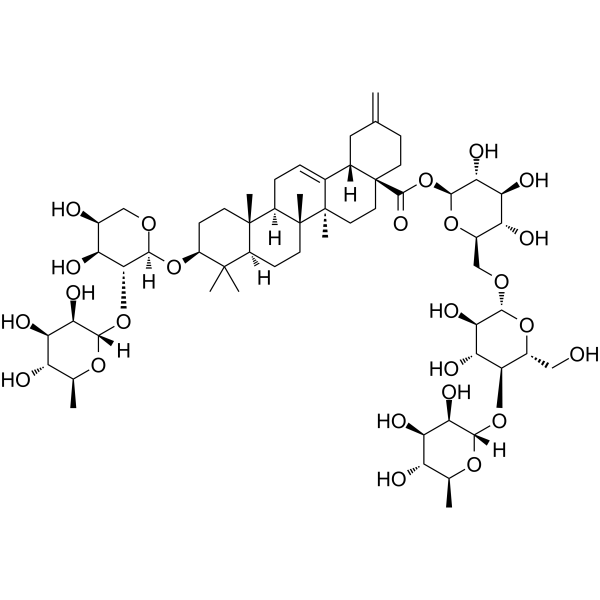
Ciwujianoside B is an orally active, blood-brain barrier penetrable radioprotective agent and memory enhancer. Ciwujianoside B reduces radiation-induced DNA damage, cell cycle arrest and apoptosis, downregulates NF-κB and the Bax/Bcl-2 ratio, and enhances the proliferative capacity of bone marrow cells. Ciwujianoside B enhances object recognition memory in normal mice and induces dendritic extension in primary cultured cortical neurons. Ciwujianoside B can be used in studies related to hematopoietic system radiation injury and memory enhancement .
loading...
    loading...
Cat. No.: HY-139664A
CAS No.: 2170140-50-6
Purity:  98.97%
Target:  

DNA Methyltransferase

Research Areas:  

Cancer

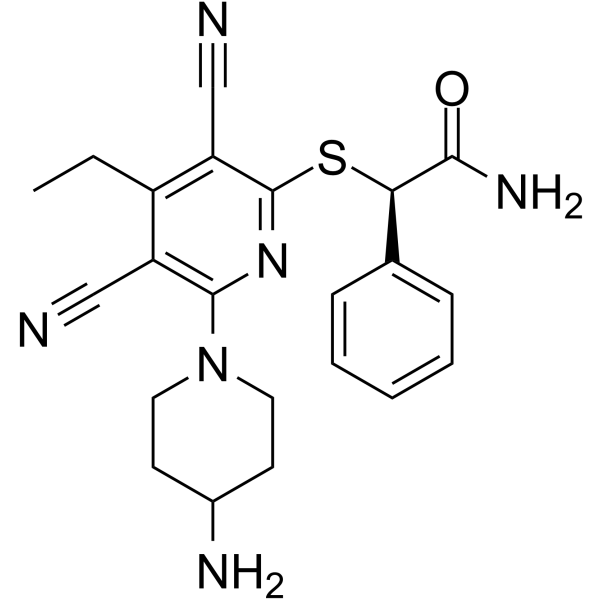
(R)-GSK-3685032 is the R-enantiomer of GSK-3685032 (HY-139664) and is a potent, non-covalent, reversible DNMT1-selective inhibitor with an IC50 of 0.036 μM against DNMT1. (R)-GSK-3685032 preferentially binds DNMT1 in a hemimethylated DNA context, inhibits DNA methylation maintenance by occupying the DNMT1 active site loop that inserts into DNA and by interacting with the target recognition domain, thereby inducing DNA hypomethylation and transcriptional activation. (R)-GSK-3685032 is useful for research on DNMT1, acute myeloid leukemia, and B cell humoral immunity .
loading...
    loading...
Cat. No.: HY-E70212
CAS No.: 91448-96-3
Synonyms: Hhal
Target:  

DNA Methyltransferase

Research Areas:  

Cancer

Hhal Methyltransferase (Hhal) is a DNA methyltransferase (recognition sequence: GCGC) .
loading...
    loading...
Cat. No.: HY-129594
CAS No.: 761401-89-2
Target:  

Fluorescent Dye

Research Areas:  

Others

DANP is a bulge base recognition probe that strongly and specifically binds to the single cytosine and thymine bulges. DANP could stabilize not only a single cytosine but also the thymine bulge in duplex DNA .
loading...
    loading...
Cat. No.: HY-P1758
CAS No.: 153840-64-3
Synonyms: IRRP1
Target:  

IFNAR STAT Influenza Virus

Research Areas:  

Infection

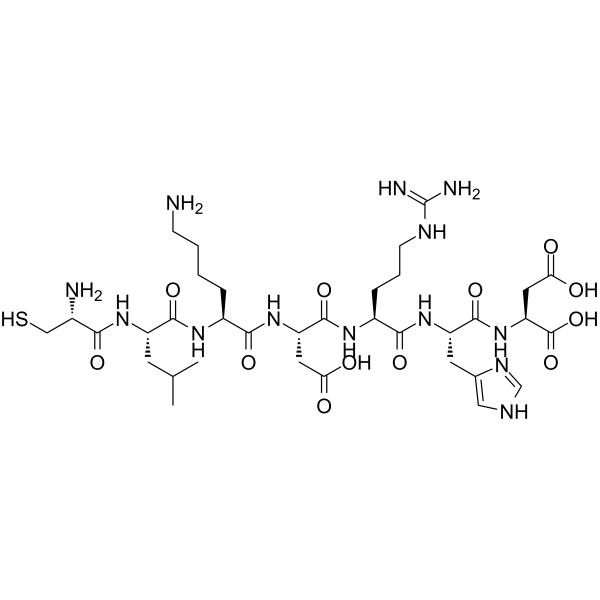
IFN-α Receptor Recognition Peptide 1 (IRRP1) is an amino acid synthetic peptide and also a regulator of IFN-α Receptor. IFN-α Receptor Recognition Peptide 1 binds to IFNAR2, enhances the binding capacity of IFN-α receptor, and slightly increases the IFN-α-induced growth inhibitory activity. IFN-α Receptor Recognition Peptide 1 inhibits IFN-α-induced STAT1 phosphorylation and STAT-DNA binding by blocking the activation of IFNAR by IFN-α. IFN-α Receptor Recognition Peptide 1 increases the occupancy of IFN-α on cell surface receptors, enhances the phosphorylation activation of ISGF3, and elevates IFN-α-induced antiviral activity. IFN-α Receptor Recognition Peptide 1 can be used in studies related to encephalomyocarditis virus infection .
loading...
    loading...
Cat. No.: HY-N6181
CAS No.: 1802497-05-7
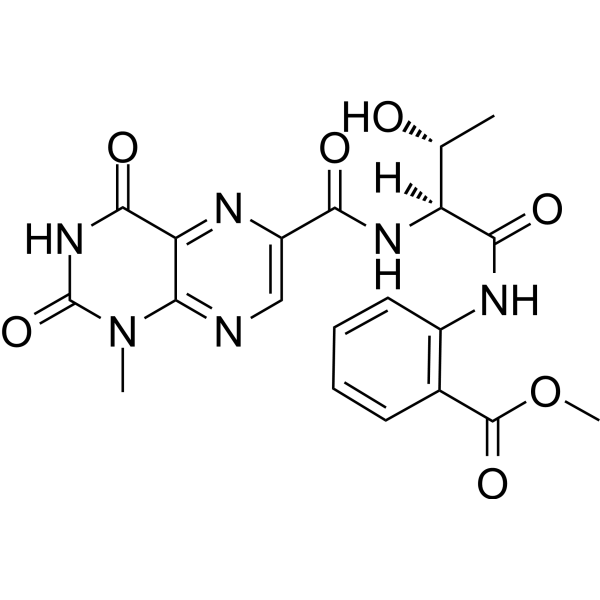
Terrelumamide A is a lumazine-containing peptide. Terrelumamide A is isolated from the culture broth of the marine-derived fungus Aspergillus terreus. Terrelumamide A exhibits pharmacological activity by improving insulin sensitivity. Terrelumamide A has the potential in the application of DNA sequence recognition .
loading...
    loading...
Cat. No.: HY-N0307R
CAS No.: 114902-16-8
Ciwujianoside B (Standard) is the analytical standard of Ciwujianoside B. This product is intended for research and analytical applications. Ciwujianoside B is an orally active, blood-brain barrier penetrable radioprotective agent and memory enhancer. Ciwujianoside B reduces radiation-induced DNA damage, cell cycle arrest and apoptosis, downregulates NF-κB and the Bax/Bcl-2 ratio, and enhances the proliferative capacity of bone marrow cells. Ciwujianoside B enhances object recognition memory in normal mice and induces dendritic extension in primary cultured cortical neurons. Ciwujianoside B can be used in studies related to hematopoietic system radiation injury and memory enhancement.
loading...
    loading...
Cat. No.: HY-129594A
Purity:  99.29%
Target:  

Fluorescent Dye

Research Areas:  

Others

DANP dihydrochloride is a bulge base recognition probe that strongly and specifically binds to the single cytosine and thymine bulges. DANP dihydrochloride could stabilize not only a single cytosine but also the thymine bulge in duplex DNA .
loading...
    loading...
Cat. No.: HY-P1758A
Synonyms: IRRP1 acetate
Target:  

IFNAR STAT Influenza Virus

Research Areas:  

Infection

IFN-α Receptor Recognition Peptide 1 acetate (IRRP1 acetate) is an amino acid synthetic peptide and also a regulator of IFN-α Receptor. IFN-α Receptor Recognition Peptide 1 acetate binds to IFNAR2, enhances the binding capacity of IFN-α receptor, and slightly increases the IFN-α-induced growth inhibitory activity. IFN-α Receptor Recognition Peptide 1 acetate inhibits IFN-α-induced STAT1 phosphorylation and STAT-DNA binding by blocking the activation of IFNAR by IFN-α. IFN-α Receptor Recognition Peptide 1 acetate increases the occupancy of IFN-α on cell surface receptors, enhances the phosphorylation activation of ISGF3, and elevates IFN-α-induced antiviral activity. IFN-α Receptor Recognition Peptide 1 acetate can be used in studies related to encephalomyocarditis virus infection .
loading...
    loading...
Cat. No.: HY-DY2032
Research Areas:  

Others

Methyl Green Staining Solution (Chloroform-Extracted, 1%) is a basic dye stock solution with differential nucleic acid binding activity that distinguishes double-stranded DNA from RNA, and it can be used for assays related to nucleic acid distribution and DNA localization. Methyl Green Staining Solution (Chloroform-Extracted, 1%) functions by competitively binding to the phosphate groups of nucleic acids and stably binds to intact double-stranded DNA; RNA within the oocyte-specific ribonucleoprotein complex specifically binds to this dye, and RNase completely blocks this binding reaction. The nucleic acid recognition of Methyl Green Staining Solution (Chloroform-Extracted, 1%) depends on the size of the dye cation and the intact double-helical structure of DNA .
loading...
    loading...
Cat. No.: HY-174519
Target:  

mRNA

Research Areas:  

Inflammation/Immunology

Human TLR9 mRNA encodes the human toll like receptor 9 (TLR9) protein, a member of the Toll-like receptor (TLR) family which plays a fundamental role in pathogen recognition and activation of innate immunity. TLR9 mediates cellular response to unmethylated CpG dinucleotides in bacterial DNA to mount an innate immune response.
loading...
    loading...
Cat. No.: HY-179651
CAS No.: 106664-01-1
Research Areas:  

Cancer

NSD2-PWWP1-IN-6 (Compound 16) is an effective NSD2-PWWP1 inhibitor with a Kd value of 30 nM. NSD2-PWWP1-IN-6 competitively blocks the recognition of H3K36me2 and DNA by NSD2-PWWP1, thereby weakening its binding ability to nucleosomes. NSD2-PWWP1-IN-6 can be used for cancer research .
loading...
    loading...
Cat. No.: HY-183631
CAS No.: 2248127-86-6
Research Areas:  

Cancer

PM54 is an antitumor agent with activity across multiple cancer types. PM54 acts as a transcription and WNT/β-catenin signaling pathway inhibitor. PM54 suppresses oncogenic transcriptional programs, and key malignant pathways, while inducing DNA double-strand breaks, S-phase cell cycle arrest and apoptosis. PM54 enhances innate immune recognition, remodels the tumor microenvironment. PM54 exhibits antitumor activity as monotherapy or in combination in xenograft models. PM54 is applicable to research on various cancers and advanced solid tumors .
loading...
    loading...
Cat. No.: HY-179650
CAS No.: 217798-45-3
Research Areas:  

Cancer

NSD2-PWWP1-IN-5 (Compound 13) is an effective NSD2-PWWP1 inhibitor with a Kd value of 78 nM. NSD2-PWWP1-IN-5 competitively blocks the recognition of H3K36me2 and DNA by NSD2-PWWP1, thereby weakening its binding ability to nucleosomes. NSD2-PWWP1-IN-5 inhibits the proliferation of U2OS osteosarcoma cells and induces cell cycle arrest and apoptosis. NSD2-PWWP1-IN-5 can be used for the study of osteosarcoma .
loading...
    loading...
Cat. No.: HY-138830B
CAS No.: 1818252-52-6
Target:  

Histone Demethylase

Research Areas:  

Neurological Disease

TAK-418 free base is an orally active, blood-brain barrier-penetrant LSD1 inhibitor with a human IC50 of 2.9 nM. TAK-418 free base irreversibly inhibits LSD1 by forming a compact flavin-FAD adduct with the catalytic domain FAD, blocking the demethylation of H3K4me1/2 and H3K9me1/2 without disrupting the LSD1-GFI1B interaction. TAK-418 free base restores normally dysregulated brain gene expression and DNA methylation, increases H3K4me1/2/3 and H3K9me2 at the Ucp2 locus, and induces Ucp2 mRNA expression. TAK-418 free base rescues defective H3K4 histone modifications, normalizes adult neurogenesis, and improves recognition memory, social behavior, and cognition in rodent models. TAK-418 free base can be used in research related to neurodevelopmental disorders, Alzheimer's disease, and autism spectrum disorders .
loading...
    loading...
  • 1

