19 Results for "

FFAR1

" in MedChemExpress (MCE) Product Catalog:
Products (19)

19 Results for "FFAR1" in MCE Product Catalog:

3
3 Cited Publications
Cat. No.: HY-101906
CAS No.: 346692-04-4
Purity:  99.57%
Research Areas:  

Metabolic Disease

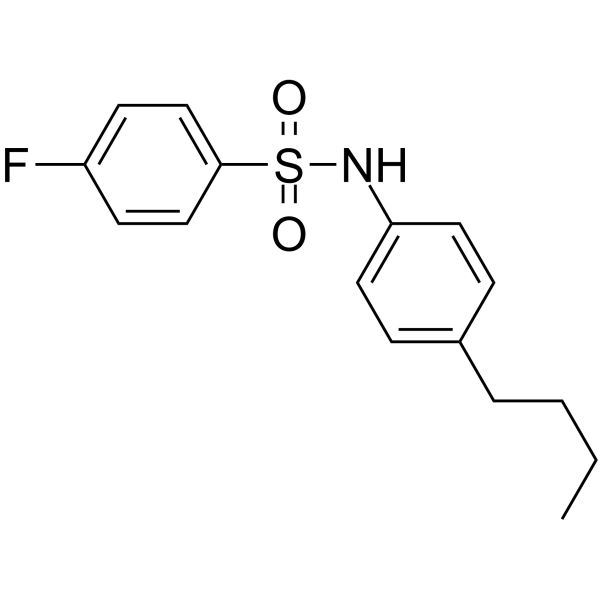
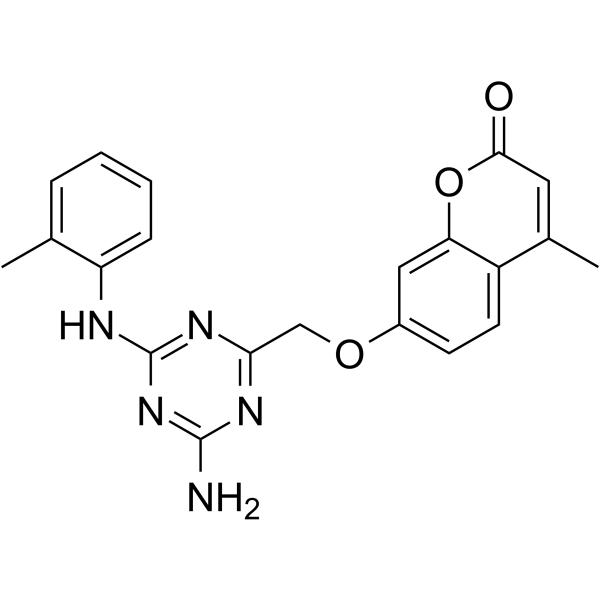
DC260126 is a potent antagonist of GPR40 (FFAR1). DC260126 dose-dependently inhibits GPR40-mediated Ca 2+ elevations stimulated by linoleic acid, oleic acid, palmitoleic acid and lauric acid (IC50: 6.28, 5.96, 7.07, 4.58 μM, respectively) [1]. DC260126 could protect MIN6 β cells from palmitate-induced ER stress and apoptosis .
loading...
    loading...
1
1 Cited Publications
Cat. No.: HY-W040127
CAS No.: 6906-39-4
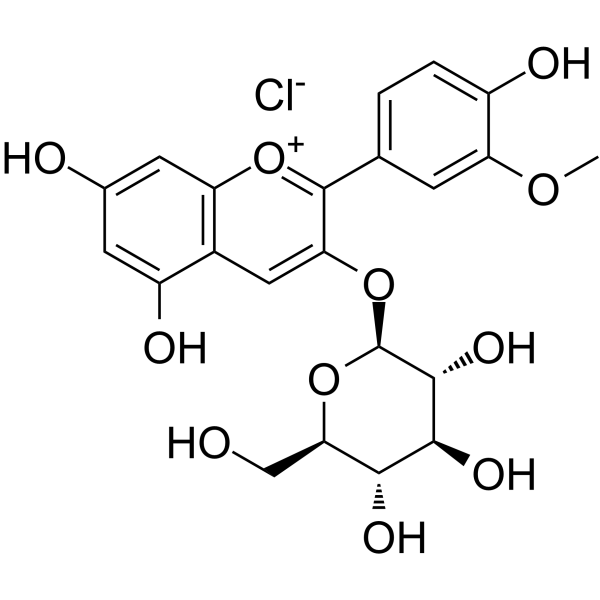
Peonidin 3-O-glucoside chloride is an agonist of the free fatty acid receptor FFAR1 and Glucokinase. Peonidin 3-O-glucoside chloride enhances insulin secretion of pancreatic beta cells and increases glucose uptake by liver cells. Peonidin 3-O-glucoside chloride activates FFAR1, promotes the phosphorylation of related proteins in the insulin secretion pathway, and increases the expression of FFAR1. In liver cells, Peonidin 3-O-glucoside chloride activates GK and regulates proteins associated with carbohydrate metabolism. Peonidin 3-O-glucoside chloride can be used in diabetes research [1] .
loading...
    loading...
Cat. No.: HY-W009081
CAS No.: 2433-96-7
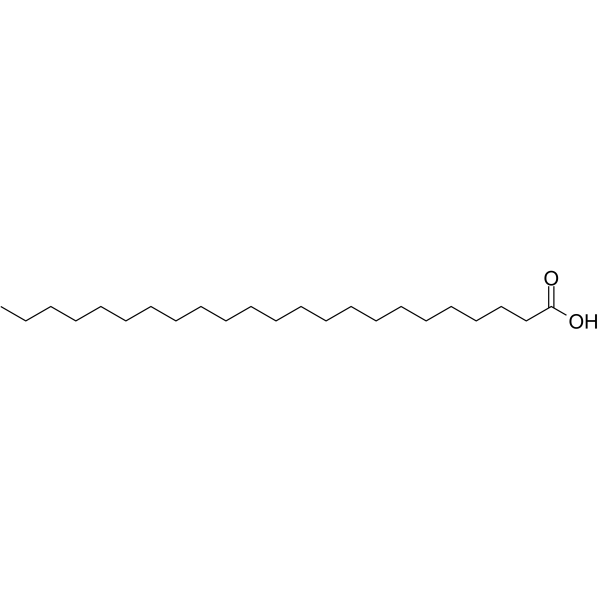
Tricosanoic acid is an endogenous agonist of long-chain saturated fatty acids and free fatty acid receptor FFAR1, which can activate hair growth. Tricosanoic acid (C23:0) has the activity of improving cognitive function by regulating neuronal membrane fluidity, inhibiting neuroinflammatory response, participating in myelination and neuronal energy metabolism. Tricosanoic acid expression levels are low in the prefrontal cortex of Alzheimer's disease (AD) models; while better cognitive performance corresponds to higher serum concentration levels. Tricosanoic acid can be used as a biomarker for diseases related to cognitive decline [1].
loading...
    loading...
Cat. No.: HY-148418
CAS No.: 1206629-08-4
Purity:  99.78%
Research Areas:  

Metabolic Disease

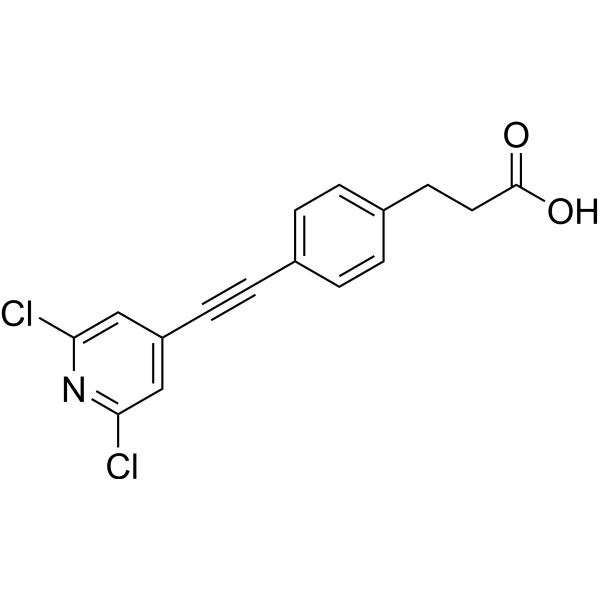
TUG-499 is a selective free fatty acid receptor 1 (FFAR1 or GPR40) (Free Fatty Acid Receptor) agonist with a pEC50 of 7.39. TUG-499 exhibits >100-fold selectivity over the related receptors FFA2, FFA3, and the nuclear receptor PPARγ and other diverse receptors, ion channels, and transporters. TUG-499 can be used for the research of type 2 diabetes [1]. TUG-499 is a click chemistry reagent, it contains an Alkyne group and can undergo copper-catalyzed azide-alkyne cycloaddition (CuAAc) with molecules containing Azide groups.
loading...
    loading...
Cat. No.: HY-111763
CAS No.: 874755-26-7
Purity:  98.28%
Research Areas:  

Metabolic Disease

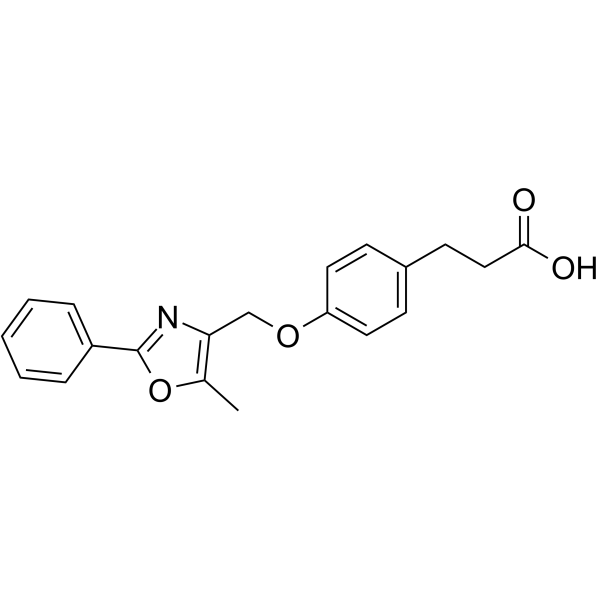
GPR40/FFAR1 modulator 1 is an agonist and an allosteric modulator for Gq-coupled free fatty acid receptor 1 (GPR40/FFAR1) [1].
loading...
    loading...
Cat. No.: HY-147351
CAS No.: 1798751-25-3
Purity:  99.64%
Research Areas:  

Metabolic Disease

GPR40 agonist 6 (Compound 7a) is a potent and selective free fatty acid receptor 1 (FFAR1 or GPR40) agonist with an EC50 of 0.058 μM [1].
loading...
    loading...
Cat. No.: HY-121212
CAS No.: 1253909-57-7
Purity:  97.28%
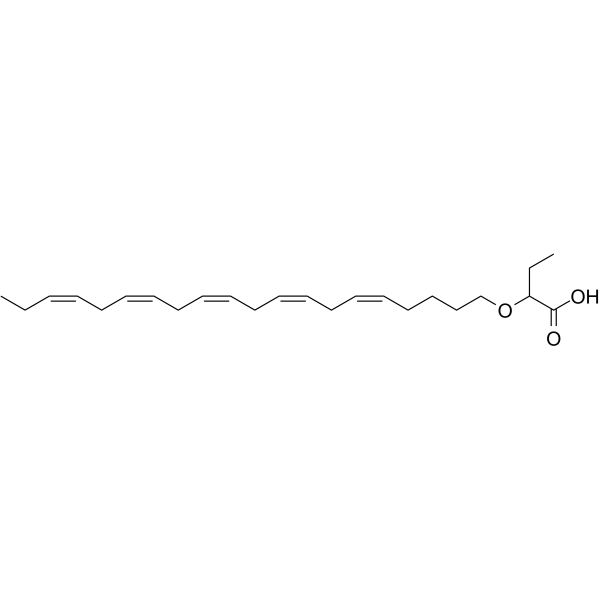
Icosabutate is an orally active engineered fatty acid and a dual FFAR1/FFAR4 (GPR40/GPR120) agonist with EC50 values of 10 μM and 15.5 μM, respectively. Icosabutate acts as a partial agonist of PPAR-α, with an EC50 of 208 nM. Icosabutate inhibits the arachidonic acid cascade and exhibits antioxidant and anti-apoptotic activities. Icosabutate can be used in the research of nonalcoholic steatohepatitis, metabolic dysfunction-associated steatohepatitis, and atherosclerosis [1] .
loading...
    loading...
Cat. No.: HY-148235
CAS No.: 858097-86-6
Research Areas:  

Metabolic Disease

TP-051, a chemical probe, is a potent FFAR1 agonist with an Ki value of 16 nM for human FFAR1. TP-051 can increase insulin secretion in rat insulinoma cells. TP-051 can be used to research type 2 diabetes [1].
loading...
    loading...
Cat. No.: HY-RS04874
Research Areas:  

Others

FFAR1 Human Pre-designed siRNA Set A contains three designed siRNAs for FFAR1 gene (Human), as well as a negative control, a positive control, and a FAM-labeled negative control.

loading...
    loading...
Cat. No.: HY-164870
CAS No.: 2839486-16-5
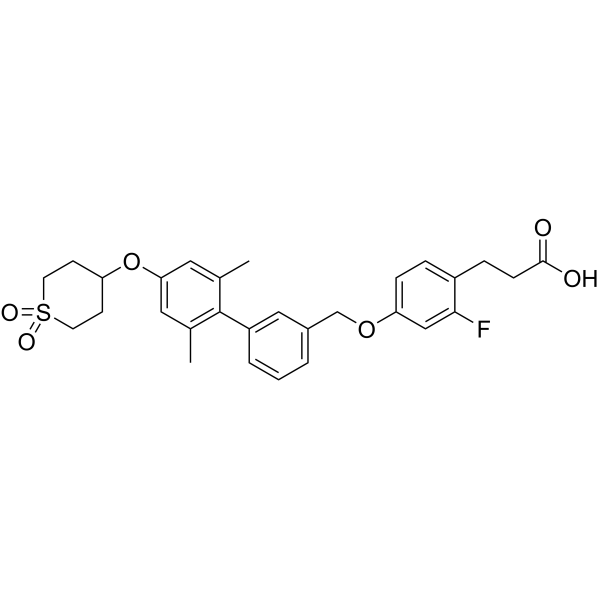
FFAR1/FFAR4 agonist-1 (compound 83) is a FFAR1/FFAR4 agonist with the EC50 of 1 nM A and 4nM for FFAR1 and FFAR4, respectively. FFAR1/FFAR4 agonist-1 can be used for study of glycemic control [1].
loading...
    loading...
Cat. No.: HY-RS16972
Research Areas:  

Others

Ffar1 Mouse Pre-designed siRNA Set A contains three designed siRNAs for Ffar1 gene (Mouse), as well as a negative control, a positive control, and a FAM-labeled negative control.

loading...
    loading...
Cat. No.: HY-RS23415
Research Areas:  

Others

Ffar1 Rat Pre-designed siRNA Set A contains three designed siRNAs for Ffar1 gene (Rat), as well as a negative control, a positive control, and a FAM-labeled negative control.

loading...
    loading...
Cat. No.: HY-148247
CAS No.: 1458656-71-7
Research Areas:  

Metabolic Disease

BI-2081, a chemical probe, is a GPR40 (FFAR1) partial agonist (EC50: 4 nM). BI-2081 induces glucose depending insulin secretion and reduces the plasma glucose concentration. BI-2081 can be used in the research of metabolic diseases, in particular diabetes type 2 [1].
loading...
    loading...
Cat. No.: HY-121212R
CAS No.: 1253909-57-7
Desmethyl Sibutramine (hydrochloride) (Standard) is the analytical standard of Desmethyl Sibutramine (hydrochloride). This product is intended for research and analytical applications. Icosabutate is an orally active engineered fatty acid and a dual FFAR1/FFAR4 (GPR40/GPR120) agonist with EC50 values of 10 μM and 15.5 μM, respectively. Icosabutate acts as a partial agonist of PPAR-α, with an EC50 of 208 nM. Icosabutate inhibits the arachidonic acid cascade and exhibits antioxidant and anti-apoptotic activities. Icosabutate can be used in the research of nonalcoholic steatohepatitis, metabolic dysfunction-associated steatohepatitis, and atherosclerosis [1] .
loading...
    loading...
Cat. No.: HY-101906R
CAS No.: 346692-04-4
DC260126 (Standard) is the analytical standard of DC260126 (HY-101906). This product is intended for research and analytical applications. DC260126 is a potent antagonist of GPR40 (FFAR1). DC260126 dose-dependently inhibits GPR40-mediated Ca2+ elevations stimulated by linoleic acid, oleic acid, palmitoleic acid and lauric acid (IC50: 6.28, 5.96, 7.07, 4.58 μM, respectively) [1]. DC260126 could protect MIN6 β cells from palmitate-induced ER stress and apoptosis .
loading...
    loading...
Cat. No.: HY-178395S
Tricosanoic acid-d45 is the deuterium labeled Tricosanoic acid (HY-W009081). Tricosanoic acid is an endogenous agonist of long-chain saturated fatty acids and free fatty acid receptor FFAR1, which can activate hair growth. Tricosanoic acid (C23:0) has the activity of improving cognitive function by regulating neuronal membrane fluidity, inhibiting neuroinflammatory response, participating in myelination and neuronal energy metabolism. Tricosanoic acid expression levels are low in the prefrontal cortex of Alzheimer's disease (AD) models; while better cognitive performance corresponds to higher serum concentration levels. Tricosanoic acid can be used as a biomarker for diseases related to cognitive decline [1].
loading...
    loading...
Cat. No.: HY-W746542
CAS No.: 2732915-45-4
Tricosanoic acid-d3 is the deuterium labeled Tricosanoic acid (HY-W009081). Tricosanoic acid is an endogenous agonist of long-chain saturated fatty acids and free fatty acid receptor FFAR1, which can activate hair growth. Tricosanoic acid (C23:0) has the activity of improving cognitive function by regulating neuronal membrane fluidity, inhibiting neuroinflammatory response, participating in myelination and neuronal energy metabolism. Tricosanoic acid expression levels are low in the prefrontal cortex of Alzheimer's disease (AD) models; while better cognitive performance corresponds to higher serum concentration levels. Tricosanoic acid can be used as a biomarker for diseases related to cognitive decline [1].
loading...
    loading...
Cat. No.: HY-182921
Target:  

GPR84 Enterovirus

Research Areas:  

Inflammation/Immunology

GPR84 antagonist 11 is a highly selective GPR84 antagonist, with a human pA2 of 8.41 and a pKi of 8.16. GPR84 antagonist 11 competitively inhibits the binding of agonists to the orthosteric site of GPR84 and has improved druglike properties, though its metabolic stability still requires optimization. GPR84 antagonist 11 can be used in the research of autoimmune diseases and fibrotic diseases [1].
loading...
    loading...
Cat. No.: HY-185937
CAS No.: 3110207-82-1
Research Areas:  

Metabolic Disease

FFAR4 agonist-1 is an orally active, selective agonist of FFAR4. FFAR4 agonist-1 improves glucose tolerance, reduces blood glucose levels and promotes insulin secretion. FFAR4 agonist-1 can be used in the research of type 2 diabetes [1].
loading...
    loading...
  • 1

