20 Results for "

Foxp3+ regulatory T cells

" in MedChemExpress (MCE) Product Catalog:
Products (20)

20 Results for "Foxp3+ regulatory T cells" in MCE Product Catalog:

38
38 Publications Verification
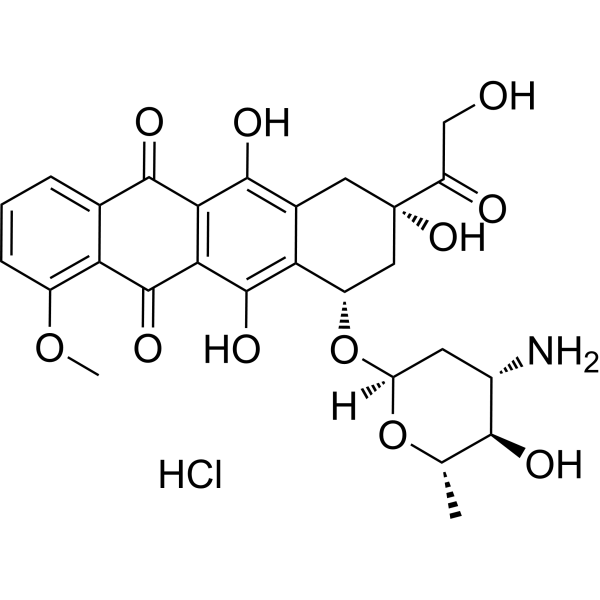
Cat. No.: HY-13624A
CAS No.: 56390-09-1
Purity:  99.15%
Synonyms: 4'-Epidoxorubicin hydrochloride
Epirubicin hydrochloride (4'-Epidoxorubicin hydrochloride), a semisynthetic L-arabino derivative of doxorubicin, has an antineoplastic agent by inhibiting Topoisomerase . Epirubicin hydrochloride inhibits DNA and RNA synthesis. Epirubicin hydrochloride is a Forkhead box protein p3 (Foxp3) inhibitor and inhibits regulatory T cell activity .
loading...
    loading...
38
38 Publications Verification
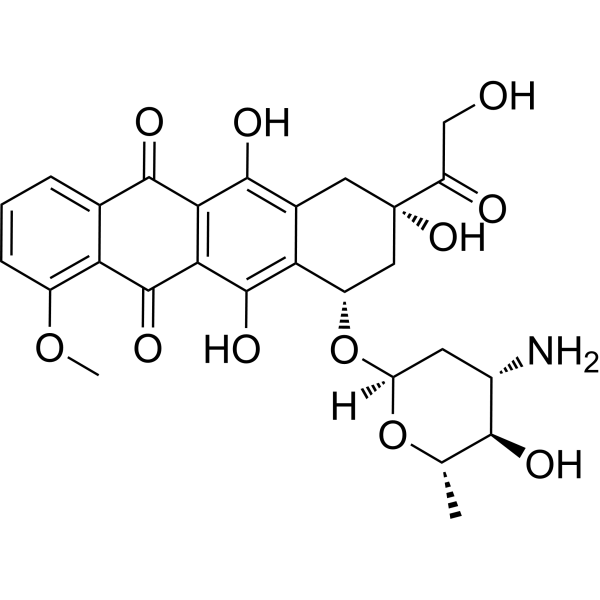
Cat. No.: HY-13624
CAS No.: 56420-45-2
Synonyms: 4'-Epidoxorubicin
Epirubicin (4'-Epidoxorubicin), a semisynthetic L-arabino derivative of doxorubicin, has an antineoplastic agent by inhibiting Topoisomerase . Epirubicin inhibits DNA and RNA synthesis. Epirubicin is a Forkhead box protein p3 (Foxp3) inhibitor and inhibits regulatory T cell activity .
loading...
    loading...
6
6 Cited Publications
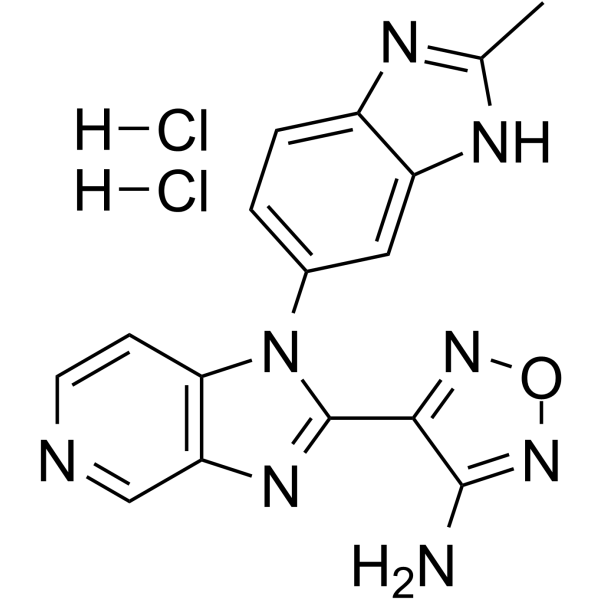
Cat. No.: HY-126675A
CAS No.: 2241300-51-4
Purity:  99.94%
Research Areas:  

Inflammation/Immunology

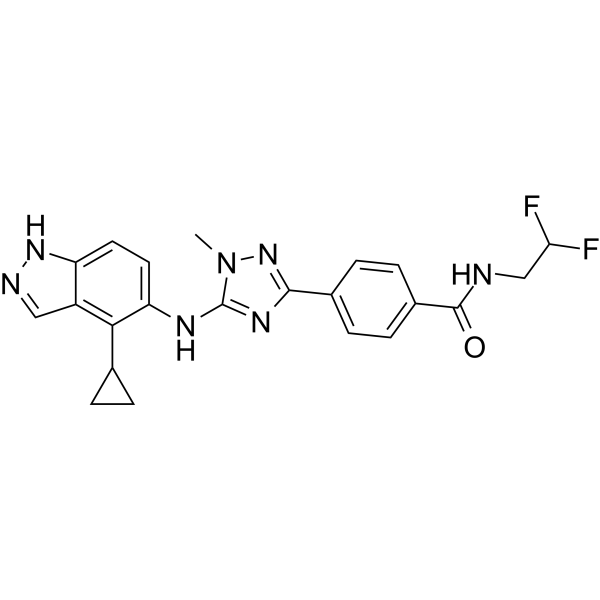
AS2863619 is an orally active CDK8/19 inhibitor that also inhibits BMP2, MDA5 and RIG-I receptors. AS2863619 targets Stat5a-CDK8/19 to promote the differentiation of CD4 + T cells into regulatory T cells and induce FOXP3 expression, thereby restoring immune homeostasis and establishing transplant immune tolerance. AS2863619 also enhances the BMP2/SMAD signaling pathway to promote osteogenic differentiation and inhibit adipogenic differentiation. AS2863619 exerts osteoprotective effects by alleviating inflammation-induced impairment of osteogenic function and inducing neutrophil apoptosis (apoptosis). AS2863619 can be applied to research in related fields such as periodontitis-induced bone defects .
loading...
    loading...
6
6 Cited Publications
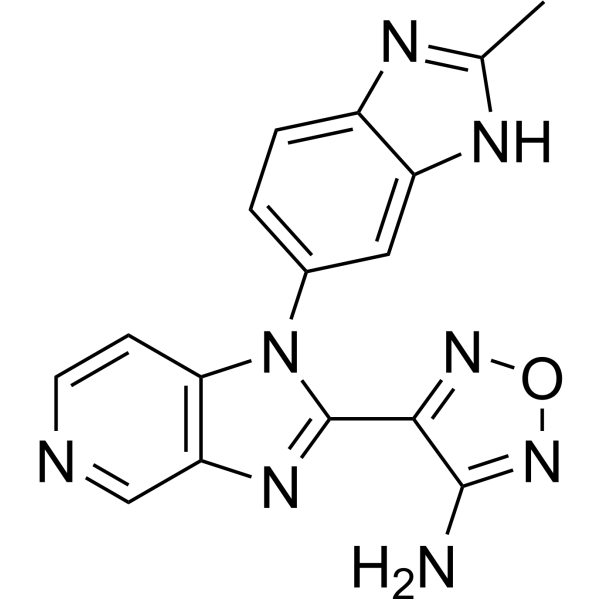
Cat. No.: HY-126675
CAS No.: 2241300-50-3
Purity:  99.68%
Research Areas:  

Inflammation/Immunology

AS2863619 free base is an orally active CDK8/19 inhibitor that also inhibits BMP2, MDA5 and RIG-I receptors. AS2863619 free base targets Stat5a-CDK8/19 to promote the differentiation of CD4 + T cells into regulatory T cells and induce FOXP3 expression, thereby restoring immune homeostasis and establishing transplant immune tolerance. AS2863619 free base also enhances the BMP2/SMAD signaling pathway to promote osteogenic differentiation and inhibit adipogenic differentiation. AS2863619 free base exerts osteoprotective effects by alleviating inflammation-induced impairment of osteogenic function and inducing neutrophil apoptosis (apoptosis). AS2863619 free base can be applied to research in related fields such as periodontitis-induced bone defects .
loading...
    loading...
1
1 Cited Publications
Cat. No.: HY-P1684
CAS No.: 1319725-20-6
Synonyms: Foxp3 inhibitor P60
Peptide P60 is a FOXP3 inhibitor. Peptide P60 reduces the nuclear translocation of FOXP3 and impairs FOXP3-mediated inhibition of NF-κB and NFAT activity. Peptide P60 inhibits the immunosuppressive activity of regulatory T cells and restores the proliferation and activation of effector T cells. Peptide P60 induces lymphoproliferative autoimmune syndrome in neonatal ICR mice and reduces the number of CD4 +CD25 +Foxp3 + T cells in the spleen. Peptide P60 enhances the efficacy of AH1 (HY-P4193) peptide vaccine and recombinant adenovirus-based HCV NS3 vaccine in BALB/c mice, including protective effects against CT26 tumor implantation. Peptide P60 can be used in studies related to tumor immunity, viral infection and lymphoproliferative autoimmune syndrome .
loading...
    loading...
Cat. No.: HY-148808
CAS No.: 2365193-22-0
Purity:  99.33%
Synonyms: RXC007
Target:  

ROCK

Research Areas:  

Cancer

Zelasudil (RXC007) is an orally active, highly selective small molecule Rho-associated coiled-coil containing protein kinase 2 (ROCK2) inhibitor with anti-fibrotic efficacy. Zelasudil elicits positive immunomodulatory effects in metastatic pancreatic tumors with increase of CD8+ and CD4+ T cell infiltrate into the tumor cortex and reduction in immunosuppressive FOXP3+ regulatory T cells at the tumor border. Zelasudil is promising for research of pancreatic ductal adenocarcinoma .
loading...
    loading...
Cat. No.: HY-159692
CAS No.: 2603457-08-3
Synonyms: IONIS-1063734
Target:  

FOXP

Research Areas:  

Cancer

AZD8701 (IONIS-1063734) is an antisense oligonucleotide targeting FOXP3 in regulatory T cells (Tregs), with a human IC50 of 65.2 nM. AZD8701 binds to intronic sites of all FOXP3 pre-mRNA isoforms and mediates dose-dependent FOXP3 knockdown via free uptake. AZD8701 can be used in cancer-related research .
loading...
    loading...
Cat. No.: HY-13624AR
CAS No.: 56390-09-1
Synonyms: 4'-Epidoxorubicin hydrochloride (Standard)
Epirubicin (hydrochloride) (Standard) is the analytical standard of Epirubicin (hydrochloride). This product is intended for research and analytical applications. Epirubicin hydrochloride (4'-Epidoxorubicin hydrochloride), a semisynthetic L-arabino derivative of doxorubicin, has an antineoplastic agent by inhibiting Topoisomerase . Epirubicin hydrochloride inhibits DNA and RNA synthesis. Epirubicin hydrochloride is a Forkhead box protein p3 (Foxp3) inhibitor and inhibits regulatory T cell activity .
loading...
    loading...
Cat. No.: HY-P2114
CAS No.: 173959-12-1
Target:  

Inhibitory Antibodies

Research Areas:  

Cancer

IT9302 is a synthetic IL-10 agonist with the activity of inducing tolerogenic dendritic cells. IT9302 is able to mimic multiple effects of IL-10, including downregulating the antigen presentation machinery and increasing the sensitivity of tumor cells to natural killer cell-mediated lysis. IT9302 can also hinder the response of human monocytes to differentiation factors and reduce the antigen presentation and co-stimulatory capacity of dendritic cells. Dendritic cells treated with IT9302 showed a weakened ability to stimulate T cell proliferation and interferon-γ production. IT9302 exerts its effects through mechanisms that are partially different from IL-10, involving STAT3 inactivation and regulation of the NF-κB intracellular pathway. IT9302-treated dendritic cells showed enhanced expression of membrane-bound TGF-β, associated with the effective induction of foxp3+ regulatory T cells .
loading...
    loading...
Cat. No.: HY-169853
CAS No.: 1189495-81-5
M351-0056 is an orally active VISTA agonist with a Kd value of 12.60 μM. M351-0056 inhibits the activation of the JAK2-STAT2 pathway, reduces the phosphorylation levels of JAK2 and STAT2, and regulates type I interferon (IFN-I) and non-canonical NF-κB pathways. M351-0056 decreases the levels of cytokines (IFN-γ, IL-17A, TNF-α, IL-2 and IL-1β). M351-0056 improves imiquimod (HY-B0180)-induced psoriasis-like skin inflammation, reduces autoantibody levels, kidney damage and immune cell expansion in mice susceptible to chronic graft-versus-host disease and lupus, and delays the progression of systemic lupus erythematosus. M351-0056 can be used in research related to psoriasis-like dermatitis and systemic lupus erythematosus .
loading...
    loading...
Cat. No.: HY-148601
CAS No.: 217939-97-4
Synonyms: DSPG
Target:  

Liposome

Research Areas:  

Inflammation/Immunology

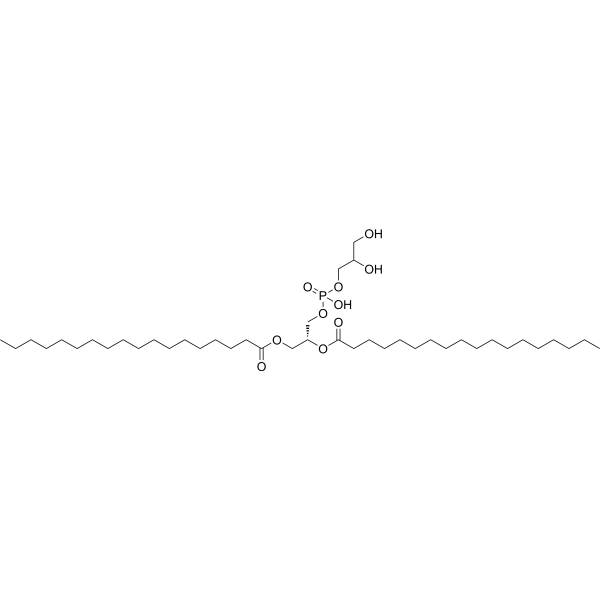
1,2-Distearoyl-sn-Glycero-3-Phosphatidylglycerol (DSPG) is an anionic (negatively charged) phospholipid . 1,2-Distearoyl-sn-Glycero-3-Phosphatidylglycerol is used to prepare lipid microbubbles as ultrasound contrast agents. 1,2-Distearoyl-sn-Glycero-3-Phosphatidylglycerol can be used to construct liposomes as vaccine carriers for the treatment of atherosclerosis. 1,2-Distearoyl-sn-Glycero-3-Phosphatidylglycerol is applicable to the research of drug delivery and diagnostic preparations .
loading...
    loading...
Cat. No.: HY-W060417
CAS No.: 1019158-02-1
Target:  

Interleukin Related

Research Areas:  

Inflammation/Immunology Cancer

iST2-1 is an Stimulation-2 (ST2) inhibitor with an IC50 value of 46.65 μM, blocks interaction between ST2 and IL-33, inhibits downstream signaling. iST2-1 functions as an immunomodulator, reduces proliferation of CD4 + and CD8 + T cells, increases regulatory T cell populations, reduces IFN-γ +CD4 + T cell populations, increases Foxp3 +CD4 + regulatory T cell populations in the gastrointestinal tract. iST2-1 reduces plasma soluble ST2 and IFN-γ levels, reduces graft-versus-host disease scores, improves survival in graft-versus-host disease animal models, preserves graft-versus-tumor effect. iST2-1 can be used for the research of graft-versus-host disease .
loading...
    loading...
Cat. No.: HY-159692A
Synonyms: IONIS-1063734 sodium
Target:  

FOXP

Research Areas:  

Inflammation/Immunology Cancer

AZD8701 (IONIS-1063734) sodium is an antisense oligonucleotide targeting FOXP3 in regulatory T cells (Tregs). AZD8701 sodium can relieve immunosuppression in cancer .
loading...
    loading...
Cat. No.: HY-15091
CAS No.: 170368-04-4
Synonyms: LF-150195
Target:  

Endogenous Metabolite

Research Areas:  

Neurological Disease

Anisperimus (LF-150195) is an immunosuppressant with the activity of enhancing activation-induced T cell death. Anisperimus enhances the sensitivity of T cells to anti-CD95 antibodies and other inducers by promoting the activation of caspase-8 and caspase-10 at the level of the death-inducing signaling complex (DISC). Anisperimus also promotes the development of Foxp3-expressing regulatory CD4 T cells, thereby preventing central nervous system autoimmunity .
loading...
    loading...
Cat. No.: HY-P992361

Research Areas:  

Cancer

HB0030 is a TIGIT inhibitor with antibody-dependent cellular cytotoxicity (ADCC) and complement-dependent cytotoxicity (CDC) activities. HB0030 enhances the expression of activation markers in natural killer (NK) cells, promotes the killing of regulatory T cells (Tregs), and reduces the proportion of FoxP3 + Treg in tumor-infiltrating lymphocytes. The combination of HB0030 with the anti-PD-L1/VEGF bispecific antibody HB0025 further enhances tumor suppression efficacy. HB0030 can be used in studies related to colorectal cancer, pancreatic adenocarcinoma, hepatocellular carcinoma, bladder cancer, breast cancer, non-small cell lung cancer, and advanced solid tumors .
loading...
    loading...
Cat. No.: HY-P991824

Research Areas:  

Inflammation/Immunology

Anti-Mouse CD4 Antibody (YTS 177) reacts with the mouse CD4. Anti-Mouse CD4 Antibody (YTS 177) shows non-depleting but binding does induce rapid internalization of CD4 on both CD4 + Foxp3- T cells and Foxp3 + regulatory T cells. Recommend Isotype Controls: Rat IgG2a kappa, Isotype Control (HY-P990679) .
loading...
    loading...
Cat. No.: HY-10540
CAS No.: 908351-31-5
Synonyms: AEB071 acetate
Target:  

PKC NF-κB

Research Areas:  

Inflammation/Immunology

Sotrastaurin (AEB071) acetate is a selective, orally active PKC inhibitor. Sotrastaurin acetate inactivates NF-κB by inhibiting PKC α, β, θ, γ subtypes, thereby reducing the transcription levels of immune response-related genes. Sotrastaurin acetate effectively inhibits alloreactive T cell proliferation, conventional T cell activation, as well as the production of pro-inflammatory cytokines and B lymphocytes. Sotrastaurin acetate also maintains the functional and phenotypic stability of regulatory T cells, enhances Foxp3 expression and restores the balance of helper T lymphocytes. Sotrastaurin acetate can prolong the survival time of allografts, and alleviate inflammatory responses and myasthenic symptoms by reducing anti-AChR antibody levels. Sotrastaurin acetate is widely used in studies related to kidney transplantation, psoriasis and myasthenia gravis .
loading...
    loading...
Cat. No.: HY-126675G
CAS No.: 2241300-51-4
AS2863619 GMP is AS2863619 (HY-126675) produced by using GMP guidelines. GMP small molecules works appropriately as an auxiliary reagent for cell therapy manufacture. AS2863619 is an orally active CDK8/19 inhibitor that also inhibits BMP2, MDA5 and RIG-I receptors. AS2863619 targets Stat5a-CDK8/19 to promote the differentiation of CD4 + T cells into regulatory T cells and induce FOXP3 expression, thereby restoring immune homeostasis and establishing transplant immune tolerance. AS2863619 also enhances the BMP2/SMAD signaling pathway to promote osteogenic differentiation and inhibit adipogenic differentiation. AS2863619 exerts osteoprotective effects by alleviating inflammation-induced impairment of osteogenic function and inducing neutrophil apoptosis (apoptosis). AS2863619 can be applied to research in related fields such as periodontitis-induced bone defects .
loading...
    loading...
Cat. No.: HY-181472
10 (11)-Cl-BBQ is a high-affinity aryl hydrocarbon receptor (AhR) agonist. 10 (11)-Cl-BBQ is a mixture of 10-Cl-BBQ and 11-Cl-BBQ, among which 11-Cl-BBQ exhibits higher AhR activation potency than 10-Cl-BBQ. Low-dose/short-term AhR activation by 10 (11)-Cl-BBQ promotes IL-17 production, while high-dose/sustained activation induces regulatory T cells and suppresses immune responses. 10 (11)-Cl-BBQ can be used in immunomodulation research .
loading...
    loading...
Cat. No.: HY-NP229
DNP-BSA is a multivalent antigen and protein-binding reagent. DNP-BSA binds to subdomain IIA (Site I) of bovine serum albumin via predominantly hydrophobic forces, with spontaneous complex formation via combined dynamic and static quenching. DNP-BSA induces cross-linking of IgE-bound FceRI, triggering tyrosine phosphorylation of FceRI β and γ subunits. DNP-BSA binds to anti-DNP IgE via its DNP groups, forming cross-links between IgE-FceRI complexes, with most DNP groups initially unavailable but transiently exposed for binding. DNP-BSA induces FITC fluorescence quenching in FITC-labeled anti-DNP IgE, proportional to occupied IgE Fab binding sites. DNP-BSA can be used for the research of allergy, inflammation, and contact sensitivity (allergic contact dermatitis) .
loading...
    loading...
  • 1

