

28 Results for "

HEK293 membranes

" in MedChemExpress (MCE) Product Catalog:
Products (28)

28 Results for "HEK293 membranes" in MCE Product Catalog:

155
155 Publications Verification
Cat. No.: HY-100545
CAS No.: 126150-97-8
Purity:  99.23%
BAPTA-AM is a well-known membrane permeable Ca 2+ chelator. BAPTA-AM inhibits hERG channels, hKv1.3 and hKv1.5 channels in HEK 293 cells with IC50s of 1.3 μM, 1.45 μM and 1.23 μM, respectively .
loading...
    loading...
14
14 Cited Publications
Cat. No.: HY-108682
CAS No.: 680590-49-2
Purity:  99.92%
Research Areas:  

Neurological Disease

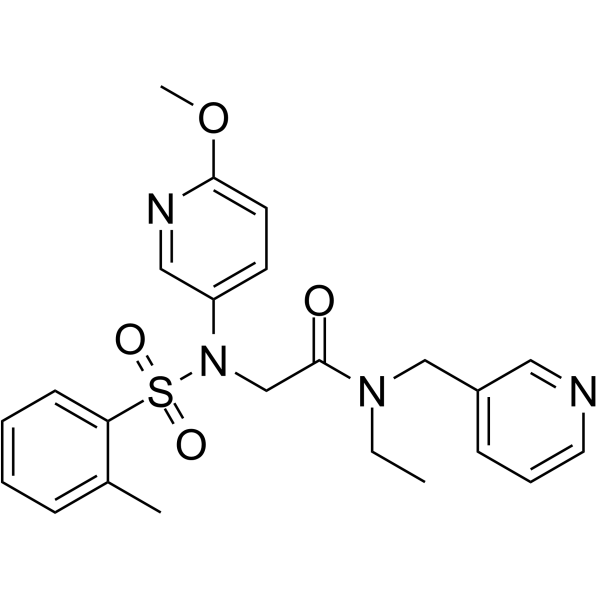
EMPA is a high-affinity, reversible and selective orexin OX2 receptor antagonist. [ 3H]EMPA binds to human and rat OX2-HEK293 membranes with KD values of 1.1 and 1.4 nM respectively .
loading...
    loading...
Cat. No.: HY-P10932A
Research Areas:  

Neurological Disease

pGk13a TFA is an azide (azide group can be combined with fluorophore)-containing amphiphilic membrane labeling probe. pGk13a TFA enables high-resolution imaging of cell membranes in the ultrastructural membrane expansion microscopy (umExM) technique, facilitating the observation of membrane-associated structures and proteins. pGk13a TFA can be used for neuronal structural studies .
loading...
    loading...
Cat. No.: HY-D1602
CAS No.: 217075-07-5
Target:  

Fluorescent Dye

Research Areas:  

Others

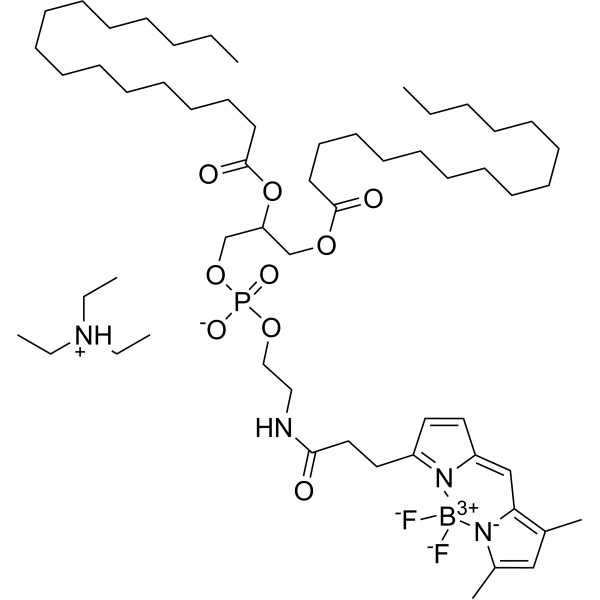
BODIPY FL-DHPE is a fluorescent lipid probe composed of phosphatidylethanolamine (DHPE) labeled with a BODIPY FL fluorophore, which is used for fluorescent labeling of cell membranes, differentiation between liposome membrane fusion and endocytic pathways, and studies of membrane dynamics. The two C16 alkyl chains of BODIPY FL-DHPE insert into the lipid bilayer of membranes, and its fluorescence exhibits concentration dependence: it exists as monomers and emits green fluorescence at low mole fractions; it forms dimers with a red-shifted emission peak at high mole fractions; this spectral change is independent of enzymes, pH, and membrane potential. When liposomes enter the plasma membrane via membrane fusion, the dye is diluted, leading to attenuation of the dimer peak and enhancement of the monomer peak; when entry occurs via endocytosis, the dye remains in endosomes at high concentration with no change in the dimer peak, allowing differentiation between the two uptake pathways. Ex = 488 nm; monomer Em = 515 nm, dimer Em ≈ 620 nm .
loading...
    loading...
Cat. No.: HY-156004
CAS No.: 2399497-60-8
Purity:  99.62%
Target:  

Bacterial

Research Areas:  

Others

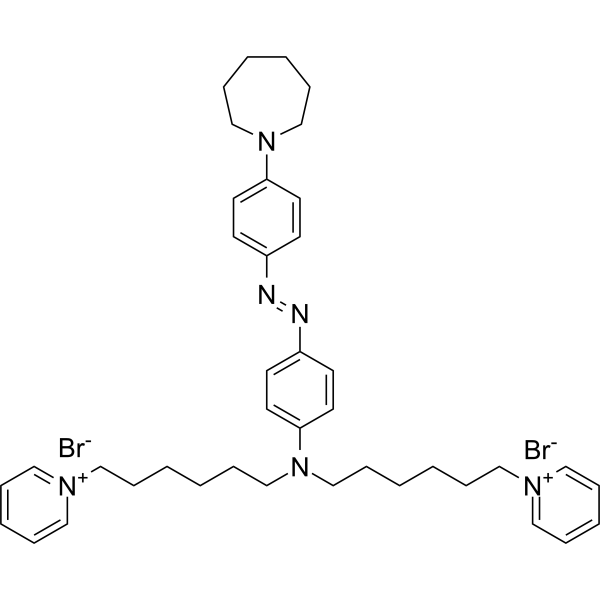
Ziapin 2 is a membrane potential modulator and an intracellular membrane photoactuator. Ziapin 2 binds to the bacterial plasma membrane, and upon embedding into the lipid bilayer, undergoes trans-cis isomerization under 470 nm light irradiation, which triggers membrane potential hyperpolarization and induces the opening of ion channels on bacterial cell membranes. Through interactions with lipids, Ziapin 2 increases the overall flexibility of the lipid bilayer. Ziapin 2 can form photosensitive transmembrane dimers to trigger cellular signal transduction. Ziapin 2 is applicable to the research and regulation of bacterial electrical signal transduction and the regulation of membrane physical properties .
loading...
    loading...
Cat. No.: HY-124314
CAS No.: 1620582-23-1
Target:  

MAGL DAGL

Research Areas:  

Metabolic Disease

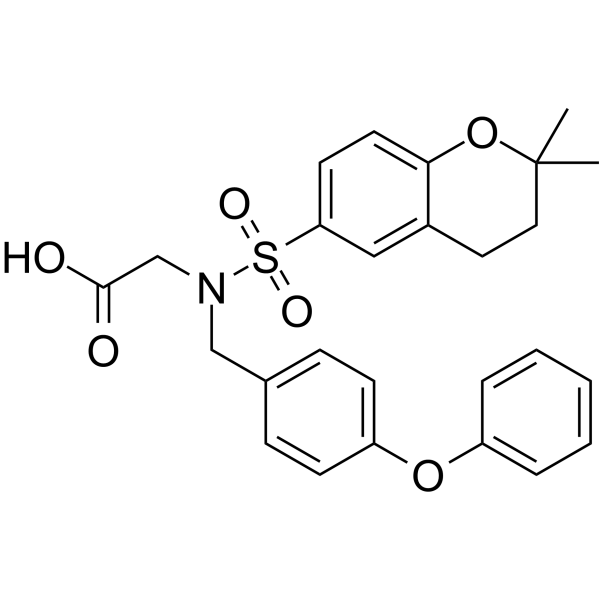
LEI-106 is a dual ABHD6 and DAGL-α inhibitor, with a Ki of 0.8 μM for ABHD6, and an IC50 of 18 nM and a Ki of 0.7 μM for DAGL-α. LEI-106 blocks the synthesis of 2-arachidonoylglycerol, reduces the level of endothelial cell-derived 2-arachidonoylglycerol, without altering the levels of cannabinoids and diacylglycerol. LEI-106 is applicable to research related to diet-induced obesity and metabolic syndrome .
loading...
    loading...
Cat. No.: HY-NP163A
Synonyms: WGA-AF488
Wheat germ agglutinin-AF488 (WGA-AF488) is a cell membrane-specific staining agent prepared by conjugating wheat germ agglutinin with the Alexa Fluor 488 (HY-D1304) fluorescent dye, and it binds to cell surface glycoproteins with high affinity. Wheat germ agglutinin-AF488 is applied in fluorescence microscopy and confocal imaging techniques, and it can clearly label the membrane structures of various cells including breast cancer cells, enabling high-resolution visual observation. Wheat germ agglutinin-AF488 is used in studies of breast cancer and triple-negative breast cancer to observe cell morphology and membrane dynamic changes .
loading...
    loading...
Cat. No.: HY-W013712
CAS No.: 69563-88-8
Target:  

Potassium Channel

Research Areas:  

Neurological Disease

GI-530159 is a selective opener of TREK1 and TREK2 potassium channels. GI-530159 displays selectivity for TREK1/2 over TRAAK, TASK3 and other potassium channels, with an EC50 of 0.76 μM for TREK1. GI-530159 reduces rat dorsal root ganglion neuron excitability and shows potential analgesic effect .
loading...
    loading...
Cat. No.: HY-100545R
CAS No.: 126150-97-8
BAPTA-AM (Standard) is the analytical standard of BAPTA-AM. This product is intended for research and analytical applications. BAPTA-AM is a well-known membrane permeable Ca2+ chelator. BAPTA-AM inhibits hERG channels, hKv1.3 and hKv1.5 channels in HEK 293 cells with IC50s of 1.3 μM, 1.45 μM and 1.23 μM, respectively .
loading...
    loading...
Cat. No.: HY-P10932
Research Areas:  

Neurological Disease

pGk13a is an amphipathic membrane-labeling probe containing an azide group, which can bind to fluorophores. pGk13a enables high-resolution imaging of cell membranes in the ultrastructure expansion microscopy (umExM) technique, facilitating the observation of membrane-associated structures and proteins. pGk13a is applicable to neuronal structure research .
loading...
    loading...
Cat. No.: HY-125717
CAS No.: 330819-85-7
Target:  

mGluR

Research Areas:  

Neurological Disease

VU0029251 is a mGluR5 partial antagonist (Ki: 1.07 μM). VU0029251 inhibits glutamate induced calcium mobilization in HEK293 cell membranes expressing rat mGluR5 (IC50: 1.7 μM) .
loading...
    loading...
Cat. No.: HY-145257
CAS No.: 1808389-92-5
Target:  

GABA Receptor

Research Areas:  

Neurological Disease

GABAA receptor agent 5 (compound 018) is a potent γ-GABAAR antagonist with an Ki of 0.020 µM. GABAA receptor agent 5 shows γ-GABAAR antagonist activity with low cellular membrane permeability .
loading...
    loading...
Cat. No.: HY-108682R
CAS No.: 680590-49-2
EMPA (Standard) is the analytical standard of EMPA (HY-108682). This product is intended for research and analytical applications. EMPA is a high-affinity, reversible and selective orexin OX2 receptor antagonist. [3H]EMPA binds to human and rat OX2-HEK293 membranes with Kd values of 1.1 and 1.4 nM respectively .
loading...
    loading...
Cat. No.: HY-P2818F
CAS No.: 9001-78-9
Synonyms: Apase, Human (HEK293)
Alkaline phosphatase (Apase), Human (HEK293) is an orally active membrane-bound glycoprotein that catalyzes the hydrolysis of phosphate monoesters at alkaline pH. Alkaline phosphatase reduces myeloperoxidase activity and bacterial translocation. Alkaline phosphatase improves survival rate of mice infected with E. coli. Alkaline phosphatase improves TNBS-induced colon inflammation .
loading...
    loading...
Cat. No.: HY-145256
CAS No.: 2035203-91-7
Target:  

GABA Receptor

Research Areas:  

Neurological Disease

GABAA receptor agent 4 (compound 1e) is a potent γ-GABAAR antagonist with an Ki of 0.18 µM. GABAA receptor agent 4 efficiently rescues inhibition of T cell proliferation. GABAA receptor agent 4 has the immunomodulatory potential .
loading...
    loading...
Cat. No.: HY-173606
CAS No.: 1938081-40-3
Research Areas:  

Others

DSPE-PEG2000-Azide ammonium is an azide-functionalized phospholipid and lipid-polyethylene glycol conjugate. DSPE-PEG2000-Azide ammonium serves as a component of azide-functionalized liposome nanoparticles, which enables conjugation with DBCO-modified antibodies and proteins via strain-promoted alkyne-azide cycloaddition, and can also passively insert into exosome membranes through hydrophobic interactions, thereby achieving modular surface engineering via azide-alkyne click chemistry. DSPE-PEG-Azide ammonium binds to bovine milk exosomes with a KD of 347 μM .
loading...
    loading...
Cat. No.: HY-W015787
CAS No.: 7768-28-7
2-Hydroxyphenylethanol is a molecular chaperone that rescues misfolded P123S mutant pendrin, promoting translocation from the cytoplasm to the plasma membrane. 2-Hydroxyphenylethanol can be used for the research of pendred syndrome .
loading...
    loading...
Cat. No.: HY-W158948
CAS No.: 180161-14-2
Target:  

Opioid Receptor

Research Areas:  

Neurological Disease

6-Fluoro-3-(1,2,3,6-tetrahydropyridin-4-yl)-1H-indole is a ORL-1 receptor modulator. 6-Fluoro-3-(1,2,3,6-tetrahydropyridin-4-yl)-1H-indole regulates downstream pathways associated with nociception, cognition and physiological processes. 6-Fluoro-3-(1,2,3,6-tetrahydropyridin-4-yl)-1H-indole is used in the research of central nervous system diseases and pain-related disorders including anxiety, depression, Alzheimer's disease and attention deficit disorder .
loading...
    loading...
Cat. No.: HY-D3196
CAS No.: 1198157-60-6
AG2 is a glucose uptake tracer and two-photon fluorescent probe. AG2 is taken up by cells via glucose-specific transport systems, rather than passive diffusion; it preferentially accumulates in cancer cells and colon cancer tissues compared with normal cells and tissues; it mainly localizes to mitochondria, with a small amount also distributed in the cytoplasm and cell membrane. AG2 can be used for colon cancer research .
loading...
    loading...
Cat. No.: HY-181802
Target:  

BCRP

Research Areas:  

Cancer

MRS8431 is an ABCG2 inhibitor with a IC50 of 160 nM against human ABCG2. MRS8432 partially inhibits ABCG2-mediated substrate transport. MRS8432 is applicable to research related to cancer multidrug resistance .
loading...
    loading...

