12 Results for "

HT-29 colon carcinoma cells

" in MedChemExpress (MCE) Product Catalog:
Products (12)

12 Results for "HT-29 colon carcinoma cells" in MCE Product Catalog:

33
33 Cited Publications
Cat. No.: HY-B0350A
CAS No.: 156-54-7
Synonyms: Butanoic acid sodium; Butyric acid sodium
Target:  

HDAC

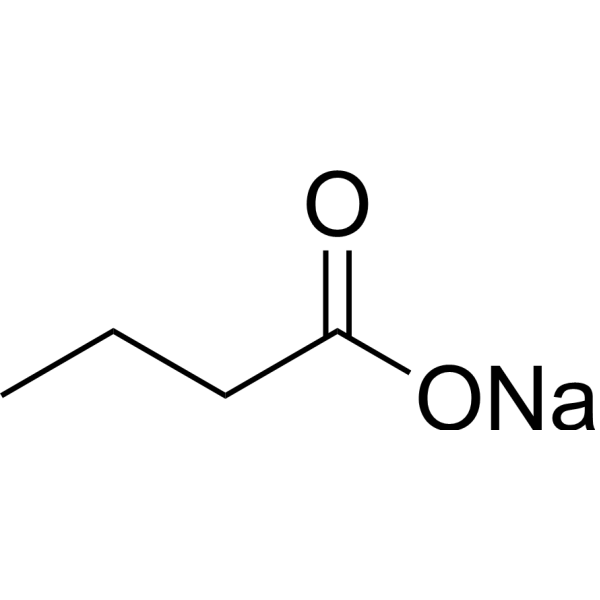
Sodium butyrate ((Butanoic acid; Butyric acid) sodium) is an orally active HDAC inhibitor. Sodium butyrate induces hyperacetylation of core histones and affects phosphorylation of H1/H2A, thereby altering chromatin structure and regulating gene expression. Sodium butyrate can be used in research related to various cancers, inflammatory bowel disease, and sickle cell anemia .
loading...
    loading...
4
4 Cited Publications
Cat. No.: HY-N2445
CAS No.: 37308-75-1
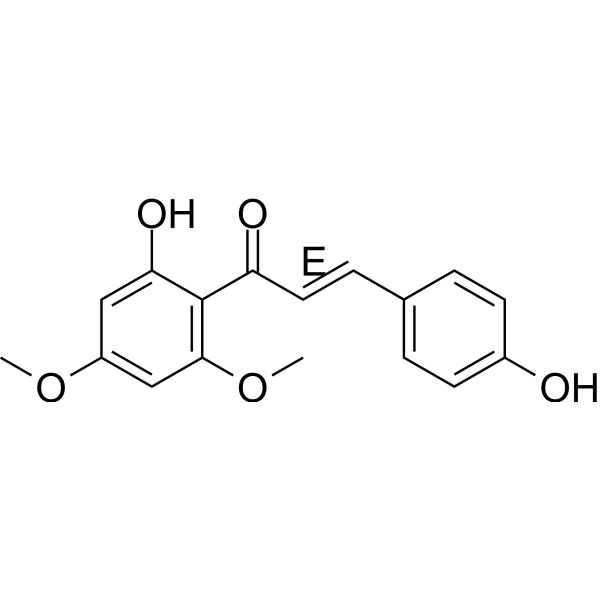
Flavokawain C is an orally active natural chalcone. Flavokawain C inhibits the proliferation of various cancer cells. Flavokawain C upregulates GADD153 in cancer cells, inhibits the phosphorylation of Akt and JNK, suppresses early ERK phosphorylation, activates late ERK phosphorylation, activates caspase related subtypes, induces PARP-1 cleavage, causes upregulation of p21 and p27, downregulation of mutant p53 and anti-apoptotic IAP proteins, elevates intracellular ROS levels, reduces SOD activity, and induces apoptosis. Flavokawain C downregulates FABP4, induces autophagy in cancer cells, and activates the AMPK/mTOR pathway . Flavokawain C decreases the expression of glycolysis-related proteins GLUT1 and HK2, and inhibits glycolysis in nasopharyngeal carcinoma cells. Flavokawain C inhibits the activation of the EGFR/PI3K/Akt/mTOR signaling pathway and reduces the expression of HSP90B1. Flavokawain C inhibits angiogenesis by decreasing the expression of angiogenic proteins Ang-1 and VEGF in human umbilical vein endothelial cells. Flavokawain C increases γ-H2AX levels in cells, inhibits the phosphorylation of FAK, PI3K and AKT in cells, and induces DNA damage in cells. Flavokawain C exerts anti-tumor activity in multiple tumor xenograft mouse models. Flavokawain C is applicable to research related to colorectal cancer, colon adenocarcinoma, nephroblastoma, nasopharyngeal carcinoma and liver cancer .
loading...
    loading...
Cat. No.: HY-N8420
CAS No.: 21796-15-6
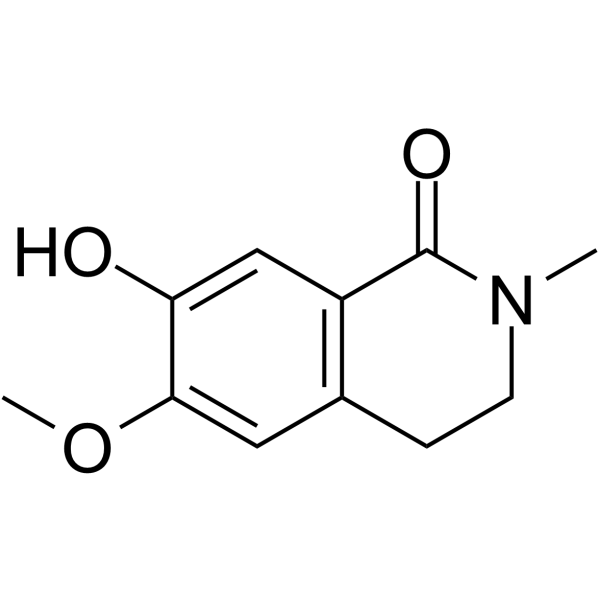
Thalifoline is an isoquinoline alkaloid. Thalifoline exerts cytotoxic effects on cancer cells. Thalifoline inhibits the growth of Fusarium oxysporum f. sp. lycopersici. Thalifoline can be used in research related to lung adenocarcinoma, colon cancer, oral epidermoid carcinoma, and fungal infections .
loading...
    loading...
Cat. No.: HY-131438
CAS No.: 149809-18-7
Target:  

Topoisomerase

Research Areas:  

Cancer

GI-149893 is a selective topoisomerase I (TopoI) inhibitor. GI-149893 prevents DNA religation and induces irreversible DNA damage in tumor cells. GI-149893 is promising for research of cancers (e.g., colon carcinoma HT-29/SW-48, breast MX-1, prostate PC-3 xenografts) .
loading...
    loading...
Cat. No.: HY-171906A
Synonyms: 1-Arachidonoyl-sn-glycerol 3-phosphate sodium; 1-Arachidonoyl LPA sodium; LPA (20:4) sodium
Target:  

LPL Receptor

Research Areas:  

Cancer

1-Arachidonoyl-2-hydroxy-sn-glycero-3-PA (sodium) (1-Arachidonoyl-sn-glycerol 3-phosphate (sodium)) is a phospholipid with arachifonic acid at the sn-1 position. 1-Arachidonoyl-2-hydroxy-sn-glycero-3-PA (sodium) binds to the LPA2/EDG4 receptor (EC50 of 10 nM). 1-Arachidonoyl-2-hydroxy-sn-glycero-3-PA (sodium) can be found in rat brain as 37% of the arachidoinic acid-containing lysophosphatidic acid species. 1-Arachidonoyl-2-hydroxy-sn-glycero-3-PA (sodium) is the precursor to 1-arachidonoyl glycerol. 1-Arachidonoyl-2-hydroxy-sn-glycero-3-PA (sodium) can prevent TNF-α and IL-6 secretion in wild type LPS-stimulated dendritic cells. 1-Arachidonoyl-2-hydroxy-sn-glycero-3-PA (sodium) reduces differentiation of HT-29 colon carcinoma cells into goblet cells when sodium butyrate is present .
loading...
    loading...
Cat. No.: HY-117356A
CAS No.: 911391-37-2
Research Areas:  

Cancer

MRS2693 ammonium is a selective P2Y6 receptor agonist. MRS2693 ammonium exerts biological effects by activating the Gq-coupled P2Y6 receptor, the ERK1/2 pathway, and the P2RY6-PLCB3-CAMKK2-PRKAA1-ULK1 signaling cascade. MRS2693 ammonium attenuates TNFα-induced NF-κB activation, stabilizes XIAP via AKT-mediated phosphorylation, induces autophagy, and reactivates PRKAA1. MRS2693 ammonium can be used in research on diseases including skeletal muscle ischemia/reperfusion injury, TNFα-induced skeletal muscle apoptosis, chronic myelomonocytic leukemia, colorectal cancer, and dry eye disease .
loading...
    loading...
Cat. No.: HY-171906
CAS No.: 65446-08-4
Synonyms: 1-Arachidonoyl-sn-glycerol 3-phosphate; 1-Arachidonoyl LPA; LPA (20:4)
Target:  

LPL Receptor

Research Areas:  

Inflammation/Immunology

1-Arachidonoyl-2-hydroxy-sn-glycero-3-PA is a phospholipid containing arachidonic acid at the sn-1 position. It is a precursor to 1-arachidonoyl glycerol (1-Monoarachidin; HY-130567) . 1-Arachidonoyl-2-hydroxy-sn-glycero-3-PA binds to the LPA2/EDG4 receptor with an EC50 value of approximately 10 nM . It prevents TNF-α and IL-6 secretion in wild-type but not Lpa2-/- dendritic cells stimulated by LPS . It also decreases differentiation of HT-29 human colon carcinoma cells to goblet cells in the presence of sodium butyrate .
loading...
    loading...
Cat. No.: HY-184827
CAS No.: 871544-55-7
Target:  

Drug Intermediate

Research Areas:  

Cancer

1-(2-Chloroacetyl)-3-(2,3-dimethylphenyl) urea is an anticancer agent. 1-(2-Chloroacetyl)-3-(2,3-dimethylphenyl) urea inhibits the growth of colon cancer, cutaneous melanoma and breast cancer. 1-(2-Chloroacetyl)-3-(2,3-dimethylphenyl) urea can be used in the research of colon cancer, cutaneous melanoma and breast cancer .
loading...
    loading...
Cat. No.: HY-184345
CAS No.: 332858-46-5
Target:  

Parasite

Research Areas:  

Infection Cancer

(+)-Cyclozonarone is a benzoquinone derivative found in brown algae Dictyopteris undulata, with activity against T. cruzi epimastigotes, Tulahuen strains. (+)-Cyclozonarone inhibits growth of cancer and endothelial cells, and exhibits anti-leishmanial activity. (+)-Cyclozonarone can be used for the research of lung carcinoma, colon carcinoma, prostate carcinoma .
loading...
    loading...
Cat. No.: HY-187153
CAS No.: 6003-11-8
Target:  

Topoisomerase

Research Areas:  

Metabolic Disease Cancer

Alizarin 2-methyl ether is a DNA topoisomerase inhibitor. Alizarin 2-methyl ether inhibits the relaxation of supercoiled DNA via DNA topoisomerase I and II. Alizarin 2-methyl ether promotes adipocyte differentiation by increasing lipid accumulation. Alizarin 2-methyl ether possesses antidiabetic and insulin-sensitizing properties. Alizarin 2-methyl ether can be used in research related to human colon cancer, P-388 lymphocytic leukemia and diabetes .
loading...
    loading...
Cat. No.: HY-186206
CAS No.: 509078-28-8
Target:  

Drug Metabolite

Research Areas:  

Cancer

(Rac)-EGC-M7 is a racemic microbial metabolite of green tea Catechin (EGC) (HY-N0898), and acts as an inhibitor of nitric oxide production and cancer cell growth. (Rac)-EGC-M7 can be used in the research of esophageal squamous cell carcinoma and colon adenocarcinoma .
loading...
    loading...
Cat. No.: HY-133849
CAS No.: 849215-53-8
Target:  

Sirtuin

Research Areas:  

Cancer

Aristoforin, a hypericin derivative, inhibits the activities of SIRT1 and SIRT2. Aristoforin induces G1 phase cell cycle arrest, scavenges hydroxyl free radicals, and exhibits protective activity against Fe 2+-induced DNA breakage. Aristoforin can be used in studies related to breast cancer and colon adenocarcinoma .
loading...
    loading...
  • 1

