1. Search Result
Search Result
Pathways Recommended: Stem Cell/Wnt Cell Cycle/DNA Damage
Results for "

HeLa/HEK293 cells

" in MedChemExpress (MCE) Product Catalog:

23

Inhibitors & Agonists

1

Fluorescent Dyes

1

MCE Kits

1

Inhibitory Antibodies

4

Natural
Products

3

Isotope-Labeled Compounds

1

Oligonucleotides

Cat. No. Product Name Target Research Areas Chemical Structure
  • HY-12033
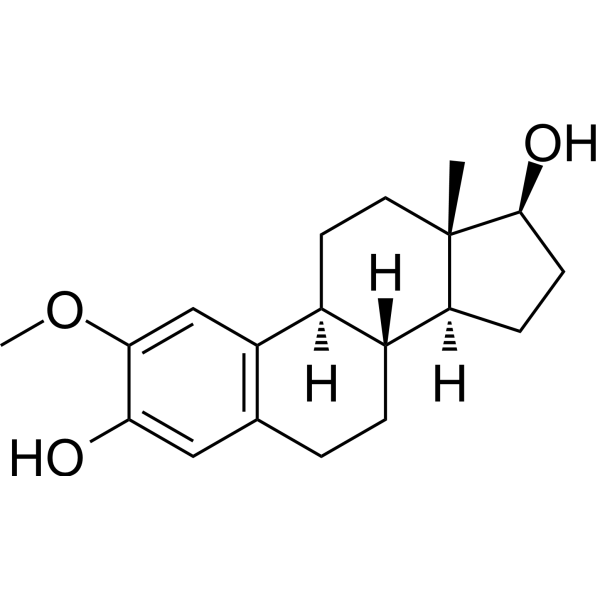
    2-Methoxyestradiol
    30+ Cited Publications

    2-ME2; NSC-659853

    Microtubule/Tubulin Reactive Oxygen Species (ROS) Apoptosis Autophagy Endogenous Metabolite Cancer
    2-Methoxyestradiol (2-ME2), an orally active endogenous metabolite of 17β-estradiol (E2), is an apoptosis inducer and an angiogenesis inhibitor with potent antineoplastic activity. 2-Methoxyestradiol also destablize microtubules. 2-Methoxyestradio, also a potent superoxide dismutase (SOD) inhibitor and a ROS-generating agent, induces autophagy in the transformed cell line HEK293 and the cancer cell lines U87 and HeLa .
    2-Methoxyestradiol
  • HY-N0316
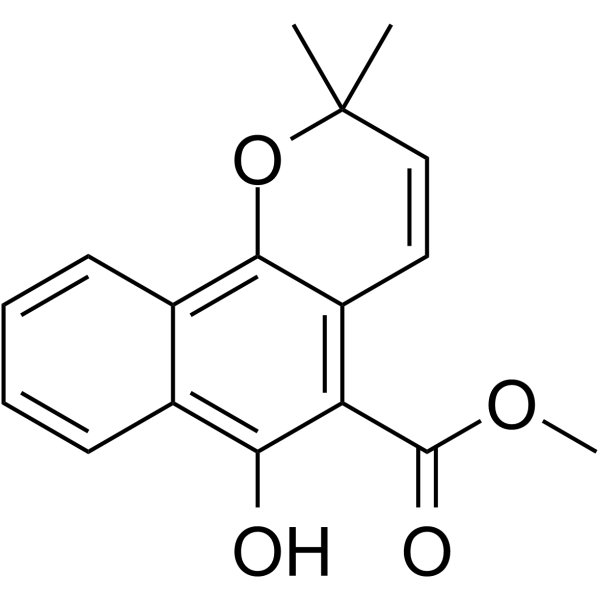
    Mollugin
    2 Publications Verification

    JAK NF-κB Reactive Oxygen Species (ROS) Apoptosis VEGFR c-Myc Cancer
    Mollugin is an orally active and potent NF-κB inhibitor. Mollugin induces S-phase arrest of HepG2 cells, and increased intracellular reactive oxygen species (ROS) levels. Mollugin induces DNA damage in HepG2 cells, as well as an increase in the expression of p-H2AX. Mollugin shows anti-cancer effect by inhibiting TNF-α-induced NF-κB activation. Mollugin enhances the osteogenic action of BMP-2 (bone morphogenetic protein 2) via the p38-Smad signaling pathway .
    Mollugin
  • HY-108708

    PARP Cancer
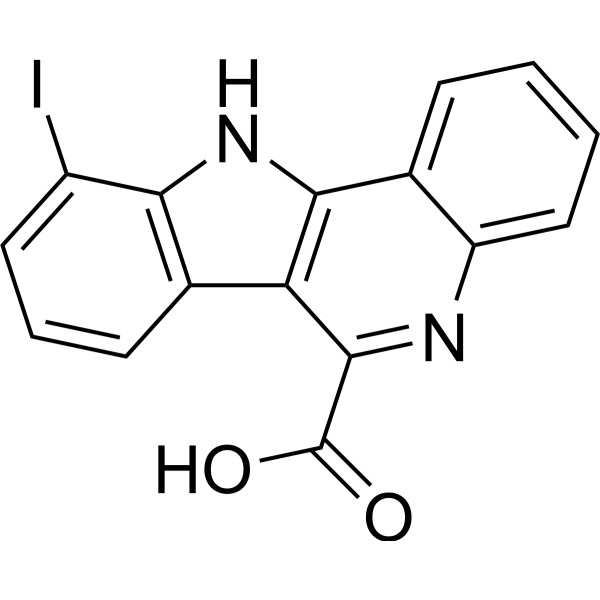
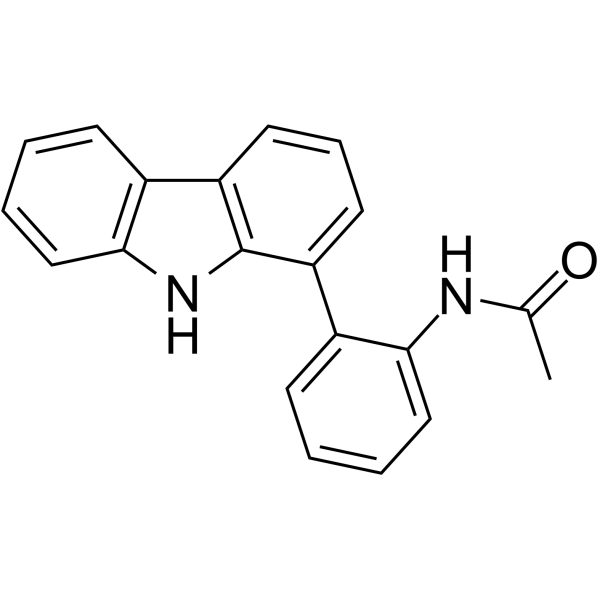
    GeA-69 is a selective, allosteric inhibitor of poly-adenosine-diphosphate-ribose polymerase 14 (PARP14) targeting macrodomain 2 (MD2), with a Kd value of 2.1 μM. GeA-69 involves in DNA damage repair mechanisms and prevents recruitment of PARP14 MD2 to sites of laser-induced DNA damage .
    GeA-69
  • HY-150364

    RGLS8429; RG1015

    MicroRNA Metabolic Disease
    Farabursen (RGLS8429; RG1015) is a blood-brain barrier-permeable miR-17 inhibitor. Farabursen derepresses Pkd1 and Pkd2, the target genes of miR-17, increases the levels of PC1 and PC2, and reduces cyst growth. Farabursen decreases renal cyst growth, kidney weight-to-body weight ratio, cyst index, proliferation index, and blood urea nitrogen levels in mouse models. Farabursen is applicable to research related to autosomal dominant polycystic kidney disease .
    Farabursen
  • HY-12033S2

    2-ME2-d5; NSC-659853-d5

    Isotope-Labeled Compounds Microtubule/Tubulin Reactive Oxygen Species (ROS) Apoptosis Autophagy Endogenous Metabolite Cancer
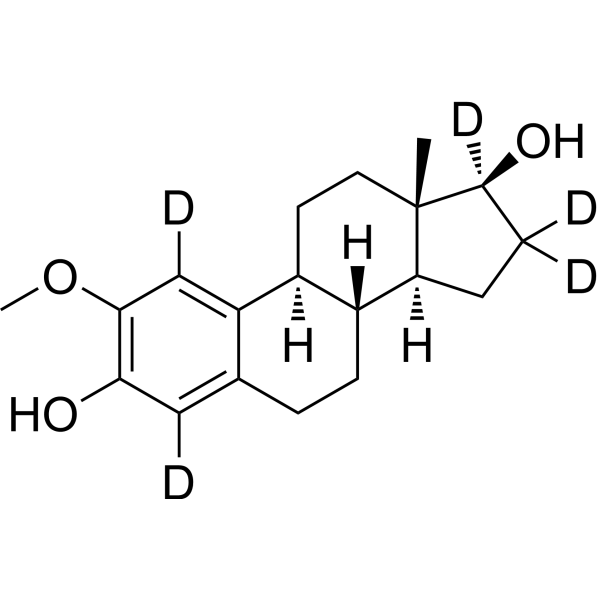
    2-Methoxyestradiol-d5 is the deuterium labeled 2-Methoxyestradiol. 2-Methoxyestradiol (2-ME2), an orally active endogenous metabolite of 17β-estradiol (E2), is an apoptosis inducer and an angiogenesis inhibitor with potent antineoplastic activity. 2-Methoxyestradiol also destablize microtubules. 2-Methoxyestradio, also a potent superoxide dismutase (SOD) inhibitor and a ROS-generating agent, induces autophagy in the transformed cell line HEK293 and the cancer cell lines U87 and HeLa .
    2-Methoxyestradiol-d5
  • HY-146221
    Dyrk1A-IN-5
    1 Publications Verification

    DYRK Neurological Disease
    Dyrk1A-IN-5 (Compound 5j) is a potent and selective DYRK1A inhibitor, with an IC50 of 6 nM. yrk1A-IN-5 exhibits significant selectivity for DYRK1B (IC50 = 600 nM) and CLK1 (IC50 = 500 nM), but shows almost no inhibition of DYRK2 (IC50 > 10 μM). Dyrk1A-IN-5 can be used for Down syndrome research .
    Dyrk1A-IN-5
  • HY-147917

    ADC Payload DNA/RNA Synthesis Cancer
    RNA polymerase II-IN-2 is a RNA polymerase II inhibitor with a Ki value of 74.1 nM. RNA polymerase II-IN-2 inhibits Pol II-mediated transcription and induces cytotoxicity in mammalian cells. RNA polymerase II-IN-2 serves as a payload for antibody-drug conjugates (ADC) and is applicable for cancer research .
    RNA polymerase II-IN-2
  • HY-169086

    PROTACs Cancer
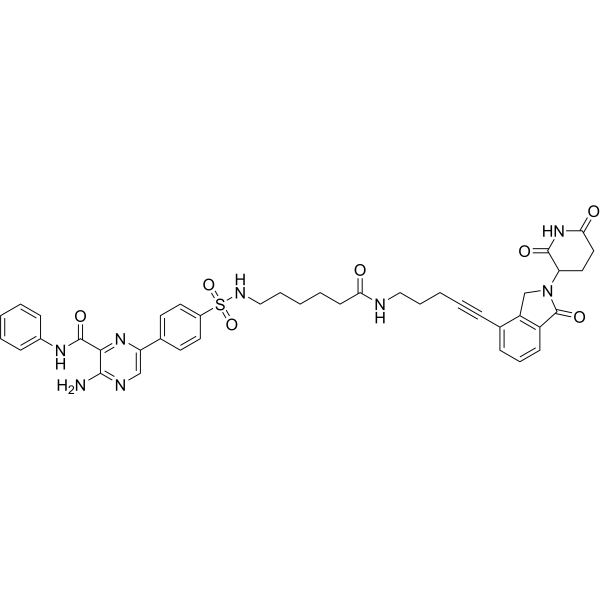
    KL-465 is a MAGE-A3 PROTAC degrader that degrades MAGE-A3 in HeLa cells with a DC50 of 2 μM. KL-465 inhibits the proliferation of MAGE-A3-positive cancer cells. KL-465 can be used for the research of MAGE-A3-related cancers .
    KL-465
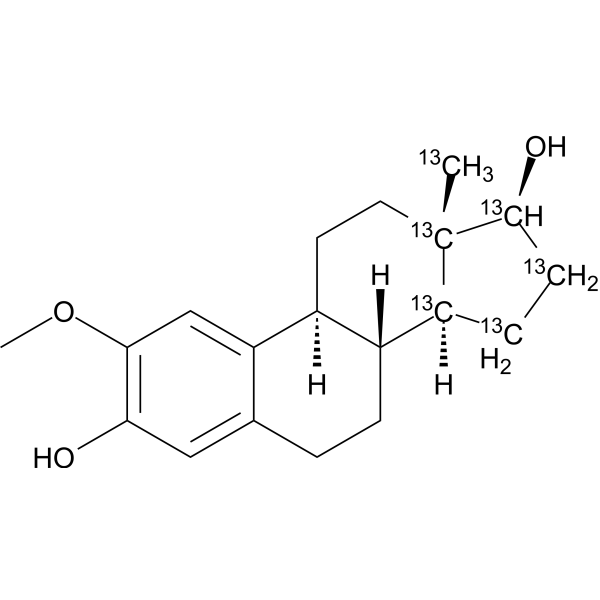
  • HY-12033S1

    2-ME2-13C6; NSC-659853-13C6

    Isotope-Labeled Compounds Microtubule/Tubulin Reactive Oxygen Species (ROS) Apoptosis Autophagy Endogenous Metabolite Cancer
    2-Methoxyestradiol- 13C6 is the 13C-labeled 2-Methoxyestradiol. 2-Methoxyestradiol (2-ME2), an orally active endogenous metabolite of 17β-estradiol (E2), is an apoptosis inducer and an angiogenesis inhibitor with potent antineoplastic activity. 2-Methoxyestradiol also destablize microtubules. 2-Methoxyestradio, also a potent superoxide dismutase (SOD) inhibitor and a ROS-generating agent, induces autophagy in the transformed cell line HEK293 and the cancer cell lines U87 and HeLa .
    2-Methoxyestradiol-13C6
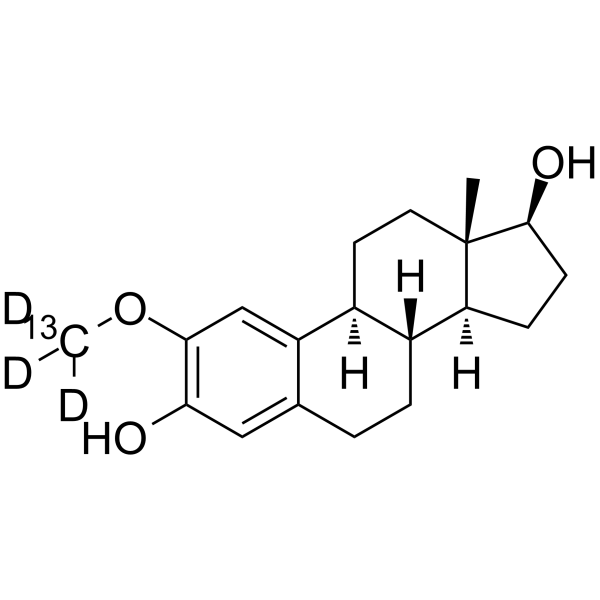
  • HY-12033S

    Isotope-Labeled Compounds Microtubule/Tubulin Reactive Oxygen Species (ROS) Apoptosis Autophagy Endogenous Metabolite Cancer
    2-Methoxyestradiol- 13C,d3 is the 13C- and deuterium labeled 2-Methoxyestradiol. 2-Methoxyestradiol (2-ME2), an orally active endogenous metabolite of 17β-estradiol (E2), is an apoptosis inducer and an angiogenesis inhibitor with potent antineoplastic activity. 2-Methoxyestradiol also destablize microtubules. 2-Methoxyestradio, also a potent superoxide dismutase (SOD) inhibitor and a ROS-generating agent, induces autophagy in the transformed cell line HEK293 and the cancer cell lines U87 and HeLa .
    2-Methoxyestradiol-13C,d3
  • HY-12033R

    2-ME2 (Standard); NSC-659853 (Standard)

    Microtubule/Tubulin Reactive Oxygen Species (ROS) Apoptosis Autophagy Endogenous Metabolite Reference Standards Cancer
    2-Methoxyestradiol (Standard) is the analytical standard of 2-Methoxyestradiol. This product is intended for research and analytical applications. 2-Methoxyestradiol (2-ME2), an orally active endogenous metabolite of 17β-estradiol (E2), is an apoptosis inducer and an angiogenesis inhibitor with potent antineoplastic activity. 2-Methoxyestradiol also destablize microtubules. 2-Methoxyestradio, also a potent superoxide dismutase (SOD) inhibitor and a ROS-generating agent, induces autophagy in the transformed cell line HEK293 and the cancer cell lines U87 and HeLa .
    2-Methoxyestradiol (Standard)
  • HY-N0316R

    JAK Reference Standards NF-κB Reactive Oxygen Species (ROS) Apoptosis VEGFR c-Myc Cancer
    Mollugin (Standard) is the analytical standard of Mollugin. This product is intended for research and analytical applications. Mollugin is an orally active and potent NF-κB inhibitor. Mollugin induces S-phase arrest of HepG2 cells, and increased intracellular reactive oxygen species (ROS) levels. Mollugin induces DNA damage in HepG2 cells, as well as an increase in the expression of p-H2AX. Mollugin shows anti-cancer effect by inhibiting TNF-α-induced NF-κB activation. Mollugin enhances the osteogenic action of BMP-2 (bone morphogenetic protein 2) via the p38-Smad signaling pathway .
    Mollugin (Standard)
  • HY-176051

    RgE

    GLUT Cancer
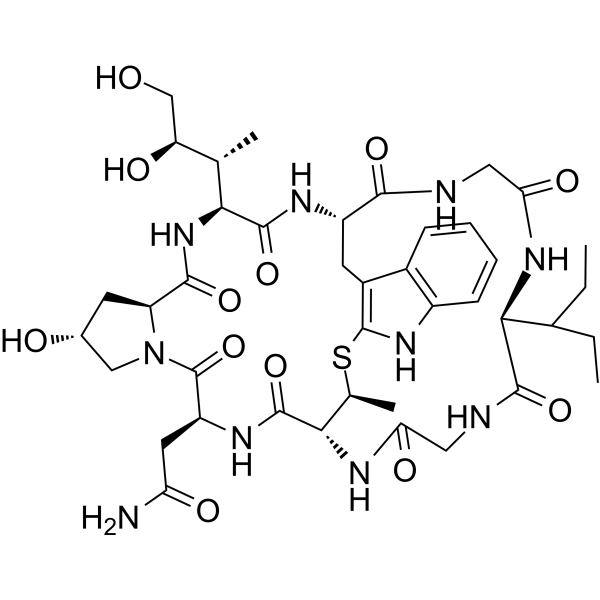
    Rapaglutin E (RgE) is a glucose transporter (GLUT) inhibitor. Rapaglutin E exhibits dose-dependent inhibition of [ 3H]-2DG uptake in A549, Jurkat T, PANC10.05, and RBC, with IC50 values 8.9 nM, 3.1 nM, 35.5 nM, 74.2 nM. Rapaglutin E inhibits cell proliferation in A549, PANC10.05, HeLa, Jurkat T, and HEK293T cells .
    Rapaglutin E
  • HY-179116

    BS2463

    Parasite Infection
    BL-1005 (BS2463), thiophen-2-yl pyrimidine (TTP), is a potent paralytic of Schistosoma mansoni with an EC50 of 37 nM. BL-1005 shows low cytotoxicity for HEK293, HeLa and HepG2 cell with CC50 >20 μM. BL-1005 can induce paralysis in both adult and juvenile S. mansoni. BL-1005 can be used for the research of infection .
    BL-1005
  • HY-149716

    Phosphodiesterase (PDE) Cancer
    MEY-003 is an Autotaxin(ATX) inhibitor with EC50s of 460 nM and 1.09 μM for hATX-β and hATX-ɣ (analysis with LPC18:1). MEY-003 behaves as a non-competitive inhibitor with K iof 432 nM. MEY-003 can be used for targeted ATX-related disease research .
    MEY-003
  • HY-154865

    Lactate Dehydrogenase Cancer
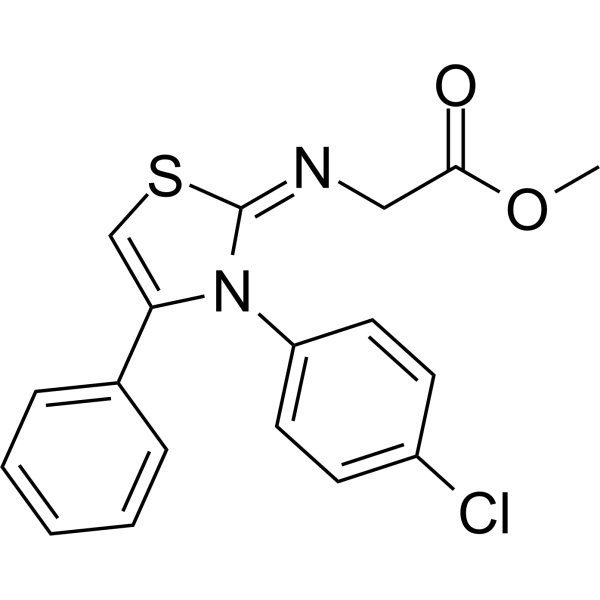
    Anticancer agent 121, an inhibitor of human lactate dehydrogenase A enzyme (hLDHA), has good anticancer activities and can be used for anticancer research .
    Anticancer agent 121
  • HY-154866

    Lactate Dehydrogenase Cancer
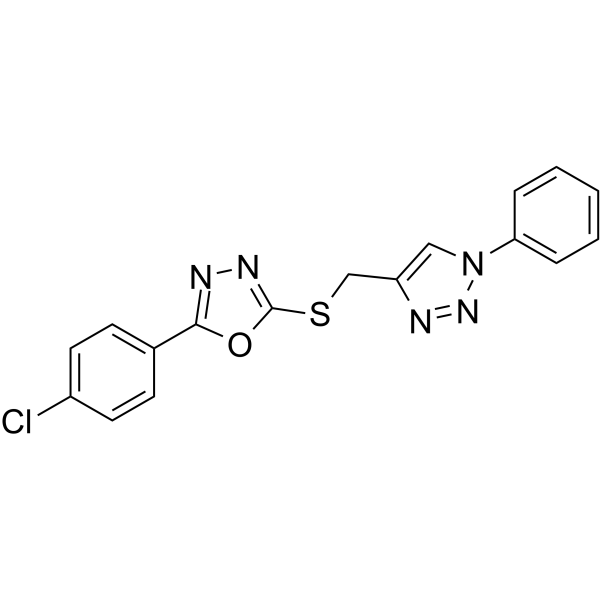
    Anticancer agent 122, an inhibitor of human lactate dehydrogenase A enzyme (hLDHA), has good anticancer activities and can be used for anticancer research .
    Anticancer agent 122
  • HY-136348

    Bacterial Infection
    ML338 is a selective small molecule inhibitor probe of non-replicating Mycobacterium tuberculosis bacilli and is against the non-replicating M. tuberculosis with IC90 and IC99 values of 1 μM and 4 μM, respectively by CFU. ML338 is a invaluable tool for identifying both essential functions and vulnerabilities of the M. tuberculosis bacilli in the nutrient deprivation states. ML338 can be used for the study of M. tuberculosis chemotherapy .
    ML338
  • HY-169167

    COX Cancer
    COX-2-IN-49 (compound 6c) is a potent cyclooxygenase-2 (COX-2) inhibitor with an IC50 value of 2.671 µM. COX-2-IN-49 shows antiproliferative activity. COX-2-IN-49 has the potential for the research of cancer .
    COX-2-IN-49
  • HY-181754

    Discoidin Domain Receptor Others
    TPKI-39 is a DDR1, DDR2, and FLT1 inhibitor, with a human DDR1 IC50 of 380 nM, human DDR1 Ka of 24 nM, human DDR2 IC50 of 120 nM, human FLT1 IC50 of 65 nM, and human FLT1 Ka of 91 nM.TPKI-39 inhibits DDR1 enzymatic activity and autophosphorylation, DDR2 enzymatic activity, and FLT1 enzymatic activity in cells.TPKI-39 inhibits collagen-induced DDR1 autophosphorylation in cells .
    TPKI-39
  • HY-D3196

    Fluorescent Dye Cancer
    AG2 is a glucose uptake tracer and two-photon fluorescent probe. AG2 is taken up by cells via glucose-specific transport systems, rather than passive diffusion; it preferentially accumulates in cancer cells and colon cancer tissues compared with normal cells and tissues; it mainly localizes to mitochondria, with a small amount also distributed in the cytoplasm and cell membrane. AG2 can be used for colon cancer research .
    AG2
  • HY-P992275

    γ-secretase Neurological Disease Cancer
    Anti-Nicastrin Antibody (A5226A) is a monoclonal antibody against Nicastrin and an inhibitor of γ-secretase. Anti-Nicastrin Antibody (A5226A) recognizes the fully glycosylated mature presenilin enhancer in the active γ-secretase complex and inhibits its activity via competition for substrate binding. Anti-Nicastrin Antibody (A5226A) abrogates the growth of cancer cells dependent on γ-secretase activity. Anti-Nicastrin Antibody (A5226A) serves as an imaging tool to visualize the endocytic trafficking of active γ-secretase, and also acts as a detection reagent to evaluate the endocytic efficiency of γ-secretase. Anti-Nicastrin Antibody (A5226A) can be used in studies related to non-small cell lung cancer, T-cell acute lymphoblastic leukemia and Alzheimer's disease .
    Anti-Nicastrin Antibody (A5226A)
  • HY-118460

    VCP/p97-IN-PPA

    p97 Cancer
    ACJI-99C (VCP/p97-IN-PPA) is a selective covalent p97/VCP ATPase inhibitor with an IC50 value of 0.6 μM. ACJI-99C binds with p97 active site residues to block ATPase activity. ACJI-99C irreversibly blocks degradation of p97-dependent protein in cells. ACJI-99C inhibits proliferation of cancer cells, including p97 inhibitor-resistant lines. ACJI-99C can be used for the research of colorectal cancer .
    ACJI-99C

Inquiry Online

Your information is safe with us. * Required Fields.

Salutation


Country or Region *

Applicant Name *


Organization Name *

Department *


Email Address *


Product Name *

Cat. No.


Requested quantity *

Phone Number *


Remarks

Inquiry Online

Inquiry Information

Product Name:
Cat. No.:
Quantity:
MCE Japan Authorized Agent:

