1. Search Result
Search Result
Results for "

Hela

" in MedChemExpress (MCE) Product Catalog:

988

Inhibitors & Agonists

40

Fluorescent Dyes

23

Biochemical Assay Reagents

38

Peptides

3

MCE Kits

5

Inhibitory Antibodies

236

Natural
Products

2

Recombinant Proteins

13

Isotope-Labeled Compounds

6

Click Chemistry

16

Oligonucleotides

3

GMP Molecules

Cat. No. Product Name Target Research Areas Chemical Structure
  • HY-B0497
    Niclosamide
    35+ Cited Publications

    BAY2353

    Environmental Pollutants Antibiotic Parasite STAT Infection Cancer
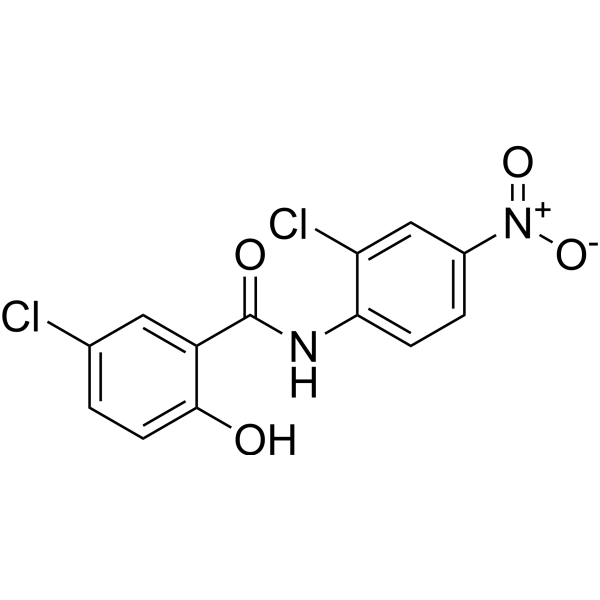
    Niclosamide (BAY2353) is an orally active antihelminthic agent used in parasitic infection research . Niclosamide is a STAT3 inhibitor with an IC50 of 0.25 μM in HeLa cells . Niclosamide has biological activities against cancer, inhibits DNA replication in Vero E6 cells .
    Niclosamide
  • HY-18399
    YM-1
    1 Publications Verification

    HSP NO Synthase Cancer
    YM-1 is a stable MKT-077 (HY-15096) analog and an orally active Hsp70 inhibitor. YM-1 induces cell death of HeLa cells and up-regulates the level of p53 and p21 proteins .
    YM-1
  • HY-D1422

    BDNCA-346

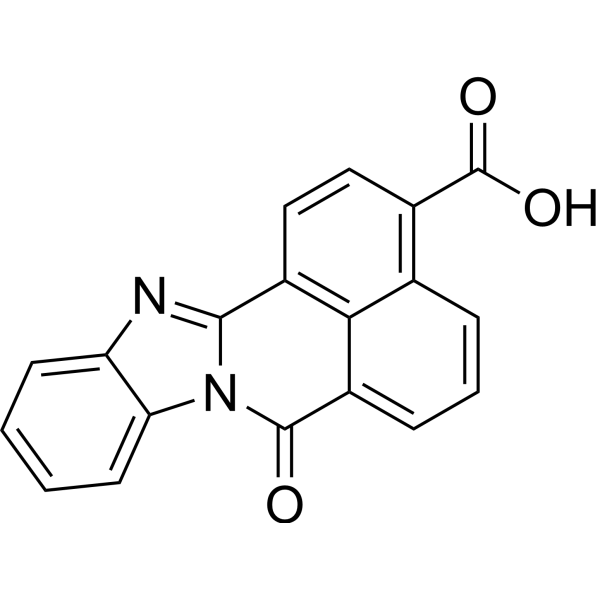
    Fluorescent Dye Others
    ER Tracker Yellow is an endoplasmic reticulum-targeted temperature-visible fluorescent probe. ER Tracker Yellow has high temperature sensitivity (3.9%/°C) and is not affected by pH and Ca 2+ interference. ER Tracker Yellow can be used for real-time monitoring of local temperature changes in the ER area. ER Tracker Yellow maintains its function in fixed cells. ER Tracker Yellow is suitable for various cell lines and primary cells, such as HeLa cells, MEF cells, and other cells .
    ER Tracker Yellow
  • HY-103349
    PETCM
    1 Publications Verification

    Caspase Apoptosis Cancer
    PETCM is an activator of caspase-3 and acts as an cytochrome c (cyto c)-dependent manner. PETCM promotes Apaf-1 oligomerization and induces cell apoptosis in HeLa cells .
    PETCM
  • HY-162655
    SLF80821178
    1 Publications Verification

    LPL Receptor Neurological Disease
    SLF80821178 is a potent and orally active inhibitor of Sphingosine-1-Phosphate Transporter (Spns2). SLF80821178 inhibits S1P release with an IC50 of 51 nM in HeLa cells and a T1/2 of 2.4 h in mouse .
    SLF80821178
  • HY-122247

    Kinesin Cancer
    PVZB1194 is a biphenyl-type inhibitor of Kinesin-5 ATPase activity that binds to the α4/α6 site of the motor domain in a nucleotide competitive manner. PVZB1194 has an IC50 of 0.12 μM for KSP ATPase. PVZB1194 induces mitotic arrest with the formation of a monopolar spindle, and inhibits HeLa cells proliferatio (IC50: 5.5 μM). PVZB1194 can be used in the study of tumors .
    PVZB1194
  • HY-170944

    HSP Apoptosis Caspase Cancer
    BAG3/HSP70-IN-1 (compound 16) is the first-in-class BAG3 and HSP70 dual inhibitor. BAG3/HSP70-IN-1 binds to BAG3 full-length, BAG3-BD, and HSP70 proteins with Kds of 33.10 μM, 27.90 μM, and 33.80 μM, respectively. BAG3/HSP70-IN-1 inhibits HeLa cells with an IC50 of 49.46 μM. BAG3/HSP70-IN-1 induces apoptosis by activating caspase 3 and caspase 9 levels in HeLa cells. BAG3/HSP70-IN-1 elevates p21 levels while reduces FOXM1 expression in HeLa cells. BAG3/HSP70-IN-1 decreases ATPase activity .
    BAG3/HSP70-IN-1
  • HY-B0497R

    BAY2353 (Standard)

    Reference Standards STAT Parasite Antibiotic Infection Cancer
    Niclosamide (Standard) is the analytical standard of Niclosamide. This product is intended for research and analytical applications. Niclosamide (BAY2353) is an orally active antihelminthic agent used in parasitic infection research . Niclosamide is a STAT3 inhibitor with an IC50 of 0.25 μM in HeLa cells . Niclosamide has biological activities against cancer, inhibits DNA replication in Vero E6 cells .
    Niclosamide (Standard)
  • HY-169056

    Reactive Oxygen Species (ROS) Cancer
    SLC7A11-IN-2 (Compound 1) is an SLC7A11/xCT inhibitor. SLC7A11-IN-2 induces cell death in HeLa cells by lowering intracellular glutathione levels and increasing oxidative stress, thereby disrupting the oxidative balance within the cells, with an IC50 value of 10.23 μM. Molecular dynamics simulation analysis indicates that SLC7A11-IN-2 has a stronger binding affinity to SLC7A11 compared to Erastin (HY-15763). SLC7A11-IN-2 can be utilized in research within the field of cervical cancer .
    SLC7A11-IN-2
  • HY-157516

    CDK Cancer
    CDK2-IN-22 (compound 7I) is a potent CDK2 inhibitor with an IC50 of 64.42 nM. CDK2-IN-22 presents a broad antiproliferative efficacy toward diverse cancer cells MV4-11, HT-29, MCF-7, and HeLa with IC50 values of 0.83 μM, 2.12 μM, 3.12 μM, and 8.61 μM, respectively .
    CDK2-IN-22
  • HY-124429

    ERK Cancer
    FQI1 is a Late SV40 Factor (LSF) inhibitor. FQI1 inhibits cell proliferation, with IC50s of 3, 0.79, 6.3 μM for NIH/3T3, HeLa, A549 cells. FQI1 can be used for cancer research .
    FQI1
  • HY-W039865
    1-Thio-beta-D-glucose tetraacetate
    1 Publications Verification

    Biochemical Assay Reagents Cancer
    1-Thio-beta-D-glucose tetraacetate exhibits cytotoxicity in cells HeLa and human ocular lens epithelium CECH with IC50s of >250 and >200 μM. 1-Thio-beta-D-glucose tetraacetate reveals moderate anticancer property .
    1-Thio-beta-D-glucose tetraacetate
  • HY-174215

    Tau Protein Neurological Disease
    TAU-IN-3 (Compound 2) is an orally active TAU inhibitor. TAU-IN-3 inhibits the expression of MAPT exon 10 DDPAC mutant gene in HeLa cells (IC50: 0.6 µM). TAU-IN-3 reduces the 4R/3R MAPT mRNA ratio in HeLa cells transfected with WT or DDPAC minigenes. TAU-IN-3 inhibits the insertion of endogenous MAPT exon 10 and the production of 4R tau protein in cells. TAU-IN-3 modulates tau splicing in htau mice and improves the associated behavioral phenotypes. TAU-IN-3 can be used to study neurodegenerative diseases .
    TAU-IN-3
  • HY-101520A

    Histone Methyltransferase Cancer
    Dot1L-IN-1 TFA is a highly potent and selective Dot1L inhibitor with a Ki of 2 pM and an IC50 of <0.1 nM. Dot1L-IN-1 TFA potently suppresses H3K79 dimethylation (IC50=3 nM), as well as the activity of the HoxA9 promoter (IC50=17 nM) in HeLa and Molm-13 cells, respectively .
    Dot1L-IN-1 TFA
  • HY-103394

    17β-HSD Cancer
    TC HSD 21 is a selective inhibitor of 17β-hydroxysteroid dehydrogenase type 3 (17β-HSD3) against related 17β-HSD isozymes, with an IC50 of 14 nM in HeLa cells. TC HSD 21 can be used in the research of prostate cancer .
    TC HSD 21
  • HY-131871

    Fat Mass and Obesity-associated Protein (FTO) Cancer
    Ethyl LipotF is a selective FTO inhibitor that significant increases modified N6-methyladenosine (m6A) levels in HeLa cells in a concentration-dependent manner .
    Ethyl LipotF
  • HY-144712

    G-quadruplex Apoptosis Cancer
    L5-DA is a G-quadruplex (G4) ligand and selectively stabilized for G4s over ds26. L5-DA exhibits significant cytotoxicity against HeLa cells (IC50=4.3 μM). L5-DA stabilizes G4s in HeLa cells, induces apoptosis, and cell cycle arrest .
    L5-DA
  • HY-125300

    Fungal Antibiotic Cancer
    Oligomycin E is a antitumor antibiotic that can be isolated from Streptomyces. Oligomycin E has significant antifungal activity, showing minimal inhibitory concentrations (MICs) values between 2 and 75μg/mL. Oligomycin E has strong antitumor activity against HeLa cells, with an IC50 of 0.014 μg/mL .
    Oligomycin E
  • HY-N4048

    Others Cancer
    Heudelotinone is a dinorditerpenoid that can be isolated from the stem bark and roots of Ricinodendron heudelotii. Heudelotinone shows cytotoxicity against SMMC-7721, A549 and Hela cells with IC50s of 21.68, 16.04 and 10.67 μM, respectively .
    Heudelotinone
  • HY-B0497B

    BAY2353 monohydrate

    STAT Antibiotic Parasite Infection Cancer
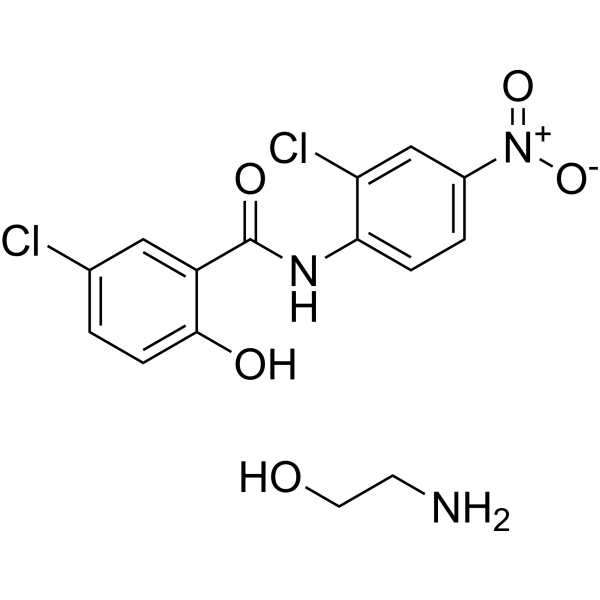
    Niclosamide (BAY2353) monohydrate is an orally active antihelminthic agent used in parasitic infection research . Niclosamide monohydrate is a STAT3 inhibitor with an IC50 of 0.25 μM in HeLa cells . Niclosamide monohydrate has biological activities against cancer, and inhibits DNA replication in Vero E6 cells .
    Niclosamide monohydrate
  • HY-N2892

    Aristololactam A IIIa; Sch 546909

    DYRK Cardiovascular Disease Cancer
    Aristolactam A IIIa (Sch 546909) is an aristolactam-type alkaloid that can be isolated from Glycosmis chlorosperma. Aristolactam A IIIa is a DYRK1A Inhibitor. Aristolactam A IIIa inhibits platelet aggregation induced by arachidonic acid (AA), collagen and platelet-activating factor (PAF). Aristolactam A IIIa has strong cytotoxic effect on HeLa cells .
    Aristolactam A IIIa
  • HY-143301

    Topoisomerase Cancer
    Topoisomerase I inhibitor 4 (compound 7a) is a topoisomerase I inhibitor. Topoisomerase I inhibitor 4 inhibits HepG2, A549, MCF-7 and HeLa cancer cells proliferation with IC50s of 1.20, 2.09, 1.56 and 1.92 μM, respectively. Topoisomerase I inhibitor 4 can be used for the research of cancer .
    Topoisomerase I inhibitor 4
  • HY-N8954

    Others Cancer
    Kaempferol 7-O-neohesperidoside is a ?avonoid glycoside that can be isolated from Litchi chinensis. Kaempferol 7-O-neohesperidoside exhibits significant cytotoxic activity against A549, LAC, Hep-G2, and HeLa cell lines with IC50s of 0.53, 7.93, 0.020, and 0.051 μM, respectively .
    Kaempferol 7-O-neohesperidoside
  • HY-130073

    NF-κB Apoptosis Cancer
    Amorfrutin A is the inhibition of NF-κB activation, that inhibits TNF-α-induced IκBα degradation, p65 nuclear translocation, and DNA-binding activity. Amorfrutin A promotes TNF-α-induced apoptosis in HeLa cell through promotion of caspase-3 and PARP proteolysis .
    Amorfrutin A
  • HY-175175

    p38 MAPK Bcl-2 Family Caspase Reactive Oxygen Species (ROS) PARP Apoptosis Cancer
    MAPK-IN-5 is a potent MAPK inhibitor with an IC50 of 1.35 μM against HeLa cells. MAPK-IN-5 inhibits HeLa cell proliferation by inducing ROS-mediated DNA damage and mitochondrial apoptosis via the MAPK pathway. MAPK-IN-5 significantly inhibits colony formation, reduces the number of live cells, suppresses cell migration, and causes cell cycle arrest in the G2/M phase in HeLa cells. MAPK-IN-5 can be used for the study of cervical cancer .
    MAPK-IN-5
  • HY-131822

    Uridine-5'-O-monophosphorothioate

    P2Y Receptor Cancer
    5'-UMPS (Uridine-5'-O-monophosphorothioate) is a P2Y14 receptor agonist. 5'-UMPS can induce HeLa cell growth slightly .
    5'-UMPS
  • HY-123583

    Fluorescent Dye Others
    MitoBADY is a mitochondria-selective Raman probe that successfully visualizes mitochondria in live HeLa cells at a concentration of 200-400 nM for 10 minutes. MitoBADY can be utilized for the study of mitochondrial dynamics .
    MitoBADY
  • HY-171573

    AZddGTP

    Telomerase Others
    3′-Azido-2′,3′-dideoxy-GTP (AZddGTP) is a selective telomerase inhibitor with a Ki value of 1.5 μM. 3′-Azido-2′,3′-dideoxy-GTP can be incorporated into the 3′-terminus of DNA by telomerase. 3′-Azido-2′,3′-dideoxy-GTP inhibits telomerase activity in HeLa cells in vitro .
    3′-Azido-2′,3′-dideoxy-GTP
  • HY-N11636

    Apoptosis Cancer
    Ganoderic acid S is a positional isomer of ganoderic acids, that can be isolated from the fermented mycelia of Ganoderma lucidum. Ganoderic acid S can induce apoptosis in HeLa cells through the mitochondria pathway .
    Ganoderic acid S
  • HY-20808

    COX Cancer
    Antioxidant agent-15 (Compound 4) is a potent antioxidant inhibition activity, with the IC50 of 15.44 nM. Antioxidant agent-15 inhibits tumor cell growth in Hela, Hep G2 and Caco-2 cells, with the IC50 of 395.26, 400.4 and 24.6 nM, respectively .
    Antioxidant agent-15
  • HY-N12233

    Apoptosis MDM-2/p53 Reactive Oxygen Species (ROS) Cancer
    Condurango glycoside A is an activator of p53. Condurango glycoside A initiates ROS generation and up-regulates p53 expression. Condurango glycoside A induces apoptosis and pre-mature senescence associated with DNA damage in HeLa cells .
    Condurango glycoside A
  • HY-131864A

    PROTACs EGFR Cancer
    SJF-1528 (PROTAC 1) hemihydrate is a potent EGFR PROTAC degrader with DC50 values of 39.2 nM and 736.2 nM for wild-type EGFR in OVCAR8 cells and Exon 20 Ins mutant EGFR in HeLa cells. SJF-1528 hemihydrate also degrades HER2. SJF-1528 hemihydrate promotes ubiquitination and degradation of EGFR and can be used in breast cancer research (Pink: ligand for target protein (HY-159047); Black: linker Tos-PEG2-CH2-Boc (HY-130532); Blue: ligand for E3 ligase (S,R,S)-AHPC (HY-125845)) .
    SJF-1528 hemihydrate
  • HY-150655

    HSP Cancer
    Hsp90-IN-15 is an Hsp90 inhibitor with anticancer activity. Hsp90-IN-15 induces cell apoptosis, arrests the cell cycle at S phase and decreases the expression level of Hsp90 in Hela cell .
    Hsp90-IN-15
  • HY-N7980

    NF-κB Cancer
    Rubipodanone A, a naphthohydroquinone dimer, shows cytotoxicity against A549, BEL-7402, HeLa, HepG2, SGC-7901 and U251 cells. Rubipodanone A also shows obvious activating effect at 20 and 40 μM for NF-κB .
    Rubipodanone A
  • HY-B0497A

    BAY2353 sodium

    Antibiotic STAT Parasite Infection Cancer
    Niclosamide (BAY2353) sodium is an orally active antihelminthic agent used in parasitic infection research . Niclosamide sodium is a STAT3 inhibitor with an IC50 of 0.25 μM in HeLa cells . Niclosamide sodium has biological activities against cancer, and inhibits DNA replication in Vero E6 cells .
    Niclosamide sodium
  • HY-N2802

    9-Oxo-10,11-dehydroageraphorone

    Apoptosis Caspase Parasite Infection Cancer
    Euptox A (9-Oxo-10, 11-dehydroageraphorone), a cadenine sesquiterpene, is the main toxin that can be isolated from Eupatorium adenophorum. Euptox A induces apoptosis by improving the gene expression level of apoptotic proteases such as caspase-10 in HeLa cells .
    Euptox A
  • HY-101520

    Histone Methyltransferase Cancer
    Dot1L-IN-1 is a highly potent and selective Dot1L inhibitor with a Ki of 2 pM and an IC50 of <0.1 nM. Dot1L-IN-1 potently suppresses H3K79 dimethylation (IC50=3 nM), as well as the activity of the HoxA9 promoter (IC50=17 nM) in HeLa and Molm-13 cells, respectively .
    Dot1L-IN-1
  • HY-P5033

    Bacterial Cancer
    Cyclo(Gly-His) is a liposome-encapsulated cyclic dipeptide with antimicrobial and anticancer activity. Cyclo(Gly-His) has cytotoxicity for HeLa and MCF-7 cell with IC50 values of 1.699 mM and 0.358 mM, respectively. Cyclo(Gly-His) can be used for the research of drug delivery systems .
    Cyclo(Gly-His)
  • HY-175204

    AUTACs SHP2 Apoptosis Autophagy Atg8/LC3 Cancer
    SHP2 protein degrader-3 is a SHP2 AUTAC degrader. SHP2 protein degrader-3 shows dose-dependent SHP2 degradation ability (DC50 = 3.22 μM) and anti-tumor activity (IC50 = 5.59 μM) in HeLa cells. SHP2 protein degrader-3 induces degradation through the LC3-mediated autophagy pathway, which can be inhibited by lysosome inhibitors. SHP2 protein degrader-3 induces apoptosis in various cancer cells (HeLa cells, HepG2 cells, LoVo cells, Huh-7 cells) (SHP2 Ligand : (HY-100388); LC3 Ligand: (HY-10542); Linker : (HY-128834)) .
    SHP2 protein degrader-3
  • HY-149354

    Aurora Kinase Cancer
    Aurora kinase-IN-4 (Compound 11c) is a covalent and ATP competitive aurora kinase A inhibitor (IC50: 1.7 nM). Aurora kinase-IN-4 inhibits cell proliferation in SJSA-1, MDA-MB-231, A54, HeLa cells with IC50s of 4.27, 1.54, 3.08, 6.99 μM. Aurora kinase-IN-4 can be used for research of triple negative breast cancer (TNBC) .
    Aurora kinase-IN-4
  • HY-175867

    PROTACs Epigenetic Reader Domain Cancer
    PROTAC SMARCA2 degrader-34 (compound 52) is a selective SMARCA2 PROTAC degrader (DC50 in HeLa cell: < 0.1 μM for SMARCA2, > 1 μM for SMARCA4). PROTAC SMARCA2 degrader-34 can be used for study of cancer. (Pink: SMARCA2 ligand (HY-178414) ; Blue: E3 ligand (HY-168055) ; Black: linker) .
    PROTAC SMARCA2 degrader-34
  • HY-169275

    PROTACs SWI/SNF Complex Cancer
    PROTAC SMARCA2 degrader-24 (Compound 34) is a PROTAC degrader for SMARCA2 with a DC50 < 0.1 µM in HeLa. PROTAC SMARCA2 degrader-24 degrades SMARCA4 with a DC50 > 10 μM in HeLa .
    PROTAC SMARCA2 degrader-24
  • HY-120490

    Apoptosis Microtubule/Tubulin Mitosis Cancer
    NMK-TD-100 is a modulator for microtubule. NMK-TD-100 binds to tubulin, inhibits the tubulin polymerization with an IC50 of 17.5 µM, inhibits mitosis, and decreases mitochondrial membrane potential (MMP). NMK-TD-100 inhibits the proliferation of HeLa with an IC50 of 1.42 µM, arrests cell cycle at G2/M phase, induces apoptosis in HeLa .
    NMK-TD-100
  • HY-125720

    Antibiotic Infection
    A-39183A is an antibiotic that shows significant cytotoxicity to HeLa cells, with an IC50 value of 1.8 μM .
    A-39183A
  • HY-N14822

    Antibiotic Bacterial Infection Cancer
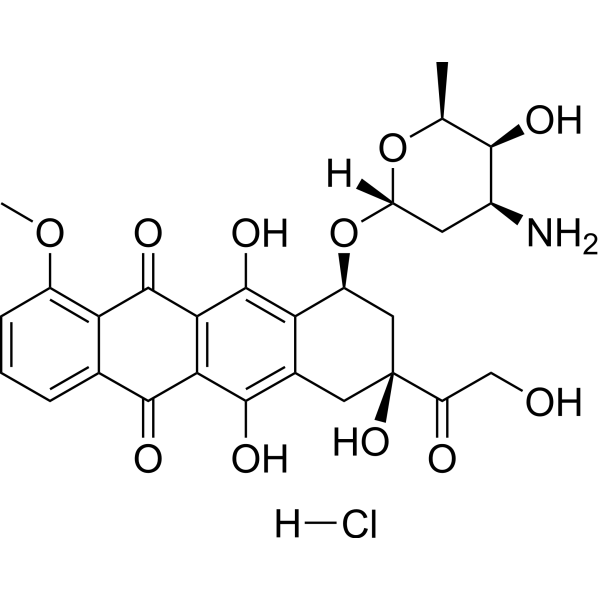
    4-O-Demethyl-11-deoxydoxorubicin is an anthracycline antibiotic with antibacterial and antitumor activities. 4-O-Demethyl-11-deoxydoxorubicin is cytotoxic to Hela cells .
    4-O-Demethyl-11-deoxydoxorubicin
  • HY-W112239

    Reactive Oxygen Species (ROS) Fluorescent Dye Cancer
    BDPI is the a BODIPY derivative. BDPI reveals a high O2 quantum yield and exhibits phototoxicity that inhibits HeLa with an IC50 of 0.6 µg/mL. BDPI nanoarticles can be taken up by HeLa, producing fluorescence signals in the cells, and can be used as cell imaging agent. BDPI nanoarticles exhibit antitumor efficacy in mouse models .
    BDPI
  • HY-N2213

    Others Cancer
    Matairesinol 4′-O-β-D-glucopyranoside displays cytotoxic activity against HeLa cell line with an IC50 of 47.1 μM .
    Matairesinol 4′-O-β-D-glucopyranoside
  • HY-126954

    Antibiotic Bacterial Infection Cancer
    13-Deoxycarminomycin is an antibiotic with antibacterial activity. 13-Deoxycarminomycin also exhibits cytotoxicity against tumor cells such as HeLa and P388, and can play an anti-tumor role .
    13-Deoxycarminomycin
  • HY-155382

    Monocarboxylate Transporter Others Cancer
    Lactate transportor 1 (compound 1) is an active lactate transporter in living cells. Lactate transportor 1 displays the cytotoxic effect, with IC50 values of 3.36, 3.27,5.58 and 7.66 μM in Hela, CAL27, MCF7 and MCF10A, respectively. Lactate transportor 1 has an additive effect with Cisplatin (HY-17394) observed in HeLa cells .
    Lactate transportor 1
  • HY-150411

    AUTACs Cancer
    Cys-C-cGMP is a autophagy tag for AUTACs. Cys-C-cGMP can increase the K63-linked ubiquitination of mitochondria in HeLa cells .
    Cys-C-cGMP

Inquiry Online

Your information is safe with us. * Required Fields.

Salutation


Country or Region *

Applicant Name *


Organization Name *

Department *


Email Address *


Product Name *

Cat. No.


Requested quantity *

Phone Number *


Remarks

Inquiry Online

Inquiry Information

Product Name:
Cat. No.:
Quantity:
MCE Japan Authorized Agent:

