1. Search Result
Search Result
Results for "

Human retinoblastoma

" in MedChemExpress (MCE) Product Catalog:

13

阻害剤およびアゴニスト

3

天然物

1

組換えタンパク質

3

抗体

製品番号 製品名 Target 研究分野 構造式
  • HY-N6996
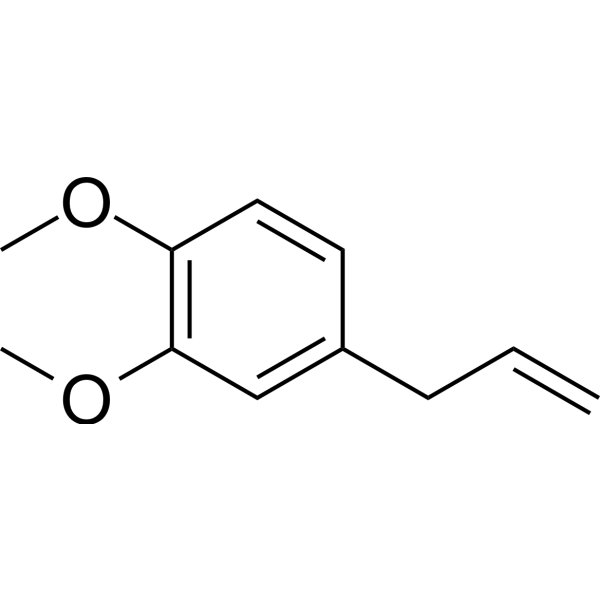
    Methyl Eugenol
    1 Publications Verification

    Environmental Pollutants Autophagy mTOR Akt PI3K Inflammation/Immunology Cancer
    Methyl Eugenol is a bait that has oral activity against oriental fruit fly (Hendel).Methyl Eugenol has anti-cancer and anti-inflammatory activities. Methyl Eugenol can induce Autophagy in cells. Methyl Eugenol can be used in the study of intestinal ischemia/reperfusion injury .
    Methyl Eugenol
  • HY-148214

    CDK Cancer
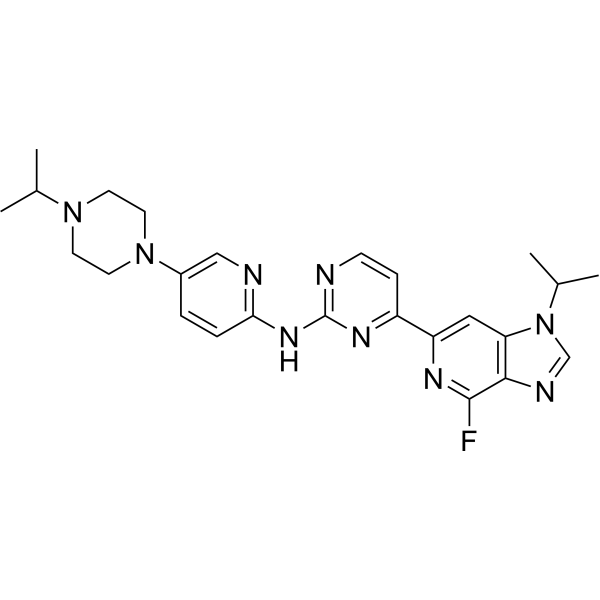
    CDK2/4/6-IN-2 is a selective CDK2/4/6 inhibitor with IC50 values <1 μM. CDK2/4/6-IN-2 inhibits cells proliferation and phosphorylation of retinoblastoma protein at Ser807/811 in breast cancer cells. CDK2/4/6-IN-2 can be used for the research of cancer, such as breast cancer .
    CDK2/4/6-IN-2
  • HY-N0891

    Tubeimoside-B

    EGFR TGF-β Receptor RIG-I-like receptor (RLR) SARS-CoV Infection Neurological Disease Cancer
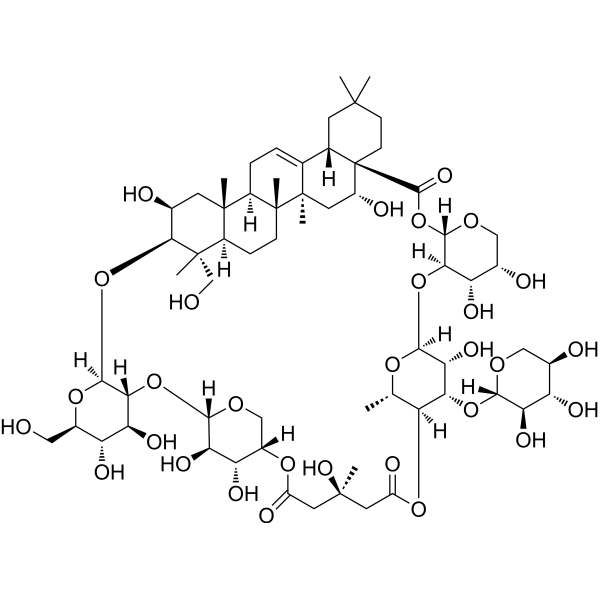
    Tubeimoside II is an orally active triterpenoid saponin and antiviral agent that binds to PACT/PRKRA with Kd values of 5.37 μM and 133.1 μM, respectively. Tubeimoside II inhibits oxidase-dependent EGFR activation and reduces TGF-β1-induced oxidative stress. Tubeimoside II activates the RIG-I signaling pathway and increases IFN-β secretion. Tubeimoside II suppresses TPA-induced ear edema, mouse sarcoma 180 growth, and TPA-induced skin tumor formation. Tubeimoside II exerts broad-spectrum antiviral activity against SARS-CoV-2, HCoV-OC43, and IAV-H1N1/FM1. Tubeimoside II can be used in research related to retinoblastoma, respiratory viral infections, skin tumors, and sarcoma 180 .
    Tubeimoside II
  • HY-119715

    CDK Apoptosis Inflammation/Immunology Cancer
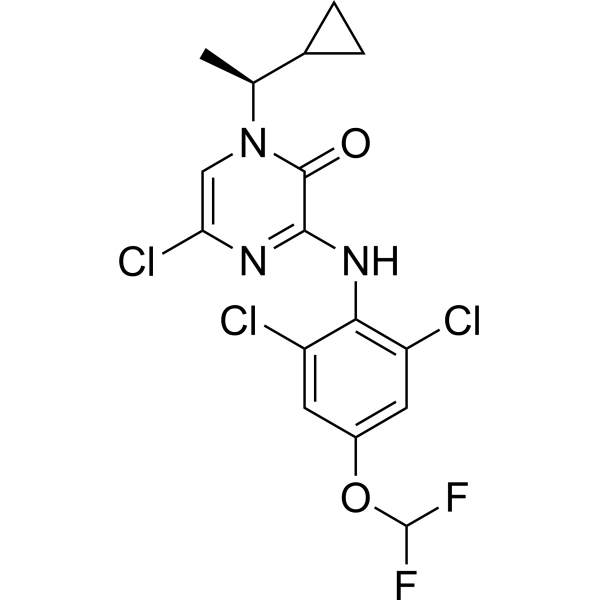
    AG-012986 is a pan-CDK inhibitor with Ki values of 44 nM (CDK1), 9.2 nM (CDK4), 94 nM (CDK2), and IC50 values of 22 nM (CDK5), 4 nM (CDK9). AG-012986 causes apoptosis of T-cells by targeting upstream kinases in the p38 Mitogen-activated protein kinase (MAPK) pathway and impairing cellular survival. AG-012986 induces cell cycle arrest, retinoblastoma protein hypophosphorylation, and reduces Ki-67 expression. AG-012986 exerts antiproliferative activity in tumor cells, demonstrates antitumor efficacy in human xenograft models, and causes retinal and peripheral neurotoxicity, plus immune cell toxicity. AG-012986 can be used for the research of colon carcinoma, non-small cell lung carcinoma, lung carcinoma, breast carcinoma, ovarian tumor, pancreatic carcinoma, osteosarcoma, lymphoma, leukemia, retinotoxicity .
    AG-012986
  • HY-N6996R

    Reference Standards Autophagy PI3K mTOR Akt Inflammation/Immunology Cancer
    Methyl Eugenol (Standard) is the analytical standard of Methyl Eugenol. This product is intended for research and analytical applications. Methyl Eugenol is a bait that has oral activity against oriental fruit fly (Hendel).Methyl Eugenol has anti-cancer and anti-inflammatory activities. Methyl Eugenol can induce Autophagy in cells. Methyl Eugenol can be used in the study of intestinal ischemia/reperfusion injury .
    Methyl Eugenol (Standard)
  • HY-128020

    Phospholipase Neurological Disease Cancer
    ML114 is a specific inhibitor of RBBP9 serine hydrolase, with an IC50 of 0.63 μM against recombinant RBBP9. ML114 can inhibit the proliferation of human pluripotent stem cells (hPSCs) by regulating the expression of NFYA and other factors, but does not induce differentiation. ML114 can be used in the research of diseases such as retinoblastoma .
    ML114
  • HY-E70678

    CDK Cancer
    CDK3 is a major player driving retinoblastoma (Rb) phosphorylation during the G0/G1 transition and in the early G1 phase of the cell cycle. CDK3 interacts with various transcription factors involved in cell proliferation, differentiation, and transformation driven by the EGFR/Ras signaling pathway. CDK3/CycE1 Recombinant Human Active Protein Kinase is an ortholog of CDK3 .
    CDK3/CycE1 Recombinant Human Active Protein Kinase
  • HY-14132

    CRFR Neurological Disease
    BMS-665053 is a corticotropin-releasing factor-1 (CRF1) receptor antagonist (IC50 = 1.0 nM). BMS-665053)11 is a potent inhibitor of CRF-stimulated cyclic adenosine monophosphate (cAMP) production in human Y-79 retinoblastoma cells (IC50 = 4.9 nM) .
    BMS-665053
  • HY-E70677

    CDK Cancer
    CDK3 is a major player driving retinoblastoma (Rb) phosphorylation during the G0/G1 transition and in the early G1 phase of the cell cycle. CDK3 interacts with various transcription factors involved in cell proliferation, differentiation, and transformation driven by the EGFR/Ras signaling pathway. CDK3/CycC Recombinant Human Active Protein Kinase is an ortholog of CDK3 .
    CDK3/CycC Recombinant Human Active Protein Kinase
  • HY-E70680

    CDK Cancer
    CDK3 is a major player driving retinoblastoma (Rb) phosphorylation during the G0/G1 transition and in the early G1 phase of the cell cycle. CDK3 interacts with various transcription factors involved in cell proliferation, differentiation, and transformation driven by the EGFR/Ras signaling pathway. CDK3/CycO Recombinant Human Active Protein Kinase is an ortholog of CDK3 .
    CDK3/CycO Recombinant Human Active Protein Kinase
  • HY-E70679

    CDK Cancer
    CDK3 is a major player driving retinoblastoma (Rb) phosphorylation during the G0/G1 transition and in the early G1 phase of the cell cycle. CDK3 interacts with various transcription factors involved in cell proliferation, differentiation, and transformation driven by the EGFR/Ras signaling pathway. CDK3/CycE2 Recombinant Human Active Protein Kinase is an ortholog of CDK3 .
    CDK3/CycE2 Recombinant Human Active Protein Kinase
  • HY-186132

    PROTACs CDK Cancer
    PROTAC CDK2-pRb degrader-1 is an orally active PROTAC-class degrader of CDK2. PROTAC CDK2-pRb degrader-1 effectively inhibits the phosphorylation of retinoblastoma protein (Rb) at serine residues 807/811 by inducing ubiquitination and proteasomal degradation of CDK2. PROTAC CDK2-pRb degrader-1 exhibits significant activity against human cells (with EC50 values of 12 nM and 125 nM, respectively). In xenograft models, PROTAC CDK2-pRb degrader-1 effectively inhibits tumor growth and induces tumor stasis, making it suitable for research related to CCNE1-amplified cancers (such as ovarian cancer, gastric cancer, and breast cancer) .
    PROTAC CDK2-pRb degrader-1
  • HY-182470

    CDK
    AG-012986 (dihydrochloride) is a pan-CDK inhibitor with Ki values of 44 nM (CDK1), 9.2 nM (CDK4), 94 nM (CDK2), and IC50 values of 22 nM (CDK5), 4 nM (CDK9). AG-012986 (dihydrochloride) causes apoptosis of T-cells by targeting upstream kinases in the p38 Mitogen-activated protein kinase (MAPK) pathway and impairing cellular survival. AG-012986 (dihydrochloride) induces cell cycle arrest, retinoblastoma protein hypophosphorylation, and reduces Ki-67 expression. AG-012986 (dihydrochloride) exerts antiproliferative activity in tumor cells, demonstrates antitumor efficacy in human xenograft models, and causes retinal and peripheral neurotoxicity, plus immune cell toxicity. AG-012986 (dihydrochloride) can be used for the research of colon carcinoma, non-small cell lung carcinoma, lung carcinoma, breast carcinoma, ovarian tumor, pancreatic carcinoma, osteosarcoma, lymphoma, leukemia, retinotoxicity .
    AG-012986 dihydrochloride

オンラインお問い合わせ

入力情報は安全に管理されます. 必須入力項目.

タイトル


国或いは地域 *

お名前 *


組纖名 *

デパートメント *


メールアドレス *


製品名 *

製品番号


カスタマ需要量 *

電話番号 *


必ず会社名を記載ください。個人への返信は行いません。

備考

バルクお問い合わせ

Inquiry Information

製品名:
製品番号:
数量:
MCE 日本正規代理店:

