
8 Results for "

IPNS

" in MedChemExpress (MCE) Product Catalog:
Products (8)

8 Results for "IPNS" in MCE Product Catalog:

Cat. No.: HY-103671
CAS No.: 1853164-83-6
Purity:  99.47%
Target:  

Glutaminase

Research Areas:  

Inflammation/Immunology Cancer

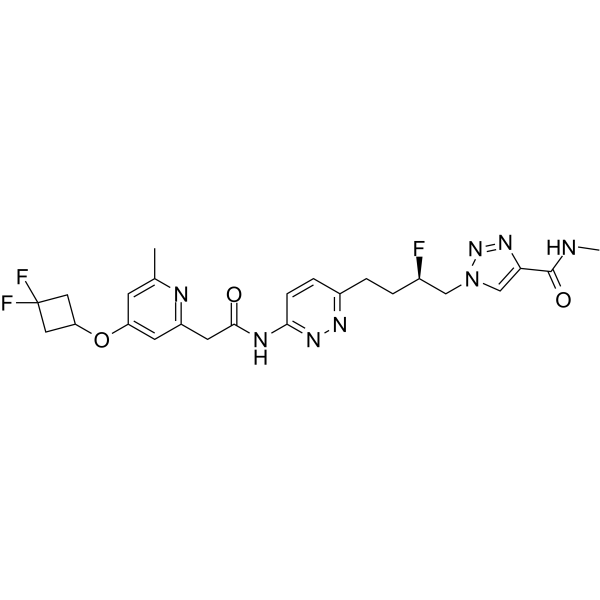
IPN-60090 is an orally active and highly selective inhibitor of glutaminase 1 (GLS1; IC50=31 nM), with no activity observed against GLS-2. IPN-60090 exhibits excellent physicochemical and pharmacokinetic properties in vivo. IPN-60090 can be used for solid tumors research, such as lung and ovarian cancers .
loading...
    loading...
Cat. No.: HY-P99648
CAS No.: 1788032-39-2
Synonyms: BMS-986168; IPN007; BIIB092

Target:  

Tau Protein

Research Areas:  

Neurological Disease

Gosuranemab (BMS-986168; IPN007; BIIB092) is a humanised IgG4 anti-tau monoclonal antibody. Gosuranemab neutralizes the extracellular tau protein, inhibiting the spread and aggregation of pathological tau protein. Gosuranemab can be used for the research of progressive supranuclear palsy and early Alzheimer’s disease .
loading...
    loading...
Cat. No.: HY-103671A
CAS No.: 2102101-72-2
Purity:  99.68%
Target:  

Glutaminase

Research Areas:  

Inflammation/Immunology Cancer

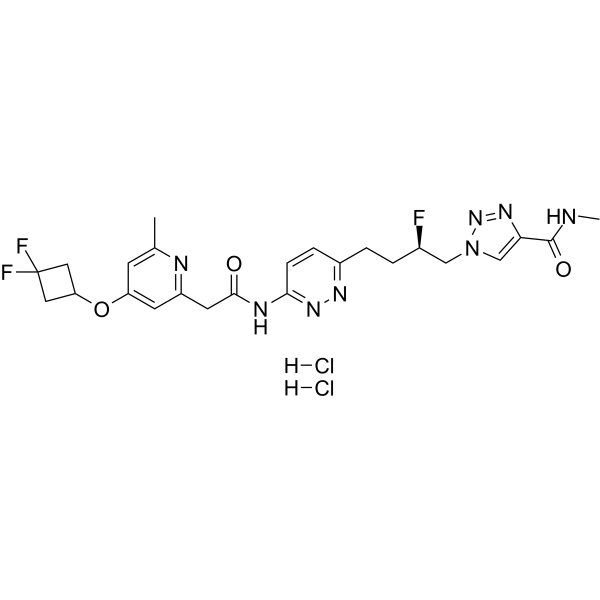
IPN-60090 dihydrochloride is an orally active and highly selective inhibitor of glutaminase 1 (GLS1; IC50=31 nM), with no activity observed against GLS-2. IPN-60090 dihydrochloride exhibits excellent physicochemical and pharmacokinetic properties in vivo. IPN-60090 dihydrochloride can be used for solid tumors research, such as lung and ovarian cancers .
loading...
    loading...
Cat. No.: HY-W014674
CAS No.: 6575-24-2
Target:  

Acyltransferase

Research Areas:  

Cancer

2,6-Dichlorophenylacetic acid is an inhibitor of isopenicillin N synthase (IPNS) and acyl-CoA: 6-APA acyltransferase. 2,6-Dichlorophenylacetic acid is also part of a group of phenylacetate derivatives that have cytostatic activity against tumour cells .
loading...
    loading...
Cat. No.: HY-103671AR
CAS No.: 2102101-72-2
IPN60090 dihydrochloride (Standard) is the analytical standard of IPN60090 dihydrochloride (HY-103671A). This product is intended for research and analytical applications. IPN-60090 dihydrochloride is an orally active and highly selective inhibitor of glutaminase 1 (GLS1; IC50=31 nM), with no activity observed against GLS-2. IPN-60090 dihydrochloride exhibits excellent physicochemical and pharmacokinetic properties in vivo. IPN-60090 dihydrochloride can be used for solid tumors research, such as lung and ovarian cancers .
loading...
    loading...
Cat. No.: HY-103671R
CAS No.: 1853164-83-6
IPN60090 (Standard) is the analytical standard of IPN60090 (HY-103671). This product is intended for research and analytical applications. IPN-60090 is an orally active and highly selective inhibitor of glutaminase 1 (GLS1; IC50=31 nM), with no activity observed against GLS-2. IPN-60090 exhibits excellent physicochemical and pharmacokinetic properties in vivo. IPN-60090 can be used for solid tumors research, such as lung and ovarian cancers .
loading...
    loading...
Cat. No.: HY-153709
CAS No.: 1613265-38-5
Synonyms: IPN-01087
Target:  

Neurokinin Receptor

Research Areas:  

Cancer

Zalsenertant tetraxetan (IPN-01087) is a DOTA-conjugated antagonist of the neurohypophyseal hormone receptor subtype 1 (NTSR1). Zalsenertant tetraxetan is labeled with the radioactive isotope Lu-177 (177Lu), which can be used for molecular imaging to identify potential responders. Zalsenertant tetraxetan can be used in the radiotherapy research of solid tumors .
loading...
    loading...
Cat. No.: HY-P99648A
CAS No.: 1788032-39-2
Synonyms: BMS-986168 (powder); IPN007 (powder); BIIB092 (powder)

Target:  

Tau Protein

Research Areas:  

Neurological Disease

Gosuranemab (BMS-986168; IPN007; BIIB092) (powder) is a humanised IgG4 anti-tau monoclonal antibody. Gosuranemab (powder) neutralizes the extracellular tau protein, inhibiting the spread and aggregation of pathological tau protein. Gosuranemab (powder) can be used for the research of progressive supranuclear palsy and early Alzheimer’s disease .
loading...
    loading...

