

76 Results for "

Indianmeal moth

" in MedChemExpress (MCE) Product Catalog:
Products (76)

76 Results for "Indianmeal moth" in MCE Product Catalog:

1
1 Cited Publications
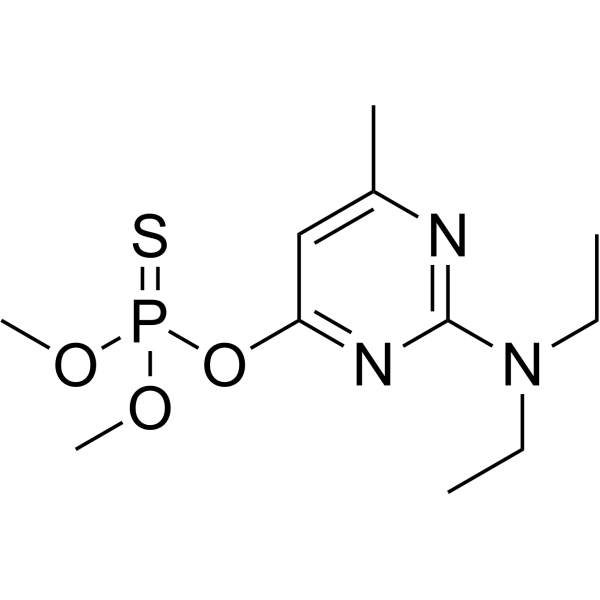
Cat. No.: HY-B1881
CAS No.: 29232-93-7
Pirimiphos-methyl is an organophosphorus insecticide and acaricide that can inhibit AChE in target organisms. Pirimiphos-methyl is often used for prevention and control of beetles, snout beetles, moths and Ephestia cautella during storage of agricultural grains .
loading...
    loading...
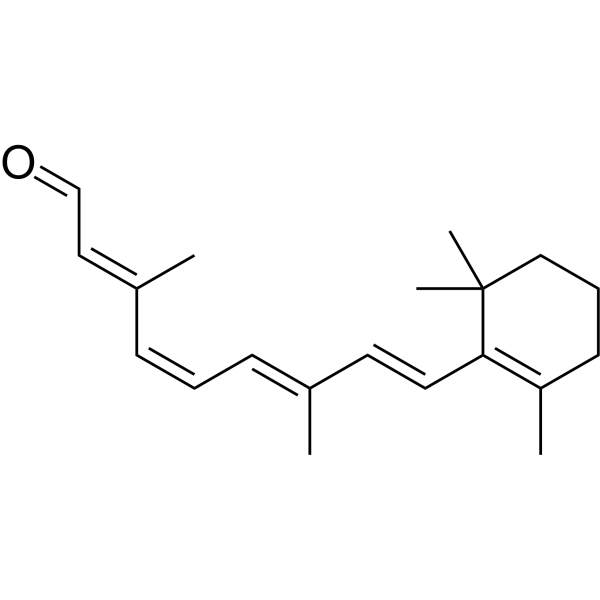
Cat. No.: HY-116711
CAS No.: 564-87-4
Synonyms: 11-cis Retinaldehyde; 11-cis Vitamin A aldehyde
11-cis-Retinal (11-cis Retinaldehyde; 11-cis Vitamin A aldehyde), oxidized form of 11-cis-Retinol (HY-W587807), is a naturally occurring visual component. 11-cis-Retinal binds to opsin in the mammalian visual system as an inverse agonist forming the inactive conformation of rhodopsin. 11-cis-Retinal plays a crucial role in vision, growth and development. 11-cis-Retinal can restore visual function in moths with visual impairments. 11-cis-Retinal can restore retinal function in an early-age LCA2 retinal degeneration 12 mouse model .
loading...
    loading...
Cat. No.: HY-Y1887
CAS No.: 8001-29-4
Cottonseed oil is an edible oil extracted from the seeds of cotton (Gossypium hirsutum). Its fatty acid composition includes 26-35% saturated fatty acids, 42-52% polyunsaturated fatty acids, and 18-24% monounsaturated fatty acids. Cottonseed oil is regarded as an Insecticide, as it is used to protect the trunks of apple trees from damage by the apple clearwing moth. Cottonseed oil possesses anti-inflammatory and cardioprotective properties. It also has extensive applications in many fields such as biofuels, animal husbandry, cosmetics, agriculture, and chemical industry .
loading...
    loading...
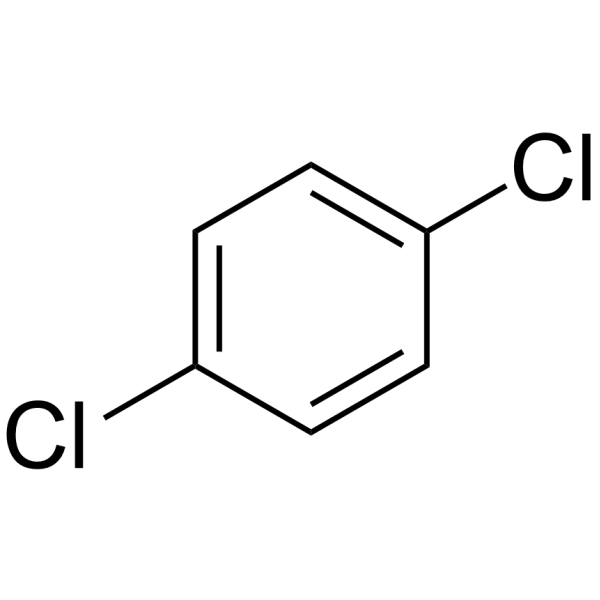
Cat. No.: HY-Y0496
CAS No.: 106-46-7
Research Areas:  

Cancer

1,4-Dichlorobenzene is a non-genotoxic, orally active mitogenic/tumor-promoting carcinogen that is also widely used as a dye, resin intermediate, and deodorant, moth repellent/insecticide. 1,4-Dichlorobenzene induces liver tumors in mice and promotes the growth of spontaneous precancerous lesions, but shows no liver tumor-inducing activity in F344 rats. Exposure to 1,4-dichlorobenzene leads to elevated leukocyte counts, serum alanine aminotransferase, and blood urea nitrogen levels. Due to the hepatotoxic characteristics, 1,4-Dichlorobenzene is applicable to liver cancer-related research .
loading...
    loading...
Cat. No.: HY-W104758
CAS No.: 15015-57-3
Target:  

Elastase Bacterial

Research Areas:  

Infection

LasR antagonist-2 is a LasR competitive antagonist and quorum sensing inhibitor, with a Kd value of 7.04 μM against LasR of Pseudomonas aeruginosa. LasR antagonist-2 reduces the production of virulence factors including elastase (elastase), pyocyanin (pyocyanin) and rhamnolipid (rhamnolipid). LasR antagonist-2 inhibits bacterial (bacterial) swarming and swimming motility, and moderately suppresses biofilm formation. LasR antagonist-2 inhibits Pseudomonas aeruginosa infection in the greater wax moth larva model. Elastase-IN-3 can be used in studies related to Pseudomonas aeruginosa infection .
loading...
    loading...
Cat. No.: HY-W040141
CAS No.: 7643-75-6
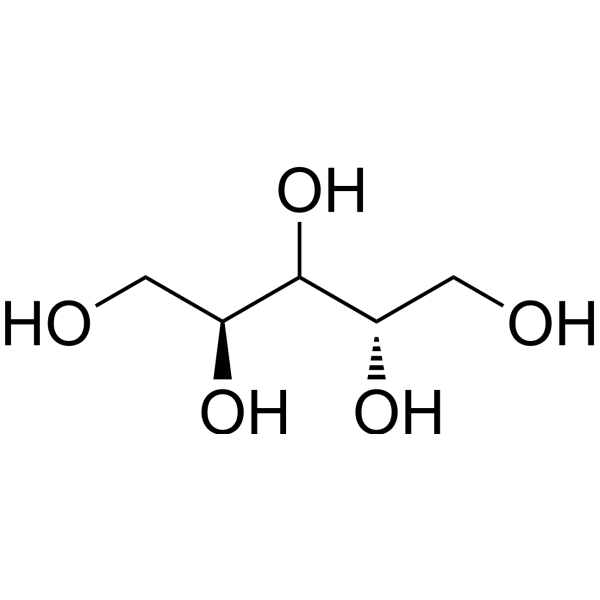
L-Arabinitol is a potential biomarker for the comsuption of the food products such as sweet potato, deerberry, moth bean, and is also associated with Alzheimer's disease and ribose-5-phosphate isomerase deficiency.
loading...
    loading...
Cat. No.: HY-128421
CAS No.: 505-52-2
Purity:  99.93%
Synonyms: Brassylic Acid
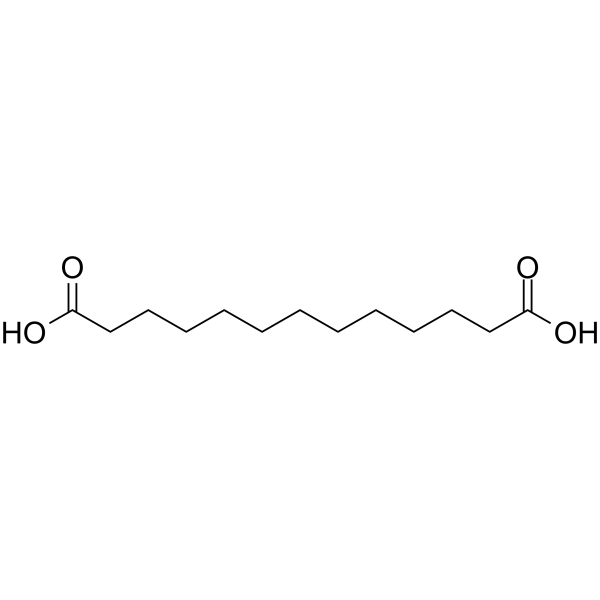
Tridecanedioic acid (Brassylic Acid) is a long-chain fatty acid and an endogenous serum metabolite. Tridecanedioic acid is positively correlated with the intestinal genus Tuzzerella in non-alcoholic steatohepatitis (NASH) mice fed a MCD diet. Tridecanedioic acid accumulates at high levels in Brassica napus germplasm tolerant to Plutella xylostella (diamondback moth), thereby participating in plant defense. Tridecanedioic acid can be used in studies related to Plutella xylostella infestation .
loading...
    loading...
Cat. No.: HY-W014780
CAS No.: 122-40-7
Synonyms: 2-Benzylideneheptanal; α-Pentylcinnamaldehyde
Research Areas:  

Others

α-Amylcinnamaldehyde is a ligand for the Niemann-Pick type C2 (NPC2) protein of arthropod moths and may play a key role in the identification of moth volatiles. NPC2 is a key enzyme for cholesterol transport in the body .
loading...
    loading...
Cat. No.: HY-W742821
CAS No.: 4273-95-4
Target:  

Sex Pheromone

(Z)-11-Octadecenal is a female pheromone with diurnal stability, isolated from the pheromone glands of female rice leaffolder moths .
loading...
    loading...
Cat. No.: HY-128421R
CAS No.: 505-52-2
Synonyms: Brassylic Acid (Standard)
Tridecanedioic acid (Standard) is the analytical standard of Tridecanedioic acid (HY-128421). This product is intended for research and analytical applications. Tridecanedioic acid is an endogenous metabolite. Tridecanedioic acid is an endogenous metabolite. Tridecanedioic acid is related to the metabolic regulation of non-alcoholic fatty liver disease (NASH) and may be an important node molecule in the intestinal microbiota-host metabolism interaction network. Tridecanedioic acid is significantly accumulated in tolerant cabbage-type rapeseed varieties and has a lower content in sensitive varieties. It plays an important role in the defense response against the infection of the small cabbage moth (Plutella xylostella). Tridecanedioic acid can be used as a biomarker for plant insect resistance or a diagnostic marker for metabolic diseases.
loading...
    loading...
Cat. No.: HY-W322222
CAS No.: 3025-30-7
Target:  

Sex Pheromone

Ethyl (E,Z)-2,4-decadienoate is an attractant. Ethyl (E,Z)-2,4-decadienoate can be isolated from pears. Ethyl (E,Z)-2,4-decadienoate elicits electroantennographic responses in codling moths and tortricid moths, and activates their olfactory receptor neurons. Ethyl (E,Z)-2,4-decadienoate acts as an attractant for codling moths and tortricid moths. Ethyl (E,Z)-2,4-decadienoate shows no significant field attractant activity against green budworms .
loading...
    loading...
Cat. No.: HY-24574
CAS No.: 7206-21-5
Synonyms: (E)-Octadec-5-ene
Target:  

Sex Pheromone

Research Areas:  

Endocrinology

(E)-5-Octadecene ((E)-Octadec-5-ene) is a sex pheromone or a related chemical component. (E)-5-Octadecene has effect on destruction of sexual attraction of female moth of rice borers moth (Chilo suppressalis Walker) .
loading...
    loading...
Cat. No.: HY-W014885
CAS No.: 112-17-4
Target:  

Sex Pheromone

Decyl acetate is a synthetic pheromone attracting male false codling moths (Cryptophlebia leucotreta) .
loading...
    loading...
Cat. No.: HY-W749562
CAS No.: 50933-33-0
Target:  

Sex Pheromone

Gossyplure is an insect pheromone used for capturing male pink bollworm moths and corn earworms .
loading...
    loading...
Cat. No.: HY-W745644
CAS No.: 56797-40-1
Target:  

Parasite

(Z)-7-Hexadecenal is a sex pheromone that attracts male insects, isolated from female Heliothis virescens moths .
loading...
    loading...
Cat. No.: HY-W613934
CAS No.: 72698-30-7
Target:  

Sex Pheromone

(E)-10-Hexadecenal is a pheromone that can be isolated from the fruit-feeding type of yellow peach moth, Dichocrocis punctiferalis .
loading...
    loading...
Cat. No.: HY-N3068
CAS No.: 26121-56-2
Synonyms: Nigakilactone I; Simalikalactone B
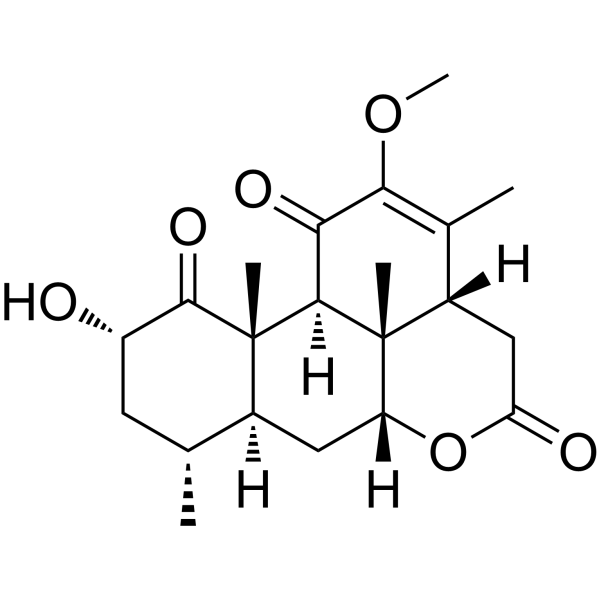
Picrasin B (Nigakilactone I) can be isolated from the bark of Picrasma quassioides. Picrasin B shows antifeedant and insecticidal activity against Diamondback Moth .
loading...
    loading...
Cat. No.: HY-W750129
CAS No.: 163041-87-0
Target:  

Sex Pheromone

(3E,8Z)-3,8-Tetradecadienyl acetate is an insect sex pheromone that can be isolated from unmated female South American potato tuber moths (Scrobipalpula absoluta) .
loading...
    loading...
Cat. No.: HY-P1735
CAS No.: 108273-68-3
Target:  

Cytochrome P450

Research Areas:  

Inflammation/Immunology

Moth Cytochrome C (MCC) (88-103), derived from the carboxyl terminus of moth cytochrome c, induces positive selection of TCR transgenic thymocytes .
loading...
    loading...
Cat. No.: HY-Y0496S
CAS No.: 3855-82-1
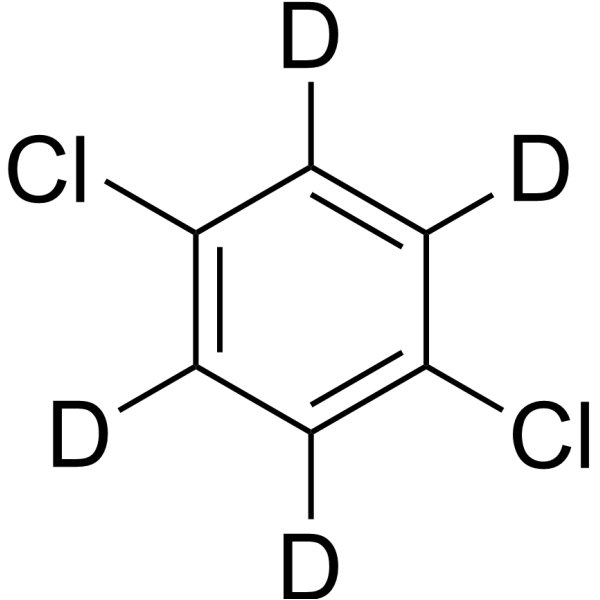
1,4-Dichlorobenzene-d4 is the deuterium labeled 1,4-Dichlorobenzene. 1,4-Dichlorobenzene is a non-genotoxic, orally active mitogenic/tumor-promoting carcinogen that is also widely used as a dye, resin intermediate, and deodorant, moth repellent/insecticide. 1,4-Dichlorobenzene induces liver tumors in mice and promotes the growth of spontaneous precancerous lesions, but shows no liver tumor-inducing activity in F344 rats. 1,4-Dichlorobenzene increases the levels of white blood cell count, serum alanine aminotransferase and blood urea nitrogen in occupationally exposed populations. 1,4-Dichlorobenzene is metabolized to 2,5-dichlorophenol and excreted in urine, and this metabolite can serve as a biomarker for 1,4-Dichlorobenzene exposure. Due to its specific hepatotoxic characteristics, 1,4-Dichlorobenzene is applicable to liver cancer-related research .
loading...
    loading...

