336 Results for "

K channel

" in MedChemExpress (MCE) Product Catalog:
Products (336)

336 Results for "K channel" in MCE Product Catalog:

28
28 Publications Verification
Cat. No.: HY-13519
CAS No.: 289905-88-0
Purity:  99.73%
Target:  

Potassium Channel

Research Areas:  

Neurological Disease

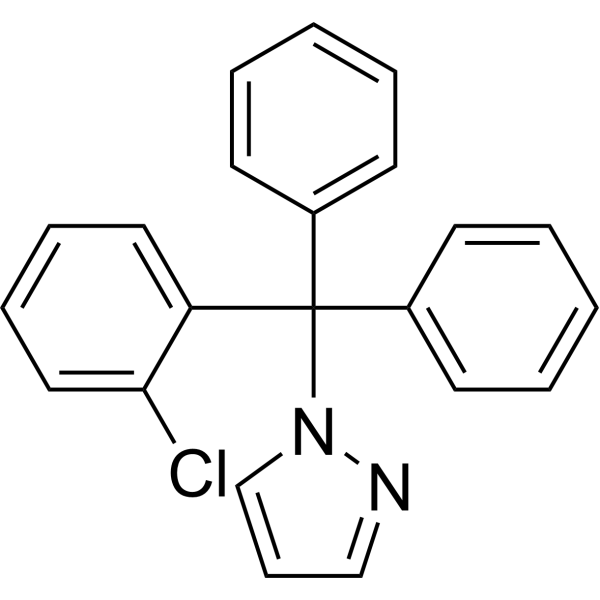
TRAM-34 is a highly selective blocker of intermediate-conductance calcium-activated K + channel (IKCa1) (Kd=20 nM).
27
27 Cited Publications
Cat. No.: HY-15206
CAS No.: 10238-21-8
Purity:  99.94%
Synonyms: Glyburide
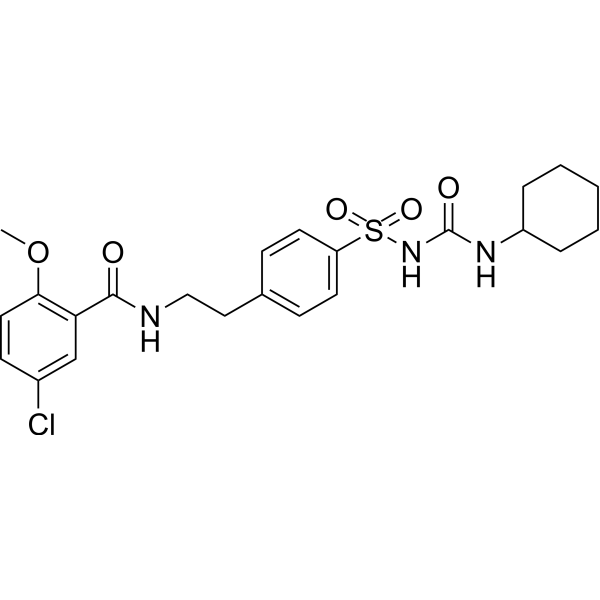
Glibenclamide (Glyburide) is an orally active ATP-sensitive K + channel (KATP) inhibitor and can be used for the research of diabetes and obesity . Glibenclamide inhibits P-glycoprotein. Glibenclamide directly binds and blocks the SUR1 subunits of KATP and inhibits the cystic fibrosis transmembrane conductance regulator protein (CFTR) . Glibenclamide interferes with mitochondrial bioenergetics by inducing changes on membrane ion permeability . Glibenclamide can induce autophagy .
24
24 Cited Publications
Cat. No.: HY-B1751
CAS No.: 56-54-2
Quinidine (15% dihydroquinidine) is an antiarrhythmic agent. Quinidine is a potent, orally active, selective cytochrome P450db inhibitor. Quinidine is also a K + channel blocker with an IC50 of 19.9 μM, and can induce apoptosis. Quinidine can be used for malaria research .
17
17 Cited Publications
Cat. No.: HY-B0246
CAS No.: 298-46-4
Synonyms: CBZ; NSC 169864
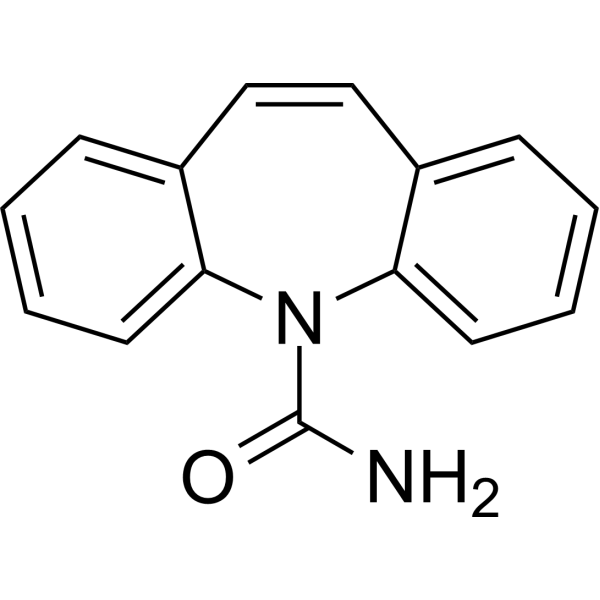
Carbamazepine is an orally active pressure-sensitive sodium ion channel blocker with an IC50 of 131 μM. Carbamazepine blocks voltage gated Na +, Ca 2+, and K + channels, and is also a HDAC inhibitor (IC50: 2 μM). Carbamazepine is an anticonvulsant and can be used for research of epilepsy and neuropathic pain .
11
11 Cited Publications
Cat. No.: HY-50694
CAS No.: 289656-45-7
Synonyms: ICA-17043
Target:  

Potassium Channel

Research Areas:  

Others

Senicapoc (ICA-17043) is a potent and selective Gardos channel (Ca 2+-activated K + channel; KCa3.1) blocker with an IC50 of 11 nM. Senicapoc blocks Ca 2+-induced rubidium flux from human RBCs with an IC50 value of 11 nM and inhibits RBC dehydration with IC50 of 30 nM .
11
11 Cited Publications
Cat. No.: HY-P0256
CAS No.: 24345-16-2
Synonyms: Apamine
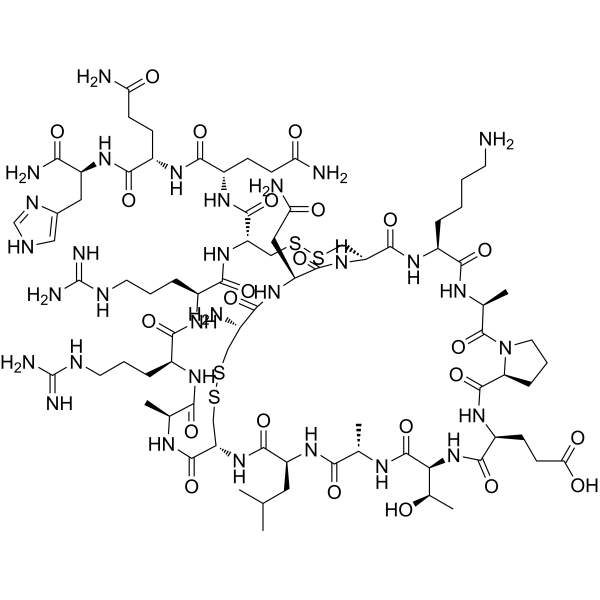
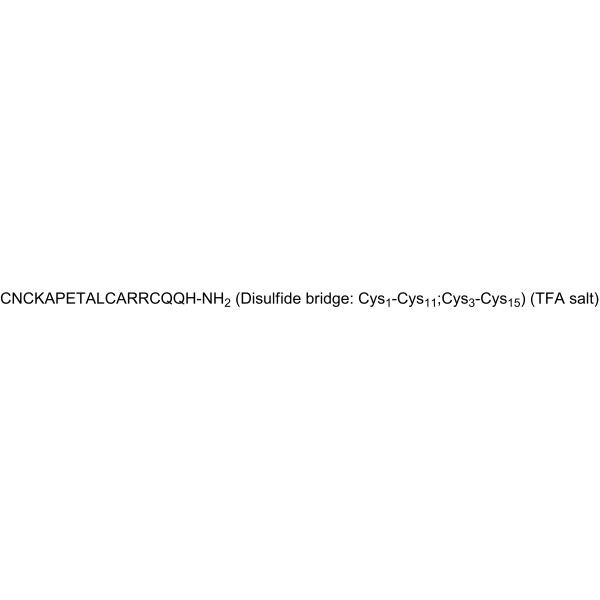
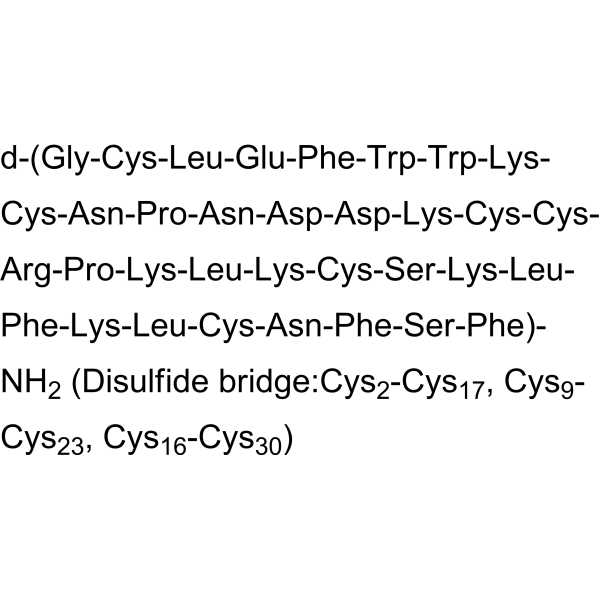
Apamin (Apamine) is an 18 amino acid peptide neurotoxin found in apitoxin (bee venom), is known as a specifically selective blocker of Ca 2+-activated K + (SK) channels and exhibits anti-inflammatory and anti-fibrotic activity .
11
11 Cited Publications
Cat. No.: HY-103371
CAS No.: 82749-70-0
Purity:  99.83%
Research Areas:  

Neurological Disease

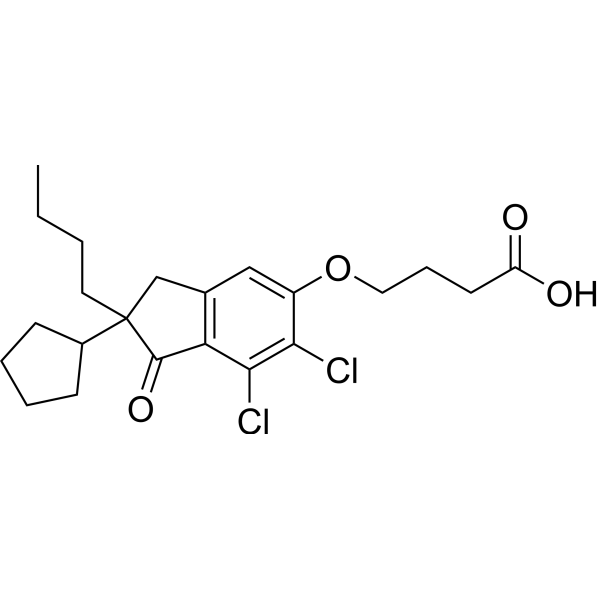
DCPIB is a selective, reversible and potent inhibitor of volume-regulated anion channels (VRAC). DCPIB voltage-dependently activates potassium channels TREK1 and TRAAK, and inhibits TRESK, TASK1 and TASK3 (IC50s: 0.14, 0.95, 50.72 μM, respectively). DCPIB is also a selective blocker of swelling-induced chloride current (ICl,swell), with an IC50 of 4.1 μM. DCPIB is a useful tool for investigating structure-function studies of K2P channels .
11
11 Cited Publications
Cat. No.: HY-P0256A
Synonyms: Apamine TFA
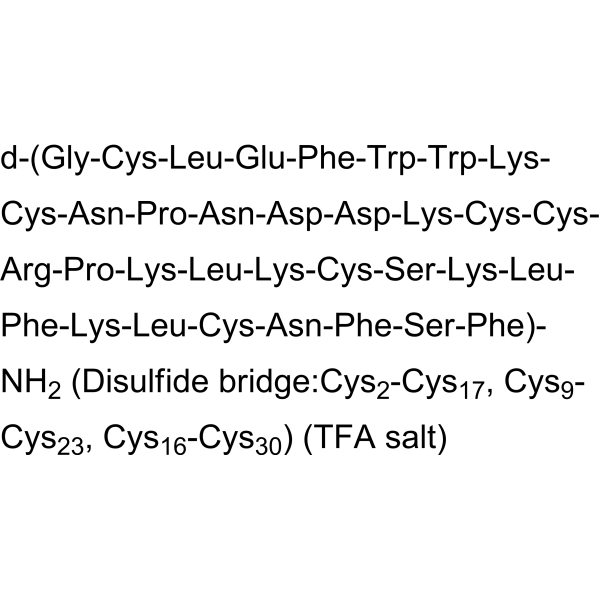
Apamin TFA (Apamine TFA) is an 18 amino acid peptide neurotoxin found in apitoxin (bee venom), is known as a specifically selective blocker of Ca 2+-activated K + (SK) channels and exhibits anti-inflammatory and anti-fibrotic activity .
9
9 Cited Publications
Cat. No.: HY-B1221
CAS No.: 530-78-9
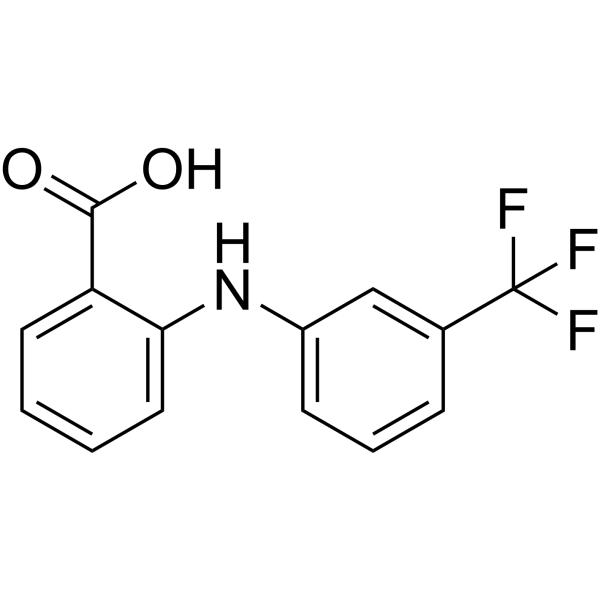
Flufenamic acid is a non-steroidal anti-inflammatory agent, inhibits cyclooxygenase (COX), activates AMPK, and also modulates ion channels, blocking chloride channels and L-type Ca 2+ channels, modulating non-selective cation channels (NSC), activating K + channels. Flufenamic acid binds to the central pocket of TEAD2 YBD and inhibits both TEAD function and TEAD-YAP-dependent processes, such as cell migration and proliferation.
9
9 Cited Publications
Cat. No.: HY-15124
CAS No.: 98625-26-4
Purity:  99.10%
Target:  

Calcium Channel

Research Areas:  

Cardiovascular Disease

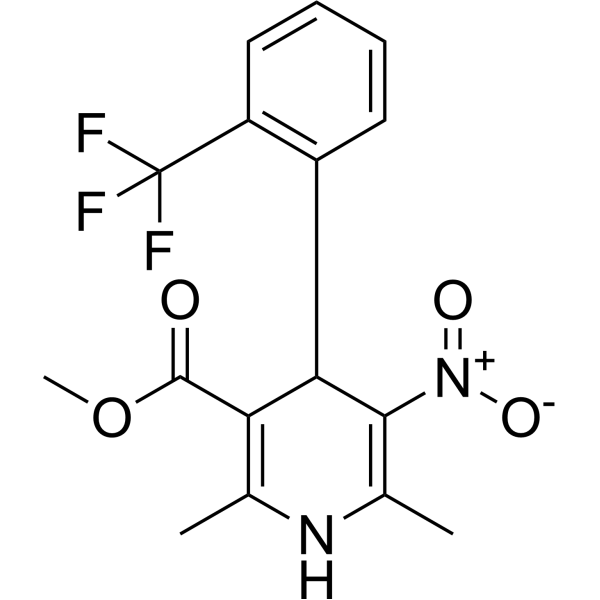
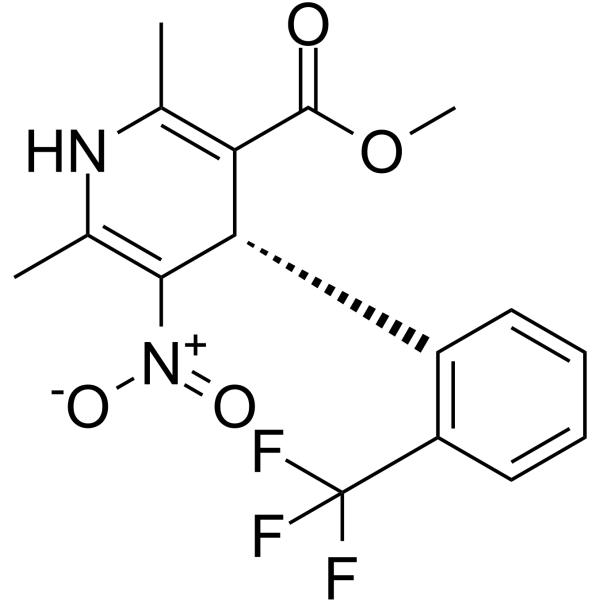
(S)-(-)-Bay-K-8644 is an agonist of L-type Ca 2+ channel. (S)-(-)-Bay-K-8644 activates Ba 2+ currents (IBa) (EC50=32 nM).
9
9 Cited Publications
Cat. No.: HY-16952A
CAS No.: 74764-40-2
Synonyms: (±)-Bepridil hydrochloride hydrate; Org 5730 hydrochloride hydrate
Target:  

Calcium Channel

Research Areas:  

Cardiovascular Disease

Bepridil hydrochloride hydrate ((±)-Bepridil hydrochloride hydrate) is a non-selective, long-acting Ca + channel antagonist and Na +, K + channel inhibitor, with antianginal and type I antiarrhythmic effects. Bepridil hydrochloride hydrate also acts as a cardiac Na +/Ca2 + exchange (NCX1) inhibitor. Bepridil hydrochloride hydrate can be used for the research of cardiovascular disorders .
8
8 Cited Publications
Cat. No.: HY-10588
CAS No.: 71145-03-4
Purity:  99.96%
Synonyms: (±)-Bay K 8644
Bay K 8644 ((±)-Bay K 8644) is a racemate consisting of two isomers (R)-(+)-Bay-K-8644 and (S)-(-)-Bay-K-8644 . Bay K 8644 is a L-type Ca 2+ channel agonist with an EC50 of 17.3 nM. Bay K 8644 increases Ca 2+ influx through sarcolemmal Ca 2+ channels by increasing the open time of the channel. Bay K 8644 has vasoconstrictive effects .
8
8 Cited Publications
Cat. No.: HY-12532
CAS No.: 68844-77-9
Purity:  99.77%
Synonyms: R 43512
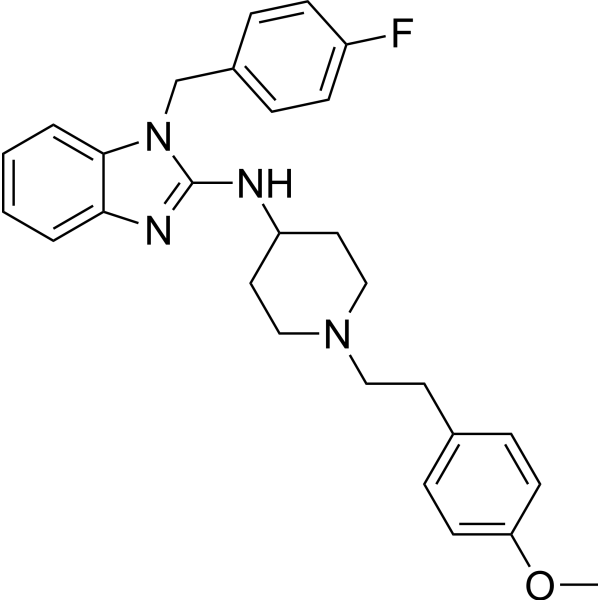
Astemizole (R 43512), a second-generation antihistamine agent to diminish allergic symptoms with a long duration of action, is a histamine H1-receptor antagonist, with an IC50 of 4 nM. Astemizole also shows potent hERG K + channel blocking activity with an IC50 of 0.9 nM. Astemizole has antipruritic effects .
7
7 Cited Publications
Cat. No.: HY-B0563
CAS No.: 84057-95-4
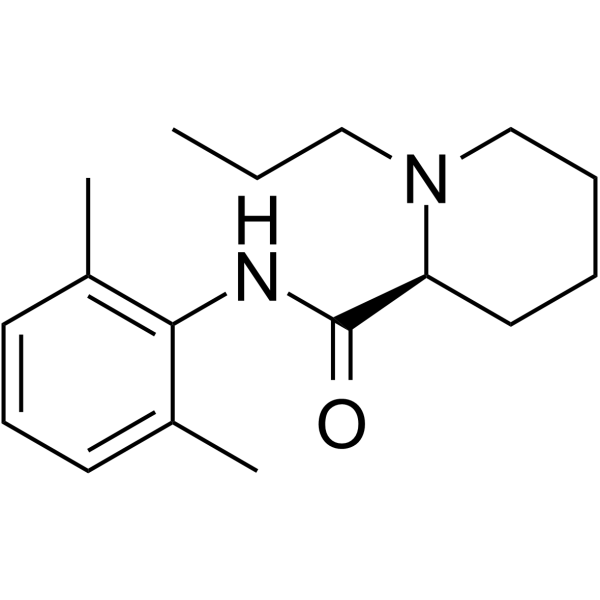
Ropivacain is a potent sodium channel blocker. Ropivacain blocks impulse conduction via reversible inhibition of sodium ion influx in nerve fibrese . Ropivacaine is also an inhibitor of K2P (two-pore domain potassium channel) TREK-1 with an IC50 of 402.7 μM in COS-7 cell's membrane . Ropivacaine is used for the research of neuropathic pain management .
7
7 Cited Publications
Cat. No.: HY-B0563B
CAS No.: 98717-15-8
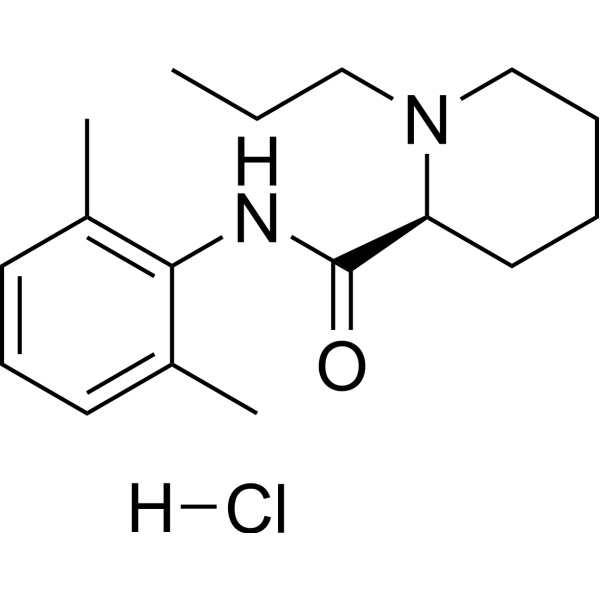
Ropivacaine hydrochloride is a potent sodium channel blocker and blocks impulse conduction via reversible inhibition of sodium ion influx in nerve fibrese . Ropivacaine is also an inhibitor of K2P (two-pore domain potassium channel) TREK-1 with an IC50 of 402.7 μM in COS-7 cell's membrane . Ropivacaine is widely used for neuropathic pain management in vivo .
7
7 Cited Publications
Cat. No.: HY-B0563A
CAS No.: 132112-35-7
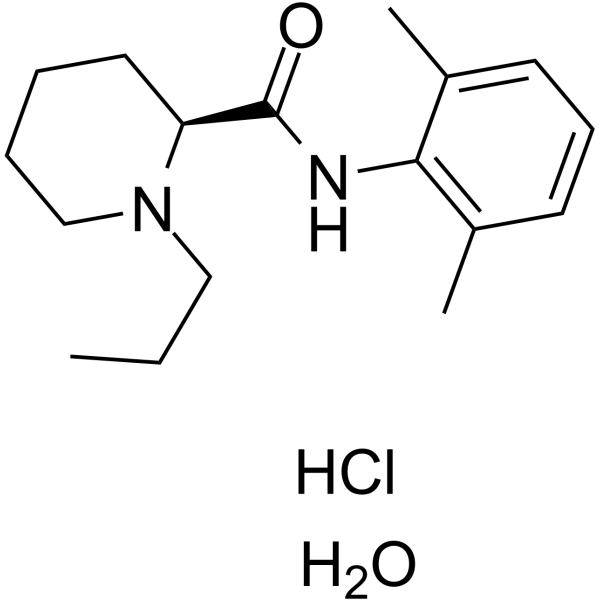
Ropivacaine hydrochloride monohydrate is a potent sodium channel blocker and blocks impulse conduction via reversible inhibition of sodium ion influx in nerve fibrese . Ropivacaine is also an inhibitor of K2P (two-pore domain potassium channel) TREK-1 with an IC50 of 402.7 μM in COS-7 cell's membrane . Ropivacaine is widely used for regional anesthesia and neuropathic pain management in vivo .
7
7 Cited Publications
Cat. No.: HY-B1751B
CAS No.: 549-56-4
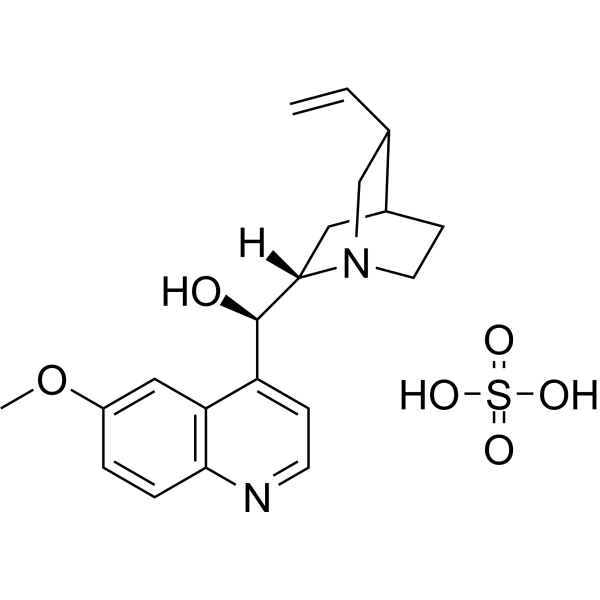
Quinidine sulfate is an antiarrhythmic agent. Quinidine sulfate is a potent, orally active, selective cytochrome P450db inhibitor. Quinidine sulfate is also a K + channel blocker with an IC50 of 19.9 μM. Quinidine sulfate can be used for malaria research .
7
7 Cited Publications
Cat. No.: HY-D1297
CAS No.: 730931-46-1
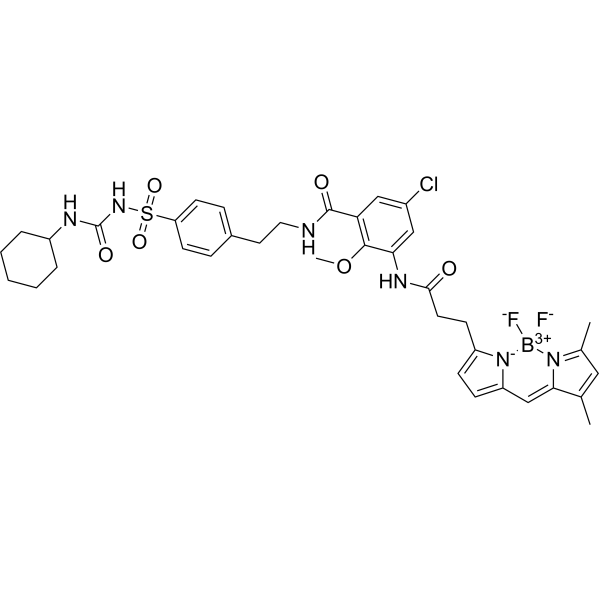
ER-Tracker dye is a derivative of BODIPY series dyes coupled with Glibenclamide (HY-15206), highly selective binding to the endoplasmic reticulum, non-toxic to cells at low concentrations, this type of dye is an environmentally sensitive probe, and formaldehyde treatment can still retain part of the fluorescence, with high fluorescence life, good extinction coefficient and other characteristics. Glibenclamide is an atp-dependent K + channel blocker (Kir6, KATP) and CFTR Cl-channel blocker that binds in the endoplasmic reticulum. ER-Tracker is not suitable for staining cells after fixation .
7
7 Cited Publications
Cat. No.: HY-B0563C
CAS No.: 854056-07-8
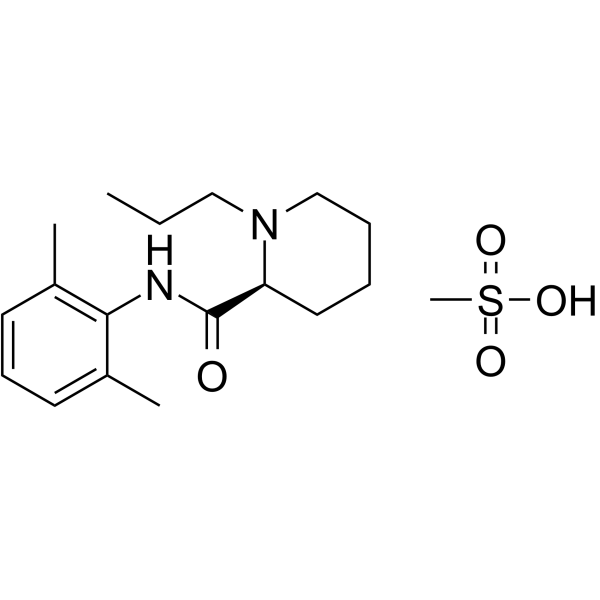
Ropivacaine mesylate is a long-acting amide local anaesthetic agent for a spinal block and effectively blocks neuropathic pain. Ropivacaine blocks impulse conduction via reversible inhibition of?sodium ion influx?in nerve fibressup>[1] . Ropivacaine is also an inhibitor of K2P (two-pore domain potassium channel)?TREK-1?with an IC50?of 402.7 μM in COS-7 cell's membrane .
5
5 Cited Publications
Cat. No.: HY-D1431
ER-Tracker dye is a derivative of BODIPY series dyes coupled with Glibenclamide (HY-15206), highly selective binding to the endoplasmic reticulum, non-toxic to cells at low concentrations, this type of dye is an environmentally sensitive probe, and formaldehyde treatment can still retain part of the fluorescence, with high fluorescence life, good extinction coefficient and other characteristics. Glibenclamide is an atp-dependent K + channel blocker (Kir6, KATP) and CFTR Cl-channel blocker that binds in the endoplasmic reticulum. ER-Tracker is not suitable for staining cells after fixation. Ex/Em=587/615 nm .

