13 Results for "

L5178Y lymphoma

" in MedChemExpress (MCE) Product Catalog:
Products (13)

13 Results for "L5178Y lymphoma" in MCE Product Catalog:

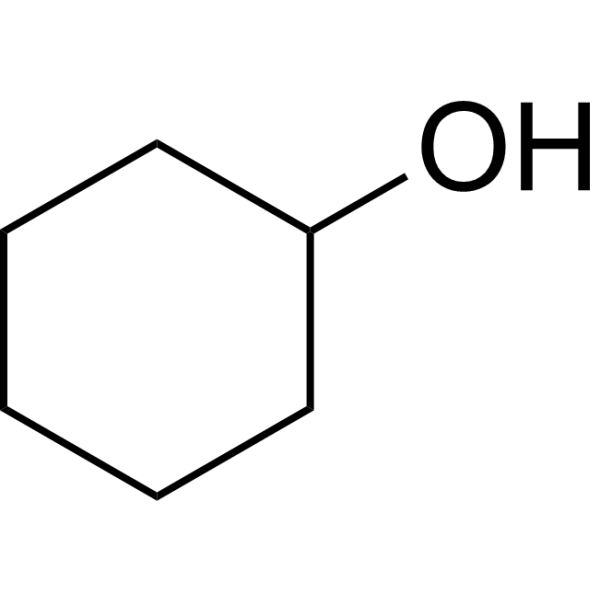
Cat. No.: HY-Y1217
CAS No.: 108-93-0
Synonyms: Hydroxycyclohexane; NSC 54711; Naxol; Cyclohexanol
1-Cyclohexanol (Hydroxycyclohexane; NSC 5471) is an orally active Cramer Class I flavor ingredient that can be used in fragrances. 1-Cyclohexanol has a wide margin of safety and is environmentally friendly .
loading...
    loading...
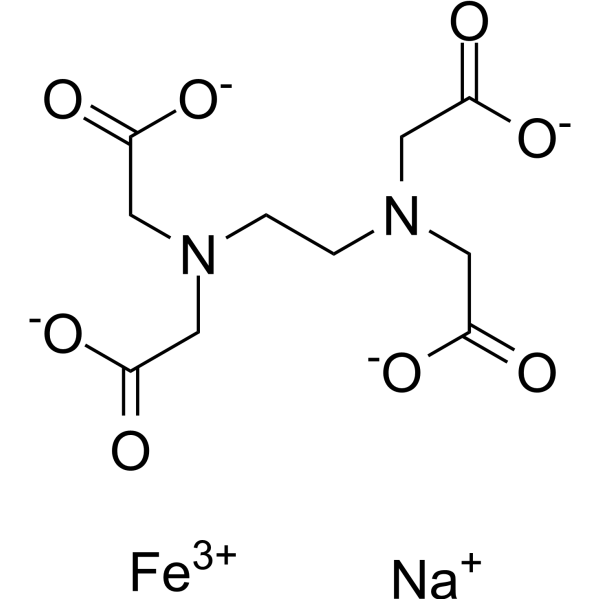
Cat. No.: HY-131926
CAS No.: 15708-41-5
Synonyms: Ethylenediaminetetraacetic acid (iron sodium)
EDTA iron sodium (Ethylenediaminetetraacetic acid iron sodium) is an orally active food fortifier and iron chelate. EDTA iron sodium provides absorbable iron during consumption of fortified soy sauce, rice-based meals, or complementary foods made from high-phytate grains. EDTA iron sodium increases serum iron levels for up to 4 h, and total non-heme iron levels in the liver also rise with increasing doses. EDTA iron sodium is applicable to research on iron deficiency anemia and lymphoma .
loading...
    loading...
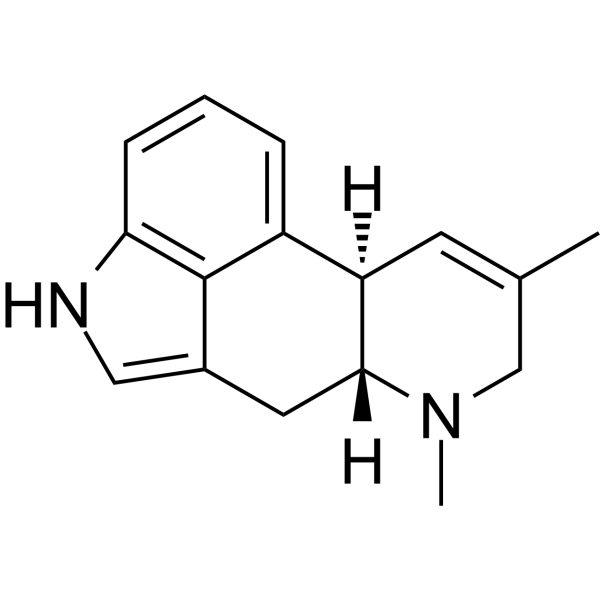
Cat. No.: HY-135525
CAS No.: 548-42-5
Agroclavine acts as an agonist of the D1-dopamine receptor and α1-adrenergic receptor. Agroclavine enhances the sensitivity of the brain to magnetic fields; it impairs spatial memory without affecting hippocampal long-term potentiation (LTP). Agroclavine exerts bidirectional regulatory effects on immune activity: it enhances NK cell activity with low toxicity under normal conditions, while it inhibits NK cell activity and exhibits significant cardiac and hepatic toxicity under stress conditions. Agroclavine can be used for research on neuroelectrophysiology, learning and memory, and immunoregulation .
loading...
    loading...
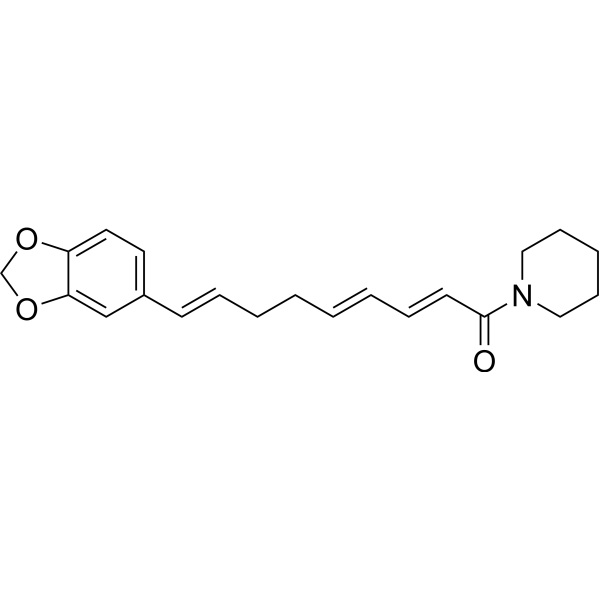
Cat. No.: HY-N12122
CAS No.: 107584-38-3
Dehydropipernonaline (Compound 24) is an amide compound. Dehydropipernonaline shows considerable cytotoxicity to L5178Y mouse lymphoma cells (IC508.9μM). Dehydropipernonaline can be used for screening antifungal and cytotoxicity .
loading...
    loading...
Cat. No.: HY-N6799
CAS No.: 36519-25-2
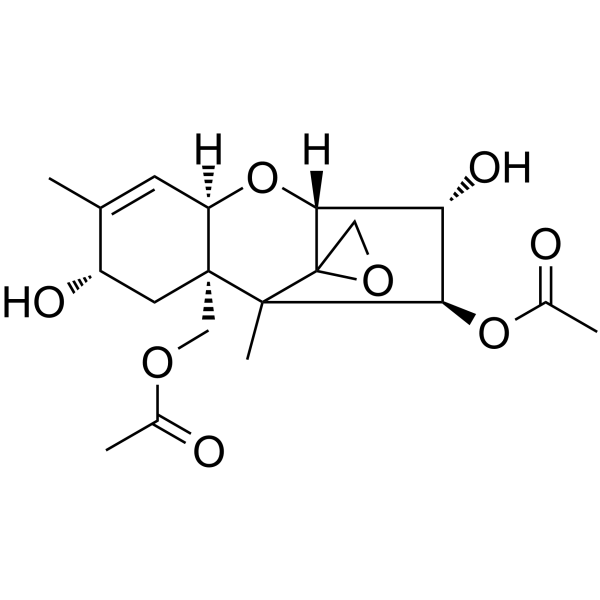
Neosolaniol is an orally active type A trichothecene mycotoxin, and it is a metabolite of T-2 Toxin (HY-N6792) in human cancer cells and renal epithelial cells. Neosolaniol targets Bax, Bcl-2, caspase 3, caspase 8, and cytochrome c, thereby inducing apoptosis, emesis and anorexia. Neosolaniol reduces intracellular ATP levels, elevates ROS levels, decreases mitochondrial membrane potential, induces mitochondrial damage, and exerts toxicity on Leydig cells. Neosolaniol downregulates the expression of intestinal tight junction proteins in broilers and increases the load of Salmonella enteritidis in the cecum of broilers. Neosolaniol can be used in research related to anorexia, lymphoma, Fusarium melonis rot, and Salmonella infection .
loading...
    loading...
Cat. No.: HY-133787
CAS No.: 117678-38-3
Purity:  98.28%
Target:  

Drug Metabolite

Research Areas:  

Infection Others

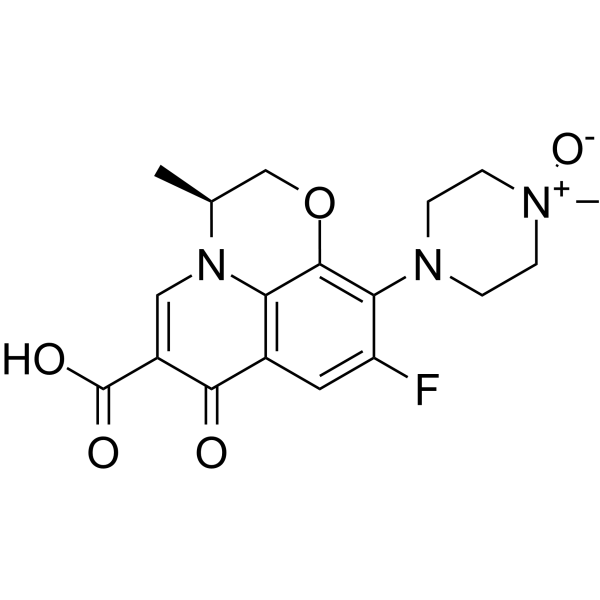
Levofloxacin N-oxide is an oxidation product and impurity of Levofloxacin (HY-B0330), and it is a non-mutagen. Under specific concentration conditions with the addition of S-9 mixture, Levofloxacin N-oxide increases structural chromosomal aberrations in hamster lung cells .
loading...
    loading...
Cat. No.: HY-117285
CAS No.: 60227-09-0
Synonyms: Lactoquinomycin A; LQM-A
Lactoquinomycin A is a quinone antibiotic. Lactoquinomycin A has the activity of anti-Gram-positive bacteria and some Gram-negative bacteria, but the effect of anti-Gram-negative bacteria is weak and has no effect on fungi. Lactoquinomycin A inhibits a variety of cell lines including lymphoma L5178Y progenitor, Adriamycin resistant, Bleomycin-resistant, human leukemia K562, mouse leukemia L-1210 and mouse leukemia P 388 with ID50 (μg/mL) of 0.02, 0.006, 0.008, 0.033, 0.013 and 0.03, respectively .
loading...
    loading...
Cat. No.: HY-N14774
CAS No.: 101342-94-3
Lactoquinomycin B is a quinone antibiotic. Lactoquinomycin B has the activity of anti-Gram-positive bacteria and some Gram-negative bacteria, but the effect of anti-Gram-negative bacteria is weak and has no effect on fungi. Lactoquinomycin B inhibits a variety of cell lines including lymphoma L5178Y progenitor, Adriamycin resistant, Bleomycin-resistant, human leukemia K562, mouse leukemia L-1210 and mouse leukemia P 388 with ID50 (μg/mL) of 0.43, 0.21, 0.19, 0.16, 0.2 and 0.12, respectively .
loading...
    loading...
Cat. No.: HY-13762
CAS No.: 98774-23-3
Target:  

Cytochrome P450

Research Areas:  

Cancer

Tesmilifene is an antihistamine agent and a chemical sensitizer. Tesmilifene targets cytochrome P450, exhibits hormonal effects on DNA synthesis in MCF-7 cells, and stimulates the tumor growth in mouse/rat models. Tesmilifene overcomes multidrug resistance .
loading...
    loading...
Cat. No.: HY-13762S
Tesmilifene-d4 is the deuterium labeled Tesmilifene (HY-13762). Tesmilifene is an antihistamine agent and a chemical sensitizer. Tesmilifene targets cytochrome P450, exhibits hormonal effects on DNA synthesis in MCF-7 cells, and stimulates the tumor growth in mouse/rat models. Tesmilifene overcomes multidrug resistance .
loading...
    loading...
Cat. No.: HY-76652
CAS No.: 1264191-73-2
Target:  

Renin

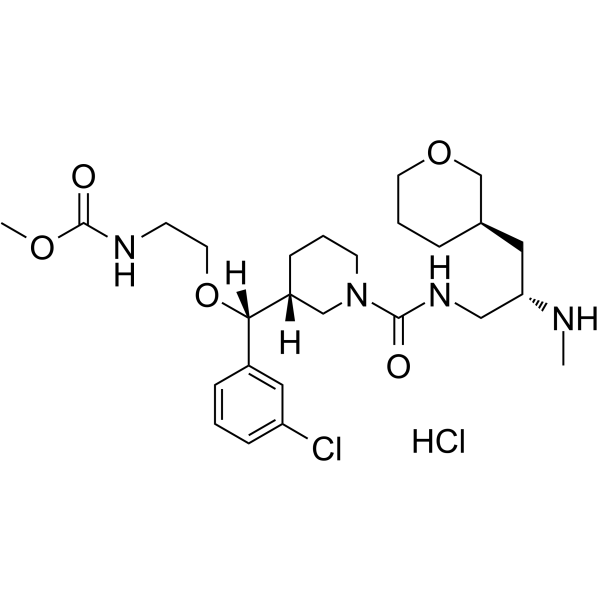
VTP-27999 Hydrochloride is an orally active renin inhibitor. VTP-27999 Hydrochloride functionally inhibits renin and acid-activated prorenin, suppresses plasma renin activity and modulates plasma and urinary aldosterone levels. VTP-27999 Hydrochloride reduces mean arterial blood pressure, induces plasma renin concentration increases, decreases plasma angiotensin II levels and enhances renin immunoreactivity. VTP-27999 (Hydrochloride) can be used for the research of hypertension and chronic renal disease .
loading...
    loading...
Cat. No.: HY-N19666
CAS No.: 1820968-26-0
2-Hexylglutaconic acid is a 2-Pentenedioic acid (HY-W073501A) derivative found in the soil-derived fungus Gongronella butleri. 2-Pentenedioic acid is a chemical building block in synthesis, with research applications focusing on metabolic studies .
loading...
    loading...
Cat. No.: HY-N19113
CAS No.: 112900-04-6
Emindole SB is an anticancer agent. Emindole SB can be isolated from Penicillium species. Emindole SB exerts anticancer effects against ovarian cancer, breast cancer and lymphoma. Emindole SB shows no toxicity to Caenorhabditis elegans. Emindole SB can be used in studies related to ovarian cancer, lymphoma and breast cancer .
loading...
    loading...
  • 1

