23 Results for "

Licaria aurea (Huber) Kosterm.

" in MedChemExpress (MCE) Product Catalog:
Products (23)

23 Results for "Licaria aurea (Huber) Kosterm." in MCE Product Catalog:

1
1 Cited Publications
Cat. No.: HY-171658
CAS No.: 3070346-91-4
R1-ICR-5 is a highly selective RIPK1 PROTAC degrader. Mediated by VHL, R1-ICR-5 induces the degradation of RIPK1, which in turn dysregulates the TNFR1 and TLR3/4 signaling hubs, enhances the signaling outputs of NF-κB, MAPK and IFN, and simultaneously promotes RIPK3 activation and necroptosis (necroptosis). R1-ICR-5 can be used in the research of triple-negative breast cancer and skin inflammation .
loading...
    loading...
Cat. No.: HY-N7364
CAS No.: 18794-84-8
Synonyms: trans-β-Farnesene
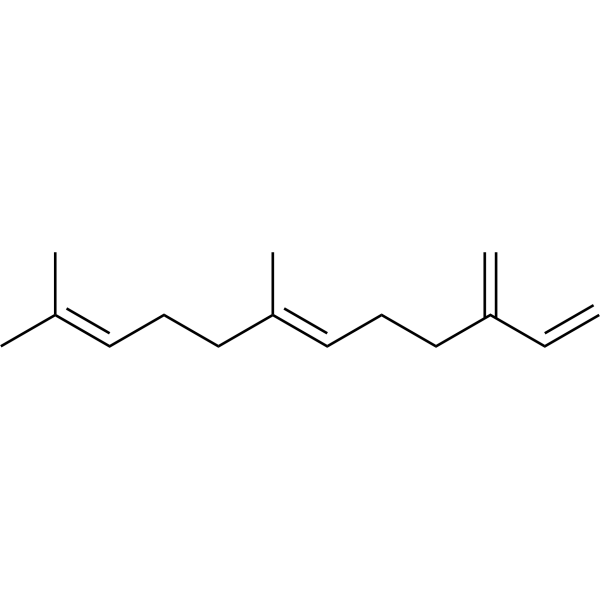
(E)-β-Farnesene (trans-β-Farnesene) is an aphid alarm pheromone, which can be found in Phlomis aurea Decne essential oil. (E)-β-Farnesene shows good binding score with a value of -30.64 kcal/mol to the CDK2 receptor. (E)-β-Farnesene also exhibits good affinity to odorant-binding protein 3 (OBP3). (E)-β-Farnesene can be used as a feeding stimulant for the sand fly Lutzomyia longipalpis .
loading...
    loading...
Cat. No.: HY-P5726
CAS No.: 302343-01-7
Target:  

Bacterial Antibiotic

Research Areas:  

Infection Cancer

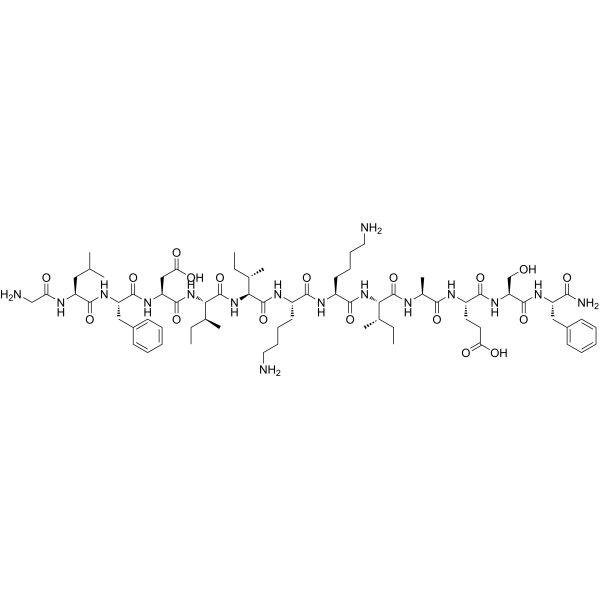
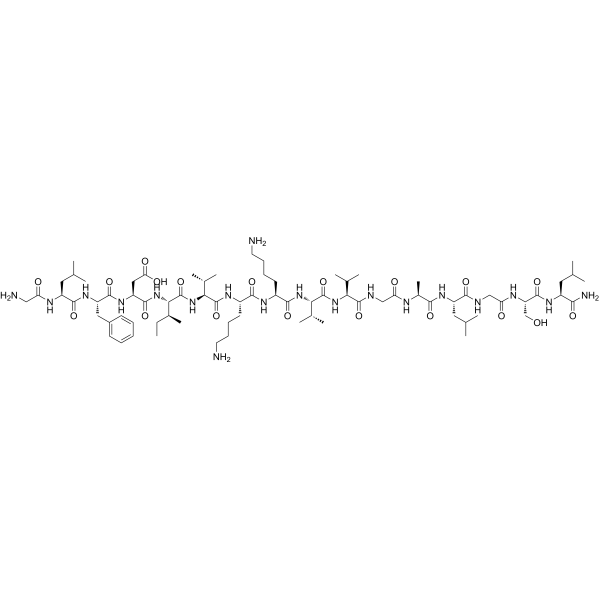
Aurein 1.2 is a C-terminally amidated antimicrobial peptide found in Litoria raniformis. Aurein 1.2 exhibits moderate, broad-spectrum antimicrobial activity against a variety of bacteria, with a MIC of 12-100 μg/mL. Aurein 1.2 forms an amphipathic α-helix with distinct hydrophilic and hydrophobic faces, and may exert antimicrobial and cytotoxic effects on tumor cells by disrupting cell membranes. Aurein 1.2 can be used in studies related to antimicrobial peptides, membrane-active peptides, and tumor cytotoxicity .
loading...
    loading...
Cat. No.: HY-P5290
CAS No.: 2213408-17-2
Research Areas:  

Cancer

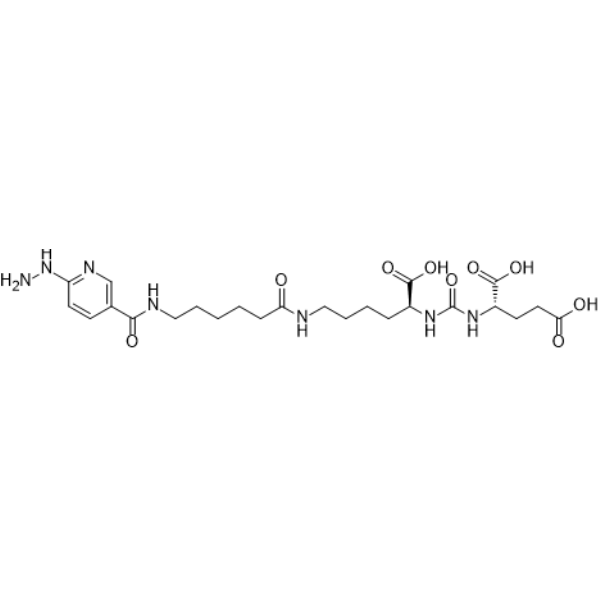
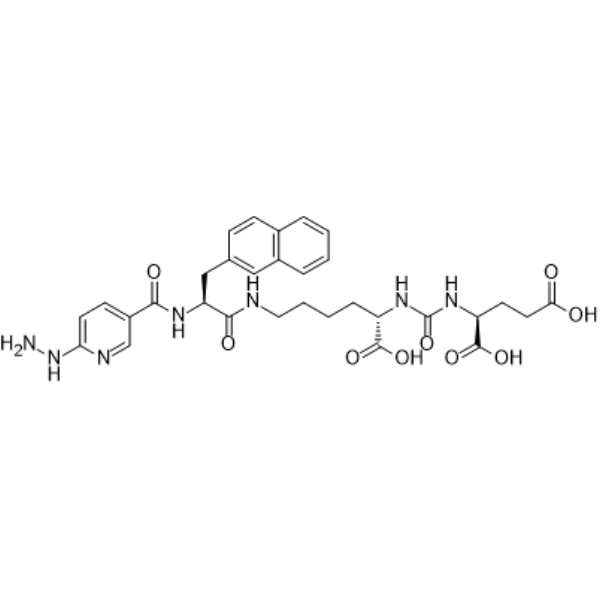
HYNIC-PSMA is a ligand for molecular imaging of tumors. Hynic-psma consists of two components: HYNIC (6-hydrazinonicotinamide) and PSMA (Prostate-Specific Membrane Antigen). HYNIC is a compound used to attach radioactive isotopes to targeted molecules, such as 188Re-HYNIC-PSMA. PSMA is a membrane antigen that is specifically expressed on the surface of prostate cancer cells. HYNIC-PSMA can be used in prostate cancer research . HYNIC-PSMA can be used for the synthesis/research of Radionuclide-Drug Conjugates (RDCs).
loading...
    loading...
Cat. No.: HY-N7364R
CAS No.: 18794-84-8
Synonyms: trans-β-Farnesene (Standard)
(E)-β-Farnesene (Standard) is the analytical standard of (E)-β-Farnesene. This product is intended for research and analytical applications. (E)-β-Farnesene (trans-β-Farnesene) is a volatile sesquiterpene hydrocarbon which can be found in Phlomis aurea Decne essential oil. (E)-β-Farnesene can be used as a feeding stimulant for the sand fly Lutzomyia longipalpis .
loading...
    loading...
Cat. No.: HY-P5292A
CAS No.: 2375849-11-7
Research Areas:  

Cancer

HYNIC-iPSMA TFA is a PSMA-targeted ligand for tumor molecular imaging, with a Ki value of 3.11 nM. HYNIC-iPSMA TFA consists of two components: HYNIC (6-hydrazinonicotinamide) and iPSMA (Inhibitor of Prostate-Specific Membrane Antigen). HYNIC serves as a chelating moiety to link radionuclides to the targeting molecule; iPSMA is a specific inhibitor that targets Prostate-Specific Membrane Antigen (PSMA). 68Ga-labeled iPSMA is used for prostate cancer detection via PET imaging, while the further developed 99mTc-EDDA/HYNIC-iPSMA TFA exhibits excellent specificity and sensitivity. HYNIC-iPSMA TFA can be used for the synthesis and research of radionuclide-conjugated drugs (RDC) .
loading...
    loading...
Cat. No.: HY-146268
CAS No.: 3031484-08-6
Purity:  98.41%
Target:  

CaMK

Research Areas:  

Neurological Disease

CaMKIIα-IN-1 (Compound 4d) is an orally active Ca 2+/calmodulin-dependent protein kinase II α (CaMKIIα) inhibitor with a KD of 219 nM for CaMKIIα WT hub. CaMKIIα-IN-1 has good metabolic stability .
loading...
    loading...
Cat. No.: HY-P5292
CAS No.: 2192215-74-8
Research Areas:  

Cancer

HYNIC-iPSMA is a PSMA-targeted ligand for tumor molecular imaging, with a Ki value of 3.11 nM. HYNIC-iPSMA consists of two components: HYNIC (6-hydrazinonicotinamide) and iPSMA (Inhibitor of Prostate-Specific Membrane Antigen). HYNIC acts as a chelating moiety to link radionuclides to the targeting molecule; iPSMA is a specific inhibitor that targets Prostate-Specific Membrane Antigen (PSMA). 68Ga-labeled iPSMA is used for prostate cancer detection via PET imaging, while the further developed 99mTc-EDDA/HYNIC-iPSMA TFA exhibits excellent specificity and sensitivity. HYNIC-iPSMA can be used for the synthesis and research of radionuclide-conjugated drugs (RDC) .
loading...
    loading...
Cat. No.: HY-P5561
CAS No.: 302343-04-0
Target:  

Antibiotic Bacterial

Research Areas:  

Infection

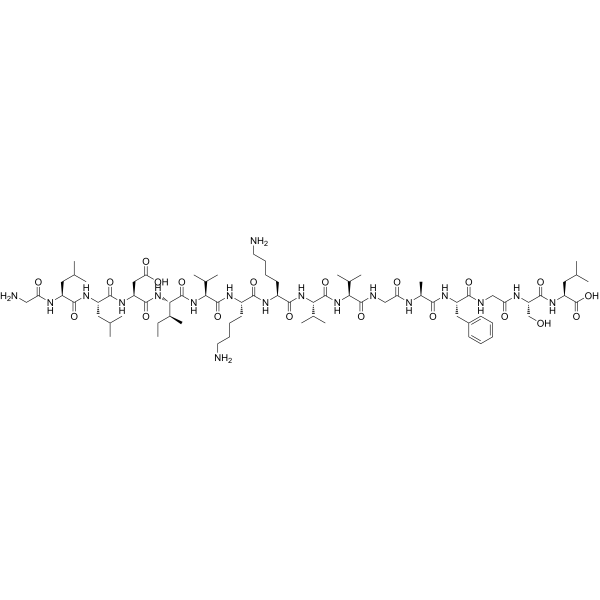
Aurein 2.2 is a major component of the skin secretion of L.aurea. Aurein 2.2 is an antibiotic with broad-spectrum antibacterial activity against Gram positive bacteria such as Staphylococcus aureus and S. epidermidis .
loading...
    loading...
Cat. No.: HY-P991640
Synonyms: BIIB015 antibody

Target:  

ADC Antibodies

Research Areas:  

Cancer

Anti-TDGF1 antibody (huB3F6) (BIIB015 antibody) is a CHO-expressed human antibody that targets TDGF1. Anti-TDGF1 antibody has huIgG1 heavy chain and huλ light chain, with a predicted molecular weight (MW) of 145 kDa. The isotype control for Anti-TDGF1 antibody can refer to Human IgG1 kappa, Isotype Control (HY-P99001). Anti-TDGF1 antibody (huB3F6) can be used for synthesis of ADCs .
loading...
    loading...
Cat. No.: HY-134529
CAS No.: 14075-00-4
Synonyms: Ribose 1-phosphate
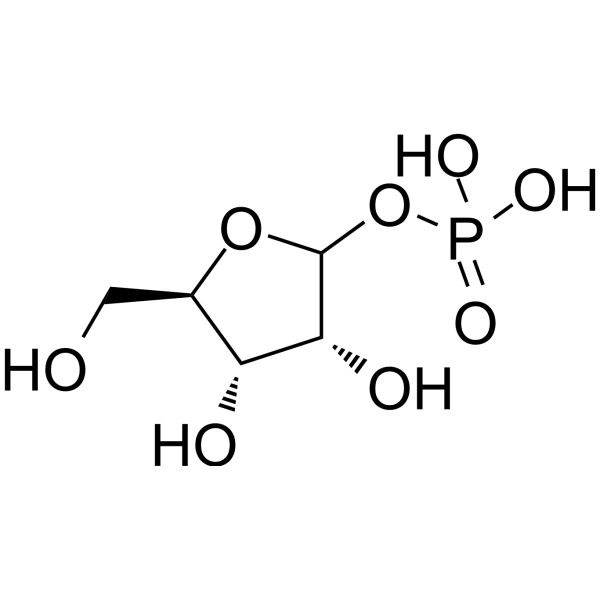
D-Ribofuranose 1-dihydrogenphosphate (Ribose 1-phosphate) dicyclohexanamine is a pentose phosphate and serves as a key intermediate metabolite in the salvage synthesis pathway of purine and pyrimidine nucleotides. In nucleotide salvage synthesis, D-Ribofuranose 1-dihydrogenphosphate dicyclohexanamine directly "transfers" the ribosyl group from purine nucleosides to pyrimidine bases, acting as a hub molecule linking nucleoside/base metabolism with pentose phosphate metabolism .
loading...
    loading...
Cat. No.: HY-P5725
CAS No.: 1240116-47-5
Target:  

Bacterial Antibiotic

Research Areas:  

Infection

Aurein 2.1 is an antibiotic peptide that can be found in the Australian Bell Frogs Litoria aurea and Litoria raniformis .
loading...
    loading...
Cat. No.: HY-123161
CAS No.: 1198588-57-6
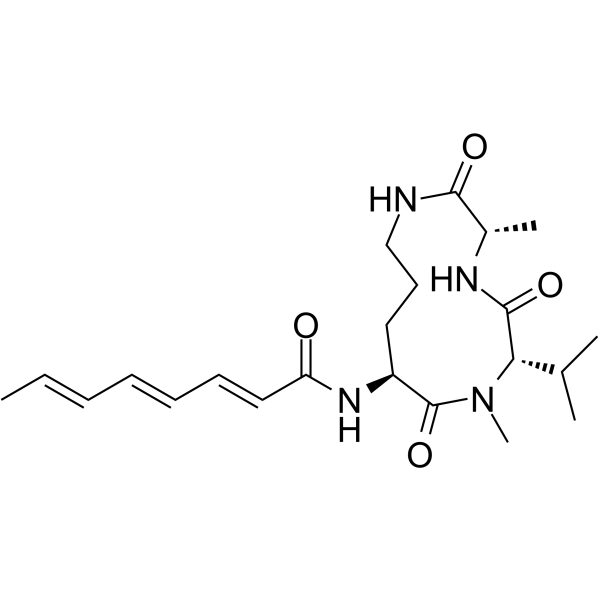
JBIR-15 is a new aspochracin derivative. JBIR-15 is isolated from a sponge-derived fungus, Aspergillus sclerotiorum Huber Sp080903f04 .
loading...
    loading...
Cat. No.: HY-158702
CAS No.: 40581-89-3
Target:  

5-HT Receptor

Research Areas:  

Neurological Disease

5-HTQ chloride is an indole alkaloid that can be isolated from the skin secretions of the Australian golden bell frog Litoria aurea. 5-HTQ chloride is also a full agonist of the 5-HT receptor .
loading...
    loading...
Cat. No.: HY-N19993
Synonyms: Lindera aggregata (sims) kosterm leaves extract; Combined spicebush leaves extract
Category:  

Extract

Target:  

Bacterial

Lindera aggregata leaves extract (Lindera aggregata (sims) kosterm leaves extract) is an extract of Lindera aggregata (Sims) Kosterm., which has antioxidant, antibacterial, hepatoprotective and cardiovascular protective effects.
loading...
    loading...
Cat. No.: HY-N7364S
CAS No.: 1092965-77-9
Synonyms: trans-β-Farnesene-d6
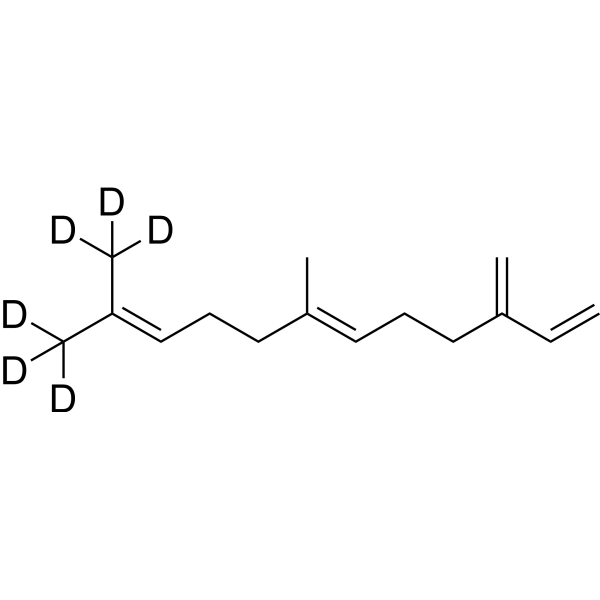
(E)-β-Farnesene-d6 is deuterated labeled (E)-β-Farnesene (HY-N7364). (E)-β-Farnesene (trans-β-Farnesene) is an aphid alarm pheromone, which can be found in Phlomis aurea Decne essential oil. (E)-β-Farnesene shows good binding score with a value of -30.64 kcal/mol to the CDK2 receptor. (E)-β-Farnesene also exhibits good affinity to odorant-binding protein 3 (OBP3). (E)-β-Farnesene can be used as a feeding stimulant for the sand fly Lutzomyia longipalpis .
loading...
    loading...
Cat. No.: HY-135167
CAS No.: 867178-11-8
Target:  

CaMK

Research Areas:  

Neurological Disease

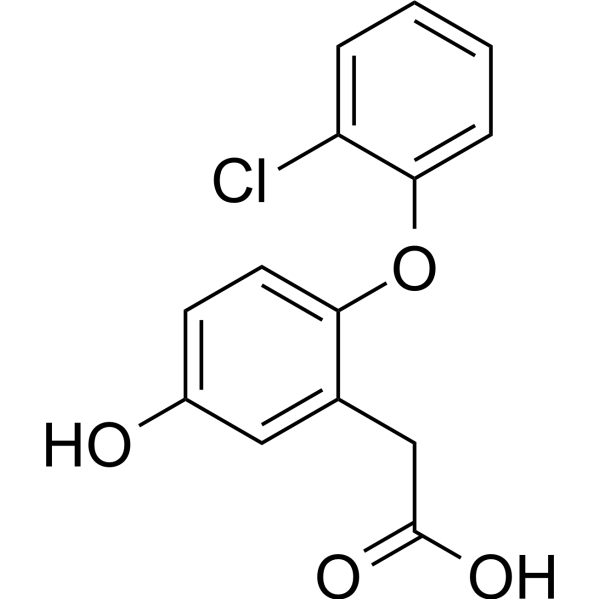
HOCPCA is a compound with neuroprotective activity that improves sensorimotor function in mice after experimental stroke. HOCPCA selectively binds to the CaMKIIα hub domain, modulates signaling of different CaMKII pools, and alleviates abnormal CaMKII signaling after cerebral ischemia. HOCPCA promotes hippocampal neuronal activity and enhances working memory. HOCPCA also normalizes Thr286 autophosphorylation in the cytoplasm after ischemia and downregulates ischemia-specific expression of active CaMKII enzymatic cleavage fragments. HOCPCA binds to the GHB binding site with 27-fold higher affinity than GHB and has good blood-brain barrier penetration ability .
loading...
    loading...
Cat. No.: HY-N19758
CAS No.: 133084-28-3
Benzyl alcohol-O-β-xylopyranosyl-(1→2)-β-glucopyranoside is a benzyl alcohol glycoside found in the leaves of Phlomis aurea .
loading...
    loading...
Cat. No.: HY-N21812B
(R)-4'-O-Methylpreglabridin is the R configuration of 4'-O-Methylpreglabridin (HY-N21812A). 4'-O-Methylpreglabridin is an isoflavane that can be isolated from the roots of Glycyrrhiza asymmetrica Hub.-Mor.
loading...
    loading...
Cat. No.: HY-184849
CAS No.: 7219-59-2
Research Areas:  

Others

Glu-Arg is a dipeptide linked by L-glutamic acid and L-arginine. Glu-Arg contributes to the construction of the hydrophobic network and maintenance of stability of mouse cAMP-dependent protein kinase; it acts as a core hub connecting the activation segment and the GHI subdomain in eukaryotic protein kinases, and promotes signal transmission between elements and within enzymes. As a salt bridge, Glu-Arg regulates the formation and unfolding rates of α-helices, and its optimized spatial conformation is conducive to the stability and folding rate of α-helices. Glu-Arg induces concentration-dependent intracellular calcium changes in cultured human fungiform taste bud cells .
loading...
    loading...

