


1. Search Result
Search Result
Results for "

MHC class II molecules

" in MedChemExpress (MCE) Product Catalog:

14

Inhibitors & Agonists

9

Peptides

1

Inhibitory Antibodies

Cat. No. Product Name Target Research Areas Chemical Structure
  • HY-P1924

    Lipocalin Family Interleukin Related Inflammation/Immunology
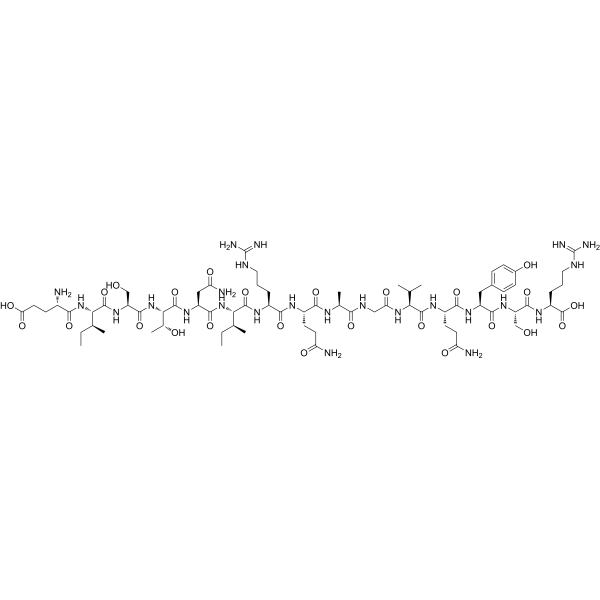
    IRBP (651-670) human, mouse is an epitope and uveitis inducer naturally processed from the conserved region of native IRBP. IRBP (651-670) human, mouse increases the levels of proinflammatory cytokines in ocular tissues (IL-1β, IL-6, TNFα, IL-17A and IL-17F). IRBP (651-670) human, mouse is a IRBP fragment conserved among human, mouse and bovine species. IRBP (651-670) human, mouse induces experimental autoimmune uveitis. IRBP (651-670) human, mouse is applicable to research related to experimental autoimmune uveitis .
    IRBP(651-670) human, mouse
  • HY-P1745

    Insulin B chain (9-23)

    MHC Insulin Receptor IFNAR Inflammation/Immunology
    InsB (9-23) (Insulin B chain (9-23)) is an HLA-DQ8-restricted insulin B-chain peptide composed of amino acid residues 9-23. InsB (9-23) serves as a major MHC II class-restricted antigen. InsB (9-23) supports the recognition and activation of T cells, stimulates the secretion of IFN-γ and cytokines, and induces cross-reactive immune responses. InsB (9-23)-specific CD4 T cells can initiate diabetes . InsB (9-23) can be used in research related to type 1 diabetes and autoimmune diabetes .
    InsB (9-23)
  • HY-P11303

    CD74 MHC Neurological Disease Cancer
    PADRE peptide is a pan-HLA-DR binding epitope and immunostimulant. PADRE peptide binds to the peptide-binding groove of MHC class II molecules for presentation to CD4 + T cells, thereby effectively stimulating specific immune responses. PADRE peptide not only enhances anti-tumor immune responses, inhibits tumor growth and prolongs survival; it also significantly increases the frequency of E7-specific CD8 + T cells and improves therapeutic efficacy against TC-1 tumors when used in combination with E7 peptide-based vaccines and poly (I:C). The intensity of the immune response induced by PADRE peptide is lower than that of the Ii-PADRE DNA vaccine, and it fails to enhance the immune effect of CRT-E7 DNA. PADRE peptide is widely applicable to research on related tumors such as melanoma, glioblastoma and cervical cancer .
    PADRE peptide
  • HY-P99613

    MK-4280; Mavezelimab

    LAG-3 Cancer
    Favezelimab (MK-4280) is a humanized monoclonal antibody targeting LAG-3. Favezelimab blocks the interaction between LAG-3 and its ligand, MHC class II molecules. Favezelimab is applicable to research on relapsed/refractory classical Hodgkin lymphoma, relapsed/refractory diffuse large B-cell lymphoma, and relapsed/refractory indolent B-cell lymphoma . For the isotype control of Favezelimab, refer to Human IgG4 (S228P) kappa, Isotype Control (HY-P99003).
    Favezelimab
  • HY-157269

    Hapten Inflammation/Immunology
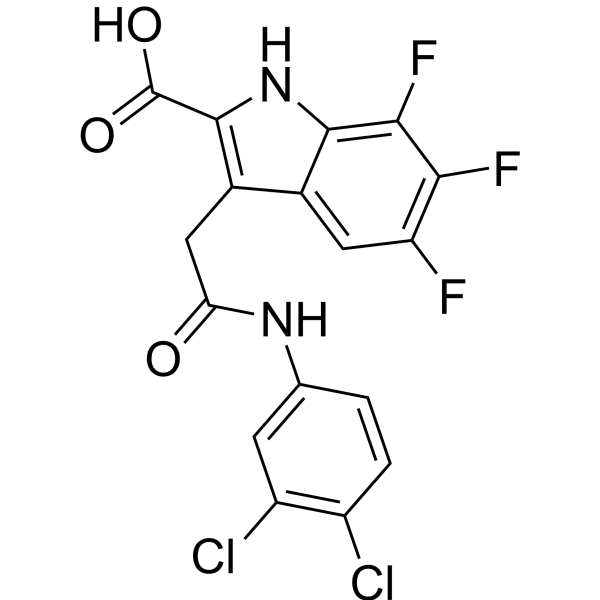
    J10-1 is a hapten small molecule. J10-1 accelerates peptide exchange in MHC class II molecules in an HLA-DM-independent manner, and its effect is not affected by the polymorphism of the P1 pocket of MHC class II molecules. J10-1 enhances the processes of peptide dissociation, peptide binding and peptide association of MHC class II molecules on the surface of B cells. J10-1 can be used for research on immunoregulation .
    J10-1
  • HY-P5453

    CD3 Others
    CFP10 (71–85) is a biological active peptide. (CFP1071–85, that elicited IFN-γ production and CTL activity by both CD4+ and CD8+ T cells from persons expressing multiple MHC class II and class I molecules)
    CFP10 (71–85)
  • HY-P2525

    MHC Inflammation/Immunology
    GAD65 (206-220) is glutamic acid decarboxylase (GAD) 65-derived peptide, corresponding to residues 180-188. GAD65 is presented to T cells in association with I-Ag7 MHC class II molecules and a major pancreatic antigens targeted by self-reactive T cells in type I diabetes mellitus .
    GAD65 (206-220)
  • HY-P1924A

    Lipocalin Family Interleukin Related Inflammation/Immunology
    IRBP (651-670) human, mouse TFA is an epitope and uveitis inducer naturally processed from the conserved region of native IRBP. IRBP (651-670) human, mouse TFA increases the levels of proinflammatory cytokines in ocular tissues (IL-1β, IL-6, TNFα, IL-17A and IL-17F). IRBP (651-670) human, mouse TFA is a IRBP fragment conserved among human, mouse and bovine species. IRBP (651-670) human, mouse TFA induces experimental autoimmune uveitis. IRBP (651-670) human, mouse TFA is applicable to research related to experimental autoimmune uveitis .
    IRBP(651-670) human, mouse TFA
  • HY-157171

    MHC Inflammation/Immunology
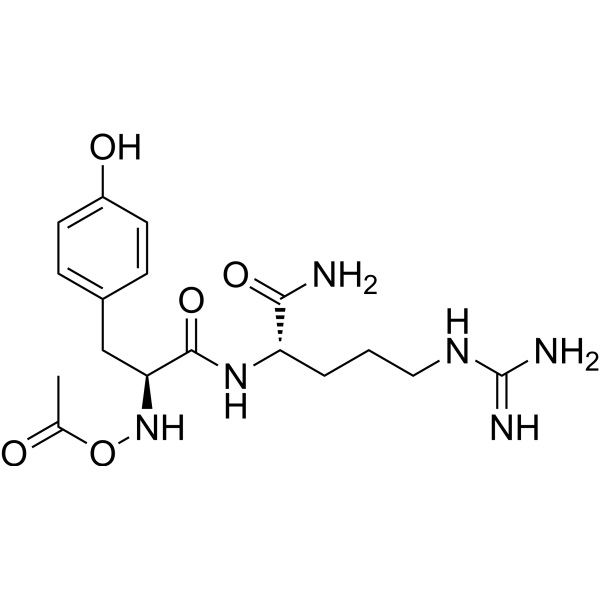
    Ac-YR-NH2 is a small molecule modulator of MHC class II antigen presentation. Ac-YR-NH2 can influence peptide binding by MHC II to influence immune response .
    Ac-YR-NH2
  • HY-P10246

    MHC Inflammation/Immunology
    Hemoglobin 64-76 is a T cell inducing determinant, that binds to two different MHC class II molecules in distinct registers and lengths .
    Hemoglobin (64-76)
  • HY-W179151

    Dopamine Receptor Inflammation/Immunology
    N-Octanoyl dopamine is superior to dopamine in protecting graft contractile function when administered to the heart transplant recipients from brain-dead donors. N-Octanoyl dopamine inhibits cytokine production in activated T-cells and diminishes MHC-class-II expression as well as adhesion molecules in IFNγ-stimulated endothelial cells .
    N-Octanoyl dopamine
  • HY-168384

    STING TNF Receptor Interleukin Related CD28 Inflammation/Immunology
    M04 is an agonist of STING. It induces the expression of the IFN reporter gene in HEK293T cells expressing wild-type human STING, but does not induce this expression in HEK293T cells expressing the R71H-G230A-R293Q (HAQ) STING variant or in mouse RAW 264.7 cells, indicating that its activity is dependent on allelic and species variations. M04 induces the production of TNF-α, IL-10, IL-1β, and IL-12p70 in human peripheral blood mononuclear cells (PBMCs). At a concentration of 50 µM, M04 stimulates dendritic cells isolated from PBMCs to express the MHC class II cell surface receptor HLA-DR and co-stimulatory molecules CD40, CD80, and CD86, and also enhances their ability to activate T cells in an ex vivo assay. M04 can be used in research on inflammatory immune diseases .
    M04
  • HY-W387035

    MHC Metabolic Disease Inflammation/Immunology
    D-α-Methyl DOPA is an inhibitor of the binding of DQ8 peptide to MHC class II molecules. D-α-Methyl DOPA occupies a pocket along the DQ8 peptide binding groove. D-α-Methyl DOPA inhibits the binding of a DQ8 peptide to an MHC class II molecule for presentation to CD4 + T cells, thereby slowing the development or progression of type 1 diabete or celiac disease .
    D-α-Methyl DOPA
  • HY-171239

    Toll-like Receptor (TLR) NF-κB MHC Others
    Ste2Cys is a diacylglycerol cysteine-type immunologic adjuvant lipid molecule. Ste2Cys can bind to TLR2 and activate NF-κB signaling pathway. Ste2Cy can upregulate the expression of MHC II class molecules on the surface of mouse bone marrow-derived D1 dendritic cells. Ste2Cys can be used for research of the development of immunologic vaccines .
    Ste2Cys

Inquiry Online

Your information is safe with us. * Required Fields.

Salutation


Country or Region *

Applicant Name *


Organization Name *

Department *


Email Address *


Product Name *

Cat. No.


Requested quantity *

Phone Number *


Remarks

Inquiry Online

Inquiry Information

Product Name:
Cat. No.:
Quantity:
MCE Japan Authorized Agent:

