14 Results for "

MI injury

" in MedChemExpress (MCE) Product Catalog:
Products (14)

14 Results for "MI injury" in MCE Product Catalog:

4
4 Cited Publications
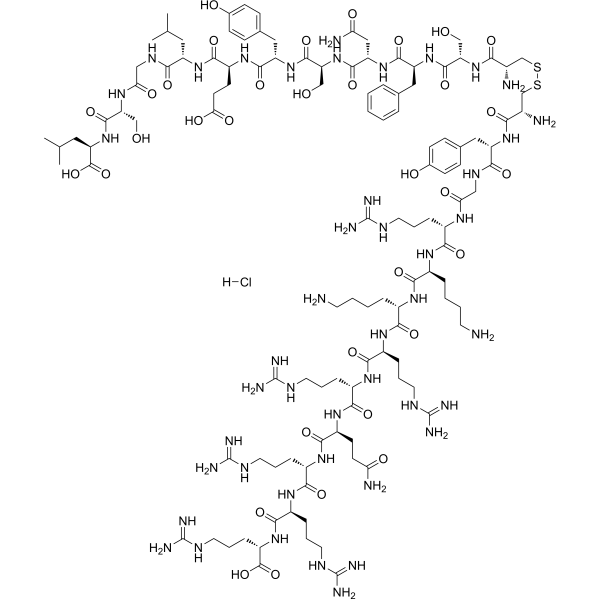
Cat. No.: HY-106262B
Purity:  99.73%
Synonyms: KAI-9803 hydrochloride; BMS-875944 hydrochloride
Target:  

PKC

Delcasertib (KAI-9803) hydrochloride is a potent and selective δ-protein kinase C (δPKC) inhibitor. Delcasertib (KAI-9803) hydrochloride could ameliorate injury associated with ischemia and reperfusion in animal models of acute myocardial infarction (MI) .
loading...
    loading...
1
1 Cited Publications
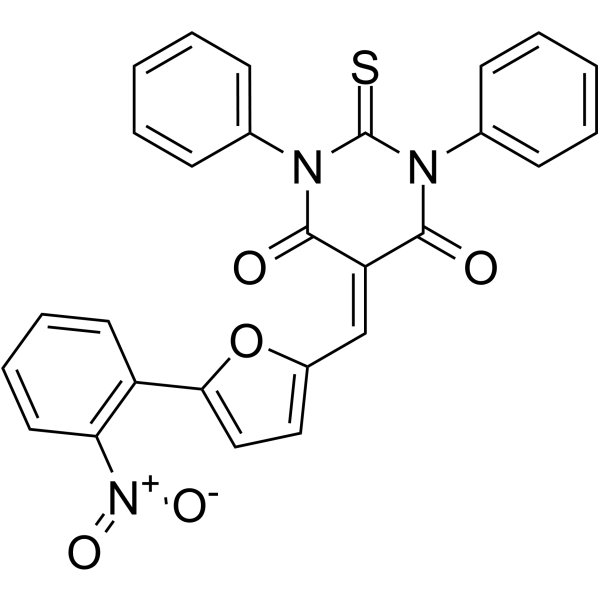
Cat. No.: HY-125959
CAS No.: 313649-08-0
Purity:  99.65%
Target:  

Apoptosis

Ucf-101 is a selective and competitive inhibitor of pro-apoptotic protease Omi/HtrA2, with an IC50 of 9.5 μM for His-Omi. Ucf-101 exhibits very little activity against various other serine proteases (IC50>200 μM). Ucf-101 has a natural red fluorescence at 543 nm that is used to monitor its ability to enter mammalian cells. Ucf-101 has a significant cardioprotective effect against MI/R injury and also has certain neuroprotective effect .
loading...
    loading...
Cat. No.: HY-W017982
CAS No.: 55965-84-9
Synonyms: CMI/MI
CMIT/MIT (14.5% in water) (CMI/MI) is a mixture of CMIT and MIT, and is also a preservative and skin sensitizer. CMIT/MIT (14.5% in water) increases the levels of phosphorylated ERK1/2, p38, JNK1/2, p53, p21 and Bax, decreases the level of Bcl-2, and activates the Nrf-2/HO-1 signaling pathway. CMIT/MIT (14.5% in water) increases LDH release and lipid peroxidation levels, impairs antioxidant defense capacity, promotes pro-inflammatory cytokine release, induces apoptosis, triggers cell cycle arrest, exhibits neurotoxicity in neuroblastoma cells, and causes dysregulation of Th2/Th17 immune responses. CMIT/MIT (14.5% in water) can be used in studies related to allergy, atopic dermatitis and lung injury .
loading...
    loading...
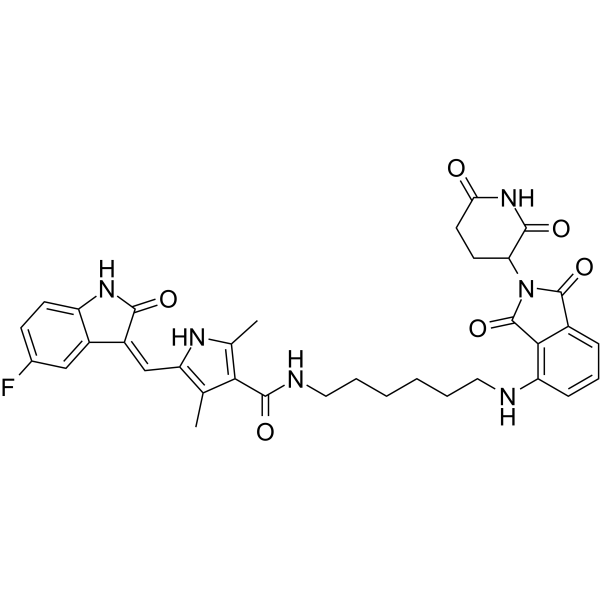
Cat. No.: HY-136688
CAS No.: 2222635-92-7
Purity:  99.34%
MI-389 is a potent menin-MLL interaction inhibitor (IC50=25 nM) and a CRBN-recruiting, GSPT1-targeted PROTAC degrader. MI-389 upregulates myeloid differentiation-related genes that are lowly expressed in primitive hematopoietic progenitor cells, thereby inducing myeloid differentiation phenotypic changes in MLL-rearranged leukemia cells. MI-389 competitively blocks the MG-H1-RAGE interaction to interfere with the AGEs-RAGE pathway, thus alleviating AGEs-induced HUVEC injury . MI-389 can be used in studies related to MLL-rearranged acute leukemia .
loading...
    loading...
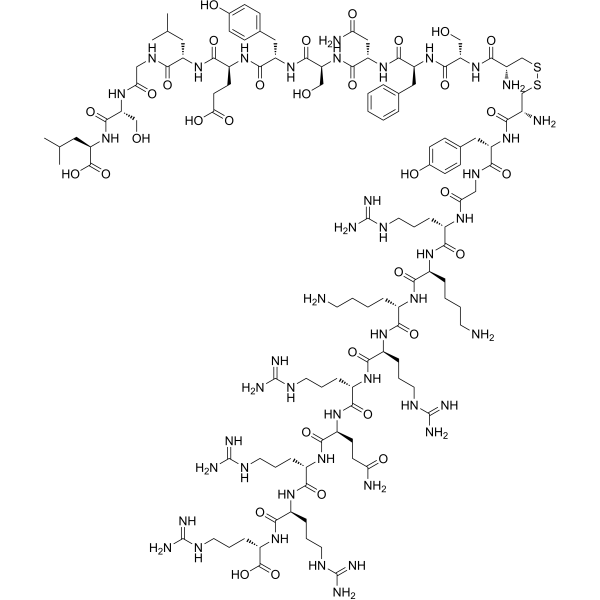
Cat. No.: HY-106262
CAS No.: 949100-39-4
Synonyms: KAI-9803; BMS-875944
Target:  

PKC

Delcasertib (KAI-9803) is a potent and selective δ-protein kinase C (δPKC) inhibitor. Delcasertib (KAI-9803) could ameliorate injury associated with ischemia and reperfusion in animal models of acute myocardial infarction (MI) .
loading...
    loading...
Cat. No.: HY-N7064
CAS No.: 256-96-2
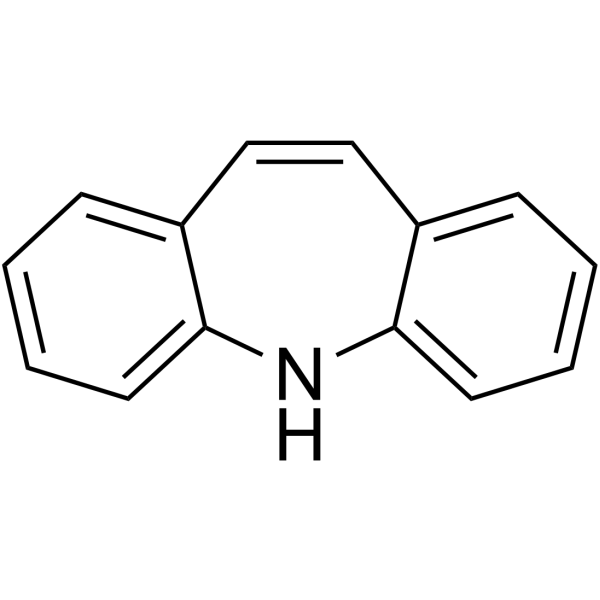
Iminostilbene is a chemical precursor of carbamazepine. Additionally, Iminostilbene is an orally active inhibitor of PKM2 (Pyruvate Kinase M2) and COX2 (Cyclooxygenase-2). Iminostilbene exerts its effects by inhibiting PKM2 and its interaction with HIF-1α and STAT3, reducing COX2 and iNOS expression, and decreasing LPS-induced release of IL-1β, IL-6, TNF-α, and MCP-1, thereby suppressing macrophage-mediated inflammatory responses and improving myocardial ischemia/reperfusion (MI/R) injury. Iminostilbene holds promise for research in inflammation regulation, cardiovascular diseases (such as MI/R injury), and macrophage-mediated immune-related diseases .
loading...
    loading...
Cat. No.: HY-N15660
CAS No.: 507-61-9
Azafrin, a carotenoid, is one of the most abundant active ingredients in C. grandiflora. Azafrin increases HO-1, NQO1, and Nrf2 expression. Azafrin shows cardioprotective effect against myocardial injury via activation of the Nrf2-ARE pathway. Azafrin can be used for research of cardiovascular diseases .
loading...
    loading...
Cat. No.: HY-175640
Troponin-IN-1 is a troponin inhibitor. Troponin-IN-1 protects OGD/R-injured H9c2 cardiomyocytes by reducing LDH leakage, pyroptosis and ROS accumulation. Troponin-IN-1 inhibits NO production and IL-1β/TNF-α/IL-18 release in LPS (HY-D1056)-induced RAW264.7 cells. Troponin-IN-1 acts via caspase-1/GSDMD/IL-18 pathway. Troponin-IN-1 reduces myocardial infarct size in LAD-induced myocardial ischemia/reperfusion (MI/R) male rats. Troponin-IN-1 can be used for the study of myocardial ischemia/reperfusion (MI/R) injury .
loading...
    loading...
Cat. No.: HY-130272
CAS No.: 2387506-35-4
Target:  

Drug Derivative

Research Areas:  

Cardiovascular Disease

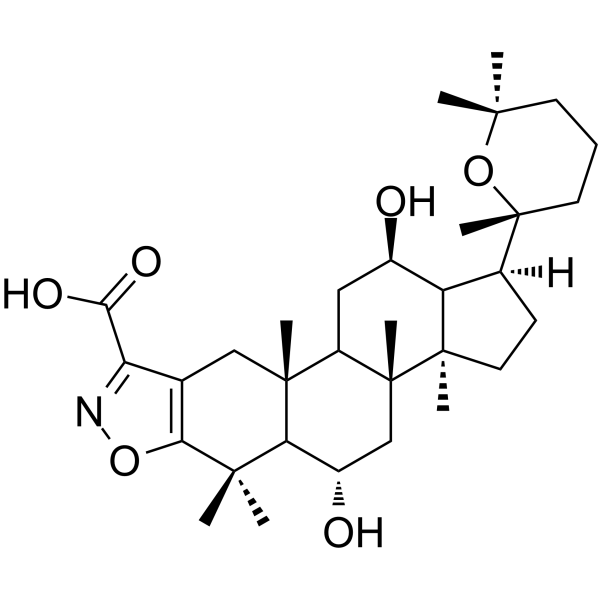
Anti-MI/R injury agent 1 (compound 18), a Panaxatriol derivative, is an orally active, potent anti-myocardial ischemia/reperfusion (anti-MI/R) injury agent. Anti-MI/R injury agent 1 enhances oxygen-glucose deprivation and reperfusion (OGD/R)-induced cardiomyocyte injury cell viability. Anti-MI/R injury agent 1 can markedly reduce myocardial infarction size, decrease circulating cardiac troponin I (cTnI) leakage, and alleviate cardiac tissue damage in the rats .
loading...
    loading...
Cat. No.: HY-W017982A
CAS No.: 55965-84-9
Synonyms: CMI/MI (2.0-2.5% in water)
CMIT/MIT (2.0-2.5% in water) (CMI/MI (2.0-2.5% in water)) is a mixture of CMIT and MIT, and is also a preservative and skin sensitizer. CMIT/MIT (2.0-2.5% in water) increases the levels of phosphorylated ERK1/2, p38, JNK1/2, p53, p21 and Bax, decreases the level of Bcl-2, and activates the Nrf-2/HO-1 signaling pathway. CMIT/MIT (2.0-2.5% in water) increases LDH release and lipid peroxidation levels, impairs antioxidant defense capacity, promotes pro-inflammatory cytokine release, induces apoptosis, triggers cell cycle arrest, exhibits neurotoxicity in neuroblastoma cells, and causes dysregulation of Th2/Th17 immune responses. CMIT/MIT (2.0-2.5% in water) can be used in studies related to allergy, atopic dermatitis and lung injury .
loading...
    loading...
Cat. No.: HY-162538
CAS No.: 3053823-69-8
Target:  

PROTACs IRAK NF-κB

Research Areas:  

Inflammation/Immunology

LC-MI-3 is an orally active IRAK4 PROTAC degrader with an IC50 of 57.2 nM and high selectivity among human protein kinases. LC-MI-3 eliminates IRAK4 kinase and scaffolding functions via the cereblon E3 ubiquitin ligase and ubiquitin-proteasome systems. LC-MI-3 inhibits downstream nuclear factor-κB and IRAK4-mediated inflammatory signaling pathways. LC-MI-3 can be used for the research of acute lung injury, sepsis, psoriasis, and inflammatory diseases .
loading...
    loading...
Cat. No.: HY-149586
Research Areas:  

Others

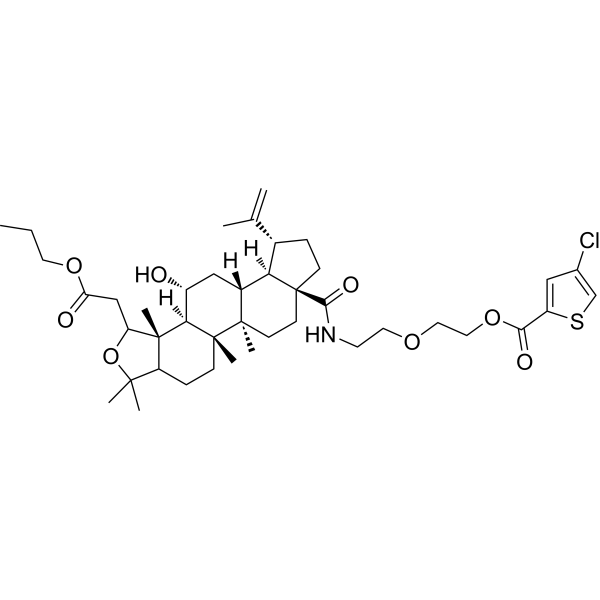
ROS-IN-2 (compound 85) is a seco-lupane triterpenoid derivative. ROS-IN-2 blocks ROS production and protects mitochondria from damage by inhibiting excessive production of oxidative stressors. ROS-IN-2 can be used for myocardial ischemia/reperfusion (MI/R) injury research .
loading...
    loading...
Cat. No.: HY-W753956
CAS No.: 3044090-39-0
Iminostilbene-d10 is the deuterium labeled Iminostilbene (HY-N7064). Iminostilbene is a chemical precursor of carbamazepine. Additionally, Iminostilbene is an orally active inhibitor of PKM2 (Pyruvate Kinase M2) and COX2 (Cyclooxygenase-2). Iminostilbene exerts its effects by inhibiting PKM2 and its interaction with HIF-1α and STAT3, reducing COX2 and iNOS expression, and decreasing LPS-induced release of IL-1β, IL-6, TNF-α, and MCP-1, thereby suppressing macrophage-mediated inflammatory responses and improving myocardial ischemia/reperfusion (MI/R) injury. Iminostilbene holds promise for research in inflammation regulation, cardiovascular diseases (such as MI/R injury), and macrophage-mediated immune-related diseases .
loading...
    loading...
Cat. No.: HY-125959R
CAS No.: 313649-08-0
Target:  

Apoptosis

Ucf-101 (Standard) is the analytical standard of Ucf-101. This product is intended for research and analytical applications. Ucf-101 is a selective and competitive inhibitor of pro-apoptotic protease Omi/HtrA2, with an IC50 of 9.5 μM for His-Omi. Ucf-101 exhibits very little activity against various other serine proteases (IC50>200 μM). Ucf-101 has a natural red fluorescence at 543 nm that is used to monitor its ability to enter mammalian cells. Ucf-101 has a significant cardioprotective effect against MI/R injury and also has certain neuroprotective effect .
loading...
    loading...
  • 1

