16 Results for "

NCI–H1975

" in MedChemExpress (MCE) Product Catalog:
Products (16)

16 Results for "NCI–H1975" in MCE Product Catalog:

Cat. No.: HY-147858
CAS No.: 3033297-59-2
Purity:  99.99%
Target:  

PROTACs EGFR Apoptosis

Research Areas:  

Cancer

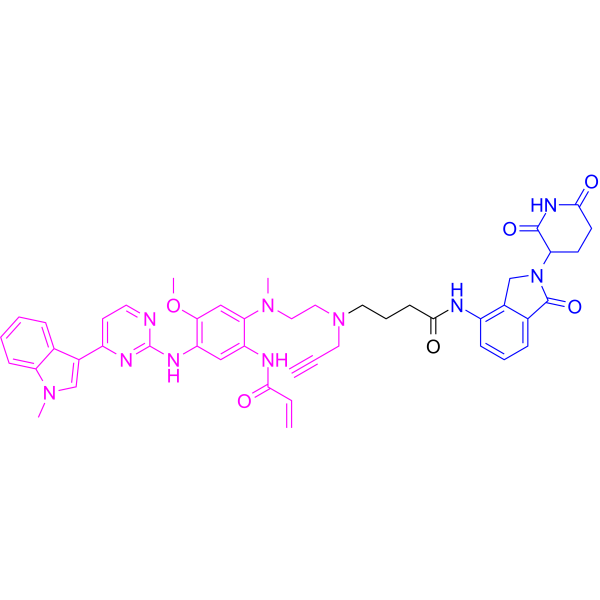
PROTAC EGFR degrader 7 (compound 13b) is a potent and selective CRBN-recruiting PROTAC EGFR L858R/T790M degrader, with a DC50 of 13.2 nM. PROTAC EGFR degrader 7 inhibits NCI–H1975 cells proliferation, with an IC50 of 46.82 nM. PROTAC EGFR degrader 7 significantly induces apoptosis and G2/M phase arrest in NCI–H1975 cell. PROTAC EGFR degrader 7 shows antitumor activity, and can be used for non-small cell lung cancer (NSCLC) research . PROTAC EGFR degrader 7 is a click chemistry reagent, it contains an Alkyne group and can undergo copper-catalyzed azide-alkyne cycloaddition (CuAAc) with molecules containing Azide groups.
loading...
    loading...
Cat. No.: HY-116505
CAS No.: 2091134-35-7
Purity:  99.26%
Target:  

JAK

Research Areas:  

Cancer

JAK1-IN-4 is a potent and selective JAK1 inhibitor, with IC50s of 85 nM, 12.8 μM and >30 μM for JAK1, JAK2, and JAK3, respectively. JAK1-IN-4 inhibits STAT3 phosphorylation in NCI-H 1975 cells (IC50, 227 nM) .
loading...
    loading...
Cat. No.: HY-164384
CAS No.: 2125500-60-7
Target:  

PI3K Akt mTOR Apoptosis

Research Areas:  

Cancer

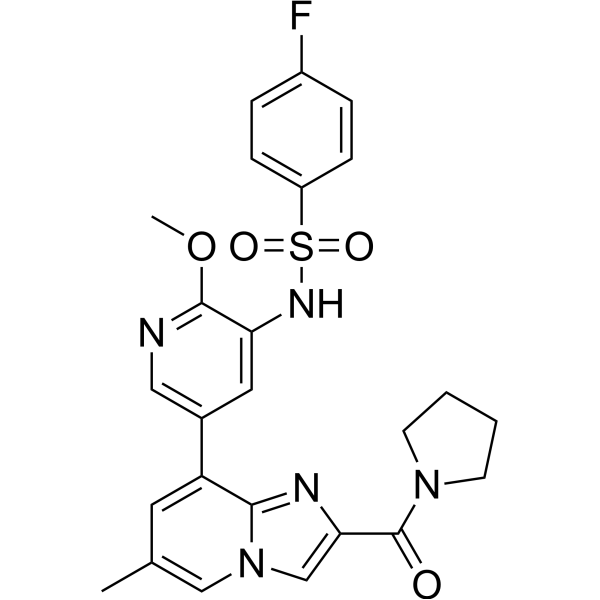
DFX117 is a selective, orally active inhibitor for PI3Kα and c-Met tyrosine kinase. DFX117 inhibits PI3K/Akt/mTOR pathway, inhibits the proliferation of NCI-H1975, NCI-H1993, and HCC827 with IC50s 0.02-0.08 µM. DFX117 arrests cell cycle at G0/G1 phase, induces apoptosis in A549 and NCI-H1975. DFX117 exhibits antitumor efficacy in mice .
loading...
    loading...
Cat. No.: HY-171958
CAS No.: 2654821-05-1
Target:  

PROTACs EGFR

Research Areas:  

Cancer

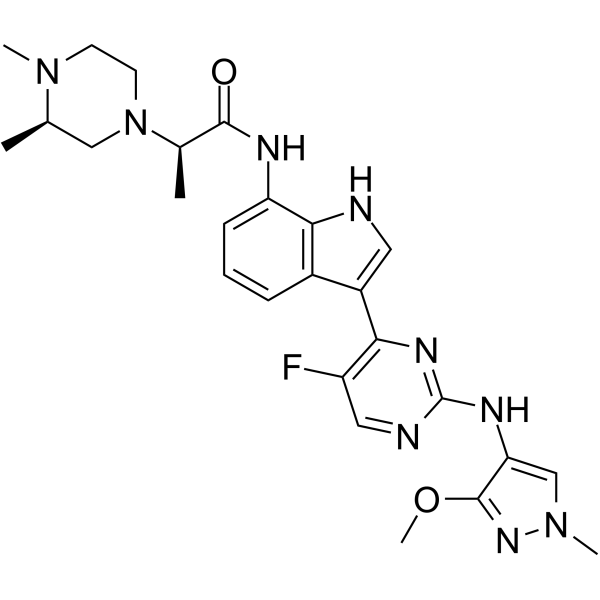
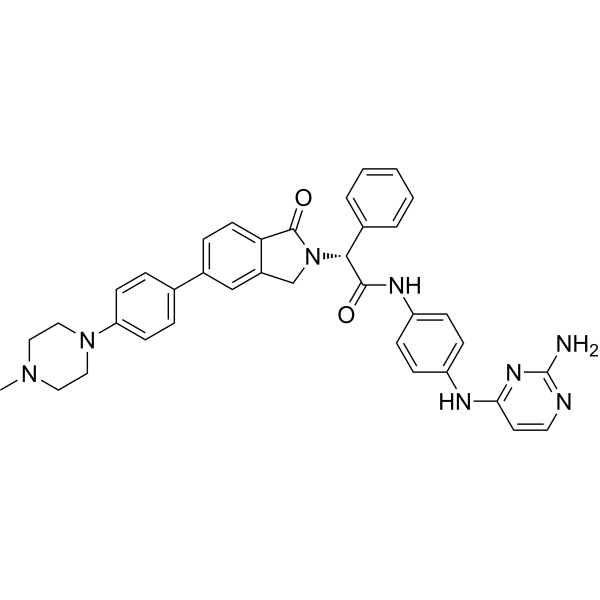
PROTAC EGFR degrader 12 (example 1) is a PROTAC degrader targeting EGFR that can effectively degrade EGFR mutants, but has little effect on EGFR WT. PROTAC EGFR degrader 12 shows IC50s against EGFR L858R-T790M (NCI-H1975 cells), EGFR L858R (NCI-H3255 cells), and EGFR L858R-T790M-L797S (NCI-H1975+CS cells) of all <50 nM .
loading...
    loading...
Cat. No.: HY-170995
Target:  

PROTACs ROR Apoptosis

Research Areas:  

Cancer

PROTAC ROR1 degrader-1 is a ROR1 PROTAC degrader with DC50 values of 40.88 nM (NCI-H23), 69.0 nM (NCI-H460), 83.35 nM (NCI-H1299) and 42.07 nM (NCI-H1975), respectively. PROTAC ROR1 degrader-1 inhibits the proliferation of lung cancer cells and induces apoptosis. PROTAC ROR1 degrader-1 can be used in research related to non-small cell lung cancer .
loading...
    loading...
Cat. No.: HY-164392
CAS No.: 1451370-01-6
Target:  

EGFR Apoptosis

Research Areas:  

Cancer

TAS-121 is an orally active, selective, covalent, third-generation mutant EGFR-tyrosine kinase inhibitor (EGFR-TKI). TAS-121 inhibits the L858R mutation (IC50=1.7 nM), Ex19del mutation (IC50=2.7 nM), L858R/T790M mutation (IC50=0.56 nM) and Ex19del/T790M mutation (IC50=1.1 nM) and wild-type EGFR (IC50=8.2 nM). TAS-121 inhibits HER2 and HER4 with IC50s of 110 and 2.6 nM, respectively. TAS-121 inhibits phosphorylation of EGFR and its downstream signaling targets to block cell proliferation. TAS-121 induces apoptosis and displays antitumor activity in SW48 (EGFR G719S) and NCI-H1975 (EGFR L858R/T790M) xenograft models .
loading...
    loading...
Cat. No.: HY-147858A
Purity:  99.19%
Target:  

PROTACs EGFR Apoptosis

Research Areas:  

Inflammation/Immunology Cancer

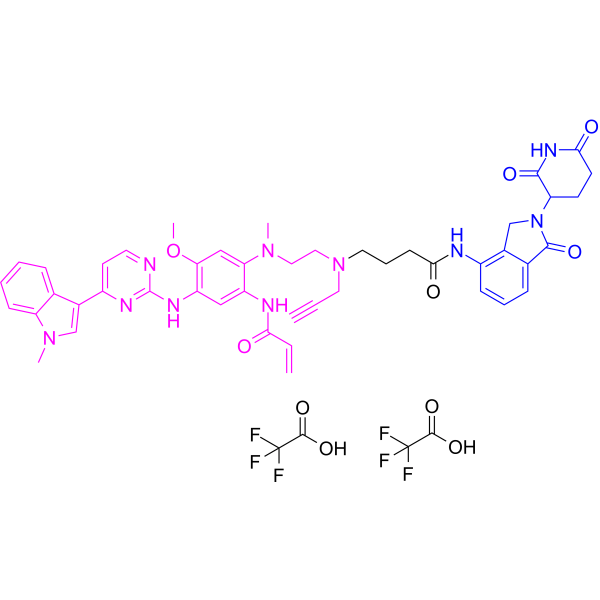
PROTAC EGFR degrader 7 (compound 13b) diTFA is a potent and selective CRBN-recruiting PROTAC EGFR L858R/T790M degrader, with a DC50 of 13.2 nM. PROTAC EGFR degrader 7 diTFA inhibits NCI–H1975 cells proliferation, with an IC50 of 46.82 nM. PROTAC EGFR degrader 7 diTFA significantly induces apoptosis and G2/M phase arrest in NCI–H1975 cell. PROTAC EGFR degrader 7 diTFA shows antitumor activity, and can be used for non-small cell lung cancer (NSCLC) research . PROTAC EGFR degrader 7 diTFA is a click chemistry reagent, it contains an Alkyne group and can undergo copper-catalyzed azide-alkyne cycloaddition (CuAAc) with molecules containing Azide groups.
loading...
    loading...
Cat. No.: HY-146132
CAS No.: 2057423-46-6
Target:  

EGFR

Research Areas:  

Cancer

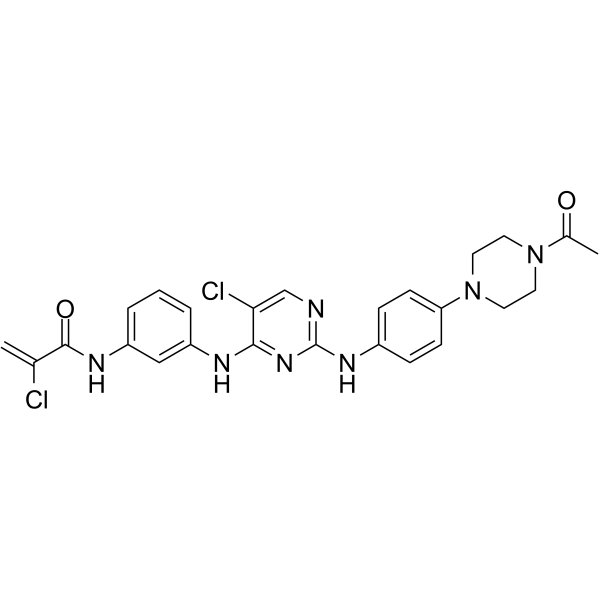
EGFR-IN-55 (Compound 8a) is a potent EGFR inhibitor with IC50 values of 70 nM and 3.9 nM against EGFR WT and EGFR L858R/T790M, respectively. EGFR-IN-55 arrests NCI-H1975 cells in G0/G1 phase and shows anticancer activity .
loading...
    loading...
Cat. No.: HY-N15614
CAS No.: 471-71-6
Cassamine is a diterpenoid compound that can be isolated from the bark of Erythrophleum fordii. Cassamine exhibits certain cytotoxicity against non-small cell lung cancer cell lines, with IC50 values of 3.4, 2.1, and 1.9 μM against A549, NCI-H1975, and NCI-H1299, respectively. Cassamine has antitumor activity and can be used in the research of lung cancer and other tumors .
loading...
    loading...
Cat. No.: HY-173038
Target:  

EGFR ERK STAT Apoptosis

Research Areas:  

Cancer

EGFR-IN-151 (Compound 10) inhibits EGFR and its downstream signaling pathways ERK/STAT3. EGFR-IN-151 inhibits the proliferation of a variety lung cancer cells (IC50s for NCI-H1781, HCC827, NCI-H3255 and NCI-H1975 is 11.7, 5.19, 7.32 and 1.53 μM, respectively), inhibits the colony formation and migration of H1975, arrests the cell cycle at G1 phase, and induces apoptosis in H1975 .
loading...
    loading...
Cat. No.: HY-175011
Target:  

EGFR Apoptosis

Research Areas:  

Cancer

EGFR-IN-165 is a potent EGFR inhibitor. EGFR-IN-165 demonstrates superior potency with IC50s of 17.18 and 64.74 nM against EGFR L858R/T790M and EGFR WT; 2.17 and 6.2 μM against NCI-H1975 cells and A431 cells. EGFR-IN-165 significantly inhibits the migration and induces G1 phase cell cycle arrest and cell apoptosis. EGFR-IN-165 can be used for the study of cancers such as non-small cell lung cancer, colorectal cancer, and head and neck squamous cell carcinoma .
loading...
    loading...
Cat. No.: HY-157319
CAS No.: 2893920-80-2
Target:  

PI3K

Research Areas:  

Cancer

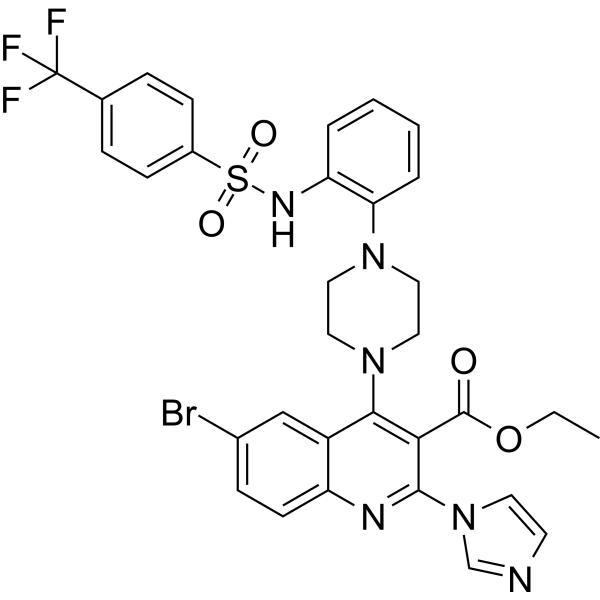
PI3Kα-IN-15 is a potent PI3Kα inhibitor with an IC50 of 0.15?μM. PI3Kα-IN-15 also has acceptable anti-proliferative activity (inhibits SKOV-3, T47D, NCI-H1975, NCI-H460, and MCF-7 growth with IC50 values of 26.6?μM, 7.9?μM,? 32.1?μM,? 17.7??μM, and 9.4??μM, respectively. PI3Kα-IN-15 can be used for cancer research .
loading...
    loading...
Cat. No.: HY-151981
CAS No.: 3037947-20-6
Target:  

EGFR

Research Areas:  

Cancer

EGFR-IN-74 (Compound 21) is a potent EGFR inhibitor with an IC50 of 138 nM against EGFR L858R/T790M. EGFR-IN-74 induces cancer cell apoptosis .
loading...
    loading...
Cat. No.: HY-157432
CAS No.: 3020681-05-1
Target:  

EGFR Apoptosis

Research Areas:  

Cancer

EGFR-IN-97 (compound 6q) is a EGFR inhibitor. EGFR-IN-97 shows inhibitory activity against Ba/F3-EGFR L858R/T790M/C797S and Ba/F3-EGFR Del19/T790M/C797S cells, with IC50 values of 0.42 μM and 0.41 μM, respectively. EGFR-IN-97 can promote apoptosis of NCI-H1975-EGFR L858R/T790M/C797S cells at the concentration of 0.8 μM .
loading...
    loading...
Cat. No.: HY-181502
CAS No.: 3060883-16-8
Research Areas:  

Cancer

EGFR-IN-197 is an EGFR inhibitor with IC50 values of 19.5 nM and 12.0 nM against EGFR L858R/T790M and EGFR L858R/T790M/C797S, respectively. EGFR-IN-197 arrests the cell cycle of NCI-H1975 cells at the G2/M phase, while inhibiting their proliferation, colony formation and migration; it also inhibits mitochondrial translocation and upregulates mitochondrial H2S levels. EGFR-IN-197 disrupts anti-apoptotic signaling pathways by regulating apoptosis-related proteins; it induces DNA damage and activates pro-apoptotic pathways to trigger apoptosis. EGFR-IN-197 can be used in studies related to non-small cell lung cancer (NSCLC) .
loading...
    loading...
Cat. No.: HY-180850
ERB-2 is a selective ERβ PROTAC degrader. ERB-2 removes the inhibitory effect of ERβ on ROS, leading to the accumulation of ROS, mitochondrial damage, and ultimately triggering cell apoptosis (apoptosis). ERB-2 significantly inhibits tumor growth in the nude mouse model of NCI-H1975OR tumors. ERB-2 can be used for the study of non-small cell lung cancer .
loading...
    loading...
  • 1

