1. Search Result
Search Result
Results for "

NK1/NK2 receptor antagonist

" in MedChemExpress (MCE) Product Catalog:

25

Inhibitors & Agonists

9

Peptides

1

Natural
Products

Targets Recommended:
Cat. No. Product Name Target Research Areas Chemical Structure
  • HY-101249

    Neurokinin Receptor Neurological Disease Cancer
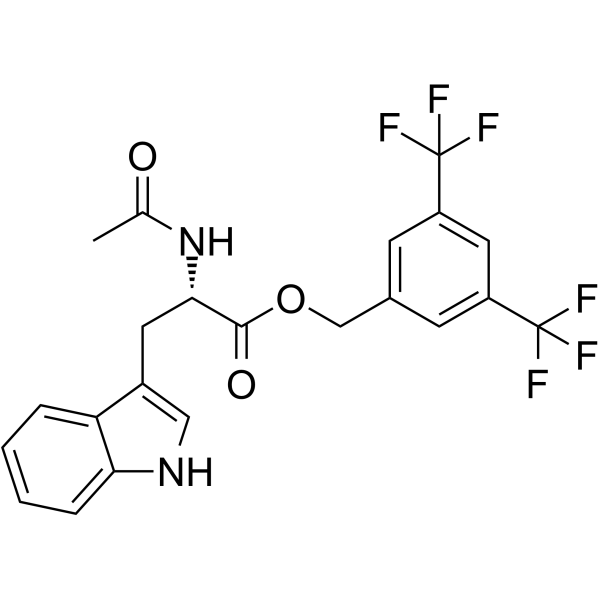
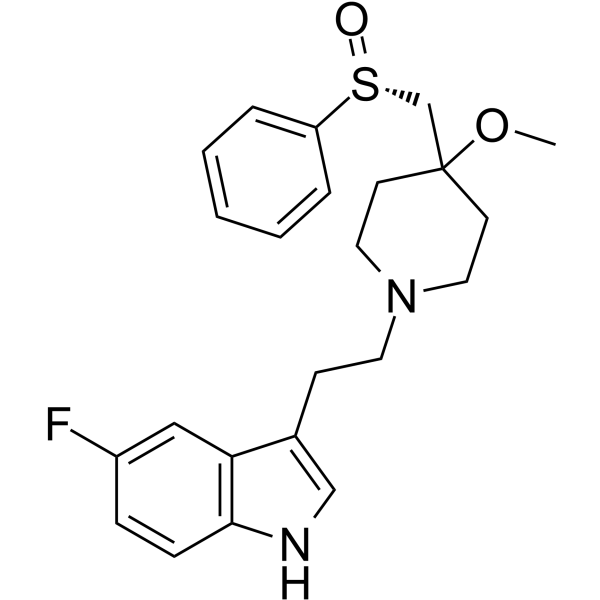
    L-732138 is a selective, potent and competitive neurokinin-1 (NK-1) receptor antagonist with an IC50 of 2.3 nM. L-732138 has 200-fold more potent in cloned human NK-1 receptors than cloned rat NK-1 receptors, and has > 1000-fold more potent than human NK-2 and NK-3 receptors. L-732138 can reduce hyperalgesia and has antitumor action .
    L-732138
  • HY-P1194

    Neurokinin Receptor Inflammation/Immunology
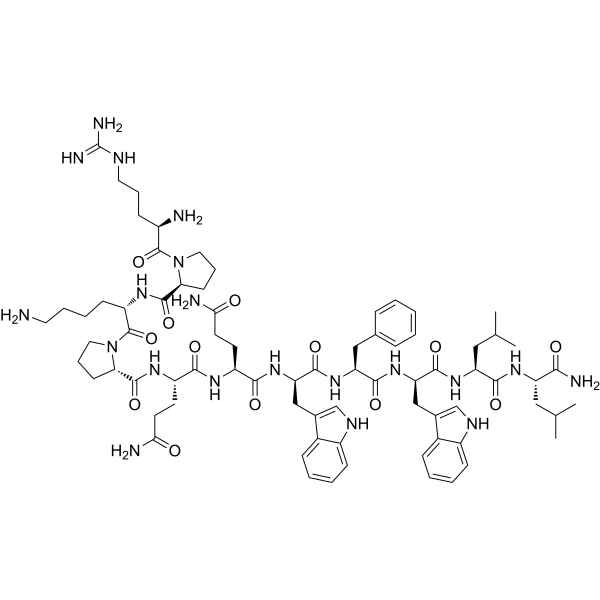
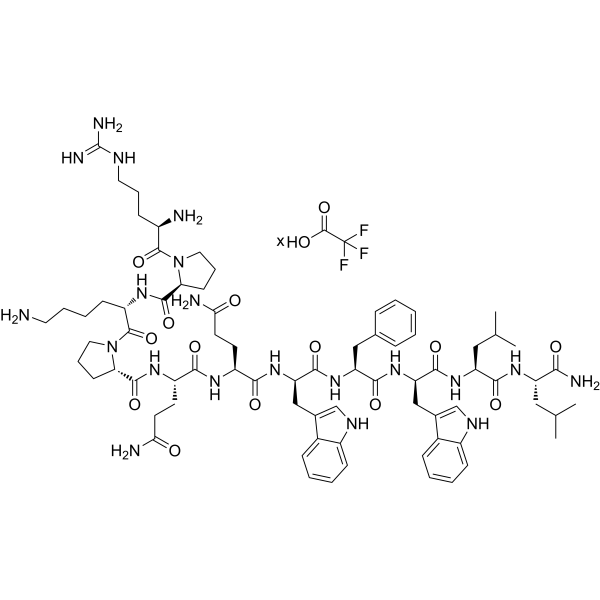
    Spantide I, a substance P analog, is a selective NK1 receptor antagonist, with Ki values of 230 nM and 8150 nM for NK1 and NK2 receptor, respectively. Spantide I provides an approach to reduce type 1 and enhance the type 2 cytokine IL-10 in the infected cornea, leading to a significant reduction in corneal perforation .
    Spantide I
  • HY-107691

    Neurokinin Receptor Neurological Disease Endocrinology Cancer
    GR 159897 is a highly potent, selective, competitive, brain-penetrated non-peptide neurokinin 2 (NK2) receptor antagonist. GR 159897 has little or no affinity for NK1 and NK3 receptors. GR 159897 inhibits binding of [ 3H]GR100679 to human NK2 (hNK2)-CHO cells and rat colon membranes with pKis of 9.51 and 10, respectively. Antagonizes bronchoconstriction. Anxiolytic-like and anti-tumor effects .
    GR 159897
  • HY-P1192

    Neurokinin Receptor Neurological Disease
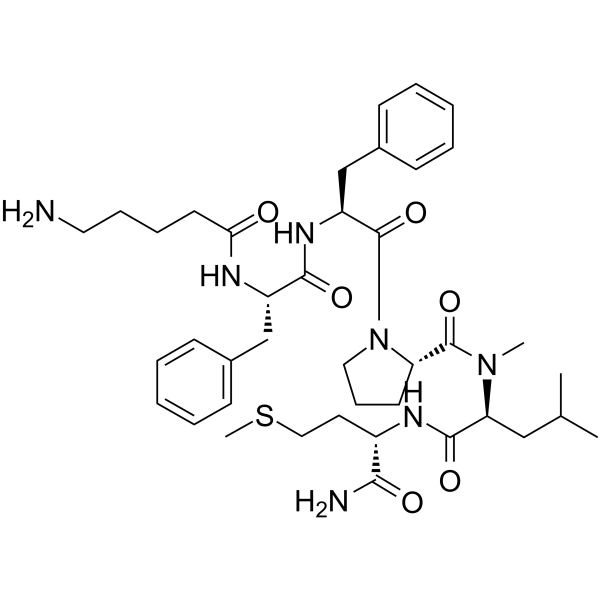
    GR-73632 is a tachykinin NK1 receptor agonist. GR-73632 activates spinal NK1 receptors to induce scratching, biting and licking behaviors. GR-73632 activates peripheral NK1 receptors to trigger lacrimation in guinea pigs, and activates central NK1 receptors to induce repetitive hind paw tapping behavior in gerbils. GR-73632 is applicable to research related to pruritus .
    GR-73632
  • HY-151413
    MEN 10207
    1 Publications Verification

    Neurokinin Receptor Neurological Disease
    MEN 10207 is a selective NK-2 tachykinin receptor (Neurokinin Receptor) antagonist. MEN 10207 has pA2 values of 5.2, 7.9 and 4.9 in three monoreceptor in vitro assays for NK-1, NK-2 and NK-3 tachykinin receptors, respectively.
    MEN 10207
  • HY-18006
    NKP608
    1 Publications Verification

    Neurokinin Receptor Wnt Bcl-2 Family β-catenin Cyclin G-associated Kinase (GAK) VEGFR Caspase Cadherin Apoptosis Neurological Disease Metabolic Disease Inflammation/Immunology Cancer
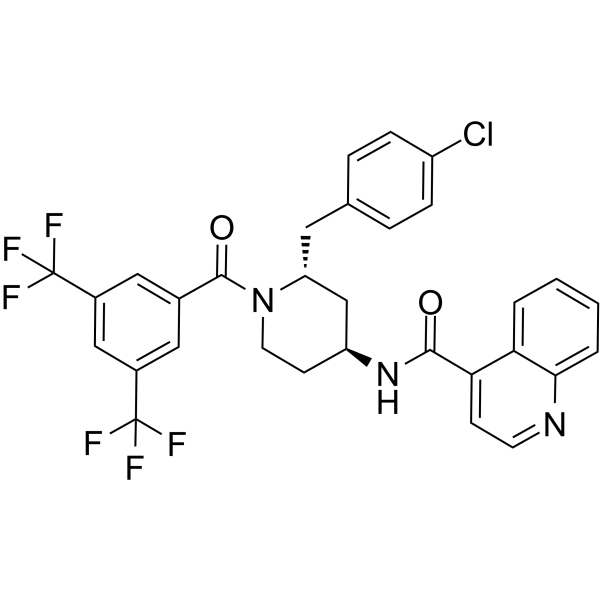
    NKP608 is a non-peptidic derivative of 4-aminopiperidine, a highly selective, orally active, neurokinin-1 (NK1) receptor antagonist with IC50 of 2.6 nM. NKP608 is active both in vitro and in vivo, showing extremely low affinity for NK2, NK3 receptors. NKP608 exerts its effects by blocking the NK₁ receptor, regulate cell proliferation and apoptosis, affect neurotransmitter functions and gastric mucosal repair mechanisms, and suppress the Wnt/β-catenin pathway in antitumor research. NKP608 is applicable to research related to various diseases, including cough, anxiety disorders, depression, gastric mucosal injury, and colorectal cancer .
    NKP608
  • HY-P1277

    Neurokinin Receptor Neurological Disease
    GR 94800 is a potent and selective NK2 receptor peptide antagonist, with pKB values of 9.6, 6.4 and 6.0 for NK2, NK1 and NK3 receptors, respectively .
    GR 94800
  • HY-P3854

    Neurokinin Receptor Neurological Disease
    GR 83074 is a potent and selective NK-2 (Neurokinin Receptor) antagonist with a pKB of 8.23. GR 83074 is inactive as an NK-3 antagonist and exhibits a 340-fold NK-2/NK-1 selectivity .
    GR 83074
  • HY-120928

    Neurokinin Receptor Neurological Disease Inflammation/Immunology
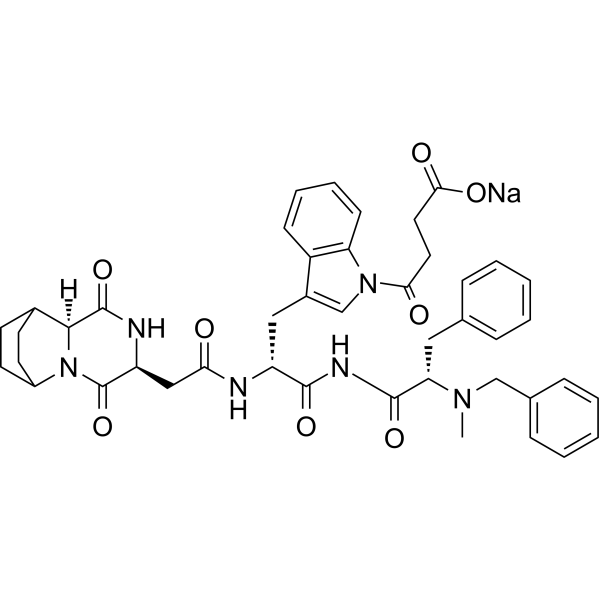
    S 16474 is a cyclic peptide with antagonistic effects on NK1 and NK2 receptors. S 16474 can be used in the study of neurogenic inflammation .
    S 16474
  • HY-128537

    Neurokinin Receptor Inflammation/Immunology
    DNK-333 is a potent and balanced dual NK1 and NK2 receptor antagonist with IC50 values of 4.8 nM and 5.5 nM, respectively. DNK-333 blocks the Neurokinin A (NKA) (HY-P0197)-induced bronchoconstriction in asthma .
    DNK-333
  • HY-P1277A

    Neurokinin Receptor Neurological Disease
    GR 94800 TFA is a potent and selective NK2 receptor peptide antagonist, with pKB values of 9.6, 6.4 and 6.0 for NK2, NK1 and NK3 receptors, respectively .
    GR 94800 TFA
  • HY-118378

    Neurokinin Receptor Neurological Disease Endocrinology
    ZD6021 is an orally active Neurokinin 1 Receptor antagonist, with Ki values of 0.12 nM for NK1 and 0.62 nM for NK2. At a concentration of 100 nM, ZD6021 has a pKB value of 8.9 for human pulmonary artery NK1 receptors, and a pKB value of 7.3 for human bronchial NK2 receptors. ZD6021 effectively reduces ASMSP-induced plasma protein extravasation in guinea pigs, with an ED50 of 0.5 mg/kg, and also decreases NK2 mediated bronchoconstriction, with an ED50 of 13 mg/kg .
    ZD6021
  • HY-P10588

    Neurokinin Receptor Others
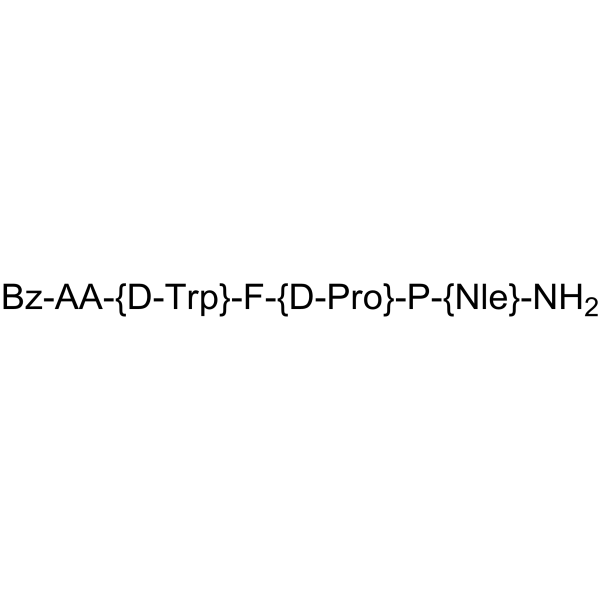
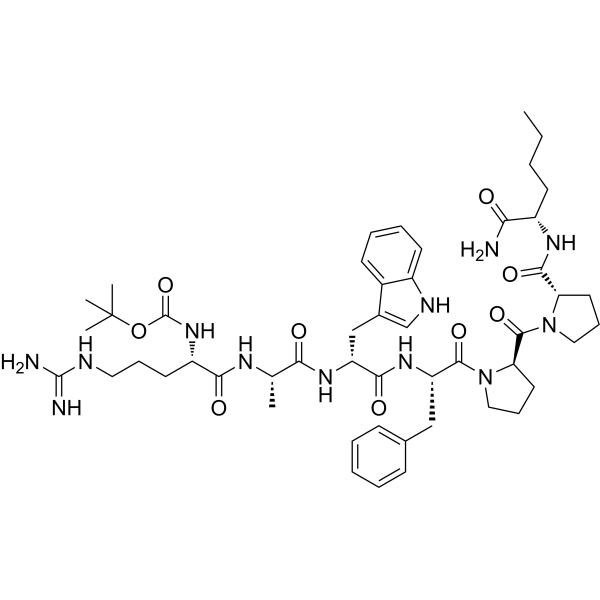
    WIN 66306 is a cyclic heptapeptide that can be isolated from an Aspergillus species. WIN 66306 is a neurokinin antagonist with antagonistic effects on both NK1 and NK2 receptors .
    WIN 66306
  • HY-116958

    Neurokinin Receptor Inflammation/Immunology
    SCH 206272 is a selective antagonist of the tachykinin (NK) receptor. SCH 206272 inhibits binding at human tachykinin NK(1), NK(2), and NK(3) receptors (Ki = 1.3, 0.4, and 0.3 nM, respectively). SCH 206272 has an orally active .
    SCH 206272
  • HY-P1194A

    Neurokinin Receptor Inflammation/Immunology
    Spantide I TFA, a substance P analog, is a selective NK1 receptor antagonist, with Ki values of 230 nM and 8150 nM for NK1 and NK2 receptor, respectively. Spantide I provides an approach to reduce type 1 and enhance the type 2 cytokine IL-10 in the infected cornea, leading to a significant reduction in corneal perforation .
    Spantide I TFA
  • HY-19633

    Neurokinin Receptor Infection Endocrinology
    CS-003 Free base (CS-003), a triple tachykinin receptor antagonist, shows high affinities for human (Neurokinin) NK1, NK2 and NK3 receptors with Ki values of 2.3 nM, 0.54 nM and 0.74 nM, respectively. CS-003 Free base (CS-003) has therapeutic efficacy on respiratory diseases associated with neurokinins.
    CS-003 Free base
  • HY-120167

    Neurokinin Receptor Neurological Disease Inflammation/Immunology
    YM-44778 is a neurokinin receptor antagonist. The pKi values for NK1, NK2 and NK3 are 8.08, 8.55 and 8.24, respectively. YM-44778 inhibits the increase of bladder pressure induced by substance [Sar9,Met(O2)11] -P (HY-P1012) in anestheticized rats .
    YM-44778
  • HY-129296

    Endogenous Metabolite Neurological Disease
    YM-44781 free acid is a non-peptide neuropeptide receptor antagonist with efficient NK(2) and NK(1) receptor antagonist activity. YM-44781 exhibits significant binding affinity on the NK(2) receptor (pKi = 9.94) and also on the NK(1) receptor Higher binding affinity (pKi = 9.09). In addition, YM-44781 also showed significant inhibitory effects on bladder contraction induced by selective NK(1) receptor agonists .
    YM-44781 free acid
  • HY-116268

    Neurokinin Receptor Neurological Disease
    GSK256471 is a non-peptide tachykinin NK3 receptor antagonist with a pKi of 8.9 for the human recombinant NK3 receptor and 8.4 for the guinea pig native receptor. GSK256471 exhibits >100-fold selectivity for NK1 (pKi = 5.2) and NK2 (pKi = 7.3) receptors. GSK256471 noncompetitively inhibits neurokinin B (NKB) (HY-P0242)-induced inositol phosphate accumulation, and this inhibition is irreversible. GSK256471 inhibits wet dog shaking behavior and suppresses dopamine release. GSK256471 could be used to study schizophrenia .
    GSK256471
  • HY-105462

    Neurokinin Receptor Neurological Disease Inflammation/Immunology
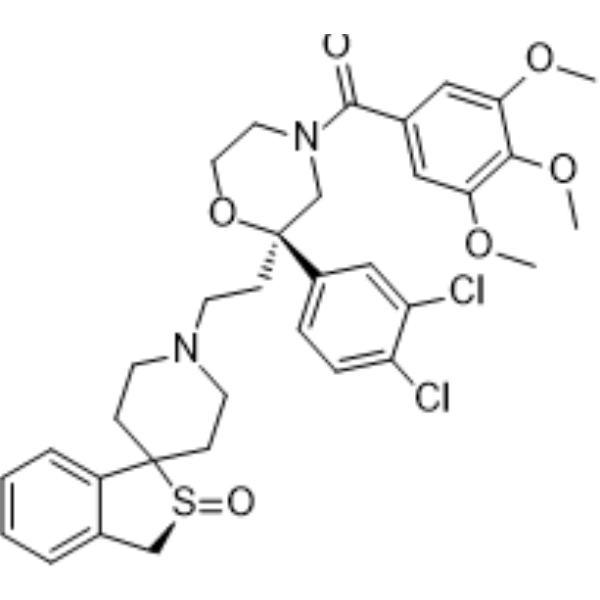
    MDL 105212A is a potent and orally active nonpeptide neurokinin receptor (NK-1/NK-2) tachykinin receptor antagonist. MDL 105212A can be used for the researches of inflammation, immunology and neurological disease, such as asthma .
    MDL 105212A
  • HY-P3802

    Neurokinin Receptor Neurological Disease
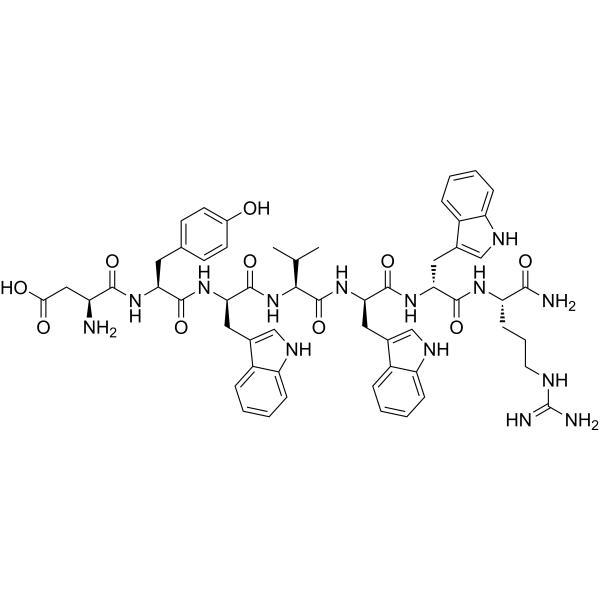
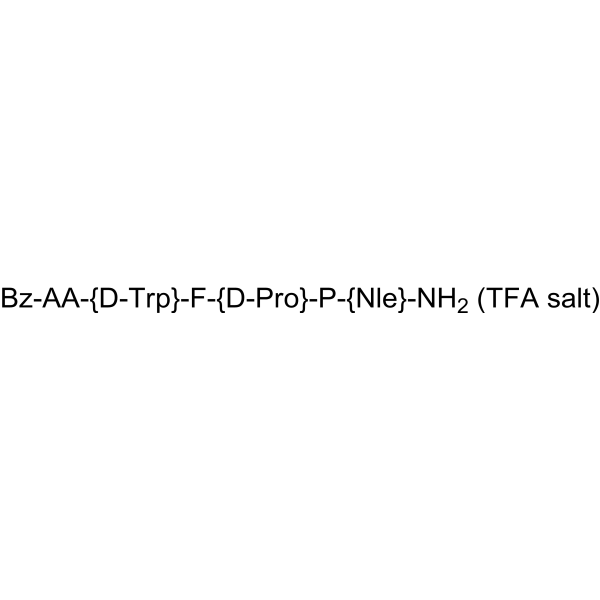
    [D-Trp2,7,9] Substance P is a tachykinin (Neurokinin Receptor) antagonist with Ki values of 1 μM, 1.3 μM, and ~9 μM for NK-1, NK-2,and NK-3 receptor, respectively .
    [D-Trp2,7,9] Substance P
  • HY-101249R

    Neurokinin Receptor Reference Standards Neurological Disease Cancer
    L-732138 (Standard) is the analytical standard of L-732138 (HY-101249). This product is intended for research and analytical applications. L-732138 is a selective, potent and competitive neurokinin-1 (NK-1) receptor antagonist with an IC50 of 2.3 nM. L-732138 has 200-fold more potent in cloned human NK-1 receptors than cloned rat NK-1 receptors, and has > 1000-fold more potent than human NK-2 and NK-3 receptors. L-732138 can reduce hyperalgesia and has antitumor action .
    L-732138 (Standard)
  • HY-180376

    Neurokinin Receptor Inflammation/Immunology
    TAC 363 is a selective tachykinin NK-2 receptor antagonist. TAC 363 shows a rightward shift in the contractile response curve induced by Neurokinin A (HY-P0197) with a pA2 of 9.82. TAC 363 has a weak antagonistic effect on NK-1 receptors. TAC 363 can inhibit Neurokinin A-induced bronchoconstriction in guinea pigs with an ED50 of 0.3 mg/kg. TAC 363 can be used for the research of bronchial asthma .
    TAC 363
  • HY-N9554

    Neurokinin Receptor Endogenous Metabolite Calcium Channel Neurological Disease Inflammation/Immunology
    WIN-64821 is a secondary metabolite produced by Aspergillus species, and acts as a Neurokinin Receptor antagonist. The Ki values of WIN-64821 for NK1, NK2 and NK3 receptors are 0.24 (human astrocytoma cells), 0.26 (rat duodenum) and 15.2 (guinea pig forebrain) μM, respectively. WIN-64821 inhibits apamin-induced contraction of rat vas deferens, blocks substance P-induced contraction of guinea pig ileum and Ca 2+ efflux in human astrocytoma cells. WIN-64821 is applicable to analgesic and anti-inflammatory research .
    WIN-64821
  • HY-182423

    Neurokinin Receptor Neurological Disease
    RO5328673 is an orally active, blood-brain barrier permeable neurokinin receptor antagonist that effectively targets human NK3 receptors (Ki=0.4 nM, Ka=0.1 nM), human NK2 receptors (Ki=1.1 nM, Ka=0.9 nM), and guinea pig NK3 receptors (Ka=0.1 nM and 0.13 nM). RO5328673 acts as an insurmountable antagonist of NK3 receptors with a slow dissociation rate, while it shows rapid association and dissociation rates at human NK2 receptors. RO5328673 potently inhibits senktide (HY-P0187)-induced enhancement of spontaneous activity in dopaminergic neurons and reverses senktide-induced changes in motor activity of gerbils. RO5328673 is widely applicable to research related to schizophrenia .
    RO5328673

Inquiry Online

Your information is safe with us. * Required Fields.

Salutation


Country or Region *

Applicant Name *


Organization Name *

Department *


Email Address *


Product Name *

Cat. No.


Requested quantity *

Phone Number *


Remarks

Inquiry Online

Inquiry Information

Product Name:
Cat. No.:
Quantity:
MCE Japan Authorized Agent:

