

1. Search Result
Search Result
Results for "

O2- generation

" in MedChemExpress (MCE) Product Catalog:

13

Inhibitors & Agonists

3

Fluorescent Dyes

5

Natural
Products

3

Oligonucleotides

Cat. No. Product Name Target Research Areas Chemical Structure
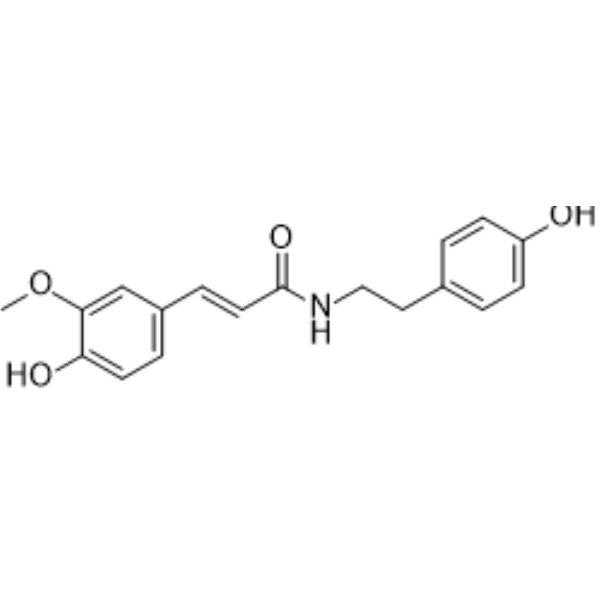
  • HY-N2410

    N-feruloyltyramine; Moupinamide

    Reactive Oxygen Species (ROS) Apoptosis Inflammation/Immunology
    N-trans-Feruloyltyramine (N-feruloyltyramine), an alkaloid, is a potent antioxidant. N-trans-Feruloyltyramine improves H2O2-induced intracellular ROS generation and decreases apoptosis. N-trans-Feruloyltyramine has the potential for oxidative stress-related neurodegenerative conditions and cancer research .
    N-trans-Feruloyltyramine
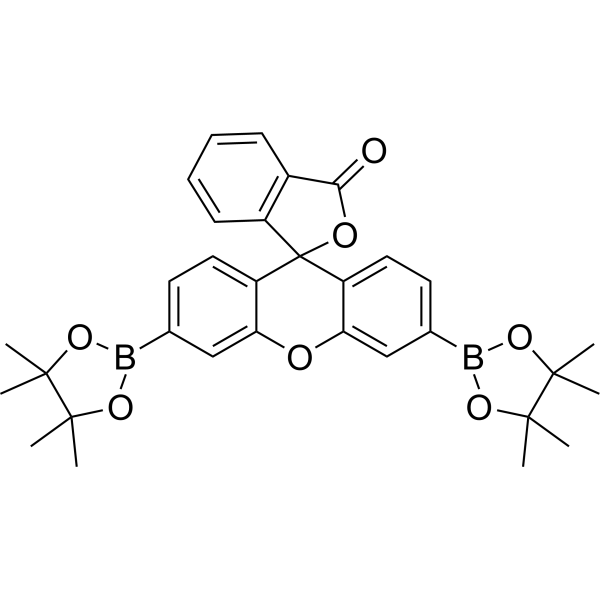
  • HY-D1458

    Fluorescent Dye Cardiovascular Disease Neurological Disease Cancer
    Peroxyfluor 1 is a cell-permeable probe for H2O2. Peroxyfluor 1 represents a first-generation, green-fluorescent probe .
    Peroxyfluor 1
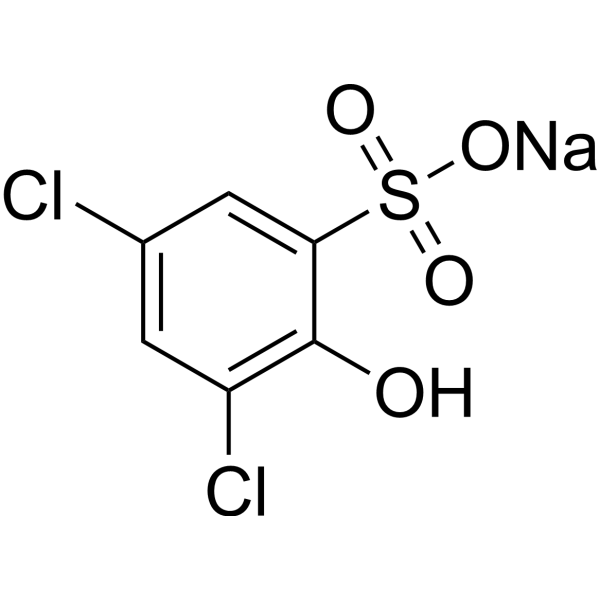
  • HY-15914

    DCHBS

    Fluorescent Dye Others
    DHBS (3, 5-dichloro-2-hydroxybenzenesulfonate) is used in conjunction with 4-aminoantipyrine (4-AAP) (HY-W100990) and hydrogen peroxide (H2O2) for chromogenic quantitation of peroxidase in coupled enzymatic reactions. Component of Trinder reagent for use with peroxidase to measure generation of hydrogen peroxide in automated systems .
    DHBS
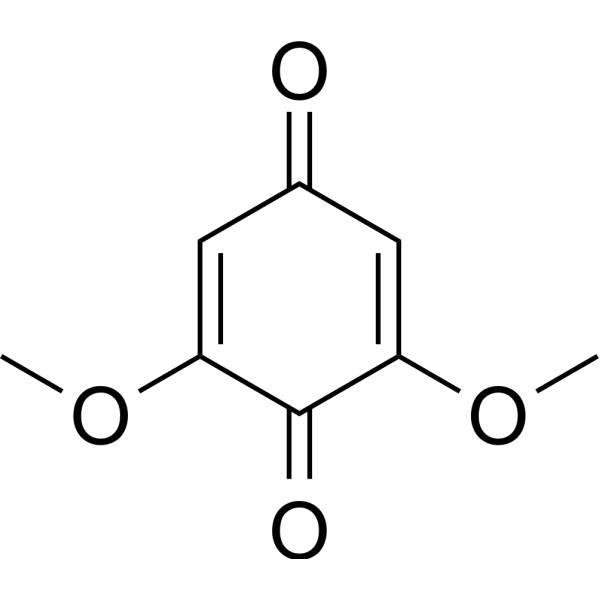
  • HY-N1677

    Akt mTOR Bacterial Fungal AMPK Infection Metabolic Disease Inflammation/Immunology Cancer
    2,6-Dimethoxy-1,4-benzoquinone is a 1,4-benzoquinone derivative. 2,6-Dimethoxy-1,4-benzoquinone promotes phosphorylation of AKT, S6K, mTOR, 4E-BP1, and AMPK, and attenuates mTORC1 activity as part of the AKT/mTOR pathway. 2,6-Dimethoxy-1,4-benzoquinone stimulates myoblast differentiation, increases myotube size, elevates MHC protein expression, enhances mitochondrial biogenesis, respiration, and DNA content, and increases skeletal muscle weights, fiber size, grip strength, and treadmill performance. 2,6-Dimethoxy-1,4-benzoquinone exerts anti-cancer, anti-inflammatory, anti-adipogenic, antibacterial, and antimutagenic effects, inhibits adipogenic transcription factors, nitric oxide production, skin tumor development, Magnaporthe oryzae growth, spore germination, appressorium formation, and growth of select bacterial species, induces H2O2 generation and rice defense gene expression, and reduces rice blast lesion formation. 2,6-Dimethoxy-1,4-benzoquinone can be used for the research of obesity, skin tumorigenesis, rice blast disease, and food-borne illness .
    2,6-Dimethoxy-1,4-benzoquinone
  • HY-132579

    RG6042; IONIS-HTTRx

    Huntingtin Neurological Disease
    Tominersen (RG6042) is a second-generation 2′-O-(2-methoxyethyl) antisense oligonucleotide that targets huntingtin protein (HTT) mRNA and potently suppresses HTT production. Tominersen improves survival and reduces brain atrophy in mice. Tominersen can be used for the research of Huntington’s disease (HD) .
    Tominersen
  • HY-132579A

    RG6042 sodium; IONIS-HTTRx sodium

    Huntingtin Neurological Disease
    Tominersen sodium is a second-generation 2′-O-(2-methoxyethyl) antisense oligonucleotide that targets huntingtin protein (HTT) mRNA and potently suppresses HTT production. Tominersen improves survival and reduces brain atrophy in mice. Tominersen sodium can be used for the research of Huntington’s disease (HD) .
    Tominersen sodium
  • HY-114809

    Reactive Oxygen Species (ROS) NADPH Oxidase Inflammation/Immunology Cancer
    AL-1 is a potent O2 - generation inhibitor (IC50 = 7.6 μM) through the inhibition of leukocytic NADPH oxidase. AL-1 inhibits 12-O-Tetradecanoylphorbol-13-acetate (TPA)-induced H2O2 production. AL-1 reduces tumor incidence in ICR mouse skin. AL-1 can be used for research on oxidative stress-related diseases including cancer .
    AL-1
  • HY-N2410R

    N-feruloyltyramine (Standard); Moupinamide (Standard)

    Reference Standards Reactive Oxygen Species (ROS) Apoptosis Inflammation/Immunology
    N-trans-Feruloyltyramine (Standard) is the analytical standard of N-trans-Feruloyltyramine. This product is intended for research and analytical applications. N-trans-Feruloyltyramine (N-feruloyltyramine), an alkaloid, is a potent antioxidant. N-trans-Feruloyltyramine improves H2O2-induced intracellular ROS generation and decreases apoptosis. N-trans-Feruloyltyramine has the potential for oxidative stress-related neurodegenerative conditions and cancer research .
    N-trans-Feruloyltyramine (Standard)
  • HY-N4278

    Reactive Oxygen Species (ROS) Inflammation/Immunology
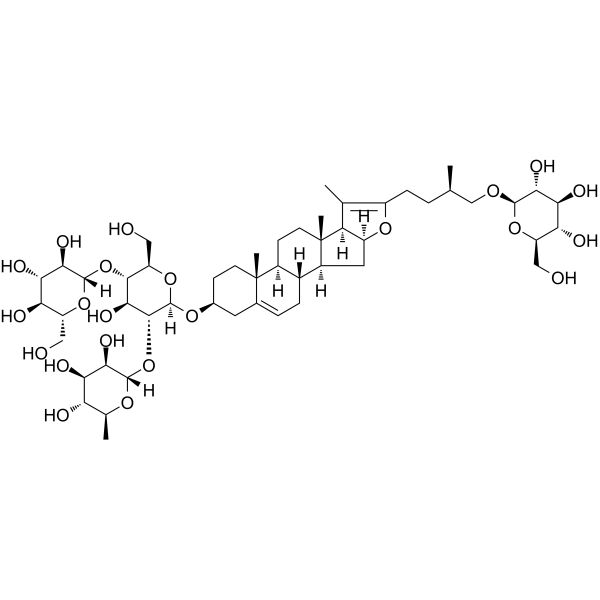
    Huangjiangsu A, pseudoprotodioscin, methyl protobioside, protodioscin, and protodeltonin, isolated from D. villosa. Huangjiangsu A has hepatoprotective potential against H2O2-induced cytotoxicity and ROS generation and could be promising as potential therapeutic agents for liver diseases .
    Huangjiangsu A
  • HY-150236

    Huntingtin Neurological Disease
    FITC-labeled Tominersen (sodium) is the Tominersen labeled with FITC. Tominersen (RG6042) is a second-generation 2′-O-(2-methoxyethyl) antisense oligonucleotide that targets huntingtin protein (HTT) mRNA and potently suppresses HTT production. Tominersen improves survival and reduces brain atrophy in mice. Tominersen can be used for the research of Huntington’s disease (HD).
    FITC-labeled Tominersen sodium
  • HY-116730

    Reactive Oxygen Species (ROS) Others
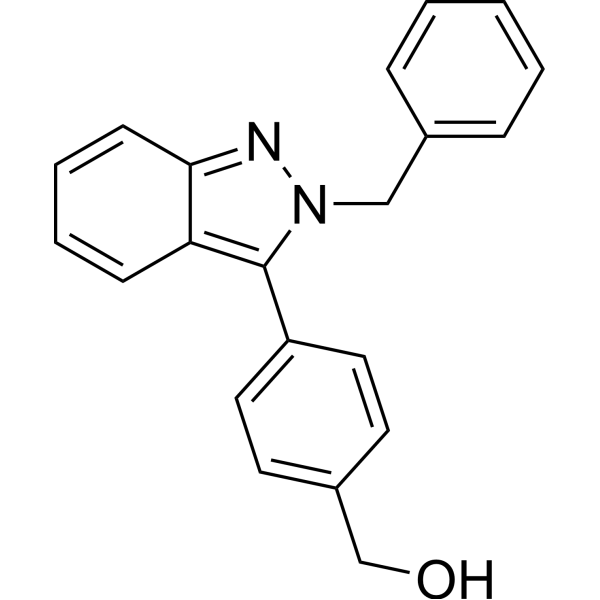
    CHS-111 is a benzyl indazole inhibitor of superoxide anion O 2- generation. CHS-111 inhibits the cell migration, and reduces the formyl-Met-Leu-Phe- but not phorbol ester-stimulated phospholipase D activity, with the IC50 of 3.9 μM .
    CHS-111
  • HY-N9676

    Others Others
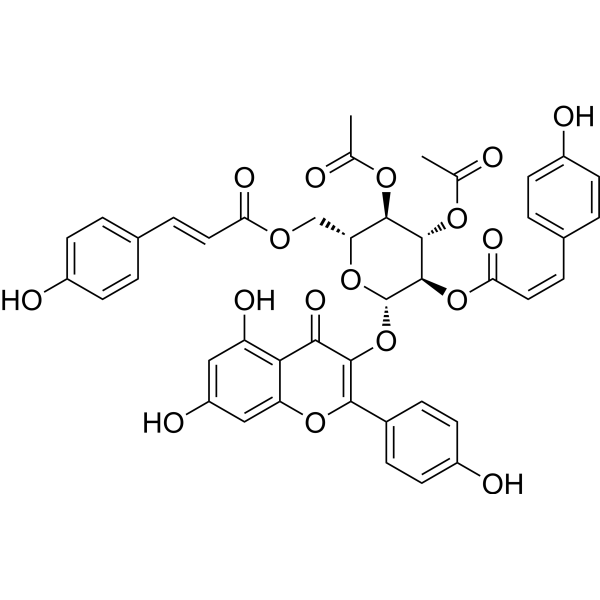
    Kaempferol 3-O-(2'',4''-di-acetyl-3''-cis-p-coumaroyl-6''-trans-p-coumaroyl)-β-D-glucopyranoside is a flavonoid compound that can be isolated from Quercus dentata. Kaempferol 3-O-(2'',4''-di-acetyl-3''-cis-p-coumaroyl-6''-trans-p-coumaroyl)-β-D-glucopyranoside suppresses the superoxide generation induced by arachidonic acid .
    Kaempferol 3-O-(2'',4''-di-acetyl-3''-cis-p-coumaroyl-6''-trans-p-coumaroyl)-β-D-glucopyranoside
  • HY-N1677R

    Reference Standards Akt mTOR Bacterial Fungal AMPK Infection Metabolic Disease Inflammation/Immunology Cancer
    2,6-Dimethoxy-1,4-benzoquinone (Standard) is the analytical standard of 2,6-Dimethoxy-1,4-benzoquinone (HY-N1677). This product is intended for research and analytical applications. 2,6-Dimethoxy-1,4-benzoquinone is a 1,4-benzoquinone derivative. 2,6-Dimethoxy-1,4-benzoquinone promotes phosphorylation of AKT, S6K, mTOR, 4E-BP1, and AMPK, and attenuates mTORC1 activity as part of the AKT/mTOR pathway. 2,6-Dimethoxy-1,4-benzoquinone stimulates myoblast differentiation, increases myotube size, elevates MHC protein expression, enhances mitochondrial biogenesis, respiration, and DNA content, and increases skeletal muscle weights, fiber size, grip strength, and treadmill performance. 2,6-Dimethoxy-1,4-benzoquinone exerts anti-cancer, anti-inflammatory, anti-adipogenic, antibacterial, and antimutagenic effects, inhibits adipogenic transcription factors, nitric oxide production, skin tumor development, Magnaporthe oryzae growth, spore germination, appressorium formation, and growth of select bacterial species, induces H2O2 generation and rice defense gene expression, and reduces rice blast lesion formation. 2,6-Dimethoxy-1,4-benzoquinone can be used for the research of obesity, skin tumorigenesis, rice blast disease, and food-borne illness.
    2,6-Dimethoxy-1,4-benzoquinone (Standard)

Inquiry Online

Your information is safe with us. * Required Fields.

Salutation


Country or Region *

Applicant Name *


Organization Name *

Department *


Email Address *


Product Name *

Cat. No.


Requested quantity *

Phone Number *


Remarks

Inquiry Online

Inquiry Information

Product Name:
Cat. No.:
Quantity:
MCE Japan Authorized Agent:

