

1. Search Result
Search Result
Results for "

Parkinsons

" in MedChemExpress (MCE) Product Catalog:

891

Inhibitors & Agonists

9

Screening Libraries

6

Fluorescent Dyes

7

Biochemical Assay Reagents

34

Peptides

5

Inhibitory Antibodies

118

Natural
Products

74

Isotope-Labeled Compounds

7

Click Chemistry

5

Oligonucleotides

1

GMP Molecules

Cat. No. Product Name Target Research Areas Chemical Structure
  • HY-N0304
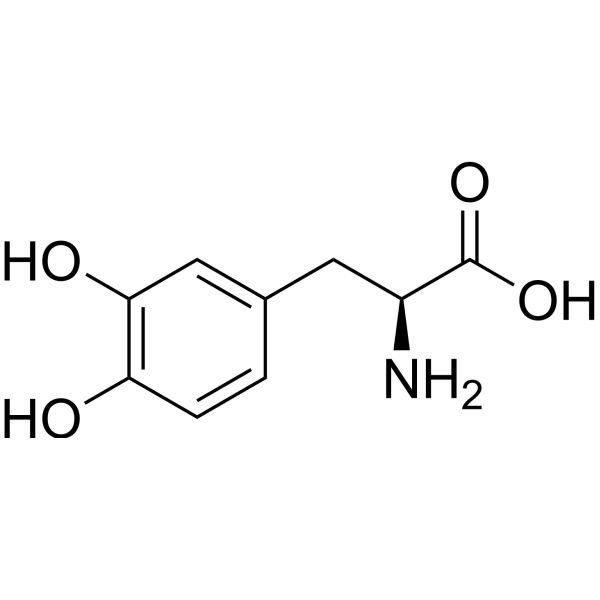
    L-DOPA
    Maximum Cited Publications
    35 Publications Verification

    Levodopa; 3,4-Dihydroxyphenylalanine

    Dopamine Receptor Endogenous Metabolite Neurological Disease Cancer
    L-DOPA (Levodopa) is an orally active metabolic precursor of neurotransmitters dopamine. L-DOPA can cross the blood-brain barrier and is converted into dopamine in the brain. L-DOPA has anti-allodynic effects and the potential for Parkinson's disease .
    L-DOPA
  • HY-17406
    Tolcapone
    3 Publications Verification

    Ro 40-7592

    COMT Amyloid-β Apoptosis Reactive Oxygen Species (ROS) Neurological Disease Cancer
    Tolcapone (Ro 40-7592) is a selective, potent and orally active COMT inhibitor with an IC50of 773 nM. Tolcapone can inhibits α-syn and Aβ42 oligomerization and fibrillogenesis. Tolcapone can cause oxidative stress and induce cancer cells apoptosis and ROS production. Tolcapone can be used for the researches of cancer and neurological disease, such as Parkinson disease and neuroblastoma .
    Tolcapone
  • HY-15887
    MG 149
    10+ Cited Publications

    Tip60 HAT inhibitor

    Histone Acetyltransferase Epigenetic Reader Domain Apoptosis PINK1/Parkin Cardiovascular Disease Neurological Disease Inflammation/Immunology Cancer
    MG149 (Tip60 HAT inhibitor) is a selective and potent Tip60 inhibitor with IC50 of 74 uM, similar potentcy for MOF (IC50 = 47 uM); little potent for PCAF and p300 (IC50 >200 uM). MG 149 inhibits KAT8 and blocks PINK1 kinase activity. MG149 inhibits the phosphorylation of Parkin and ubiquitin, thereby suppressing the initiation of PINK1-dependent mitophagy. MG 149 can reverse chronic restraint stress (CRS) induced hypertension and related molecular changes. MG 149 commonly used in research on diseases such as hypertension and Parkinson's disease .
    MG 149
  • HY-B1039A
    Ambroxol hydrochloride
    3 Publications Verification

    NA-872 hydrochloride

    Glycosidase Autophagy Neurological Disease Metabolic Disease
    Ambroxol hydrochloride (NA-872 hydrochloride), an active metabolite of the proagent Bromhexine, has potent expectorant effects. Ambroxol hydrochloride is a glucocerebrosidase (GCase) chaperone and increases glucocerebrosidase activity. Ambroxol hydrochloride induces lung autophagy and has the potential for Parkinson disease and neuronopathic Gaucher disease research .
    Ambroxol hydrochloride
  • HY-12713

    Dopamine Receptor Neurological Disease
    Lisuride is an orally active dopamine D2 receptors agonist. Lisuride, as an ergot derivative, can be used for the research of Parkinson's disease, migraine, and high prolactin levels .
    Lisuride
  • HY-134661A
    Solangepras
    1 Publications Verification

    CVN424

    GPR6 Neurological Disease
    CVN424 is an orally active and selective GPR6 inverse agonist with a Ki of 9.4 nM and an EC50 of 38 nM. CVN424 is brain-penetrant and has the potential for Parkinson disease research .
    Solangepras
  • HY-70057
    Safinamide
    2 Publications Verification

    FCE 26743; EMD 1195686

    Monoamine Oxidase Neurological Disease
    Safinamide is a potent, selective, and reversible monoamine oxidase B (MAO-B) inhibitor (IC50=0.098 μM) over MAO-A (IC50=580 μM) . Safinamide also blocks sodium channels and modulates glutamate (Glu) release, showing a greater affinity at depolarized (IC50=8 μM) than at resting (IC50=262 μM) potentials. Safinamide has neuroprotective and neurorescuing effects and can be used for the study of parkinson disease, ischemia stroke etc.al .
    Safinamide
  • HY-110125
    ML-193
    1 Publications Verification

    CID 1261822

    GPR55 Neurological Disease
    ML-193 (CID 1261822) is a potent and selective antagonist of GPR55, with an IC50 of 221 nM. ML-193 shows more than 27-fold selectivity for GPR55 over GPR35, CB1 and CB2. ML-193 can improve the motor and the sensorimotor deficits of Parkinson’s disease (PD) rats .
    ML-193
  • HY-N8804

    Asparanin B

    Reactive Oxygen Species (ROS) Neurological Disease Cancer
    Shatavarin IV is a steroidal saponin, that can be isolated from the roots of Asparagus racemosus (Liliaceae). Shatavarin IV shows anticancer activity. Shatavarin IV elicits lifespan extension and alleviates Parkinsonism in Caenorhabditis elegans .
    Shatavarin IV
  • HY-B1039
    Ambroxol
    3 Publications Verification

    NA-872

    Glycosidase Autophagy Neurological Disease Metabolic Disease
    Ambroxol (NA-872), an active metabolite of the proagent Bromhexine, has potent expectorant effects. Ambroxol is a glucocerebrosidase (GCase) chaperone and increases glucocerebrosidase activity. Ambroxol induces lung autophagy and has the potential for Parkinson disease and neuronopathic Gaucher disease research .
    Ambroxol
  • HY-B1277
    Trihexyphenidyl hydrochloride
    3 Publications Verification

    mAChR Cholinesterase (ChE) Neurological Disease
    Trihexyphenidyl hydrochloride is a selective and orally active M1 muscarinic receptor antagonist with an IC50 of 3.7 nM for rat cerebral cortex M1 muscarinic receptors. Trihexyphenidyl hydrochloride modulates cholinergic activity, countering acetylcholine supersensitivity in neural pathways. Trihexyphenidyl hydrochloride improves movement disorder, inhibits McN-A-343 (HY-107648)-induced pressor responses, vagally-induced bradycardia and vasodilatation. Trihexyphenidyl hydrochloride can be used for the research of Parkinson's disease. .
    Trihexyphenidyl hydrochloride
  • HY-W010201
    Citronellol
    2 Publications Verification

    (±)-Citronellol; (±)-β-Citronellol

    Environmental Pollutants Necroptosis Autophagy Fungal Reactive Oxygen Species (ROS) ERK Atg8/LC3 TNF Receptor Apoptosis PI3K p62 Cardiovascular Disease Neurological Disease Cancer
    Citronellol ((±)-Citronellol) is an orally active inducer of apoptosis. Citronellol can prevent oxidative stress, mitochondrial dysfunction, and apoptosis in the SH-SY5Y cell Parkinson's disease model induced by 6-OHDA by regulating the ROS-NO, MAPK/ERK, and PI3K/Akt signaling pathways. Citronellol can induce necroptosis in human lung cancer cells through the TNF-α pathway and accumulation of ROS. Citronellol can reduce the levels of LC-3 and p62 to regulate the autophagy pathway, inhibit oxidative stress and neuroinflammation, and thus have neuroprotective effects on Parkinson's rats. Citronellol exhibits anti-fungal activity against Trichophyton rubrum by inhibiting ergosterol synthesis .
    Citronellol
  • HY-136532
    ZT-1a
    3 Publications Verification

    NKCC Neurological Disease
    ZT-1a is a potent, non-ATP-competitive and selective SPAK inhibitor. ZT-1a inhibits SPAK activity with IC50s of 44.3, 35.0, 46.7 μM at ATP concentrations of 0.01, 0.1 and 1 mM, respectively .
    ZT-1a
  • HY-70057A
    Safinamide mesylate
    2 Publications Verification

    FCE 26743 mesylate; EMD 1195686 mesylate

    Monoamine Oxidase Cardiovascular Disease Neurological Disease
    Safinamide (FCE 26743; EMD 1195686) mesylate is a potent, selective, and reversible monoamine oxidase B (MAO-B) inhibitor (IC50=0.098 μM) over MAO-A (IC50=580 nM) . Safinamide mesylate also blocks sodium channels and modulates glutamate (Glu) release, showing a greater affinity at depolarized (IC50=8?μM) than at resting (IC50=262?μM) potentials. Safinamide mesylate has neuroprotective and neurorescuing effects and can be used for the study of parkinson disease, ischemia stroke et.al .
    Safinamide mesylate
  • HY-135902A
    Synucleozid hydrochloride
    2 Publications Verification

    NSC 377363 hydrochloride

    DNA/RNA Synthesis Neurological Disease
    Synucleozid hydrochloride (NSC 377363 hydrochloride) is a potent inhibitor of the?SNCA?mRNA?that encodes α-synuclein protein. Synucleozid selectively?targets the?α-synuclein?mRNA 5′ UTR at the designed IRE site, decreases the amount of?SNCA?mRNA loaded into polysomes and thereby inhibits?SNCA?translation. Synucleozid has the potential for the investigation of Parkinson’s disease .
    Synucleozid hydrochloride
  • HY-N1100

    (-)-Vasicinone

    Others Neurological Disease
    Vasicinone is a quinazoline alkaloid isolated from the Adhatoda vasica. Vasicinone is a potential agent for Parkinson's disease and possibly other oxidative stress-related neurodegenerative disorders .
    Vasicinone
  • HY-N6960

    Stepholidine; (-)-Stepholidine; L-SPD

    Dopamine Receptor Neurological Disease
    L-Stepholidine (Stepholidine) is an alkaloid. L-Stepholidine exhibits mixed dopamine D1 receptor agonist and D2 antagonist properties. L-Stepholidine has neuroprotective effect. L-Stepholidine can be used for the researches of neurological disease, such as Parkinson disease, Alzheimer's disease and opiate addiction .
    L-Stepholidine
  • HY-14561A

    RX 781094 hydrochloride

    Adrenergic Receptor Imidazoline Receptor Neurological Disease Endocrinology
    Idazoxan hydrochloride (RX 781094 hydrochloride) is an α2-adrenoceptor antagonist and is also a imidazoline receptors (IRs) antagonist competitively antagonized the centrally induced hypotensive effect of imidazoline-like agents (IMs). Idazoxan hydrochloride also improves motor symptoms in Parkinson’s disease, L-DOPA-induced dyskinesias, and experimental Parkinsonism .
    Idazoxan hydrochloride
  • HY-N0901A
    Corynoxine B
    5 Publications Verification

    α-synuclein Neurological Disease Cancer
    Corynoxine B is an alkaloid-based autophagy inducer and α-synuclein aggregation inhibitor that ameliorates Mn-induced dysregulation of autophagy and enhances α-synuclein (α-syn) clearance in Parkinson's disease mice .
    Corynoxine B
  • HY-N0304A
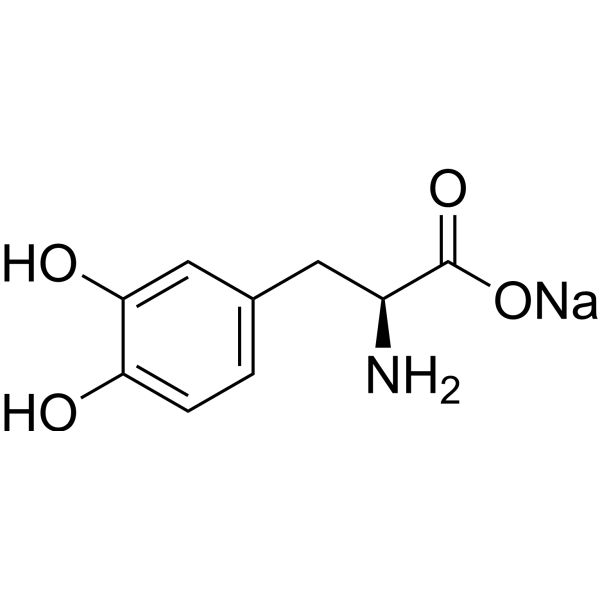
    L-DOPA sodium
    Maximum Cited Publications
    35 Publications Verification

    Levodopa sodium; 3,4-Dihydroxyphenylalanine sodium

    Dopamine Receptor Endogenous Metabolite Neurological Disease
    L-DOPA (Levodopa) sodium is an orally active metabolic precursor of neurotransmitters dopamine. L-DOPA sodium can cross the blood-brain barrier and is converted into dopamine in the brain. L-DOPA sodium has anti-allodynic effects, and can be used for Parkinson's disease research .
    L-DOPA sodium
  • HY-134542

    Calcium Channel Neurological Disease
    CaV1.3 antagonist-1 is a potent and highly selective CaV1.3 L-type calcium channel (LTCC) antagonist with an IC50 of 1.7 μM. CaV1.3 antagonist-1 inhibits CaV1.3 LTCC >600-fold more potently than CaV1.2 LTCC. CaV1.3 antagonist-1, a cyclopentyl derivative, has the potential for Parkinson's disease research .
    CaV1.3 antagonist-1
  • HY-116016

    L-DOPA ethyl ester; Levodopa ethyl ester

    Dopamine Receptor Drug Metabolite Neurological Disease
    Etilevodopa (L-Dopa ethyl ester), an ethyl-ester proagent of Levodopa, is rapidly hydrolyzed to Levodopa and ethanol by nonspecific esterases in the gastrointestinal tract. Etilevodopa is used for the treatment of Parkinson disease (PD). Levodopa is the direct precursor of dopamine and is a suitable proagent as it facilitates CNS penetration and delivers dopamine .
    Etilevodopa
  • HY-14201

    Ro 19-6327

    Monoamine Oxidase Neurological Disease
    Lazabemide (Ro 19-6327) is a selective, reversible inhibitor of monoamine oxidase B (MAO-B) (IC50=0.03 μM) but less active for MAO-A (IC50>100 μM). Lazabemide ?inhibits monoamine uptake at high concentrations, the IC50 values are 86 μM, 123 μM and >500 μM for noradrenalin, serotonin and dopamine uptake, respectively. Lazabemide can be used for the research of parkinson and?alzheimer′s disease .
    Lazabemide
  • HY-109131

    ABBV-951; Carbidopa 4′-monophosphate

    Aryl Hydrocarbon Receptor Drug Metabolite Neurological Disease
    Foscarbidopa (ABBV-951; Carbidopa 4′-monophosphate) is an inhibitory prodrug targeting peripheral aromatic L-amino acid decarboxylase. Foscarbidopa is hydrolyzed into Carbidopa (HY-B0311) by phosphatases in vivo to suppress peripheral metabolism of levodopa and elevate brain delivery of levodopa. Foscarbidopa can be used for the research of Parkinson’s disease and advanced Parkinson’s disease .
    Foscarbidopa
  • HY-125515

    Leptaflorine

    Monoamine Oxidase Neurological Disease
    Tetrahydroharmine (Leptaflorine) is a selective reversible monoamine oxidase A (MAO-A) inhibitor with an IC50 of 74 nM. Tetrahydroharmine can be used for the research of parkinson’s disease .
    Tetrahydroharmine
  • HY-163987

    Sirtuin Neurological Disease
    SIRT3 activator 2 (compound 2a) is a SIRT3 activator. SIRT3 activator 2 improved the thermal stability of SIRT3 in SH-SY5Y cells, indicating that it can directly bind to SIRT3, has SIRT3 dependency in SH-SY5Y to clear α-Syn. SIRT3 activator 2 improves motor function in Parkinson mice, preventing Parkinson (DA) neuron loss in the substantia nigra in a dose-dependent manner .
    SIRT3 activator 2
  • HY-109036

    RO5025181; SYN120

    5-HT Receptor Neurological Disease
    Landipirdine (RO5025181; SYN120) is an orally active 5-HT6 and 5-HT2A receptors antagonist. Landipirdine can be used for the study of Parkinson disease .
    Landipirdine
  • HY-120553
    B-355252
    1 Publications Verification

    Apoptosis Neurological Disease
    B355252, a phenoxy thiophene sulfonamide small molecule, is a potent NGF receptor agonist. B355252 potentiates NGF-induced neurite outgrowth. B355252 protects ischemic neurons from neuronal loss by attenuating DNA damage, reducing ROS production and the LDH level, and preventing neuronal apoptosis. B355252 has anti-apoptotic effects in glutamate-induced excitotoxicity, as well as in a murine hippocampal cell line (HT22) model of Parkinson disease (PD) .
    B-355252
  • HY-107660

    Sirtuin Neurological Disease
    SIRT2-IN-8 is a potent SIRT2 inhibitor. SIRT2-IN-8 can be used for Huntington’s and Parkinson’s diseases research .
    SIRT2-IN-8
  • HY-W040146

    Propiopromazine hydrochloride

    Dopamine Receptor Neurological Disease
    Propionylpromazine hydrochloride (Propiopromazine hydrochloride), a dopamine receptor D2 (DRD2) antagonist, can be used in the research of Parkinson disease .
    Propionylpromazine hydrochloride
  • HY-147060

    DYRK Neurological Disease
    Dyrk1A-IN-3 (Compound 8b), a highly selective dual-specificity tyrosine-regulated kinase 1A (DYRK1A) inhibitor, maintains high levels of DYRK1A binding affinity (IC50=76 nM). Dyrk1A-IN-3 can be used for the research of neurodegenerative disorders such as Alzheimer’s Disease, Huntington’s Disease, and Parkinson’s Disease .
    Dyrk1A-IN-3
  • HY-144634
    DDO-7263
    1 Publications Verification

    Keap1-Nrf2 Neurological Disease Inflammation/Immunology
    DDO-7263, a 1,2,4-Oxadiazole derivative, is a potent Nrf2-ARE activator. DDO-7263 upregulates Nrf2 through binding to Rpn6 to block the assembly of 26S proteasome and the subsequent degradation of ubiquitinated Nrf2. DDO-7263 induces Nrf2 translocation into the nucleus. DDO-7263 inhibits of NLRP3 inflammasome activation. DDO-7263 exerts anti-inflammatory activity and has the potential for neurodegenerative diseases research, such as Parkinson's disease (PD) .
    DDO-7263
  • HY-150053
    JNK-IN-11
    1 Publications Verification

    JNK Neurological Disease
    JNK-IN-11 (compound 1) is a potent JNK inhibitor with an IC50 value of 2.2, 21.4, 1.8 µM for JNK1, JNK2, JNK3, respectively. JNK-IN-11 has the potential for the research of alzheimer and parkinson disease .
    JNK-IN-11
  • HY-135902

    NSC 377363

    DNA/RNA Synthesis Neurological Disease
    Synucleozid (NSC 377363) is a potent inhibitor of the SNCA mRNA that encodes α-synuclein protein. Synucleozid selectively targets the α-synuclein mRNA 5′ UTR at the designed IRE site, decreases the amount of SNCA mRNA loaded into polysomes and thereby inhibits SNCA translation. Synucleozid has the potential for the investigation of Parkinson’s disease .
    Synucleozid
  • HY-125111

    GPR55 Cannabinoid Receptor Neurological Disease Metabolic Disease Cancer
    PSB-SB-487 is a potent GPR55 antagonist and CB2 agonist with an IC50 value of 0.113 µM for GPR55, and a Ki value of 0.292 µM for human CB2. PSB-SB-487 can be used for researching diabetes, Parkinson’s disease, neuropathic pain, and cancer .
    PSB-SB-487
  • HY-W010201R
    Citronellol (Standard)
    2 Publications Verification

    (±)-Citronellol (Standard); (±)-β-Citronellol (Standard)

    Reactive Oxygen Species (ROS) Reference Standards ERK PI3K TNF Receptor Atg8/LC3 p62 Apoptosis Necroptosis Autophagy Fungal Cardiovascular Disease Neurological Disease Cancer
    Citronellol (Standard) is the analytical standard of Citronellol. Citronellol (Standard) is an orally active inducer of apoptosis. Citronellol (Standard) can prevent oxidative stress, mitochondrial dysfunction, and apoptosis in the SH-SY5Y cell Parkinson's disease model induced by 6-OHDA by regulating the ROS-NO, MAPK/ERK, and PI3K/Akt signaling pathways. Citronellol (Standard) can induce necroptosis in human lung cancer cells through the TNF-α pathway and accumulation of ROS. Citronellol (Standard) can reduce the levels of LC-3 and p62 to regulate the autophagy pathway, inhibit oxidative stress and neuroinflammation, and thus have neuroprotective effects on Parkinson's rats. Citronellol (Standard) exhibits anti-fungal activity against Trichophyton rubrum by inhibiting ergosterol synthesis .
    Citronellol (Standard)
  • HY-17406S1

    Ro 40-7592-d4

    Isotope-Labeled Compounds COMT Amyloid-β Apoptosis Reactive Oxygen Species (ROS) Neurological Disease Cancer
    Tolcapone-d4 (Ro 40-7592-d4) is the deuterium labeled Tolcapone (HY-17406). Tolcapone (Ro 40-7592) is a selective, potent and orally active COMT inhibitor with an IC50of 773 nM. Tolcapone can inhibits α-syn and Aβ42 oligomerization and fibrillogenesis. Tolcapone can cause oxidative stress and induce cancer cells apoptosis and ROS production. Tolcapone can be used for the researches of cancer and neurological disease, such as Parkinson disease and neuroblastoma .
    Tolcapone-d4
  • HY-120419

    Monoamine Oxidase Neurological Disease
    PF9601N, an monoamine oxidase B (MAO-B) inhibitor, possesses neuroprotective properties in several in vitro and in vivo models of Parkinson's disease (PD). PF9601N can be used for the research of neurodegenerative diseases mediated by excitotoxicity . PF9601N is a click chemistry reagent, it contains an Alkyne group and can undergo copper-catalyzed azide-alkyne cycloaddition (CuAAc) with molecules containing Azide groups.
    PF9601N
  • HY-135387

    Drug Metabolite Neurological Disease
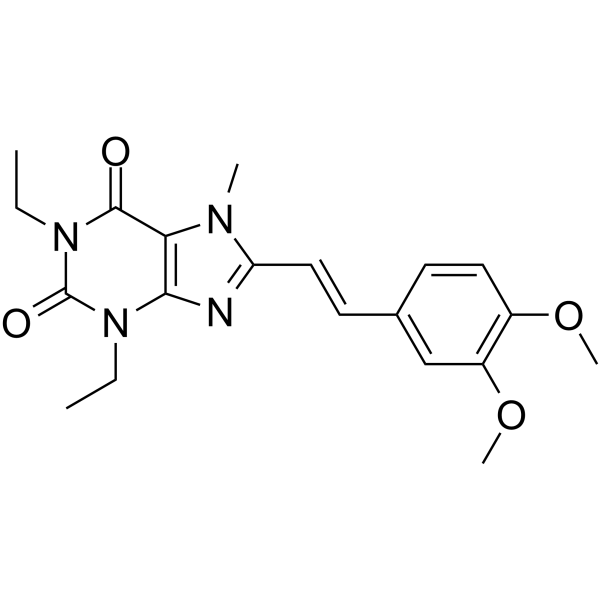
    4-Desmethyl Istradefylline is a metabolite of Istradefylline. 4-Istradefylline is a very potent, selective and orally active adenosine A2A receptor antagonist with Ki of 2.2 nM in experimental models of Parkinson's disease .
    4-Desmethyl Istradefylline
  • HY-119918

    mAChR Neurological Disease
    Cycrimine is an orally active muscarinic cholinergic receptor (mAChR) M1 antagonist, reduces the acetylcholine levels in parkinson model. Cycrimine shows antispasmodic activity, can be used in studies of behavioral and mental disorder .
    Cycrimine
  • HY-W001601

    iGluR Neurological Disease
    Budipine is an anti-parkinson agent. Budipine also is a substrate of P-glycoprotein (P-gp), is mediated the uptake into the brain by P-gp. Budipine also is N-methyl-d-aspartate (NMDA) antagonist, and has indirect dopaminergic effects through an improved dopamine release, the inhibition of monoamine oxidase type B (MAO-B). Budipine can be used for the research of CNS disorders include Parkinson disease .
    Budipine
  • HY-116016A

    L-DOPA ethyl ester hydrochloride; Levodopa ethyl ester hydrochloride

    Dopamine Receptor Drug Metabolite Neurological Disease
    Etilevodopa (L-Dopa ethyl ester) hydrochloride, an ethyl-ester proagent of Levodopa, is rapidly hydrolyzed to Levodopa and ethanol by nonspecific esterases in the gastrointestinal tract. Etilevodopa hydrochloride is used for the treatment of Parkinson disease (PD). Levodopa is the direct precursor of dopamine and is a suitable proagent as it facilitates CNS penetration and delivers dopamine .
    Etilevodopa hydrochloride
  • HY-148353

    LRRK2 Neurological Disease
    PF-06455943 is a leucine rich repeat kinase 2 (LRRK2) inhibitor with IC50 value of 3 nM. PF-06455943 also is a PET radioligand. PF-06455943 can be used for the research of ADME/neuro PK characterization and Parkinson disease (PD) .
    PF-06455943
  • HY-14202

    Ro 19-6327 hydrochloride

    Monoamine Oxidase Neurological Disease
    Lazabemide hydrochloride (Ro 19-6327 hydrochloride) is a selective, reversible inhibitor of monoamine oxidase B (MAO-B) (IC50=0.03 μM) but less active for MAO-A (IC50>100 μM). Lazabemide  inhibits monoamine uptake at high concentrations, the IC50 values are 86 μM, 123 μM and >500 μM for noradrenalin, serotonin and dopamine uptake, respectively. Lazabemide can be used for the research of parkinson and alzheimer′s disease .
    Lazabemide hydrochloride
  • HY-115038

    α-synuclein Neurological Disease
    ELN484228 is a blocker of α-synuclein which is a key protein in Parkinson’s disease.
    ELN484228
  • HY-106862A

    Dopamine Receptor Neurological Disease
    CGS 15873A is an orally active benzopyranopyridine derivative. CGS 15873A has selective dopamine receptor activation activity. CGS 15873A can be used for research on schizophrenia or Parkinson's disease .
    CGS 15873A
  • HY-109150

    IRL790

    Dopamine Receptor Neurological Disease
    Mesdopetam (IRL790) is a dopamine D3 receptor antagonist (Ki=90 nM; IC50=9.8 μM for human recombinant D3 receptor) with psychomotor stabilizing properties. Mesdopetam is used for the research of motor and psychiatric complications in Parkinson disease .
    Mesdopetam
  • HY-117059

    Dopamine Receptor Neurological Disease
    SK609 hydrochloride is a dopamine D3 receptor (D3R) selective agonist with an EC50 of 1109 nM. SK609 hydrochloride has the potential for parkinson research .
    SK609 hydrochloride
  • HY-115483

    mGluR Neurological Disease
    VU0477573 is a brain-penetrant partial negative allosteric modulator of metabotropic glutamate receptor subtype 5 (mGluR5). VU0477573 exhibits neuroprotective and anxiolytic effects. VU0477573 can be used for the research of neurological disease, such as Parkinson disease .
    VU0477573
  • HY-145712

    FKBP Cancer
    ElteN378 is an inhibitors of FKBP12e. ElteN378 can be used in study Alzheimer disease, Parkinson disease, Amyotrophic Lateral Sclerosis, proliferation disorders and cancer .
    ElteN378

Inquiry Online

Your information is safe with us. * Required Fields.

Salutation


Country or Region *

Applicant Name *


Organization Name *

Department *


Email Address *


Product Name *

Cat. No.


Requested quantity *

Phone Number *


Remarks

Inquiry Online

Inquiry Information

Product Name:
Cat. No.:
Quantity:
MCE Japan Authorized Agent:

